
Religion & Philosophy / Philosophy / Søren Kierkegaard
Søren Kierkegaard · Chapter 03 of 05
Fear and Trembling: Abraham, Faith, and the Limits of Explanation
A close reading of Kierkegaard’s most disturbing and frequently misunderstood book
Curated by Christopher Adkins of Huntersville, NC

What makes Abraham so difficult for Johannes de silentio to understand? Rembrandt, The Sacrifice of Isaac (1635). This earlier artistic treatment of Genesis 22 makes visible the terror and interruption surrounding the story at the center of Fear and Trembling; it is not an illustration created for Kierkegaard’s book. Public domain.
Rembrandt van Rijn, 1635; Hermitage Museum; Web Gallery of Art, via Wikimedia Commons · Public domain.


Explore the historical images.
01 / 08
Begin with the terror the familiar story can conceal
Fear and Trembling returns to Genesis 22, where Abraham is commanded to offer Isaac and the sacrifice is stopped. A familiar religious story can become safe through repetition: the audience knows the ending, recognizes the language, and praises the exemplary figure. Johannes de silentio, the book’s pseudonymous author, removes that safety. He asks the reader to confront the journey as something Abraham must undergo without the comfort of reading the last page first. The book appeared in 1843, as recorded in the critical edition.
Isaac is not an interchangeable possession. He is Abraham’s son and the bearer of a promise. If that relationship becomes faint, the entire problem becomes easier for the wrong reason. The book’s emotional and philosophical pressure depends on preserving love, obligation, and the apparent impossibility of reconciling the command with them.
A careful reader should therefore resist beginning with a ready-made lesson about heroic obedience. The text spends considerable energy making the reader less comfortable with admiration. It asks whether praise has become a way of refusing to imagine what is being praised. The difficulty is not an obstacle on the way to the argument; it is part of the argument. Before deciding what Abraham means, we must notice what a reassuring summary has left out.
02 / 08
Johannes de silentio cannot simply explain the answer
The name Johannes de silentio suggests a relation to silence, but this author writes intensely about what he cannot understand. He admires Abraham while repeatedly distinguishing that admiration from possessing Abraham’s faith. In the Hollander translation of selections, he explicitly says that he cannot carry out the movement of faith. That admission prevents the book from functioning as a straightforward instruction manual delivered by an authoritative spiritual expert.
There are at least three levels to keep separate: the biblical narrative, the pseudonymous writer’s attempts to understand it, and Kierkegaard’s act of constructing that writer. Collapsing the levels makes a difficult literary work look like a list of doctrines. Preserving them allows the reader to ask why an author would place his central problem in the hands of someone who professes an inability to master it.
One answer is that the inability exposes an age too quick to claim that it has surpassed faith. To move beyond something, one must first understand what it asks. De silentio’s humility is therefore a challenge. He is able to analyze, compare, and admire; he will not pretend that these achievements amount to the life he describes. His limitation may reveal something that a confident lecturer conceals: some forms of understanding cannot be certified by an elegant account of them.
“I cannot carry out the movement of faith”
Johannes de silentio, Fear and Trembling, preliminary discussion; in Selections from the Writings of Kierkegaard (1923).Lee M. Hollander; brief excerpt from the public-domain 1923 translation. The speaker is the pseudonymous narrator.

03 / 08
Infinite resignation and receiving the finite again
The book distinguishes infinite resignation from faith. Resignation gives up a finite hope while preserving its significance inwardly. It can be a tremendous act: a person accepts that what is most loved cannot be possessed in ordinary life. De silentio thinks he can understand this movement. Faith, as he presents it, asks for something more difficult: receiving the finite again without reducing the relation to a calculation of likely outcomes. The distinction appears in the preliminary discussion of knights of resignation and faith.
This is why the story is not adequately summarized as a celebration of renunciation. Abraham’s relation to Isaac cannot become merely a farewell to an earthly attachment. The problem involves trusting that the beloved will be received, even while every ordinary assurance seems to disappear. The narrator’s language of the absurd marks this collision with ordinary expectation; it should not be made a universal recommendation to believe any contradiction.
The distinction also explains the book’s affection for ordinary life. A knight of faith need not look like a spectacular ascetic. What appears extraordinary is the relation through which everyday existence is received. Here the reader encounters a question rather than an easy method: can one love what is finite without trying to guarantee it, and without converting the possibility of loss into an excuse for loving less?
04 / 08
The ethical problem must remain visible
The first of the book’s three problems asks whether there is a teleological suspension of the ethical. The phrase is difficult because it names an alleged relation in which the ordinary universal ethical demand is suspended for a higher end. In Abraham’s case, the obligation to love and protect Isaac is unmistakable. De silentio will not let the reader erase it by using sacred language. He states the ethical description of the act in stark terms. The primary text preserves the moral horror that a casual account of obedience can conceal.
The comparison with a tragic hero clarifies the issue. A tragic hero may sacrifice something precious for a publicly intelligible communal duty. Others can understand the conflict and judge the deed in a common ethical language. Abraham cannot simply offer such an explanation. His claimed relation to God cannot be translated into an ordinary public justification without losing what de silentio says makes it faith.
Readers have consequently disagreed about the book’s implications. Does it disclose a genuine exception, expose the limits of ethical theory, or make the temptation to claim an exception terrifyingly visible? The text should be read with those disagreements intact. What it does not provide is a general exemption allowing someone to convert personal certainty into authority over another person’s safety. The unresolved burden of justification is central to its power.

05 / 08
Silence, secrecy, and the cost of being unable to explain
The third problem asks whether Abraham was ethically justified in concealing his undertaking from Sarah, Eliezer, and Isaac. Silence here is not merely a romantic sign of spiritual depth. It creates an ethical wound. Other people are involved, and their relation to the action matters. The Danish critical text of Fear and Trembling contains the three problemata and their elaborate literary comparisons.
A person who cannot communicate the meaning of an action may be inwardly burdened, but inability to explain does not automatically make the action admirable. The work lets the isolation become almost unbearable. It also gives readers a reason to ask whose perspective an account of spiritual heroism leaves silent. Sarah and Isaac must not disappear merely because Abraham occupies the center of the philosophical discussion.
This is a useful discipline for reading religious and secular stories of vocation. A person may believe that a mission requires extraordinary sacrifice. The next questions are whose sacrifice is involved, who has consented, and whether the mission is being used to avoid answering those affected. These are contemporary ethical questions prompted by the text, not claims that de silentio resolves every one of them. His writing makes the problem harder. A serious reading should preserve that difficulty instead of rewarding secrecy with an automatic aura of greatness.
06 / 08
What the “leap of faith” shorthand leaves out
“Leap of faith” has become the most familiar phrase attached to Kierkegaard. It can serve as shorthand, but it is not a reliable substitute for the different discussions of leap, decision, paradox, and faith across the authorship. Treating the phrase as a complete doctrine suggests that faith means deliberately switching off thought. The actual books devote extraordinary intellectual effort to showing why certain transitions cannot be produced by accumulating information alone.
A decision to trust, promise, or commit is not simply another proposition in an argument. Reasons matter; the person must still act. This distinction can help a modern reader approach Kierkegaard, but ordinary trust and Christian faith are not thereby identical. His religious vocabulary concerns a particular relation to God, and later works examine the Christian paradox in terms of incarnation and the possibility of offense. The publication index places Philosophical Fragments and Practice in Christianity alongside Fear and Trembling, rather than merging them.
The practical reading rule is to follow the specific text. Ask who speaks, what transition is in question, and what the speaker claims can or cannot be established. A slogan may make the author feel instantly accessible, but it often removes the distinctions that make him worth reading. The goal is understanding the difficulty of commitment, not adopting a fashionable hostility to reason.

07 / 08
Faith and the temptation of self-authorization
One of the most urgent questions raised by the book is how an individual distinguishes a demand of God from an individual’s own wish to possess divine authority. The text’s fascination with Abraham cannot dissolve that problem. If another person’s life can be endangered by a private claim, the claim requires the most serious scrutiny. Admiration of a biblical figure offers no simple procedure for declaring oneself an equivalent figure.
Kierkegaard’s wider authorship gives this issue a broader setting. The Book on Adler examines a contemporary claim of revelation and the confusion surrounding religious authority; Works of Love demands attention to the neighbor. Both appear in the critical edition catalogue. Reading Fear and Trembling in isolation from these concerns can make the authorship seem less attentive to responsibility than it is.
There remains a real tension, and readers are entitled to judge it critically. A responsible interpretation does not have to explain away every troubling implication to preserve the work’s greatness. It can say that the work reveals the gravity of faith while also asking whether its categories sufficiently protect the other person. The tension between inward conviction and answerability is not confined to religion. Political, artistic, and personal missions can all tempt people to declare themselves beyond ordinary judgment. Kierkegaard gives that temptation a severe and memorable stage.
08 / 08
A reading itinerary that keeps the problem alive
Read Genesis 22 first, then the opening variations in Fear and Trembling, then the discussion of resignation and faith. Only after that groundwork move to the three problemata. This sequence lets the emotional stakes and distinctions develop before the most technical question arrives. For a freely available beginning, the 1923 Hollander selections are useful, but they represent only part of the work; a complete scholarly edition is needed for sustained study.
Keep a record of what the narrator can understand and what he says he cannot. Watch the language of greatness carefully. Does admiration clarify the problem, or does it become a substitute for confronting it? Ask how the ending of the biblical story affects your judgment of the journey. Knowing an outcome can make a past decision look less uncertain than it was for the person required to make it.
The book leaves a reader with an unsettling measure of intellectual honesty. We should neither claim a faith we do not understand nor praise a sacrifice while refusing to consider its cost. We should also avoid turning uncertainty into an excuse to stop thinking. The durable achievement of Fear and Trembling is its insistence that faith, ethics, love, and responsibility deserve more attention than the reassuring language habitually used in their names.
The visual reading room
Look closely. Ask better questions.
Eight images invite a slower look at places, portraits, manuscripts, and later interpretations. What makes Abraham so difficult for Johannes de silentio to understand? Select any image to enlarge it; the source and reuse credit remain with every item.


Geographic orientation
A city small enough for reputations to travel.
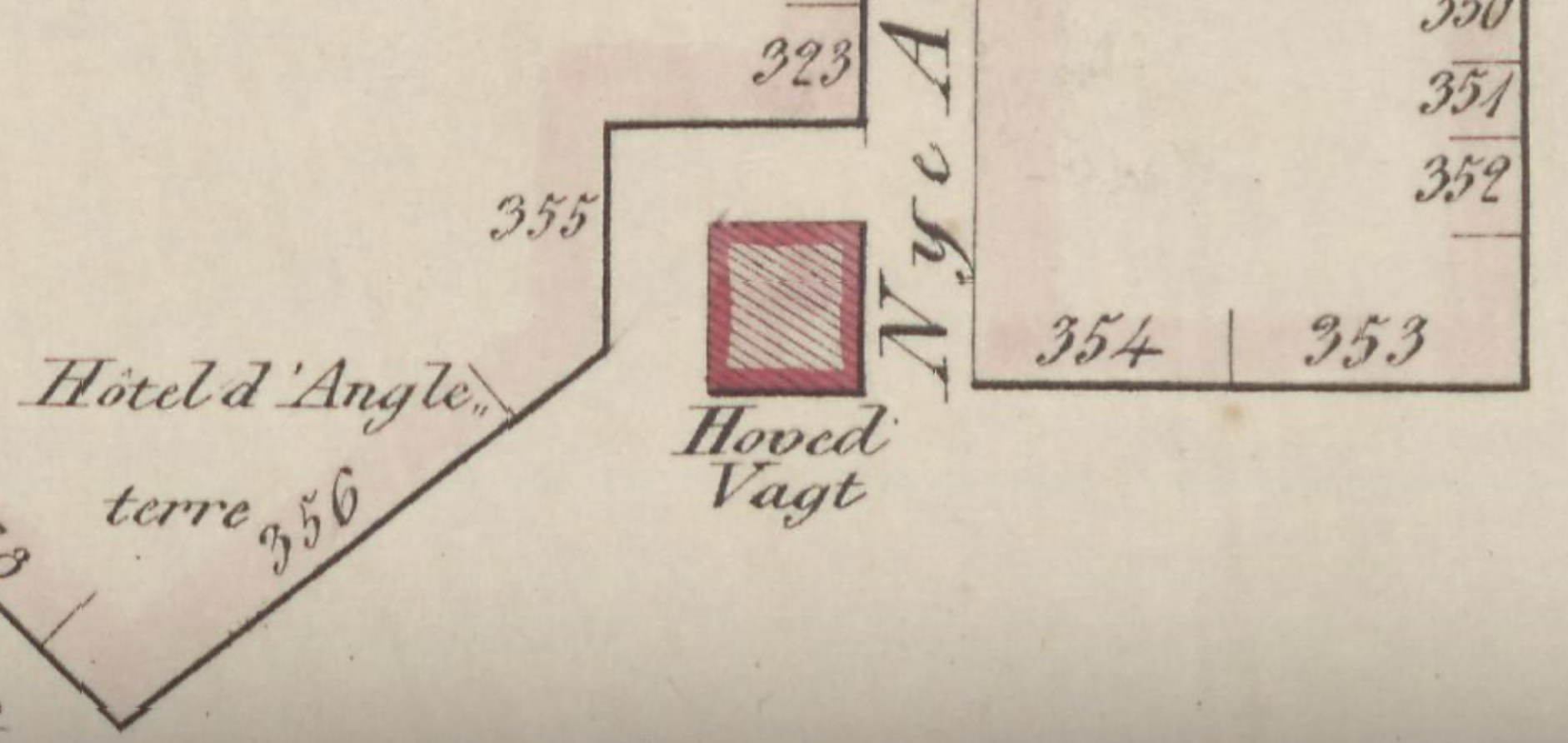
The Copenhagen detail brings streets and public spaces into view around Kierkegaard’s early adulthood. Compare its ordered plan with the 1840 daguerreotype in the visual collection: one organizes space; the other records a particular view.
The underlying archival sheet belongs to Sterm’s 1838–1841 map series and is dated 1839–1841 by Copenhagen City Archives. This is a historical map detail, not a reconstruction of Kierkegaard’s private movements.
The argument workshop
Faith and the difficulty of explanation
What makes Abraham so difficult for Johannes de silentio to understand?
Fear and Trembling places a biblical story under extraordinary pressure. The narrator’s difficulty is central: he admires faith while repeatedly refusing to pretend that he can explain or perform Abraham’s movement.
1. Begin with the narrative
Read Genesis 22 before the philosophical discussion. Keep the command, journey, threatened sacrifice, interruption, and promise in view rather than replacing the episode with a vague celebration of conviction.
2. Distinguish resignation from faith
The narrator’s contrast concerns what one gives up and how one expects to receive the finite again. Reducing the distinction to optimism loses its religious and existential stakes.
3. Preserve the ethical difficulty
Private certainty is not a general permission to harm others. Ask why the book makes justification so difficult and why the narrator’s inability matters to the reader’s judgment.
Return to the chapter’s primary-text anchor: Johannes de silentio, Fear and Trembling, preliminary discussion; in Selections from the Writings of Kierkegaard (1923).. These exercises are editorial prompts, not quotations from the philosopher.
Check the distinction
Read the answer and explanation
Johannes de silentio openly says that he cannot make the movement of faith The narrator’s stated limit is essential. His struggle should not be erased by turning the book into a universal license for conduct based on private assurance.
Continue the conversation
Follow the question into another room.
These are invitations to comparison. A shared question does not make different thinkers or traditions interchangeable.
The Bible
Return to the biblical setting of Genesis 22 before interpreting the philosophical retelling.
Explore this connection →The Torah
Recognize the shared ancient narrative and the distinct histories of its interpretation.
Explore this connection →Conscience before the city
Compare the difficulty of justification without equating Socrates’ case with Abraham’s.
Explore this connection →A Grief Observed
Read a different confrontation with faith, suffering, and the limits of easy explanation.
Explore this connection →Pause · question · discuss
Carry the argument further
Does Fear and Trembling tell readers to imitate Abraham’s action?
It provides no general permission to harm others on the basis of private conviction. Its narrator makes the ethical horror explicit and insists on the extraordinary difficulty of the faith he cannot himself perform.
What is infinite resignation?
In the book it is the movement of relinquishing a finite hope while retaining its inward significance. Faith is described as a further movement of receiving the finite again.
Why is Johannes de silentio important?
He admires Abraham but declares that he cannot understand or perform faith in the same way. That distance is part of the book’s philosophical structure.
The reading room
Primary texts and source notes
- Fear and Trembling: Hollander selectionsVerified short quotation and primary text; this public-domain selection is only part of the complete book.
- Fear and Trembling: Danish critical textComplete Danish work, including the three problemata.
- Critical edition indexPseudonyms and publication dates; The Book on Adler and Works of Love.
- Stanford Encyclopedia of PhilosophyInterpretive debates about faith and the ethical.