


Nature › Seasons
Nature · SeasonsA year in wild North Carolina
Fireflies that flash in unison in June. Rhododendron balds turning pink. Ridges on fire with color in October. Swans by the tens of thousands in January. Pick a season, or a month, and see what is happening outside right now.
By Christopher Adkins · The Lake Norman Brief · Huntersville, North Carolina
Choose a season to change the scene.
What is happening outside this month?
The calendar opens on the current month. Tap any month to plan ahead. Timing varies by elevation and by year, so treat dates as a guide.
Spring climbs the mountains


Spring in North Carolina does not arrive all at once. It climbs. Red maples color the swamps of the Coastal Plain in February, the Piedmont greens up in March and April, and the high peaks may not leaf out until May. Hikers can follow spring uphill for two months, catching the same wildflowers again and again at higher elevations.
The stars of the season are the spring ephemerals: bloodroot, trout lily, hepatica, spring beauty, Dutchman’s breeches and many trilliums. They bloom in the brief window after the soil warms and before the forest canopy closes, then set seed and fade by early summer. The rich coves of the Smokies and the slopes along the Blue Ridge Parkway are among the best wildflower destinations in North America.
In the Piedmont, flowering dogwood, the state flower since 1941, lights up woodland edges in April, along with redbud and wild azaleas. On the coast, Venus flytraps send up white flowers in May. It is also the season of song: frogs at night, and in late April and May, warblers and other migrants passing through on their way north.


Rhododendron, fireflies and cool summits

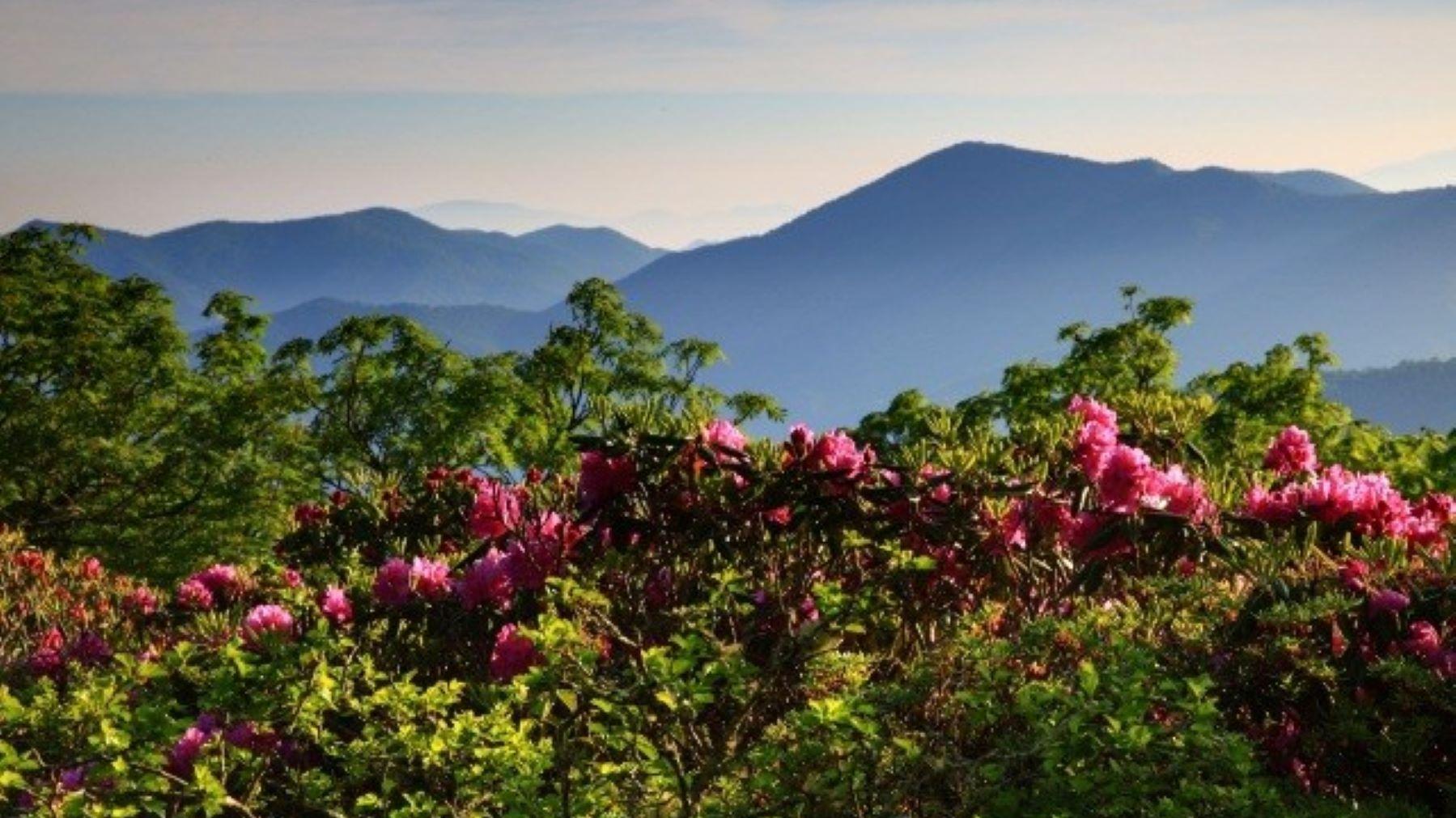
June belongs to the rhododendrons. The Catawba rhododendron, with rose-purple flowers, peaks on the high balds and ridges around mid-June. Craggy Gardens near Asheville and the Roan Highlands on the Tennessee line are the classic displays. Flame azalea glows orange on the same ridges. Later, the white rosebay rhododendron blooms along mountain streams.
Summer nights are firefly nights. Common lightning bugs flash over yards and fields statewide. In the mountains, the blue ghost firefly glows low over the forest floor, and in late May and June a single Smokies species flashes in synchrony. The After Dark guide explains how and where.
Heat drives many North Carolinians uphill. Because air cools about 3.5°F for every 1,000 feet of elevation, Mount Mitchell’s summit is often 20 degrees or more cooler than Charlotte on the same afternoon. On the coast, loggerhead turtles nest on summer nights and hatchlings emerge from late July on.


Why the leaves change color
North Carolina has one of the longest and most varied fall color seasons in the country, because its forests span more than 6,000 feet of elevation and an enormous diversity of tree species.


A leaf is green in summer because it is full of chlorophyll, the pigment that captures sunlight. Hidden beneath it all season are yellow and orange pigments called carotenoids. As nights lengthen in autumn, trees stop making chlorophyll and it breaks down, revealing the yellows of tulip poplars, hickories and birches.
The reds are different. Many trees, including red maples, sourwoods, blackgums, dogwoods and sassafras, actively make red and purple pigments called anthocyanins in autumn. Sunny days and cool nights that stay above freezing build the brightest reds. A long drought or a warm, cloudy fall can dull the show. A hard early freeze can end it.
Because cooler temperatures arrive first at high elevations, color moves downhill like a slow wave. The highest ridges often begin in late September, the High Country peaks around mid-October, and the Piedmont and coast follow into November.
Fall color estimator
Slide to an elevation, or tap a town, to see when color typically peaks there and watch the tree change.
Ten great fall color drives and walks


Swans, ice and empty beaches

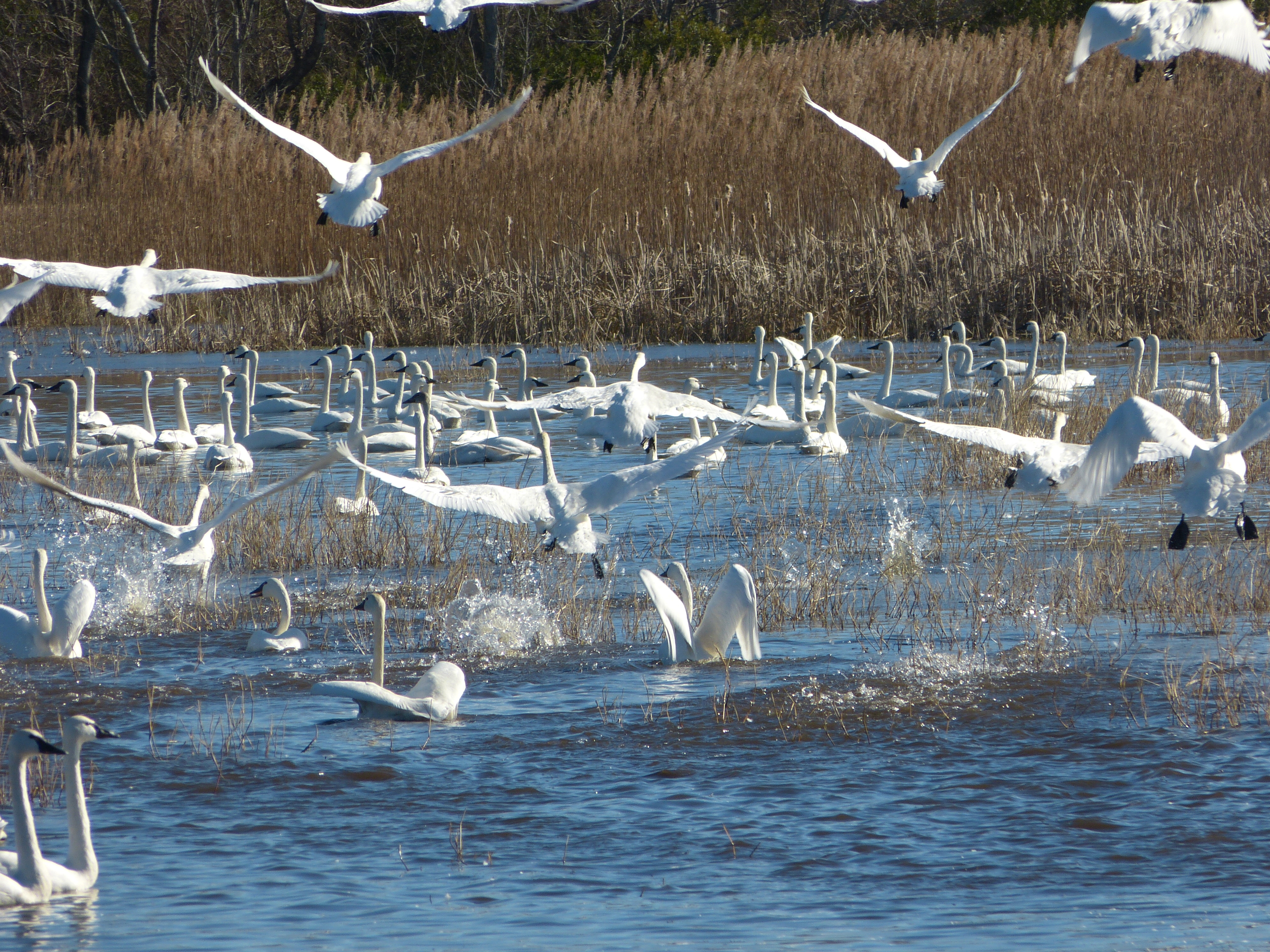
Winter is the secret season. On the eastern refuges, tundra swans arrive from the Arctic in late fall and gather in huge, noisy flocks with snow geese and ducks. Lake Mattamuskeet, Pocosin Lakes and Pea Island are the places to see them, and the white birds rising over dark water at sunrise are unforgettable.
In the mountains, freezing fog builds rime ice on spruce and fir, and the highest peaks can be as wintry as New England. Roads such as the Parkway close for ice, so many winter hikes start from lower trailheads. Bare trees also reveal what summer hides: old stone walls, stream terraces and long ridge views.
Winter evenings are the best time for stars, with long nights and dry air. The Geminid meteor shower in mid-December is often the year’s strongest. On the Outer Banks, a quiet beach and a lighthouse under rare snow make for some of the most striking pictures of the year.


How much cooler is it up there?
Enter the temperature where you are and pick a destination. This is why the seasons arrive at different times at different heights.
Seasons FAQ
When is peak fall color in North Carolina?
It depends on elevation. The highest ridges above about 5,000 feet often color in late September and early October. The Boone and Blowing Rock area usually peaks around mid-October, Asheville’s elevation later in October, and the Piedmont, including Lake Norman and Charlotte, in late October to mid-November. Weather can shift timing by a week or more.
Where is the best fall color in North Carolina?
The Blue Ridge Parkway, especially around Grandfather Mountain, Graveyard Fields, Mount Pisgah and Craggy Gardens, is the classic choice. The Smokies, Linville Gorge, Pilot Mountain and the Cherohala Skyway are also excellent.
When do the rhododendrons bloom at Craggy Gardens and Roan Mountain?
Catawba rhododendron usually peaks around mid-June, varying with the spring.
When can I see the synchronous fireflies?
Usually from late May to mid-June, for roughly two weeks, with timing that depends on spring temperatures.
When do tundra swans come to North Carolina?
They arrive in late fall and stay through winter, with numbers usually highest from December into February.
How much colder is it on Mount Mitchell?
On average air cools about 3.5°F per 1,000 feet. Mount Mitchell is about 5,900 feet higher than Lake Norman, so it is typically around 20°F cooler, and wind can make it feel much colder.
Sources and further reading
- Appalachian State University, Fall color reports by Dr. Howard Neufeld
- WFDD, High Country on schedule for mid-October peak (2024)
- National Park Service, Blue Ridge Parkway (road status and alerts)
- National Park Service, Craggy Gardens
- U.S. Fish and Wildlife Service, Mattamuskeet National Wildlife Refuge
- American Meteor Society, Meteor shower calendar
- USDA Forest Service, Fall colors

Christopher Adkins is a Huntersville, North Carolina attorney, the founder of Adkins Law, PLLC, and the editor of The Lake Norman Brief. A Charlotte native, former Army officer and former CMPD officer, he writes these guides to share the wild places that make North Carolina home.
Keep exploring wild North Carolina
 Nature atlas home
 Bears, elk, wolves & wild horses
 Blue Ridge Parkway
 Fireflies & night skies
 Outer Banks
 Lake Norman’s wild side
 Salamander capital
 Venus flytrap & carnivorous plants
 Mountains
 Piedmont
 Coast & Coastal Plain
 Waterfalls
 250 hiking trails
 Wildlife field guide
 Plants & trees
 Lakes & river basins
 Mount Mitchell & Kuwohi
 Nature by the numbers
 Intracoastal Waterway
 Article directory