
A history told in six pieces
Look closely at the queen in a modern set. There was a time when her ancestor could scarcely move. The history of chess is the history of ideas like that changing hands.
Explore the places
Map by OpenStreetMap contributors.An army small enough for a table
India · sixth–seventh centuriesImagine reducing an army to four kinds of fighting force. The infantry goes on foot. The cavalry can reach around obstacles. Elephants and chariots carry different expectations of reach and force. The name chaturanga evokes the four divisions of an Indian army. By roughly the sixth or seventh century, an eight-by-eight board held a game recognizable as an ancestor of chess. The exact inventor and the route of every early rule remain uncertain.
The portable board did something a real army could never do. A player could lose, put every piece back on its square, and try the same campaign again with a different plan. That ability to revisit a decision is still the heart of a good chess lesson.
Historical source →A king, a counselor, and a problem to solve
Persia and the Arabic-speaking worldAs the game traveled into Persia and through the Arabic-speaking world, shatranj developed a literature of positions to solve. The piece beside the king was a counselor, often called a vizier. It moved only a single square diagonally. An elephant, the distant relative of the bishop, leapt two diagonal squares. Put those two restrictions on a modern board and the long attacks familiar to us largely disappear.
A surviving ceramic set from Nishapur renders the forces as compact shapes. Paired projections can suggest the elephant’s tusks. A player did not need a literal animal for the piece to carry meaning. Today a tournament knight is immediately recognizable by its head, while a printed N does exactly the same work on a scoresheet.
Historical source →What the Lewis chessmen can tell us
Medieval Europe · the Isle of LewisThe carved kings, queens, bishops, mounted knights, and warders found on the Isle of Lewis make the board look like a medieval court. The solemn seated figures and shield-bearing warriors tell us how one culture pictured authority. They also remind us that finding a set in one place does not establish where its rules were invented. Its findspot and place of manufacture are different historical questions.
Look at the photograph below. The crown tells you the rank of a figure, but the face gives it a personality. That distinction survives even in a digital game. A rook can wear a bow tie and still travel along exactly the same ranks and files.
Historical source →

When the queen learned to cross the board
Europe · late fifteenth centuryGive a piece that could move only one diagonal step the combined range of a rook and a bishop. Suddenly the far corner is a possible target in a single move. The late-medieval transformation of queen and bishop movement accelerated attacks and changed the cost of leaving lines open. Opening a diagonal near your king now carried consequences that a shatranj player would scarcely recognize.
Printed manuals helped these ideas travel. A diagram and a short sequence let a reader in another city try the move, improve the defense, and pass the question along. A replay board is a descendant of that printed page.
Historical source →A painter watches a chess game


Follow the eyes around the table before looking at the board. One sister looks out toward us. Another lifts her hand. The youngest watches the older players. Anguissola makes a small domestic contest feel like a conversation we have walked into halfway through.
What can we learn from the painting?
It gives us evidence of how the artist chose to portray her sisters thinking, competing, and reacting to each other. It gives us less certainty about the exact move on the board. Historians and chess players both have to distinguish what they can see from what they infer.
A common set and a public championship
London and the United States · nineteenth centuryIn a club with several styles of pieces, a visitor might spend the first minutes of a game identifying the bishop. The Staunton pattern, introduced in 1849, made instant recognition part of tournament design. London’s 1851 international tournament helped turn a meeting between players into an event the public could follow.
In 1886 Wilhelm Steinitz and Johannes Zukertort contested the first generally recognized official world championship, across New York, St. Louis, and New Orleans. Steinitz won. He became associated with the argument that an attack should grow out of advantages in the position. In practice that can mean improving a badly placed knight before you send the queen toward the enemy king.
Historical source →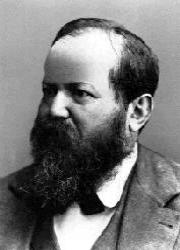

Vera Menchik and the contest for a world title
London · 1927FIDE was founded in 1924. Three years later London hosted the first official Chess Olympiad and the first Women’s World Championship. Vera Menchik won the women’s event and retained the title for the rest of her life. Her career also included competition against leading men in international tournaments.
A championship title and a rating answer different questions. A championship has conditions, opponents, and a decisive result. A rating estimates strength across rated games. Menchik’s place in history begins with the games she actually played. Follow a modern title match and a ranking list side by side to see that distinction at work.
Historical source →A match larger than its board
Reykjavík · 1972Boris Spassky faced Bobby Fischer in Iceland while audiences read the contest through the Cold War. The politics explain some of the extraordinary attention. The moves explain why the match still rewards study. A challenger had to manage a series of different positions against a reigning champion who could prepare for him between games. Fischer won the title.
To follow a match, keep two scores. One records the current board. The other records how much risk the match standings reward. A player who needs a win has different incentives from one for whom half a point will do. The legal moves are identical in either case.
Historical source →From Deep Blue to a coach in your browser
New York · 1997 to the online boardGarry Kasparov beat IBM’s Deep Blue in their 1996 match. Its successor won their six-game rematch in New York in 1997. The distinction matters. A single win, a match victory, and a claim about how people think are three separate propositions. The machine searched possible continuations and evaluated positions, while a world champion chose which questions to ask at the board.
Today a beginner can replay a grandmaster’s choice, turn off the hints, and test an alternative in seconds. Used well, an engine becomes a partner in asking why. Pick a move, write down the reply you expect, and only then ask Chester. Even when his suggestion is stronger, the difference between your line and his is the part worth studying.
Historical source →