


World War II · Eastern Front · June – August 1944
Operation Bagration: The Destruction of Army Group Centre, 1944
Sixteen days after D-Day, the Red Army struck the German Army Group Centre in Belorussia. In twelve days it tore a gap hundreds of miles wide in the German front; in eight weeks it reached the Vistula. It was the worst defeat in the history of the German army, and the least remembered great battle of the war in the West. Nine illustrated chapters, from the balcony to the Mound of Glory.
In June 1944, while the Western Allies fought in the hedgerows of Normandy, the Soviet Union launched the largest offensive of the war against the German Army Group Centre, which still held most of Belorussia three years after Operation Barbarossa. The Germans expected the blow in Ukraine. It fell in the forests and marshes of the center instead, and within two weeks Army Group Centre had ceased to exist as a fighting force.
Key facts
What happened
Army Group Centre held a great salient, the balcony, around Vitebsk, Orsha, Mogilev and Bobruisk, but in May 1944 it had been stripped of most of its tanks to meet the attack the Germans expected in the south (Chapter 1). The Red Army hid four fronts in the forests opposite it, and on the night of 19–20 June the partisans of Belorussia struck its railways all at once (Chapter 2). The offensive opened on 22 June. Vitebsk was surrounded in three days and Orsha fell on 26 June (Chapter 3); at Bobruisk Rokossovsky’s two blows, one straight out of the marshes, destroyed the German Ninth Army (Chapter 4).
The German Fourth Army, ordered to hold the Dnieper, retreated too late, and on 3 July Soviet tanks entered Minsk, trapping about 100,000 Germans to the east (Chapter 5). Hitler dismissed the army group’s commander, and on 17 July some 57,000 prisoners were marched through Moscow (Chapter 6). The Red Army drove on to Vilnius, the Gulf of Riga, Majdanek and the Vistula, where it halted as the Warsaw Uprising was crushed (Chapter 7). Chapter 8 tells the Allied side, from Teheran to the Poltava raid, and Chapter 9 counts the cost and visits the memorials.
Why it matters
Bagration was the greatest single defeat the German army suffered in the Second World War, larger in losses than Stalingrad and far faster. Coming in the same weeks as Normandy, it meant that Germany could no longer shift its reserves from one front to the other, and together the two offensives broke the German army in the summer of 1944. It freed Belarus from an occupation that had killed one in four of its people, it led to the liberation of the first great Nazi camp at Majdanek, and in Poland and the Baltic states it brought a new Soviet domination that would last until 1989–91.
The Carolinas connection
Liberty ships from Wilmington
Lend-Lease supplies, including the American trucks that carried the Red Army across Belorussia, crossed the oceans in Liberty ships like the 125 built at the North Carolina Shipbuilding Company in Wilmington. See Chapter 8 and Chapter 9.
How to use this collection
Read the nine chapters in order for the whole story, or start anywhere: chapters 1–2 set the scene and the plan, chapters 3–6 tell the destruction of Army Group Centre, chapter 7 follows the advance to the Vistula, chapter 8 tells the Allied side and chapter 9 looks back. Each chapter has photographs, maps or charts, a command decision to try and sources. The maps below can be played phase by phase; select any place for details and a link to the chapter that tells its story.
The collection
9 chapters
Read in order for the full story, or start anywhere.
 01Spring 1944The Balcony: Army Group Centre and the Summer of 1944Three years after Barbarossa, the German Army Group Centre still held a great bulge of Belorussia. Why Hitler expected the blow to fall in the south, and why Stalin chose to strike in the forests and marshes instead.02April – 21 June 1944Maskirovka: Deception, Partisans and the PlanHow the Red Army hid four fronts, 1.6 million men and nearly 6,000 tanks; the rail war of 140,000 partisans; and the plan named for a prince of 1812.
 0322–28 June 1944Vitebsk and Orsha: The Northern Jaws CloseThe 1st Baltic and 3rd Belorussian Fronts surround Vitebsk, break the Orsha highway and destroy the German LIII Corps in three days.0424–29 June 1944Bobruisk: Through the Marshes, and the End of the Ninth ArmyRokossovsky’s two blows, one of them straight through the swamps the Germans thought impassable, trap the Ninth Army east of the Berezina.0523 June – 11 July 1944Mogilev, the Berezina and the Liberation of MinskThe German Fourth Army retreats too late, the tanks race across Napoleon’s river, and Minsk is freed on 3 July with 100,000 Germans trapped to the east.06July 1944The Collapse of Army Group Centre and the Parade of the DefeatedTwenty-five divisions gone in a fortnight, the July plot, and the morning 57,000 German prisoners were marched through the streets of Moscow.075 July – 19 August 1944To the Vistula and the Baltic: Vilnius, Majdanek and WarsawVilnius and the Home Army, the Gulf of Riga, the liberation of Majdanek, the bridgeheads over the Vistula and the tragedy of the Warsaw Uprising.
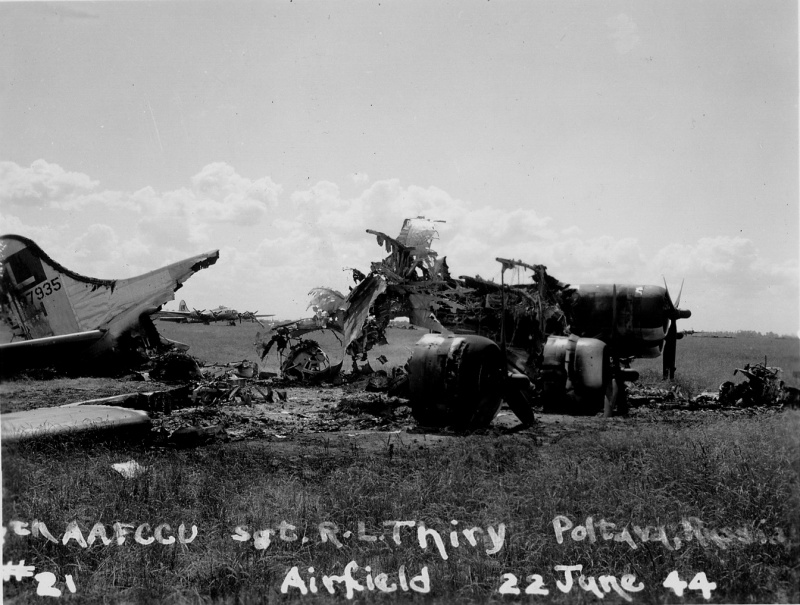
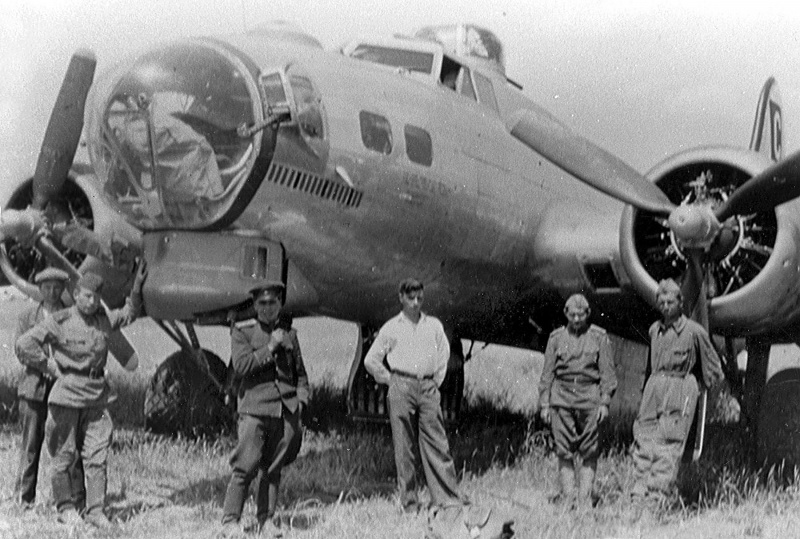 08November 1943 – September 1944Normandy, Lend-Lease and the Poltava Raid: The Allies and BagrationThe promise made at Teheran, two offensives sixteen days apart, American trucks on Belorussian roads, French pilots over the Niemen, and the night the Luftwaffe burned the B-17s at Poltava.
 091944 – todayThe Cost and the Memory: Belarus and the Forgotten VictoryWhat Bagration won and cost, why the West barely remembers it, the North Carolina thread, and the memorials of Belarus from the Mound of Glory to Khatyn.
Maps
Three interactive maps
The first map shows the whole Eastern Front from Moscow to Warsaw in the summer of 1944, with the American shuttle bombers at Poltava. The second follows the encirclements in Belorussia day by day. The third follows the drive to the Vistula and the Baltic. Press Play, or choose a phase.
Interactive map 1 of 3 · the Eastern Front
The Eastern Front, June–August 1944
Interactive map 2 of 3 · the encirclements
The encirclements in Belorussia, 22 June – 4 July 1944
Interactive map 3 of 3 · to the Vistula and the Baltic
To the Vistula and the Baltic, July–August 1944
Forces
Who fought
The main formations in this collection. Filter by side.
Interactive · filter
Who fought in Operation Bagration, June–August 1944
Broke through north of Vitebsk and drove to Polotsk, Šiauliai and the Gulf of Riga.
Chapter 3 →Encircled Vitebsk, took Orsha and Minsk and drove on to Vilnius and Kaunas.
Chapter 3 →Took Mogilev and pushed the German Fourth Army back across the Berezina.
Chapter 5 →Destroyed the Ninth Army at Bobruisk, then took Lublin and Brest and reached the Vistula.
Chapter 4 →Drove from Orsha to the Berezina at Borisov and on to Minsk.
Chapter 5 →Struck the German railways on the night of 19–20 June and harried the retreat.
Chapter 2 →About 849,000 men in four armies; most of it destroyed in twelve days.
Chapter 1 →Lost the LIII Corps at Vitebsk in the first days.
Chapter 3 →Retreated too late and was trapped east of Minsk.
Chapter 5 →Encircled and destroyed at Bobruisk by 29 June.
Chapter 4 →Fought for Vilnius in Operation Ostra Brama and rose in Warsaw on 1 August.
Chapter 7 →Fought on the Vistula near Dęblin and tried to cross to Warsaw in September.
Chapter 7 →Shuttle bombers flew from Soviet bases; more than 40 B-17s destroyed at Poltava on 21–22 June.
Chapter 8 →Flew Yaks with the 1st Air Army and earned the name “Niemen.”
Chapter 8 →American trucks, above all the Studebaker US6, carried much of the Red Army.
Chapter 8 →You decide
Command decisions
Every chapter puts you in a commander’s place before showing what actually happened.
Command decision · you decide
Where will the blow fall?
You are on the German army staff in May 1944. Your intelligence points to the Soviet tank armies in Ukraine. Army Group Centre in Belorussia asks for reserves. You do not have enough panzers for both.
Numbers
By the numbers
Every figure carries its source. Where Soviet and German counts differ, both are given.
Soviet and German strength, June 1944
People
Commanders and witnesses
Select a name for the chapter where they appear.
Insisted on two blows at Bobruisk; promoted Marshal of the Soviet Union during the offensive.
The youngest front commander in the Red Army; took Vitebsk, Orsha, Minsk and Vilnius.
Broke through north of Vitebsk and reached the Gulf of Riga.
Took Mogilev and pursued the Fourth Army to the Berezina.
Coordinated the northern and southern fronts for Moscow.
Led horsemen and tanks through the marshes to Slutsk and Baranovichi.
Obeyed Hitler’s orders to hold; dismissed on 28 June.
Rebuilt a front on the borders of East Prussia and the Vistula.
Relieved on 27 June after his army was trapped at Bobruisk.
A leader of the July plot; took his own life on 21 July near Białystok.
Led about 1,200 people out of the Naliboki forest in July 1944.
Led the first American shuttle mission to Soviet bases on 2 June 1944.
Myth or fact
What people get wrong
Myth or fact · open each card
Six things people get wrong
Bagration was a reaction to D-Day.
It was promised at Teheran in 1943 and planned in the spring of 1944 to coincide with the landing in France. See Chapter 8.
The Germans saw it coming.
It was a single battle.
It was a series of linked operations by four fronts over eight weeks. See Chapter 2.
Stalingrad was the Germans’ worst defeat.
Bagration cost Army Group Centre more men, faster. See Chapter 6.
The Western Allies had nothing to do with it.
American trucks carried much of the Red Army, and American bombers flew from Soviet bases. See Chapter 8.
The Red Army simply chose not to save Warsaw.
Exhaustion, a German counterattack and Stalin’s politics all played a part; historians still argue the balance. See Chapter 7.
Gallery · 12 photographs · select to enlarge
Operation Bagration in photographs





Gallery · memorials · select to enlarge
Belarus today


Before and after
Then and now
Drag the slider to compare.


Quiz
Test yourself
Eight questions. Every answer is explained in the chapters.
Score: answer a question to begin.
1. On what date did Bagration begin?
Three years to the day after Barbarossa, and sixteen days after D-Day. See Chapter 2.
2. Where did the Germans expect the Soviet summer offensive?
They moved their panzers south accordingly. See Chapter 1.
3. Who was Bagration?
Prince Pyotr Bagration was mortally wounded at Borodino. See Chapter 1.
4. What did the partisans do on the night of 19–20 June?
Thousands of demolition charges went off. See Chapter 2.
5. How did Rokossovsky break through at Bobruisk?
The southern blow broke through fastest. See Chapter 4.
6. When was Minsk liberated?
Belarus now marks its Independence Day on 3 July. See Chapter 5.
7. What happened in Moscow on 17 July 1944?
Their generals marched at the head. See Chapter 6.
8. What destroyed more than 40 American B-17s on 21–22 June 1944?
The bombers had just flown a shuttle mission to Soviet bases. See Chapter 8.
Questions
Frequently asked questions
What was Operation Bagration?
Operation Bagration was the Soviet summer offensive of 1944 in Belorussia (today Belarus). Between 22 June and 19 August 1944 four Soviet fronts destroyed most of the German Army Group Centre, liberated Belorussia and much of Lithuania and eastern Poland, and reached the Vistula and the borders of East Prussia. See Chapter 1 and Chapter 2.
Why was it called Bagration?
It was named for Prince Pyotr Bagration, the Georgian-born Russian general mortally wounded fighting Napoleon at the Battle of Borodino in 1812. The name is said to have been chosen by Stalin. See Chapter 1.
When did Bagration begin, and how was it connected to D-Day?
It began on 22 June 1944, three years to the day after the German invasion of the Soviet Union and sixteen days after D-Day. At Teheran in 1943 Stalin had promised a great offensive to coincide with the Allied landing in France, so that Germany could not move troops between fronts. See Chapter 8.
How big was it?
The Soviet fronts committed about 1.67 million combat and support troops, 5,818 tanks and self-propelled guns, about 32,700 guns and mortars and 7,799 aircraft. Army Group Centre had about 849,000 men, fewer than 500 operational tanks and assault guns and about 600 serviceable aircraft. See Chapter 2.
How many Germans were lost?
By the count of the German historian Karl-Heinz Frieser, from German records, about 399,000: 26,397 killed, 109,776 wounded and 262,929 missing and captured. Soviet wartime estimates were higher, about 540,000. Twenty-five divisions were lost in the first twelve days alone. See Chapter 6.
How many Soviet soldiers were lost?
By the Soviet figures, 180,040 killed and missing and 590,848 wounded and sick, more than 770,000 in all. See Chapter 9.
What was the Parade of the Defeated?
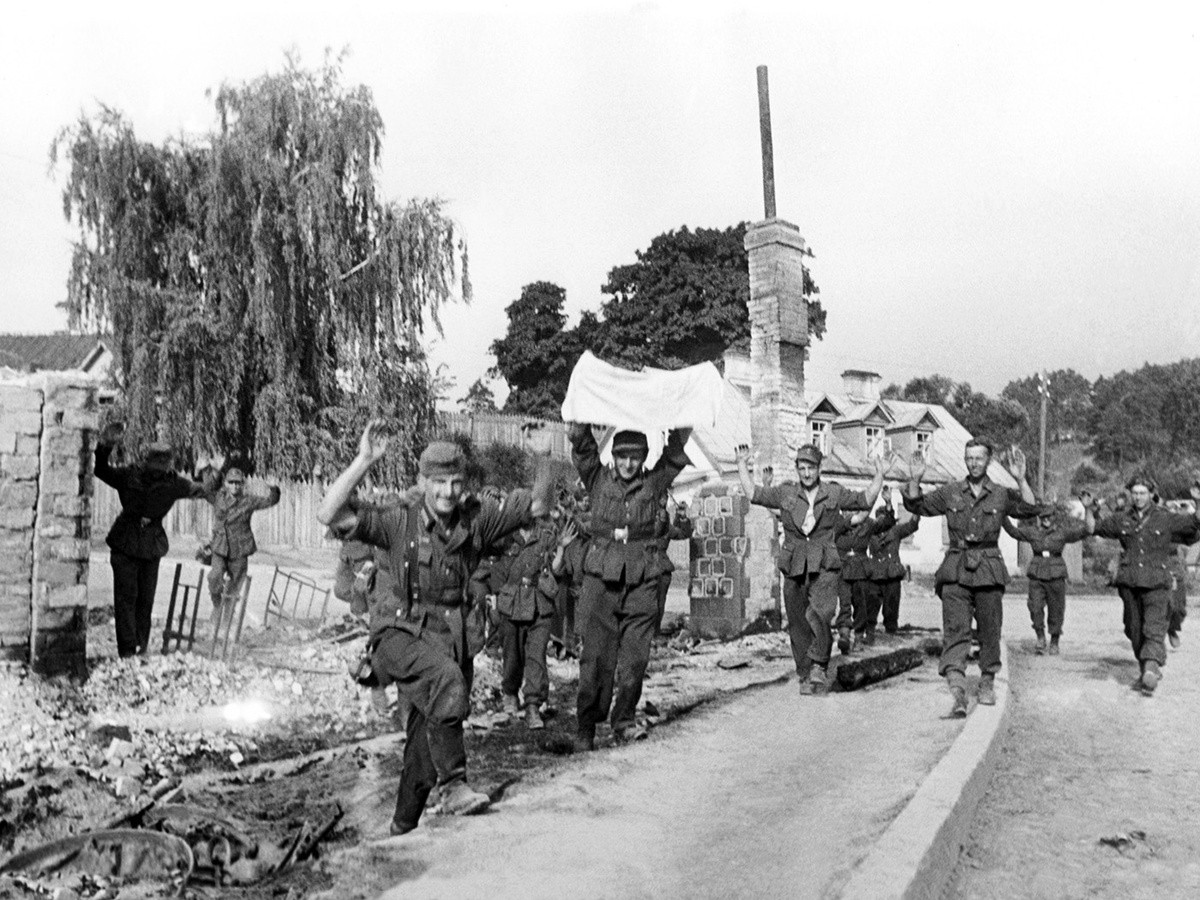
On 17 July 1944 about 57,000 German prisoners captured in Belorussia, led by their generals, were marched through the streets of Moscow. Street-cleaning trucks followed to wash the pavements. See Chapter 6.
Why did the Red Army stop outside Warsaw?
The Warsaw Uprising began on 1 August 1944 as Soviet tanks approached the city. A German counterattack mauled the Soviet spearhead, the Soviet armies were exhausted after advancing hundreds of miles, and Stalin had political reasons not to help the Home Army. Historians still argue about the balance. The rising was crushed by 2 October. See Chapter 7.
Did Americans take part?
Not on the ground. But American Lend-Lease trucks, especially the Studebaker US6, carried much of the Red Army across Belorussia, and American bombers flew shuttle missions from Soviet airfields at Poltava and Mirgorod; on the night of 21–22 June 1944 a German raid on Poltava destroyed more than 40 B-17s. See Chapter 8.
Why is Bagration so little known in the United States?
It came just after D-Day, the Soviets released little about it, Western correspondents were rarely allowed near the front, and the Cold War made Soviet victories unpopular subjects. Only in recent decades have historians writing from Soviet archives made its scale widely known. See Chapter 9.
Sources
Sources and further reading
- Wikipedia, “Operation Bagration” — a general summary with references, used to cross-check dates, strengths and losses (Frieser; Glantz and House)
- Imperial War Museums, “Operation Bagration: The Greatest Military Defeat of All Time?” — force ratios, the partisans’ rail attacks, the advance and the losses
- Wikipedia, “Bobruysk offensive” — Rokossovsky’s two blows, the pocket and the end of the Ninth Army
- Wikipedia, “Parade of the Vanquished” — the march of German prisoners through Moscow on 17 July 1944
- United States Holocaust Memorial Museum, “Liberation of Lublin-Majdanek” — the liberation of Majdanek on 23 July 1944
- National Museum of the U.S. Air Force, “Operation Frantic: Shuttle Raids to the Soviet Union” — the shuttle bases and the Poltava raid
- Air & Space Forces Magazine, “The Poltava Debacle” — the German raid on Poltava on 21–22 June 1944
- Wikipedia, “Studebaker US6 2½-ton 6×6 truck” — the American truck that carried much of the Red Army in 1944
- NCpedia, “Liberty Ships” — the North Carolina Shipbuilding Company at Wilmington
- Memorial Museums, “State Memorial Khatyn” — Khatyn and the destroyed villages of Belarus
- Wikipedia, “Mound of Glory” — the memorial on the Moscow highway east of Minsk
More from The Lake Norman Brief
The Lake Norman Brief · History collections
Keep reading the Second World War
Every collection on lkn-law.com is free to read and built from official histories, archival photographs and primary sources. The Lake Norman Brief is published by Christopher Adkins of Adkins Law, PLLC in Huntersville, North Carolina.
Operation Bagration collectionAll World War II collectionsThe Battle of Berlin