

The University of North Carolina at Charlotte (UNC Charlotte) is the largest public university in the Charlotte metropolitan area and one of the fastest-growing institutions in the state. With more than 30,000 students and a growing research profile, it stands today as North Carolina’s urban research university — a place where local roots and global ambition meet. Its story, however, began in much humbler circumstances: a night school for returning World War II veterans.
Postwar Beginnings (1946)
In the fall of 1946, classrooms at Central High School in Charlotte opened to hundreds of young men and women eager to use their G.I. Bill benefits. This was the Charlotte Center of the University of North Carolina, one of fourteen temporary extension centers created statewide to serve veterans.
That first semester, 278 students enrolled, most of them recently discharged servicemen looking to build new futures through education. The classes were small, the setting modest, but the demand was undeniable: Charlotte needed permanent access to higher education.
Though the state planned to close the centers after just a few years, Charlotte’s story would prove different. A mathematics instructor named Bonnie Cone stepped into leadership, and her determination ensured that higher education would not vanish from the Queen City.
Charlotte College Finds a Home
Through the 1950s, Charlotte College operated out of borrowed and makeshift facilities — classrooms at Central High, shared space in local schools, and temporary offices that reflected both the institution’s modest resources and its determination to survive. Enrollment, however, was climbing, and community leaders pressed for a permanent home.
That dream became reality in 1961, when Charlotte College secured land on the northeastern edge of the city and opened its first campus buildings. Two modest structures rose from former farmland along what would later become University City Boulevard. The site, on what was then the rural edge of Mecklenburg County, would eventually grow into today’s 1,000-acre University City campus.
The location was chosen with care. It was close enough to Uptown Charlotte to remain accessible, yet far enough out to offer room for decades of growth. The choice proved wise: the new campus quickly became a magnet not just for students in Charlotte and Mecklenburg County, but also for families in nearby towns like Davidson, Mooresville, and Statesville, who had long sought an affordable path to higher education close to home.
By the early 1960s, the new campus symbolized permanence and ambition. Charlotte College was no longer just a stopgap for veterans or a city-supported junior college — it was a young institution ready to grow into a full-fledged university.
Joining the UNC System
The early 1960s marked a turning point for Charlotte College. Enrollment was climbing, the new campus was taking shape, and pressure was mounting to elevate the institution beyond its two-year status. Community leaders, legislators, and advocates like Bonnie Cone argued that the Charlotte region — one of the state’s largest and fastest-growing metropolitan areas — deserved a full four-year university.
In 1964, the North Carolina General Assembly approved Charlotte College’s transition into a four-year institution. Just one year later, in 1965, the college officially became the University of North Carolina at Charlotte, the fourth campus in the statewide UNC System.
This change transformed Charlotte’s educational landscape. Students no longer had to transfer elsewhere after two years; they could complete their bachelor’s degrees in the city. For many families in Charlotte, Huntersville, Cornelius, Davidson, Mooresville, and Statesville, this made higher education both more affordable and more accessible.
UNC Charlotte quickly expanded its academic reach. In 1969, the university introduced its first graduate programs, and in 1992 it was authorized to offer doctoral degrees. These milestones positioned UNC Charlotte as more than a commuter school — it was becoming a comprehensive research university.
By the early 2000s, UNC Charlotte had emerged as the research anchor of the southern Piedmont. Its mission complemented the work of nearby institutions such as Queens University and Davidson College, while providing access and opportunity on a scale that smaller private colleges could not. For families who might otherwise have sent their children away to Chapel Hill, Raleigh, or even out of state, UNC Charlotte represented an affordable and ambitious local choice.
Growth Into a Research University
UNC Charlotte’s evolution has mirrored the growth of the Charlotte region itself. What began as a small commuter campus is now a major metropolitan university serving more than 30,000 students each year. Its reach stretches across North Carolina, drawing students from the mountain towns of Boone and West Jefferson, the foothills of Wilkes County, and the Lake Norman communities of Newton, Troutman, Denver, Terrell, Mooresville, and Sherrills Ford.
The university’s rise unfolded in tandem with Charlotte’s own transformation. As the city grew from a textile and banking hub into one of the nation’s fastest-growing metropolitan areas, UNC Charlotte expanded to meet new economic and cultural demands. It became a vital partner to Charlotte’s businesses, civic organizations, and surrounding towns, anchoring higher education in the heart of the southern Piedmont.
UNC Charlotte’s academic strengths reflect this partnership. The William States Lee College of Engineering has long supported the region’s infrastructure and energy sectors. The Belk College of Business produces graduates for the banking and finance industry that made Charlotte a national center of commerce. The College of Computing and Informatics is central to the city’s growth in technology and data science. Programs in urban policy, health research, and education tie directly into the needs of one of America’s most dynamic cities.
These strengths culminated in 2021, when UNC Charlotte achieved the Carnegie R1 classification, the highest designation for research universities in the country. The recognition placed UNC Charlotte alongside North Carolina’s flagship institutions, affirming its role not only as a regional anchor but as a university with national and global influence.
For families across the Charlotte metro and the Lake Norman region, UNC Charlotte represents more than access to higher education — it’s a bridge between local roots and world-class opportunity.
A Legacy of Spirit and Resilience
The 49ers nickname captures the very essence of UNC Charlotte’s history. Adopted in 1949, the year Charlotte College was saved from closure, it became a symbol of determination and survival against the odds. The name also draws on the region’s gold-mining heritage — a reminder that in the early 1800s, Charlotte was the site of the first major U.S. gold rush, decades before California.
That spirit of grit echoes deeper still in the city’s Revolutionary War past. In 1780, when British General Lord Cornwallis marched into Mecklenburg County, he found such fierce resistance that he branded Charlotte a “Hornet’s Nest of Rebellion.” The phrase became part of the city’s identity and today connects directly to UNC Charlotte’s own resilient character.
Traditions reinforce this spirit on campus. Norm the Niner, the pickaxe-carrying mascot, personifies the hard work and toughness associated with miners and pioneers. The Miner Statue outside the Student Union, where graduating seniors dip their class rings, symbolizes both continuity and achievement. Wear Green Wednesday rallies students and alumni each week, while the echo at Star Quad is a playful reminder of the community’s shared spirit.
This legacy extends beyond symbols. UNC Charlotte has become a gateway for diverse student populations:
- First-generation students, breaking new ground for their families.
- Veterans, connecting back to the university’s origin under the G.I. Bill.
- International scholars, bringing global perspectives to Charlotte’s urban campus.
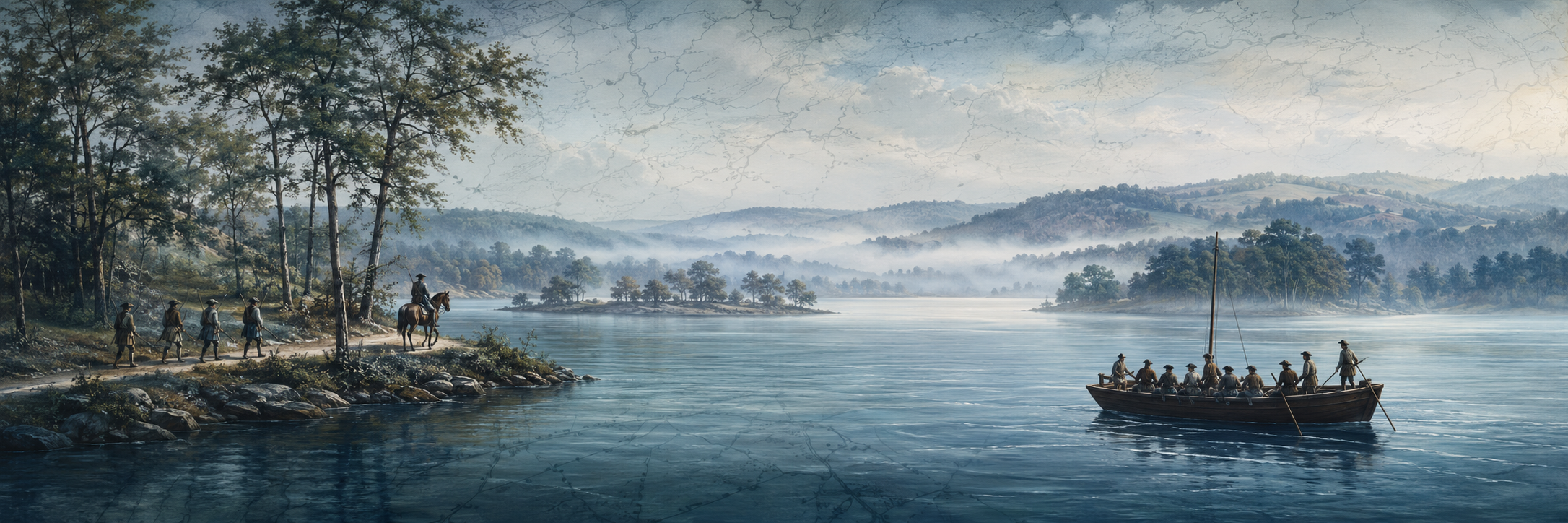
From the Revolutionary battlefield at the Battle of Cowan’s Ford on the Catawba River, to the present-day classrooms filled with students from across the region — Huntersville, Cornelius, Davidson, Troutman, Denver, Sherrills Ford, Mooresville, and beyond — the spirit of resilience defines UNC Charlotte. It is the same persistence that carried the city through war, industry, and reinvention, now carried forward by the university that bears its name.
UNC Charlotte in Context
The story of UNC Charlotte is inseparable from the wider history of higher education in North Carolina. Its founding in 1946 aligned with a national wave of postwar institutions created to serve veterans, but it also reflected deeper patterns in the state: how geography, identity, and politics shaped access to education across regions.
In the Piedmont, where Charlotte’s banking and textile industries were booming, Charlotte College emerged as a solution for a fast-growing metropolitan population. Its rise paralleled statewide debates over how to balance investment between the long-established institutions in the east and the underserved areas in the west.
In Western North Carolina, communities often referred to as the “Lost Provinces” struggled with isolation and limited access to higher education. The earlier creation of Appalachian State in Boone — first a teacher’s college and later a full university — reflected efforts to bring opportunity to mountain communities. Similar stories played out in Wilkes County and nearby towns like West Jefferson, where residents looked to schools like App State to anchor their futures.
UNC Charlotte, by contrast, was born directly out of the needs of postwar veterans. It was not a teacher’s college that grew into a comprehensive university but a night school created to meet an urgent demand for higher education. Its evolution was shaped by urban momentum, making it unique among North Carolina’s public universities.
Placed alongside institutions such as Davidson College and Queens University (and of course, Louisiana State University (LSU))— both private colleges with 19th-century roots — UNC Charlotte’s late-20th-century origins underscore its modern identity. It is the state’s urban research university, carrying the legacy of the G.I. Bill while serving as a bridge between the traditions of older colleges and the demands of a metropolitan future.
In this way, UNC Charlotte connects to a larger narrative: the expansion of opportunity across North Carolina, the balancing of east–west divides, and the ongoing question of how education defines identity in regions once thought peripheral — from the “Hornet’s Nest of Rebellion” in Charlotte to the Lost State of Franklin in the mountains.
Conclusion
From a modest night school for returning soldiers to a nationally recognized Carnegie R1 research institution, UNC Charlotte’s journey reflects the story of the modern South: pragmatic, resilient, and ambitious. Its growth was powered by community determination, visionary leadership, and the steady belief that access to education could transform lives.
Today, UNC Charlotte enriches not only the Queen City itself but also the surrounding communities across the Lake Norman region — from Huntersville and Cornelius to Mooresville, Troutman, Terrell, Denver, and Sherrills Ford. Families who once might have had to send students to Chapel Hill, Raleigh, or out of state can now look to a comprehensive, world-class university in their own backyard.
The university’s legacy also connects to the larger history of North Carolina. Like Boone’s App State in the mountains, or Davidson College with its deep Presbyterian roots, UNC Charlotte represents how higher education adapts to meet local needs. Where the Lost Provinces of Western North Carolina sought connection through teacher colleges and regional schools, Charlotte created its own pathway — a university born not of tradition but of necessity, forged from the demand of veterans returning from war.
In that sense, UNC Charlotte embodies the dual spirit of North Carolina’s past and present: the Hornet’s Nest of Rebellion that defied Cornwallis, and the entrepreneurial city that grew into a banking and innovation hub. It stands as both anchor and gateway — a cornerstone of higher education that continues to shape the future of Charlotte, Lake Norman, and the entire state.
About Adkins Law, PLLC
At Adkins Law, PLLC, we’re proud to serve families and individuals across Huntersville, Concord, and the greater Lake Norman region. Just as UNCC grew from humble roots into a cornerstone of opportunity for our community, our practice is built on dedication, resilience, and trust. Whether you need guidance in family law, estate planning, or mediation, our team is here to provide the knowledge and advocacy you deserve.



Leave a Reply