



China–Burma–India Theater · India · Chapter 9 of 9 · 1944 – today
For Your Tomorrow: Cost and Memory
A cemetery on a tennis court, an epitaph spoken every November, the trials that hastened Indian independence and the battlefields today.
The battle that Slim called the turning point of the Burma war was almost unknown in Britain for half a century and not much better known in India. Its best-known words are on a stone beside a road in Nagaland.
Key facts
The epitaph
The Kohima War Cemetery lies on the slope of Garrison Hill, on the terraces of the Deputy Commissioner’s garden. The white lines of the tennis court are marked permanently in concrete among the graves. The Commonwealth War Graves Commission cares for 1,420 Commonwealth burials of the Second World War there, and a memorial at the top of the hill carries the names of 917 Hindu and Sikh soldiers who were cremated according to their faith.
At the foot of the cemetery, beside the road, stands the memorial of the British 2nd Division: a tall rough stone of the kind Nagas raise to their own dead, hauled into place by Naga villagers. On it is cut the verse now known everywhere as the Kohima Epitaph:
When you go home, tell them of us and say,
For your tomorrow, we gave our today.
The words are adapted from an epitaph written during the First World War by the English classicist John Maxwell Edmonds, who modeled it on the Greek epitaph for the Spartans at Thermopylae. They are spoken at remembrance services across the Commonwealth every November.
Gallery · 8 photographs · select to enlarge
Kohima War Cemetery


Imphal remembers
Imphal has two Commonwealth cemeteries: Imphal War Cemetery, with about 1,600 burials, and the Imphal Indian Army War Cemetery, with more than 800 and a cremation memorial to nearly as many again. For decades after 1944 the battlefields themselves were little visited. Manipur and Nagaland were closed to most foreigners, and the people who had lived through the fighting, whose villages had been bombed by one side and requisitioned by the other, were rarely asked what they remembered.
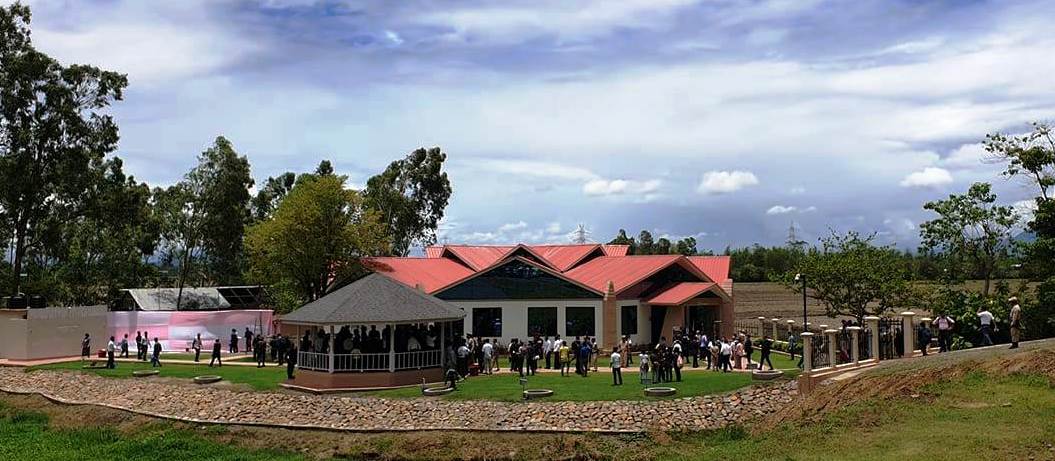
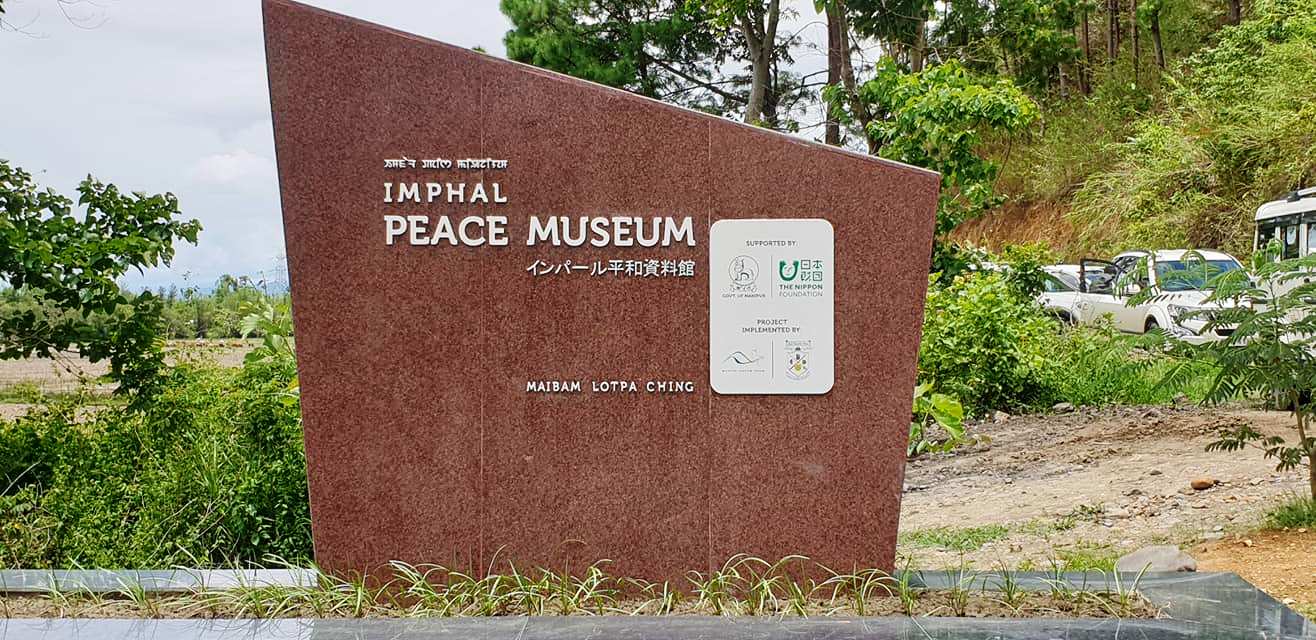
That has changed. Local historians and guides have mapped the positions on the Shenam Saddle, at Nungshigum and along the Tiddim road, and families from Britain, India, Japan and Nepal now come to find them. At Red Hill, Maibam Lokpa Ching, where a Japanese battalion was destroyed in May 1944, a Japanese war memorial, the India Peace Memorial, was dedicated in 1994, and the Imphal Peace Museum opened beside it in June 2019, on the seventy-fifth anniversary, with support from the Nippon Foundation. Its displays give as much room to the Manipuri civilians as to the armies.

The trials at the Red Fort
The Indian National Army lost perhaps half its men on the Imphal front, most of them to hunger and disease in the retreat. Subhas Chandra Bose was reported killed in an air crash on Taiwan in August 1945. That autumn the British authorities put three captured INA officers, a Hindu, a Muslim and a Sikh, on trial for treason at the Red Fort in Delhi. It was a serious misjudgment. Whatever Indians had thought of the INA’s alliance with Japan, the trial made its soldiers into patriots. Congress and the Muslim League both took up their defense, there were riots in Calcutta and Bombay, and the sentences were remitted.
In February 1946 sailors of the Royal Indian Navy mutinied. The British government concluded that it could no longer rely on Indian servicemen to hold India by force. Independence came in August 1947. Historians still argue over how much weight the INA should carry in that story. What is not in dispute is that the two and a half million Indians who volunteered for the British Indian Army, the largest volunteer army in history, and the few tens of thousands who joined the INA, both believed they were fighting for India.

Britain’s greatest battle
In April 2013 the National Army Museum in London asked the public and a panel of historians to choose Britain’s greatest battle. The shortlist included Waterloo, Rorke’s Drift, D-Day and Aliwal. The winner, to general surprise, was Imphal and Kohima. The case made for it was simple: it was a victory against a formidable enemy, won on ground and in weather as hard as any in the war, by an army that had been beaten two years earlier, and it was decisive.
It was also, in the main, an Indian victory. Most of the infantry who held the Shenam Saddle and Bishenpur and retook Nungshigum were Indian and Gurkha soldiers, led by Indian and British officers together. Slim’s Fourteenth Army may have been the most diverse army of the war, with men from every province of India, from Nepal, from Britain, and from East and West Africa, supported by American and British airmen. It called itself forgotten, and for a long time it was.
Gallery · 6 photographs · select to enlarge
The ground today




Visiting
Kohima is the capital of the Indian state of Nagaland and Imphal the capital of Manipur. Both have airports or are within a few hours’ drive of one, and both cemeteries are open daily. Indian citizens from other states need an Inner Line Permit for Nagaland and Manipur; rules for foreign visitors change, and security conditions in Manipur in particular should be checked before travel. The Kohima Museum in York, England, run by the 2nd Division’s successors, holds the division’s records of the battle and is open by appointment.
People, places and pages in this chapter
Sources and further reading
- Commonwealth War Graves Commission, “Kohima War Cemetery” — the number of burials, the cremation memorial and the tennis court
- The Kohima Museum, York, “Memorials” — the 2nd Division memorial and the epitaph
- Hemant Singh Katoch, “The Battle of Imphal: March–July 1944,” Journal of Defence Studies (2014) — the Imphal battlefields, Red Hill and battlefield tourism in Manipur
- National Army Museum, “Battle of Imphal” — the 2013 “Britain’s Greatest Battle” contest and the casualty figures
More from The Lake Norman Brief
The Lake Norman Brief · History collections
Keep reading the Second World War
Every collection on lkn-law.com is free to read and built from official histories, archives and public-domain photographs. The Lake Norman Brief is published by Christopher Adkins of Adkins Law, PLLC, in Huntersville, North Carolina.
Imphal and Kohima collectionAll World War II collectionsKokoda and Buna–Gona