


Pacific Theater · Papua · Chapter 2 of 9 · 22 July – 25 August 1942
Kokoda: The 39th Battalion and the First Battles
Awala, Oivi and two fights for the Kokoda plateau: young militiamen and the Papuan Infantry Battalion against Japan’s advance guard, and the death of Lt. Col. William Owen.
The first battles of the Kokoda campaign were fought by a few hundred men: the Papuan Infantry Battalion, one company of Australian militiamen and then the rest of their battalion, the 39th. They were outnumbered many times over, short of everything and a week’s walk from help. In five weeks they lost Kokoda twice, lost their commanding officer, and bought the time that the rest of the campaign depended on.
Key facts
Awala and Gorari
The Japanese advance guard moved fast. On 23 July, two days after the landing, PIB scouts and a platoon of the 39th Battalion fired on the Japanese near Awala and fell back. The next day and the day after, the Australians and Papuans fought short delaying actions at Gorari and Oivi, a few kilometers east of Kokoda. At Oivi on 26 July Capt. Sam Templeton, the commander of B Company, went forward alone in the dark to warn a party coming up the track and was never seen again. He is believed to have been captured and killed. Templeton’s Crossing on Eora Creek is named after him.
The first battle for Kokoda, 28–29 July
Lt. Col. William Owen, the commanding officer of the 39th Battalion, had flown into Kokoda on 24 July to take command of Maroubra Force. He had fought the Japanese at Rabaul in January and escaped. With about eighty Australians and a few Papuan soldiers he decided to hold the plateau and its airstrip, hoping for reinforcements by air. Only a trickle ever arrived.
The Japanese attacked in the early hours of 29 July, in mist and moonlight, with mortars and a mountain gun. Owen moved along his forward positions throwing grenades and encouraging his men, and was shot in the head. He died soon afterward. The surviving Australians withdrew to Deniki, a village a few kilometers back up the track toward the mountains.
Interactive map · press “1. July–August” to see the first Japanese advance
The Kokoda Track and the beachheads, 1942
Cameron’s counterattack, 8–10 August
More companies of the 39th Battalion came up the track in early August, and in early August Maj. Allan Cameron arrived to command Maroubra Force. On 8 August he sent three companies forward to retake Kokoda. One of them, A Company under Capt. Noel Symington, found the plateau lightly held and occupied it. For two days Symington’s men held Kokoda against counterattacks, waiting for supplies that the airmen could not deliver. On the night of 10 August, short of food and ammunition, they slipped away into the jungle and rejoined the battalion. On 14 August the Japanese pushed the 39th out of Deniki too, and the battalion fell back to the village of Isurava.
Command decision · you decide
Hold the airstrip, or save the battalion?
You are Capt. Symington at Kokoda on 10 August. You hold the airstrip, but the planes are not coming. Your men are nearly out of food and ammunition, the Japanese are attacking again, and you are cut off from the rest of the battalion.
Honner arrives
On 16 August Lt. Col. Ralph Honner reached Isurava to take command of the 39th Battalion. He was a veteran of the 6th Division’s battles in North Africa, Greece and Crete, and he found a battalion that had been fighting for three weeks, sick, hungry and soaked, many of its men in clothes that were rotting off them. He also found that they had held. Honner later wrote warmly of his young soldiers, and the 39th became one of the most famous battalions in Australian history.
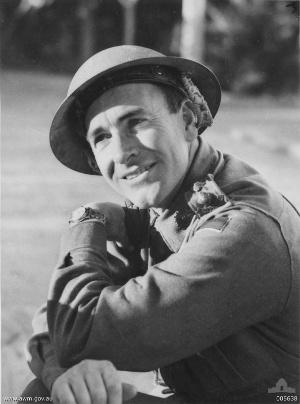
The battalion dug in at Isurava with the Papuan Infantry Battalion and waited for help. The 21st Brigade of the 7th Division, desert veterans under Brig. Arnold Potts, was already climbing the track from Owers’ Corner. And on the north coast, the main body of Horii’s South Seas Force had landed and was marching toward them. The battle that followed is Chapter 3.
Gallery · 4 photographs · select to enlarge
The 39th Battalion


Who they were
The militia
The 39th was a Citizen Military Forces battalion, part of Australia’s home-defense militia. Its men were often mocked by the volunteers of the Australian Imperial Force as “chocos,” chocolate soldiers who would melt in the heat. Under the law of the time, militiamen could be sent to fight in Australian territory, which included Papua, but not overseas. At Kokoda they fought, by every account, as well as any troops in the war.
The nickname did not survive the campaign. See Chapter 9 for how Kokoda is remembered.
The Japanese also paid for the advance. Their supply line from the coast was already long, and each kilometer they moved inland made it longer. That would matter later.
People, places and pages in this chapter
Sources and further reading
- Department of Veterans’ Affairs, Anzac Portal, "Kokoda 1942" — the official Australian summary of the campaign: dates, units, battles and casualties
- Australian War Memorial, "Mapping Kokoda" — how the track was mapped and how its places relate
- Wikipedia, "Kokoda Track campaign" — a general summary with references, used for cross-checking dates and unit names
- Samuel Milner, Victory in Papua (U.S. Army in World War II, Center of Military History, 1957) — the U.S. Army official history; the source of the campaign casualty figures used here
More from The Lake Norman Brief
The Lake Norman Brief · History collections
Keep reading the Second World War
Every collection on lkn-law.com is free to read and built from official histories, archives and public-domain photographs. The Lake Norman Brief is published by Christopher Adkins of Adkins Law, PLLC, in Huntersville, North Carolina.
Kokoda and Buna–Gona collectionAll World War II collectionsThe Doolittle Raid and the Coral Sea