
1776
David McCullough

Independence acquired a date before it had a secure future. McCullough stays with the army that still had to survive the rest of the year.
Edition cover from Simon & Schuster.A reader expecting the Declaration of Independence to take center stage may be surprised by how much of David McCullough's year belongs to an army in retreat. George Washington has to hold together men with expiring enlistments and uneven training while the British can bring ships to bear on a coastline exceptionally difficult to defend. The geography of New York is almost an antagonist in its own right.
McCullough gives weather and transport their due. An army cannot act on a fine intention until enough people, guns, and boats arrive in the right place. This makes Trenton feel like an achievement assembled out of small uncertainties, even for a reader who has known the outcome since school. The concentrated military narrative has less to say about the political imagination that made independence possible or the range of people for whom it meant different things. Its particular accomplishment is to restore suspense to the survival of a force that later generations could too easily imagine as destined to win.
The other capital
For an American reader, the trouble with the title 1776 is that it arrives already decorated. There are fireworks on the date, voices reading the Declaration, and a remarkably complete idea of which side the reader is going to cheer. McCullough opens in London in 1775. The date and the city briefly dislodge us from the celebration. George III must address people who take Britain’s authority in America seriously and want to know what the government proposes to do about a rebellion. The king does not have our handy list of future presidents. He has a present political problem. Sitting awhile in the other capital is the first good reason to choose this particular account of an extremely familiar year.
Washington enters a story whose outcome feels less secure once the British have been allowed a speaking part. His job is peculiarly awkward. People who have demonstrated an impressive willingness to gather when their neighborhoods were threatened must now decide whether to remain together somewhere else, take instructions from strangers, and do so while households at home still require attention. A national army is easy enough to imagine from the far side of victory. McCullough gives the phrase its verbs back. Somebody has to raise, supply, persuade, house, replace, and occasionally restrain the human beings who will eventually earn the general noun.
The man who knew books
Henry Knox makes a particularly appealing figure in this company. The Boston bookseller possesses the kind of technical curiosity a civilian can acquire without being given any special place in an established military hierarchy. It is one thing to recognize that heavy guns in the wrong place are potentially valuable to people in another. It is another to undertake the physical business of getting them there. Roads, ice, animals, money, daylight, and the judgment of the people actually moving a load enter an enterprise that looks wonderfully simple once it has been reduced to an arrow on a map. This is McCullough’s way of telling an adventure. First make the reader feel the weight.
Washington’s willingness to make use of people like Knox and Nathanael Greene deserves more than the easy compliment that he knew talent when he saw it. Putting confidence in an inexperienced man does not relieve a commander of responsibility if the man fails. It can be a remarkably public wager. The revolutionaries’ limited supply of conventional advantages leaves room for a bookseller or a Rhode Islander with an appetite for military reading to take on extraordinary responsibility. That openness is exciting. A reader should also feel how alarmingly close it sits to the simple fact that a great many people in this army are learning their jobs in an organization with very little ability to absorb a bad decision.
Two very different harbors
The Boston success is especially revealing beside the ordeal of New York. A person trying to explain the year in one sentence could say that Washington won a city and then lost one. The symmetry conceals more than it reveals. Coastlines and waterways alter the practical relationship between an army on land and a power able to move people and supplies by sea. A position whose meaning looks perfectly plain on a street map can acquire a different meaning when a reader asks who can approach it by water. There is no good reason to imagine the general saw everything at once simply because a modern reader can turn to a map.
McCullough keeps Washington recognizable through a long, discouraging interval. A lesser portrait might alternate between the familiar hero and a briefly incompetent stranger responsible for the reverses. Here the qualities that made him useful remain in play even when results go badly against him. Persistence has a much less attractive face in the middle of a losing campaign than it acquires once victory is certain. It may require an officer to appear before people who saw the last decision go wrong and ask them to act on his judgment again. The gap between the public monument and that necessary next conversation is the space where McCullough does his best work.
The letter that does two things at once
Letters are among the pleasures of the book. In using them, McCullough recovers voices whose chief interest in writing home was rarely the convenience of a later historian. An officer can report on an event and try to protect his family from the full extent of his anxiety in the same sentence. A soldier recording a privation may be asking for something useful to be sent. An official passing judgment on somebody else’s conduct may already be considering how his own will be understood. Try reading a letter first as information and then as something one particular person wanted another particular person to receive. Some of the apparently straightforward statements begin to sound much more human.
This way of reading also highlights an important limit. People able to put their experiences on paper and have the paper survive enjoy an advantage over their less well-documented neighbors. A history rich in contemporary voices can still leave certain households, workers, and civilians at a considerable distance. McCullough’s emphasis lies with the military fortunes of a cause, particularly with its commander and the people in a position to influence those fortunes. Readers who want a comparable social account of the people whose fields, boats, or towns became part of the campaign will need to read beyond this book. The limitation is easier to recognize once the book has taught you to notice how many different people its protagonists depend on.
The year runs out before the war does
The calendar is more than a convenient way to package the subject. Men enlist for a term. Food and clothing become urgent in a different way as the weather changes. A person with good reason to hope an army will remain in existence may also have an honorable reason to go home when the agreed service ends. By December the continuity of the American effort is a question about individual decisions repeated across a camp. There is a peculiar power in having the year people remember for a declaration come down to whether enough people will still be there when the next year starts.
That makes Trenton an affecting place to approach the end. Its value does not depend on pretending the war was won there. A limited success can change what a commander is entitled to ask of the people around him. It can change what people farther away believe might be worth risking. For a reader who wants to continue, Rick Atkinson’s The British Are Coming offers the pleasure of seeing overlapping episodes from a narrative with a broader reach on the British side. Read McCullough first to feel the changing fortunes of one army through one extraordinary year. Then compare the two authors at a moment of retreat. The better measure of a history may be what it can show you while a good outcome still looks decidedly unlikely.
Compare the harbors on a map
Look at Boston Harbor and New York Harbor. Compare access from the sea and the waterways dividing the land. The shorelines have changed, but the relationship between the two campaigns is easier to picture with both maps open.
Explore the publisher’s edition and illustrations.

James Peale. Reproduction via Wikimedia Commons, CC0.
Open the full image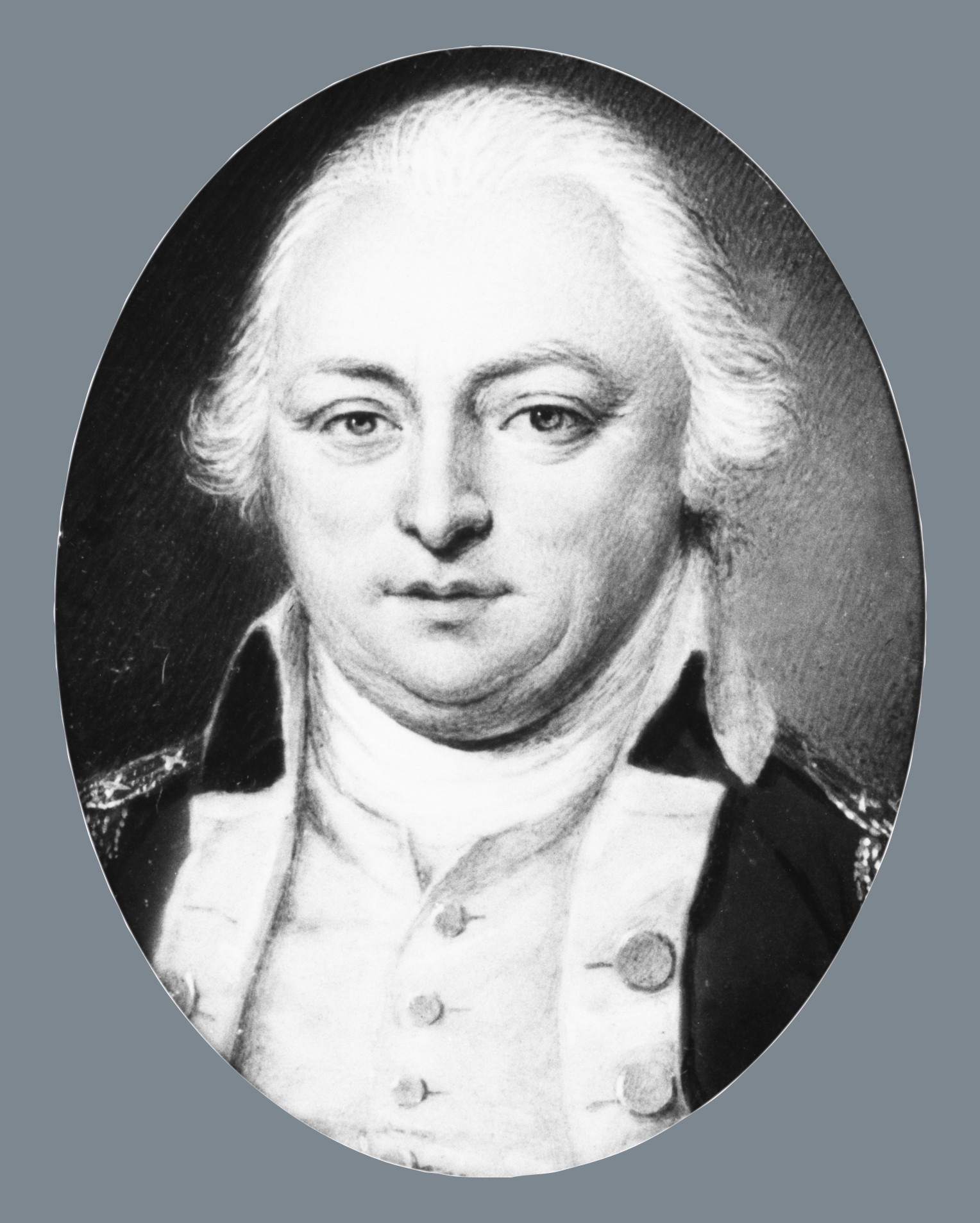
Read alongside
Try reading an episode of the American Revolution first as a political argument and then as a practical problem for the people present.
 The British Are ComingRick Atkinson
Start with the distance between London and Boston. A minister can issue a confident instruction on the strength of a situation that has already ceased to exist by the time the ship carrying it arrives.
 John AdamsDavid McCullough
John Adams left a biographer one extraordinary advantage and one sizable problem. He wrote almost incessantly, often in a voice that makes it easy to imagine him in the room.
Reading group guide
At which point in 1776 would a well-informed observer have had the strongest reason to doubt Washington?
Find this book and edition
1776 · David McCullough · American History
Cover edition ISBN 9780743226721 · Look for this edition in a library