
War Is a Force That Gives Us Meaning
Chris Hedges

Hedges takes seriously a painful question from his years as a correspondent. Why can a person who knows the destruction of war still miss the intensity of belonging it produced?
War Is a Force That Gives Us Meaning by Chris Hedges. Edition cover from Open Library.A conventional denunciation of war has little trouble listing the reasons to hate it. Chris Hedges has a more disturbing subject. War can make ordinary people feel urgently necessary, joined to their neighbors, and relieved of the ambiguities of peace. A correspondent who has experienced that attraction himself has some standing to explain why an account of suffering alone will never be enough to defeat it.
Hedges draws on his reporting and his reading of tragedy to examine what a group must forget in order to tell a satisfying story about itself. The essay has the pressure of a sermon. At times its certainty compresses differences among the conflicts and communities it examines. Yet its central insight survives that objection. The emotional rewards of belonging are real even when the story that confers belonging is false. Readers interested in propaganda will find unusually searching attention here to the listeners. What makes the loudspeaker effective is partly the private longing of the person who turns toward it.

Leena A. Krohn, CC BY-SA 3.0 via Wikimedia Commons.
Open the full image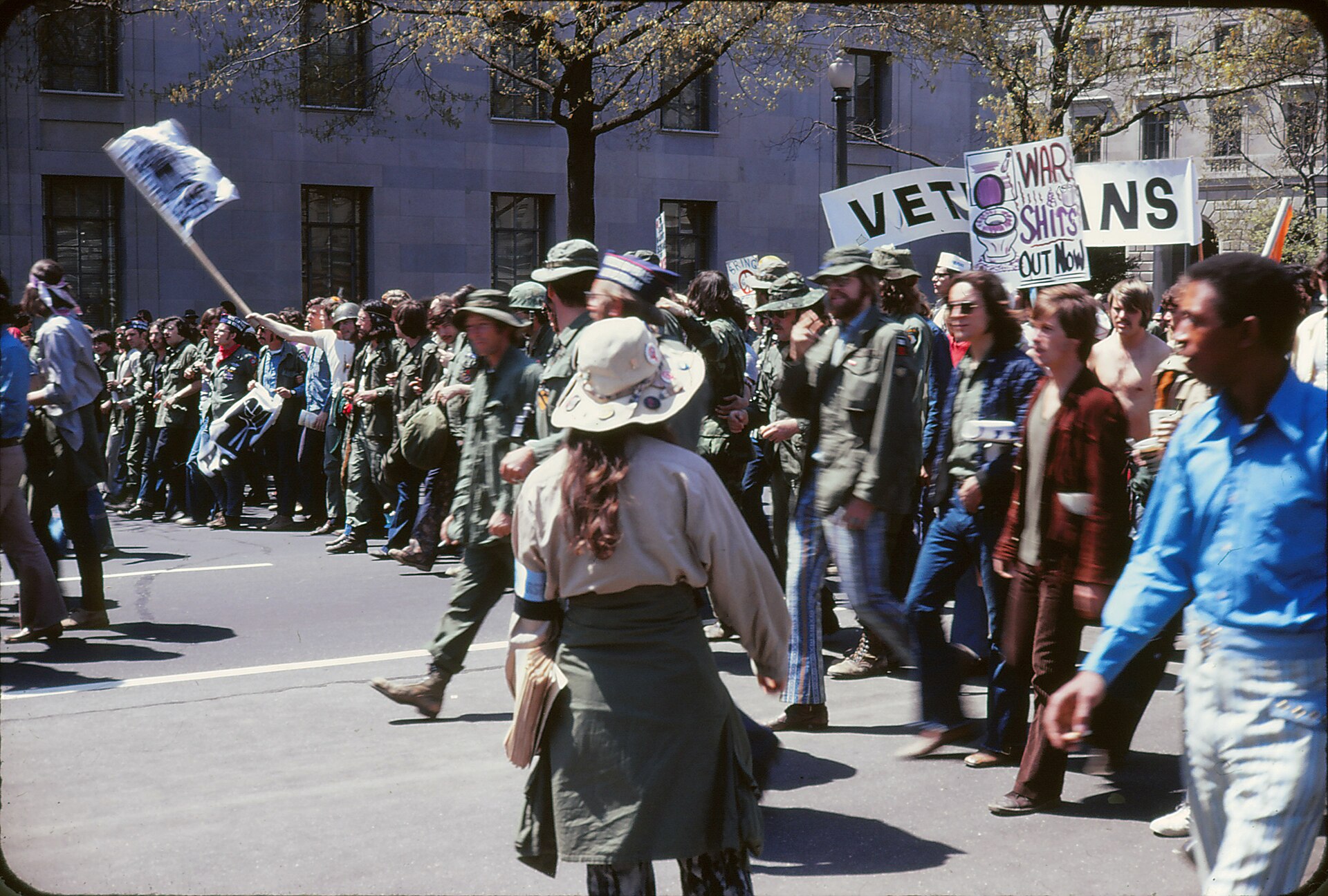
Read alongside
Consider how the writer’s position changes the account of political violence and what can be seen from that position.
 From Beirut to JerusalemThomas L. Friedman
Thomas L. Friedman writes from the experience of reporting in Beirut and Jerusalem in the 1970s and 1980s. The two cities impose different demands on a correspondent. In one, violence can redraw the practical meaning of a street crossing.
 BlowbackChalmers Johnson
Chalmers Johnson takes a term associated with covert action and uses it to describe the delayed consequences of American power overseas. A policy can be obscure to the public at home and a daily fact of life to people elsewhere.
Reading group guide
Where does Hedges show the attraction of a collective wartime story before exposing what it costs?
Find this book and edition
War Is a Force That Gives Us Meaning · Chris Hedges · War & Military History
Cover edition ISBN 9781610393591 · Look for this edition in a library