
To the Last Man
Jeff Shaara
The cockpit offers one kind of view of the First World War. A man on foot, pressed against the ground and unable to see beyond the next few yards, lives through an entirely different event. Shaara moves between pilots, including Manfred von Richthofen and the American Raoul Lufbery, and the Americans who must eventually confront the war on the ground. The change in elevation matters more than any abstract claim about the scale of the fighting.

The flying can take on the shape of a contest between recognizable opponents. The ground war makes it progressively harder to imagine that individual skill will be enough to govern a man's fate. Shaara's habit of entering historical figures' thoughts offers immediacy at the price of certainty. These are imagined conversations and judgments. As a novel, it succeeds most fully when the switch in viewpoint revises the meaning of a familiar word like courage. What looks dazzling from one man's cockpit might look merely necessary to somebody trapped below.
The contrast between sky and ground gives Shaara two incompatible scales for heroism. What looks like a clean maneuver from altitude can share a battlefield with an infantryman’s day of waiting.

Stanley Arthur Devon, Royal Air Force official photographer; IWM CH 1733. Public domain — expired UK Crown copyright (Commons PD-UKGov).
Open the full image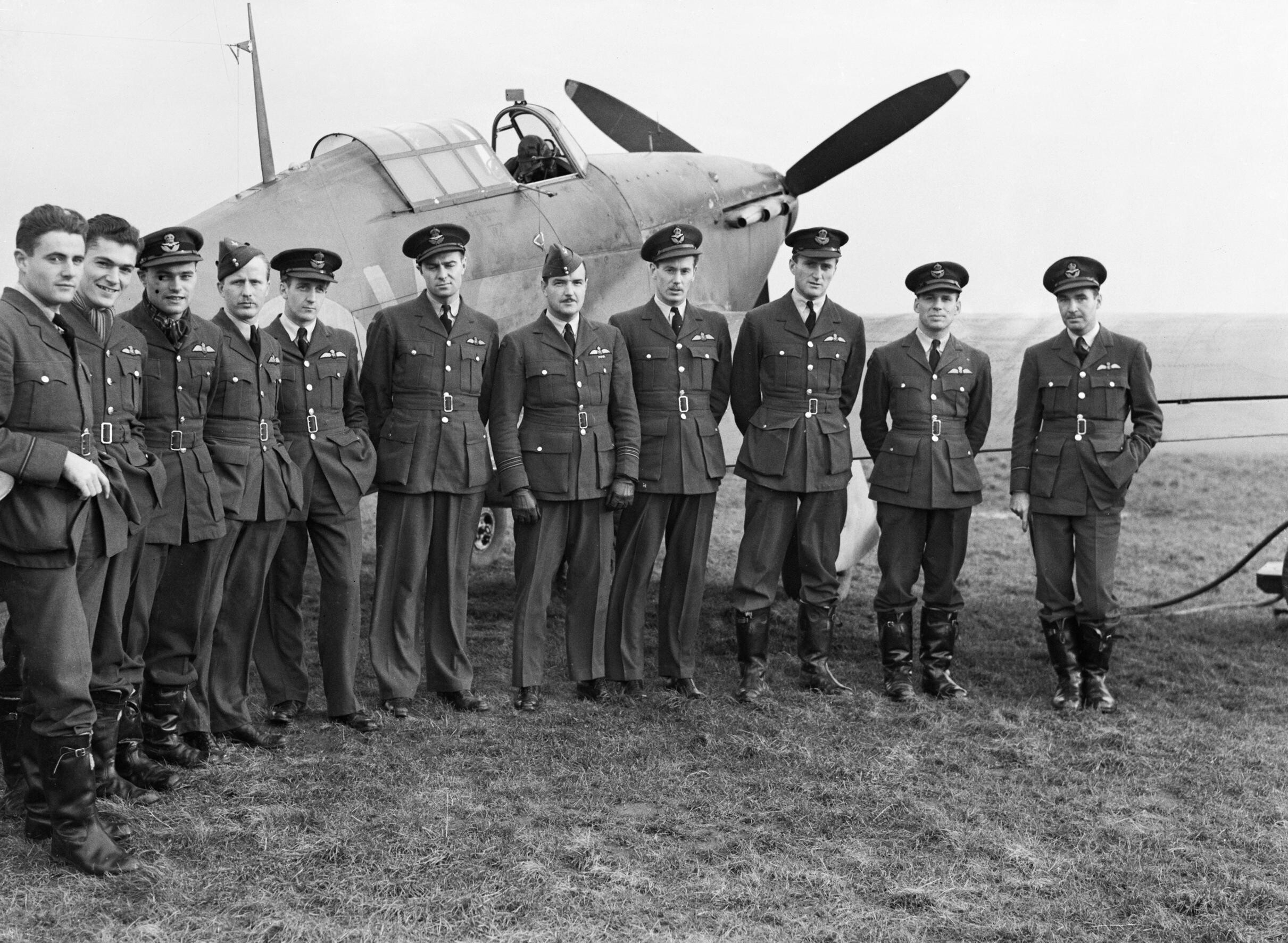
Read alongside
Compare what formal choices can do for a war story. Compression, irony and a broad historical frame each change the experience.
 Catch-22
Joseph Heller
Yossarian wants to survive his service as a bombardier.
 Angel Down
Daniel Kraus
Five American soldiers go into no man’s land during the First World War and encounter a fallen angel.
Reading group guide
What can a pilot see from above that the infantry cannot, and what does the altitude conceal?
Find this book and edition
To the Last Man · Jeff Shaara · Historical & War Fiction
Cover edition ISBN 9780345461346 · Look for this edition in a library