The Lake Norman Brief · Estate Planning
Named Executor in Iredell County? First Steps, Records, and North Carolina Deadlines
A practical starting guide for executors in Mooresville, Troutman, Statesville, and Iredell County, with distinct deadlines and recordkeeping priorities.
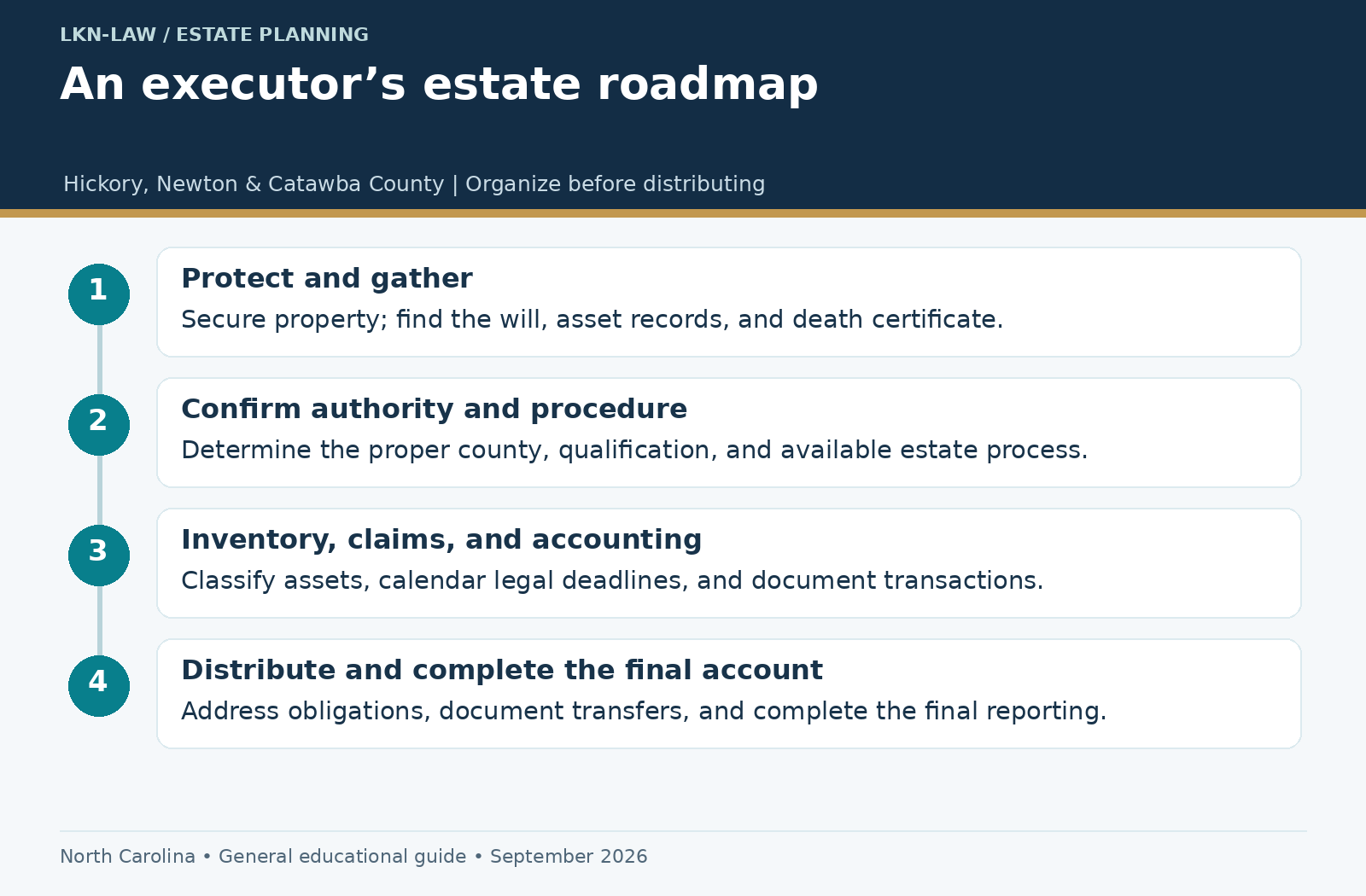
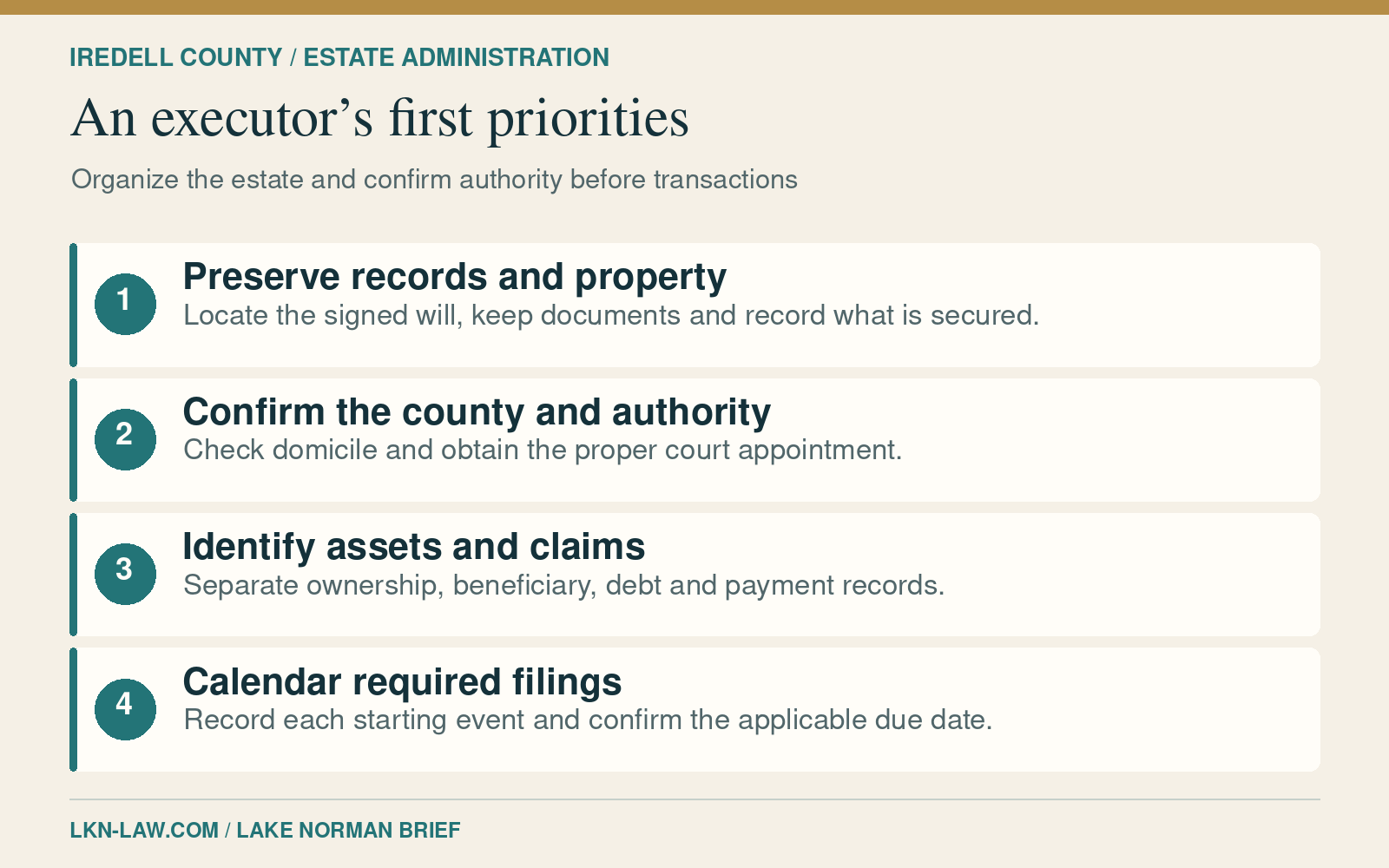
Being named executor can feel like receiving a second job while grieving. For families in Mooresville, Troutman, Statesville, and elsewhere in Iredell County, the first task is to organize the estate and establish authority. A will naming you does not by itself authorize every transaction a bank, buyer, or beneficiary may request.

Protect information and property first
Locate the signed will and any trust documents, arrange for certified death certificates, and identify immediate property needs. Secure the home lawfully, check on pets, and preserve mail and financial records. Take photographs of valuable personal property before anything is moved. Keep a written list showing who holds keys, documents, vehicles, and other important items.
Do not turn an informal family cleanout into an early distribution. A seemingly ordinary drawer may contain the only record of an account, a loan, or a property interest. If relatives remove items for safekeeping, document what was taken and where it went. Preservation and a transparent record are easier than reconstructing events later.
Confirm the county and qualify for the right role
G.S. 28A-3-1 generally places a North Carolina resident’s estate in the county of domicile at death. The place of death or the executor’s home is not automatically the controlling location. For an Iredell County estate, use the Judicial Branch’s official county contact directory to confirm the clerk’s current procedures and the appropriate estates contact before traveling.
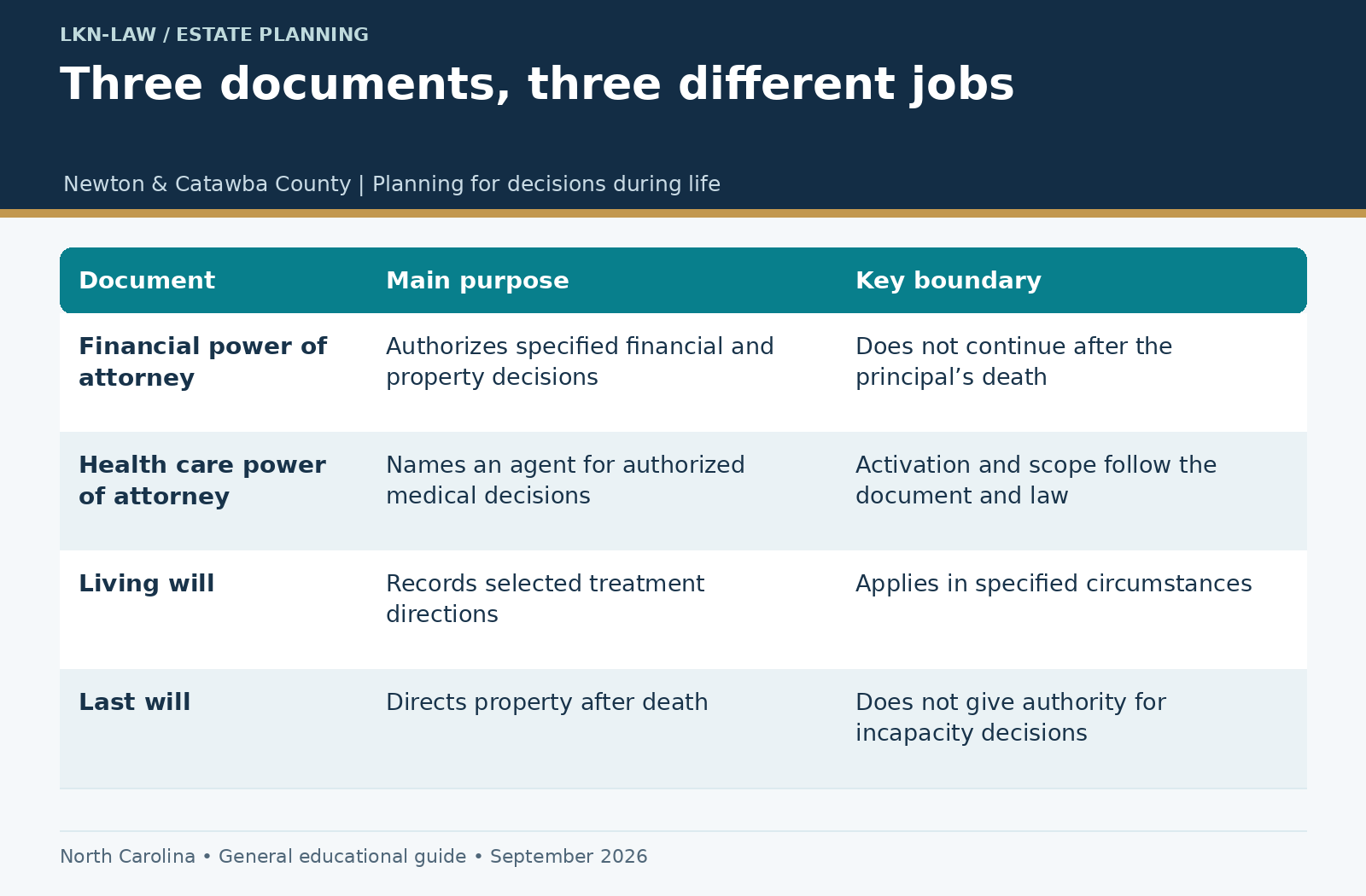
The clerk issues letters testamentary or letters of administration establishing a personal representative’s authority. Institutions commonly request them. A financial power of attorney is different: under G.S. 32C-1-110, it terminates when the principal dies. Someone who managed an account during life should not assume that authority continues after learning of the death.
Ask whether full administration is required. North Carolina has alternatives for some estates, including collection by affidavit when statutory conditions are met. G.S. 28A-25-1, for example, addresses qualifying intestate estates and includes asset-value, timing, and other requirements. Do not select a simplified procedure from the house value or one bank balance alone; review the complete situation with counsel or the clerk’s procedural resources.
Build an estate record that another person could follow
Use one secure folder for court filings and another for financial evidence. Keep an activity log with the date, person contacted, issue discussed, and promised follow-up. Once authorized, arrange appropriate estate banking and maintain a clear separation between estate transactions and personal spending.
| Record category | What to collect | Why it helps |
|---|---|---|
| Assets | Date-of-death statements, titles, deeds, ownership details, and beneficiary records. | Supports identification, valuation, and the correct transfer process. |
| Debts | Invoices, loan statements, contracts, correspondence, and claim notices. | Allows review before payment and helps track disputes. |
| Payments | Receipts, bank records, invoices, and the purpose of each payment. | Supports later accounting and reimbursement requests. |
| People | Names and addresses of beneficiaries, heirs, advisers, and relevant institutions. | Makes notices and communication more reliable. |
For example, an executor handling a Troutman resident’s estate might discover an individually owned account, a jointly titled vehicle, and property with a named beneficiary. Those items should be investigated separately. An inventory of everything found is a starting point; it is not a conclusion that everything belongs in the same estate account.

Calendar the right deadline from the right event
Several deadlines use different starting dates. Keep the death date, qualification date, first creditor-notice publication date, and notice-delivery dates in separate fields. Treating all of them as “three months after death” is a serious mistake.
| Requirement | Starting point or rule |
|---|---|
| Inventory in full administration | Generally within three months after qualification, unless the clerk extends the time, under G.S. 28A-20-1. |
| Published creditor notice | The claim date must be at least three months after the first publication or posting; publication and direct notice requirements also apply. |
| Annual account | G.S. 28A-21-1 generally makes it due 30 days after one year from qualification; a permitted fiscal-year election changes the calculation. |
G.S. 28A-14-1 generally requires publication once weekly for four consecutive weeks when a qualifying newspaper is published in the county. It also addresses direct notice to actually known or reasonably ascertainable creditors and contains exceptions. Have the full notice process checked, including any applicable Medicaid-related notice, rather than assuming that buying a newspaper advertisement completes every obligation.
Review claims and preserve enough money before distributions
G.S. 28A-19-6 establishes the payment order for estate claims after administration costs and expenses. When money may be insufficient, paying bills in the order they arrive can produce the wrong result. Gather and classify claims before deciding what to pay; obtain advice promptly if insolvency is possible.
Likewise, a beneficiary’s urgent request is not a reason to distribute without checking debts, taxes, expenses, and the governing documents. A proposed early distribution should be evaluated with enough information to determine what must remain available. Maintain the evidence supporting that decision.
Real estate deserves its own review. Do not assume that being executor gives you unrestricted authority to sell a house or sign a deed. Ask counsel to review title, the will, ownership at death, estate needs, and any required procedure before agreeing to a sale.
Give the family a predictable update
A brief written update can identify completed steps, unresolved questions, and the next expected action without promising a distribution date. Explain that account research, claims, taxes, and court filings each require attention. Keep sensitive account numbers and personal identifiers out of group emails.
If you have been asked to administer an Iredell County estate, bring the will, death certificate, asset list, and any immediate notices to an initial meeting. Contact Adkins Law to discuss estate administration and the next steps for your family’s circumstances.
Educational information about North Carolina law; individual circumstances and document terms matter. Sources checked September 22, 2026.
This material is for general educational information, is not legal advice, and does not create an attorney-client relationship. Legal decisions depend on current law, the facts and the terms of your documents. Contact a North Carolina attorney for advice about your situation.