


Introduction
Mountain Island Lake is often called the forgotten lake of the Catawba River chain. Wedged between the sprawling waters of Lake Norman to the north and Lake Wylie to the south, it doesn’t share the same reputation for marinas, waterfront restaurants, or high-profile real estate. Instead, Mountain Island is defined by its quiet banks, forested coves, and strict protections.
What sets it apart is purpose. Mountain Island Lake is Charlotte’s lifeline — the primary source of drinking water for over a million residents in Mecklenburg and Gaston Counties. While its neighbors have become playgrounds for boating and development, Mountain Island exists first as a reservoir. Its still waters and protected shoreline remind us that not every lake has to be busy to be essential.
Origins & Creation (1924)
Mountain Island Lake was born in the early twentieth century, when the Carolinas were shifting from farmland to factory towns. In 1921, the Southern Power Company — the forerunner of today’s Duke Energy — began work on a new hydroelectric station along the Catawba River. By 1924, the Mountain Island Hydroelectric Station and dam were complete, forming the reservoir we now know as Mountain Island Lake.
The project’s purpose was simple but transformative: to generate electricity for the rapidly growing textile industry in Charlotte and nearby mill towns. Cotton mills needed steady, affordable power, and the Catawba’s flow offered exactly that. Mountain Island became one link in a chain of hydro projects that would stretch across the river, fueling Charlotte’s rise as an industrial hub.
It was the first of the three manmade lakes in the Charlotte metro region, predating both Lake Wylie and Lake Norman. While the larger reservoirs that followed would take on reputations as centers of recreation and development, Mountain Island’s role was rooted in utility — producing power, cooling nearby plants, and ultimately serving as the region’s most vital drinking-water reservoir.
Revolutionary Roots & Historic Echoes
The story of Mountain Island Lake is layered over an older, more dramatic history. Long before the dam, this stretch of the Catawba River was a contested frontier during the American Revolution. Nearby Huntersville became a hub for Scotch-Irish settlers, anchored by Hopewell Presbyterian Church — one of Mecklenburg County’s oldest congregations and a gathering place for early patriots.
Just north of today’s lake, General William Lee Davidson made his last stand against British troops at the Battle of Cowan’s Ford in 1781. Though outnumbered, Davidson’s militia fought fiercely along the riverbank before he was killed in action. His sacrifice became a rallying cry for the patriot cause in the Carolina Piedmont.
That same spirit pulsed through Charlotte itself. British General Cornwallis, frustrated by the stiff local resistance, famously branded the town a “Hornet’s Nest of Rebellion.” Mountain Island Lake’s quiet waters now cover parts of those old battlefields and ferry crossings, but the echoes of defiance remain, woven into the identity of the region.
Specs, Name, and What Lies Beneath
Mountain Island Lake may be smaller than its neighbors, but its numbers tell a story of importance. The reservoir covers about 3,281 acres, stretches 14 miles from end to end, and offers roughly 61 miles of shoreline. At full pond, it rests at 648 feet above sea level, and today it supplies drinking water for more than one million people across Mecklenburg and Gaston Counties.
Its name comes from a feature that predates the dam: a small island with a rocky rise that resembled a tiny mountain. When the Catawba was flooded in 1924, the island remained above water, and “Mountain Island” became the natural name for both the island and the lake that surrounded it.
Beneath the surface lies another layer of history. Before the damming, locals crossed here at Rozzelle’s Ferry, a wooden flatboat service that ferried people, wagons, and livestock across the river. The old ferry site and surrounding farmland now lie underwater, alongside homestead foundations and stretches of bottomland forest. Over the years, duck blinds, fish attractors, and even the occasional odd find — from discarded stoves to barbecue grills pulled during volunteer cleanups — have added to what’s hidden below. Unlike Lake Norman, which swallowed entire towns, Mountain Island’s submerged story is quieter, but no less meaningful: traces of daily life left behind as the river was transformed into a lake.
Shoreline Stories
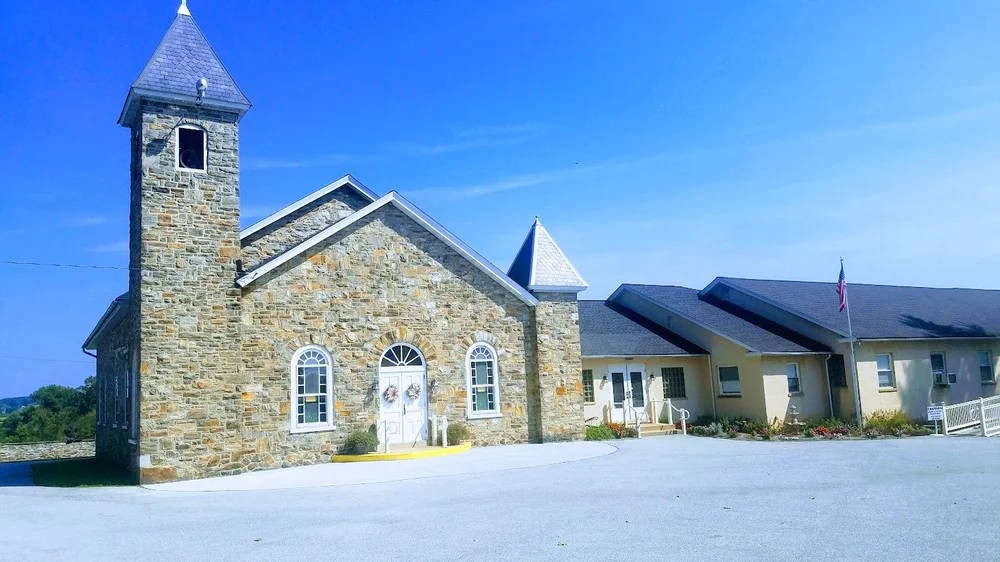
The shoreline of Mountain Island Lake tells a quieter story than its larger neighbors. On the eastern bank, the past is preserved at Latta Place, a former cotton plantation that now stands within Latta Nature Preserve. Nearby, the humble brick chapel of St. Joseph’s Catholic Church, built in 1843 by Irish mill workers, remains one of the oldest Catholic churches in North Carolina. Both sites anchor the lake to its deeper cultural and human roots.
Across the water in Gaston County, the contrast becomes clear. Communities like Cornelius, Davidson, and Sherrills Ford grew into bustling towns along Lake Norman’s booming shoreline, defined by marinas, restaurants, and waterfront development. Mountain Island’s western edge, by contrast, has resisted that kind of transformation. Here, wooded coves and scattered homes dominate, with fewer boat slips and less commercial traffic.
Still, the influence of nearby growth is felt. Terrell and Denver, two communities also tied to Lake Norman, illustrate how development and recreation have spread along the Catawba chain. Yet compared to them, Mountain Island remains the exception — a shoreline defined more by preservation than by expansion, a space where history and nature still outweigh commerce.
Ecology & Water Supply
Mountain Island Lake’s most important role is invisible to the eye: it serves as the primary drinking-water source for Charlotte, Gastonia, and Mount Holly. Every day, more than 100 million gallons are drawn from its intakes, supplying well over a million people across the region. Protecting that supply explains why Mountain Island is more tightly regulated than its sister lakes — its shoreline is free of marinas, fuel docks, and restaurants, and its natural buffers are carefully preserved.
This protection has benefits beyond water. The lake’s wooded coves and preserved shoreline provide habitat for bald eagles, osprey, herons, deer, and countless smaller species. Latta Nature Preserve, which fronts much of the eastern bank, acts as both a green buffer and a thriving ecosystem for wildlife and native plants.
The contrast with nearby lakes is striking. Along Troutman and Mooresville, Lake Norman’s shoreline has grown dense with waterfront neighborhoods, boat clubs, and marinas — symbols of a booming recreation economy. Mountain Island’s waters, by comparison, remain quieter and clearer, with rules ensuring its first identity stays that of a reservoir. That balance between utility and preservation has kept the lake pristine, even as development surges all around it.
Broader Regional Ties
Though Mountain Island Lake sits only minutes from uptown Charlotte, its story stretches far beyond its quiet shoreline. To the north, Statesville developed as a transportation hub in the 19th century, where railroads and roads met to connect the Piedmont with the mountains. Its growth mirrored the broader role of the Catawba River basin — a corridor between fertile farmland and industrial towns.
Keep going west, and the story deepens. Towns like Boone, West Jefferson, and communities across Wilkes County anchor the NC High Country, where rugged terrain fostered independence and resilience. These upland settlements were often cut off from the wealthier coastal and Piedmont centers, creating a sense of separation that influenced both politics and culture.
This divide found dramatic form in the late 18th century with the Lost State of Franklin, when western settlers tried to break from North Carolina and form their own government. A century later, the same geographic and cultural distance gave rise to the phrase “Lost Provinces of Western North Carolina,” shorthand for the mountain counties that felt ignored by Raleigh.
Mountain Island Lake, though modest in size, lies on that same thread of geography and history — a place where water connects Charlotte’s urban core with the Appalachian highlands, and where the old east-west divide of North Carolina is never far from view.
Education & Cultural Influence
The influence of Mountain Island Lake is not only ecological but cultural, tying into the educational landscape that shapes the region. In the mountains, App State grew from a teachers’ college in Boone into a statewide leader in higher education, carrying the spirit of the High Country into classrooms across North Carolina.
Closer to the lake, UNCC represents the modern growth of Charlotte itself — a research university born from a postwar night school for returning veterans that now drives innovation in engineering, business, and urban policy. Its rise mirrors the city’s own transformation from textile hub to banking capital.
The region’s older institutions tell their own story. Queens University of Charlotte traces its lineage to a mid-19th-century women’s seminary, while Davidson College, founded in 1837 on the Catawba River’s edge, has long been a cornerstone of liberal arts education in the South. Both schools connect directly to the heritage of the Piedmont and the values of civic and religious leaders who first settled the area.
Even nearby towns like Newton, NC, underscore how education and civic life intertwine across the Piedmont. Once a center of law and government for Catawba County, Newton remains an example of how small communities shaped the cultural backbone that institutions of higher learning would later expand.
Together, these colleges and communities show that Mountain Island Lake is not an isolated reservoir but part of a larger story — where water, culture, and education have always flowed together.
Fishing, Recreation & Access
Mountain Island Lake may be quiet, but it offers plenty of ways to get on the water. The main public access points are the Riverbend Boat Ramp, the Neck Road Boat Ramp, and the smaller Lucia Access Area. Each provides a window into the lake’s natural coves and open stretches, with enough parking to handle summer weekends — though arriving early is always wise.
Recreation here skews toward the peaceful. Kayakers and paddleboarders hug the wooded shoreline of Latta Nature Preserve. Families gather at the lake’s sandbars, where shallow sandy bottoms invite wading, swimming, and floating. Small coves offer calm waters for wakeboarding or waterskiing, though Mountain Island doesn’t have the same reputation for high-octane boating as its neighbors.
When it comes to angling, the lake is a hidden gem. While fishing on Lake Norman is well-known across North Carolina — celebrated for striped bass tournaments and bustling with anglers — Mountain Island caters to those who prefer calm and steady action. Largemouth and spotted bass thrive along its rocky points and submerged timber. Catfish are abundant, especially upriver near the tailrace currents below the hydro station. Panfish fill the coves, making it a perfect family fishing lake.
Here, fishing is less about competition and more about connection: to the water, to the wildlife, and to the sense of quiet that sets Mountain Island apart.
Conclusion
Mountain Island Lake may not have the size or celebrity of Lake Norman or Lake Wylie, but that is exactly what makes it special. It is the “forgotten lake” — quiet, pristine, and essential. Its purpose is clear: to provide clean water, preserve natural habitat, and hold onto a sense of history and balance in a region where growth often outpaces reflection.
For families who live along the Catawba chain — whether in Charlotte, Huntersville, Cornelius, or the quieter communities around Mountain Island — life on the lake is about more than recreation. It is about community, stability, and stewardship. And when those families face transitions, whether through custody changes, property matters, or estate planning, the guidance of a trusted local attorney can make all the difference in protecting both loved ones and legacies.
Mountain Island Lake’s still waters remind us that not every treasure is loud or visible. Sometimes the most vital things are the ones that work quietly, sustaining us every single day.
Adkins Law, PLLC — Huntersville, NC
At Adkins Law, we are proud to serve families and individuals throughout Huntersville and the Lake Norman region. Our practice focuses on family law, custody, divorce, estate planning, and mediation — helping you protect what matters most through life’s transitions. Whether you are raising a family near Mountain Island Lake, planning for the future in Huntersville, or moving between communities around Charlotte, our team is here to provide trusted legal guidance with a personal touch.




Leave a Reply