


Introduction
Huntersville, North Carolina, today recognized as a thriving suburban town just north of Charlotte, is more than a modern commuter hub or retail destination. It is a community with roots that stretch back nearly three centuries, entwined with the broader historical, cultural, and economic development of Mecklenburg County. From its origins as a Scotch-Irish and German farming settlement in the mid-18th century to its transformation into a textile town, and later into one of the fastest-growing suburbs of the Lake Norman region, Huntersville’s story reflects larger patterns of migration, industrialization, and suburbanization in the American South. This paper examines the historical trajectory of Huntersville, providing a chronological narrative that situates the town within local, regional, and national contexts.
I. Early Settlements (Mid-1700s)
The Huntersville area, like much of the Carolina Piedmont, was settled in waves during the mid-18th century by Scotch-Irish and German immigrants. These groups, many of whom were second-generation colonists migrating from Pennsylvania and Virginia, were drawn to the region by its fertile red clay soil, abundant forests, and its strategic proximity to the Catawba River. The land offered opportunities for farming and independence at a time when more coastal areas were becoming crowded and expensive.
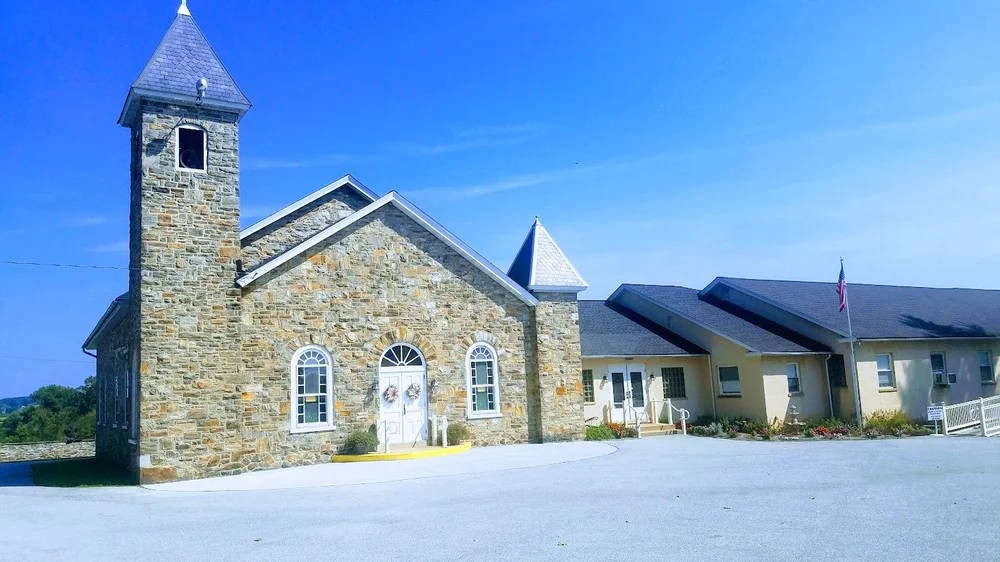
The Scotch-Irish, with their strong Presbyterian heritage, established congregations almost immediately upon settling. One of the earliest and most enduring was Hopewell Presbyterian Church, founded in 1762. The church quickly became not only a place of worship but also a center for civic and community organization. In the frontier context of the 1700s, churches like Hopewell provided stability, literacy, and moral guidance, often serving as schools, meeting halls, and even defensive rallying points. Hopewell’s cemetery, still in existence today, contains the graves of Revolutionary War soldiers, underscoring its deep historical significance.
The German settlers who arrived contemporaneously were equally industrious, bringing with them traditions of craftsmanship, farming efficiency, and Lutheran and Reformed congregations. Together with the Scotch-Irish, they formed the cultural backbone of the early Huntersville area. Although these groups shared many values, subtle differences in language, faith, and tradition contributed to a diverse cultural fabric that defined early community life.
Agriculture dominated the local economy during this formative period. Families cultivated staple crops such as corn, wheat, and oats, supplemented by livestock raising. Tobacco became increasingly common, though it never reached the scale of the plantation economies further east. Small gristmills and sawmills began to dot the creeks, providing basic infrastructure for local commerce and processing. Enslaved African Americans were present in the community, though slavery in this part of Mecklenburg County was generally on a smaller scale than in the coastal or plantation-dominated regions of the South. Enslaved individuals labored on family farms, in milling operations, and later in the textile industries that would emerge in the 19th century.
Transportation was a defining feature even in these early decades. The Great Wagon Road, one of the most important migration routes in colonial America, cut through the Carolina Piedmont, facilitating trade, migration, and communication. Farmers could send goods by wagon to markets in Charlotte, Salisbury, and beyond, tying Huntersville’s nascent economy into broader regional networks. The area’s proximity to the Catawba River also meant access to vital water routes and crossings, which would later play roles in military and commercial history.
This early emphasis on transportation, agriculture, and religious life foreshadowed Huntersville’s future growth. The combination of fertile land, strategic location, and a cohesive settler community established the foundation upon which the town’s later agricultural, industrial, and suburban identities would be built.
II. Revolutionary War Era
Huntersville and the greater Mecklenburg County region played a highly visible role during the American Revolution. The residents of the Hopewell community, much like those across the county, overwhelmingly supported the Patriot cause, motivated by a blend of Scotch-Irish Presbyterian independence, distrust of centralized authority, and a tradition of self-reliance forged on the frontier. Hopewell Presbyterian Church became not only a spiritual center but also a civic one, and its churchyard would serve as a final resting place for numerous Revolutionary soldiers. Oral traditions from the area recall that sermons from the pulpit sometimes blended religious exhortation with calls for resistance against British authority.
The Revolution came to Huntersville not in the form of large set-piece battles but through smaller engagements, militia activity, and the constant movement of troops across the landscape. Families in the region were deeply affected by shifting allegiances, the presence of foraging armies, and the threat of loyalist uprisings. Militia companies drawn from the Huntersville area contributed to Mecklenburg’s reputation as a hotbed of rebellion. Local farms supplied food and provisions to Patriot troops, but they were also vulnerable to raids and requisitions by both sides.
The most significant Revolutionary War event near Huntersville was the Battle of Cowan’s Ford, fought on February 1, 1781. As British forces under Lord Cornwallis attempted to cross the Catawba River in pursuit of General Nathanael Greene’s retreating army, they encountered stiff resistance from local militia under the command of General William Lee Davidson. Though the militia was ultimately forced to retreat, the skirmish delayed Cornwallis’s advance and highlighted the strategic importance of the river crossings that dotted the Huntersville and Lake Norman landscape. General Davidson himself was killed in the action, falling as he attempted to rally his men. His sacrifice transformed him into a regional martyr for independence.
Davidson’s legacy is still felt throughout Huntersville and the Lake Norman area. Numerous historical markers commemorate his role, and Davidson College—established later in nearby Davidson—was named in his honor. The reverence with which his memory has been preserved underscores how Huntersville and its neighboring communities tied their identities to Revolutionary heritage, using the story of sacrifice and resilience as a cultural touchstone well into the 19th and 20th centuries.
The Revolutionary War era thus represents a defining chapter in Huntersville’s early history. Though the town itself was not yet incorporated, the people of the community actively shaped the struggle for independence, enduring loss, contributing manpower and resources, and embedding their landscape with stories of courage and sacrifice. The emphasis on local militias, church-centered community life, and the defense of the Catawba crossings foreshadowed the enduring values of resilience and communal identity that Huntersville would carry into its later development.
III. Antebellum Development (1800–1860)
By the early 19th century, the Huntersville area had firmly established itself as an agrarian community, rooted in farming and supported by a growing network of small businesses, schools, and churches. Families cultivated corn, wheat, and oats as staple crops, while cotton increasingly became the region’s cash crop. Livestock raising, especially hogs and cattle, supplemented the agricultural economy and provided goods for both subsistence and market trade. These farms, though modest compared to the vast plantations of the Deep South, created a thriving, self-sufficient rural society.
Commerce expanded during this period, with the construction of the Hugh Torrance House and Store between 1779 and 1805 by the Torrance family. The store, strategically located along key trade routes, became a hub of community life, serving as a place not only for buying and selling goods but also for exchanging news and information. Today, the Torrance Store remains the oldest surviving store in Mecklenburg County, a tangible reminder of early entrepreneurial activity in the Huntersville area.
Education also gained importance in the antebellum years. The lack of a formal public education system meant that communities relied on subscription schools and private academies, where families paid fees for their children to attend. These institutions laid the groundwork for more organized schooling that would follow after the Civil War. Instruction focused primarily on literacy, arithmetic, and religious education, reinforcing the values of the community’s Scotch-Irish and German Protestant roots.
Despite Huntersville’s relatively modest scale compared to plantation regions, slavery was a defining element of the antebellum economy and society. Enslaved African Americans worked in the fields, tended livestock, and provided domestic labor for wealthier families. In some cases, enslaved individuals also contributed skilled labor in mills and construction. Slavery in Huntersville was less concentrated in massive estates and more integrated into the daily life of small and mid-sized farms. Nevertheless, the institution shaped the community profoundly, embedding racial hierarchies that would endure well beyond emancipation.
The local economy began to diversify slightly as small-scale industries took root. Sawmills and gristmills, often powered by the area’s creeks, processed timber and grain, providing vital services to farming families and enabling modest commercial growth. Blacksmiths, carpenters, and other tradesmen operated within the community, contributing to a more complex local economy than farming alone could provide.
By the 1850s, Huntersville remained largely rural and agricultural, but its foundations for future growth were in place. Its churches provided stability, its schools introduced formal education, its farms and mills sustained the economy, and its reliance on slave labor mirrored broader Southern realities. The community’s agrarian character, intertwined with commerce and education, would soon be tested and reshaped by the seismic upheaval of the Civil War.
IV. Civil War and Reconstruction (1861–1877)
During the Civil War, Mecklenburg County contributed significant numbers of men, supplies, and resources to the Confederate cause, and the Huntersville area was no exception. Many local families sent sons to fight in the Confederate Army, while the home front mobilized to support the war effort through agriculture and material production. The Presbyterian churches in the region, including Hopewell, often hosted gatherings that blended religious fervor with Confederate patriotism. Despite the absence of major battles in Huntersville itself, the war was ever-present, shaping daily life and placing heavy burdens on the town’s families.
The war brought disruption to Huntersville’s agrarian economy. Farms were strained by the absence of men, leaving women, children, and enslaved laborers to maintain production. Inflation, scarcity of goods, and Confederate requisitioning created further hardship. For enslaved African Americans, the war presented both peril and opportunity. Some seized the chance to flee when Union forces advanced into the Carolinas late in the conflict, seeking freedom behind Union lines. Others remained in bondage until emancipation was formally declared and enforced, with freedom arriving unevenly depending on local circumstances.
The surrender of the Confederacy in 1865 ushered in the transformative but turbulent period of Reconstruction. Formerly enslaved African Americans in Huntersville and surrounding Mecklenburg County began to establish independent lives, creating their own communities, churches, and schools. The building of African American churches was especially significant, as these institutions became not only centers of worship but also hubs for education and civic leadership. Early schools, often operated in church buildings, laid the groundwork for future educational initiatives.
The most notable effort in African American education during this era would later be embodied in the Rosenwald School movement of the early 20th century, but its roots were in Reconstruction. In Huntersville, the Rosenwald School eventually became a symbol of resilience and determination, reflecting the community’s ongoing fight for educational equality despite systemic barriers and segregation. The Bethesda Schoolhouse, founded in 1898 by African American farmer John Young, illustrates the continuation of this Reconstruction-era impulse toward self-sufficiency in education.
Reconstruction also marked the first stirrings of Huntersville’s industrial era. As the broader Southern economy shifted away from subsistence agriculture, cotton assumed an even more central role, paving the way for textile production. Although full-scale industrialization would come later, the seeds of Huntersville’s transformation were planted during these years. Small-scale cotton gins and early mills hinted at the economic reorientation that would define the late 19th and early 20th centuries.
Politically, Reconstruction brought its own challenges. Federal oversight of the South clashed with local white resistance, creating tensions that shaped civic life in Huntersville. The promise of Reconstruction—political participation for freedmen, educational progress, and economic opportunity—was undermined by racial violence, restrictive laws, and the eventual rise of Jim Crow segregation. For African Americans in Huntersville, the era was one of both profound hope and harsh setbacks.
In sum, the Civil War and Reconstruction profoundly altered Huntersville’s trajectory. The war imposed immediate economic and personal costs, while Reconstruction initiated long-lasting changes in the community’s racial, educational, and economic landscape. Though the town remained small and agrarian, the seeds of later growth—industrial, civic, and cultural—were planted during this turbulent period.
V. Founding of Huntersville (1873)
Huntersville’s official incorporation came in 1873, marking a turning point in its transition from a loosely organized rural settlement to a formal town within Mecklenburg County. The town was named for Robert Boston Hunter, a prominent local landowner and cotton farmer whose influence extended beyond his agricultural pursuits. Hunter played a key role in petitioning for and securing a post office for the community, a development that signified Huntersville’s growing importance as a recognizable civic entity. The post office, in an era when communication and commerce relied heavily on mail, served as a cornerstone of community identity and progress.
The naming of the town after Hunter symbolized not just his individual contributions but also the broader transition of the region toward a more structured and interconnected society. Prior to incorporation, Huntersville had been known by various names, including Craighead and Craighead Depot, reflecting the significance of the railroad depot in local life. Incorporation brought stability to these shifting identities and cemented Huntersville’s place on the map.
The arrival of the Charlotte & Statesville Railroad, later absorbed into the Southern Railway, was instrumental in Huntersville’s growth during this period. Completed in the 1860s, the railroad linked the community directly to larger markets, enabling the efficient shipment of cotton, grain, timber, and other goods. For a town rooted in agriculture, the railroad offered new possibilities for economic expansion and integration into regional and national trade networks. Farmers who once depended on slow wagon transport could now move their crops quickly and profitably to Charlotte, Statesville, and beyond.
Rail access also encouraged new forms of commerce and attracted a wider array of residents. Merchants and traders set up shops near the depot, offering goods that ranged from farm implements to textiles, thereby creating a small but bustling commercial district. The railroad depot became a focal point of town life, a place where residents gathered not only for business but also for social interaction and news from afar.
The economic ripple effects extended further. With reliable transportation in place, mill owners and industrial investors began to view Huntersville as a promising site for development. The town’s location along a major rail line, combined with its strong agricultural base, positioned it well for the textile and industrial expansion that would characterize the late 19th and early 20th centuries. Cotton gins multiplied, supporting the processing of raw cotton and laying the groundwork for more advanced textile operations.
In short, the founding of Huntersville in 1873 represented the formal recognition of a community that had been steadily growing since the mid-18th century. The establishment of the post office and the integration of the railroad were pivotal milestones that transformed Huntersville from a scattered agrarian settlement into an organized town with commercial ambitions. This period foreshadowed the significant industrial growth and civic development that would soon reshape the community’s identity.
VI. Industrial and Textile Growth (Late 19th–Early 20th Century)
The late 19th and early 20th centuries marked a transformative period in Huntersville’s history as the town transitioned from an agrarian community into an emerging textile hub. The expansion of the railroad and the reliable production of cotton positioned Huntersville squarely within the Piedmont textile belt, a network of mill towns stretching across the Carolinas. Cotton gins proliferated in and around Huntersville, ensuring that raw cotton could be processed efficiently before being sent to nearby mills. These developments bound Huntersville’s economy more tightly to the cycles of global cotton markets and Southern industrial growth.
Textile mills soon became central to the town’s identity. Among the most notable was the Torrence Mill, which operated as both an industrial workplace and a social anchor for its employees. As was common across the Piedmont, mills often constructed mill villages—rows of company-owned housing designed to attract and retain laborers. These villages typically included not only housing but also company stores where workers purchased essentials, often on credit that tied them economically to the mill. For many families, life in the mill village meant a profound shift from the rhythms of farm life to the regimented schedule of industrial labor.
The social and economic fabric of Huntersville was reshaped by this industrial growth. Families who had once worked the land now adapted to the long hours and difficult conditions of textile work. Laborers—both white and African American—faced low wages, monotonous tasks, and the dangers of working with heavy machinery in poorly ventilated spaces. Child labor was common in these years, with children as young as eight or nine working alongside parents in the mills. Despite these hardships, mill employment offered something farming often could not: steady wages and a sense of economic security in an era of volatile crop prices.
The presence of textile work also spurred community development. Schools expanded to serve mill families, and churches multiplied to meet the needs of a growing, more densely settled population. Civic organizations, fraternal orders, and social clubs formed, providing outlets for community life beyond the mills. In many respects, the emergence of an industrial economy in Huntersville deepened its civic identity, turning what had been a rural town into a more complex social and economic community.
Importantly, textile growth in Huntersville reflected broader trends in the Piedmont: the blending of agricultural traditions with industrial modernity. Many families maintained small gardens or livestock even while working in the mills, creating a hybrid economy of wage labor and subsistence farming. This dual existence softened the harsh realities of mill work and kept alive aspects of Huntersville’s rural heritage.
By the early 20th century, Huntersville had become a small but bustling textile town. It’s mills connected it to regional markets, its schools and churches supported a growing population, and its civic institutions matured alongside its economic ambitions. The era left a lasting imprint on the town’s landscape and social fabric, setting the stage for further growth and change in the decades ahead.
VII. Segregation, Education, and African American Life (1900–1940)
In the early 20th century, Huntersville—like the rest of the South—was shaped by the harsh realities of Jim Crow segregation. The daily lives of Black and white residents were divided by law and custom, with access to education, public services, and economic opportunity heavily stratified along racial lines. White children attended county-funded schools that benefited from better facilities and resources, while African American children were often forced to rely on church-based schools or community-funded efforts, highlighting stark inequities in access to basic education.
One of the most significant early initiatives in Black education was the Bethesda Schoolhouse, built in 1898 by African American farmer John Young. This modest one-room building, constructed with the support of the local Black community, represented both a literal and symbolic act of self-determination. The Bethesda Schoolhouse is today the only surviving one-room African American schoolhouse in Mecklenburg County, and it stands as a powerful reminder of the lengths to which the Black community went to secure education for their children in the face of systemic exclusion.
The drive for educational advancement was reinforced by the national Rosenwald School movement, which provided matching funds to help Black communities build better-equipped schools. In the 1920s, Huntersville constructed its own Rosenwald School, which became a cornerstone of African American life in the town. These schools were not merely centers of instruction—they served as civic and cultural hubs, hosting meetings, church gatherings, and community events. For many African American families, they symbolized hope and progress, even as segregation confined them to second-class citizenship.
Education during this period was marked by inequality in every measurable respect. Black schools received fewer funds, had shorter academic years, and often operated with outdated textbooks and limited supplies. Teachers were typically underpaid compared to their white counterparts, despite often being among the most educated members of the Black community. Yet the commitment of families, teachers, and local leaders ensured that these schools produced generations of students who would go on to shape Huntersville’s civic, cultural, and economic development.
Beyond education, African American life in Huntersville during the early 20th century was defined by the growth of independent institutions that fostered resilience and solidarity. Black churches flourished, serving as both spiritual anchors and civic organizations. They provided mutual aid, organized resistance to discriminatory practices, and created spaces where dignity and leadership could thrive. Fraternal organizations, women’s clubs, and other community associations added layers of strength to Black civic life.
Segregation also defined economic opportunity. While white residents increasingly benefited from Huntersville’s textile growth, African Americans often found themselves relegated to the lowest-paying and most physically demanding jobs in mills, farms, and domestic service. Despite these barriers, many Black families succeeded in purchasing land, starting small businesses, and building stable lives for themselves.
Between 1900 and 1940, Huntersville’s African American community navigated the twin forces of exclusion and determination. The period highlights both the injustices of segregation and the extraordinary resilience of a community that built its own schools, churches, and civic institutions in pursuit of dignity and opportunity. The Bethesda Schoolhouse and the Huntersville Rosenwald School stand today not just as historical landmarks, but as enduring testaments to the power of collective action in the face of systemic inequity.
VIII. Mid-20th Century: Suburbanization and Lake Norman (1940–1980)
The mid-20th century ushered in profound changes for Huntersville as the town, long defined by agriculture and textiles, confronted the twin forces of industrial decline and suburban expansion. Like much of the Carolina Piedmont, Huntersville felt the impact of the textile industry’s slow decline during the 1940s and 1950s. Global competition, technological shifts, and the migration of textile production to lower-cost areas began to erode the steady employment that mills had once provided. While mills in Huntersville persisted into the postwar years, they no longer defined the town’s economy as fully as they had in earlier decades. Families that had relied on mill wages increasingly looked to Charlotte or other industries for employment, accelerating Huntersville’s transformation into a commuter community.
At the same time, transportation infrastructure reoriented Huntersville toward new patterns of growth. U.S. Highway 21, running north-south through the town, provided improved access to Charlotte and Statesville, making Huntersville more attractive as a residential location. The completion of Interstate 77 in the 1960s reinforced this trend, cementing Huntersville’s role as part of Charlotte’s expanding metropolitan orbit. What had once been a rural town on the periphery of Mecklenburg County now found itself strategically positioned for suburban development.
The most transformative development of all came with the creation of Lake Norman in the early 1960s. Constructed by Duke Power through the building of the Cowans Ford Dam (completed in 1963), Lake Norman flooded thousands of acres along the Catawba River, permanently reshaping the geography of Huntersville and surrounding towns. The dam project generated hydroelectric power and supported Duke Power’s industrial ambitions, but for Huntersville, the consequences extended far beyond energy. The new lake created an entirely new landscape of waterfront property, recreational opportunities, and economic potential.
Former farmland near the Catawba River suddenly became highly desirable real estate. Developers seized the opportunity to market lakefront lots and subdivisions to Charlotte professionals seeking vacation homes or permanent residences. The culture of Huntersville shifted accordingly, as families that had long been tied to agriculture or mills now lived alongside newcomers drawn by the lake’s recreational promise. Fishing, boating, sailing, and swimming transformed Lake Norman into a regional playground, drawing visitors from across the Carolinas.
Suburbanization accelerated in tandem with these developments. Huntersville saw steady growth in population during the 1960s and 1970s, with new subdivisions appearing along major corridors. Local schools expanded, churches built larger sanctuaries, and civic organizations adapted to the needs of a more mobile and suburban population. Shopping centers, service stations, and roadside businesses sprang up to serve both residents and travelers along U.S. 21 and I-77.
The creation of Lake Norman also carried costs. Families who had lived for generations along the Catawba River saw their land submerged, and some historic sites disappeared beneath the rising waters. The damming of the river represented both progress and loss—providing electricity and fueling economic growth while erasing parts of Huntersville’s early geography and heritage.
By 1980, Huntersville had been reshaped. The textile mills no longer dominated its economy, while new suburban neighborhoods, lakefront communities, and transportation corridors defined its identity. The town stood at a crossroads: no longer a small, isolated agricultural village, but not yet the booming suburb it would become in the final decades of the 20th century. This transitional period laid the groundwork for the explosive growth that would follow, making Huntersville both a gateway to Lake Norman and an integral part of the Charlotte metropolitan region.
IX. Modern Huntersville (1980–Present)
Since the 1980s, Huntersville has experienced one of the most dramatic transformations of any town in North Carolina, evolving from a quiet farming community into a vibrant suburban hub. The population surge has been staggering: from fewer than 4,000 residents in 1990 to more than 60,000 in the early 21st century. This exponential growth has been fueled by Charlotte’s metropolitan expansion, the recreational draw of Lake Norman, and Huntersville’s strategic position along Interstate 77, which offers direct access to Charlotte’s financial and cultural center.
Residential development has defined much of Huntersville’s modern landscape. Farmland that once produced cotton, corn, and livestock has been converted into expansive subdivisions such as Northstone, Skybrook, Wynfield, and Birkdale. These neighborhoods, many built as master-planned communities, feature golf courses, pools, clubhouses, and other amenities designed to attract middle- and upper-middle-class families. Birkdale Village, opened in 2003, became a regional destination by combining retail, dining, offices, and residential units in a walkable “lifestyle center” model, further cementing Huntersville’s reputation as a suburban hotspot.
Commercial and industrial growth accompanied the residential boom. Huntersville developed multiple business parks that attracted employers in technology, logistics, and healthcare, diversifying the town’s economic base and reducing its dependence on Charlotte. Retail corridors expanded along Sam Furr Road and Gilead Road, while the town became a magnet for restaurants and service businesses catering to both residents and lake visitors. Huntersville’s economic development has consistently balanced proximity to Charlotte with an effort to cultivate its own identity as more than a bedroom community.
The rapid influx of families created urgent demand for education. Charlotte-Mecklenburg Schools (CMS) expanded their footprint in Huntersville, while alternative options grew in prominence. Lake Norman Charter School, founded in 1998, became one of the most successful charter schools in the state, drawing students from across the region. Private schools such as Christ the King Catholic High School and others offered faith-based alternatives, while homeschooling networks also thrived. This educational diversity reflects both the growth of the population and the high expectations of Huntersville families seeking quality schooling.
Even amid rapid modernization, Huntersville has worked to preserve its historical and cultural heritage. Sites like Rural Hill, once the homestead of Major John Davidson, have been transformed into educational and cultural venues, hosting events such as the Loch Norman Highland Games and reenactments that celebrate the town’s Scotch-Irish roots. The Hugh Torrance House and Store continues to serve as a preserved landmark and museum, highlighting early commerce in the region. The Bethesda Schoolhouse stands as a monument to African American resilience and the pursuit of education in the face of segregation. These efforts ensure that Huntersville’s past remains interwoven with its present identity.
The town has also invested in greenways, parks, and cultural programming to balance suburban growth with livability. Greenways connect neighborhoods to schools, parks, and commercial centers, encouraging outdoor recreation and community interaction. Events such as festivals, farmers markets, and concerts at venues like Veterans Park foster a sense of civic pride and cultural vitality.
Challenges remain. Traffic congestion along I-77 has been a persistent issue, leading to debates over toll lanes and transportation infrastructure. Rapid development has raised concerns about the loss of farmland, open space, and the environmental impact on Lake Norman and its watershed. Balancing growth with sustainability and historical preservation continues to shape town planning and political debates.
Nevertheless, Huntersville today stands as a model of transformation. From a rural settlement to a textile town to one of the fastest-growing suburbs in the state, it has continually adapted to changing economic and cultural circumstances. Modern Huntersville embodies both the opportunities and tensions of suburban growth in the 21st century—prosperous, diverse, and dynamic, yet still mindful of its deep historical roots.
Conclusion
The history of Huntersville is, above all, a story of adaptation and resilience. From its earliest Scotch-Irish and German farms in the mid-1700s to its Revolutionary War legacy, from its rise as a textile town in the late 19th century to its transformation into a booming Lake Norman suburb, Huntersville reflects the broader patterns of North Carolina’s evolution. Each era has left its imprint—migration, agriculture, industry, race relations, and suburban expansion—layering together to form the complex identity of the town today.
What distinguishes Huntersville is not only its capacity for change but also its commitment to remembering and honoring its past. Landmarks such as Hopewell Presbyterian Church, Rural Hill, the Hugh Torrance House and Store, and the Bethesda Schoolhouse serve as enduring reminders of the town’s journey from frontier settlement to modern suburb. These sites stand as physical testaments to the values of perseverance, community, and innovation that carried Huntersville through centuries of transformation.
As Huntersville continues to evolve in the 21st century, it faces both challenges and opportunities. Rapid growth brings prosperity, diversity, and cultural vitality, but it also raises pressing questions about infrastructure, environmental sustainability, and the preservation of open spaces. The creation of Lake Norman brought both recreation and displacement; suburban expansion has brought both economic dynamism and concerns over congestion and sprawl. These tensions are not unique to Huntersville but are deeply felt in a community that values both its historic roots and its modern aspirations.
In many ways, Huntersville’s story mirrors the dual identity of North Carolina itself. Just as the NC High Country communities of Boone and West Jefferson balance mountain tradition with modern tourism and recreation—and remain connected to Appalachian State University as a hub of regional education and culture—Huntersville balances Revolutionary heritage with its role as a thriving Charlotte suburb. Families in Huntersville may fish or boat on Lake Norman one weekend, and the next hike, camp, or trout fish in the Blue Ridge streams of Boone and West Jefferson—together representing the full spectrum of the state’s outdoor and cultural heritage. Likewise, institutions such as Davidson College and Queens University of Charlotte embody the region’s long-standing commitment to higher learning, ensuring that Huntersville’s growth remains tied to education, civic life, and innovation.
Looking ahead, Huntersville is poised to remain a central player in the Charlotte metropolitan region. Its strategic location along I-77, its vibrant neighborhoods, and its balance of commerce, culture, and history make it an attractive destination for families and businesses alike. The challenge will be to manage growth in a way that sustains community identity while embracing the opportunities of a changing economy and population.
Huntersville’s story continues to be written, shaped by the decisions of its residents, leaders, and institutions. Its past demonstrates a remarkable capacity to adapt while preserving a sense of continuity. From frontier settlement to bustling suburb, Huntersville’s journey is a microcosm of the American South—rooted in history, shaped by struggle and change, and always looking toward the future. And, as the old story of the State of Franklin reminds us, regional identity and the pursuit of self-governance have long defined North Carolina’s mountain and Piedmont communities—echoes that still resonate in Huntersville’s own evolving story.
📍 About Adkins Law PLLC – Your Huntersville Law Firm
At Adkins Law PLLC, we are proud to serve Huntersville, Cornelius, Davidson, Statesville, Concord and the greater Lake Norman community. Just as Huntersville has grown from its early roots into a thriving, family-centered town, our practice is built on tradition, resilience, and a commitment to helping families navigate life’s challenges. Whether you are facing a child custody dispute, divorce, estate planning decision, or mediation, our team understands the unique values and needs of our community.
If you are searching for a Huntersville family law attorney, or want trusted legal guidance from a firm rooted right here in Lake Norman, reach out to Adkins Law PLLC today.
🌐 www.huntersvillelawyer.com | 📞 (704) 274-5677



Leave a Reply