The Lake Norman Brief · Lake Norman, Local Towns & History
Cornelius from Main Street to the Water: Local History, Parks and Planning for Lake Life
Cornelius connects a cotton-town past with public parks and modern lake life. Here is how to explore those connections and organize the practical side of living here.
Lake Norman communities · Cornelius · Mecklenburg County
Cornelius has more than one center of gravity. Its historic identity grew from cotton commerce south of Davidson. Its waterfront draws attention to Lake Norman. Its parks create places where residents meet, exercise and spend time with children. Understanding the town means connecting those parts rather than reducing Cornelius to a shoreline address.
This local guide offers a compact history, ideas for using public outdoor spaces and practical questions for households whose homes, recreational property and family arrangements need to work together.

Before the lake, there was the cotton trade
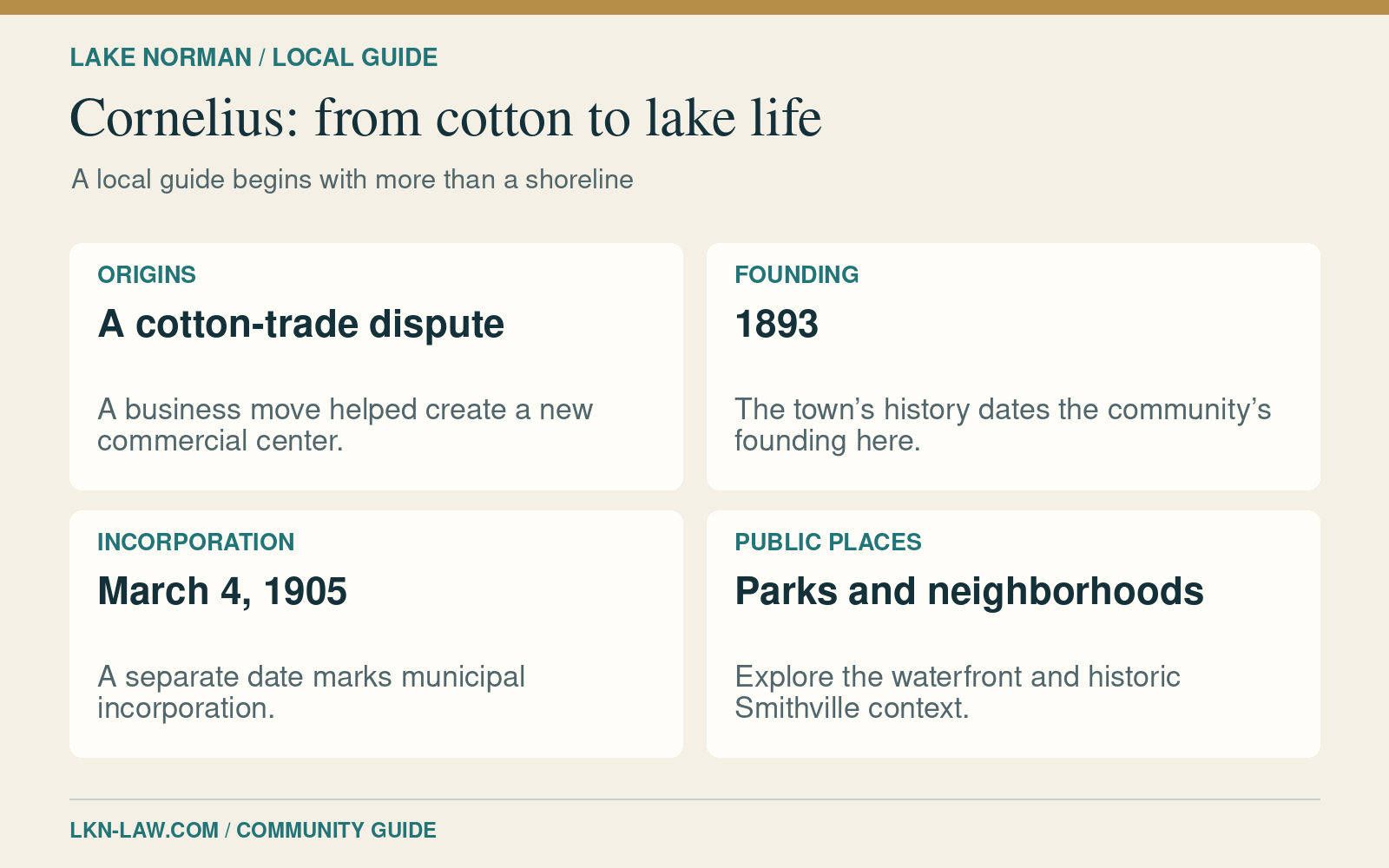
The Town of Cornelius’s history page dates the community’s founding to 1893 and its incorporation to March 4, 1905. It traces the town’s origins to a dispute about appointing an official cotton weigher in Davidson. One firm moved much of its operation south of the Davidson limits, helping create a new commercial center.
The North Carolina General Assembly’s centennial resolution identifies Joseph Benjamin Cornelius, the principal stockholder in the Cornelius Cotton Mill, as the town’s namesake. Read the legislative account of the town’s first century alongside the municipal history for two official perspectives.
This origin story is a useful reminder that a community can grow from practical business decisions: where goods are weighed, where money is invested and where people find work. When walking through the historic part of town, look for the relationship between commercial buildings, homes and transportation routes. Our longer Cornelius history provides additional context.
Choose a park for the day you actually want
Ramsey Creek Park and Beach give visitors access to Lake Norman through a county-managed setting. Mecklenburg County lists a swimming area, boat-launch opportunities, a playground, picnic shelters, trails and a fishing pier among its features. Swimming access and fees require a separate check of the current county information; a waterfront park should not be treated as a promise that every activity is available year-round.
For a different kind of outing, Cornelius’s parks plan describes Smithville Park as a gateway to the historic Smithville community, with sports fields, a playground, picnic space and a splash pad. That setting invites residents to think about the town’s neighborhoods as well as its water views. Consult the town’s parks and greenways plan for the broader system, then use the town website for current program and facility information.
A simple approach works well for families: choose one main activity and a backup. A planned beach afternoon might become a playground visit if swimming is unavailable. A field-based outing may need a different destination during organized use. Checking first preserves the relaxed pace people associate with lake life.

Give recreational property a place in your household records
A boat, waterfront home or shared family retreat can create a surprisingly large paperwork trail. Gather ownership documents, loans, insurance, maintenance contacts, association information and any agreements concerning use. Keep the materials together even if you are not facing a legal problem. An organized record helps everyone understand what exists and whom to call.
| What to organize | Question to discuss |
|---|---|
| Home and recreational property | Who owns each asset, and where are the documents? |
| Ongoing expenses | Who handles insurance, repairs, payments and scheduling? |
| Shared family use | Are expectations about access, guests and maintenance written down? |
| Future decision-making | Do the estate documents and named decision-makers reflect current wishes? |
These questions become particularly useful when planning for retirement, a blended family or the next generation. The Adkins Law estate-planning page explains the planning services available to Cornelius and Lake Norman residents. A consultation can examine the actual documents instead of relying on assumptions about how an asset will pass.
Build family arrangements around real routines
During separation, even an enjoyable community activity can require practical decisions. Who registers the child? Who transports sports equipment? What happens if a weekend plan changes? Write down the recurring arrangements before discussing a proposed parenting schedule. Existing agreements and orders should be reviewed before changes are made.
For a useful first conversation, bring a calendar showing ordinary school weeks, activities and work commitments. Add a separate list of property and financial concerns. The family-law resource center can help organize those questions.
Explore Cornelius with reliable starting points
Use the official town and county pages for current local information, then continue through the Lake Norman Brief’s town histories and legal guides. To discuss family law or estate planning, contact Adkins Law at 704-274-5677.
General community and educational information. A lawyer must review the facts and documents before giving advice. Check official facility pages before visiting.
This material is for general educational information, is not legal advice, and does not create an attorney-client relationship. Legal decisions depend on current law, the facts and the terms of your documents. Contact a North Carolina attorney for advice about your situation.