
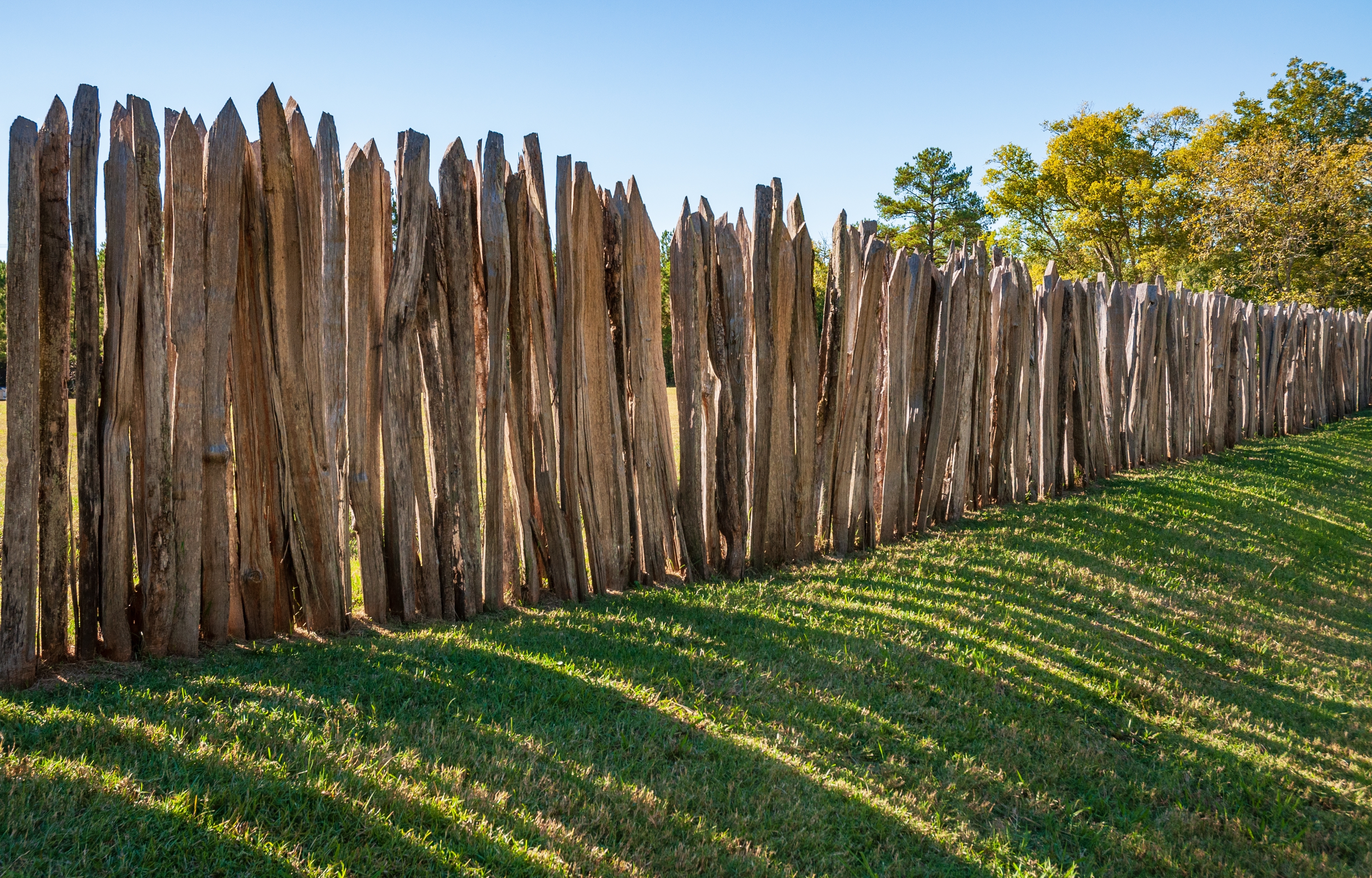

I. Introduction: A Different Kind of Battle
In the late spring of 1781, the backcountry of South Carolina was already old with war. Long before Continental soldiers dug trenches into its red clay, the land around Ninety Six had been shaped by generations of frontier life—by Native American paths, colonial traders, militia musters, and the lingering scars of earlier conflicts.
Those scars extended well beyond South Carolina. The Carolinas’ interior had been steeped in resistance long before muskets were raised in the Revolution. In Mecklenburg County, North Carolina, Presbyterian settlers influenced by radical Whig sermons—most notably those of the fiery Scots-Irish minister Alexander Craighead—had absorbed a theology of resistance that treated tyranny not merely as political failure, but as moral corruption. Craighead’s preaching in the 1750s and 1760s laid ideological groundwork that later found expression in open defiance, including the Mecklenburg Resolves and the skirmishes that erupted around Charlotte in 1780 as British authority tried—and failed—to impose itself inland.
The rolling hills and pine forests were not wilderness in the romantic sense, but a hard-edged borderland where loyalty, survival, and identity were constantly in question. This was not a place that belonged cleanly to any empire. It never had.
By the time Nathanael Greene arrived outside the town on May 22, 1781, Ninety Six had been a strategic crossroads for decades. Its name—likely derived from early colonial surveyors who believed it lay ninety-six miles from the Cherokee town of Keowee—reflected its origins as a measured point in a contested interior. During the French and Indian War, the region had already seen the movement of colonial militia, traders, and Native allies. Fortifications had risen and fallen nearby. Memories of that earlier imperial war still lived in the minds of older settlers who understood that great powers fought their contests not just along coasts, but in places like this—where roads met, supplies moved, and allegiance could be enforced.
Ninety Six was not a city. It was a fortified village, surrounded by farms, trading posts, and scattered homesteads. Its people were a mixture of Scots-Irish settlers, German farmers, English loyalists, enslaved Africans, and Native Americans navigating an increasingly dangerous frontier. When the American Revolution reached the South in earnest, it did not arrive as a clean ideological struggle. It arrived as a civil war. Neighbors chose sides. Families fractured. Old grudges hardened into violence.
By 1780, British forces had recognized Ninety Six for what it was: a linchpin of interior control. After capturing Charleston and asserting dominance across much of South Carolina, the British sought to hold the backcountry not through large armies, but through fortified posts manned by Loyalists—men who knew the terrain, spoke the language of the region, and believed, often sincerely, that British authority offered stability where rebellion promised chaos. Ninety Six became one of the strongest of those posts, its defenses deliberately constructed to withstand siege rather than battle.
When Greene arrived in the spring of 1781, the American Revolution itself was at a crossroads. Just four months earlier, American forces under Daniel Morgan had annihilated a British detachment at Cowpens. That victory had been swift, brilliant, and decisive—a masterclass in maneuver warfare and battlefield deception. Two months later, Greene had fought Lord Cornwallis at Guilford Courthouse in North Carolina, losing the field but inflicting casualties the British could not afford. Cornwallis, battered and bleeding, abandoned the Carolinas entirely and marched toward the coast, eventually turning north into Virginia.
Those two engagements—Cowpens and Guilford Courthouse—are rightly remembered as turning points. But between them and what followed lay Ninety Six, a battle unlike either. There would be no sweeping cavalry charges here. No dramatic collapse of enemy lines. No single moment of decision that could be captured in a painting. Instead, Ninety Six would be a test of endurance.
This was siege warfare—slow, technical, exhausting, and deeply personal. It required men to live in trenches under constant threat, to labor with pick and shovel in suffocating heat, to endure disease, hunger, and fear. It required commanders to trust time as a weapon, even as time threatened to undo them.
For Greene, Ninety Six represented his most demanding challenge yet—not because of the enemy’s numbers, but because of what victory required him to endure. He could not win here quickly. He could not win here cleanly. And he could not afford to fail outright.
Yet when the siege ended nearly a month later, Greene would withdraw without capturing the fort. On paper, it would be recorded as a British victory.
In reality, it marked the beginning of the end for British power in the South.
Ninety Six was a tactical failure for the American army—but a strategic success of the highest order. It demonstrated that British control of the interior could not be sustained, even when defended skillfully and stubbornly. It forced the enemy to retreat inward, toward the coast, abandoning the countryside they could no longer hold.
More than any other engagement in the Southern Campaign, Ninety Six revealed the true nature of Greene’s war: not a quest for glory, but a deliberate campaign of erosion—of patience, pressure, and relentless denial.
And for the men who lived it—who dug, fought, sweated, and bled in the Carolina heat—it was a battle they would never forget.

II. The Strategic Moment After Guilford Courthouse
When the guns fell silent at Guilford Courthouse on March 15, 1781, no one on the field could honestly claim victory.
The road to Guilford had already been soaked in blood and warning. Months earlier, at the Waxhaws in May 1780, British dragoons under Banastre Tarleton had cut down surrendering Continentals in what Patriots remembered as a massacre. That single episode hardened backcountry resistance, convincing many that compromise with British arms was no longer possible. In February 1781, at Cowan’s Ford on the Catawba River, North Carolina militia under General William Lee Davidson—operating near what would later become Mooresville—attempted to delay Cornwallis’s advance. Davidson was killed in the crossing, but his stand bought Greene precious time and further demonstrated that interior resistance could bleed British momentum without decisive battle.
British General Lord Charles Cornwallis had driven Nathanael Greene’s army from the field, but the cost was staggering. More than a quarter of his force lay dead or wounded—officers and veterans he could not replace. The battlefield in the Carolina woods told a grim story: shattered regiments, exhausted survivors, and a commander staring at the limits of British power in the interior.
For Greene, Guilford Courthouse was a loss only in the narrowest tactical sense. He had done exactly what he intended—force Cornwallis to fight on American terms, draw him deep into hostile territory, and bleed him dry. Greene’s army remained intact. Cornwallis’s did not.
Cornwallis’s Dilemma
Cornwallis now faced an impossible choice.
To remain in the Carolina backcountry meant risking annihilation. Patriot militia harassed his foraging parties. Loyalist support, once promised in abundance, had proven unreliable and often illusory. Roads were poor. Supplies were scarce. Every mile inland stretched British logistics thinner.
So Cornwallis made a fateful decision: he would abandon the Carolinas.
He marched his battered army east to Wilmington, North Carolina, seeking resupply by sea. From there, convinced that the rebellion in the South could only be ended by striking at its northern heart, he turned north toward Virginia—a decision that would ultimately lead him to Yorktown.
In doing so, Cornwallis ceded the interior of the Carolinas.
Greene’s Insight: Opportunity, Not Escape
Many American commanders would have chased Cornwallis. Greene did not.
Where others saw a retreating enemy, Greene saw something far more important: a vacuum of power. Cornwallis’s departure meant that British control of the South now rested on a thin chain of isolated posts—Charleston on the coast, and a handful of interior outposts manned by Loyalists, dependent on long and vulnerable supply lines.
Greene understood the nature of the war in the South better than any American general. This was not a war that would be won by holding cities. It would be won by controlling people—by denying the British the ability to govern, recruit, tax, and intimidate. So Greene let Cornwallis go.
Instead of pursuing the British main army, Greene pivoted south, back into South Carolina—the very ground Cornwallis had fought so hard to claim. It was a decision rooted in patience, confidence, and a deep understanding of the political geography of rebellion.
The Carolina Backcountry in 1781
To understand Greene’s choice, one must understand the Carolina backcountry itself.
This was not a region of unified rebellion or loyalism. It was a mosaic of communities shaped by migration, religion, land hunger, and memory. Many settlers were recent arrivals—Scots-Irish Presbyterians, German farmers, frontier traders—who distrusted distant authority of any kind. Others, particularly wealthier landowners and officials, leaned Loyalist, fearing social upheaval more than imperial rule.
Militia leaders like Francis Marion, Thomas Sumter, and Andrew Pickens had become local legends by waging a brutal partisan war—ambushing supply lines, striking outposts, and melting back into swamps and forests. Their war was intimate and unforgiving. Prisoners were rare. Mercy rarer still.
British attempts to impose control had hardened resistance rather than crushed it.
Greene knew that if he could remove British garrisons from the interior, Loyalist authority would collapse under its own weight. Without forts, British power would exist only on paper.
Greene’s Southern Strategy
Greene’s strategy after Guilford Courthouse was revolutionary not because it promised dramatic victories, but because it deliberately avoided them. Where other commanders sought a decisive battle to end the war in the South, Greene recognized that such a battle would almost certainly favor the British. The Crown still possessed professional regulars, naval mobility, and the ability to shift forces rapidly along the coast. To meet that understanding with audacity alone would have been to gamble the Southern Army itself.
Instead, Greene chose restraint as a form of aggression.
He resolved to avoid large, decisive battles unless forced into them, not out of timidity, but out of calculation. Every engagement would be weighed against what it cost in men, time, and momentum. A battle won at too high a price could be as damaging as a battle lost. Greene had learned this lesson early in the war, and Guilford Courthouse had confirmed it beyond dispute. The British could win the field and still bleed themselves into strategic exhaustion.
Time, therefore, became Greene’s most reliable weapon. He understood that British power in the South depended on momentum, confidence, and the ability to impose authority across vast distances. If that momentum could be slowed—if British forces could be made to linger, to march farther, to defend more ground with fewer men—the structure of occupation would begin to fail. Greene was willing to trade space for time, and time for pressure, knowing that the arithmetic of endurance favored the Patriots.
Equally important was Greene’s willingness to let militia and geography do what conventional armies could not. The Southern backcountry was not suited to European-style warfare. Its rivers, swamps, forests, and poor roads punished large formations and rewarded small, mobile forces familiar with the terrain. Greene did not attempt to suppress partisan warfare or subordinate it entirely to Continental operations. Instead, he integrated it into his strategy, allowing leaders like Marion, Sumter, and Pickens to harass supply lines, isolate garrisons, and keep Loyalist communities in a state of constant uncertainty. Geography itself became an ally, stretching British logistics thin and turning every mile inland into a liability.
Most decisively, Greene targeted positions rather than armies. He understood that British control of the South did not rest on the presence of a single field army, but on a network of fortified posts that projected authority into the countryside. These posts collected supplies, encouraged Loyalist recruitment, gathered intelligence, and intimidated wavering populations. Destroying them did not require defeating British regulars in open battle; it required making those positions untenable.
One by one, the British outposts fell.
Fort Watson was reduced not by overwhelming force, but by ingenuity and persistence. Camden, long a symbol of British power after Gates’s defeat there, was abandoned under pressure. Fort Motte fell through a combination of siege and local cooperation. Each success did more than remove a garrison—it chipped away at the illusion of British dominance in the interior. Communities that had hedged their loyalties began to drift toward the Patriot cause, not because of ideology alone, but because British protection was no longer reliable.
By the spring of 1781, the British position in South Carolina had narrowed dramatically. Only two major strongholds remained. Charleston, heavily fortified and supplied by sea, was effectively immune to immediate reduction. It could be isolated, but not easily taken. The other was Ninety Six—isolated, inland, dependent on long and vulnerable supply lines, and surrounded by a countryside that no longer accepted British authority.
Greene chose Ninety Six not because it was the easiest target, but because it was the most revealing one. If British power could not be sustained there—deep in the interior, supported by Loyalists, and defended by prepared fortifications—then it could not be sustained anywhere beyond the coast. The siege of Ninety Six would not merely test the strength of a fort. It would test the viability of Britain’s entire Southern strategy.
That was the logic that carried Greene south, back into enemy-held territory, and into the longest field siege of the American Revolution.
The Men Who Would Fight There
Greene’s army was not large, but it was hardened.
Veterans of the Maryland and Virginia Lines marched alongside militia who had lost homes, brothers, and farms to the war. These were men who understood that victory might not come in their lifetime—but defeat would come swiftly if they failed.
Opposing them were Loyalists who believed just as fiercely in their cause. Many at Ninety Six had taken up arms not for pay, but for survival—convinced that a Patriot victory would bring retribution. Under Lieutenant Colonel John Harris Cruger, they prepared to hold their ground.
Cruger knew what Greene intended. He also knew his fort was designed to resist exactly this kind of war.
A War Without Decisive Battles
By 1781, the American Revolution no longer resembled the war it had been at its outset. In the North, it had settled into something approaching stalemate. George Washington shadowed Sir Henry Clinton around New York, neither commander able—or willing—to force a decisive engagement that might risk everything. The war there had become as much a contest of diplomacy, alliance, and endurance as of armies in the field. French support mattered as much as battlefield maneuver, and time itself had become a strategic factor.
To the west, along the Ohio Valley and the trans-Appalachian frontier, the conflict took on a different character altogether. Fighting was intimate, violent, and irregular—marked by raids, counter-raids, and cycles of reprisal between settlers, Loyalists, and Native nations. It was a war without clear fronts or formal conclusions, where survival often mattered more than allegiance and victory was measured in months rather than moments.
But it was in the South that the Revolution entered its most fluid—and most dangerous—phase.
There, the war refused to conform to traditional expectations. British forces could advance deep into the interior, win engagements, occupy towns, and still find their authority evaporating beyond the range of their muskets. Patriot forces could lose battles, abandon ground, and yet emerge strategically stronger than before. Control shifted constantly, shaped less by flags planted on courthouses than by which side could remain present without collapsing under the strain.
In this environment, decisive battles became increasingly irrelevant. Victory would not come from a single annihilating blow. It would come from endurance—by determining which side could justify the continued expense of occupation, which could replace its losses, which could maintain legitimacy in the eyes of a population exhausted by war. The question was not who won the most engagements, but who could stay.
Nathanael Greene understood this with uncommon clarity.
His decision after Guilford Courthouse was therefore not dramatic, nor was it designed to inspire immediate celebration. He did not pursue Cornwallis in hopes of a climactic showdown. He did not declare victory. He simply repositioned, redirected his army, and applied pressure where British strength was weakest. It was a decision rooted in realism rather than romance, informed by the understanding that time, distance, and cost would decide the Southern Campaign more surely than battlefield brilliance.
That decision forced the British to confront a brutal and unfamiliar truth: they could win battles and still lose the war.
Every engagement that bled their ranks, every mile marched inland, every garrison that required reinforcement narrowed their options. Tactical success could no longer guarantee strategic security. The very act of holding territory became a liability when that territory demanded constant defense against a hostile countryside.
Ninety Six would become the place where this truth was tested most clearly.
There, British engineering, discipline, and courage would succeed on their own terms. The fort would hold. The assault would fail. Yet the strategic cost of that success would prove unsustainable. Ninety Six revealed that in the Southern Campaign, survival was not victory, and holding ground was not the same as controlling a country.
It was a war without decisive battles because it was a war decided elsewhere—by endurance, attrition, and the quiet arithmetic of what an empire could no longer afford.

III. Why Ninety Six Mattered
To understand why Nathanael Greene was willing to risk time, men, and momentum on an isolated inland post, one must first understand what Ninety Six was—and what it represented—in the eighteenth-century South.
The logic was the same one that had undone British hopes elsewhere in the interior. Charlotte had proven impossible to hold after Cornwallis’s occupation in the fall of 1780, earning the nickname “the hornet’s nest” as militia fire and civilian resistance made sustained control untenable. Mooresville and the Catawba crossings had shown that even when the British advanced successfully, they did so at mounting cost. Ninety Six represented an attempt to fix that problem permanently—a fortified answer to a population that refused to submit.
A Crossroads in the Backcountry
Ninety Six occupied a critical geographic position in the South Carolina backcountry. Long before the Revolutionary War, it had served as a waypoint on a web of rough roads and trading paths that linked the coastal lowcountry with the western frontier and the Cherokee backcountry beyond.
Merchants, traders, and messengers passed through the area regularly. So did militia patrols, couriers, and refugees fleeing earlier phases of the war. In a region defined by distance and isolation, Ninety Six functioned as a rare point of concentration—a place where information moved faster, supplies could be gathered, and authority could be asserted.
Its importance was not derived from size or wealth, but from location. Control of Ninety Six meant influence over a wide rural expanse that otherwise resisted centralized rule. For the British, whose strategy depended on stabilizing the interior through Loyalist support, this made Ninety Six indispensable.
The Name and the Place
The town’s unusual name predated the Revolution by decades. One commonly accepted explanation is that early traders believed the site lay ninety-six miles from the Cherokee town of Keowee, an important reference point in colonial mapping. Whether the distance was exact mattered less than the fact that Ninety Six had become a recognized landmark in frontier geography—a known place in a largely unmapped world.
By the mid-eighteenth century, the area had already seen conflict. During the French and Indian War, Ninety Six served as a colonial outpost and supply point. A rudimentary fortification existed there during that earlier war, reflecting its longstanding military utility. While the Revolutionary-era Star Fort was a later and more sophisticated construction, it stood on ground already marked by imperial rivalry and frontier violence.
This continuity mattered. The British were not inventing Ninety Six’s importance in 1780—they were inheriting it.
From Trading Post to Loyalist Stronghold
When the British occupied Ninety Six in 1780, they recognized immediately that the town could serve as the linchpin of their inland control. The surrounding region contained a significant Loyalist population—farmers, former colonial officials, and settlers who feared Patriot reprisals or doubted the rebellion’s prospects.
Ninety Six became a recruitment center, a place where Loyalists could rally under British protection. It also functioned as a supply depot, storing food, arms, and equipment destined for other posts or militia operations. From here, British commanders could project authority outward, reinforcing Loyalist resolve while intimidating wavering communities.
In a war defined by allegiance as much as firepower, this made Ninety Six more than a military position—it was a political statement.
The Fort and Its Design
The fortifications at Ninety Six reflected both experience and adaptation. The centerpiece, the Star Fort, was an earthen redoubt shaped with angular points that allowed defenders to fire along multiple approaches, reducing blind spots and maximizing overlapping fields of fire. This design was not accidental. Star-shaped forts had been used in European warfare for centuries and were well suited to resisting siege attacks.
Around the fort lay a deep ditch, sharpened abatis made from felled trees, and palisaded walls. A secondary redoubt guarded the water supply—an acknowledgment that siege warfare often turned on endurance rather than firepower. Though the garrison possessed only a handful of small cannons, the fort’s strength lay in geometry, earthworks, and preparation rather than artillery.
Unlike the crude stockades of earlier frontier wars, Ninety Six was designed specifically to withstand a determined enemy. Its defenses reflected lessons learned from the French and Indian War and the early years of the Revolution, when poorly constructed posts had fallen quickly.
A Symbol of British Authority Inland
By the spring of 1781, Ninety Six had taken on symbolic weight far beyond its physical footprint. With British forces withdrawing or defeated across much of the backcountry, Ninety Six stood as one of the last visible signs that the Crown still ruled inland South Carolina. Its survival suggested resilience. Its loss would signal collapse.
For Loyalists, Ninety Six represented protection and legitimacy. For Patriots, it represented unfinished business—and a constant threat to their fragile gains. As long as Ninety Six remained in British hands, Greene could not claim control of the interior, nor could he safely isolate Charleston.
Why Greene Could Not Ignore It
Nathanael Greene understood that British power in the South could not be sustained from the coast alone. Charleston, no matter how well fortified or supplied by sea, was not enough. Armies did not exist in isolation. They required food drawn from the countryside, intelligence gathered by local supporters, recruits willing to fight for the cause, and—perhaps most critically—a sense of psychological dominance that convinced populations resistance was futile. All of those things flowed from control of the interior. Without it, British authority in the Carolinas was little more than a façade.
Ninety Six represented the linchpin of that inland system. As long as it remained in British hands, it projected influence far beyond its walls. It anchored Loyalist confidence, enabled recruitment, and served as a reminder that the Crown could still reach deep into the backcountry. To bypass it would have been to accept a permanent threat behind American lines—a fortified splinter capable of bleeding Greene’s army through raids, intimidation, and disruption even as the war moved elsewhere.
Greene recognized the risk of addressing it directly. Siege warfare was slow and unforgiving. It consumed time, manpower, and morale. It exposed his army to disease, exhaustion, and the ever-present danger of British relief forces marching from the coast. But the alternative was worse. Leaving Ninety Six untouched would have allowed British authority to persist in a region Greene was otherwise reclaiming, undermining every gain his strategy had produced.
By committing to Ninety Six, Greene sought to break the backbone of British interior control. His objective was not merely to take a fort, but to sever British influence in the backcountry, erode Loyalist morale, and force the enemy into an unsustainable choice: either pour men and resources into defending an isolated inland post, or abandon the interior altogether. In making that choice unavoidable, Greene was not chasing a battlefield victory. He was reshaping the strategic landscape of the Southern Campaign itself.
The Broader War Beyond Ninety Six
While Nathanael Greene prepared to commit his army to the slow, grinding work before Ninety Six, the American Revolution continued to unfold across a fractured continent, each theater moving to its own rhythm and governed by its own pressures. Events elsewhere would soon determine the war’s ultimate outcome, but in the spring of 1781, few of those connections were yet visible. What bound them together was not coordination, but consequence.
In Virginia, Lord Charles Cornwallis was maneuvering northward, chasing advantage through raids, skirmishes, and the logic of movement that had carried British armies from New York to the Carolinas. He did not yet know that his path would narrow, that French naval power would close the sea behind him, or that George Washington would soon seize the opportunity to strike decisively at Yorktown. In the moment, Cornwallis was still operating under assumptions that British mobility and battlefield success could force the rebellion into submission.
In the North, the war had settled into a weary stalemate. George Washington shadowed British forces around New York, neither side able—or willing—to risk a decisive engagement. Diplomacy, supply shortages, and exhaustion shaped strategy as much as gunfire. The Revolution there had become a test of endurance, fought as much in European courts as on American soil.
Along the western frontier, the conflict took on yet another character altogether. Settler expansion collided violently with Native nations, producing a brutal, localized war that ran parallel to the Revolution but was never fully integrated into its grand strategy. Raids, reprisals, and displacement continued largely out of sight of the main armies, reminding all involved that independence would not bring peace to every border.
But it was in the Carolinas that the Revolution entered its most fluid and decisive phase. Here, the war was no longer about capturing capitals or defeating armies in the field. It was about control—of roads, rivers, farms, and loyalty. British authority in the South depended not on holding Charleston alone, but on sustaining a network of inland strongholds that made royal power visible and credible far from the coast.
Places like Ninety Six mattered precisely because they were remote, contested, and fiercely defended. They were not glamorous objectives, but they were essential ones. From them flowed recruitment, intelligence, supplies, and the psychological assurance that the Crown still governed the interior. Remove those anchors, and British power would collapse inward, no matter how many battles were technically won. That was the reality Greene understood.
If Ninety Six fell—or even if it became impossible to hold—British authority in the backcountry would unravel. Loyalist confidence would falter. Supply lines would fray. The countryside would no longer sustain an occupying force. If Ninety Six held, however, the Southern Campaign risked stagnation, grinding forward without resolution while British influence continued to poison American control from within.
That is why Ninety Six mattered so profoundly. It was not a side theater to the war’s great moments, but one of the places where the Revolution’s outcome was being quietly decided. While armies marched elsewhere and diplomats negotiated abroad, the fate of British power in the South hinged on whether positions like Ninety Six could endure the pressure Greene was determined to apply.
The war beyond Ninety Six would eventually produce a climactic victory at Yorktown. But without what happened in the Carolinas—without the slow suffocation of British interior control—that victory would have rested on far shakier ground.

IV. Why It Was Called Ninety Six
Long before it became a battlefield, before earthen walls rose from the soil or artillery spoke across the clearing, and long before its name appeared in dispatches sent to London or Philadelphia, Ninety Six existed first as a description.
In the early eighteenth century, the South Carolina backcountry was not yet a world of counties, borders, or towns laid out with tidy logic. It was an interior realm defined by forests that seemed endless, rivers that bent and doubled back on themselves, ridgelines that interrupted travel without warning, and footpaths worn thin by repetition rather than design. Much of it remained unmapped in any meaningful way. What Europeans knew of the region came less from ink on parchment than from experience—what could be reached in a day, where one could trade, where water could be found, where danger might wait.
Travelers moving inland from Charleston did not measure their progress by signposts or mile markers. They measured it by time and fatigue, by remembered distances, by the names of places that mattered because people returned to them again and again. In that world, distance itself became a language.
It was within that practical, uncertain geography that Ninety Six acquired its name.
To colonial officials and traders on the coast, the interior appeared on maps as great stretches of near emptiness. Rivers were traced with confidence; Native towns were often carefully noted; everything else faded into vague suggestion. In that environment, naming places by their relationship to something known was not an act of poetry but of necessity. A place did not need a name because it was settled. It needed a name because people needed to find it again. Ninety Six began as one of those names.
The most widely accepted explanation—and the one that aligns with how people actually navigated the backcountry—is that traders believed this stopping place lay roughly ninety-six miles from the Cherokee town of Keowee. Keowee was no arbitrary point of reference. It was one of the principal towns of the Cherokee people in the foothills of the Blue Ridge, a center of political authority, diplomacy, and trade. For Europeans pushing inland from the coast, Keowee functioned as an anchor—an inland certainty in an otherwise fluid frontier.
To say a place was “ninety-six miles from Keowee” was to locate it meaningfully. It placed the spot within a shared mental map, one that depended not on jurisdictional boundaries but on movement and memory. Distance from Keowee told a trader roughly how far he had come and how far he still had to go. It told officials where influence might extend. It told settlers where they stood in relation to Native power and frontier risk.
In the early 1700s, the backcountry operated through networks that bore little resemblance to the world that would come later. Trade moved along paths beaten into the land by centuries of Native use. Wagons followed where terrain allowed and stopped where it did not. Markets were informal, often temporary. Native towns appeared prominently on European maps because they were stable, known, and politically important in a landscape that shifted constantly. Within that system, a name like Ninety Six made sense.
Modern readers may pause over the specificity of the number and wonder how anyone in the 1730s could claim such a measurement with confidence. The answer lies not in imagining modern precision, but in understanding colonial practice. Surveying tools existed, and skilled professionals used them when required. Chains—most commonly Gunter’s chain—were standardized instruments. Compasses provided bearings. Land could be measured, recorded, and described with care when the purpose demanded it.
But traders and travelers were not conducting straight-line surveys through wilderness. They moved along routes shaped by terrain—over ridges, across creeks, around swamps, and through detours forced by weather or conflict. Distance accumulated the way travel itself accumulated: step by step, day by day. Journeys were counted as much in time as in miles. A place that lay “ninety-six miles” away was one that had been reached often enough, by enough people, that the estimate became shared knowledge. Precision was not the goal. Repeatability was.
If multiple travelers, moving along the same route over years, agreed that this was the place where ninety-six miles from Keowee ended, the number became fixed. The usefulness of the label mattered far more than its mathematical accuracy. And because it was useful, it endured.
In the colonial backcountry, paths came before maps. Routes existed because people used them. Only later did surveyors and officials attempt to impose order on movement that had already taken shape. That is why Ninety Six appears early in records as a reference point rather than a settlement. It was a place where paths converged, where travelers stopped, where trade paused and resumed. Measurement followed movement, not the other way around.
The persistence of the name tells us something essential. This was not a place encountered once and forgotten. It was a waypoint people returned to, spoke of, and relied upon. It mattered enough to name—and the name mattered enough to last.
When the name took hold, the land around Ninety Six was sparsely populated. Farmsteads were scattered across the countryside, often separated by long stretches of forest. Small clusters of homes appeared near water crossings or along established paths. Reliable supply points were few. Travel was slow and exhausting, shaped by seasons and weather. Roads, such as they were, consisted largely of mud and ruts, dust and improvisation.
To many along the coast, this region felt distant, almost foreign—inside the colony, yet not fully of it. But people lived here. They farmed, traded, raised families, and navigated a frontier world that demanded resilience and caution in equal measure.
That caution was not unfounded. The backcountry carried a living memory of violence. Long before the American Revolution, settlers in this region had experienced cycles of fear, fort-building, and defense tied to earlier conflicts. The French and Indian War and other frontier struggles left scars on both the land and the people. Communities learned, sometimes brutally, that security could vanish quickly and that fortified places were not luxuries but necessities.
This memory shaped how people viewed locations like Ninety Six. It was never just a crossroads. It was a place where control mattered—where authority could be asserted, challenged, or lost.
By the time the American Revolution reached the South in full force, Ninety Six was already known as a strategic node. That reputation had been earned over decades of movement, trade, and survival. It did not arise because of the war. The war merely revealed it.
That is why the name matters to the siege story.
“Ninety Six” is not a curiosity or a footnote. It is a clue. It tells us why the British chose it as an inland anchor, why Loyalists rallied around it, and why Greene could not afford to bypass it. This was not a random village that happened to be fortified. It was a place defined by connection—by distance, movement, and memory.
That is why it became a prize. And that is why its siege carried consequences far beyond its earthen walls.

V. The Opposing Commanders
By the time the armies settled into the long standoff at Ninety Six, the outcome would hinge less on raw numbers than on the men who commanded them. The siege became, in many ways, a contest between two very different kinds of leadership—two lives shaped by commerce, politics, belief, and exile as much as by war.
Greene’s understanding of interior resistance had been shaped by earlier sacrifices. The death of General William Lee Davidson at Cowan’s Ford was not lost on him; Davidson had embodied the kind of local leadership Greene depended on—men who knew rivers, roads, and communities better than any regular army ever could. That network of local sacrifice, stretching from Mecklenburg County through the Catawba Valley and into South Carolina, formed the invisible scaffolding of Greene’s strategy.
On the American side stood Nathanael Greene, a man whose rise to military prominence would have seemed improbable to anyone who knew his beginnings. Born into a devout Quaker family in Rhode Island, Greene came of age in a world that prized restraint, discipline, and moral seriousness over ambition. He educated himself obsessively, reading military theory and classical history at a time when such interests were frowned upon by his religious community. His curiosity, combined with a physical limp that barred him from traditional militia service, might have consigned him to obscurity.
Instead, the Revolution gave Greene a purpose that neither his faith nor his society had anticipated.
From the earliest days of the war, Greene demonstrated a rare capacity to think beyond the next engagement. He learned quickly—sometimes painfully. Early failures in the New York campaign, including the loss of Forts Washington and Lee, haunted him for years. But they also shaped him. Greene absorbed mistakes rather than denying them, developing an instinct for logistics, supply, and endurance that most battlefield commanders never mastered.
His appointment as Quartermaster General was not a sideline—it was a crucible. Greene learned how armies lived or died based not on courage alone but on shoes, wagons, food, and timing. When George Washington later entrusted him with command of the Southern Department in late 1780, it was not because Greene was the boldest general available, but because he was the most complete.
By the spring of 1781, Greene understood something fundamental about the war in the South: decisive victories were rare, but strategic collapse was possible. His goal was not to destroy British armies outright, but to make their position untenable. Time, attrition, distance, and morale were weapons just as surely as muskets and cannon. Greene accepted that he would lose battles. What he refused to accept was losing the war. At Ninety Six, that philosophy reached its most demanding test.
Across the field stood John Harris Cruger, a Loyalist commander whose life before the war placed him at the heart of the Atlantic world the Revolution sought to overturn. Cruger was born in Jamaica in 1737 into a powerful mercantile family whose interests stretched from the West Indies to New York and Bristol. Trade, not farming or frontier life, shaped his early years. He moved easily through the corridors of colonial commerce and politics, serving as a governor of King’s College in New York and as a member of the Royal Council.
Through his family’s trading firm, Cruger crossed paths with a young Alexander Hamilton, who worked as a clerk in the company’s St. Croix office and corresponded with Cruger regularly. Hamilton would later attend King’s College—an institution Cruger helped govern—before becoming one of the Revolution’s most influential figures. The irony was unmistakable: men who once inhabited the same commercial and intellectual world now stood on opposite sides of history.
When rebellion erupted, Cruger did not hesitate. In 1776, as Patriot mobs sought to seize him in New York, he fled and hid in a Loyalist Quaker’s barn until British troops retook the city. Though he had no formal military background, Cruger accepted a commission as lieutenant colonel and assumed command within DeLancey’s Brigade, a Loyalist provincial unit composed largely of experienced men from New York, New Jersey, and the Carolinas.
Cruger learned war not in theory, but in practice—defending Long Island, building and garrisoning forts, fighting at Savannah, Charleston, Camden, and eventually throughout the southern backcountry. By the time he arrived at Ninety Six in August 1780, he was no amateur. He understood fortification, discipline, and the psychology of defense. Over the fall and winter, he transformed Ninety Six from a vulnerable outpost into a layered defensive system, culminating in the construction of the star-shaped fort that would dominate the siege.
Cruger’s leadership was shaped by loyalty sharpened into conviction. He knew what defeat would mean. Loyalist officers had little hope of reintegration if the Patriot cause prevailed. Exile, confiscation, and ruin loomed over every decision. For Cruger and his men, Ninety Six was not just a post—it was a line beyond which there was no safe retreat.
When Greene appeared before the town in May 1781, Cruger refused to surrender without hesitation. He trusted his fortifications, his troops, and the time it would take Greene to break him. He also understood the clock. British relief forces were moving inland. If Ninety Six held long enough, the siege would collapse.
The asymmetry between the two commanders defined everything that followed.
Greene commanded more men. He had artillery. He had engineers, including the brilliant Polish officer Tadeusz Kościuszko, who supervised trenches and siege works with professional precision. But Greene lacked time. Every day the siege continued increased the risk of British reinforcements arriving from Charleston.
Cruger, by contrast, commanded barely five hundred and fifty Loyalists—but they occupied prepared ground. They fought from behind earth and timber, with clear fields of fire and interior lines. Their advantage lay not in mobility, but in position. Every hour they endured favored them.
What unfolded at Ninety Six was not a clash of personalities so much as a collision of philosophies. Greene pressed forward because he believed the strategic consequences justified the risk. Cruger held firm because he believed survival itself was victory.
Both men were correct in their own terms.
Greene would fail tactically at Ninety Six. His assault would be repulsed. His army would withdraw. Yet the siege would still help unravel British control of the interior by forcing the evacuation of the post soon afterward. Cruger would defend the fort successfully, yet lose the town and, eventually, the war he fought so fiercely to preserve.
At Ninety Six, leadership was not measured by who stood last on the field, but by how each commander understood time, consequence, and sacrifice. The siege revealed not heroes and villains, but two professionals locked into opposing visions of what endurance meant—and how much it would cost.
That tension, more than gunfire or earthworks, defined the struggle.

VI. The Defenses of Ninety Six
By the time Nathanael Greene’s army emerged from the pine forests and red-clay fields of the South Carolina backcountry in late May 1781, it was immediately apparent that Ninety Six was not a town that could be rushed or intimidated into surrender. What Greene saw before him was no longer merely a frontier settlement or a Loyalist outpost, but a deliberately engineered landscape—one designed not for maneuver or spectacle, but for resistance, endurance, and time.
At the center of this system stood the Star Fort, an eight-pointed earthen redoubt unlike anything most of the American soldiers had ever encountered. Its shape was not decorative, nor improvised. It was geometry applied with intent, a physical manifestation of European military science translated into Carolina soil. Every angle had been calculated, every projection designed to deny attackers safe approach and to allow defenders to fire not merely forward, but sideways and diagonally, sweeping the ground before the walls with intersecting lines of musketry.
The decision to fortify Ninety Six in this manner had been neither accidental nor hasty. After the British occupation of the region in 1780, Loyalist commanders quickly grasped a hard truth: Ninety Six lay deep inland, surrounded by a countryside that was increasingly hostile, unreliable, and prone to partisan warfare. It could not be held by manpower alone. It would survive only if it could resist siege. When Lieutenant Colonel John Harris Cruger assumed command in August 1780, he immediately ordered the strengthening of existing works and the construction of new defenses, understanding that what could not be held by force of arms might yet be held by earth, timber, and time.
The technical design of the Star Fort fell to Loyalist engineer Lieutenant Henry Haldane, a trained military engineer steeped in the principles that had governed European warfare since the seventeenth century. These principles—codified most famously by the French engineer Sébastien Le Prestre de Vauban—emphasized angular bastioned works, earthen construction, controlled fields of fire, and layered defenses that multiplied the effectiveness of limited manpower. Haldane’s work at Ninety Six reflected that lineage. What rose from the red clay soil was not a fortress of stone and permanence, but a fort shaped entirely for survival.
The Star Fort was built of earth rather than masonry, a deliberate choice grounded in experience. Stone walls shattered under artillery fire, sending lethal fragments inward; packed earth absorbed shock, slumped rather than exploded, and could be repaired overnight with shovel and basket. The fort’s projecting points allowed defenders to rake advancing attackers from multiple directions, ensuring that no approach remained unpunished. Any force that pressed toward one face of the fort would find itself enfiladed from the flanks, exposed to fire it could neither see nor silence.
Encircling the fort was a deep ditch, dug by hand, its excavated soil thrown inward to thicken the ramparts. Beyond that lay abatis—trees felled outward, their limbs sharpened and interlocked into a chaotic barrier that tore clothing, slowed movement, and forced attackers to pause under fire. Time spent hacking through abatis was time measured in casualties. A wooden palisade and earthen embankments tied the Star Fort to the town itself, while covered communication trenches allowed defenders to move between positions without exposing themselves. A smaller redoubt guarded the water supply at Spring Branch, a detail that revealed a sophisticated understanding of siege warfare: walls mattered, but water mattered more.
The fort mounted only three small three-pounder cannon, but artillery was not its strength. Design was. Geometry replaced firepower. Engineering compensated for numbers.
Building this defensive system had been a feat of sustained labor. Construction began in the fall of 1780 and continued through winter into early 1781. Loyalist soldiers provided much of the manpower, joined by enslaved African Americans compelled into grueling physical work. Earthworks demanded relentless effort—digging, hauling, packing, shaping—all accomplished with hand tools. Each shovel of soil represented hours of labor, and each angle had to be correct. Errors made in October would be paid for in blood the following summer. By the time Greene arrived, the soil had settled, the ditches had deepened, and the fort had quite literally become part of the land itself. For Greene, this presented a problem that courage alone could not solve.
American military engineering in 1781 was still a developing art. The Continental Army had learned painfully over the course of the war, absorbing European methods through experience rather than tradition. Formal siegecraft required specialized training, patience, and mathematical precision. Greene, however, possessed one decisive advantage: his chief engineer, Colonel Tadeusz Kościuszko.
Kościuszko was a product of European military education, trained in fortification design, geometry, and applied mathematics. He understood fortresses not as static objects but as systems—relationships between earth, angle, distance, and time. His earlier work designing the defenses at West Point had already demonstrated his skill. At Ninety Six, his task was more difficult: to dismantle, inch by inch, what another trained engineer had built. This was the ancient domain of the sapper.
Military engineers—known as sappers—were named for the very act that defined their craft. To “sap” was to undermine, to eat away at an enemy’s strength not with a sudden blow, but through methodical, unseen advance. The term itself came from European siege warfare, where armies learned that fortifications were rarely overcome by force alone. Walls, parapets, and ditches were defeated instead by patience, mathematics, and labor—by men who moved the battlefield forward one shovelful at a time.
A sapper was not merely a digger. He was a specialist in controlled destruction, trained to read soil as carefully as a map, to understand how earth would hold or collapse, how timber would bear weight, and how angles of fire could kill or spare a man. Sapping demanded an intimate knowledge of physics and fatigue alike. It required men who could work for hours under fire, advancing toward the enemy without ever presenting a clear target.
Under Tadeusz Kościuszko’s direction, Greene’s army embraced this older, colder form of warfare. Rather than rushing the Star Fort, the Americans began cutting their way toward it through a system of approach trenches, or saps, dug in deliberate zigzag patterns. These angled lines were not aesthetic choices; they were calculated defenses against death. A straight trench invited enfilading fire, allowing defenders to rake its length with musketry or artillery. A zigzag broke those sightlines, forcing defenders to fire blindly or not at all.
As each sap crept forward, it was anchored by parallels—trenches dug parallel to the enemy’s works—where troops could gather, rest, and prepare for the next advance under relative safety. These parallels functioned as arteries of the siege, allowing men, tools, ammunition, and orders to move without exposure. From them, new saps would branch outward, inching closer to the fort’s walls.
The work was exhausting and relentless. Men dug at night to avoid sharpshooters, hauling soil away quietly, often with bare hands when tools were scarce or too loud. Earth was piled carefully to form parapets that could stop musket balls. Fascines—bundles of sticks—were used to shore up unstable ground. Every foot gained came at the cost of sweat, fear, and constant risk. British sorties attempted to disrupt the work, capturing tools, filling trenches, or killing engineers before they could withdraw.
This was warfare stripped of drama and drenched in endurance. There were no cheers when a sap advanced ten yards, no music when a parallel was completed. Progress was measured in survival. A successful day was one in which the line moved forward and the dead were few.
At Ninety Six, sapping was not merely a technique—it was a philosophy. It reflected Greene’s understanding that the fort could not be overwhelmed, only reduced. Each trench denied the British freedom of movement. Each parallel tightened the noose. The Star Fort was being defeated not by a single act of violence, but by the slow removal of space, safety, and certainty.
This was the quiet war beneath the louder one—a war fought by men whose victories were invisible until they were irreversible.
British defenders responded aggressively. Night sorties erupted from the fort, striking the trenches, capturing tools, killing diggers, and forcing the Americans to defend their own earthworks. The Americans adapted in turn, deepening their trenches, correcting angles, and creeping closer. What unfolded was not merely a siege, but an engineering duel—calculation answering calculation, shovel answering shovel.
The most dramatic expression of this duel was the construction of the Maham Tower, proposed by Colonel Hezekiah Maham and inspired by earlier successes elsewhere in the campaign. Rising nearly thirty feet high, the wooden tower allowed American sharpshooters to fire down into the fort, briefly negating the protection of the parapets. For a time, British gunners were driven from their positions, hugging the earth under plunging fire.
Cruger adapted quickly. Sandbags were stacked atop the parapets, raising their height and restoring cover. British marksmen returned fire through loopholes. Attempts were made to burn the tower; fire was answered with fire. Each innovation was met with a countermeasure.
Kościuszko also ordered the excavation of a mine, a tunnel driven from the third parallel toward the base of the Star Fort, intended to be packed with powder and detonated beneath the wall. It was painstaking work, conducted in darkness and silence, measuring distance and direction by calculation and feel alone. The mine was never finished. Time ran out.
By mid-June, Greene faced an unforgiving reality. British relief forces were marching from Charleston. The siege works had reached their practical limits. Greene would be forced to choose between withdrawal and assault.
The Star Fort did precisely what it had been designed to do. It resisted.
Greene’s assault failed, and his army withdrew. Yet the engineering victory was incomplete. The British could hold the fort, but they could not hold the countryside. Within weeks, Ninety Six would be abandoned, its supplies destroyed, its strategic value exhausted.
Today, the earthworks remain. Trenches and parapets still cut the land, and the unfinished mine still runs beneath the soil—a rare, silent witness to the longest field siege of the American Revolution. At Ninety Six, engineering decided the battle. Endurance decided the war.

VII. Greene Chooses Siege Over Assault
When Nathanael Greene first came within sight of Ninety Six in late May of 1781, the decision before him was neither simple nor heroic in the conventional sense. This was not a battlefield that invited spectacle. There would be no dramatic cavalry charge sweeping the field, no sudden rush of bayonets through a collapsing line. What confronted Greene instead was something colder and more exacting: a problem of time, geometry, logistics, and restraint—a kind of problem that rewarded patience and punished impulse.
On paper, Greene had choices. He could attempt an immediate assault, hurling his men directly against the fortifications in the hope that surprise, momentum, and raw courage might overwhelm the defenders before the geometry of the works could assert itself. He could bypass Ninety Six entirely, leaving the Loyalist stronghold intact behind him while pushing deeper into South Carolina, gambling that the post would wither without attention. Or he could do the hardest thing of all: sit down in front of the fort and attempt a formal siege, committing his army to weeks of labor under fire in hostile territory while British relief forces remained very real, very mobile, and very dangerous. Each option carried risk, but only one offered control.
An immediate assault would have been the fastest—and the most dangerous—course. Greene understood this almost at a glance. The Star Fort had been built precisely to repel frontal attack. Its earthen walls absorbed artillery fire rather than shattering under it. Its angular design created overlapping fields of musketry that punished attackers from multiple directions at once. A deep ditch and dense abatis ensured that any assaulting force would be slowed, tangled, and exposed long before it reached the parapet. To storm it outright would be to gamble the Southern Army itself.
Greene could not afford such a gamble. His was not an expendable force. Every regiment under his command had already been worn thin by months of marching, hunger, disease, and combat. A catastrophic loss here would not simply cost him a battle—it could unravel the entire Southern Campaign. In the South, there were no deep reserves waiting behind the lines. Once men were lost, they were gone.
Bypassing Ninety Six, however tempting, posed a different but equally serious danger. Leaving a fortified Loyalist garrison intact in his rear would threaten Greene’s supply lines, embolden Loyalist resistance throughout the backcountry, and undermine the very strategy that had drawn him south in the first place. Ninety Six was not an isolated village. It was a hub—a node of authority and influence that radiated power far beyond its walls. If it remained standing, British control of the interior would remain credible. Greene understood that the backcountry could not be reclaimed piecemeal. Its strongpoints had to be systematically dismantled. That reality narrowed Greene’s options until only one remained.
A siege was not a sign of hesitation or weakness. It was an acknowledgment of facts on the ground. Choosing siege warfare meant accepting delay, discomfort, and inevitable criticism in exchange for methodical progress. It meant trusting engineering over enthusiasm and discipline over daring. It also meant embracing a fundamental truth of the Southern War: victory would not come through dramatic, single-day triumphs, but through attrition—by exhausting British manpower, logistics, and political authority until their position collapsed under its own weight.
In choosing siege over assault, Greene made clear how he understood time itself. To him, time was not an enemy to be outrun, but a weapon to be wielded. Where other generals sought decisive engagements, Greene sought cumulative pressure. He was willing to endure accusations of timidity or indecision if the long-term result justified the short-term discomfort. This quiet confidence—this willingness to let criticism pass while the enemy bled slowly—set Greene apart from many of his contemporaries and would define the Southern Campaign. Once the decision was made, Greene turned to the man best equipped to execute it.
Colonel Tadeusz Kościuszko had been with the Continental Army since 1776, but his importance extended far beyond seniority. Trained in European military engineering and steeped in the science of fortification and siegecraft, Kościuszko understood warfare as a system rather than a spectacle. He had already demonstrated his abilities at Saratoga, where his obstructions and fieldworks helped starve Burgoyne’s army into surrender, and at West Point, where his defensive designs transformed the Hudson River into an almost impassable barrier for British fleets.
Greene trusted Kościuszko precisely because Kościuszko understood limits—of men, of soil, of time, and of human endurance. Siege warfare was not about brilliance in a single moment; it was about calculation repeated daily, under pressure, without error. Every trench had to be cut at the proper angle. Every approach had to minimize exposure. Every yard gained had to be held.
Under Kościuszko’s direction, Greene committed fully to engineering the reduction of Ninety Six. Trenches would be dug methodically. Parallels would creep forward yard by yard. Artillery would be positioned only when it could be used to maximum effect. Sharpshooters would be elevated. Mines would be planned. Nothing would be rushed, because rushing was how men died.
This choice placed extraordinary demands on Greene’s army. The men would dig instead of charge, sweat instead of shout, and labor under fire rather than meet it head-on. It was not the kind of warfare most soldiers imagined when they enlisted, and it required a discipline of a quieter, more exhausting kind—one measured in blisters, sleepless nights, and relentless tension rather than moments of glory.
Yet this, too, reflected the reality of the war in 1781. Greene was not fighting for headlines or monuments. He was fighting to make British control of the South impossible. Ninety Six stood squarely in the way of that objective, and it would be dealt with not by reckless courage, but by deliberate, grinding pressure applied day after day.
In choosing siege over assault, Greene revealed the core of his genius. He understood that wars are not won by the battles that look the best in retrospect, but by the decisions that preserve armies, exhaust enemies, and leave no viable path forward for the opposition. At Ninety Six, Greene did not choose the fastest road. He chose the one that could be walked to the end.

VIII. Life Inside the Siege
The siege of Ninety Six did not begin with a shout. It began with digging.
Many of the men turning earth outside Ninety Six had already seen the darker side of the war. Some had marched after the slaughter at Waxhaws. Others had crossed rivers slick with winter ice at Cowan’s Ford. They understood, with bitter clarity, that this war was not decided by formalities. Digging was not beneath them; it was survival translated into labor.
That is the first thing most people miss when they imagine eighteenth-century warfare. We picture lines of men, drums, flags, smoke, the sudden violence of volleys. But siege warfare—real siege warfare—was built out of quieter, more punishing work. It was geometry made physical, day after day, under a sun that seemed intent on boiling the life out of everything that moved.
When Greene committed to a formal siege, he committed his army to the oldest truth of that kind of fight: you do not defeat a fort by wishing. You defeat it by approaching it in a way that keeps men alive long enough to matter.
That is why the trenches at Ninety Six bent and zigzagged like a drawn-out lightning bolt. Those angles weren’t improvisation. They were survival.
A straight trench aimed directly at the Star Fort would have been a gift to Cruger’s garrison. The defenders had been given an engineered advantage: the fort’s points and angles were designed to sweep the ground with musket fire. If the Americans cut a direct line toward it, British rifles and cannon could rake that trench from end to end, turning it into a long, shallow grave. A zigzag approach—what European manuals called a sap—broke that deadly line of sight. Each turn in the trench was a shield. Each angled section meant that even if the British could fire into one stretch, they could not fire down the entire corridor. The earth itself became armor.
Kościuszko, who had learned fortifications the way some men learned scripture, would have understood this instinctively. Siegecraft was not mystical; it was method. You advanced by stages, cutting parallels in front of the enemy works—long trenches where troops could gather and guns could be positioned—then pushing forward again with angled saps that crept closer, always trying to deny the defenders a clean view. It was slow warfare, but it was warfare designed to keep the besieger from bleeding out before the fort did.
And at Ninety Six, bleeding out was a real possibility.
The backcountry soil was not the soft, forgiving loam a farmer might turn in spring. In many places it was dense and stubborn, a clay that resisted the blade and held together like packed brick when the sun baked it. In other places it was mixed with roots that turned every shovel stroke into a wrestling match. Men hit stones. Men hit buried timber. Men hit the hardpan beneath the surface that made every inch feel earned. The tools were simple and brutally honest: shovels, spades, picks, axes, mattocks—implements that asked for muscle more than finesse. A man could go to war dreaming of heroics and find himself spending the night with a pick in his hands, learning the intimate, humiliating truth that earth can be as much an enemy as any redcoat.
Digging was not glamorous work, and it was not done by some separate caste of professional engineers while the soldiers watched. The Continental Army did have trained engineers—Kościuszko foremost among them—and officers who understood the mathematics of angles, distances, and lines of approach. But the labor itself fell on ordinary soldiers and militia. If a man could carry a musket, he could carry a shovel. If he could stand in line for a volley, he could stand in a trench and cut earth away one spadeful at a time.
It became a rotation of misery. Some men dug. Some stood guard. Some hauled earth and timber. Others carried fascines—bundles of sticks—and gabions—wicker baskets filled with earth—used to shore up trench walls and create quick protection. There were shifts, because bodies gave out. Even determined men could only shovel so long in heat like that before their arms turned heavy and their thoughts went dull. Officers drove the pace because time mattered, but they also learned quickly that there was no victory in working a man to collapse. A collapsed digger was not merely a casualty; he was a tool taken out of the only machine Greene truly had.
The heat was its own weapon. In late May and June, the South Carolina interior could feel like a lid clamped down on the world. Sweat did not evaporate; it pooled. Clothes stayed wet. Men itched under wool and linen. Flies gathered in clouds. Water became precious, not because it was rare in an absolute sense, but because the human body demanded so much of it under labor. In that kind of work, thirst arrived like a punishment and then settled in as a constant companion.
Supplies were always the quiet anxiety beneath everything. Greene’s army was operating inland, far from an easy coastal pipeline. Wagons brought flour, salted meat, cartridges, tools, nails, timber when it could be found, and whatever fresh provisions could be scraped from the countryside. The countryside itself was strained by years of war. Farmers hid what they could. Loyalists were hostile. Patriots were cautious and weary. Foraging fed armies, but it also fed resentment.
Inside the Star Fort and the town defenses, the problem looked different but felt just as sharp. Cruger’s garrison had prepared for this moment since the fortifications first rose. Food, powder, shot, tools, and—most critically—water had been stockpiled. The redoubt guarding Spring Branch mattered not merely as a military position but as a lifeline. Siege warfare often turned not on walls, but on thirst.
Cleanliness was a constant struggle on both sides. Neither army lived with a modern understanding of sanitation. Latrines existed, but discipline varied. Flies ignored boundaries. Water sources risked contamination. Soap existed but was limited, and time to wash properly was scarce. Disease was an ever-present danger, fueled by heat, exhaustion, wounds, and close quarters. A trench could protect a man from musket fire while quietly exposing him to sickness.
Cruger did not allow the Americans to dig in peace. Night after night, Loyalist troops launched sorties, slipping out under darkness to attack work parties, fire into trenches, capture tools, and disrupt progress. The goal was rarely decisive battle; it was delay. Delay favored the defenders. Delay bought time for relief.
The Americans adapted. Guards doubled. Trenches deepened. Men learned to sleep in fragments, muskets within reach, shovels never far away. Every night became a contest between construction and interruption, progress and sabotage.
As the days passed, the siege tightened. Parallels crept forward. Saps edged closer. Shots became personal. Voices carried across the distance. Time itself began to feel measured not in days, but in shovelfuls.
And hovering over everything was the knowledge Greene could not wait forever.
British relief remained a living possibility. Charleston still fed men into the field. Lord Rawdon’s approach loomed like weather on the horizon. Greene had chosen patience, but patience had limits. A siege that dragged too long risked turning the besieger into the trapped.
That was life inside the siege at Ninety Six: labor instead of glory, endurance instead of spectacle, geometry instead of bravado. It was warfare stripped of romance and reduced to its most human elements—sweat, fear, calculation, and time. And in the end, it was time that would decide everything.

IX. Engineering Innovation: The Maham Tower
By the second week of the siege, it had become increasingly clear that earth alone would not finish the work at Ninety Six. Greene’s zigzag trenches continued their slow, methodical advance, and the parallels closed the distance yard by stubborn yard, yet the Star Fort still stood firm. Its angles remained intact, its defenders protected by geometry, packed clay, and careful design. Greene and Kościuszko were forced to confront one of the enduring truths of siege warfare: progress does not always stall because the method is flawed. Sometimes it stalls because the enemy’s engineering is simply too effective.
What finally broke that stalemate was not a new weapon, but a shift in thinking—an idea borrowed from earlier experience, adapted to the terrain, and expanded to meet the particular challenge posed by Ninety Six. The inspiration came from Fort Watson earlier that same year, where Patriot forces had faced a smaller but similarly stubborn British post. There, instead of battering walls that refused to crumble, the Americans had built upward, erecting a crude wooden tower from which riflemen could fire down into the fort and negate the defenders’ greatest advantage: cover. The tactic had worked decisively. Fort Watson fell not because its walls collapsed, but because elevation altered the geometry of the fight in a way the defenders could not ignore.
At Ninety Six, Greene authorized the same gamble, though on a far more ambitious and dangerous scale. The structure that rose from the American lines became known as the Maham Tower, named for South Carolina officer Hezekiah Maham, who recognized its potential and pressed for its construction. It was a blunt, unapologetic structure—rough timber lashed together into a tall framework that rose nearly thirty feet into the air, well within musket range of the Star Fort. It was not elegant, nor was it meant to endure. This was engineering stripped to its essence, built quickly and openly, exposed to enemy fire, and intended to solve one specific problem before it could be destroyed.
The logic behind the tower was as simple as it was devastating. The Star Fort’s parapets had been designed to protect defenders from fire coming horizontally across the ground. Muskets fired upward from below lost accuracy and force, while attackers were exposed long before they could threaten anyone behind the walls. Fire delivered from above, however, reversed the equation entirely. From the tower’s elevated platforms, American sharpshooters could look down into the fort, turning parapets into shallow cover and exposing gunners, officers, and infantry who had previously been secure.
For a brief but electrifying period, the tactic worked exactly as intended. American riflemen climbed the tower and began firing downward into the fort, picking off British artillerymen at their guns and forcing defenders to hug the earth. Positions that had been held confidently for weeks became suddenly untenable. Inside the Star Fort—once a place of routine and disciplined defense—movement itself became dangerous. Men could no longer stand upright without risk. The psychological effect was immediate and profound. A fort designed to dominate the surrounding ground now found itself dominated from above, its carefully calculated advantages suddenly inverted.
The moment served as a sharp reminder that fortifications are never absolute. They are answers to specific problems, built on specific assumptions, and when those assumptions are challenged, even the strongest works can falter.
Cruger responded with speed and clarity. He neither panicked nor wasted time protesting the ingenuity of the tactic. Instead, he did what a capable commander—and a capable engineer—does when confronted with innovation: he adapted. British troops began raising the height of the parapets, piling sandbags atop the earthen walls to restore the cover that elevation had stripped away. The work was done under fire, just as the American trenches had been dug under fire, with men hauling earth and bags upward inch by inch while British marksmen searched for angles of their own, firing back at the tower’s platforms and picking off exposed riflemen whenever opportunity allowed.
What followed was not merely combat, but escalation. Fire became a weapon on both sides as the Americans launched flaming arrows into the fort in hopes of igniting wooden structures or sowing chaos within the cramped defenses. The British responded with heated shot—cannonballs warmed until they glowed and then fired toward the tower in an effort to set it ablaze. Smoke drifted across the works, sparks leapt through the air, and the siege took on an almost medieval character, not because either army was primitive, but because engineering had reached the outer limits of available materials, time, and imagination.
This was Ninety Six at its most revealing. What unfolded was not simply a contest of armies, but a contest of minds, where every innovation invited a counter and every advantage lasted only until the enemy learned how to blunt it. The Maham Tower did not end the siege, but it forced the defenders to expend precious time, labor, and attention responding to it. It shifted the balance just enough to remind Cruger that the Star Fort was not invulnerable, and to remind Greene that even the best ideas rarely deliver clean or permanent solutions.
That is why the tower matters. It stands as a symbol of the larger story unfolding at Ninety Six—a place where brute force never decided outcomes and where engineering shaped the fight at every level. Here, men dug instead of charged, built instead of rushed, and adapted instead of surrendering. The Star Fort and the Maham Tower were answers to one another, expressions of the same truth viewed from opposite sides of the parapet.
At Ninety Six, innovation did not belong to one army alone. It belonged to whoever could think faster, work harder, and endure longer. The tower rose, the parapets rose with it, and the siege pressed on—not toward a single dramatic climax, but toward exhaustion, calculation, and time. In that sense, the Maham Tower was not an anomaly at all. It was the siege itself, turned vertical.
X. The Clock Runs Out
Every siege is ultimately a race against time, and at Ninety Six the clock had been ticking from the moment Greene ordered the first trench cut into the South Carolina clay. No matter how carefully Kościuszko’s lines advanced or how ingeniously American engineers adapted, there was always a larger force moving somewhere beyond the horizon—one that could not be stopped by earthworks or clever geometry. Greene knew it. Cruger knew it. And in Charleston, Lord Francis Rawdon was already preparing to act on it.
On June 7, 1781, Rawdon departed Charleston at the head of a relief column numbering roughly two thousand troops. It was a substantial force by Southern Campaign standards, composed of seasoned regulars and Loyalist provincials hardened by months of brutal fighting. The march itself was an ordeal. Charleston lay nearly two hundred miles from Ninety Six, and the route passed through heat, swamps, rivers, and a countryside increasingly hostile to British movement. But Rawdon understood what was at stake. Ninety Six was the last major British outpost anchoring the interior of South Carolina. If it fell, British authority beyond the coast would unravel. If it held—even barely—it could still serve as a lever for control.
For Greene, the danger was not merely Rawdon’s strength, but uncertainty. Intelligence in the backcountry traveled unevenly, carried by scouts, deserters, intercepted messengers, and rumor. News did not arrive cleanly or instantly. Greene did not learn of Rawdon’s departure until June 11, four days after the relief column had already begun its march. By then, Rawdon was well on his way, and Greene was suddenly forced to measure his remaining options not in weeks, but in days.
The siege had already consumed precious time and manpower. Trenches had been dug, parallels extended, the Maham Tower raised, and an unfinished mine pushed forward beneath the earth. Yet the Star Fort still stood. Cruger remained defiant. The British garrison was battered, strained, and increasingly confined, but it was not broken. Now Greene faced the central dilemma of the campaign: whether to abandon months of progress in order to preserve his army, or to risk everything on one final blow before Rawdon could arrive.
Withdrawal was the safer choice, at least in purely military terms. Greene had preserved his army through caution before. He could do so again, retreating northward, forcing Rawdon to march farther into an interior that increasingly belonged to the Patriots. But retreat carried its own cost. Abandoning the siege would hand the British a symbolic victory, reinforce Loyalist morale, and leave Ninety Six standing as a reminder that British power in the backcountry was not yet extinguished. Greene understood that strategy was not fought on maps alone—it was fought in perception, confidence, and momentum.
An assault, on the other hand, offered a chance at finality. If the Star Fort could be taken before Rawdon arrived, Ninety Six would fall, and with it the last real British foothold inland. But the price would be high. Greene knew exactly what an assault against such fortifications would cost. His men would have to cross open ground, cut through abatis, descend into ditches, and climb parapets under concentrated fire. Even success would be bloody. Failure could be catastrophic.
This was the moment when Greene’s long patience met its limit.
He had delayed as long as prudence allowed. He had trusted engineering over impulse, calculation over spectacle. But time, which he so often wielded as a weapon, was now being turned against him. Rawdon’s column was no longer an abstraction. It was moving, closing distance with every passing hour. If Greene was going to act decisively, he had to do so now.
The decision that followed was not driven by recklessness, but by narrowing possibilities. Greene committed to a final assault, not because he believed it was easy or even likely to succeed cleanly, but because it was the only remaining path that offered resolution. To withdraw without one last attempt would concede the field. To wait longer would invite encirclement. The siege, so carefully engineered and patiently conducted, had reached the point where it could no longer be prolonged.
At Ninety Six, the war had been shaped by trenches, towers, and geometry. Now it would be decided by men moving forward under fire, with the knowledge that time itself had become the enemy.
XI. The Assault of June 18, 1781
The night of June 18 marked the moment when weeks of calculation, labor, and restraint gave way to violence. Greene knew what he was asking of his army. He also knew that if Ninety Six were to fall, it would fall now—or not at all.
The plan for the assault was deliberate and tightly coordinated, shaped by the realities of the fortifications and the narrow window remaining before Rawdon’s relief column arrived. Greene ordered simultaneous attacks on two critical points: the Star Fort itself and the smaller redoubt guarding the vital water supply at Spring Branch. If both could be taken at once, the garrison would be fractured, its defenses overwhelmed before Cruger could concentrate his men. The siege works that had taken weeks to construct—trenches, parallels, and approach saps—were now to serve their final purpose: delivering American troops as close as possible to the enemy before the killing began.
As darkness settled over the works, assault columns moved forward from the trenches. Men carried axes, ladders, and muskets, advancing in tense silence broken only by the sounds of feet in the dirt and whispered commands. When the attack began, it came suddenly and violently. American troops surged across the last open ground, hacking through the abatis that had so effectively slowed them for weeks. In places, the sharpened branches were torn apart. In others, men forced their way through under fire, bodies piling in the gaps. Portions of the parapets were reached, and for a moment it appeared that Greene’s gamble might succeed.
American soldiers climbed onto the earthworks. Parapets were ripped apart by hand. The fort’s carefully shaped geometry—so formidable at a distance—was now being contested at arm’s length. Officers shouted orders in the darkness. Smoke filled the air. The lines between attacker and defender blurred as the fight collapsed into small, desperate knots of men.
Cruger responded with speed and ferocity. He had anticipated the possibility of an assault, and his men were ready. British and Loyalist troops launched counterattacks from within the fort, striking the American flanks where they were most exposed. Sorties erupted into the chaos, pushing back attackers who had gained ground and sealing breaches before they could be exploited. The defenders fought with the advantage of familiarity, knowing every angle, every turn of the earthworks they had built and defended for months.
What followed was among the most savage fighting of the Southern Campaign. Muskets were fired until powder fouled the air and weapons became useless. Bayonets flashed in the dark. When blades broke or were lost, muskets were swung like clubs. Men grappled, fell, rose again, and fell once more. There was no room for maneuver, no opportunity for elegant tactics. This was combat reduced to its rawest form—strength, endurance, and will colliding in confined space.
The assault began to unravel as quickly as it had surged forward. American officers, exposed while leading their men over the works, were struck down. Command and coordination faltered. Units that had pushed deepest into the defenses found themselves isolated, unable to reinforce or be reinforced. Momentum drained away as casualties mounted and the defenders pressed harder. The initial gains, won at terrible cost, could not be held.
Greene, observing the attack and receiving reports from the field, recognized the truth before it became catastrophe. The fort was not collapsing. The water redoubt still stood. Rawdon was drawing closer with every hour. To persist would risk the destruction of the army he had spent months preserving.
Reluctantly—but decisively—Greene ordered the assault called off.
The withdrawal was conducted under fire, men dragging wounded comrades back into the trenches as the defenders reoccupied their works. By dawn, the battlefield fell quiet again, broken only by the cries of the injured and the smoke drifting over ground that had been fought for inch by inch.
The cost was severe. Nearly two hundred Americans lay killed or wounded—an enormous loss for an army of Greene’s size. Cruger’s garrison had suffered as well, but it still held the fort. Tactically, the assault had failed.
Yet even in failure, the attack revealed the deeper reality of Ninety Six. The Star Fort had done exactly what it was built to do: resist assault long enough for relief to arrive. Greene’s army had done what it had been trained to do: adapt, press, and withdraw before destruction. Neither side could claim a clean victory. But the consequences of the assault would soon extend beyond the battered walls and blood-soaked earth. At Ninety Six, courage had met engineering head-on—and time, once again, had decided the outcome.

XII. Tactical Defeat, Strategic Outcome
Measured in the narrow arithmetic of the battlefield, the siege of Ninety Six ended in defeat for the American army. Greene had been forced to abandon his trenches, withdraw his men across the Broad River, and leave the Star Fort in British hands. The numbers told a grim story. American casualties approached one hundred and fifty killed and wounded—nearly a fifth of Greene’s force—while British and Loyalist losses remained under one hundred. By the standards of eighteenth-century warfare, the defenders had done their job. They had held their ground. They had repelled a determined assault. They had survived the longest field siege of the American Revolution.
On paper, it was a British victory. But wars are not decided on paper, and Ninety Six was never about the ground beneath the fort alone. From the moment Rawdon’s relief column began its march from Charleston, the strategic meaning of the post began to shift. The very fact that two thousand troops had to be pulled from the coast to save a single inland garrison underscored the weakness of Britain’s position in the southern interior. Ninety Six had not been defended cheaply. It had been defended at the cost of flexibility, initiative, and time.
Rawdon arrived to find a fort still standing—but a countryside lost.
The siege had stripped Ninety Six of its illusion of permanence. Its supplies were strained. Its defenses, though intact, had been tested to their limits. Its survival depended entirely on external support, and that support had to travel hundreds of miles through increasingly hostile territory. Greene’s army, though bloodied, remained intact and mobile. Loyalist control beyond the fort’s walls had eroded under constant pressure, raids, and the quiet collapse of confidence.
Rawdon did not linger. Within weeks of relieving the garrison, he reached the conclusion that Greene had been driving toward all along: Ninety Six could not be held. It was too isolated, too exposed, too expensive to defend in a region that no longer accepted British authority. Holding it would require a permanent commitment of men and resources that Britain could not afford—not while the war’s center of gravity was shifting north toward Virginia.
In early July, the British made their choice. The town of Ninety Six was burned. Supplies were destroyed. The fort that had resisted weeks of siege was abandoned by the very army that had fought so hard to save it. Rawdon pulled his forces back toward Orangeburg and ultimately toward Charleston, contracting British control into a shrinking coastal enclave. The implications were profound.
With Ninety Six gone, British interior authority in South Carolina collapsed. Loyalist recruitment dried up. Communication lines fractured. Greene’s strategy—ridiculed by some as overly cautious, overly defensive, overly fond of retreat—had achieved its purpose. Without winning a decisive battle, he had made British occupation impossible. The enemy still held Charleston, but the countryside belonged to the Patriots.
This was Greene’s war in its purest form. He lost battles in order to win campaigns. He traded ground for time, blood for exhaustion, and headlines for outcomes. Ninety Six was not a moment of triumph in the traditional sense. It was something quieter, more enduring, and ultimately more decisive.
The Star Fort stood. The British flag had flown a little longer. But the war had moved past it.
At Ninety Six, Greene proved that tactical defeat does not preclude strategic victory—and that sometimes the most important results of a battle occur only after the fighting has ended.
XIII. Criticism, Blame, and Historical Debate
No battle of consequence ever ends with the last shot. It lingers—first in letters, then in memoirs, then in the long, unsettled arguments of history. Ninety Six was no exception. In the weeks and months after Greene’s withdrawal, the siege became something else entirely: a subject of reflection, frustration, and quiet recrimination among men who had survived it and struggled to make sense of what it had cost.
Greene himself never pretended that the outcome had been anything other than painful. The loss of so many men, especially seasoned officers, weighed heavily on him. He understood the arithmetic of the siege better than anyone—how close he had come, how much labor had been invested, how narrow the margin had been between success and withdrawal. In private correspondence, Greene acknowledged that Ninety Six had tested the limits of his strategy more severely than any engagement before or after. He did not deny the failure. Instead, he absorbed it, folding it into his larger understanding of the campaign as a whole.
Others were less inclined to restraint. Among the most prominent critics was Henry “Light Horse Harry” Lee, one of Greene’s most capable and aggressive subordinates. Lee was a cavalryman by instinct and temperament—a man who believed deeply in speed, shock, and decisive action. To him, the siege had dragged on too long. In his later writings, Lee questioned whether the American engineers, particularly Tadeusz Kościuszko, had placed the siege parallels too cautiously and too far from the fort, thereby lengthening the time required to bring artillery into effective range.
Lee’s critique reflected more than tactical disagreement. It exposed a deeper tension within the Continental Army itself: the uneasy balance between maneuver warfare and formal European siegecraft. Cavalry officers like Lee saw time spent digging as time wasted. Engineers like Kościuszko understood time differently, as something that could either be spent recklessly or conserved carefully. In retrospect, Lee believed the siege might have succeeded had it been pressed faster and harder. Kościuszko believed—correctly, many historians would argue—that rushing siege works in the face of a well-designed fort would only have increased casualties without guaranteeing success.
The debate did not stop there. Questions were also raised about coordination beyond Greene’s immediate command. Critics pointed to the absence of significant pressure from partisan leaders like Thomas Sumter and Francis Marion, whose guerrilla forces had been instrumental elsewhere in the Southern Campaign. Why, some asked, had Loyalist communications not been cut more thoroughly? Why had Rawdon’s relief column been allowed to march with such speed from Charleston? Could greater cooperation in the countryside have delayed or even prevented British reinforcement?
These questions were not without merit, but they were shaped by hindsight rather than circumstance. Sumter and Marion operated with limited manpower, uncertain intelligence, and constant threats to their own bases of support. Coordinating irregular forces across vast distances without reliable communication was an aspiration more than a guarantee. Greene had asked for help; what arrived was constrained by geography, exhaustion, and the realities of partisan warfare.
When viewed in full, the criticisms surrounding Ninety Six reveal less about individual failures than about structural limits. Greene was operating at the edge of his logistical capacity. His army was short of heavy artillery, short of supplies, and short of time. The Star Fort was not a typical fieldwork hastily thrown up by an overconfident garrison; it was a carefully designed defensive system built by experienced engineers and defended by disciplined Loyalist troops who understood exactly what they were fighting for.
Above all, Ninety Six forced Greene to confront the one factor he could not engineer around: time. Rawdon’s march from Charleston placed a hard deadline on the siege. Every day spent digging was a day closer to relief. Every choice involved risk—move faster and lose men, or move carefully and risk being overtaken by events.
That Greene was criticized at all is, in its own way, a testament to how much he had achieved. Before his arrival in the South, British control had seemed unassailable. After Ninety Six, it was already collapsing. The debate over how the siege might have been won more cleanly exists only because Greene had made winning conceivable in the first place.
History has been kinder to Greene than many of his contemporaries were. Modern assessments tend to see Ninety Six not as a failure of nerve or engineering, but as the outer boundary of what was possible under the circumstances. The siege did not break the fort, but it broke the British hold on the interior. It demonstrated the power—and the limits—of methodical warfare in a revolutionary struggle defined by scarcity and endurance.
Ninety Six remains controversial not because it was mismanaged, but because it sits at the uncomfortable intersection of tactics and strategy, where losses are real, victories are ambiguous, and judgment depends on what one believes war is meant to achieve.
XIV. Ninety Six in the Larger War
To understand Ninety Six properly, it must be lifted out of its trenches and set back into the larger landscape of the American Revolution. Standing alone, the siege looks like a costly failure—an army that dug, bled, and withdrew. But Nathanael Greene never fought battles to win headlines. He fought them to bend the structure of British power until it collapsed under its own weight. In that sense, Ninety Six was not an aberration in the Southern Campaign; it was one of its clearest expressions.
Greene’s war in the South was a war of erosion. From the moment he took command, he understood that he could not defeat the British by smashing their armies outright. The Crown still possessed professional regulars, naval mobility, and the ability to shift forces by sea. Greene, by contrast, possessed time, space, and a population whose loyalties were fluid rather than fixed. His task was not annihilation, but attrition—to make British occupation so costly, so isolated, and so politically brittle that it could not endure.
Ninety Six sat squarely in the path of that strategy. It was both a symbol and an instrument of British authority in the interior. From its walls flowed Loyalist recruitment, supply collection, intelligence gathering, and coercive power. As long as Ninety Six stood, British claims to the South Carolina backcountry carried weight. When it fell—even indirectly—those claims evaporated.
The aftermath proved the point. Although Lord Rawdon’s relief column saved the garrison tactically, it could not save the position strategically. Within weeks, Rawdon ordered Ninety Six burned and abandoned, recognizing that no amount of bravery or engineering could overcome the reality of distance. The post was simply too far from Charleston, too exposed to partisan pressure, and too expensive to hold. British forces contracted toward the coast, surrendering the interior without Greene needing to win another siege.
Greene, meanwhile, did exactly what his critics claimed he never did: he stood his ground—strategically, if not tactically. He withdrew to the High Hills of the Santee, a defensible region where his army could rest, recover, and reassemble. There, away from the fever-ridden lowlands, Greene preserved the most valuable asset he possessed: a functioning army. When the British moved again, Greene was ready.
That movement culminated in the Battle of Eutaw Springs in September 1781, the last major engagement of the Southern Campaign. Like Ninety Six, Eutaw Springs produced no clean battlefield victory. Like Ninety Six, it cost both sides dearly. And like Ninety Six, it accelerated British contraction rather than American collapse. Within months, British forces were penned inside Charleston, effectively neutralized as an offensive force in the South.
What Ninety Six demonstrates, perhaps better than any single engagement, is that the Southern Campaign was not decided by conquest, but by control. The British could take towns. They could build forts. They could win battles. What they could not do was hold the countryside without draining themselves dry. Greene understood this instinctively. Every siege, every retreat, every engagement was calibrated not to destroy the British army, but to make its continued presence impossible.
The siege also reveals much about the human machinery that powered the war.
Recruitment in the Southern theater was a constant struggle on both sides. The Continental Army offered modest pay—often late or unpaid altogether—along with promises of land bounties and, eventually, pensions. Many men enlisted out of ideology, local loyalty, or sheer necessity rather than expectation of profit. Service was grueling, rewards uncertain, and survival never guaranteed. Retirement benefits, when they came at all, often arrived years later, after petitions, affidavits, and frustration.
The British and Loyalists recruited differently. They offered more regular pay, protection for property, and the promise of order over upheaval. Loyalist units like DeLancey’s Brigade attracted men who feared Patriot reprisals or believed sincerely in the Crown. Yet those promises carried their own risks. When British control evaporated, Loyalist soldiers and their families often paid a steep price—confiscated land, exile, or lifelong displacement.
Ninety Six became a crossroads of these competing systems of loyalty. The men inside the Star Fort were not faceless redcoats; many were provincials fighting for what they believed would preserve their world. The men digging trenches outside were not mercenaries; they were farmers, craftsmen, immigrants, and sons of the backcountry staking their future on an uncertain republic. The lives that followed the siege tell the rest of the story.
Nathanael Greene emerged from the war as one of its most respected generals, though not a wealthy one. He died in 1786, just five years after Ninety Six, burdened by debt incurred in service to the nation he helped secure. His reputation, however, only grew with time. Historians would come to recognize him as the architect of the Southern victory—a commander whose patience achieved what brilliance alone could not.
Tadeusz Kościuszko returned north and later to Europe, where he became a symbol of liberty on two continents. He fought for Polish independence, opposed serfdom, and advocated for the abolition of slavery. His American service, including Ninety Six, formed a critical chapter in a life devoted to the belief that freedom required structure, discipline, and sacrifice.
John Harris Cruger’s fate was less triumphant. Though he defended Ninety Six skillfully and honorably, the cause he served collapsed. After the war, he lost his property, his home, and his place in American society. Like many Loyalists, he went into exile in Britain, carrying with him the memory of a fort held against overwhelming odds and then abandoned by the empire it served.
Others from Ninety Six scattered into the fabric of the new nation. Officers became legislators, lawyers, and landowners. Soldiers returned to farms or moved west, carrying scars and stories that would outlive them. Some found modest pensions late in life; others found little more than memory and pride.
In this way, Ninety Six echoes far beyond its earthworks. It is not merely a siege, but a microcosm of the Revolution itself—a conflict defined less by decisive moments than by accumulated pressure, endurance, and choices made under constraint. It shows how empires can lose wars not by collapse, but by attrition, and how revolutions are secured not by victory alone, but by persistence.
At Ninety Six, the British held the ground and lost the country. Greene lost the fort and won the campaign. In that tension between tactics and strategy lies one of the clearest lessons of the American Revolution.
XV. Legacy and Preservation
Long after the last musket smoke drifted away and the armies moved on, Ninety Six remained written into the land itself. Unlike so many Revolutionary War sites where memory must be reconstructed through documents and imagination alone, Ninety Six endures in earth and contour—in the quiet persistence of soil shaped by men who believed the future of a continent might hinge on inches of dirt and angles of fire.
Today, Ninety Six National Historic Site stands as one of the most complete and best-preserved siege landscapes of the American Revolution. It is not preserved through grandeur or monumentality, but through honesty. Shallow depressions mark former trenches. Embankments trace old parapets. The unmistakable geometry of the Star Fort still cuts its shape into the ground. These are not symbolic traces. They are physical remnants of intent, labor, fear, and calculation.
Walking the site, one can still read the battle in the terrain. The Star Fort’s angles remain legible. The American siege lines show how Greene’s army tightened its grip yard by yard. Most remarkable of all is the surviving mine tunnel—unfinished, silent, intact beneath the soil—the only known Revolutionary War siege mine still visible today. It is engineering ambition frozen in time.
That survival matters because Ninety Six was never meant to be remembered as spectacle. It was a place of work, endurance, and patience under pressure. Its preservation allows modern visitors to encounter the war as process rather than myth, to understand how revolutions are fought when enthusiasm has worn thin and success depends on discipline rather than daring.
The lessons embedded in Ninety Six are not loud, but they are durable. It teaches what leadership looks like when certainty is impossible and criticism unavoidable. Greene stood here and made decisions that appeared to fail in the moment and proved decisive in the long view. He accepted retreat and disappointment because he understood that preserving an army mattered more than holding a position.
It teaches strategic patience in a war often remembered for dramatic turns. At Ninety Six, progress came in shovelfuls and sleepless nights. Victory did not arrive in an afternoon. Yet those slow decisions reshaped the Southern Campaign more profoundly than many flashier battles.
Above all, Ninety Six teaches the power of long-term vision over short-term success. Greene lost the fort. The British held it. On paper, the outcome favored the Crown. In reality, the siege hastened the collapse of British interior control and forced a retreat toward the coast that could not be reversed.
Preserving Ninety Six preserves more than a battlefield. It preserves a way of understanding history that resists simplicity. It invites us to walk the lines, imagine the labor, and recognize that the American Revolution was won not only by bold charges and stirring speeches, but by quiet resolve, skilled engineering, and leaders willing to absorb loss for the sake of ultimate victory.

XVI. Conclusion: Greene’s Unseen Victory
When the siege of Ninety Six ended in June of 1781, there was little in the outcome that resembled victory—at least not in the conventional sense. The British still held the field. The Star Fort remained intact. Greene’s army withdrew northward, bloodied and exhausted. On paper, it was a defeat, and Greene himself never pretended otherwise. Yet history is rarely kind to paper alone.
What Ninety Six reveals more clearly than almost any other engagement of the Southern Campaign is the difference between losing a position and losing a war. Greene did not fail because the fort stood. He succeeded because its survival became meaningless. The siege stripped Ninety Six of strategic value, exposed the fragility of British interior control, and forced a retreat that confirmed what Greene had understood from the beginning.
Ninety Six was Greene’s hardest trial—not because the fighting was bloodier than Cowpens or the stakes more immediate than Guilford Courthouse, but because it required leadership without applause. Cowpens rewarded audacity. Guilford rewarded sacrifice. Ninety Six demanded patience, restraint, and faith in outcomes that would not reveal themselves for months.
Within weeks of Greene’s withdrawal, the British abandoned Ninety Six entirely. The interior of South Carolina slipped beyond their reach. Loyalist recruitment withered. Supply lines collapsed. British authority contracted toward Charleston, where it would remain bottled up until the war’s end. Greene regrouped, rested, and continued the pressure that culminated at Eutaw Springs and sealed British defeat in the South.
This is why Ninety Six deserves equal recognition. It exemplifies how the Revolution was truly won in the South—not by conquest alone, but by control; not by spectacle, but by suffocation. Greene did not need to capture Ninety Six to defeat British power. He only needed to make it untenable.
About Adkins Law — Christopher Adkins, Attorney at Law
Adkins Law is led by Christopher Adkins, a Huntersville-based attorney whose practice is grounded in service, integrity, and deep local roots. As a longtime Lake Norman resident, former law enforcement officer, military veteran, and experienced trial lawyer, Christopher Adkins brings a rare combination of real-world perspective and legal skill to every case he handles.
At Adkins Law, we focus on helping people through some of the most important—and often most difficult—moments of their lives. Christopher Adkins represents clients in divorce and family law matters, mediation, estate planning, and civil disputes, providing clear guidance, steady advocacy, and practical solutions tailored to each client’s goals. Whether the issue involves protecting children, dividing assets, planning for the future, or resolving conflict outside the courtroom, Adkins Law approaches every case with preparation, professionalism, and respect.
Our firm proudly serves Huntersville, Cornelius, Davidson, Mooresville, and the greater Lake Norman region, combining local knowledge with high-level legal experience. Clients choose Adkins Law not just for legal answers, but for a trusted advocate who understands this community and stands beside them when it matters most.
Rooted in Huntersville. Committed to our clients. Focused on results.




Leave a Reply