


Cowpens Before the Battle: Land, People, and Purpose
Long before muskets cracked the winter air and cavalry sabers flashed beneath a pale Carolina sun, Cowpens was a place defined not by armies, but by animals. In the eighteenth-century backcountry, a “cow pen” was not a fenced ranch or a tidy agricultural enterprise. It was something older and looser—an understood commons, a stretch of open land where settlers drove their cattle during the colder months, letting the animals graze on hardy grasses while men returned home to tend fields, mend tools, or fight wars.
These cow pens were named, known, and remembered. They existed by custom more than deed, marked not on official maps but in the shared memory of the backcountry. Travelers spoke of them the way sailors spoke of harbors. Militiamen used them as rendezvous points. Drovers passed through them season after season. One of these places was known as Hannah’s Cowpens, a broad, gently rolling pastureland in the upcountry of South Carolina, threaded by rough roads and bordered by woods that had been thinned by years of grazing.
In January of 1781, Hannah’s Cowpens was not a town. There were no clustered houses, no courthouse, no church steeple rising above the trees. There was no Cowpens, South Carolina—not yet. That town would come nearly a century later, founded in the age of railroads and cotton mills, its name borrowed from the battle that would one day make the land famous. In 1781, the place was simply ground—open, familiar, and useful.
Yet usefulness, in wartime, has a way of becoming destiny.
The land itself bore the marks of its purpose. Cattle grazing had kept the undergrowth low. The field opened wide, nearly park-like in its clarity, broken by scattered trees and gentle rises that barely qualified as hills. It was not dramatic terrain. There were no cliffs, no rivers cutting sharply across the field. But it was honest ground—ground that allowed men to see, to maneuver, and to fight.
Around this pastureland lay the Carolina backcountry, a region already soaked in fear and blood long before the armies arrived. The Revolutionary War in the South was not the neat affair of uniforms and proclamations that had once animated the northern colonies. It was a war of neighbors, of whispers and betrayals, of families divided by loyalty and survival. Patriots and Loyalists lived side by side, sometimes under the same roof. Raids came at night. Homes were burned. Men disappeared.
By the winter of 1780–1781, South Carolina had become something close to a civil war within a war.
British forces had captured Charleston the previous spring, shattering the Continental Army in the South. The defeat at Camden that summer—catastrophic, humiliating—had sent American militia fleeing and left the Patriot cause in ruins. British commanders believed the region was theirs for the taking. Loyalist support, they assumed, would rise naturally once royal authority was restored.
But the countryside told a different story.
Bands of Patriot militia harassed British supply lines. Loyalist units answered with their own violence. British cavalry under the young and ferocious Banastre Tarleton earned a reputation for speed, ruthlessness, and little mercy—particularly after the slaughter at Waxhaws, an episode that echoed through the backcountry as a warning. “Tarleton’s Quarter,” people said grimly. No quarter at all.
Into this chaos came a man who understood the land and its people in a way few officers did.
Daniel Morgan had no patience for theory divorced from reality. He was not polished. He was not elegant. He had been a teamster, a wagoner, a frontier fighter long before he wore a general’s star. He knew militia because he had been one. He knew how men behaved when frightened, hungry, and exhausted—and he planned accordingly.
When General Nathanael Greene took command of the shattered Southern Army, he made a decision that many considered reckless: he split his already outnumbered force. One wing he kept with him. The other he sent west under Morgan, toward the rolling backcountry near the Broad River. The purpose was simple and dangerous—to force the British to chase, to stretch their lines, to give the rebellion breathing room.
The chase came quickly.
British commander Lord Cornwallis, alarmed by Morgan’s movements, dispatched Banastre Tarleton with orders to destroy him. Tarleton moved fast, as he always did, driving his men through rain and cold, pressing hard, convinced that Morgan could be cornered and crushed.
By mid-January, Morgan found himself in a tightening vise. Behind him lay the Broad River, swollen with winter rains, treacherous to cross under pressure. Ahead of him came Tarleton, relentless and confident. To retreat farther risked disaster. To stand and fight risked annihilation—unless the ground and the moment could be made to serve.
Morgan chose Hannah’s Cowpens.
It was a decision born not of desperation, but of calculation. The open pasture would deny Tarleton the advantage of surprise. The gently rolling ground would allow for layered defenses. The familiar crossroads would draw militia naturally, as it always had. And the absence of civilian settlement meant that the battle, if it came, would not immediately consume homes and families clustered at the center of the field.
That absence mattered. There were no civilians huddled behind fences on the battlefield itself, no town to burn or defend. The war would fall on soldiers alone—though the echoes would ripple outward into the countryside for years to come.
On the night of January 16, 1781, militia drifted into the Cowpens from the dark woods and muddy roads. They came in ones and twos, carrying long rifles, wrapped in blankets, stamping cold from their feet. They knew the place. They knew the land. Some had pastured cattle here. Some had passed through dozens of times. It was familiar ground in an unfamiliar war.
By dawn, two armies would meet on that pastureland—one confident, one cautious, one rushing headlong, the other waiting.
Cowpens, a place meant for cattle and quiet, was about to become a name spoken wherever wars are studied—not because it was grand, but because it was understood.

Erected to honor all who fought at the Battle of Cowpens
The Strategic Situation in the South: Collapse, Hunger, and the Long Roads In Between
By the winter of 1780, the American Revolution in the South was not merely in trouble. It was unraveling.
Charleston, the great port city of the Carolinas, had fallen the previous spring in one of the worst defeats the Continental Army ever suffered. Thousands of American soldiers were captured. Cannons, powder, wagons—everything that could sustain a fighting force—had passed into British hands. With Charleston secured, British flags flew over the coastal plain, and British columns moved inland, occupying towns, crossroads, and river landings with methodical confidence.
Camden followed. There, in August, an American army under Horatio Gates—hero of Saratoga, savior of the North—had been smashed in a matter of minutes. Militia fled almost before the first volleys fully echoed. Veteran Continental troops fought bravely and died where they stood. Gates himself rode hard from the field, leaving the South without an army and without direction.
The defeat at Camden did something more corrosive than empty supply wagons ever could: it broke belief.
In the backcountry, the war took on a new, darker character. This was no longer a struggle of distant armies marching under flags. It became personal. Loyalists organized armed bands and hunted Patriot neighbors. Patriots responded in kind. Men were dragged from their homes. Barns burned. Old grudges found new excuses. The war seeped into kitchens and fields, into churches and family tables.
British commanders believed—incorrectly, as it turned out—that time was now on their side. The theory was simple and comforting: the South was loyal at heart. Remove the rebel army, restore royal authority, and Loyalists would rise naturally. Order would return.
But loyalty proved far more conditional when it had to be defended with one’s own blood.
Into this ruin stepped George Washington with one of the hardest decisions of the war. The Southern Army could not be rebuilt in the old way—not with formal battles and centralized supply lines. He needed a commander who could endure defeat without breaking, who understood scarcity, distance, and people. He chose Nathanael Greene.
Greene arrived to find little more than scattered units, empty depots, and men whose shoes were worn through to the soles. Food was scarce. Powder scarcer. Discipline uneven. But Greene had something many generals lacked: patience and imagination.
Rather than attempt to re-create a single grand army—a tempting target for British bayonets—Greene chose dispersion. He would divide his already outnumbered force and force the British to chase shadows across a vast countryside. It was a strategy that courted danger. It was also the only one available.
One wing Greene kept with himself, moving east. The other he sent west, into the Carolina backcountry, under the command of Brigadier General Daniel Morgan.
Morgan did not ride west at the head of a shining column. He moved like a man accustomed to long roads and short rations. His force was a collection of veterans and volunteers, riflemen and militia, men who arrived carrying what they owned and little else. They wore hunting shirts, patched coats, old Continental uniforms faded nearly to gray. Many carried muskets older than the war itself. Some carried rifles made for deer, not men.
They slept on the ground, wrapped in blankets stiff with frost. They ate what they could find: cornmeal when there was any, beef when cattle could be taken, sometimes nothing more than parched corn carried in a pouch. They talked of home. Of burned farms. Of neighbors who had chosen the other side. Of Tarleton.
Tarleton’s name traveled faster than the man himself.
Banastre Tarleton was young, ambitious, and terrifyingly effective. His cavalry struck quickly and withdrew before resistance could organize. His men were disciplined, well-mounted, and aggressive. His reputation after Waxhaws—where American troops were cut down amid confusion—had hardened into something mythic. In the backcountry, mothers whispered his name like a warning.
When Lord Cornwallis learned that Morgan was loose in the interior—gathering militia, threatening supply lines, drawing support—he responded instinctively. He sent Tarleton.
What followed was not a meeting planned on maps and parchment. It was a pursuit, driven by weather, exhaustion, and choice. Morgan did not march blindly toward Cowpens, nor did Tarleton stumble upon him by chance. The two forces moved through the same funnel of roads and rivers because the land itself left them little alternative.
Winter rains flooded the Broad River and its tributaries. Roads turned to mud. Wagons bogged down. Horses went lame. Morgan retreated deliberately, always just ahead of Tarleton’s advance guard, always mindful of the river behind him. Crossing it too soon would strand his militia on the wrong bank. Crossing it too late could mean destruction.
By January 16, Morgan understood what the land was telling him. The Broad River was no longer an escape. It was a wall. Tarleton was too close to outrun. The militia had come in greater numbers than expected, drawn by word of Morgan’s presence and by hatred of British patrols. To retreat farther risked being caught in the open while crossing flooded water.
The men felt it too. They knew the moment had narrowed. Around campfires that night, they spoke quietly. Some sharpened bayonets. Some cleaned rifle barrels with scraps of cloth. Some simply stared into the dark, thinking of home, or of nothing at all. They carried what they always carried: powder horns, shot pouches, blankets, memories. There was no talk of glory. There was talk of standing.
Cowpens lay ahead—not as destiny, but as necessity.
It was not happenstance that brought the armies there. Nor was it some grand design conceived weeks in advance. Cowpens was chosen because the land allowed it, because the men knew it, because the river denied retreat, and because Daniel Morgan understood that if a battle must be fought, it should be fought where men could see clearly, move freely, and behave as themselves.
By dawn, the pasture would no longer belong to cattle or drovers. It would belong to history.

Why Morgan Was in the Backcountry
Daniel Morgan did not ride west in search of a decisive battle. He went because the war itself had changed, and the South demanded a different kind of fighting. By late 1780, the American cause below the Mason–Dixon Line was hanging by a thread. Cities had fallen, armies had shattered, and the countryside had become a place where loyalty was measured not in words but in risk. In this environment, Morgan’s task was not to win glory but to destabilize British control in quieter, more corrosive ways.
Nathanael Greene understood this when he divided his force. The British could defeat a single army in the open field, but they could not easily pin down multiple moving targets spread across hundreds of miles of difficult country. Morgan’s detachment was meant to roam the backcountry, threaten supply lines, gather militia, and force British commanders into constant reaction. It was a strategy that depended less on winning battles than on shaping behavior—drawing attention, provoking pursuit, and exhausting an enemy already stretched thin.
Morgan was well suited to this kind of war. He did not look or sound like a European officer. He spoke plainly, swore freely, and had little patience for formality. The men who joined him recognized something familiar. Many were farmers and hunters who carried their own weapons and provisions, sleeping where night found them and eating what the land provided. They were not drawn by ideology alone. They came because British patrols had passed too close to their homes, because Loyalist neighbors had grown bold, because the war had ceased to be abstract. Morgan gave them structure without pretending they were something they were not.
As Morgan moved westward, his presence immediately began to ripple outward. British supply wagons vanished or arrived late. Loyalist units reported growing unrest. Patriot militia—assumed broken after Camden—were clearly not finished. They drifted in from surrounding districts, sometimes arriving singly, sometimes in small groups, carrying rifles slung over their shoulders and news from the roads behind them. The countryside, which British commanders believed pacified, was clearly anything but.
To the British high command, this could not be ignored. Lord Cornwallis understood that Morgan represented a particular kind of threat: not a general seeking to challenge British strength directly, but one undermining it from within. Morgan’s force was small enough to evade destruction yet large enough to disrupt British control wherever it appeared. Left unchecked, it invited imitation. Cornwallis knew that allowing Morgan to operate freely would encourage the very resistance the British hoped to suppress.
The response was swift and predictable. Cornwallis turned to Banastre Tarleton.
Tarleton was the embodiment of speed and aggression, a cavalry officer who believed momentum itself was a weapon. His men rode hard, often at night, appearing where they were least expected. He attacked with confidence and pressed relentlessly, convinced that militia—if shocked quickly enough—would break and scatter. This belief had served him well, and his reputation followed him like a storm cloud.
In the backcountry, Tarleton’s name carried weight far beyond his actual rank. Stories from Waxhaws had spread quickly, carried by frightened survivors and repeated around hearths and campfires. Whether Tarleton had ordered the killing or merely failed to restrain his men mattered little. The effect was the same. To militia families, Tarleton became a symbol of what happened when resistance faltered—swift punishment, little mercy.
This is where modern imagination often finds its footing. In The Patriot, the war is shown not as a distant clash of armies but as something intimate and terrifying, fought in fields and forests, spilling into homes and lives. Jason Isaacs’s Colonel Tavington is fictional, but the fear he inspires is rooted in reality. Tarleton was not a caricature, but neither was he misunderstood. He was exactly the kind of officer designed to crush irregular resistance through speed, intimidation, and relentless pursuit.
When Cornwallis sent Tarleton after Morgan, the intent was unambiguous. This was not reconnaissance or containment. It was a hunt meant to end decisively and publicly. Morgan was to be destroyed before his presence could harden into something permanent. Tarleton accepted the assignment eagerly, confident in his ability to bring the chase to a rapid conclusion.
Morgan, for his part, knew precisely who was coming. He understood Tarleton’s habits, his impatience, his reliance on shock and momentum. He knew how militia reacted to men like Tarleton—how fear could either dissolve them or, if handled carefully, sharpen their resolve. And he knew that if he were caught on the wrong ground, his force would not survive.
What followed was not a retreat born of panic, but a withdrawal shaped by experience and calculation. Morgan moved deliberately, allowing Tarleton to close the distance without quite catching him, drawing the British deeper into the backcountry. Roads narrowed options. Winter rains flooded rivers. Horses tired. Men marched hungry and cold. Every mile increased the pressure on both sides, and every mile made Tarleton more certain that Morgan was nearly trapped.
The geography of the Carolinas enforced this convergence. Rivers dictated where men could cross. Roads funneled movement toward familiar points. Grazing grounds like Cowpens, long used as gathering places, naturally drew militia and travelers alike. Morgan did not march blindly toward Cowpens, nor did Tarleton stumble upon him by chance. Both armies moved there because the land, the weather, and the logic of pursuit left few alternatives.
By the time Morgan reached the open pasture known as Cowpens, he understood that retreat was no longer the safer option. The Broad River behind him was swollen and dangerous, a barrier rather than an escape. The militia had arrived in strength, drawn by word of his presence and by their own grievances. To flee farther risked destruction while crossing flooded ground. To stand offered at least the possibility of control.
Tarleton, closing fast, believed the opposite. He believed Morgan was cornered. He believed the end was near. He believed that one more hard push would scatter the militia and leave Morgan exposed.
Both men read the situation correctly—just not in the same way.
Cowpens was not chosen by accident, nor was it selected weeks in advance as the site of a grand design. It became the battlefield because the land allowed it, because the men knew it, and because Daniel Morgan understood that if a fight was unavoidable, it should occur on ground where visibility, movement, and human behavior could be shaped rather than resisted.
By dawn, the pasture that had once held cattle and quiet would hold something far heavier: the collision of confidence and caution, reputation and reality, speed and understanding. Cowpens was about to become more than a place. It was about to become a lesson.
How the Battle Came to Cowpens (It Wasn’t Random)
The meeting at Cowpens was not an accident, but neither was it a tidy appointment arranged by generals with quills and maps. It came the way most real battles come—through pressure, weather, fatigue, and the narrowing of options until movement itself becomes decision.
By mid-January of 1781, Banastre Tarleton was no longer merely following Daniel Morgan. He was driving him. The pursuit pressed through days of cold rain and nights of raw wind, across roads that dissolved into mud and rivers that swelled beyond their banks. Horses struggled for footing. Wagons lurched and stalled. Men marched with damp powder and stiff fingers, boots soaked through, rations dwindling. Winter in the Carolina backcountry was not the frozen spectacle of the northern colonies, but it was miserable in its own way—wet, gray, and unrelenting.
Morgan retreated, but not in haste. Each mile was calculated. He moved just quickly enough to deny Tarleton the decisive strike, just slowly enough to keep the British convinced that the end was near. The retreat drew Tarleton farther from his bases and deeper into unfamiliar ground, stretching his supply lines and sharpening his impatience. The chase became personal. Tarleton believed he could feel Morgan slipping. Morgan knew he could feel Tarleton’s breath.
The land itself participated in the pursuit. Roads funneled movement along the same ridges and crossings used for generations. Streams that were passable one day became barriers the next. The countryside offered no easy concealment. Winter stripped the trees and flattened the fields, leaving men exposed to sight and weather alike. There was no slipping quietly away into wilderness. Everything about the terrain pushed the two forces toward collision.
By January 16, the situation had tightened to a dangerous point. Morgan reached the vicinity of the Broad River and found it transformed. Recent rains had swollen it into a wide, fast-moving barrier, cold and unforgiving. Under normal circumstances, the river might have offered escape. Now it threatened destruction. To attempt a crossing with Tarleton so close would invite disaster—men struggling in the water, horses panicking, militia breaking under pressure, British cavalry striking at the worst possible moment.
Behind Morgan, the river blocked retreat. Ahead of him came Tarleton, closing fast.
At the same time, the countryside was answering Morgan’s call. Militia continued to arrive, drawn by word of his presence and by their own grievances. They came carrying rifles worn smooth by years of hunting, wearing homespun coats and patched shoes, some leading horses, others arriving on foot. They brought little more than what they could carry, but they brought resolve. Their arrival strengthened Morgan’s force even as it narrowed his choices. A retreat across the river would scatter them. A stand might hold them together.
This was the moment when avoidance ceased to be wisdom.
Morgan understood that he could not outrun Tarleton forever, and that crossing the Broad under pressure would likely destroy his army without a fight. If battle was inevitable, it would have to be fought on ground that favored understanding over aggression, discipline over speed. He needed space—space to see, space to maneuver, space to absorb shock and answer it deliberately.
Cowpens provided that space.
The grazing ground known as Hannah’s Cowpens lay ahead, open and familiar, a place shaped by cattle and time rather than fortification. Years of grazing had kept the undergrowth low and the sightlines clear. The pasture rolled gently, offering subtle rises rather than commanding heights, and scattered trees rather than dense woods. It was not dramatic terrain, but it was honest. Men could see one another. Lines could form and reform. Movement would be visible, and deception could be deliberate rather than accidental.
Just as important, the militia knew the ground. Many had passed through it countless times. Some had driven cattle there themselves. It was not strange or intimidating. It felt like home terrain, even in war. That familiarity mattered more than maps ever could. Men fight differently on land they understand.
Cowpens also offered sustenance. The very reason it existed—the grazing cattle—meant food could be found, at least temporarily. In a war where hunger stalked armies as relentlessly as the enemy, this mattered. An army that eats is an army that thinks more clearly.
To an aggressive attacker, however, the same openness that appealed to Morgan carried hidden danger. Open ground denied surprise. Clear lines invited overconfidence. Gentle slopes tempted pursuit without concealment. An officer accustomed to breaking militia through speed and shock might see Cowpens as ideal ground for a quick decision—and that was precisely the point.
Morgan did not choose Cowpens because it was perfect. He chose it because it was the least bad option left and the one place where he could shape events rather than react to them. The land allowed him to deploy his men as they were, not as theory demanded. It allowed him to anticipate behavior—his own men’s and his enemy’s—and turn expectation into weapon.
By nightfall on January 16, the decision was made not with ceremony, but with quiet resolve. Campfires flickered across the pasture. Men ate what they could, spoke softly, cleaned their weapons, and wrapped themselves against the cold. Somewhere beyond the darkness, Tarleton was still coming, convinced the trap was nearly sprung.
Both armies were moving toward Cowpens not because a battle had been scheduled, but because the geography, the weather, and the accumulated weight of choices left them nowhere else to go.
By dawn, the pasture would belong to neither cattle nor travelers. It would belong to consequence.
The Armies at Cowpens
The two armies that faced one another at Cowpens could not have been more different in character, even where they appeared similar in numbers or weapons. On paper, both forces marched under familiar categories—infantry, cavalry, artillery—but on the ground, they functioned as entirely different organisms, shaped by logistics, habit, and expectation as much as by training or command.
Daniel Morgan’s force was not an army in the European sense. It was a gathering of men who arrived with what they owned and carried what they could. Some wore faded Continental coats; others wore hunting shirts stitched at home. Shoes were precious. Blankets were shared. Many slept directly on the ground, warming themselves against small fires when fuel could be found, wrapping themselves against the cold Carolina damp that seeped into bone and muscle alike. Their camps were temporary by necessity. Morgan rarely lingered. Staying too long in one place invited discovery, Loyalist reporting, or attack.
Food came irregularly. Official rations existed in theory, but in practice the men ate what the countryside allowed. Cornmeal was common. Beef, when cattle could be driven or taken, was a luxury. Men hunted when they could—squirrels, deer, small game—using the same rifles they would soon turn on British troops. Hunger was familiar. So was improvisation. There were no supply trains stretching miles behind them, no formal bakeries or depots. What they carried was what they had.
Sanitation was basic to the point of danger. Camps shifted before waste could accumulate too badly, but sickness was constant. Dysentery, fevers, and exhaustion took men as reliably as bullets. Morgan understood this reality. He did not push his force beyond what it could endure for long. Marches were hard but measured. Fifteen to twenty miles in a day was possible when roads allowed, less when rain and mud intervened. Speed mattered, but survival mattered more.
Scouting for Morgan was informal but effective. Riflemen moved ahead and along the flanks, watching roads, listening for movement, reading signs in the dirt and brush. Information traveled by word and intuition as much as by written report. Morgan relied on men who knew the land—not engineers with maps, but hunters who understood where a road narrowed, where a ridge revealed movement, where a river might suddenly turn impassable after rain.
His force included a hard core of Continental Army regulars—Maryland and Delaware troops who had seen real fighting and survived it. These men trained together, marched in formation, and understood discipline under fire. Around them gathered militia from South Carolina, North Carolina, and Virginia—men who fought fiercely when conditions suited them and vanished just as quickly when those conditions turned against them. Morgan did not resent this. He built around it. He accepted that militia were not soldiers in the European sense and refused to pretend otherwise.
Cavalry under William Washington added mobility and shock, but even they were not lavishly supplied. Horses were precious. Saddles and tack were repaired endlessly. A lame mount could remove a man from the fight entirely. There were no remount depots waiting beyond the horizon.
Across the pasture stood a very different force.
Banastre Tarleton’s command functioned as a striking arm of a professional army. British regular infantry marched in proper order, drilled to maintain formation under fire, accustomed to obeying commands delivered crisply and without debate. Their uniforms, while worn by campaign, still marked them clearly as soldiers of the Crown. Their equipment followed standards. Their bayonets were meant to be used.
Tarleton’s cavalry—the British Legion—was his greatest strength. These men were trained for speed and violence, mounted on good horses, accustomed to moving fast and striking before an enemy could organize. They scouted aggressively, often riding ahead in strength rather than quietly observing. Where Morgan’s scouts blended into the land, Tarleton’s announced their presence and dared the countryside to resist.
British logistics were more formal but also more brittle. Supply wagons carried flour, salted meat, ammunition, and equipment, but they required roads and protection. When those wagons failed to arrive, the army suffered quickly. British soldiers were less accustomed to hunting for food or living off the land in small groups. They relied on depots like Camden and on the assumption that Loyalist areas would provide support. When that assumption failed, tension followed.
British camps were more orderly. Sanitation was better regulated, at least when time allowed. Engineers and artillerymen accompanied the force, maintaining the two light guns Tarleton carried—small, mobile pieces meant to support rapid advances rather than prolonged engagements. Powder was more consistent. Ammunition was standardized. Commands traveled through established channels.
Yet this professionalism carried its own limitations. The British force expected to impose its will through discipline and momentum. It expected militia to break. It expected battles to resolve themselves quickly once shock was applied. Tarleton had been rewarded for these expectations before. His experience reinforced them.
The two armies moved differently. Morgan’s force flowed. It expanded and contracted as men joined and left. It listened to the countryside. Tarleton’s force drove forward, compact and purposeful, its movements sharp and deliberate. Where Morgan avoided being seen, Tarleton relied on being felt.
By the time both forces reached Cowpens, they were tired in different ways. Morgan’s men were cold, hungry, and accustomed to it. Tarleton’s men were worn by pursuit, frustrated by delay, confident that one more push would end the matter. Both believed they understood the enemy they faced.
Tarleton believed Morgan was trapped by the Broad River and by his own slow-moving militia. Morgan believed Tarleton was predictable—fast, aggressive, and impatient.
The pasture at Cowpens would test which understanding mattered more.
Morgan’s Plan: Engineering Victory
Daniel Morgan did not stumble into his plan at Cowpens. Nor did it emerge fully formed in the darkness of the night before the battle, as later legend sometimes suggests. It was the product of a lifetime spent watching men under fire—how they behaved, what they feared, and what they could be trusted to do when fear arrived. Morgan’s genius lay not in demanding courage where it could not be sustained, but in arranging circumstances so that ordinary behavior produced extraordinary results.
He understood militia psychology intimately because he had lived it. Militia were not cowards, but they were not built to stand motionless while bayonets closed the distance. They were hunters, farmers, and backcountry fighters who excelled at movement, marksmanship, and initiative. When asked to stand in open ground against a professional advance, they often broke—not from lack of will, but from instinct. Morgan did not try to overwrite that instinct. He incorporated it.
What he designed at Cowpens was not a single line of defense, but a layered system meant to absorb shock, shape momentum, and turn British expectations against them. Each element had a simple task. No unit was asked to do more than it reasonably could. No success depended on perfect execution. The plan assumed fear, confusion, and uneven performance—and used those realities rather than denying them.
The first men Tarleton’s force encountered were not meant to stop the British advance. They were meant to touch it. Morgan placed picked riflemen—experienced skirmishers—forward, spread loosely across the pasture. These men were excellent shots, accustomed to choosing targets deliberately. Their task was not to hold ground but to unsettle the enemy: to fire into advancing ranks, pick off officers where possible, and create friction at the very start of the attack. After firing, they were to fall back deliberately, drawing the British forward and reinforcing the impression that the Americans were already giving way.
Behind them stood the militia, arranged not as a desperate last stand but as a deliberate second act. Under Andrew Pickens, these men were given instructions so clear they bordered on disarmingly simple. They were to fire two controlled volleys—no more—and then withdraw. Morgan did not threaten them with punishment if they failed. He did not promise glory if they stood longer. He asked them only to do what they could reliably do under pressure: aim, fire, and move.
This instruction mattered more than it might appear. Militia panic often arose when men felt trapped between expectation and reality—when they were told to stand fast and then realized they could not. Morgan removed that conflict entirely. Withdrawal was not failure. It was the plan. The militia knew exactly when they were meant to leave, and because they expected to fall back, they were far less likely to run.
The withdrawal itself was part of the design. As the militia moved back, the British would interpret the movement as collapse. Tarleton’s troops, trained to exploit weakness aggressively, would surge forward, their formation stretching, cohesion loosening as confidence rose. Momentum, once gained, is difficult to restrain—especially for an officer like Tarleton, who believed speed was the key to victory.
Waiting beyond the militia was the true backbone of Morgan’s force: the Continental regulars under John Eager Howard. These men were trained to stand. They understood how to hold formation under pressure, how to absorb a charge without breaking, and how to respond to command amid chaos. Where the militia were meant to bend, the Continentals were meant to stop.
Morgan positioned them not at the front, but at the point where British momentum would be greatest. By the time Tarleton’s infantry reached this line, they would have advanced through skirmisher fire, militia volleys, and apparent retreat. They would believe they were winning. That belief would carry them forward—straight into resistance they had not anticipated.
Hidden from immediate view was the final element of the design: William Washington’s cavalry. These dragoons were not placed to defend or screen. They were held back deliberately, out of sight, waiting. Their role was not to blunt the British advance but to end it. When the moment came—when British lines were committed, extended, and vulnerable—Washington’s cavalry would strike, not as a probing force but as a decisive blow.
The brilliance of the plan lay in its restraint. No single component was asked to do everything. Each phase set conditions for the next. Failure at one point did not doom the entire design. Even if militia withdrew unevenly, the British would still advance. Even if the skirmishers achieved little, they would still draw attention forward. The plan did not require perfection. It required predictability.
And Tarleton was predictable.
What makes this understanding more than postwar storytelling is the documentary record that survives. Morgan described his intentions and observations in correspondence and postwar accounts. Officers under his command—Pickens, Howard, and others—left recollections that align in substance even when they differ in emphasis. British accounts, too, confirm the sequence of events, particularly their interpretation of militia withdrawal as collapse. These documents, preserved, shared, and debated by historians over generations, allow us to reconstruct not only what happened, but how it was understood at the time.
There is no single, pristine document labeled “Morgan’s Plan.” There is instead a convergence of letters, reports, memoirs, and enemy testimony that point to deliberate design rather than improvisation. The consistency across these sources—American and British alike—is what gives the plan its credibility.
At Cowpens, Morgan did not defeat Tarleton by matching strength with strength. He defeated him by arranging human behavior into a pattern Tarleton could not resist following. He engineered victory not by demanding heroics, but by trusting men to act as men do—and placing them where those actions would matter most.
By dawn on January 17, the pasture was quiet. The lines were set. The plan, tested only in Morgan’s mind, now waited on flesh and fire to prove whether understanding could triumph over momentum.

The Battle: January 17, 1781
Dawn at Cowpens came cold and pale, the kind of light that reveals breath and frost but little else. Smoke from dying campfires clung low to the pasture, drifting across ground that only hours earlier had been quiet and familiar. Men stood where they had been placed in the dark, stamping numb feet, checking flints, tightening straps, pulling coats close against the damp chill. There was no speech meant to inspire them. Daniel Morgan did not believe in such things, not on mornings like this. The work had already been done. The design was set. All that remained was to see whether men, when pressed by fear and momentum, would behave as they usually did.
Banastre Tarleton did not wait to find out.
The moment his force came into view, he ordered the attack. There was no careful deployment, no pause to study the American lines beyond a quick glance. Speed had always been his ally, and he believed it would be again. Before the sun had fully cleared the horizon, British infantry advanced at a brisk pace, drums beating, officers riding forward to urge them on. Tarleton expected resistance to dissolve quickly. He had seen it happen before, had built his reputation on it, and nothing in the opening moments suggested this morning would be different.
The first shots came from Morgan’s skirmishers, rifle fire cracking sharply across the open ground. The men aimed not at mass but at leadership, picking targets with the deliberate calm of hunters. A few British officers fell. Others ducked instinctively, the forward rhythm momentarily disrupted. The skirmishers did not linger. They fired and withdrew exactly as instructed, slipping back through the pasture and vanishing behind the militia line. To Tarleton’s eye, this was encouraging. It fit neatly into his expectations. American irregulars harassed, then fled.
The militia stood next. When the British closed, Andrew Pickens’s men raised their weapons and delivered their volleys—clean, controlled, and surprisingly sharp. Smoke rolled forward, hanging in the cold air. British ranks staggered, men falling or slowing as the impact registered. Then, just as Morgan had planned, the militia began to withdraw. It was not a perfect movement. Some units stepped back sooner than others, spacing opened and closed unevenly, but the direction was unmistakable. They were moving away from the enemy.
Tarleton saw exactly what he expected to see: collapse.
He pressed harder. British infantry surged forward, some units accelerating ahead of their neighbors, the neatness of formation giving way to speed. Cavalry pushed aggressively on the flanks, eager to exploit what appeared to be a breaking enemy. In the noise, smoke, and forward rush, the advance took on a momentum of its own. What had begun as an ordered attack became a pursuit. Momentum hardened into belief, belief into certainty. Victory, it seemed, was already unfolding.
It was at this moment—when confidence was highest and restraint lowest—that the battle reached its most dangerous point.
When Tarleton’s men reached the Continental line under John Eager Howard, they encountered something entirely different from what lay behind them. These men did not break. They stood. They fired. They absorbed the shock of the advance and held their ground. Then, amid the confusion of shouted commands and drifting smoke, something subtle occurred, something that would later be debated, reconstructed, and argued over by historians looking for a single clean explanation.
Howard ordered a maneuver. Whether it was intended as a slight withdrawal to realign the line, or whether the order was misheard in the din of battle, matters far less than how it played out. The Continental line stepped back—orderly, controlled—just enough to draw the British forward another few critical yards. To the attackers, it looked like confirmation. The Americans, at last, were giving way.
Then the line stopped.
Howard’s men turned as one. At close range, they fired a crushing volley directly into the advancing British infantry. The effect was immediate and devastating. Men fell in heaps. Officers shouted orders that went unanswered. Momentum, which moments earlier had seemed unstoppable, evaporated in an instant. Before the British could recover, the Continentals charged with bayonets—steel forward, voices raised, driving into an enemy that had expected flight and instead met fury.
At the same time, the battlefield revealed Morgan’s full design. The militia, having withdrawn only a short distance, reformed and turned back into the fight, striking the British flank with renewed purpose. William Washington’s cavalry, held in reserve and unseen until that moment, burst forward and smashed into the opposite side. British cavalry, already extended and disordered by the pursuit, could not respond in time. What had been a confident advance became a trap closing from every direction.
What unfolded was a classic double envelopment, not planned in the abstract like Hannibal’s masterpiece at Cannae, but achieved through timing, terrain, and an understanding of human expectation. The British line, stretched and leaning forward, suddenly found itself attacked from front, flank, and rear almost simultaneously. Commands could not be heard. Units could not realign. Men turned to face threats that were already upon them.
Encirclement is not merely a physical condition. It is a psychological one. Soldiers will endure extraordinary punishment so long as they believe there is a way forward—or back. At Cowpens, that belief vanished almost instantly. British troops realized they were surrounded not gradually, but all at once, the realization spreading faster than orders ever could. Resistance collapsed with stunning speed. Some men attempted to fight their way out. Others threw down their arms. Officers tried desperately to rally units that no longer saw a direction that made sense. Tarleton himself narrowly escaped, fleeing the field with what cavalry he could gather, the battle that had begun with confidence and aggression ending instead in confusion and surrender.
From first contact to final collapse, the engagement lasted less than an hour.
This is why Cowpens is so often called the “perfect battle,” not because nothing went wrong—much did—but because every deviation still served the larger design. The militia withdrew as expected. The British overcommitted as predicted. A misunderstood order became an advantage rather than a failure. Each phase amplified the next. The battle did not require flawless execution. It required only that men behave as men usually do under pressure.
Double envelopment is rare in history because it demands precise timing, disciplined troops, and an enemy willing to overextend. It had occurred before, most famously at Cannae, and it would occur again in later wars, but almost never so cleanly, so quickly, and with such asymmetric forces. Cowpens achieved it not through superior numbers, but through superior understanding.
What Cowpens proved, then and now, is that strategy rooted in human behavior can outweigh raw strength. Morgan did not defeat Tarleton by being bolder or faster. He defeated him by letting Tarleton be exactly who he was.
When the smoke cleared, the pasture returned briefly to silence. Bodies lay where cattle once grazed. Weapons littered the ground. Prisoners gathered in stunned groups, unsure how a victory they had believed inevitable had dissolved so completely. Cowpens was not merely a tactical success. It was a revelation. It showed that the British southern strategy was vulnerable, that militia could be decisive when properly employed, and that understanding an enemy could matter more than overpowering him. The war in the South would continue, but after Cowpens, it would never feel the same.
Casualties and Losses
When the firing stopped at Cowpens, the pasture did not immediately belong to history. It belonged to the wounded, the dying, and the living who had to decide what to do next. Smoke lingered. The smell of spent powder mixed with blood and damp earth. Men moved cautiously at first, unsure whether the violence had truly ended, then more purposefully as the reality set in. Victory and loss occupied the same ground.
For the British, the defeat was catastrophic. Of the roughly eleven hundred to twelve hundred men Tarleton brought into the fight, more than half were gone as an effective force by midmorning. Around one hundred were dead on the field. Two hundred more were wounded, many seriously. Nearly five hundred were taken prisoner, including a significant portion of the British regular infantry. For a force designed for speed and shock, the loss of cohesion was total. Cowpens did not merely cost Tarleton men; it erased his command as a fighting unit.
The American losses were comparatively light, though no less real to those who bore them. Contemporary reports listed a dozen killed and roughly sixty wounded, numbers that later historians believe were likely undercounts. More realistic estimates place American losses closer to twenty-five killed and perhaps one hundred to one hundred twenty wounded when militia casualties are fully considered. Even at the higher figures, the disparity was staggering. Battles in the eighteenth century rarely ended so unevenly.
But numbers alone conceal as much as they reveal.
The dead at Cowpens did not receive immediate, formal burials. There was no time for ceremony. The living had prisoners to secure, wounded to tend, and an enemy army still operating nearby. Bodies were gathered as best they could be, often by comrades, sometimes by local civilians who arrived cautiously after the fighting ended. Many were buried close to where they fell, in shallow graves marked only temporarily, if at all. Some were laid to rest in small clusters, others singly, depending on circumstance and familiarity.
There is no evidence of a single large, formal mass grave at Cowpens, but there were undoubtedly group burials, particularly for British dead. The ground itself absorbed them. Over time, plowing and grazing erased surface markers. The exact locations of many graves were lost within a generation.
Religious practice, where possible, followed custom rather than doctrine. Chaplains were rare in such mobile engagements. Prayers were spoken when time allowed. Some officers received more deliberate burial, particularly Americans whose units remained on the field longer. British officers who fell were often buried with respect, even by the enemy. Eighteenth-century warfare, for all its brutality, retained a code among officers that did not vanish at Cowpens.
The wounded suffered greatly. Field medicine was primitive. Surgeons worked with saws, knives, and limited supplies, amputating shattered limbs to save lives. Pain relief was minimal. Infection was common. Men were housed in nearby structures where possible or laid out under cover of makeshift shelters. Civilians—women in particular—played a role here, providing water, food, and basic care when they could. For militia wounded, treatment often meant being carried or helped home, where recovery depended on family and fortune.
Personal belongings were another quiet casualty of the battle. Money, letters, Bibles, keepsakes, and tools were found on the dead and wounded. Officers made efforts to collect and return these items when identity could be established, especially for American dead. British possessions were more complicated. Some were inventoried for eventual return. Others were lost, taken, or simply absorbed into the confusion of aftermath. Letters meant for England or Ireland never arrived. Coins meant for families never returned. For many, Cowpens marked the end of correspondence and the beginning of silence.
Prisoners taken by Morgan were marched north, away from Cornwallis, in harsh winter conditions. Some wounded did not survive the journey. Others recovered and spent months or years in captivity before eventual exchange or release. A few would never see home again.
There were also men who disappeared without clear record. Muster rolls from the period are imperfect. Some wounded were counted among the living and died later. Others were listed as missing and never conclusively accounted for. In an era before centralized records, “missing” often meant simply that no one knew what had become of a man. Families waited years for news that never came.
Desertion, too, complicates the story. On both sides, men slipped away during the chaos of retreat and pursuit. Among the British, there are documented cases—particularly among Loyalist and provincial troops—of men who deserted and blended into the countryside. Some were presumed dead by their units. A few appear later in American records, having taken new names, married locally, or moved west. The backcountry allowed such disappearances. Loyalty there had always been fluid, survival often more compelling than allegiance.
American desertion existed as well, particularly among militia whose obligation was temporary by nature. Some men returned home once the immediate danger passed, never formally discharged, simply absorbed back into civilian life. They were not cowards. Many had done what they believed necessary and possible, then returned to fields and families that required them more urgently than armies did.
Animals, too, paid a price. Horses were killed or crippled in the fighting, particularly during the cavalry engagements. Those that survived were gathered where possible, either returned to service or claimed by locals if ownership could be determined. Dead animals were often left where they fell or butchered for meat if conditions allowed. War left little untouched.
Over time, Cowpens settled back into pasture. Grass grew where blood had soaked the ground. Cattle returned. The dead remained, unnamed in many cases, their presence known more by tradition than by marker. In the nineteenth century, as memory hardened into history, interest in the battlefield revived. Veterans spoke. Families searched for meaning. Eventually, the land was preserved, and modern memorials were placed—not always precisely where bodies lay, but where memory demanded recognition.
Today, Cowpens National Battlefield honors the dead of both sides without distinction. There are no individual headstones for most who fell. Instead, the landscape itself serves as marker, the rolling pasture bearing witness to lives ended and futures diverted. The absence of names is itself a reminder of how war was experienced by ordinary men—briefly, violently, and often without lasting record.
Cowpens is remembered for its brilliance, its strategy, its perfection. But beneath that perfection lies the quieter truth that victory still required bodies, grief, and silence. The men who died there were not symbols when they fell. They were sons, husbands, neighbors, and strangers, carried into the battle by momentum and carried out by memory.
That, too, is part of what Cowpens teaches.

Aftermath on the Ground
The battle ended quickly, but its aftermath did not. When the last organized British resistance collapsed and the pasture fell quiet, Cowpens became something else entirely—less a battlefield than a problem that had to be solved immediately, under pressure, with cold hands and limited time. Victory brought prisoners. Prisoners brought risk. Risk brought urgency, because everyone on that ground understood the same fact: Cornwallis was not far away, and he would not tolerate Tarleton’s destruction without response.
The first work was grim and practical. The dead had to be gathered. The wounded had to be triaged with the crude efficiency of eighteenth-century medicine. The living had to decide what to do with hundreds of captured men who could not simply be left behind. The pasture itself—so open, so useful—now made concealment impossible. Every hour spent lingering increased the odds of British retaliation.
Local tradition speaks of “wolf pits,” and the phrase captures something true even if the details blur with time. In the backcountry, “wolf pits” could mean literal traps—deep pits dug to catch wolves—or the kind of natural or manmade depressions that people used when rapid burial was required. The important point is not whether a particular pit can be identified today with absolute certainty; it is that there was a need for quick burial and that the land already contained places suited for it. British dead, in particular, were numerous enough that they could not all be buried individually with care. Many were laid to rest in group burials, placed in shallow graves, covered quickly, the location known to those present and then gradually lost as seasons passed and the ground returned to pasture. Officers, especially those recognized and recovered by their men or by American officers who respected rank and custom, were more likely to receive deliberate burial, but even that respect operated within the constraints of time and danger. War in the South rarely allowed the dead the kind of closure later generations imagine.
Then came the prisoners, and here Cowpens becomes even more impressive, because it was not merely a tactical victory—it was an administrative miracle carried out under threat. Capturing roughly five hundred prisoners sounds like a triumph until you picture it: cold men, hungry men, wounded men, disarmed but not harmless, standing in clusters while exhausted militia guard them with scarce ammunition and little patience. A prisoner column is slow. It is vulnerable. It must be fed, watched, and moved, and it announces itself to the countryside like a bell.
Morgan understood that if Cornwallis caught him with those prisoners in hand, the battlefield victory could turn into operational disaster. So he did what good commanders do after a perfect fight: he refused to let the enemy choose the next move. He began to withdraw almost immediately, not because he feared Cornwallis personally, but because he understood the mathematics of pursuit. Cowpens had been won by controlling momentum; the aftermath would be survived the same way.
The prisoners were marched north, generally toward Virginia, where the American side had better options for holding and distributing captives. The march itself was its own ordeal. Winter travel in the backcountry was slow even for armed men; for prisoners—many wounded, many exhausted, some barefoot or poorly clothed—it could be brutal. Captors had to balance speed against collapse. They could not afford to stop long, but they could not march men to death without consequences either, especially when those deaths might inflame local resentment or invite retaliation. Treatment varied, as it always does in war, shaped by individual officers, local conditions, and raw emotion. There were certainly moments of harshness, theft, and anger. There were also moments of restraint and unexpected humanity. Some prisoners carried letters, coins, small personal items that were taken, lost, or occasionally preserved. Some wrote later about captivity—fragmentary, imperfect testimony, but enough to show that for many, Cowpens did not end when the firing stopped; it merely changed shape into months of uncertainty.
On the British side, captivity was not always final. Prisoners could be exchanged, paroled, or released depending on policy and circumstance. Officers, particularly, sometimes traveled on parole under agreed restrictions. Enlisted men were more likely to be held longer, moved between locations, or assigned to labor under guard. The concept of a single, permanent “prison camp” in the modern sense is misleading for this period; captivity was often decentralized, with prisoners held in towns, courthouses, makeshift stockades, or distributed among communities where they could be watched and supplied. Conditions depended heavily on local resources and the state of the war. When food was scarce for civilians, it was scarce for prisoners too.
Nor were Americans immune to the realities of imprisonment. Throughout the Southern Campaign, Patriot militia and Continentals captured by British or Loyalist forces could end up in harsh confinement, sometimes in makeshift facilities inland, sometimes moved toward coastal strongholds where British control was strongest. Charleston, once taken, became one of the most important British centers in the South, and prisoners passed through it or were held under its orbit. The British, supplied by the sea, often had more consistent access to certain goods than Patriot forces did, but that did not automatically translate to comfort for prisoners. Disease, crowding, and neglect were endemic. Letters survive from the era describing captivity as a slow grinding down—less dramatic than battle, but in some ways more frightening because it stretched indefinitely into the future.
The question of “conversion” is complicated, and the South was full of gray zones. Some prisoners, especially Loyalists captured while serving with provincial units, faced a terrible calculus. They could remain loyal and risk long captivity or retribution. They could attempt parole and fade back into civilian life. They could, in some cases, switch sides—openly or quietly—particularly if they were local men rather than British regulars. The backcountry, with its blended communities and shifting allegiances, allowed men to reinvent themselves in ways that would have been harder in a more centralized society. There are documented patterns—Loyalists who later appear living quietly under Patriot rule, militia who simply vanish home, provincial soldiers who desert and melt into the countryside. Cowpens, by producing a large prisoner population in a region already prone to blurred loyalties, almost certainly contributed to these disappearances, even if the record rarely captures them in clean narrative form.
While Morgan moved north with prisoners, Tarleton’s survivors did what routed forces always do: they ran until they could stop. Regrouping after Cowpens was not a proud reassembly; it was a scramble to gather fragments—cavalry here, a few infantry there, scattered wounded, men separated from units, officers trying to reassert control. Tarleton’s escape ensured there would be a nucleus around which survivors could collect, but the British Legion and attached troops had been damaged not only physically but psychologically. Their aura of inevitability had cracked. In the South, reputation was its own form of supply, and Cowpens had disrupted it.
Cornwallis was not blind to what the defeat meant. British supply in the South depended on a network of coastal access and inland posts—Charleston as a major base, Camden as an important inland node, Ninety Six as another point of control—and a constant movement of wagons, cattle, and ammunition along roads vulnerable to militia attacks. Cornwallis could be supplied more reliably than the Americans in some respects because of naval power, but inland operations still lived and died by ground transport. Every mile from the coast thinned British control. Cowpens, by destroying a mobile striking force, made those lines feel longer and more fragile.
In the immediate wake of the battle, there were no grand, famous “after-battle skirmishes” on the Cowpens field itself in the way later wars produced running fights. The more significant action was pursuit and evasion—Morgan withdrawing with prisoners, Cornwallis pressing to respond, cavalry probing for weakness, scouts watching roads and river crossings. The Southern Campaign in this phase was a war of movement, with battles acting like stones thrown into a stream, changing the current. The skirmishing was often small and sharp—patrols colliding, rear guards exchanging fire, militia striking at exposed wagons—but it rarely produced the kind of tidy set-piece that earns a chapter heading in older histories. It did, however, shape outcomes. A few captured wagons here, a delayed crossing there, a night march made possible by a guide—all of it mattered.
For civilians, Cowpens was both distant and intimate. The battlefield itself had no town to burn, no courthouse to seize, no clustered homes to destroy. That spared it the immediate devastation that befell so many Southern communities. But the surrounding countryside felt the shock almost at once. Wounded men were carried to nearby farms. Prisoner columns passed along roads that ran near homesteads. Rumors spread faster than facts. Loyalist families suddenly understood that the British could be beaten decisively. Patriot families felt a surge of hope, the kind that warms you even when the air is cold. And the neutral—those who had tried to survive by saying little and choosing less—were forced to reconsider whether neutrality was still possible.
Cowpens did not end the war in the South. It did something subtler, and in some ways more important: it changed the emotional geometry of the conflict. It showed that British aggression could be lured, shaped, and broken; that militia could be used not as a liability but as an instrument; and that the backcountry, so often treated as a reluctant stage for the war, could in fact dictate its direction.
By the time Morgan’s column disappeared northward with its prisoners and Cornwallis began to absorb what had happened, the pasture at Cowpens had already begun its quiet return to itself. The grass would grow again. Cattle would graze again. But the people who lived in the folds of that countryside would remember, because after Cowpens, the war no longer felt like a slow British tightening. For the first time in a long time, it felt like the British could bleed—and that made everything that followed possible.

Why Cowpens Changed the War
Cowpens did not announce itself as a turning point the moment the firing stopped. There was no thunderclap of realization, no instant sense among the exhausted men standing in that pasture that they had altered the course of a revolution. Battles rarely feel decisive to the people who fight them. What Cowpens changed emerged gradually, like a fracture spreading through stone—quiet at first, then impossible to ignore.
In purely military terms, the damage was immediate and severe. Cornwallis had lost not just men, but a particular kind of force: fast, aggressive, psychologically dominant. Tarleton’s command had functioned as the British hammer in the backcountry, the unit sent to shatter resistance before it could harden into organized opposition. Its destruction left Cornwallis blind and blunt at the same time. He still commanded an army, but he no longer possessed the instrument that allowed him to dictate tempo across the Carolinas.
For American forces, the effect was electrifying, even if not yet fully understood. News of Cowpens traveled along the same roads and rivers that carried militia and supplies. It moved by word of mouth, by riders, by letters written with shaking hands. What mattered most was not the casualty count, impressive as it was, but the nature of the victory. This had not been a fluke. It had not been an ambush in the dark or a lucky stand behind fortifications. It had been a clear, open-field defeat of British regulars by an army that included large numbers of militia. That fact alone unsettled assumptions that had governed the war in the South since Charleston fell.
Among Patriot soldiers and civilians, Cowpens did not feel like the end of danger—but it felt like the return of possibility. Men who had hesitated to join militia units reconsidered. Others who had drifted home after earlier defeats found themselves drawn back into the conflict. Confidence, so fragile after Camden, began to re-form. The Southern Army was no longer something to be pitied or avoided. It was something that could win.
The British reaction unfolded very differently. Cornwallis did not retreat to reassess. He doubled down. The loss at Cowpens struck at his sense of control, and control was the foundation of British strategy in the South. The entire plan depended on speed, intimidation, and the belief that resistance would collapse when confronted decisively. Cowpens contradicted that belief, and Cornwallis responded not by abandoning the plan, but by pursuing Morgan and Greene with renewed urgency.
This decision mattered enormously.
Rather than pulling back to secure supply lines and consolidate Loyalist support, Cornwallis burned his wagons and committed to a hard pursuit northward. It was a gamble born of frustration and confidence in British endurance. He believed that by forcing a decisive confrontation, he could recover the initiative lost at Cowpens. In doing so, he traded logistical security for momentum—a trade that would haunt him.
As Cornwallis chased Greene through North Carolina, the geography of the Piedmont began to shape events just as it had at Cowpens. Rivers dictated movement. Roads narrowed options. The countryside absorbed the British army’s strength mile by mile. Local skirmishes flared constantly—small clashes, ambushes, militia strikes against exposed elements. These were not famous battles, but they mattered. Every lost wagon, every delayed crossing, every exhausted regiment compounded the consequences of Cowpens.
Meanwhile, the war elsewhere did not pause. In the North, the conflict had settled into a tense stalemate, punctuated by raids and maneuver rather than decisive engagements. British attention and resources were still divided globally—by the Caribbean, by naval commitments, by the looming presence of French forces. Cowpens did not change the entire war overnight, but it changed the balance of pressure in the South, forcing British commanders to make choices under strain rather than on their own terms.
As the armies moved closer to the Charlotte region and beyond, Cowpens became a reference point even if it was not yet a legend. American officers understood that Greene’s strategy—trading space for time, refusing decisive defeat, drawing the British deeper inland—had been validated. Morgan’s victory showed that British aggression could be shaped and punished rather than merely endured. The chase northward was no longer a retreat in spirit, even when it was a retreat in fact.
By the time the armies converged near Guilford Courthouse, the logic of Cowpens had matured. Greene chose to fight not because he expected to annihilate Cornwallis, but because he understood what Cowpens had revealed: British victories that cost too much were, in the long run, indistinguishable from defeat. At Guilford, Greene would again allow the British to win the field while losing the war of endurance. Cornwallis emerged technically victorious—but his army was crippled, forced toward the coast, bleeding strength it could not replace.
Only in hindsight did Cowpens assume its full weight. Only after Guilford, and then Yorktown, did it become clear that Cowpens had been the first crack in a southern strategy that depended on inevitability. It proved that militia could be decisive if used honestly rather than heroically. It proved that leadership rooted in human understanding could overcome reputation and discipline. And it proved that terrain, when read correctly, could become a weapon more reliable than steel.
For the men who fought there, Cowpens likely felt at first like survival—then relief—then something quieter and deeper: the sense that the enemy was not invincible after all. For civilians, it marked the moment when hope returned to places where hope had become dangerous. For the British, it was a warning that arrived too late, because responding to it required restraint at a moment when frustration ruled.
Cowpens did not end the war. It changed its direction.
From that pasture in the South Carolina backcountry flowed the long pursuit into North Carolina, the grinding exhaustion at Guilford Courthouse, the retreat to the coast, and ultimately the isolation at Yorktown. Cowpens mattered not because it was dramatic, but because it was decisive in the way real turning points often are—quiet at first, unmistakable only when the road behind you has already vanished.
And that is why Cowpens endures: not as a myth, not as a miracle, but as proof that understanding—of land, of people, of fear, and of expectation—can bend history without announcing itself as it does.

Cowpens vs. Camden: Why This Battle Was Different
To understand why Cowpens mattered so profoundly, it helps to set it beside Camden—not as a contrast drawn by hindsight, but as one that men of the time felt in their bones. Camden, fought only five months earlier, still haunted the Southern Army. It was the disaster everyone remembered, the moment when hope seemed to drain out of the war in the Carolinas. Cowpens did not erase that memory. It answered it.
At Camden, the American army had been arranged according to theory rather than reality. Militia were placed where steadiness was required, expected to perform as trained regulars under the most terrifying conditions imaginable: a night march, exhaustion, unfamiliar officers, and the sudden appearance of British bayonets at dawn. When those militia broke—as militia often did under such circumstances—the collapse cascaded. Once fear spread, there was no structure left to absorb it. The army dissolved not because the men were weak, but because the plan assumed they would behave differently than experience suggested they would.
Cowpens began with that lesson fully absorbed.
Daniel Morgan had been at Camden. He had seen what happened when commanders demanded courage where instinct ruled instead. He had seen militia panic not because they were cowards, but because no one had given them permission to do what they would inevitably do anyway. At Cowpens, retreat was not a failure condition. It was written into the design. Men were not surprised by their own fear. They were guided through it.
Leadership made the difference, but not in the heroic sense later generations often prefer. Morgan’s leadership was quiet, grounded, almost conversational. He spoke to men in language they recognized. He promised them no impossible stand and asked only for what they could give. Andrew Pickens understood the same truth and conveyed it to his militia without pretense. John Eager Howard provided the disciplined anchor Camden had lacked, while William Washington’s cavalry added a controlled violence that was released only when it could not be wasted.
Terrain, too, marked a clear departure. Camden had been fought on ground chosen by circumstance and urgency. Cowpens was fought on ground chosen by understanding. Morgan selected a place that allowed visibility, maneuver, and timing. He did not rely on surprise or concealment; he relied on clarity. Men could see what was happening. They could feel the sequence unfolding. That alone reduced panic.
Communication played a subtle but critical role in how Cowpens differed from earlier failures. In 1781, there was no rapid transmission of orders or news. Messages traveled by rider, limited by weather, roads, rivers, and human endurance. A dispatch from Cowpens to Greene might take a day or more under ideal conditions, longer if pursuit or flooded crossings intervened. News to Virginia or to Congress could take weeks. Europe would hear of Cowpens months later, filtered through letters, official reports, and the biases of whoever told the story first.
There were newspapers in the colonies, but in the backcountry they were distant voices. Most people learned of Cowpens the way wars had always been learned—by rumor, by returning soldiers, by travelers repeating what they had heard from someone else. That slowness mattered. It meant Cowpens did not instantly become legend. Its meaning accumulated as events unfolded and as its consequences became harder to ignore.
Key figures felt those consequences almost immediately. Nathanael Greene, already committed to a strategy of maneuver and exhaustion, saw in Cowpens confirmation that his instincts were right. Morgan, whose health would soon force him out of the campaign, had delivered his masterpiece and then stepped back, his role complete. Tarleton, once feared, found his reputation permanently altered. Cornwallis, perhaps most importantly, felt compelled to respond—not with patience, but with pursuit.
That response carried the war northward, into North Carolina, along the same corridors that would soon host the Race to the Dan. Here again, Cowpens shaped events without shouting its influence. Greene, drawing on the lessons Morgan had demonstrated, refused to be trapped or forced into a Camden-style catastrophe. He retreated deliberately, drawing Cornwallis deeper inland, stretching British supply lines, exhausting troops already worn thin. Rivers once again became decisive. Timing once again mattered. Knowledge of terrain once again favored the Americans.
The Race to the Dan was not a battle like Cowpens, but it was born of the same philosophy. Greene did not seek immediate victory; he sought survival on his own terms. Where Cowpens had shown how to fight and win decisively, the Race to the Dan showed how to avoid losing while setting the stage for what came next. Together, they formed a continuum: Cowpens shattered British momentum, and the retreat north ensured it could not be rebuilt.
As Greene finally turned to face Cornwallis at Guilford Courthouse, the contrast with Camden was complete. The army was still outmatched on paper, still reliant on militia, still vulnerable—but it was no longer naïve. The battle would be costly, and Greene would again yield the field, but Cornwallis would pay a price he could not afford. That logic—win the battle, lose the war—had its roots in the understanding first demonstrated so cleanly at Cowpens.
In the months that followed, as news filtered outward and reports reached other commanders, Cowpens took on clearer shape. It was not remembered simply as a victory, but as proof that the failures of the past were not inevitable. Camden had shown what happened when commanders planned against human nature. Cowpens showed what happened when they planned with it.
That difference mattered more than tactics. It reshaped confidence, altered strategy, and reoriented the war in the South. And because communication was slow and meaning emerged over time, Cowpens did not feel instantly transformative to everyone involved. It became a turning point only as its logic repeated itself—at the Dan, at Guilford, and finally at Yorktown—each step echoing the same lesson first learned in a quiet pasture in the South Carolina backcountry.
Cowpens was different not because the men were braver, but because the plan was truer.
Cowpens After the Revolution
At the time of the battle, Cowpens was not a town in any sense that modern readers would recognize. It was not even a proper place name in the formal way maps would later require. It was a description—practical, local, almost casual—used by people who lived in the backcountry to describe a shared grazing ground. A cow pen was not a fenced ranch but an open winter pasture, a place where cattle could be gathered, watched, and moved along the long drovers’ paths that tied the interior of the Carolinas to markets farther east.
“Hannah’s Cowpens,” as it was often called, existed because the land made sense for it: open, gently rolling, well-watered, and accessible by the rough network of roads and paths that threaded the backcountry. It was known to travelers, militia, and drovers alike, not because it was special, but because it was useful. In a world where travel was slow and landmarks were functional, usefulness was how places earned names.
Nearby, there were recognizable towns, though even those were small by modern standards. Ninety Six lay to the south, an important British post and Loyalist center. Camden, farther east, was a major inland hub and symbol of British control after its capture. Charlotte Town to the north—still more crossroads than city—sat along the path armies would soon tread again and again. These places anchored the region’s sense of distance. To move from Camden to the Cowpens area could take days on foot, longer with wagons, depending on weather, river conditions, and the health of men and animals. Armies marched perhaps fifteen to twenty miles on a good day, less when roads dissolved into mud or rivers ran high. Time, as much as distance, defined movement.
When Morgan’s army passed through Cowpens after the battle, it did not linger. There was no garrison established, no encampment meant to last. The pasture returned almost immediately to what it had been before—quiet land marked only by trampled grass, shallow graves, and the memory carried away by those who survived. The war moved on, northward and eastward, pulling men and attention with it. Cowpens itself slipped back into the background, a place passed through rather than settled.
That is what makes the later birth of the town so striking.
Nearly a century after the battle, in 1876, Cowpens, South Carolina, was formally founded. By then, the war was long over, its veterans mostly gone, but its meaning had not faded. Railroads had reshaped the region, and small towns grew where lines crossed and commerce gathered. When this new community took shape, it chose to name itself Cowpens, not because of cattle or convenience, but because of memory. It was an act of deliberate remembrance, a decision to anchor the town’s identity to an event that had occurred on nearby ground generations earlier.
The town was incorporated in 1880, growing slowly, shaped by agriculture, trade, and later industry. There is no evidence that Cowpens was founded directly by veterans of the battle in the romantic sense sometimes imagined, but it was founded in their shadow. The choice of name ensured that the battle would not drift into abstraction. It tied daily life—mail delivered, children raised, businesses opened—to a past that still mattered.
Preservation followed memory. As the United States matured, so did its relationship with its Revolutionary past. Cowpens came to be recognized not just as a site of local pride, but as one of the most instructive battlefields in American history. Eventually, the land itself was protected as Cowpens National Battlefield, preserved not as a monument to conquest, but as a classroom without walls. Interpreted alongside Kings Mountain, it tells a broader story of the Southern Campaign—how irregular warfare, local knowledge, and human understanding shaped outcomes more decisively than sheer numbers.
Visitors who walk the field today encounter something rare: a landscape that has changed remarkably little. The same gentle rises, the same open sightlines, the same sense of space remain. There are no towering ruins, no dramatic fortifications. The power of the place lies in its restraint. It asks the visitor to imagine—not to be overwhelmed.
Part of that imagination involves understanding who fought there. Not all who fought on the British side were British soldiers in the modern sense. Many were Loyalists—colonists who believed their future lay with the Crown, or who feared the consequences of Patriot victory more than British rule. They joined provincial units, fought alongside regulars, and lived in the same countryside as their Patriot neighbors. Likewise, not all who fought for the American cause were professional soldiers. Militia came and went, answering local calls, balancing war with family and survival. Allegiances were not abstract. They were personal, local, and often painful.
Cowpens sits at the intersection of all of that complexity. It reminds us that the Revolution was not fought by uniformed strangers alone, but by people who shared roads, markets, and sometimes bloodlines. That reality gives the battle its lasting power. It was not merely a clash of armies. It was a moment when a community’s land became the stage for a decision that echoed outward into the future.
Today, Cowpens is a town with schools, neighborhoods, and ordinary rhythms of life. The battlefield nearby is quiet, maintained, interpreted with care. People come not just to learn tactics, but to feel connection—to stand where others once stood and consider how understanding, restraint, and respect for human nature shaped history.
That is the deeper value Cowpens offers. It teaches that history is not distant or abstract. It lives in places, in names, in choices made long after the fighting ends. By preserving Cowpens—by remembering it not only as a perfect battle but as a human one—we give ourselves something rare: a way to see our own lives as part of a longer story, shaped by land, memory, and the decisions of people who once stood in the same quiet fields and wondered what would come next.
Cowpens endures because it connects us—not just to a victory, but to the idea that understanding the past gives meaning to the present.

Why Cowpens Is Often Called The Perfect Battle
Cowpens is often called the perfect battle not because it was bloodless, effortless, or cinematic, but because it did exactly what a battle is supposed to do—and nothing it was not. It accomplished its purpose with precision, economy, and consequence, without requiring miracles or heroics beyond what ordinary men could reasonably give. That restraint is precisely what makes it so rare. Many battles are dramatic. Few are clean. Fewer still are decisive without being wasteful.
The phrase perfect battle did not originate with a single contemporary observer standing in the cold pasture on January 17, 1781. No one on that field declared perfection in the moment. Soldiers were too busy surviving, tending the wounded, and moving prisoners. The designation emerged later, as officers reflected, as reports were written, and as historians compared Cowpens to hundreds of other engagements where plans unraveled, men behaved unpredictably, or victories cost more than they delivered. Cowpens endured that comparison. The more it was studied, the more its internal logic held.
The plan worked—not approximately, not partially, but in sequence. Each element did what it was designed to do, in the order it was intended to do it. Skirmishers disrupted and withdrew. Militia fired and fell back without collapsing. Continentals absorbed shock and counterattacked. Cavalry struck at the moment when it mattered most. Nothing depended on extraordinary courage under impossible conditions. Each unit was asked to behave as its nature and training allowed. That honesty—about what men would do rather than what one wished they would do—separates Cowpens from countless battles built on wishful thinking.
Equally important, the enemy behaved exactly as Morgan anticipated. Tarleton did not act irrationally or foolishly. He did what his experience, training, and prior success had taught him to do. He attacked aggressively. He pressed apparent weakness. He relied on speed and momentum. Cowpens worked because it accounted for those traits rather than hoping the enemy would abandon them. In war, forcing an enemy to act against his nature is difficult. Allowing him to act according to it—and making that behavior serve your design—is far more powerful.
Casualties matter here, but not because lower numbers make the battle “clean.” They matter because they reveal efficiency. Battles are instruments of policy, not tests of endurance for their own sake. Cowpens achieved decisive results while preserving the fighting capacity of the Southern Army. It did not bleed itself white to win the field. It destroyed an elite British force while retaining the ability to move, maneuver, and fight again almost immediately. That economy of force is one of the hallmarks of effective generalship and one of the clearest reasons Cowpens is still studied.
Then there is the strategic impact, which unfolded not instantly, but relentlessly. Cowpens shattered British confidence in their ability to dominate the backcountry through speed and intimidation. It forced Cornwallis into a pursuit that traded logistics for momentum and left his army increasingly vulnerable. It validated Greene’s strategy of maneuver and exhaustion. It set in motion the sequence that ran through the Race to the Dan, Guilford Courthouse, the retreat to the coast, and finally Yorktown. Cowpens did not end the war—but without Cowpens, the war in the South likely does not unfold the way it did.
That is why historians return to it. Not because it flatters American mythology, but because it resists it. Cowpens does not hinge on luck, divine favor, or exceptionalism. It hinges on understanding—of land, of people, of fear, of habit. It shows that wars are not won by abstract ideals alone, but by leaders who see clearly and plan honestly.
And that is where Cowpens becomes more than a military case study.
For many people, early American history arrives flattened—reduced to red coats and blue coats, powdered wigs, and elementary school dioramas that feel distant and artificial. In that version of the past, battles are dates to memorize, not experiences to understand. Cowpens cuts through that distance because it is intelligible. You can see why each decision was made. You can recognize the human behavior involved. You can imagine yourself standing there—not as a hero, but as a person doing what seems reasonable in a frightening moment.
Cowpens matters because it reminds us that history is not driven only by grand ideals or overwhelming force. It is shaped by judgment, restraint, and the willingness to plan for reality rather than fantasy. It teaches that success does not require denying human nature, but understanding it deeply enough to work with it. That lesson applies far beyond the battlefield.
Calling Cowpens the perfect battle is not about celebrating violence. It is about recognizing clarity. The battle earns the name because it reveals, in a compact and comprehensible way, how history actually moves: through choices made under constraint, by imperfect people, on ordinary ground, with consequences that extend far beyond the moment itself.
Cowpens did not just win a fight. It showed how wars are won—not by brilliance alone, but by honesty about who we are, how we behave, and what the world will allow.
That is why it endures. Not as a myth. Not as a slogan. But as a perfect lens through which to see the past—and, if we are willing, ourselves.
Conclusion
Cowpens stands as proof that victory is not about numbers alone, that discipline outlasts bravado, that planning matters more than reputation, and that understanding people—how they think, fear, hesitate, and commit—matters more than force. These truths are not inspirational slogans. They are hard-earned lessons, written into the ground of a South Carolina pasture by men who had no guarantee they would live to see them validated.
What makes Cowpens endure is not merely that it was a battlefield, but that it became a place where intention met reality without illusion. Nothing about the outcome depended on chance alone. The terrain was chosen. The enemy was studied. The men were placed where they could succeed rather than where pride might demand they stand. Cowpens did not reward recklessness. It punished it. It did not celebrate courage divorced from judgment. It showed that courage guided by understanding could change the course of a war.
In the years after the battle, the land returned to quiet use. Cattle grazed again where lines had stood. Trails hardened into roads. Families settled nearby. Long after muskets were cleared from the field, memory remained. When the town of Cowpens eventually took shape nearly a century later, it did so not because the battle created immediate prosperity, but because it created meaning. The place mattered before it had a name. The name came later, to honor what had happened there.
That progression matters. Cowpens reminds us that history is not born fully formed. It accumulates. It is carried forward by people who choose to remember, to preserve, and to interpret rather than erase. The battlefield became a town. The town became a community. The community became a steward of memory. That continuity is not automatic. It is an act of respect.
For Americans, Cowpens offers a deeper understanding of independence than slogans or symbols ever could. Independence was not won in a single declaration or secured by overwhelming force. It was fought for in places like Cowpens—uncelebrated ground, defended by men who were not invincible, led by officers who did not pretend otherwise. The Revolution succeeded not because Americans were stronger, but because they learned, adapted, and endured.
Cowpens also reminds us that warfare is not merely destruction. It is a human endeavor shaped by choice. It reveals how restraint can be more powerful than aggression, how humility can outmaneuver arrogance, and how preparation can turn apparent weakness into decisive strength. These lessons extend beyond the battlefield. They apply to leadership, to governance, to any struggle where outcomes depend on understanding rather than force.
History becomes dull only when it is stripped of consequence. Cowpens restores that consequence. It shows that the past is not a collection of dates and uniforms, but a record of decisions made under pressure by people not so different from ourselves. When we understand that, history stops being distant. It becomes instructive.
Cowpens was not luck. It was mastery—of terrain, of timing, of human nature, and of restraint. That is why it still matters.
About Adkins Law — Christopher Adkins, Attorney at Law
Adkins Law is led by Christopher Adkins, a Huntersville-based attorney whose practice is grounded in service, integrity, and deep local roots. As a longtime Lake Norman resident, former law enforcement officer, military veteran, and experienced trial lawyer, Christopher Adkins brings a rare combination of real-world perspective and legal skill to every case he handles.
At Adkins Law, we focus on helping people through some of the most important—and often most difficult—moments of their lives. Christopher Adkins represents clients in divorce and family law matters, mediation, estate planning, and civil disputes, providing clear guidance, steady advocacy, and practical solutions tailored to each client’s goals. Whether the issue involves protecting children, dividing assets, planning for the future, or resolving conflict outside the courtroom, Adkins Law approaches every case with preparation, professionalism, and respect.
Our firm proudly serves Huntersville, Cornelius, Davidson, Mooresville, and the greater Lake Norman region, combining local knowledge with high-level legal experience. Clients choose Adkins Law not just for legal answers, but for a trusted advocate who understands this community and stands beside them when it matters most.
Rooted in Huntersville. Committed to our clients. Focused on results.

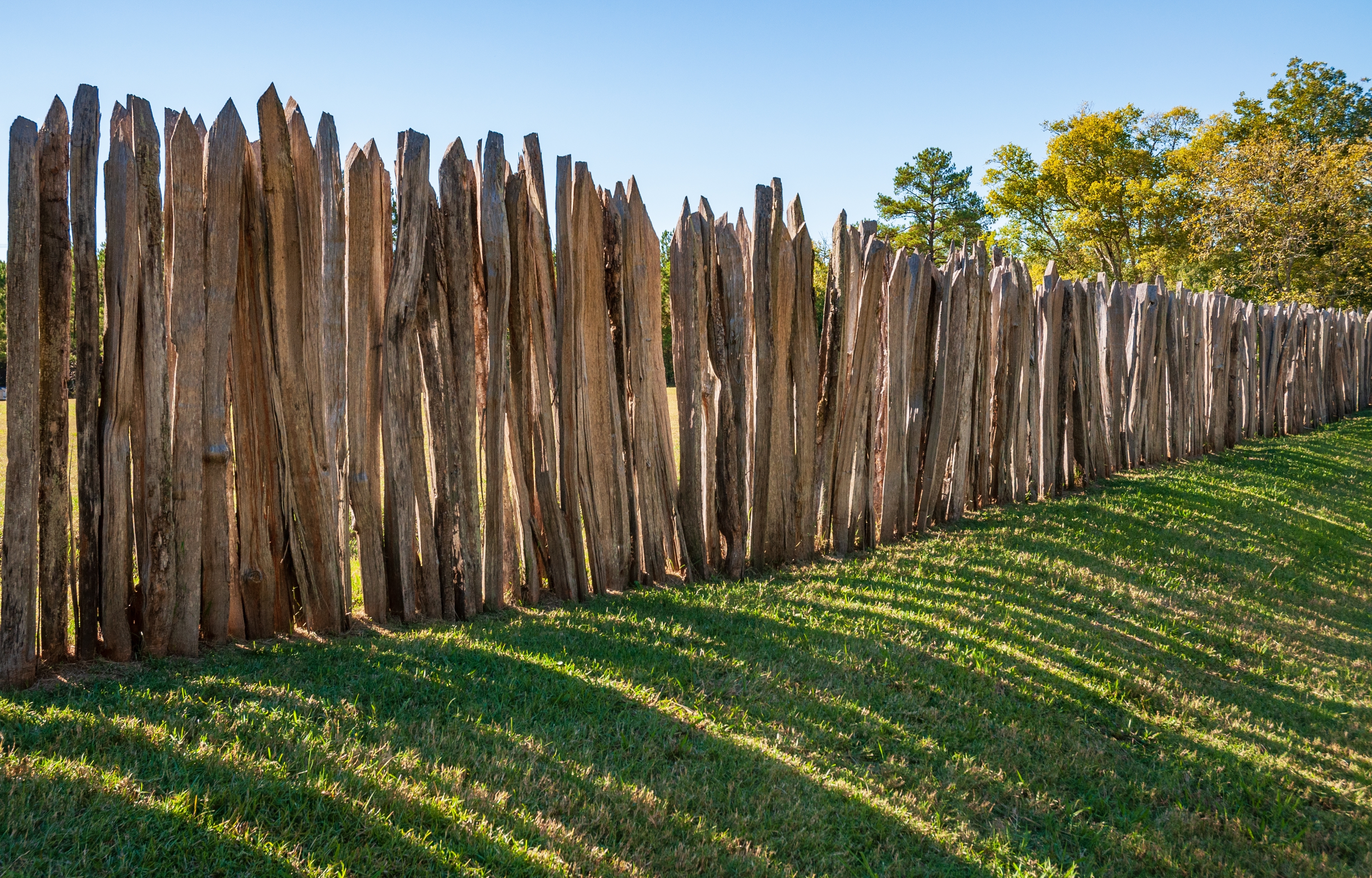

Leave a Reply