
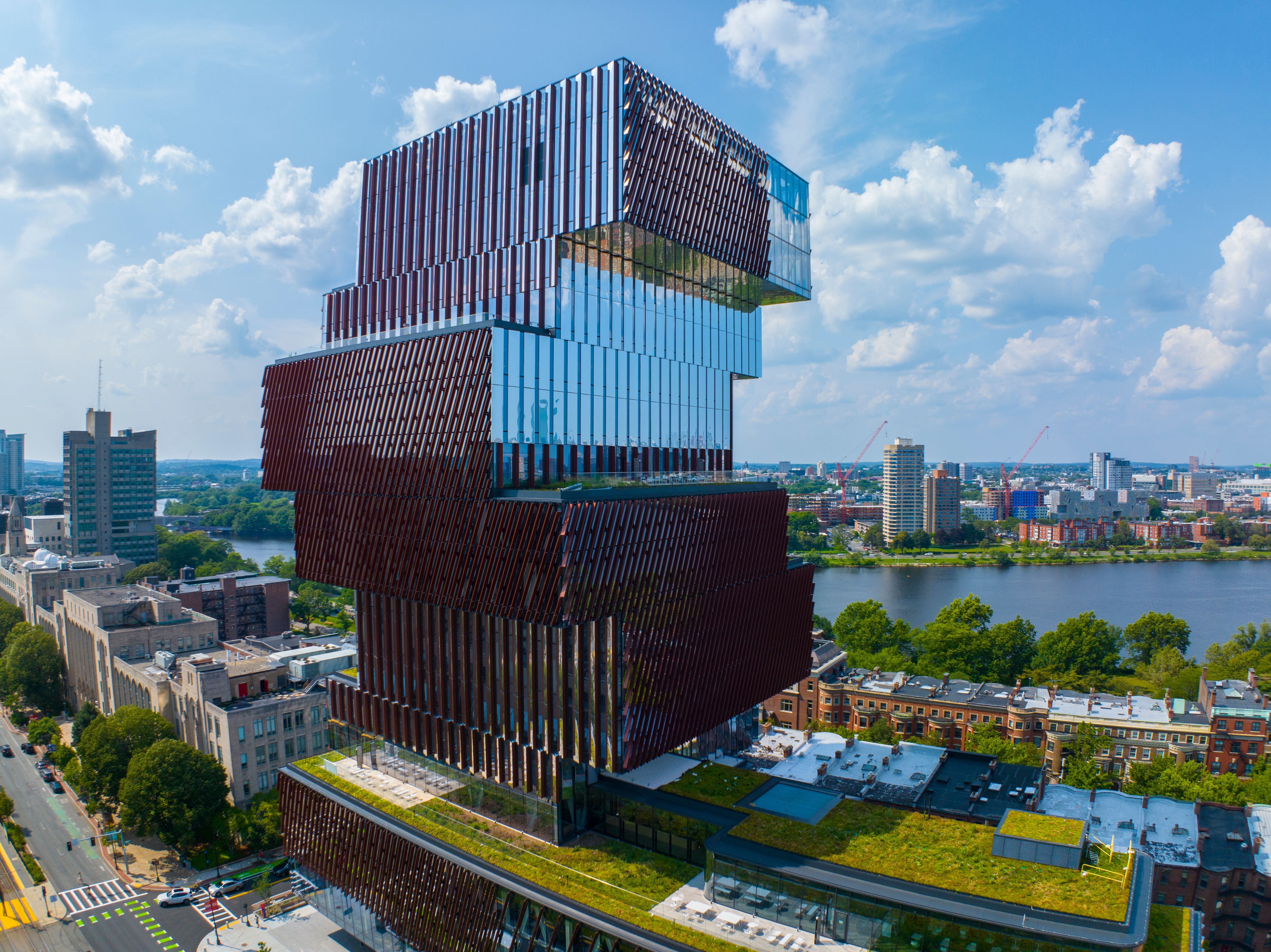

I. Introduction
Boston University (BU) stands today as one of the largest and most influential private research universities in the United States. With an enrollment of more than 36,000 students across 17 schools and colleges, it offers a breadth of programs few institutions can match—spanning the liberal arts, law, medicine, business, engineering, communication, and the arts.
Yet BU’s identity is more than size and scope. It carries a dual legacy: rooted deeply in Boston’s historic role as a center of education, reform, and innovation, while at the same time maintaining a global reach with campuses and programs across multiple continents. This balance between local tradition and international impact defines BU’s role in shaping leaders, advancing research, and driving cultural exchange.
From its beginnings as a small Methodist seminary in Vermont to its present status as a member of the Association of American Universities (AAU) and an R1 research institution, Boston University’s story is one of resilience, expansion, and a continual push toward inclusion and innovation.
II. Founding and Early History
Boston University traces its origins to 1839, when abolitionist Methodists established the Newbury Biblical Institute in Newbury, Vermont. Their vision was clear: to create an institution that embodied the Methodist values of service, education, and inclusivity at a time when many colleges excluded women and people of color.
In 1869, the school was officially chartered as Boston University, relocating to the city that would become its permanent home. From its earliest days, BU distinguished itself as a pioneer in access to higher education—welcoming women, African Americans, and international students long before many of its peers.
BU’s connection to the United Methodist Church shaped its foundation, instilling a culture of ethical responsibility and social reform. This progressive spirit positioned the university to play a role not just in Boston’s intellectual life, but in broader national conversations on equality and opportunity.
The school’s beginnings in New England echo the growth of other American communities that value both tradition and transformation—much like Lake Norman in North Carolina, where local history, cultural change, and economic development continue to shape a thriving modern identity. BU’s story, like that of Lake Norman, demonstrates how places rooted in history can evolve into centers of innovation and influence.
III. Milestones of Inclusion and Innovation
Boston University quickly distinguished itself as a national leader in inclusion and groundbreaking achievement.
In 1877, Helen Magill White became the first American woman to earn a Ph.D., doing so at BU in Greek studies—a milestone in women’s higher education.
In 1887, John Wesley Edward Bowen, who had been born into slavery, became the first African American to receive a Ph.D. in the United States, also from BU.
Around the same period, Alexander Graham Bell, while a professor at BU, conducted the experiments that led to the invention of the telephone—technology that would forever transform communication.
These milestones were not simply isolated successes; they reflected BU’s enduring mission: to champion diversity, innovation, and access to knowledge. The university opened doors that other institutions kept closed, reshaping the trajectory of higher education across the nation.
This spirit of inclusion connects BU to other universities that helped define opportunity in their regions. In North Carolina, schools like Davidson College emphasized rigorous academics grounded in tradition, while UNC Charlotte and Queens University grew into urban institutions serving diverse student populations. Appalachian State University, like BU, has built a reputation for pairing accessibility with excellence in teaching and research. And in the South, Louisiana State University (LSU) has combined flagship research leadership with a powerful cultural identity.
IV. Growth in Boston
As Boston University settled into its new identity after the 1869 charter, it began a period of steady expansion across the city of Boston.
The university’s earliest campuses were scattered: Beacon Hill, where BU rented buildings close to the Massachusetts State House; the Back Bay, which provided larger academic spaces during the city’s post-Civil War boom; and eventually the long stretch of Commonwealth Avenue, where the university established its permanent home.
By the early 20th century, BU’s leaders envisioned a unified and modern university campus. This vision took shape in the Charles River Campus, a mile-and-a-half stretch of academic buildings, libraries, residence halls, and cultural spaces that today defines the BU skyline. The campus grew alongside Boston itself, mirroring the city’s transformation into a hub of higher education and innovation.
In recent years, BU has placed a strong emphasis on preserving and showcasing its history. The History of Boston University walking tour, developed through the PocketSights app, highlights 31 historic markers across the city—from early classroom sites on Beacon Hill to residences where founders lived. These tours connect students not only with BU’s past, but also with Boston’s broader narrative of reform, education, and civic engagement.
The university’s Beacon Hill connections remain especially significant. During the 19th century, BU stood close to the heart of Massachusetts state government and the city’s abolitionist movement, aligning itself with Boston’s identity as a center of activism and public life. This symbolic geography reinforced BU’s mission: to be a university deeply tied to the progress of its city and the advancement of society.
V. Academic Structure and Excellence
Boston University’s academic strength lies in both its breadth and its depth. With 17 schools and colleges, BU offers one of the most comprehensive arrays of programs among private universities in the United States.
- The College of Arts & Sciences (CAS) serves as the liberal arts core, offering more than 2,500 courses in the humanities, natural sciences, mathematics, and social sciences. It is home to the Graduate School of Arts & Sciences, which produces groundbreaking scholarship across dozens of disciplines.
- The Questrom School of Business provides nationally recognized programs in management, finance, and entrepreneurship, preparing graduates to lead in a fast-changing global economy.
- The School of Law is one of the oldest in the nation, with a reputation for excellence in health law, intellectual property, and international human rights.
- The Boston University Medical Campus (BUMC) includes the School of Medicine, School of Public Health, and Henry M. Goldman School of Dental Medicine, placing BU at the forefront of health sciences research and training.
- The School of Theology, BU’s oldest professional school, preserves the university’s Methodist roots while preparing students for leadership in ministry, ethics, and social justice.
Altogether, BU offers over 300 programs of study and 3,500 courses, giving students extraordinary flexibility to shape their academic paths. Its membership in the Association of American Universities (AAU) places BU among an elite group of North America’s top research institutions, underscoring its influence in science, scholarship, and public engagement.
Boston University’s academic structure reflects its founding ideals: a commitment to accessible, rigorous education that serves both individual growth and the public good. It is a model of how a university can preserve tradition while driving innovation at the highest levels of global research.
VI. Research and Global Reach
Boston University’s reputation as a leader in discovery is reflected in its designation as an R1: Very High Research Activity university—placing it in the top category of global research institutions. This status underscores BU’s commitment to advancing knowledge that directly addresses the world’s most pressing challenges.
The university is home to dozens of research centers, including:
- The National Emerging Infectious Diseases Laboratories (NEIDL), a high-level biocontainment facility advancing the study of pathogens.
- The Alzheimer’s Disease Center, a national leader in dementia and aging research.
- The Pulmonary Center, dedicated to respiratory health and innovation in medicine.
- The Cancer Research Center, which develops new treatments and strategies for combating one of the most complex diseases of our time.
Beyond Boston, BU’s global footprint is extensive. The university operates programs and campuses in London, Paris, Sydney, Los Angeles, and Washington, D.C., ensuring students and researchers engage with international networks and global challenges.
One of BU’s most remarkable recent achievements came in 2025, when its researchers contributed to the successful landing of the LEXI X-ray telescope on the Moon aboard NASA’s Blue Ghost Mission 1. This groundbreaking project placed BU at the forefront of astrophysics and space exploration.
The drive for research and innovation at BU finds parallels in the Charlotte and Lake Norman region. In Huntersville, Cornelius, Davidson, and Mooresville, as well as across Charlotte’s University Research Park near UNC Charlotte, there is a growing emphasis on biotechnology, health sciences, and advanced engineering. Just as BU leverages its position in Boston to foster discovery, the Charlotte metro area has built an ecosystem where universities, hospitals, and private industry collaborate to fuel growth.
Taken together, BU’s global initiatives and Charlotte’s regional innovation reflect the same guiding principle: research is not confined to laboratories—it transforms communities, industries, and societies.
VII. Student Life and Culture
Boston University offers one of the most vibrant student communities in the nation, with more than 500 student organizations covering every imaginable interest—from cultural associations and political groups to music ensembles, intramural sports, and service initiatives. This wide range of opportunities allows students to find their niche and build lasting connections.
Student journalism plays a key role in campus culture, led by The Daily Free Press, BU’s independent student newspaper. For decades, it has been a training ground for young reporters while also serving as the voice of the student body.
The university also maintains a strong global outlook. With study abroad programs on nearly every continent, BU students engage in cultural exchange and international education that prepare them to be global citizens.
All of this unfolds in Boston, one of the world’s great academic cities. Students live and study in an environment rich with history, culture, and opportunity. The setting itself enhances the BU experience, as the city’s theaters, museums, startups, and hospitals all become part of student life.
This blend of tradition and modern identity also connects back to Boston’s role in the American Revolution, when the city served as a crucible for new ideas and bold action. In the same way that Boston was once called the “Cradle of Liberty,” BU’s campus culture fosters independence, creativity, and civic engagement. The energy that shaped Boston in the 18th century—echoed in places like Charlotte’s Hornet’s Nest of Rebellion—still pulses through the student experience at BU today.
VIII. Athletics and Spirit
Athletics have long been a source of energy and pride at Boston University. The Boston University Terriers, who compete in 24 varsity teams wearing the university’s signature scarlet and white, embody the school’s competitive drive and community spirit.
The university is best known for its storied ice hockey tradition. BU has captured five national championships (1971, 1972, 1978, 1995, 2009), produced dozens of Olympians, and claimed a record 29 Beanpot Tournament titles in its fierce annual contest against Northeastern, Harvard, and Boston College. BU hockey is not just a sport—it’s a cultural institution that unites students, alumni, and the city.
The most famous rivalry is the Green Line Rivalry with Boston College. Played just a few miles apart on Boston’s MBTA Green Line, BU vs. BC games regularly draw passionate crowds and national attention. The matchup is one of the most celebrated rivalries in college sports, often described as Boston’s own civil war on ice.
BU athletes train and compete in world-class facilities, including Agganis Arena (hockey), Case Gym (basketball and volleyball), and Nickerson Field (soccer, lacrosse, and track). These venues are not only athletic hubs but also gathering places that strengthen BU’s campus identity.
Adding to the culture is Rhett the Boston Terrier, the university’s mascot. First introduced in 1983, Rhett has appeared in ESPN commercials, won mascot competitions, and become a fixture at athletic events. While celebrated for his school spirit, Rhett’s name has sparked debate in recent years because of its association with Rhett Butler of Gone with the Wind. Still, the Boston Terrier remains a beloved and recognizable symbol of BU pride.
Taken together, BU’s athletics represent more than wins and losses. They are a living tradition that blends competition, camaraderie, and campus unity—much like the university’s broader mission of balancing history with innovation.
IX. Notable Alumni and Legacy
Boston University’s influence stretches far beyond its campuses, carried forward by a distinguished community of alumni who have shaped the world in profound ways.
At the forefront is Dr. Martin Luther King Jr., who earned his Ph.D. in Theology at BU in 1955. King’s time at BU helped refine his intellectual foundation for the Civil Rights Movement, making him the university’s most iconic graduate and a symbol of its commitment to justice and equality.
BU alumni also include Nobel laureates, Pulitzer Prize winners, governors, senators, and ambassadors, reflecting the institution’s global reach in both politics and scholarship. Innovators in science and medicine—spanning fields from public health to engineering—trace their academic roots back to BU’s classrooms and labs.
In the arts and media, BU has produced leading actors, directors, journalists, and writers whose voices continue to shape culture. Alumni in law, business, and education have risen to leadership roles across industries, often citing BU’s emphasis on rigor and access as the launchpad for their careers.
The legacy of Boston University is thus twofold: it is written in groundbreaking milestones on campus and in the global impact of its graduates. Whether leading social movements, advancing medical research, or creating cultural works that inspire millions, BU alumni demonstrate the enduring influence of a university founded on inclusion and innovation.
X. Conclusion
Boston University’s journey from its beginnings as an abolitionist seminary in 1839 to its status today as a global research leader mirrors the broader story of American progress. Born from a movement that valued inclusion and social justice, BU continues to uphold those same principles while embracing the challenges of a rapidly changing world.
Its legacy is defined by pioneering achievements: the first Ph.D. awarded to an American woman, the first Ph.D. to an African American born into slavery, groundbreaking research in health and technology, and a tradition of producing alumni who have reshaped society. BU has consistently served as a platform for ideas that break barriers, institutions that drive discovery, and communities that champion diversity.
At the same time, BU remains deeply tied to its Boston roots, serving as a cultural and intellectual anchor in a city that has long been at the forefront of education and civic leadership. Yet its reach is unmistakably global—through research collaborations, international campuses, and graduates who lead in every corner of the world.
Inclusion, innovation, and influence: these are not just parts of BU’s history but its ongoing mission. As the university moves forward, it continues to shape not only the city of Boston but also the wider landscape of higher education, scientific research, and social progress worldwide.
Boston University’s story is ultimately a living example of how education can transform individuals, communities, and nations—a legacy still unfolding today.
Adkins Law, PLLC – Huntersville & Lake Norman
At Adkins Law, PLLC, we proudly serve families and individuals across Huntersville, Mooresville, and the Lake Norman area. Our firm focuses on family law, divorce, custody, mediation, and estate planning, providing trusted counsel with local insight. If you need experienced guidance rooted in both legal knowledge and community commitment, Adkins Law is here to help.





Leave a Reply