


Introduction
Tucked in the rolling hills of the North Carolina Piedmont, the city of Statesville stands as the historic and cultural heart of Iredell County. Established as the county seat in 1789, Statesville today is home to nearly 28,500 residents (2020 census) and continues to serve as a crossroads community where history, commerce, and tradition intersect. Its geography has always given it importance: centrally located between the Charlotte metropolitan area and the NC High Country, Statesville connects urban commerce to mountain traditions. From the days when the Great Wagon Road carried Scots-Irish and German settlers southward through the Yadkin Valley from Boone and West Jefferson, to its rise as a railroad hub in the 19th century, and now as the modern interchange of Interstate 40 and Interstate 77, Statesville has long been a place where paths converge.
Statesville matters because it embodies the story of North Carolina itself. Its early roots lie in the Fourth Creek Congregation of Presbyterians, the spiritual anchor for frontier families who braved a rugged backcountry on the edge of Cherokee territory. This congregation, along with sister churches at Bethany and Concord, reflects the strong Presbyterian heritage that also shaped institutions like Davidson College and Queens University to the south. That same spirit fueled the region’s reputation during the Revolution as the “Hornet’s Nest of Rebellion,” when patriots in nearby Mecklenburg and Iredell counties resisted British authority. After independence, Statesville’s location made it a natural gathering point, a courthouse town surrounded by fertile farmland and small trade outposts stretching to Wilkesboro, Newton, and the Catawba Valley.
The 19th century brought prosperity as the Western North Carolina Railroad and the Atlantic, Tennessee & Ohio line turned Statesville into a hub of commerce. Industries grew around tobacco production, liquor distilling, and the roots-and-herbs trade, the latter propelled to international prominence by the Wallace Brothers Herbarium. Jewish merchants, African American craftsmen, and immigrant families alike found opportunities here, shaping a diverse civic identity. Statesville became not only a business center but also a cultural one, boasting schools, churches, and neighborhoods whose architecture still defines the historic districts today.
In the modern era, Statesville’s civic fabric has been enriched by ties to its neighbors around Lake Norman. From Mooresville’s Race City USA identity to the residential and recreational growth of Huntersville, Cornelius, Davidson, Denver, and Sherrills Ford, Statesville sits just north of the lake’s booming corridor yet maintains a more historic, small-city charm. Visitors come for both heritage and leisure: to tour Fort Dobbs, the only French and Indian War site in North Carolina; to walk downtown’s revitalized streetscapes; or to spend an afternoon fishing on Lake Norman before dining in Statesville’s eclectic restaurants. Institutions like Queens University of Charlotte and Davidson College maintain academic and cultural partnerships that further link Statesville to the wider Piedmont.
Today, Statesville offers a layered sense of place — part frontier outpost, part industrial boomtown, and part modern Piedmont city. It is a community that preserves treasures like Congregation Emanuel, one of the oldest synagogues in the South, while embracing the future through cultural preservation, highway infrastructure, and regional collaboration. Whether it is a traveler pausing at the crossroads of I-40 and I-77, a historian tracing the Battle of Cowan’s Ford nearby, or a family seeking a day trip between Charlotte and the mountains, Statesville continues to thrive at the intersection of past and present.
In short, from its 18th-century beginnings as a frontier settlement to its 19th-century heyday as an herb and tobacco hub, and now as a modern community proud of its layered heritage, Statesville exemplifies the resilience, diversity, and adaptability of North Carolina itself.
Regional & Geological Context
Geographically, Statesville lies in the heart of the North Carolina Piedmont, the rolling plateau that stretches between the Blue Ridge Mountains to the west and the Coastal Plain to the east. This placement has always defined its character. The Piedmont provided fertile clay soils for farming, dense hardwood forests for building, and an accessible corridor for trade. Settlers traveling the Great Wagon Road found the area attractive precisely because it sat at the meeting point of mountain and plain, offering both security from frontier dangers and proximity to broader markets. Statesville’s position placed it midway between Charlotte’s urban center and the rising communities of the High Country, such as Boone and West Jefferson, making it a natural crossroad for movement and commerce.
The city is part of the Yadkin–Pee Dee River Basin, one of North Carolina’s major watersheds. Locally, three creeks define the landscape: Third Creek, Fourth Creek, and the South Yadkin River. Fourth Creek, in particular, gave its name to the Fourth Creek Congregation that became the nucleus of Statesville’s settlement in the 1750s. These creeks not only provided water and fertile bottomlands for agriculture but also became central features in the social geography of the region. Mills, farms, and meeting houses clustered along them, shaping early patterns of settlement that still echo in present-day place names.
Statesville’s elevation — roughly 850 feet above sea level — gives it a slightly cooler climate than much of the lower Piedmont. The area experiences a humid subtropical climate, with hot, humid summers and mild to cool winters. Rainfall is evenly distributed through the year, though summer thunderstorms are common, and winter occasionally brings light snow. This climate made the area particularly favorable for tobacco farming, corn production, and livestock, all of which underpinned the town’s early economy. Today, it remains an attractive balance point: close enough to Lake Norman for water recreation and fishing, within easy reach of the ski slopes near Boone, and still comfortably tied into the metro networks of Charlotte.
Statesville’s geography also explains its continuing role as a transportation hub. Historically, the Great Wagon Road and early stagecoach lines followed the same corridors that today carry Interstate 40 and Interstate 77. Just as the creeks and fertile soils encouraged settlement, so too did the region’s plateau topography make it suitable for roads, railroads, and modern highways. The result is a community whose geological and geographical context has continually fostered growth, connection, and resilience, anchoring Statesville at the center of Iredell County and the wider Piedmont.
Early Settlement, Faith & Founding
The story of Statesville begins with the migration of Scots-Irish Presbyterians and German Lutherans along the Great Wagon Road in the 1740s and 1750s. Moving southward from Pennsylvania through the Shenandoah Valley of Virginia, many of these families settled in the fertile valleys of the North Carolina Piedmont. By the early 1750s, small clusters of cabins dotted the creeks of what would later become Iredell County. These settlers were drawn by inexpensive land, abundant game, and relative safety from French-allied Native American raids that plagued more northern frontiers.
The Fourth Creek Congregation
In 1753, Rev. John Thompson organized the Fourth Creek Congregation, named for its location on the fourth creek west of Salisbury. The congregation quickly became the spiritual and social nucleus of the settlement. Its log meeting house stood near what is now downtown Statesville, and its adjoining burial ground — the Fourth Creek Burying Ground — remains one of the city’s oldest landmarks, with graves dating to 1759. Later led by the influential Rev. James Hall, the congregation also oversaw daughter churches at Bethany and Concord, spreading Presbyterianism through Iredell and into what would later become Mecklenburg County, home of the “Hornet’s Nest of Rebellion” during the Revolutionary War. This Presbyterian heritage also connected the community to regional institutions like Davidson College, which would become a major intellectual center in the 19th century.
Fort Dobbs: Frontier Defense
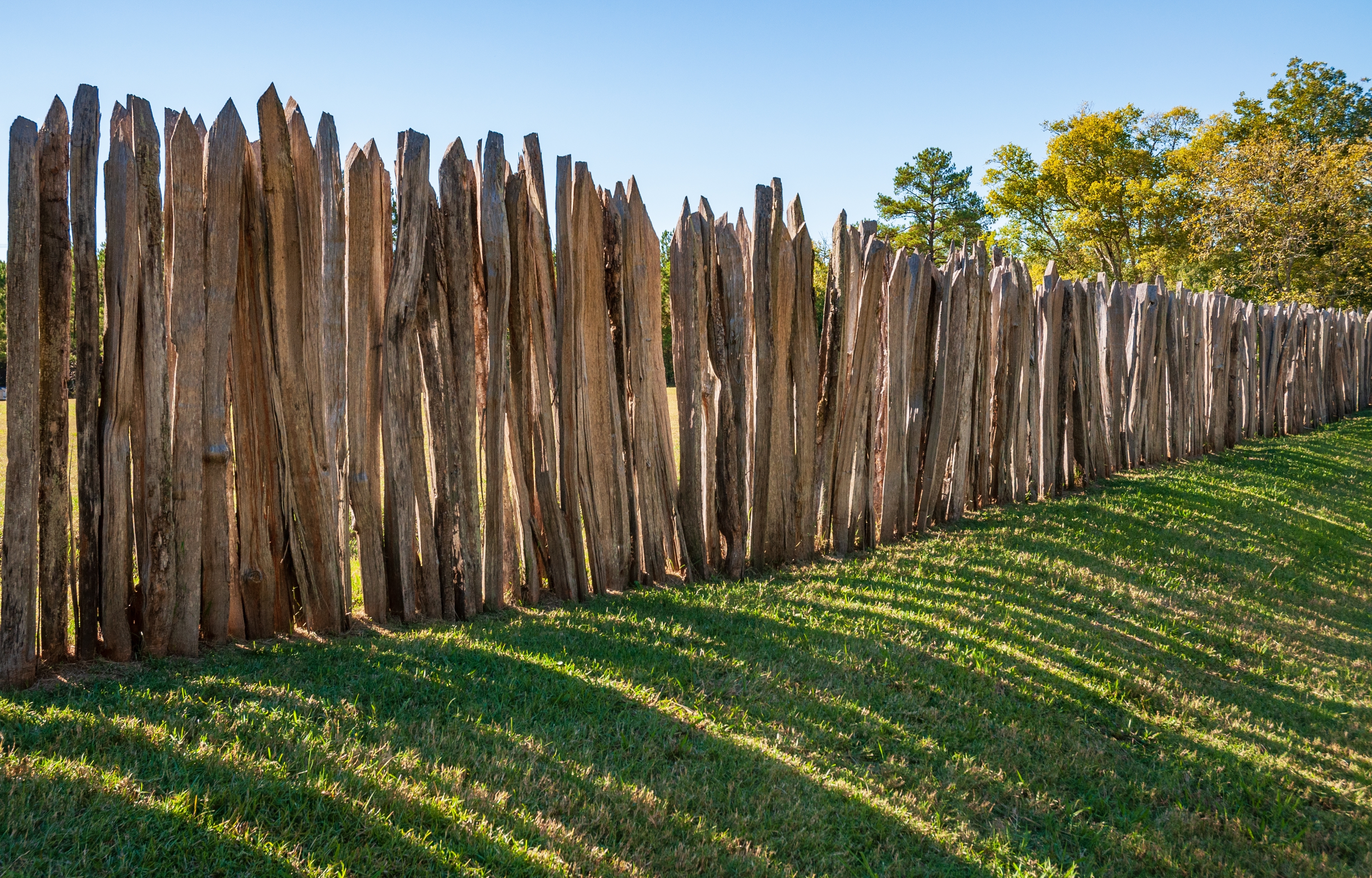
The frontier location demanded protection. In 1755, colonial governor Arthur Dobbs ordered the construction of Fort Dobbs, North Carolina’s only permanent fort from the French and Indian War era. Built by Captain Hugh Waddell, the three-story log blockhouse was designed to house 50 soldiers and withstand attack. On the night of February 27, 1760, the fort came under assault by 60–70 Cherokee warriors during the Anglo-Cherokee War. Waddell’s men repelled the attackers at close range, suffering two wounded and losing a boy near the fort, while reports indicated the Cherokee sustained 10–12 casualties. Though the fort fell into ruin after 1766, its presence gave early settlers confidence to remain in the Fourth Creek area during a volatile period. Today, the Fort Dobbs State Historic Site preserves this legacy with reconstructions and reenactments that highlight Statesville’s place on the colonial frontier.
From Rowan to Iredell County
At the time of settlement, the area was part of vast Rowan County, with its courthouse located far away in Salisbury. By the 1780s, the population of the Fourth Creek Settlement had grown enough to demand local governance. In 1788, the North Carolina legislature created Iredell County, naming it for James Iredell, an influential Federalist, constitutional advocate, and one of President George Washington’s first appointees to the U.S. Supreme Court. Although Iredell never visited the county that bears his name, his judicial legacy linked the frontier settlement to the larger story of the new republic.
The Birth of Statesville
In January 1789, the North Carolina General Assembly formally established the town of Statesville as the county seat. Initially referred to as “the States Vil,” it was intended as the site of the courthouse, jail, and stocks. The first log courthouse was erected in 1790 on land purchased from Fergus Sloan, near the Fourth Creek Meeting House. Surrounding lots were auctioned for businesses, quickly forming the nucleus of a small frontier town centered on what is now known as The Square at Broad and Center Streets.
These early years gave Statesville the foundations it would build on: a strong religious core in the Fourth Creek Congregation, a legacy of defense and resilience through Fort Dobbs, and a civic identity as the county seat of Iredell. From this beginning, the town would grow into a regional hub, eventually tied by rail, industry, and culture to the broader Piedmont, the Lake Norman region, and beyond.
19th-Century Growth & Industry
The 19th century transformed Statesville from a small county-seat village into a bustling hub of commerce and culture. Fires, railroads, industry, and education reshaped its landscape and its fortunes, positioning the town as one of the most important communities in the western Piedmont.
Fire and Rebirth
In 1855, a devastating fire swept through downtown Statesville, destroying much of its early wooden architecture. Far from ending its prospects, the disaster forced residents to rebuild with greater permanence. Brick structures began to dominate Broad and Center Streets, giving Statesville’s commercial core the durable, handsome appearance still evident in its historic districts today.
The Railroad Era
The decisive turning point came with the railroads. In 1858, the Western North Carolina Railroad reached Statesville, linking the town east to Salisbury and eventually west toward the Blue Ridge. Soon after, the Atlantic, Tennessee & Ohio Railroad (ATO) established a line running south to Charlotte. With two depots in town, Statesville became a key junction for the movement of goods and people across the Piedmont. Finished and raw products arrived from distant markets, while local commodities like tobacco, flour, and liquor could be exported efficiently. This connectivity echoed the town’s frontier crossroads origins, but on a scale that now tied it to Charlotte, Newton, Wilkes County, and even the river ports farther east.
Industries: Tobacco, Liquor, and Herbs
Statesville’s prosperity in the late 19th century rested on three pillars: tobacco, liquor, and roots-and-herbs. Tobacco warehouses handled leaf grown across the region, while distilleries refined local corn into whiskey that earned a reputation across North Carolina. The most distinctive industry, however, was the herb trade.
At the forefront was the Wallace Brothers Herbarium, founded by German-Jewish immigrants David and Isaac Wallach (later Wallace). Starting as a general store, their operation expanded after the Civil War into the largest botanical distribution house in the United States, dealing in medicinal roots, barks, and herbs. By the 1870s their catalog included thousands of items, and sales reached into the tens of thousands of dollars annually, with customers across the country and in Europe. The herbarium not only put Statesville on the map but also sustained countless rural families who gathered herbs for sale during the hard economic times of the 1870s.
Jewish Merchant Influence & Congregation Emanuel
The Wallaces symbolized the influence of Jewish merchants on Statesville’s civic and cultural life. Their success encouraged other Jewish families to settle in the town, opening wholesale liquor houses, dry goods stores, and tobacco businesses. In 1883, this growing community formally organized Congregation Emanuel, holding services first in private homes before erecting a brick Romanesque synagogue in 1892. Emanuel remains one of the oldest synagogues in continuous use in the South, a testament to the enduring impact of the Wallace Brothers and their peers.
Education: From Concord Presbyterian Female College to Mitchell College
As commerce boomed, so too did investment in education. In 1852, local Presbyterians founded Concord Presbyterian Female College, one of several institutions in the state devoted to higher learning for women. By the mid-19th century, its imposing Greek Revival Main Building — with its six-column Doric portico — dominated Broad Street. Later renamed Mitchell College in 1917 after benefactor Eliza Mitchell, the institution evolved into today’s Mitchell Community College, an enduring symbol of Statesville’s educational aspirations and Presbyterian roots.
Civil War and Recovery
The Civil War (1861–65) disrupted this prosperity. Many local men enlisted in Confederate regiments, while the rail lines carried troops and supplies across the state. Statesville itself avoided major battle, though nearby communities felt the war’s weight. The postwar years brought slow recovery, aided by the town’s resilience and its merchants’ ability to adapt. By the 1870s and 1880s, Statesville was again on the rise, attracting both capital and labor.
The Bostian Bridge Train Wreck (1891)
Tragedy struck again on August 27, 1891, when a passenger train derailed on the Bostian Bridge just west of Statesville, plunging into Third Creek below. Twenty three people were killed in one of North Carolina’s deadliest rail disasters. The wreck remains shrouded in lore, with tales of hauntings persisting into the 20th century. Yet the tragedy also underscored Statesville’s centrality to the rail network: the same tracks that fueled its prosperity also brought with them the risks of modern industrial life.
Architecture, Districts & Civic Landmarks
One of Statesville’s defining features is its wealth of historic architecture, preserved in both individual landmarks and broad districts that tell the story of its development. From schools and churches to civic buildings and industrial plants, the built environment reflects the prosperity of the 19th and early 20th centuries, when Statesville was at the height of its influence in the Piedmont.
Historic Districts
Statesville boasts five National Register of Historic Places districts, each highlighting a different facet of the city’s growth:
- Academy Hill Historic District (1885–1930): Anchored by the Statesville Male Academy (1874) and Statesville Graded School (1892), this district blends educational, industrial, and residential buildings. Brick factories like the Ash Tobacco Factory (c. 1895) and Steele Glass Plant (c. 1906) sit beside fine Queen Anne and Colonial Revival residences built for families like the Steeles, illustrating how industry and domestic life intertwined.
- East Broad–Davie Avenue Historic District: Comprising leafy residential streets lined with Victorian and early 20th-century homes, this district features the Elma Apartments (1920s) and houses like the J.S. Ramsey House (c. 1885). It represents the rise of professional and merchant families who benefited from Statesville’s industrial boom.
- South Race Street Historic District (c. 1894–1945): With its mix of Queen Anne, Colonial Revival, and Bungalow-style homes, South Race Street illustrates middle-class growth during the late 19th and early 20th centuries. Churches like Western Avenue Baptist and Race Street Methodist reflect the district’s community character.
- Mitchell College Historic District: Centered on the Main Building (1854–56), with its imposing Doric portico and Greek Revival symmetry, the district embodies Statesville’s commitment to education. Later additions like Shearer Music Hall (1907) show how the college evolved while retaining its historic grandeur.
- Statesville Commercial Historic District (1875–1925): The heart of downtown, this district includes 54 contributing buildings over 30 acres. Victorian and early 20th-century facades line Broad and Center Streets. Notable structures include the Walton & Gage Store (c. 1885), Miller Block (c. 1885), Merchants and Farmers Bank (1908), and the Madison Building. Together, they form one of the best-preserved downtowns in the Piedmont, rivaling those of Newton, Mooresville, and even parts of Charlotte in historic character.
Notable Buildings
Several individual landmarks further highlight Statesville’s architectural richness:
- U.S. Post Office & County Courthouse (1891): A Richardsonian Romanesque red-brick and sandstone building with a prominent corner tower, designed under Supervising Architect Willoughby J. Edbrooke. It served as a post office and federal courthouse before being adapted into Statesville City Hall.
- Iredell County Courthouse (1899): A Beaux-Arts masterpiece of yellow brick with a mansard cupola and grand portico, symbolizing the county’s confidence at the turn of the century. Still in use, it anchors the governmental district downtown.
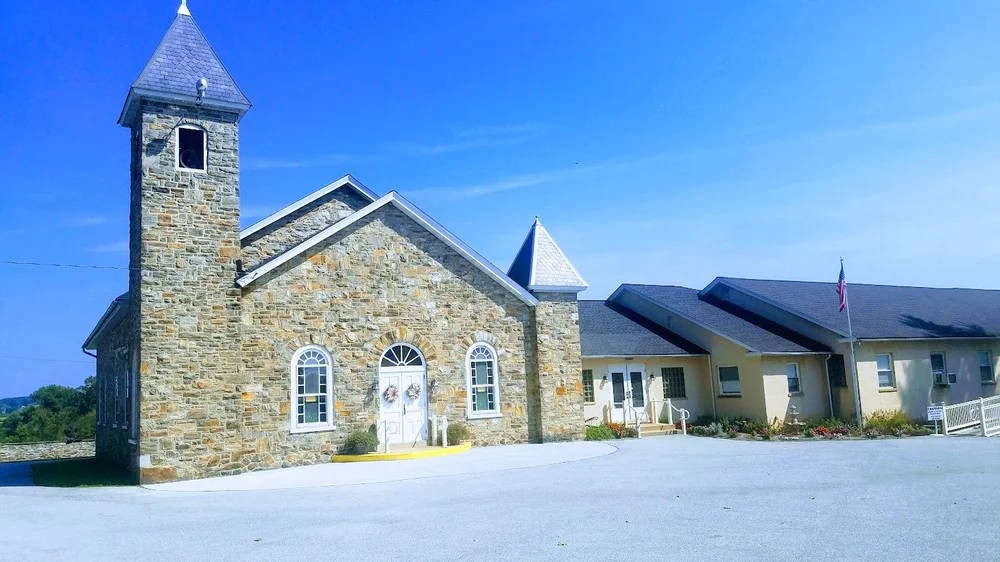
- Congregation Emanuel (1891–92): One of the oldest surviving synagogues in North Carolina, this Romanesque Revival building represents the contributions of the Wallace Brothers and the Jewish community to Statesville’s growth.
- Center Street A.M.E. Zion Church (1903): A Gothic Revival brick church with unequal towers and stained-glass windows, it is the oldest African American congregation in Statesville, founded just after the Civil War.
- St. Philip’s Catholic Church (1898, Key Memorial Chapel): A small Late Gothic Revival brick chapel with a crenellated tower, originally home to St. Philip the Apostle parish. It remains a significant part of Statesville’s religious landscape.
- Residential Landmarks:
- Morrison-Mott House (1904–05): A Classical Revival home with a wraparound Ionic porch and porte-cochère.
- McElwee Houses (early 1900s): Built for members of the McElwee family, industrialists in brick and textiles, showcasing Colonial and Neo-Classical Revival styles.
- Col. Silas Alexander Sharpe House (c. 1860): Mid-19th century Classical Revival dwelling with a portico supported by clustered columns, built for a prominent local figure.
- Henry Turner House & Caldwell–Turner Mill Site (c. 1860): A rural Greek Revival home with associated mill ruins, highlighting the agricultural-industrial link.
Civic Identity Through Architecture
Together, these districts and landmarks narrate Statesville’s journey from frontier courthouse town to industrial and cultural center. They reveal the prosperity that flowed from tobacco warehouses, liquor distilleries, and the herb trade, and the civic pride that invested in courthouses, schools, and churches. Just as the Battle of Cowan’s Ford left its mark on nearby communities, and towns like Huntersville, Cornelius, Denver, and Sherrills Ford grew around Lake Norman, Statesville’s architectural heritage anchors it firmly in the broader story of the Piedmont and Lake Norman region.
Social & Cultural Threads
Beyond railroads, industries, and courthouses, the identity of Statesville has always rested on its people and culture. Faith, community organizations, civil rights milestones, and heritage preservation all illustrate how this small Piedmont city became more than just a market town — it became a community with a shared spirit and evolving civic pride.
Faith & Community Tapestry
From its earliest days, Statesville’s fabric has been interwoven with religion and community institutions. The Fourth Creek Congregation laid the foundation in 1753, but by the 19th century the city supported a wide range of denominations. Presbyterians continued to dominate, with congregations like Fifth Creek and the educational presence of Mitchell College reinforcing their influence. Methodists established churches such as Race Street Methodist, while Baptists like Western Avenue Baptist built their own strong presence.
The city’s Jewish community, led by the Wallace Brothers, left a permanent legacy in Congregation Emanuel (1892), one of the oldest standing synagogues in North Carolina. Meanwhile, Catholics organized St. Philip’s Church (1898), and African American Christians built enduring institutions in the post-Civil War years. This diversity of faiths shows how Statesville mirrored the wider Lake Norman and Charlotte region, where Presbyterians shaped Davidson College, Baptists established seminaries, and Methodists built schools that later became part of Queens University of Charlotte.
African American Heritage
Statesville’s African American community has played a vital role since emancipation. The Center Street A.M.E. Zion Church, founded in the 1860s and housed in its 1903 Gothic Revival building, stands as the oldest Black congregation in the city. Other Black churches — Baptist and Methodist — anchored neighborhoods, schools, and civic life.
A pivotal milestone in Statesville’s civil rights history came in 1949, when the city appointed Parker Carlton McClelland as its first African American police officer. This moment placed Statesville in the broader story of Black civic advancement in the Piedmont, paralleling developments in nearby Charlotte and other Lake Norman communities like Mooresville and Huntersville.
Cultural Preservation
Few individuals embody Statesville’s dedication to preserving its story better than Steve Hill, founder of the Statesville Historical Collection. What began as his childhood hobby of collecting local photographs and memorabilia has grown into a professional cultural institution. Relocated in 2025 to the restored Holland Building downtown, the Collection features thousands of artifacts — from old newspapers and hotel ledgers to advertising ephemera and rare photographs. Visitors can see images of the I-40/I-77 interchange under construction in the 1960s, or scenes of Statesville’s grand hotels and department stores at their peak. Hill’s work has been featured on NC Weekend and Discover Statesville, and the collection remains one of the city’s most beloved attractions.
Filming, Public Memory & Downtown Identity
Statesville has also become a place of public memory and storytelling. The city has hosted film productions, with downtown streets and historic buildings appearing as backdrops for movies. Local initiatives have placed markers and plaques throughout downtown, noting events from the 19th century fire to the lore of the Bostian Bridge train wreck (1891). The Downtown Walk of Fame honors citizens who shaped Statesville’s civic and cultural life.
Walking tours now guide visitors past landmarks like the Iredell County Courthouse, the Post Office and Federal Courthouse (now City Hall), and the historic neighborhoods of East Broad and South Race Street. These tours link Statesville’s story to the wider Piedmont and Lake Norman narrative — from the Revolutionary spirit of the Battle of Cowan’s Ford, to the industrial rise of Newton, to the recreational boom of fishing on Lake Norman. In doing so, they remind residents and visitors alike that Statesville is not just a place of commerce but also a keeper of memory.
Infrastructure & Modern Growth
Highway Crossroads: I-40 and I-77
If the 19th century was defined by the arrival of the railroad, the 20th century reshaped Statesville through the construction of the interstate highway system. In the 1960s, the city became the intersection point of Interstate 40, running east–west from Wilmington, NC to Barstow, CA, and Interstate 77, running north–south from Columbia, SC to Cleveland, OH. This junction transformed Statesville into one of the most important crossroads in North Carolina, placing it within an hour’s drive of Charlotte, ninety minutes from Winston-Salem, and two hours from the NC High Country towns of Boone and West Jefferson. The interchange echoed the role once played by the Great Wagon Road and later the railroad depots, ensuring that Statesville remained a vital stopping point for travelers and freight alike.
Signal Hill Mall Lifecycle
The post-interstate boom also fueled suburban-style retail. Signal Hill Mall, opened in 1973, became the centerpiece of Statesville’s commercial life for decades, with anchor stores like Belk and JCPenney. Like many mid-sized malls, however, Signal Hill faced decline in the late 20th and early 21st centuries as shopping shifted online and to larger metro centers like Charlotte and Mooresville. In recent years, redevelopment proposals have circulated, aiming to repurpose the site for mixed use or logistics, echoing national trends in re-imagining retail spaces. The mall’s lifecycle reflects broader shifts in suburban planning and retail economics across the Piedmont.
Education & Schools
Education remains a cornerstone of Statesville’s civic identity. The Iredell–Statesville Schools system serves more than 20,000 students across elementary, middle, and high schools, consistently ranked among the better-performing districts in North Carolina. Specialized magnet programs and partnerships with regional universities provide opportunities in STEM, arts, and technical training. At the higher education level, Mitchell Community College — tracing its lineage back to the Concord Presbyterian Female College of 1852 — continues to serve as the city’s intellectual anchor, offering two-year degrees, continuing education, and cultural programming. Ties to nearby institutions such as Davidson College, Queens University of Charlotte, and Appalachian State University in Boone extend Statesville’s educational reach into the Lake Norman area, Charlotte, and the NC High Country.
Demographics, Growth, and Economy
According to the 2020 census, Statesville’s population was 28,419, part of a wider Iredell County population of 186,693. Growth has been steady, fueled by its position in the Charlotte metropolitan area and its proximity to Lake Norman. The economy has diversified from its historic base of tobacco, liquor, and herbs into manufacturing, logistics, healthcare, and professional services. Distribution facilities benefit from the interstate crossroads, while small businesses support a vibrant downtown. Proximity to Mooresville’s racing industry, Huntersville’s retail growth, and Cornelius’s lakefront development ensures that Statesville participates in the region’s wider economic success while maintaining its distinctive small-city identity.
Urban Planning and Revitalization
In recent decades, Statesville has made significant investments in downtown revitalization. Historic tax credits have supported the restoration of building facades in the Commercial Historic District, helping to attract restaurants, boutiques, and arts venues. Streetscape improvements have widened sidewalks, introduced brick crosswalks, and added benches, lampposts, and landscaping, creating a more welcoming and walkable city center. These efforts ensure that landmarks such as the Iredell County Courthouse and the Post Office and Federal Courthouse (now City Hall) remain central to civic life while adapting to modern needs.
City planners have worked to balance growth with heritage. As development extends toward Lake Norman and along suburban corridors like Troutman and Denver, Statesville continues to emphasize the preservation of its historic neighborhoods and cultural institutions. Festivals, farmers’ markets, and heritage tourism initiatives contribute to a vibrant community identity, ensuring that even as Statesville grows as part of the Charlotte metropolitan region, it maintains the character of a city deeply rooted in history.
Legacy & Challenges
Preservation vs. Growth Pressures
Statesville’s greatest strength — its layered heritage — is also one of its ongoing challenges. As new housing, retail, and logistics centers rise on the edges of town, the city must balance growth with preservation. Historic tax credits and protective zoning have saved much of downtown’s 19th- and early 20th-century architecture, yet pressure to modernize sometimes collides with efforts to conserve. Preserving landmarks like the Fourth Creek Burying Ground, Fort Dobbs, and the city’s historic districts requires both funding and political will, ensuring that the story of Statesville is not lost in the march of development.
Identity in the Charlotte Metro Orbit
Located just north of Charlotte and on the fringe of the Lake Norman corridor, Statesville now finds itself part of a fast-expanding metropolitan region. The success of nearby towns like Mooresville, Huntersville, Cornelius, and Davidson has created both opportunities and competition. While many newcomers view Statesville as a quieter alternative to the southern lake towns, leaders grapple with how to maintain the city’s distinctive identity. Rather than becoming merely another suburb, Statesville positions itself as a cultural and historic complement to Charlotte’s urban energy — a place where heritage is not overshadowed by growth.
Downtown Revitalization vs. Suburban Sprawl
In recent decades, downtown revitalization projects have brought new life to Broad and Center Streets, with widened sidewalks, brick crosswalks, and restored storefronts housing restaurants, boutiques, and galleries. At the same time, suburban sprawl has pulled commerce outward, especially along interstates and near developments like the aging Signal Hill Mall. The challenge lies in keeping downtown vibrant enough to draw both locals and visitors, while adapting suburban corridors for mixed-use growth rather than unchecked sprawl. This dynamic mirrors similar tensions in nearby Newton, Denver, and Sherrills Ford, where historic cores compete with strip malls and lakefront subdivisions.
Heritage Tourism as a Bridge
One of Statesville’s most promising strategies is leveraging its heritage tourism. Attractions like Fort Dobbs, the Statesville Historical Collection, and walking tours of historic districts connect residents and visitors to the city’s past. Festivals and community events highlight both history and culture, from re-enactments of the French and Indian War to downtown art walks. Proximity to Lake Norman offers opportunities to link heritage with recreation — a day might include fishing on Lake Norman, touring Congregation Emanuel, and dining downtown. In doing so, Statesville positions itself not only as a historical destination but also as a gateway between Charlotte, the Lake Norman towns, and the NC High Country communities of Boone and West Jefferson.
By embracing its legacy while adapting to modern realities, Statesville can continue to thrive as both a living community and a keeper of history. Its challenge, as always, is to remain a crossroads: not just of highways and commerce, but of past and future, tradition and progress.
Conclusion
From its beginnings as a frontier outpost clustered around the Fourth Creek Congregation and defended by Fort Dobbs, to its rise in the 19th century as a hub of railroads, tobacco, liquor, and the Wallace Brothers’ international herb trade, and into its role today as a modern Piedmont city, Statesville’s story has been one of resilience and reinvention. Each era left its mark — the Presbyterian faith communities that gave it moral grounding, the Jewish merchants who broadened its economy and built Congregation Emanuel, the Black congregations that anchored neighborhoods after emancipation, and the civic leaders who built imposing courthouses, schools, and neighborhoods that still define the city’s landscape.
Statesville’s layered history matters because it embodies the broader North Carolina experience: the blending of Scots-Irish, German, African American, and immigrant traditions; the Revolutionary spirit of the “Hornet’s Nest of Rebellion”; the economic pivots from farming to railroads to industry; and the constant balance between growth and preservation. Just as nearby towns like Huntersville, Cornelius, Davidson, Mooresville, Newton, Denver, Sherrills Ford, and Wilkes County reflect different pieces of the Piedmont mosaic, Statesville stands at the literal crossroads of those stories. Its highways, schools, historic districts, and cultural institutions make it a bridge between Charlotte to the south, Lake Norman to the east, and the High Country towns of Boone and West Jefferson to the north.
Looking ahead, Statesville faces both challenges and opportunities. Preserving its downtown landmarks and historic neighborhoods while embracing suburban growth requires thoughtful planning. Revitalizing aging retail centers like Signal Hill Mall, while capitalizing on its interstate crossroads, will shape the city’s economy. At the same time, heritage tourism — from reenactments at Fort Dobbs to walking tours of historic districts and even leisure activities like fishing on Lake Norman — offers a way to tie the city’s past to its future prosperity.
In the end, Statesville’s strength lies in being a multifaceted city — part frontier story, part industrial saga, part modern hub. Its ability to honor its heritage while forging new paths ensures that it will remain not only the county seat of Iredell but also a vital contributor to the larger story of North Carolina. Statesville stands as proof that history is not something confined to museums or monuments — it is alive in the streets, churches, schools, and neighborhoods of a community that continues to thrive where the roads, rivers, rails, and cultures come together.
At Adkins Law, PLLC, we’re proud to serve families and individuals across the Lake Norman region — from Statesville and Mooresville to Huntersville, Cornelius, and Davidson. Founded by attorney Christopher Adkins, our firm is dedicated to helping clients navigate some of life’s most important challenges, with a focus on family law, custody and visitation, divorce, mediation, and estate planning.
With deep ties to the community and a commitment to personalized service, Adkins Law blends small-town attention with big-city experience. Whether you need guidance on a custody matter, help preparing a will, or representation in court, we’re here to protect your interests and help you move forward.
Click here to arrange a consultation with a family law attorney in Huntersville NC.


Leave a Reply