

On a hot Carolina afternoon in the 1890s, a farmer loaded his wagon with cotton and steered toward Davidson. The road was rough, the trip long, and when he arrived, he faced the same problem every grower knew too well: unfair pricing at the town’s weighing station. Davidson had the scales. Davidson had the buyers. Davidson set the rules.
The farmers had had enough.
In 1893, a group of them pooled their resources, built a cotton platform south of Davidson, and christened their new community Liverpool, borrowing the name of England’s great cotton port. Liverpool was no more than a scattering of farms and a cotton yard at first, but it represented independence — a refusal to let Davidson merchants dictate their livelihoods. The name was short-lived, but the place endured.
The Mill and the Man Behind the Name
The true turning point came when Joseph Benjamin Cornelius, a wealthy merchant and investor from nearby Iredell County, agreed to back a cotton mill. Cornelius, who had already earned a reputation for sharp business sense and civic involvement, became the principal stockholder of the new enterprise.
Alongside Richard Johnson Stough, a Confederate veteran and respected farmer, Cornelius helped organize what became the Gem Yarn Mill in 1905. The mill sat near the railroad line that cut through the settlement, its location chosen so that cotton and finished yarn could easily be shipped to Charlotte and beyond.
The Gem Yarn Mill became the heartbeat of the community. Its whistle marked the hours, its payroll supported families, and its cottages filled the surrounding streets. By day, the air filled with the smell of lint and machine oil; by night, the mill village buzzed with children, front-porch conversations, and church gatherings.
In recognition of Cornelius’s investment, the town shed its temporary name of Liverpool and incorporated officially as Cornelius on March 4, 1905.
For more than half a century, the Gem Yarn Mill defined the town. At its peak during the World Wars, it employed more than a hundred workers, weaving the rhythms of cotton into every corner of daily life. When it finally closed in 1962, the buildings stood as reminders of the era when Cornelius was first and foremost a mill town — a community built on cotton, grit, and the vision of a few determined men.
Timeline of Cornelius: From Plantations to Lake Town
- 1753 – Potts Plantation Established
Among the first large landholdings in the area, the Potts Plantation symbolized the shift from wilderness to cultivated farmland. Families like the Potts, Torrence, Jetton, and Connor would shape the early economy and culture along the Catawba River. - 1827 – Mt. Zion Methodist Church Founded
Mt. Zion quickly grew into one of the largest rural Methodist congregations in the Carolinas. Its cemetery, still standing today, holds generations of farmers, soldiers, and town leaders. The church became the anchor of community life long before Cornelius existed. - 1893 – Liverpool Formed After Cotton Dispute
Tired of unfair weighing practices in Davidson, farmers established their own cotton platform and community south of town. They named it Liverpool after the English cotton port. - 1899 – Cornelius Post Office Established
Frank C. Sherrill became the first postmaster. The post office cemented the community’s identity, providing a hub for communication and commerce at the turn of the century. - 1905 – Gem Yarn Mill Founded; Town Incorporates
Backed by J.B. Cornelius and R.J. Stough, the Gem Yarn Mill provided steady jobs and economic growth. On March 4, 1905, the town officially incorporated as Cornelius, honoring its principal backer. - 1933 – Smith’s Flowers & Nurseries Opens
A small family business that grew into a landmark, Smith’s supplied flowers and greenery to the region for decades. It represented Cornelius’s shift into diversified, small-scale enterprises beyond cotton. - 1943 – Cornelius Jaycees Chartered
A civic organization for young men, the Jaycees promoted leadership and community service. Their 1971 history project preserved many of the stories we use today. - 1953 – Lions Club Founded
Part of the international Lions movement, Cornelius’s chapter became a key force in local charitable work, from eyesight programs to youth athletics. - 1963 – Lake Norman Created
Duke Power’s Cowans Ford Dam flooded the Catawba River valley, submerging farms, roads, and cemeteries. Lake Norman transformed Cornelius into a waterfront town, sparking recreation, tourism, and eventual suburban growth. - 1972 – Smithville Annexed
The historically Black community of Smithville became part of Cornelius, adding its rich cultural heritage and resilience to the town’s fabric. - 2000–2020 – Population Triples
With Charlotte’s growth pushing northward, Cornelius exploded from a mill village to a suburban-lakefront town of over 32,000. Marinas, gated communities, and shopping centers now stand where cotton fields once grew.
Before the Mill: Plantations and Churches
Long before the cotton dispute of the 1890s, the land that became Cornelius had a much older story. For centuries, it was home to the Catawba people, who followed river trails, fished its waters, and built villages along the fertile bottomlands of the Catawba River. Their footpaths later guided European settlers into the region.
By the mid-1700s, families from Pennsylvania and Virginia — Scotch-Irish, German, and English stock — moved south into Mecklenburg County. They carved plantations into the red Carolina clay, shaping a rural economy that would dominate for more than a century.
- Potts Plantation (c. 1753) – One of the earliest and largest tracts, stretching across present-day Cornelius. Its owners, the Potts family, became influential in commerce and politics.
- Torrence and Jetton families – Established plantations along the river, their lands later forming parts of Jetton Park and neighborhoods along Lake Norman.
- Washam and Connor families – Settled in the fertile ground near Beattie’s Ford, their lands eventually linked to both Cornelius and Denver.
These families intermarried with the Beattys, Sherrills, Brevards, and Grahams across the river, weaving Cornelius into the larger Scotch-Irish tapestry of the Catawba Valley.
Faith soon anchored this growing community. Churches became the heart of daily and spiritual life:
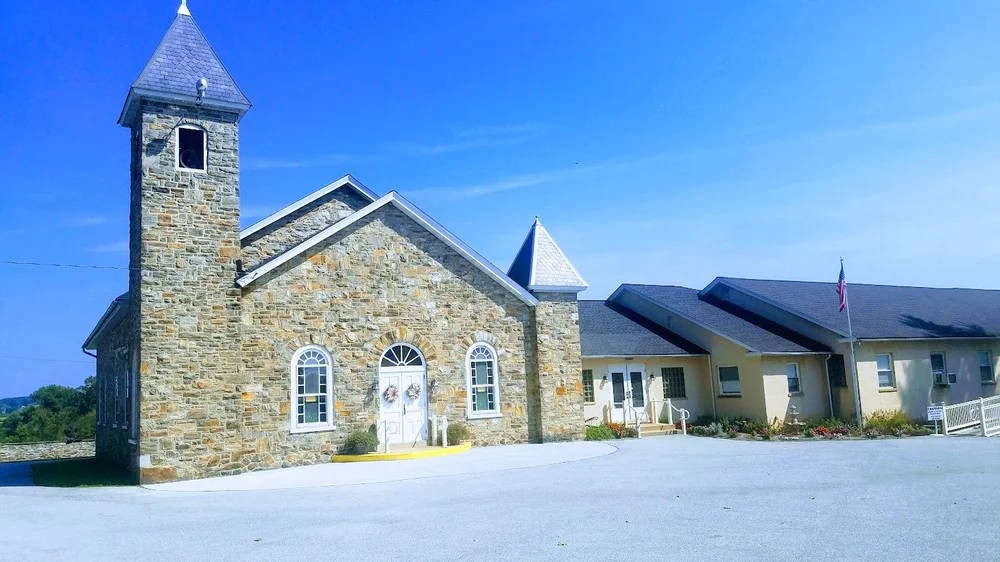
- Mt. Zion Methodist Church (1827) – Founded just north of what would later become Cornelius, Mt. Zion grew into one of the largest rural congregations in the Carolinas. Its cemetery still holds Revolutionary and Civil War soldiers, farmers, and town founders. The grounds once hosted camp meetings and Confederate reunions that drew thousands, filling the fields with tents, wagons, and hymn-singing under the stars.
- Cornelius Baptist (c. 1904) – Began when local families, tired of traveling long distances, built their own sanctuary.
- Cornelius Presbyterian (1909) – A daughter church of Bethel Presbyterian, it reflected the town’s growing Scotch-Irish heritage and educational ties to Davidson College.
- Cornelius Church of God (1946) – A newer congregation, it grew rapidly, reflecting the postwar boom and new religious movements.
Together, these churches formed the backbone of Cornelius long before the Gem Yarn Mill’s whistle marked the town’s working day. They were places of worship, social gathering, and education — the glue that bound a scattered rural community into something resembling a town.
The Gem Yarn Mill
The Gem Yarn Mill was more than a factory — it was the engine that turned Liverpool into Cornelius. Founded in 1905 and incorporated in 1907, the mill stood along the railroad so that raw cotton, spun yarn, and woven cloth could move easily in and out of town. Its location was strategic: the rail line tied Cornelius not only to Charlotte’s markets but to the broader Piedmont textile network.
Life revolved around the mill. Its whistle marked the beginning and end of shifts. Rows of mill cottages housed families who worked long hours inside its brick walls. Children often left school early to join their parents on the floor, and church life, social events, and even marriages sprang from the bonds formed in mill villages.
The mill’s impact extended beyond paychecks. The Gem Yarn Mill Board included figures like Frank Sherrill and R.J. Stough, tying Cornelius’s business leaders directly into its operation. Employment peaked during the world wars, when production fed into the broader textile boom that defined the Carolinas.
When the mill closed in 1962, it marked the end of Cornelius’s cotton era. By then, the community had lived under the hum of spindles and looms for nearly seventy years. Today, only remnants remain — foundations, mill houses, and oral histories — but the legacy of the Gem Mill is still written into the identity of the town.
For a deeper dive into this chapter of Lake Norman’s story, see our blog on The History of Lake Norman: Flooded Valleys and New Horizons and The History of Huntersville, North Carolina — both of which show how mills and railroads shaped our region’s growth.
Life in a Mill Town
By the turn of the twentieth century, Cornelius had become a true mill village, its fortunes tied directly to the hum of the Gem Yarn Mill and the iron rails running beside it.
The railroad made the town possible. Cotton bales rolled in from nearby farms, stacked high on the platforms until boxcars whisked them away to Charlotte or beyond. Finished yarn and cloth flowed back out on the same tracks. For a generation, Cornelius was a place where the whistle of the mill set the tempo of the day.
Rows of workers’ cottages lined the streets, most built by the mill itself. Each small house held a family whose livelihood depended on the looms. The air often carried the sharp tang of machine oil and the drifting dust of cotton lint. Children walked barefoot through red clay yards, mothers tended gardens beside their porches, and fathers came home coated with fibers and sweat.
The mill was more than work — it was community. Baseball teams, quilting circles, and neighborhood picnics all found support through the Gem Mill. Saturday night gatherings might be followed by Sunday mornings in church pews.
Faith grew alongside industry. Mt. Zion Methodist Church, already standing since 1827, remained the region’s spiritual anchor, drawing worshippers from across north Mecklenburg. Cornelius Baptist Church rose in the early 1900s, and by 1909, Cornelius Presbyterian joined the landscape, reflecting the town’s Scotch-Irish heritage.
Meanwhile, African American families, many only a generation removed from slavery, built a neighborhood of their own: Smithville. Here, they created homes, churches, and small businesses that anchored Black life in Cornelius. Smithville became — and remains — one of the most historic African American communities in the Lake Norman region.
In every sense, Cornelius in its mill era was a company town — tied together by the hiss of steam engines, the toll of church bells, and the laughter of children playing in mill yards.
Smithville: A Story of Resilience
Tucked just south of Cornelius’s old mill village, Smithville emerged in the early 1900s as a self-sufficient African American neighborhood. At a time when segregation limited opportunities elsewhere, Smithville families built their own world — one of homes, churches, schools, and businesses that carried pride across generations.
The community took shape on land purchased and passed down by Black families determined to carve out stability. Here, families planted gardens, raised children, and built a network of kinship that buffered them against the inequalities of Jim Crow. Churches like Torrence Chapel A.M.E. Zion and Union Bethel A.M.E. Zion became spiritual centers and gathering places, hosting everything from Sunday worship to civic meetings and school events.
Smithville was more than just geography — it was identity. It fostered baseball teams, gospel choirs, and annual reunions that kept traditions alive. Neighbors looked after one another, pooling resources when jobs were scarce or times were hard. Oral histories recall front porches lined with chairs on summer nights, the air filled with laughter, music, and the smells of home cooking.
In 1972, Cornelius formally annexed Smithville. The move brought the neighborhood inside the town limits, but it never erased its independent spirit. Even as development reshaped Cornelius in the decades that followed, Smithville retained its character — a place where roots ran deep, where surnames repeated across mailboxes, and where elders could trace nearly every family tree.
Today, Smithville stands as one of the most historic African American communities in the Lake Norman region. Preservation groups and town leaders have identified it as a cultural cornerstone, working to protect its heritage against the pressures of gentrification and redevelopment. Plans for revitalization emphasize keeping long-standing families in place while honoring the community’s past.
Smithville’s endurance is a testament to resilience: a neighborhood founded in the face of exclusion, sustained through hard years of segregation, and still vibrant in the 21st century.
Smithville at a Glance
- Origins: Founded by African American families in the early 1900s.
- Annexed: Incorporated into Cornelius in 1972.
- Institutions: Anchored by churches, schools, and community halls.
- Culture: Baseball, choirs, reunions, and oral history traditions.
- Today: At the heart of Cornelius preservation initiatives.
- Legacy: A living symbol of resilience, continuity, and cultural pride.
When the River Became a Lake
For more than sixty years after its incorporation, Cornelius changed little. Cotton and textiles kept the economy alive, and the railroad tied the town to Charlotte and the wider Piedmont textile belt. But the 1960s brought a transformation unlike anything the town had seen before.
Duke Power, seeking to expand hydroelectric capacity for the booming Carolinas, began construction of the Cowans Ford Dam in 1959. Four years later, in 1963, the gates closed and the waters of the Catawba River surged upward. What had been farmland, plantations, and river crossings for generations became Lake Norman — at over 32,000 acres, the largest man-made lake in North Carolina.
The change was dramatic and, for many, bittersweet. Families watched as barns, fields, and even homesteads disappeared beneath the waterline. Churches and cemeteries were moved, but not all graves were accounted for. Oral histories recall wooden crosses floating away and fieldstones slipping beneath the rising tide.
One of the most notable sites was the Connor–Johnston Cemetery, a burial ground for enslaved people and later African American families. Located near today’s Jetton Road, it was only partially relocated; some graves remain beneath the lake to this day. Other small farm plots and family cemeteries were also lost, their names fading as the waters claimed them.
At first, the new shoreline attracted fishermen and vacationers. Families built weekend cabins and fishing shacks, turning Cornelius into a quiet escape for residents of Charlotte. Children swam in the new coves, boats launched from improvised docks, and the lake became a summer playground.
Over time, the temporary cabins gave way to year-round neighborhoods, and the hum of the Gem Yarn Mill was replaced by the roar of speedboats and the steady draw of recreation. By the 1980s and 1990s, as Charlotte’s growth pushed northward, Lake Norman transformed Cornelius from a small mill village into a booming lakefront town.
What the Catawba once carried in ferries and farm wagons, Lake Norman now carried in sailboats and ski boats. The town’s economy shifted with it — from cotton to commerce, from yarn to yachts.
Cemeteries Beneath the Lake
When Duke Power completed Cowans Ford Dam in 1963, the rising waters of Lake Norman did not just cover fields and homes — they also claimed cemeteries. The company undertook a major relocation program, moving many marked graves to higher ground. Families gathered to witness solemn reburials as headstones were reset in churchyards and community plots.
But not all graves were moved. Some were unmarked, marked only with wooden crosses, or remembered by fieldstones that slipped beneath the rising tide. Oral histories recall markers floating away, and locals tell of places where divers or fishermen still encounter remnants of fences, walls, and even headstones on the lake bottom.
One of the most notable sites is the Connor–Johnston Cemetery, a burial ground for enslaved people and later African American families near today’s Jetton Road. While some graves were relocated, others remained. Similar stories surround the Little/Lytle family plots near the Davidson line and dozens of smaller farm cemeteries scattered across what became the lakebed.
These lost resting places fuel ghost stories and folklore. Locals whisper about spirits unsettled by the flood, tales of phantom lights drifting across coves, and strange sounds on quiet nights. Whether one believes in ghosts or not, the truth is clear: beneath Lake Norman lie the memories and remains of the people who first shaped the Catawba Valley.
Reinvention on the Lake
The creation of Lake Norman in the 1960s laid the foundation, but it was the suburban wave of the 1980s and beyond that reshaped Cornelius into the town we know today. As Charlotte’s metropolitan footprint pushed northward along I-77, Cornelius shifted from a cotton mill village into a fast-growing lake community where boating, recreation, and fishing on Lake Norman became central to daily life.
By the late 20th century, neighborhoods began to replace farm fields. Subdivisions like Jetton Cove, The Peninsula, and Governors Island transformed the shoreline into high-demand residential enclaves. Shopping centers rose on land once planted with cotton, and Catawba Avenue became the town’s commercial spine, balancing historic storefronts with modern retail.
The population numbers tell the story: Cornelius had only about 1,400 residents in 1960, fewer than 3,000 by 1980, and then surged to over 32,000 by 2020 — nearly tripling between 2000 and 2020 alone.
Yet through all this rapid growth, the past never disappeared. Downtown Cornelius still carries the bones of a cotton village: brick storefronts that once housed general stores, mill houses clustered near the old Gem Yarn Mill site, and the remnants of rail depots that once tied Cornelius directly to Charlotte’s textile economy.
Smithville continued to anchor generations of African American families, standing as a cultural touchstone even as new development pressed around it. Meanwhile, on Sunday mornings, the bells of Mt. Zion Methodist Church still rang out as they had since 1827, echoing across a town that looked very different but remembered where it came from.
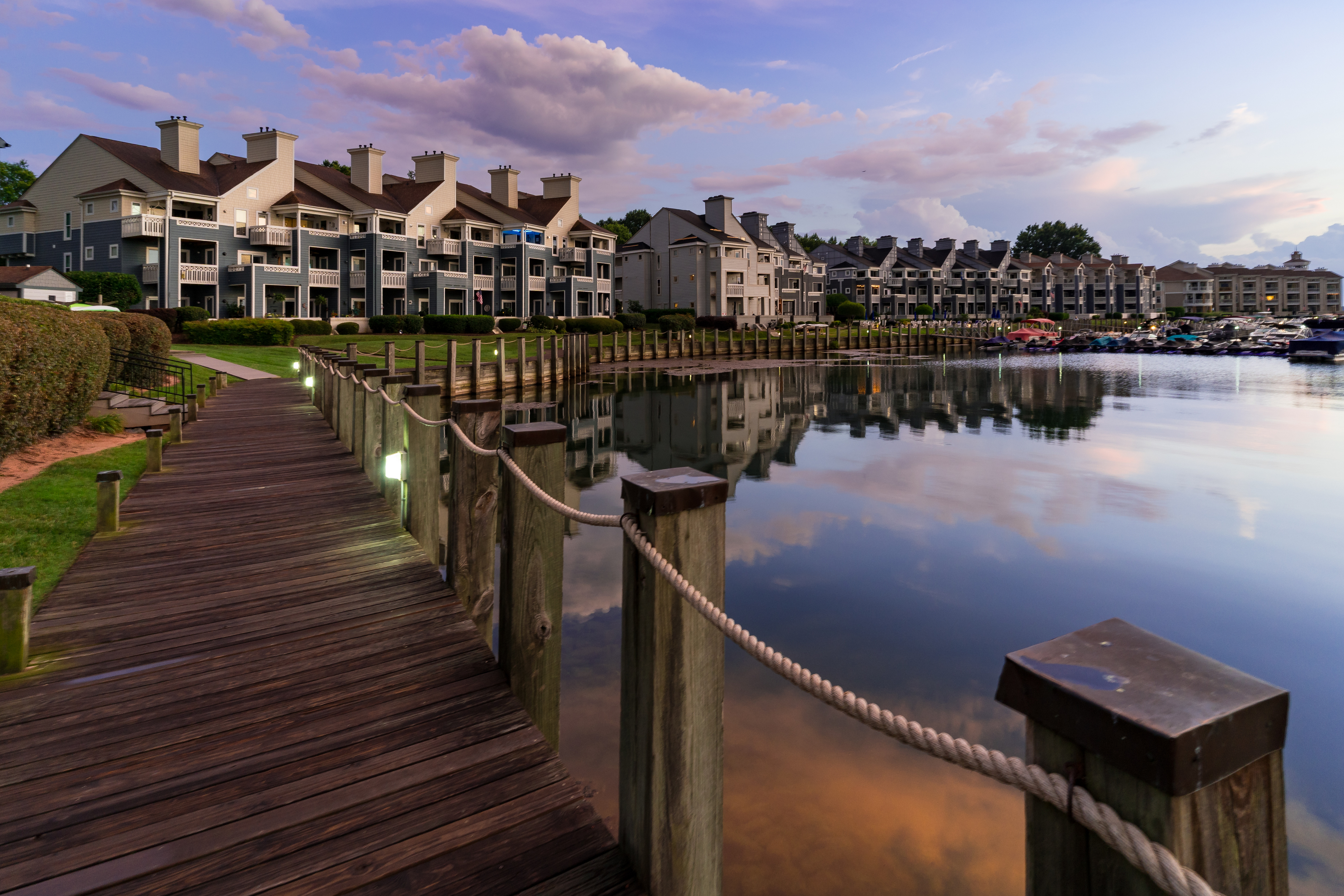
The lake itself became Cornelius’s new identity. Marinas lined the shoreline — Morningstar Marinas, Peninsula Yacht Club, and Holiday Marina among them. Public parks and waterfront restaurants like Jetton Park, Ramsey Creek Park, and The Boardwalk created gathering spaces for both locals and visitors. Cornelius branded itself as a gateway to Lake Norman, where boat slips, sailing clubs, waterfront dining, and weekends spent fishing on Lake Norman became as central to the town’s culture as cotton bales and mill whistles had once been.
Cornelius had reinvented itself again — not as a mill town, but as a lake town, defined by shoreline living, suburban energy, and a strong connection to its history. And while Cornelius grew as part of the Lake Norman community, it also became a weekend destination for travelers from the NC High Country. Families from Boone, West Jefferson, and Wilkes County who were used to trout fishing in cold mountain streams found something new here: striper runs in the main channel, catfish drifting off Ramsey Creek, or crappie pulled from shaded coves. Together, these regions — the High Country and the Lake Norman shoreline — showcase the diversity of North Carolina’s heritage and recreation.
Civic Spirit and Modern Identity
Even as Cornelius grew from mill village to booming lake town, it never lost its civic heartbeat. Community groups, churches, and small businesses kept the town close-knit, ensuring that growth didn’t erase its sense of belonging.
The Cornelius Jaycees, chartered in 1943, became a proving ground for young leaders. Their projects ranged from fundraising drives to beautification efforts. In 1971, they published The History of Cornelius, preserving many of the stories that form the backbone of this narrative today.
The Lions Club, established in 1953, carried the spirit of service into the postwar years. Its members focused on vision programs, youth sports, and local philanthropy, making the Lions one of Cornelius’s most enduring service organizations.
Schools and PTAs further bound families together. Meeting minutes from the 1930s and 40s describe mothers baking pies, fathers building ballfields, and teachers leading fundraisers — all for the sake of Cornelius’s children. These grassroots efforts not only supported education but created a culture of neighbors helping neighbors.
Businesses also played a central role in shaping Cornelius’s civic identity. Smith’s Flowers & Nurseries, founded in 1933, grew from a backyard greenhouse into a regional landmark. For decades, its poinsettias and Easter lilies filled local churches, weddings, and funerals — making Smith’s a part of nearly every life event in town.
Cornelius also produced figures of national renown. Baseball legend Hoyt Wilhelm, who grew up here and honed his knuckleball on local fields, went on to become the first relief pitcher inducted into the Baseball Hall of Fame. His legacy is honored at Hoyt Wilhelm Park, a reminder that even small towns can shape big dreams.
At the civic center of town, Town Hall houses the Conard Collection, a carefully preserved archive of photographs, artifacts, and documents assembled by historian Jack Conard. From mill ledgers to family portraits, the collection ensures that the story of Cornelius is passed down to future generations.
In short, Cornelius’s modern identity is more than marinas and subdivisions — it is the product of a civic spirit nurtured across generations, where service clubs, small businesses, and local heroes continue to tie the community together.
Notable People from Cornelius
- Joseph Benjamin Cornelius (1832–1914) – A wealthy merchant and investor, Cornelius provided the capital that made the Gem Yarn Mill possible. In recognition of his leadership, the town incorporated under his name in 1905. Beyond his business sense, he was remembered for generosity — donating to orphanages and children’s homes — and for his role as an elder at Mt. Zion Methodist Church.
- Richard Johnson Stough (1842–1926) – A Confederate veteran turned businessman, Stough partnered with J.B. Cornelius to co-found the Gem Yarn Mill. Oral histories describe him as deeply civic-minded, helping to secure the town’s first schoolteacher and lobbying for better rail connections. His family’s legacy can still be traced through old farmsteads and records preserved in the Conard Collection.
- Dr. William W. Washam (1870–1958) – Known as the “good family doctor,” Dr. Washam practiced medicine across north Mecklenburg for more than 50 years. He famously walked miles to visit patients, often accepting little or no payment for his services. Beloved for both his skill and his kindness, he became a symbol of community care in an era before modern clinics and hospitals.
- Frank C. Sherrill (1871–1951) – Serving as Cornelius’s first postmaster when the office opened in 1899, Sherrill was also one of the businessmen behind the Gem Yarn Mill. His role connected the young town to the outside world, as the post office became a vital hub for trade, news, and communication.
- James Hoyt Wilhelm (1922–2002) – Raised in Cornelius, Wilhelm honed his knuckleball on local sandlots before serving in World War II and embarking on a legendary baseball career. In 1985, he became the first relief pitcher inducted into the Baseball Hall of Fame. Today, Hoyt Wilhelm Park honors his legacy, reminding residents that Cornelius has produced not only civic leaders but national icons.
Walking Cornelius Today
To walk through Cornelius today is to experience a blend of past and present at every turn.
Downtown still carries the bones of a cotton village. Brick storefronts, once home to feed stores and general shops, now house art galleries, coffee shops, and breweries. Old railroad depots stand as reminders of the era when trains carried cotton to market, even as the streets around them hum with modern traffic.
A short drive takes you to Mt. Zion’s cemetery, where the names on the stones trace the town’s lineage. Farmers, soldiers, merchants, and mill workers lie side by side — a silent roster of Cornelius’s early story. Civil War veterans rest near church founders, their epitaphs etched into weathered marble.
In Smithville Park, the ground itself seems to tell stories. The park is more than green space: it is a living reminder of the community that African American families built in the face of segregation. Families gather here for reunions and festivals, keeping traditions alive while honoring the resilience of past generations.
At the water’s edge, Ramsey Creek Park and Jetton Park offer trails, playgrounds, and beaches. Launch a boat at Ramsey Creek, and you’re gliding across Lake Norman — above fields where corn once grew and over churchyards where families once gathered to worship. Fishermen, sailors, and water skiers now share the same space once walked by enslaved laborers, mill hands, and farmers.
Cornelius today is a town of layers. Beneath the bustle of new neighborhoods and marinas lies the imprint of plantations, mills, churches, and cemeteries. For residents and visitors alike, every step through its streets and parks carries echoes of the town’s long journey from Liverpool’s cotton yard to Lake Norman’s shore.
Conclusion: A Town of Turning Points
Cornelius’s story is one of constant reinvention. It began in 1893 with a fight over fairness — farmers in the Liverpool community breaking away from Davidson so they could weigh and sell their own cotton. Out of that dispute grew a new town, its life shaped first by cotton, then by railroads, then by industry.
For decades, Cornelius thrived as a mill town, its heartbeat set by the Gem Yarn Mill and the steady whistle of trains rolling through. Families lived in tidy mill houses, shopped at company stores, and worshiped at Mt. Zion Methodist Church, where the bells have rung since 1827. The rhythms of small-town life echoed those of nearby neighbors like Huntersville and Mooresville, each tied to the textile boom that drove the Carolina Piedmont at the turn of the century.
Everything changed in 1963 when the Catawba River was dammed at Cowan’s Ford, creating Lake Norman. Cornelius, along with Sherrills Ford to the west and Denver across the northern shore, saw farmland, churches, and even family cemeteries give way to rising waters. What could have been loss became rebirth: miles of shoreline opened the door to marinas, parks, and new neighborhoods. The lake transformed Cornelius from a fading mill town into a growing community that welcomed both new residents and weekend visitors from Charlotte.
And yet, through all this transformation, Cornelius held on to its roots. Smithville, the historically African American neighborhood, remained a cultural anchor, preserving traditions through segregation, annexation, and waves of development. Downtown’s storefronts still carry the bones of the old mill village, even as they now house breweries, art galleries, and restaurants.
Like every community, Cornelius has had its turning points — the cotton scales at Liverpool, the arrival of the railroad, the hum of the mills, the construction of the dam. Each one redefined the town, but none erased it. Instead, Cornelius adapted, layering new chapters atop old foundations.
Today, Cornelius stands as one of the shining towns of Lake Norman, alongside Huntersville, Davidson, Denver, Mooresville, and Sherrills Ford. It is a place where heritage meets growth, where the bells of Mt. Zion still mark the passing hours even as boats skim across lake waters that didn’t exist a lifetime ago. Cornelius is defined not by what it lost but by what it carried forward — resilient, adaptive, and enduring.
That is the story of Cornelius: from Liverpool’s cotton yard to a modern lakefront town, always finding a way forward while holding fast to the memory of where it began.
About Adkins Law, PLLC: A law firm located in Huntersville, NC
At Adkins Law, PLLC, we’re proud to call the Lake Norman region home. From Cornelius to Huntersville and across the shoreline communities of Lake Norman, we’ve built our practice around helping families navigate life’s most important challenges.
Led by attorney Chris Adkins, our firm focuses on family law, child custody, divorce, mediation, and estate planning. We know the history of this region because we live it every day — raising our own families here and walking the same streets that grew from cotton mills to thriving lake towns.
Whether you’re searching for a Huntersville family lawyer, need guidance on a Lake Norman custody case, or want to plan for your family’s future, our team is here to provide trusted, local representation.




Leave a Reply