

Introduction: The Inland Sea
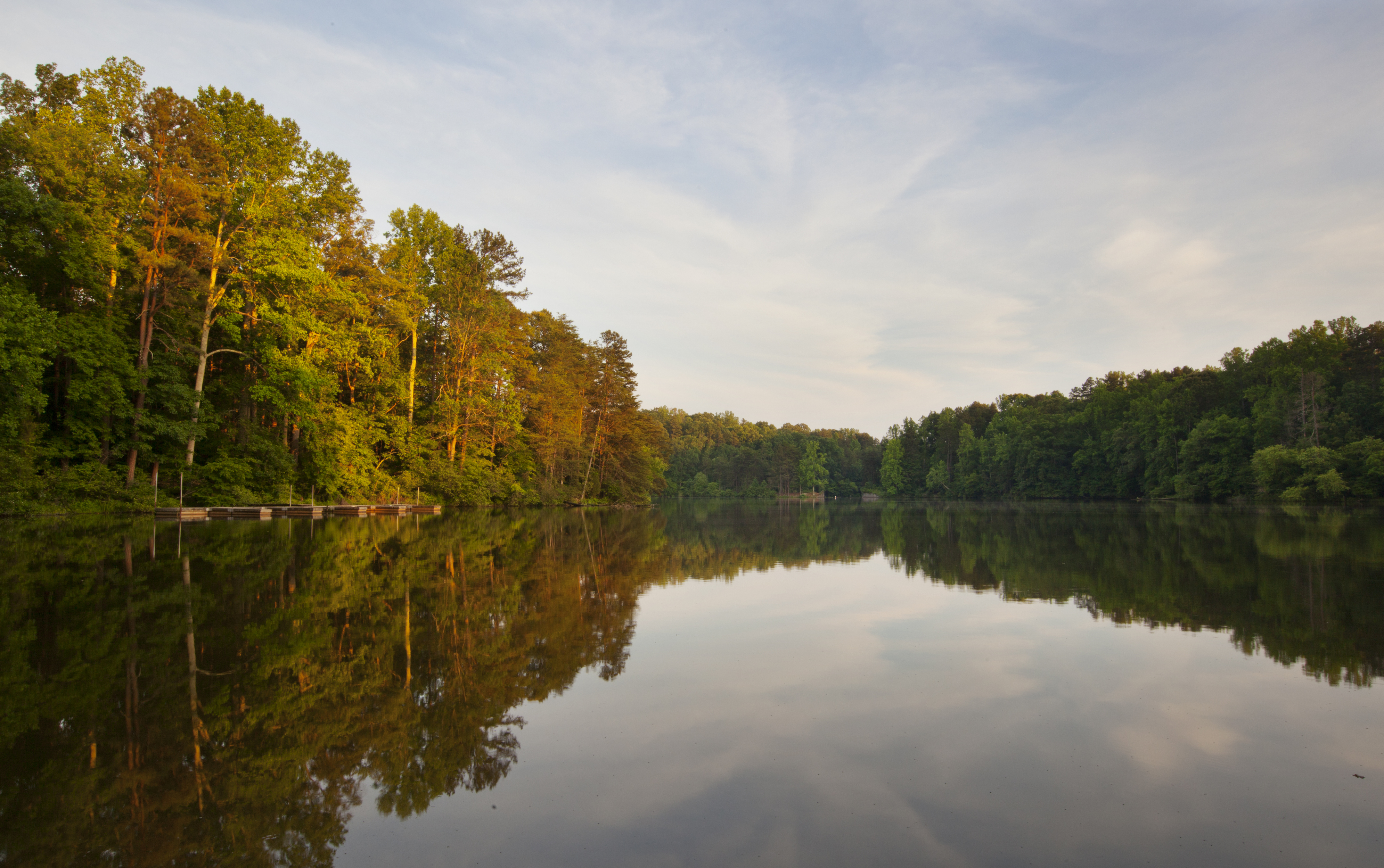
If you stand on the shore of Lake Norman at sunset, the water looks endless. A shimmer of orange and violet stretches toward the horizon, broken only by the silhouettes of boats gliding back to their slips. The sound of laughter carries across the coves, mingling with the low hum of an engine and the lapping of waves against wooden piers.
It feels timeless, as though the lake has always been here — an inland sea anchoring the lives of thousands in four North Carolina counties. But just sixty years ago, this place was not a lake at all. It was farmland, forest, and red clay roads. Cotton grew in the bottomlands. Families like the Overcashes and Davidsons worked fields that had been in their families since the 1700s. Textile mills roared on the banks of the Catawba River. Churches held Sunday gatherings, and children splashed in the river’s shallows after chores.
Then, in the span of just a few years, all of it was gone.
A River Transformed
Lake Norman is the product of industry, imagination, and loss. In the late 1950s, Duke Power — the company that would become Duke Energy — completed the Cowans Ford Dam across the Catawba River. The project was part of a sweeping plan first dreamed up in the 1890s, after a young Carolina engineer named William States Lee worked on the Niagara Falls hydroelectric project. If hydropower could be harnessed at Niagara, Lee reasoned, why not at home on the Catawba?
Funded by industrialist James B. Duke, the idea took hold. Over the next half century, Duke Power would build a chain of dams and reservoirs along the Catawba, reshaping the landscape of the Carolinas. Lake Norman, completed in 1963, was the final and largest link in that chain: 32,000 acres of water, 520 miles of shoreline, spanning four counties — Mecklenburg, Iredell, Lincoln, and Catawba.
When the gates of Cowans Ford Dam closed, the Catawba River began to back up. Water crept over farms, mills, homes, churches, and roads. By the summer of 1963, families camped along their newly formed shorelines, watching as tree trunks disappeared beneath the rising surface. Cemeteries were relocated, but not every foundation, not every road, not every secret could be moved.
What Lies Beneath
Today, when a wakeboarder cuts across a glassy cove or a fisherman casts his line into the deep, they float above a world frozen in time. Beneath the waters of Lake Norman lie the remains of entire communities: the Long Island Mill and its surrounding village, East Monbo Mill, and a 1938 summer camp. The old Beatties Ford Bridge still rests on the bottom. Sections of Highway 150 and U.S. 21 vanish under the waves. Even the battlefield where General William Lee Davidson fell in 1781 at Cowan’s Ford is now entombed beneath the lake that bears his name.
From time to time, stories surface. Firefighters using sonar discovered the wreckage of a small airplane in 2013. Divers have traced the outlines of submerged foundations. Locals whisper about “Normie,” the mythical Lake Norman monster said to haunt the depths. And archivists at Davidson College have built an interactive map cataloguing the lost mills, plantations, and homesteads that vanished when the waters rose.
To live on Lake Norman is to live on top of memory.
From Farmland to Playground
What began as a hydroelectric project quickly evolved into something larger. Duke Power’s vision may have started with energy and flood control, but the company also understood the potential of recreation. In the 1960s, Charlotte families could lease one-acre waterfront lots for $120 a year. They arrived in station wagons loaded with children, hammers, and coolers, camping on the shoreline as they cleared brush and hammered together piers.
Marinas and trading posts soon sprang up: Outrigger Harbor with its floating Kon Tiki dinner boat, the paddlewheel Robert E. Lee, bait shops that sold everything from nightcrawlers to caviar. Communities with names like Isle of Pines and Island Forest took shape on what had once been farmland. Over time, Duke Power began to sell property, and developers transformed the shoreline into subdivisions and golf courses.
By the turn of the millennium, the lake had become both a commuter hub for Charlotte’s explosive growth and a destination in its own right. Tens of thousands lived along its shores. Tens of thousands more came each summer to fish, ski, cruise, and relax. The “inland sea” had become central to the region’s identity.
A Story of Transformation
But Lake Norman is more than a recreation spot. It is a story of transformation — of how a river became a reservoir, of how families lost land and gained new opportunities, of how the past lingers beneath the surface. It is a story of Native American trails and Revolutionary battles, of mills that spun cotton and communities that prayed in wooden churches, of engineers and industrialists who dreamed of taming a river for power.
It is also a story of resilience. The families who sold their land adapted to new lives. Displaced congregations built new sanctuaries on higher ground. Millworkers moved to other jobs, other towns. And slowly, a new culture emerged: a culture of lake life, where boats replaced plows, and fishing piers replaced mill wheels.
Why This History Matters
Today, it is easy to see Lake Norman only for what it is — a glittering expanse of water ringed by marinas and restaurants. But beneath every cove lies a layer of history. Each time you launch a boat from Lake Norman State Park, you glide over ground once walked by generations. When you cross the water on Highway 150, you pass over a submerged roadbed that once carried wagons and early automobiles. When you cast a line near Long Island, you fish above the remains of one of the South’s earliest textile mills.
The story of Lake Norman is the story of North Carolina itself: a place where tradition meets progress, where loss is folded into growth, where the past is never entirely gone. It is a place of memory and imagination, of industry and recreation, of displacement and belonging.
An Invitation
This article will explore Lake Norman in all its dimensions. We will walk the riverbanks before the flood and watch the dam rise. We will meet the farmers, millworkers, and families who lost their land, and the newcomers who built a new way of life on its shores. We will dive beneath the surface to find what remains, and then surface again to experience the boating, fishing, dining, and culture that make Lake Norman a destination today.
Lake Norman is more than water. It is memory, power, and possibility — an inland sea whose story is still being written.
Part I: Before the Lake
Chapter 1: The Catawba River Valley
Long before the roar of bulldozers and the thunder of dynamite, before trestles and concrete and surveyors’ stakes, the land that would one day lie beneath Lake Norman was a mosaic of river bottoms and upland ridges, of fields tilled by generations and forests of oak, pine, and hickory. At its heart was the Catawba River, winding through the Piedmont of North Carolina in great bends and oxbows, an artery that sustained life, shaped settlement, and carried stories for centuries.
The First People: The Catawba Nation
For millennia before European settlers pushed into the Carolina Piedmont, the Catawba River was the lifeblood of the people who called themselves yĕ Iswą h’reh — “the people of the river.” This name was not a poetic flourish; it was identity itself. The Catawba were river people, bound spiritually, economically, and culturally to the currents that wound through what would later become Mecklenburg, Iredell, Lincoln, and Catawba counties.
Life Along the River
The Catawba’s daily rhythms mirrored the river’s flow. In spring and summer, they cast woven nets and spears into its waters, pulling out shad, bass, and catfish. They farmed the fertile floodplains, cultivating maize, beans, and squash in fields replenished by the river’s silty floods. In the forests beyond, they hunted deer, turkey, and bear, moving along well-worn game trails that would later form the backbone of colonial wagon roads.
Travel was by water as much as by land. In dugout canoes hollowed from great poplar or pine logs, the Catawba paddled up and down the river, carrying not only food but also news, alliances, and stories. Riverbanks became places of gathering — for rituals, for trade, for diplomacy with neighboring tribes. The river was not just sustenance; it was the axis of their world.
Archaeological Echoes
Though Lake Norman has buried many traces beneath 32,000 acres of water, archaeologists working before and after the flooding uncovered artifacts that whisper of this deep habitation. Hearthstones blackened by ancient fires, spear points chipped from stone, pottery shards decorated with incised patterns, and ceremonial pipes carved from soapstone all surfaced along the old Catawba riverbed.
Each find hints at a community once vibrant with life: villages of bark-covered houses arranged around central squares; fields of corn rustling in the breeze; children splashing in the shallows while elders smoked long pipes and told stories of their ancestors. Today, these remnants rest under the coves and channels of Lake Norman, sealed away yet enduring as silent testimony.
The Great Trading Path
The Catawba were not isolated. Their homeland lay astride the Great Trading Path, one of the most important Native routes of the Southeast. This packed-earth highway stretched from Virginia’s fall line southward into the Piedmont, threading directly through the Catawba Valley. Along it moved caravans of traders carrying deerskins, furs, copper, salt, shells, and even slaves.
The path was also a conduit of culture. Songs, beliefs, languages, and alliances traveled along with goods. Catawba traders established themselves as middlemen between coastal tribes and inland nations, strengthening their central role in the region.
When Europeans arrived, they too followed the Great Trading Path. What had been a Native highway became the wagon roads of Scots-Irish and German settlers, and eventually the routes of modern highways like U.S. 29 and Interstate 85. Every time a modern traveler drives from Charlotte toward Greensboro, they unknowingly retrace the footsteps of Catawba traders.
Contact and Catastrophe
The Catawba entered the European record in the 1500s when Hernando de Soto’s expedition (1540) and later John Lawson (1701) passed through the Carolinas. Lawson, in particular, left descriptions of thriving Catawba towns, palisaded villages with perhaps thousands of inhabitants. He recorded their hospitality and their agricultural abundance, noting fields of maize and orchards of peaches, which the Catawba had adopted from Spanish traders.
But this flourishing world collapsed under the twin pressures of disease and warfare.
- Smallpox and other epidemics swept through the Piedmont, often carried by traders themselves. By the early 1700s, waves of contagion cut the Catawba population in half, then again, leaving whole towns abandoned.
- Iroquois raiders from the north harassed Piedmont tribes for decades, capturing slaves and destabilizing alliances.
- The Yamasee War (1715–1717) drew the Catawba into bloody conflict with colonists and rival tribes, further reducing their numbers.
By the mid-18th century, the Catawba were a fraction of their former strength, their population estimated at fewer than 2,000. Yet they endured.
Adaptation and Survival
Despite devastation, the Catawba proved remarkably adaptive. They consolidated scattered remnants of smaller tribes — Waxhaw, Sugeree, Wateree — into their communities, creating a confederation that preserved their strength. They allied strategically with European colonists, serving as guides, scouts, and warriors in colonial wars, from the Tuscarora conflicts to the French and Indian War.
During the American Revolution, the Catawba sided with the colonists, providing troops and support in campaigns against the British and Cherokee allies. This alliance cemented their reputation as loyal neighbors, though it did not shield them from land loss in the years that followed.
Even as their territory shrank, the Catawba name — forever tied to the river — endured. By the 19th century, their communities were smaller, their lands encroached upon, yet they remained a recognized presence in the Carolinas. Today, the Catawba Indian Nation is federally recognized, with a reservation in South Carolina. Their ancestors’ homelands, though submerged beneath Lake Norman, are not forgotten.
A Legacy Beneath the Water
When Lake Norman was created in the 1960s, thousands of years of Catawba history vanished under the rising waters. The Great Trading Path, the hearthstones of villages, the bones of ancient hunting camps — all drowned beneath an inland sea. Yet the Catawba story endures in artifacts, in oral tradition, and in the very name of the river itself.
The Catawba were the first people of this valley, the original “people of the river.” Their legacy is not erased by the lake but hidden within it, a reminder that Lake Norman’s story begins long before Duke Power poured the first concrete at Cowans Ford.
Colonial Settlement and Transformation
By the mid-1700s, the Catawba River Valley had become a magnet for settlers from Europe and the colonies to the north. The wilderness that had long been the homeland of the Catawba Nation now drew Scots-Irish Presbyterians moving down from Pennsylvania and Virginia, as well as German Lutherans and Moravians who followed the Great Wagon Road southward into the Carolina backcountry.
These settlers did not arrive in an empty land, but they saw opportunity: fertile bottomlands, abundant forests, and a river that promised both sustenance and power. They followed wagon ruts cut through forest and thicket, often tracing the very Great Trading Path that had carried Native caravans for centuries. What had been an indigenous thoroughfare became the skeleton of colonial expansion, later transforming into wagon roads, stagecoach routes, and eventually the highways that today cross the Lake Norman region.
Farming the Wilderness
The first task of these newcomers was survival. Armed with axes, plows, and determination, families cleared patches of wilderness to plant crops. In the bottomlands — the low, fertile ground nourished by the river’s floods — they sowed corn, wheat, rye, and barley. These fields became the breadbasket of the early settlements. On upland ridges, where soil was thinner, they raised livestock: herds of cattle, hogs, and sheep roamed semi-wild, often marked only by notches in ears or brands on hides.
The Catawba River was both a blessing and a burden. In dry summers, it could shrink to a sluggish trickle, its muddy shoals barely enough to turn a millwheel. In rainy seasons, it transformed into a raging torrent, swelling over its banks, washing away fences, crops, and even homes. Settlers built their lives with this rhythm in mind, adapting as best they could to the river’s moods. Yet no one doubted its value: the river was life itself, the source of water, food, power, and a natural highway through the wilderness.
Faith and Community Institutions
Religion was at the center of frontier life. For the Scots-Irish Presbyterians, faith was inseparable from community. In the 1760s, they established Centre Presbyterian Church, just north of present-day Davidson near Mount Mourne. Its simple sanctuary quickly became a hub for families with names that echo across local history: Osborne, Torrence, Davidson, Byers, Houston, Stinson. The church cemetery grew into a resting place for veterans of the Revolution, early settlers, and enslaved people tied to plantation households.
Churches like Centre were more than houses of worship. They were centers of education, law, and social order. Ministers often doubled as schoolmasters, and sermons reinforced not only religious beliefs but also cultural identity, emphasizing the Presbyterian values of literacy, discipline, and community responsibility.
Education, too, was prized from the beginning. In 1760, Crowfield Academy opened in a small log building not far from Centre Church. Its curriculum included Greek, Latin, philosophy, theology, and Hebrew — a remarkable offering in the rough Carolina backcountry. Crowfield attracted not only local youth but also students from farther afield, some of whom would go on to become leaders in the Revolutionary movement. Historian Chalmers Davidson later described it as one of the earliest centers of classical education in western North Carolina, a direct precursor to the intellectual spirit that would one day establish Davidson College in 1837.
Daily Life and Struggles
Life in the Catawba River Valley during this period was not easy. Families lived in log cabins chinked with clay and heated by stone fireplaces. Women bore the brunt of frontier labor: tending gardens, spinning and weaving cloth, raising children, and often managing farms when men were away at war or on extended hunts. Men balanced the demands of farming with militia service and labor on public works like roads and forts.
Frontier communities had to be largely self-sufficient. Salt, iron tools, and gunpowder were imported luxuries, acquired through long wagon journeys to the coast or traded along the Great Wagon Road. Everything else — clothing, candles, food — was produced at home or in the immediate community.
Conflict and Tension
Settlement also brought tension. While the Catawba Nation attempted to maintain peaceful relations with the newcomers, their numbers were declining under waves of disease and war. Other tribes, particularly Cherokee to the west and Iroquois raiding parties from the north, sometimes clashed with settlers. The frontier was a place of unease, where rifle and plow were equally necessary tools.
The French and Indian War (1754–1763) drew settlers into wider imperial struggles, while the Regulator Movement (1760s–70s) reflected discontent with colonial authority and taxation. In this crucible of hardship and resistance, the seeds of revolution were sown.
Foreshadowing Davidson College and Beyond
By the eve of the American Revolution, the Catawba River Valley had transformed from a sparsely settled wilderness into a patchwork of farms, churches, schools, and rudimentary industries. The settlers’ emphasis on literacy and faith created fertile ground for institutions like Davidson College, established in 1837 just a few miles from Centre Church and the site of old Crowfield Academy.
The values laid down in this colonial period — perseverance, religious devotion, commitment to education, and adaptation to the river’s gifts and dangers — would echo through the centuries. They would shape not only the small towns of Davidson, Cornelius, Huntersville, and Mooresville, but also the very identity of the communities that would one day gather on the shores of Lake Norman, the “inland sea” that submerged so much of this history.
Revolution and Memory
The Catawba River Valley was no stranger to hardship, but the 1780s brought a turbulence unlike any before. The American colonies, locked in a struggle for independence, saw the Carolinas become a bitter battleground. Far from the great cities of Boston and Philadelphia, the war in the southern backcountry was brutal, personal, and relentless. Neighbors were often divided, with Loyalists and Patriots clashing in skirmishes that scarred entire communities.
The Southern Campaign
By late 1780, the tide of war had shifted south. After victories in Charleston and Camden, the British sought to tighten their grip on the Carolinas. Their strategy depended on marching north through the Piedmont, rallying Loyalist support and breaking Patriot resistance. The Catawba River stood in their way, and its fords — natural shallow crossings long used by Native Americans and settlers — became points of military urgency.
The Patriot militia, made up largely of local farmers and frontiersmen, knew the terrain intimately. They resolved to make every crossing costly for the British. At fords like Beattie’s, Tuckasegee, and Cowan’s, hastily assembled forces of militiamen shadowed Cornwallis’s advance, waiting for opportunities to strike.
The Battle of Cowan’s Ford
On the freezing morning of February 1, 1781, one such confrontation erupted at Cowan’s Ford, just north of present-day Huntersville. Patriot forces under General William Lee Davidson, a respected officer who had fought at Brandywine and Germantown before returning to North Carolina, prepared to oppose the British crossing.
Davidson’s militia numbered only a few hundred — outmatched by Cornwallis’s seasoned Redcoats and German auxiliaries. But the militia had the advantage of surprise and terrain. Hidden behind trees and embankments, they fired into the first British troops wading chest-deep into the icy current. Muskets cracked, smoke drifted over the water, and for a brief moment it seemed the river itself might hold back the empire.
The Patriots fought fiercely, but the weight of the British force was overwhelming. In the confusion of battle, Davidson himself was struck by a musket ball and killed. Leaderless, the militia scattered, retreating into the woods. The British secured the crossing and continued their march.
A Hasty Burial
Davidson’s body was recovered by local allies and carried several miles to Hopewell Presbyterian Church, where he was hastily buried to prevent desecration by the British. His resting place became a site of reverence for generations, a reminder of sacrifice on the frontier. For the families of the Catawba Valley — the Torrences, Osbornes, and Davidsons themselves — the battle was not a distant story of independence but a loss felt in their fields and homes.
The river, indifferent to the clash, flowed on. Yet in the hearts of the settlers, it was forever marked by Davidson’s death.
The Power of a Name
Though the battle was a tactical defeat, its memory grew in symbolic power. General Davidson became a martyr of the Revolution in the Carolina Piedmont. When a new Presbyterian college was chartered in 1837, it bore his name: Davidson College. The town that grew beside it also took the name, ensuring that every map of North Carolina carried the reminder of the fallen general.
Nearly two centuries after the skirmish, when Duke Power completed the Cowans Ford Dam in 1963, the battlefield itself was swallowed by the rising waters of Lake Norman. The very ford where Davidson died now lies beneath tens of feet of water, beneath the turbines that convert the Catawba’s current into electricity.
Thus, his story flows invisibly through modern life. Commuters drive past Cowans Ford Dam daily, unaware that beneath the surface lies one of the region’s most hallowed Revolutionary sites. Boaters skim across the cove above the battlefield, unaware that musket fire once cracked where their wakes now ripple.
Enduring Legacy
The name Davidson endures as more than a marker. It is a testament to the sacrifices made on the Carolina frontier, where the Revolution was fought not by professional armies alone but by farmers and families defending their homes.
The story of Cowan’s Ford reminds us that the Catawba River was not only a natural barrier but also a stage for national destiny. Its waters witnessed courage and loss, and its memory shaped the institutions, towns, and eventually even the inland sea that transformed the landscape.
Lake Norman may have hidden the battlefield, but it also ensured that the name Davidson remains forever tied to the river, the valley, and the spirit of perseverance.
Industry and the River
As the new United States grew in the early 19th century, so too did the importance of the Catawba River for industry and commerce. What had once been a natural boundary and source of food became an engine of economic development. Its steady current promised power, and its fertile bottomlands supported both subsistence farmers and wealthy planters. By the mid-1800s, the hum of mills joined the river’s eternal rhythm, weaving the sound of machinery into the daily lives of the valley’s people.
The Rise of the Mills
The industrial revolution arrived in the Piedmont not with great ironworks or massive factories, but with cotton mills that tapped into the South’s most abundant crop. Water-powered machinery transformed raw cotton into thread and cloth, fueling both local economies and the wider textile markets of the United States.
On the banks of the Catawba, one of the earliest and most important of these was the Long Island Mill. Founded in the mid-19th century, Long Island Mill quickly grew into a thriving industrial community. It was not merely a building but a village unto itself — complete with worker housing, a mill store, and facilities that anchored the lives of families whose labor fed the whirring spindles. Generations grew up in the shadow of the mill’s smokestack, their lives dictated by the rising and falling of the mill bell.
Nearby, East Monbo Mill offered another industrial hub. Like Long Island, it was more than a workplace; it was a community. Worker cottages lined dirt streets, gardens grew in backyards, and families shopped at the company store, their wages often paid in mill scrip redeemable only in its aisles. Churches were established to serve the spiritual needs of the millhands, while schools gave their children rudimentary education before they, too, entered the workforce.
Together, Long Island and East Monbo became emblematic of the Piedmont’s textile economy, which by the early 20th century would dominate North Carolina’s industrial output. They foreshadowed the later industrial villages that would stretch across the region, tying the identity of communities — and their dependence — to the mills that loomed over their rivers.
Farms, Orchards, and Plantations
Yet not all in the Catawba Valley were tied to mill whistles. Much of the land remained a patchwork of farms and plantations, sustained by the same fertile soils that had drawn settlers a century earlier. Families like the Overcashes, who had been in the region since the 1700s, worked broad bottomlands along the Catawba. Their farms produced corn, wheat, and livestock for market and home.
Other tracts grew into larger plantations, supported by enslaved labor until the Civil War. Estates with names like Elm Wood dotted the landscape. These homes stood as symbols of wealth and permanence, their brick chimneys rising above surrounding fields, their family cemeteries tucked under stands of oak and cedar. After emancipation, some of these plantations persisted, while others fragmented into smaller farms. But all left behind remnants — cemeteries, foundations, orchards — that would one day be drowned beneath Lake Norman’s waters.
Churches as Anchors
In both mill villages and farm communities, churches remained the central institutions of life. Williamson’s Methodist Church, for example, served generations of farmers before its congregation relocated when Duke Power’s lake project forced its removal. Hunters Chapel AME Zion, a Black congregation, offered not just a place of worship but also a community hub in a segregated society. These churches connected scattered families into networks of kinship and faith, reinforcing resilience in the face of economic dependence or racial inequality.
Churches were also keepers of memory. Cemeteries attached to them preserved names and lineages that stretched back to colonial settlement. When Lake Norman rose in the 1960s, many of these cemeteries had to be painstakingly relocated — gravestones lifted, bones reburied, and communities forced to reckon with the erasure of their physical past.
The Dual Character of the River
The Catawba in this era symbolized duality. It was a source of power that spun cotton into thread and lifted families into the industrial age. It was also a lifeline for farms and plantations, a source of both irrigation and fertile soil. And yet it remained unpredictable: floods could ruin crops and damage mill dams; droughts could slow wheels to a halt.
For communities along its banks, the river was both promise and threat. But by the mid-19th century, one fact was clear: the Catawba was not only a natural feature of the landscape — it had become the backbone of the region’s economy and identity.
Foreshadowing the Next Transformation
By the dawn of the 20th century, mills and farms defined the Catawba River Valley. Families rose with the sun, whether to till the fields or to walk the dusty paths to the mill. Churches tolled their bells on Sundays, schools trained children for either plows or spindles, and the river’s current tied all lives together.
But already, a new vision was forming — one that saw the Catawba not merely as a river to power mills but as a chain of reservoirs to power cities. The hum of cotton machinery was only the first industrial use of the river. The coming of hydroelectric power in the early 20th century would dwarf everything that had come before.
The families who worked the mills and farmed the plantations could not have imagined that within a century, the entire valley would lie beneath a man-made lake, and their villages, fields, and cemeteries would be submerged under the waters of Lake Norman.
A River that Gave and Took
Throughout the 19th and early 20th centuries, the Catawba River was a paradox. It was a source of abundance — feeding fields, powering mills, and providing a watery highway through the backcountry. But it was also unpredictable, capable of ruin with every flood or drought. To those who lived along its banks, the river was both friend and foe, a presence that could never be ignored.
The Fords: Lifelines Across the River
Before bridges spanned its breadth, the river was crossed at natural fords, where its rocky shoals and shallows allowed wagons and livestock to pass. These fords were more than conveniences; they were strategic lifelines that connected communities and commerce across the Piedmont.
- Beatties Ford: Perhaps the most famous, Beatties Ford linked Mecklenburg and Lincoln Counties and was heavily used in colonial times. It later became the site of a bridge that carried Highway 73, serving generations until Lake Norman swallowed it in the 1960s.
- Cowan’s Ford: Immortalized by the Revolutionary clash in 1781 where General William Lee Davidson fell, this crossing remained vital for travelers until the dam that bears its name was built nearly two centuries later.
- Sherrill’s Ford: Named for the Sherrill family, early settlers in the region, this ford was another key crossing point for wagons and horseback riders moving between farms, markets, and county seats.
At each ford, the river both connected and imperiled. A sudden rain upstream could transform a passable crossing into a deadly torrent, sweeping wagons and livestock away. Yet families and merchants depended on them, and their names became woven into the geography of the region.
Ferries and Early Bridges
Where the fords were treacherous or insufficient, ferries filled the gap. Small wooden craft, often little more than flat rafts pulled by rope or pole, carried wagons, livestock, and travelers from bank to bank. These ferries were operated by local families who lived beside the river, their work as precarious as it was essential.
By the late 19th century, progress came in the form of bridges. Wooden and later steel trusses spanned the river at critical points. The Beatties Ford Bridge, part of North Carolina Highway 73, became one of the most important crossings in the area, linking rural communities to Charlotte and Statesville markets. Yet bridges too were vulnerable to the river’s moods, often washed away by floods or weakened by decades of use.
A River’s Fury
The people of the Catawba Valley knew that every spring brought the risk of floods. Heavy rains swelled the river beyond its banks, destroying fences, drowning crops, and sometimes sweeping away homes. Mills, built along the river to take advantage of its current, were especially vulnerable. A single storm could damage dams, ruin wheelhouses, and halt production for months.
In contrast, summers often brought droughts that reduced the river to a sluggish trickle. Millwheels slowed or stopped altogether, crippling production in places like Long Island and East Monbo. Farmers, too, watched their crops wither without sufficient rain, praying that the river’s bounty would return before starvation or financial ruin set in.
The Catawba nourished — and it menaced. It gave and it took. Families told stories of floods that marked the seasons and defined generations: “the year the river rose,” “the year the fields drowned,” “the year the mill was washed away.” These events etched themselves into memory, reminding all who lived there that life on the river was always uncertain.
A Problem — and an Opportunity
By the dawn of the 20th century, one truth had become unavoidable: the Catawba River’s power had to be controlled. Its cycles of feast and famine, of flood and drought, no longer fit a modernizing region. Farmers, industrialists, and civic leaders all longed for stability.
It was in this moment that visionaries like William States Lee, an engineer who had worked at Niagara Falls, and James B. Duke, the industrial magnate behind Duke Power, saw not just a river but a vast untapped potential. To them, the Catawba was not only a source of frustration but also a source of limitless energy — if it could be tamed, harnessed, and multiplied.
Their solution was radical: transform the unpredictable river into a series of reservoirs, each controlled by dams that would regulate its flow, prevent floods, mitigate droughts, and, most importantly, generate electricity.
This vision would set into motion one of the most ambitious industrial projects in North Carolina’s history, reshaping the Catawba forever. Where once ferries pulled across shoals and farmers prayed for rain, a chain of lakes would rise, culminating in the largest of them all: Lake Norman.
Foreshadowing the Inland Sea
By the 1940s and 1950s, life along the Catawba River Valley still followed familiar rhythms. Families farmed fields their ancestors had cleared in the 1700s. Mills like Long Island and East Monbo, though weathered by decades of use, still spun cotton into thread. Churches rang their bells on Sundays, ferries still plied certain crossings, and bridges carried travelers along routes like Highway 73 and U.S. 21. To those who lived and worked there, the river remained a dependable neighbor — fickle at times with flood and drought, but essentially unchanged across generations.
Yet beneath the quiet surface, change was stirring. Duke Power, the company founded by tobacco magnate James B. Duke and engineered into being by William States Lee, had already transformed much of the Catawba into a chain of reservoirs powering the Piedmont. The lakes at Mountain Island, Fishing Creek, and elsewhere demonstrated the model: dams that tamed the river, reservoirs that stabilized its flow, and hydroelectric turbines that supplied factories, towns, and homes with power.
To Duke Power’s leaders, the stretch of the river between Cowan’s Ford and Statesville represented the ultimate prize — a basin so broad it could create the largest reservoir in North Carolina history.
Whispers of Change
Even as farmers plowed their fields and children walked dirt roads to one-room schools, whispers spread through the valley: Duke Power was sending out agents. Men with clipboards, surveying rods, and maps were appearing at crossroads and on farm porches.
They spoke quietly but firmly, making offers of purchase for bottomland and homesteads. Some families, worn by the hard life of farming, saw opportunity in a sale. Others resisted, unwilling to part with acreage that had been in their bloodlines since the Revolution. Still, Duke Power had both patience and resources. Parcel by parcel, deed by deed, they assembled the land that would soon lie beneath the waters of Lake Norman.
By the mid-1950s, entire tracts had already been bought, often at prices like $200 an acre — a fortune to some, a heartbreak to others. Families like the Overcashes, whose land traced back to the 1700s, saw their farms sold, their children camping on future lakefront lots long before the water ever rose.
Mapping the Bottomlands
At the same time, Duke engineers were quietly mapping the contours of the valley. They studied soil profiles, river depths, and the elevations of roads, bridges, and even cemeteries. Decisions had to be made: which structures to remove, which to relocate, and which to simply leave behind to be swallowed by water.
Churches like Hunters Chapel AME Zion and Williamson’s Methodist faced difficult choices — to move their sanctuaries and cemeteries or lose them to the lake. Some gravestones were painstakingly lifted and reburied on higher ground, while others were left, their inscriptions fading as the waters of Lake Norman advanced.
Roads like the old Highway 150 and bridges like Beatties Ford Bridge would also vanish, their asphalt and steel destined to lie silent beneath the new inland sea.
The First Blasts at Cowans Ford
By the late 1950s, the whispers became unmistakable. In 1959, dignitaries gathered at Cowans Ford, where history and future collided. This was the very ford where General William Lee Davidson had fallen in 1781, a Revolutionary battlefield now transformed into an industrial site.
On that September day, North Carolina’s Governor Luther Hodges set off the first blast of dynamite to begin construction of the dam. A Methodist bishop, Nolan Harmon, offered a prayer: “May the land lost prove prosperity gained.” The symbolism was powerful. A site once consecrated by sacrifice in the Revolution was now consecrated again, this time by industry and modernity.
The dynamite echoed across the valley, marking the beginning of the end for the river as generations had known it. The blasts heralded not just a dam but a new inland sea, the largest man-made lake in the Carolinas.
The End of an Era, the Dawn of Another
Within only a few years, the waters would rise to cover more than 32,000 acres, stretching 33 miles long and flooding everything in their path to a depth of over 100 feet.
- Mills that had spun cotton for over a century would be dismantled or abandoned, their ruins submerged.
- Farms and plantations, some dating back to the earliest settlers, would disappear beneath coves and channels.
- Roads and bridges, once so vital to trade and travel, would vanish under the lakebed.
- Even the battlefield of Cowan’s Ford, where Davidson’s name was immortalized, would sink into obscurity under the dam that bore its name.
The “people of the river” — from the Catawba Nation to the Scots-Irish farmers, from millworkers to church congregations — had all known the Catawba in its wild state. Now they would be joined by a new generation who would call themselves the “lake people.” They would build piers instead of plows, marinas instead of mills, and neighborhoods instead of plantations.
The story of the Catawba River Valley was entering its final chapter as a river — and the story of Lake Norman was about to begin.
Chapter 2: Revolutionary War Echoes
By early 1781, the Revolutionary War had entered its final, most desperate phase in the South. The backcountry of the Carolinas was no longer a sideshow; it was the arena in which the war would be decided. For the farmers, hunters, and townsfolk of Mecklenburg County, the war was no longer something fought far away at Lexington, Concord, or Saratoga. It was here, at their crossroads, their farms, and their fords.
The clash that took place at Cowan’s Ford on the Catawba River on February 1, 1781, was more than just a local skirmish. It was a flashpoint in the running struggle between Lord Charles Cornwallis, commander of His Majesty’s southern forces, and General Nathanael Greene, leader of the ragged but resilient Continental Army. What happened on that cold, misty morning shaped not only the course of the campaign but the destiny of the region that would one day hold Lake Norman.
The Road to the Catawba
The British campaign in the South began brilliantly. Savannah fell in 1778. Charleston—the jewel of the South—surrendered in May 1780, yielding thousands of American prisoners. Then came Camden, in August 1780, where General Horatio Gates’s American army disintegrated before Cornwallis’s advance.
Flush with success, Cornwallis turned north, aiming to subdue North Carolina and sweep into Virginia. But what looked like an easy march soon unraveled.
Charlotte proved a stinging thorn. When Cornwallis entered the little courthouse village in September 1780, he expected Loyalist support. Instead, militia under William R. Davie ambushed his advance guard at Trade and Tryon, wounding Captain George Hanger. For sixteen days, Cornwallis endured attacks, shortages, and unrelenting hostility. The general would famously write that Charlotte was “an agreeable village, but in a damned rebellious country.” From that bitter experience, Mecklenburg earned its immortal nickname: the Hornets’ Nest.
The tide turned further with the Battle of Kings Mountain in October 1780, when Patriot militia annihilated Major Patrick Ferguson’s Loyalist force just west of Charlotte. Cornwallis, now isolated, withdrew temporarily to South Carolina. But he was not finished. In early 1781, reinforced and determined to break the resistance, he returned. His quarry was Nathanael Greene.
Greene, who had replaced Gates after Camden, understood his task was not to win battles outright but to keep the American army intact. His strategy was Fabian: fight, retreat, delay, exhaust. To succeed, he had to slow Cornwallis’s march northward. Geography would be his ally, and the Catawba River was his first line of defense.
Cornwallis’s Deception
By late January 1781, Cornwallis’s army—some 5,000 strong—was camped at Ramsour’s Mill in present-day Lincolnton. The Catawba lay ahead, swollen with winter rains. The river, running swift and nearly 400 yards wide, cut directly across Cornwallis’s path. He had no choice but to cross.
Greene knew it, too. He predicted that Cornwallis would attempt to ford at either Beattie’s Ford or Cowan’s Ford, two of the most reliable crossings in Mecklenburg County. Greene assigned General William Lee Davidson, a popular militia commander and veteran of earlier campaigns, to guard the approaches. Davidson commanded about 500 militia, drawn from Mecklenburg and surrounding counties—farmers and neighbors more accustomed to plowing fields than standing in line of battle.
Cornwallis, however, was a master of misdirection. On January 31, he ordered a detachment to move toward Beattie’s Ford as a feint, while he led the bulk of his army through dense woods toward Cowan’s Ford. A local Tory named Hager guided the way. The plan was simple: distract Greene and Davidson, cross swiftly, and crush the militia before they could organize.
The Fords of the Catawba
Cowan’s Ford was not one crossing but two.
- The Wagon Ford: A direct route across the river, straight but treacherous. Its rocky bottom was uneven, the current swift, and the depth uncertain. Wagons often stalled, and men risked being swept away.
- The Horse Ford: A longer, shallower path. It veered downstream to a small island, then angled back across to a rocky rise. Easier for horses but slower and more exposed.
Davidson believed Cornwallis would choose the horse ford. He placed most of his men about 200 yards from that approach, with campfires glowing along the bank.
Cornwallis, peering through the winter mist, saw those fires. In the early hours of February 1, 1781, around 1 a.m., he gave the order. His men would cross at the wagon ford.
The Battle of Cowan’s Ford
Four abreast, bayonets fixed, muskets and cartridge boxes held high, the British waded into the icy current. Officers used long poles to steady themselves, the water rising to their waists and chests. Horses plunged forward, snorting in the freezing spray. The night air was silent save for the splash of water and the low commands of officers. Cornwallis had ordered no firing until the far bank was reached.
But the Patriots were not blind. Sentinels spotted the movement, and musket shots cracked across the fog. The alarm went up. Davidson rushed to the wagon ford, rallying his men.
As the first British troops scrambled onto the north bank, Patriot volleys erupted. Smoke mingled with mist, turning the riverbank into a blur of fire and shadow. Horses floundered, men stumbled, cries echoed across the water. Then the British cannon opened, hurling shot into the American position.
Davidson, riding forward to steady his line, was struck fatally in the chest. He fell instantly. His sudden death rippled through the militia like a shockwave. Without their commander, the line faltered.
One militiaman, Robert Henry, later recalled the chaos. His companion, Beatty, was reloading when he suddenly cried, “It’s time to run, Bob!” Moments later, Beatty was shot dead. Henry fled, running “at the top of my speed about one hundred yards” through musket fire before reaching safety.
The militia, leaderless and outnumbered, broke. Many scattered through the woods. Others regrouped at Torrence’s Tavern a few miles north, where another sharp skirmish unfolded later that day.
Cornwallis had won the crossing, but the cost was time. Greene had slipped further away.
The Race to the Dan
Though the Battle of Cowan’s Ford was a tactical British victory, strategically it belonged to Greene. The delay allowed him to continue what became the celebrated Race to the Dan—a retreat across North Carolina toward the Dan River on the Virginia border. Pursued relentlessly, Greene preserved his army intact, finally crossing into Virginia to resupply and recruit reinforcements.
Cornwallis, overextended and weary, followed but could not bring Greene to heel. Six weeks later, the two armies clashed at Guilford Courthouse on March 15, 1781. Cornwallis technically won the field, but his losses were ruinous—over a quarter of his army killed or wounded. One British officer lamented that “another such victory would ruin the British army.”
It was the beginning of the end. Cornwallis limped north to Yorktown, where later that year he would surrender, bringing the war to a close.
From Battlefield to Lakebed
Nearly 180 years later, the echoes of Cowan’s Ford were stilled under water. On September 28, 1959, Duke Power broke ground on the Cowans Ford Dam, part of a vast hydroelectric project that created Lake Norman, North Carolina’s largest manmade lake. By 1963, the valley was flooded, and the ford where Davidson fell lay beneath more than 100 feet of water.
Today, boaters skim across the surface where militiamen once fought and died. The battlefield is invisible, but its memory endures. A memorial to General Davidson stands across from the McGuire Nuclear Station, marking the place where he fell. The L-22 highway marker, erected in 1939, still reminds travelers of the “sharp fight” that unfolded west of Huntersville.
The transformation is striking: a river crossing turned into a battlefield, later buried beneath a dam, now an inland sea lined with homes, marinas, and parks. Yet beneath Lake Norman’s rippling waters remain the layers of history—musket balls in the soil, the ghosts of farmers turned militiamen, and the defiance of a people determined to live free.
The Legacy of the Catawba Campaign
The Battle of Cowan’s Ford cannot be understood in isolation. It was part of a chain:
- Battle of Charlotte (Sept. 26, 1780): Local militia under William R. Davie ambush British cavalry in the courthouse square. Cornwallis occupies Charlotte for 16 bitter days.
- Kings Mountain (Oct. 7, 1780): Patriot militia annihilate Ferguson’s Loyalist force, halting British recruitment in the Carolinas.
- Cowan’s Ford (Feb. 1, 1781): Davidson killed, militia scattered, but Cornwallis delayed.
- Torrence’s Tavern (Feb. 1, 1781): Pursuing British cavalry rout regrouping militia.
- Race to the Dan (Feb.–Mar. 1781): Greene escapes into Virginia, preserves his army.
- Guilford Courthouse (Mar. 15, 1781): Cornwallis wins but at catastrophic cost.
- Yorktown (Oct. 19, 1781): Cornwallis surrenders; independence secured.
In this chain, Charlotte and Lake Norman stand at the heart. The very soil where Davidson fell—and which now rests beneath Lake Norman—was a hinge point in the Revolution’s southern campaign.
Echoes Beneath the Water
Today, visitors to Lake Norman see marinas, sailboats, and waterfront homes. Few realize that beneath the waves lies a battlefield where independence was bought with blood. The layers of history are literal: the Revolution buried beneath progress, a ford turned into a dam, a river into a lake.
Yet the echoes endure. In every retelling of the Hornets’ Nest, in every marker by the roadside, in every whisper of mist off the Catawba on a winter morning, one can still hear the crack of muskets, the cries of militia, and the determination of a people who refused to bow.
The story of Lake Norman cannot be told without remembering the men who stood at Cowan’s Ford in 1781—and the sacrifice of General William Lee Davidson, who gave his life on its banks.
Chapter 3: Faith and Community
When the Scotch-Irish settlers carved farms out of the Carolina backcountry, their first concern was survival. But once cabins were raised and crops planted, they turned quickly to the institutions that gave life meaning and cohesion: churches, schools, burial grounds, and kinship ties. In Mecklenburg County, faith became the glue that held the community together—binding generations into a shared identity that endured war, hardship, and eventually, the floodwaters of Lake Norman.
The Sabbath on the Frontier
For families scattered miles apart, Sunday was the anchor of the week. At dawn, wagons creaked along rough roads as parents and children made their way to the nearest meetinghouse. Many carried their meals with them, knowing the day would stretch long: preaching, singing, catechism, and fellowship.
At Centre Presbyterian Church, founded in the 1750s near today’s Mount Mourne, the Osbornes, Torrences, Davidsons, and Morrisons gathered. The building itself was simple—logs or rough-hewn boards—but the service carried the weight of tradition. Sermons could last an hour or more. Ministers demanded discipline: sobriety, thrift, devotion to education. These values helped knit a raw frontier into a moral community.
Cemeteries as Sacred Ground
The cemetery beside the church was more than a burial place; it was a record of the community’s sacrifices. Here lay farmers, mothers, children—and veterans of the Revolution who had stood at Charlotte, Kings Mountain, or Cowan’s Ford. Their stones testified to lives of labor and devotion.
When Lake Norman rose in the 1960s, some of these graves had to be moved. Families and churches worked with Duke Power to reinter the remains on higher ground. Even so, many stories slipped beneath the water, joining the submerged mills and homesteads that once stood near the Catawba’s banks.
Crowfield Academy: The Backcountry’s “College”
A few miles south, in 1760, the settlers founded Crowfield Academy. In an era when education often stopped at basic literacy, Crowfield offered instruction in Latin, Greek, logic, and philosophy. Its existence revealed a remarkable ambition: that frontier children should be equipped not only for farming but also for the pulpit, the courtroom, and the halls of government.
Crowfield became a magnet for bright minds and ambitious families. Ministers trained there later shaped congregations across the Piedmont. Though the school eventually declined, it set a precedent. Its vision of faith-bound education lived on in Davidson College (1837), which would become the intellectual jewel of the region.
Sunday in the Backcountry
A Sabbath day in the Catawba Valley was as much social as sacred. Families lingered after worship, sharing meals and news. Young people courted under the watchful eyes of elders. Children recited catechism answers, tested on their knowledge of Scripture.
Church discipline extended beyond the pulpit. Elders might admonish a neighbor for drunkenness or neglect, while also organizing aid for widows or orphans. In the absence of formal courts and councils, the church session became the community’s conscience.
Burial Traditions and Memory
Frontier burial customs reveal the settlers’ values. Funerals were occasions for both grief and exhortation: ministers reminded the living of mortality and the need for faith. Gravestones often bore Biblical verses or plain epitaphs. Families tended plots carefully, planting cedars or oaks as living memorials.
These cemeteries became touchstones of memory, visited at anniversaries and communion seasons. Even when farms were sold or cabins abandoned, families often returned to ancestral plots—connecting generations across decades.
Education for Girls
While Crowfield and other academies catered mainly to boys, Presbyterian culture valued literacy for all. Mothers were expected to teach their children to read the Bible. Girls learned not only Scripture but also hymns, moral instruction, and household management. By the 19th century, female academies began to appear in Mecklenburg, expanding opportunities. These schools reflected the same principle: faith demanded knowledge, and knowledge demanded teaching.
Camp Meetings and Revivals
By the early 1800s, the Great Revival swept the backcountry. Families from miles around gathered under brush arbors and open skies for camp meetings—days of preaching, singing, and prayer. At night, fires flickered across fields as hymns echoed into the dark.
These gatherings reinforced bonds beyond single congregations. They created networks of fellowship stretching from Rowan to Mecklenburg, from the Yadkin to the Catawba. Revivalism infused backcountry religion with energy and broadened its reach, while still rooted in Presbyterian order and discipline.
Mills, Stores, and Meetinghouses
By the mid-19th century, the Catawba Valley was dotted with log homes, country stores, gristmills, and blacksmith shops. Water-powered mills along Mountain Creek or the Rocky River became local hubs, where farmers gathered to grind corn and wheat. News was exchanged, deals struck, and occasionally sermons delivered when traveling ministers passed through.
Faith infused even these secular spaces. Millers paused for prayer, stores closed on Sundays, and neighbors invoked Scripture to settle disputes. The frontier ethic of plain living was never far from Presbyterian conscience.
Enduring Legacy
The institutions forged in the 18th century—Centre Presbyterian Church, Crowfield Academy, the cemeteries and kinship networks—left an enduring imprint. Davidson College carried the intellectual mission into the modern era. The church cemeteries preserved memory across centuries, even when flooded by Lake Norman. The very names of towns and neighborhoods—Davidson, Torrence, Osborne, Alexander—testify to the faith and community life planted here.
Faith was never merely private devotion; it was the organizing principle of the backcountry. It bound strangers into neighbors, neighbors into congregations, and congregations into a people capable of enduring both Revolution and change.
Even today, when boats skim across Lake Norman or commuters drive past Centre Church’s cemetery, they pass through layers of history laid down by men and women who believed that survival was not enough. They sought to build a life of meaning—rooted in faith, strengthened by learning, and preserved in community.
Chapter 4: Industry and the River
By the mid-19th century, the Catawba River was no longer just a natural boundary marking counties and townships. It had become the engine of industry in the backcountry, powering gristmills, sawmills, and eventually textile mills that would anchor entire communities. The steady current of the river, once used mainly for ferries and fishing, now turned wheels of commerce, spinning the South’s cotton into cloth.
Mills on the Catawba
The centerpiece of the Catawba’s industrial age was the Long Island Mill, built in the mid-1800s on the stretch of river where a narrow island split the current. The site was a natural gift: water rushing on both sides could be channeled into millraces to drive giant wooden wheels, which in turn powered the clattering machinery of the textile operation. It was a marriage of natural geography and human ingenuity.
The Long Island Mill became one of the South’s earliest textile mills, a pioneer that signaled the industrial future of the Piedmont. Where once the river powered only gristmills and sawmills, it now spun cotton into cloth—a commodity that tied the Carolina backcountry to global markets.
But the mill did not stand alone. It quickly grew into a mill village, a self-contained world where work, home, and community intertwined. Rows of company-built houses, simple frame structures with front porches and garden plots, lined the banks. Families lived close together, sharing not just walls of lint-covered work but the rhythms of each other’s lives. The company store, stocked with essentials from flour to fabric, allowed families to buy on credit—a convenience that also bound them to the mill’s economy.
The sound of the mill bell became the heartbeat of the village. Its toll called men, women, and often children to work at dawn, rang again for short breaks, and signaled day’s end in the dusk. Life was structured around that bell: weddings, funerals, and even holidays had to yield to its authority.
Sundays broke the routine. Families walked to church in pressed clothes, hymns filling the little clapboard sanctuaries. Saturdays brought community to the store yard, where neighbors swapped produce from gardens, traded gossip, and sometimes gathered for fiddling and song.
Nearby, the East Monbo Mill became another thriving hub. Its workforce, like Long Island’s, included whole families—children as young as twelve at spinning frames, mothers tending looms, fathers running carding machines. Together, these mills created a network of industrial villages along the Catawba, each one bound to the river’s current.
Life in the Mill Villages
Daily life in these villages balanced hardship and solidarity. Workdays stretched 12 to 14 hours, the air thick with cotton dust that scarred lungs. The machinery was loud, dangerous, and unrelenting. Accidents with belts and looms were tragically common.
Yet there was also a deep sense of pride and belonging. A mill job meant a steady paycheck, something farm work could not always guarantee in years of drought or flood. Housing was provided, and neighbors became extended family. Oral histories recall women who started as spinners at age twelve and retired after forty years at the same mill. Men passed down loom skills to sons and grandsons. Work became identity.
Life outside the mill was vibrant. Children splashed in the river’s shallows on hot days. Men fished with cane poles from the banks. Families picnicked under sycamores on rare holidays, the roar of the mill replaced by the sound of rushing water and laughter.
Community events punctuated the year. Baseball games between mill teams drew large crowds, fostering pride and rivalry. Quilting circles allowed women to stitch and share stories. Christmas pageants—often sponsored by mill owners—brought the entire village together, the church decorated with candles and greenery.
Agriculture Alongside Industry
Even as the mills flourished, agriculture remained the backbone of the Catawba Valley. Families like the Overcashes worked the same plots their ancestors had claimed in the 1700s. Their farms stretched across fertile bottomlands, producing corn, wheat, and cotton.
Cotton in particular tied farm and mill together. Once hand-picked in the fields and ginned on small farms, it now moved directly to the mills at Long Island and Monbo, where it was transformed into thread and cloth. Agriculture and industry fed each other, creating a self-sustaining economy within the valley.
The bottomlands, broad and flat, were the most prized. Farmers dug irrigation ditches, rotated crops, and raised livestock along shaded creeks. The river made this fertility possible, and each season was marked by its rise and fall.
Many families straddled both worlds. A father might farm his own land while his children worked in the spinning rooms for wages. Daughters carried home small envelopes of cash, which bought shoes or seed or paid off credit at the company store. This blending of farm and mill income was the lifeline that kept many families afloat.
The River’s Dual Role
The Catawba River remained at the center of it all. It powered the wheels of industry, irrigated crops, and offered recreation. It provided food and a place for fellowship. It was both practical and symbolic—the thread tying together mill village and farmstead, worker and farmer, past and future.
What the people of the 19th and early 20th centuries could not have foreseen was that the same river would eventually erase the world they had built. When Duke Power dammed the Catawba to create Lake Norman in the 1960s, the villages of Long Island and East Monbo, the farms of the Overcashes, and the millraces themselves disappeared beneath the water.
Yet their legacy lives on—in family stories, in the surnames that still dot the region, and in the memory of a time when the Catawba was both workplace and lifeblood.
Churches as Anchors
In a world where farm work began at dawn and mill bells dictated long hours of labor, churches provided rhythm, rest, and renewal. They were more than sanctuaries of prayer — they were the very heartbeat of community life.
On the west bank of the Catawba, Williamson’s Methodist Church gathered farming families in a modest wooden building surrounded by fields and wagon paths. Its congregation represented the persistence of rural life, where neighbors worked long hours in the bottomlands but came together on Sundays to sing hymns, share food, and check on one another’s well-being.
For African American families, Hunters Chapel AME Zion was both a spiritual and social foundation. Born out of emancipation, it offered a space of dignity and self-determination. Its pews were filled with those who had carved lives out of difficult soil, its pulpit a place where preachers delivered not only Scripture but also encouragement and calls for education, justice, and perseverance. The church ran Sunday schools that doubled as literacy classes, teaching children and adults alike to read the Bible and navigate the written world that often excluded them.
For mill families, church provided a rare break from the grind of twelve-hour shifts. Workers shed their lint-covered clothes for Sunday best and crowded pews filled with the sound of voices rising in harmony. Hymns like Amazing Grace or Come Thou Fount rang out, their words of redemption and hope echoing against clapboard walls. Sermons reminded laborers that their struggles had meaning and that endurance was itself a form of faith.
Church grounds often hosted more than worship. Quiltings, picnics, and revivals spilled across the yards. In a time before community centers, the church was the center — a courthouse of conscience, a school of instruction, and a place where scattered families reaffirmed their ties each week.
Roads and Ferries
While faith bound the community together, roads and ferries made that community possible. In the 19th century, most travel was slow, dusty, and unpredictable. Dirt tracks cut across farmland, turning to mud in winter and dust in summer. Yet those rough roads carried farm wagons laden with cotton and corn to markets, and they carried families to church or mill.
Gradually, these paths gave way to more permanent routes. The old wagon roads evolved into thoroughfares such as U.S. Highway 21 and Highway 150, connecting the Catawba Valley to the larger towns of Charlotte and Statesville. Bridges like Beatties Ford stitched together the east and west banks, opening the way for commerce, schooling, and courtship across the river.
But for much of the 19th and even early 20th centuries, ferries remained vital. Flatboats, often operated by families for generations, guided passengers, wagons, livestock, and even whole herds of cattle across the current. Cotton bales were ferried downstream, and children making their way to distant schools often crossed on these wooden planks pulled by ropes or poled by hand. Every trip carried an element of risk: spring floods could wash ferries downstream, and winter ice made crossings treacherous.
Each ferry was a lifeline across the valley, but also a reminder: the Catawba was never fully tamed. Even as it powered mills, it demanded respect from those who relied on it daily.
The River as Lifeline and Limit
By the turn of the 20th century, the Catawba River was both ancient and modern — a lifeline and a boundary. Farmers watered their fields with its flow, knowing that without it, corn and cotton would wither in the summer sun. Mill wheels spun cotton into thread, their gears turning on the steady current that never seemed to rest. Children swam in its eddies at dusk, while fishermen cast lines for catfish and bream to feed their families.
The river carried more than water; it carried identity. Generations had been born and buried on its banks. Its fords had seen the passage of militia in the Revolution, its ferries the crossing of farmers and traders, its mills the labor of countless families.
And yet, even as it bound the valley together, the river imposed limits. Floods could sweep away bridges, drown crops, or wash out ferries. The same current that gave life could also destroy. Families lived with both gratitude and caution, shaping their days around the moods of the river.
But none of them could have imagined what the 20th century would bring. Within a few generations, the entire landscape — the mills of Long Island and Monbo, the farms of the Overcashes, the pews of Williamson’s and Hunters Chapel, the rope-ferried crossings at Beatties Ford — would be erased beneath an inland sea. The Catawba, once the region’s lifeline, would be dammed and transformed into Lake Norman.
What had endured for more than a century — a way of life rooted in land, water, and faith — was gone in an instant of history, drowned beneath the shimmering surface of progress.
Legacy
Today, the names of Long Island and Monbo survive only in memory, maps, and submerged foundations. Descendants of mill families and farmers still recall the hum of looms, the call of the bell, the creak of ferry ropes. For them, the Catawba is more than water; it is heritage—layered with labor, faith, and resilience.
Though the river valley lies beneath Lake Norman’s waves, its story endures. Industry and agriculture once thrived side by side here, carving out communities where survival, identity, and purpose flowed directly from the power of the river.
Part II: Imagining Hydroelectric Power
Chapter 5: Inspiration from Niagara Falls
At the end of the 19th century, the very idea of electricity shimmered with wonder. For centuries, humanity had relied on fire, wind, waterwheels, and muscle to power life. Then came steam, which fueled the Industrial Revolution, drove locomotives, and powered textile mills. Steam was revolutionary, but it was also dirty, dangerous, and tethered to coalfields. Electricity, by contrast, seemed almost magical: light at the flick of a switch, motors without smoke, entire cities humming on invisible currents of power.
Electricity was more than technology. It was myth, spectacle, and promise. Writers compared it to Prometheus stealing fire from the gods. Newspapers spoke of “harnessing lightning.” Crowds filled expositions to see bulbs glowing like bottled stars. A current that could be tamed, transmitted, and sold seemed nothing short of divine.
A Nation Obsessed with Power
By the 1890s, America was entranced. Thomas Edison had unveiled incandescent bulbs that turned darkness into daylight. George Westinghouse and Nikola Tesla waged their famous “War of Currents,” pitting Edison’s direct current (DC) against Tesla’s alternating current (AC). Each new invention seemed to prove that the future had arrived.
World’s Fairs and Expositions became theaters of electricity. At the 1893 Columbian Exposition in Chicago, Tesla and Westinghouse electrified the White City with AC power, dazzling visitors with boulevards lined in blazing light. Electric streetcars clattered through cities. Motors whirred without fire. Telegraph wires carried words faster than any horse, and telephones — powered by current — carried voices farther still.
“The Age of Electricity” was no mere slogan. It was the conviction that a new world was being born.
Niagara Falls: A Natural Wonder Reimagined
No place symbolized this new world more dramatically than Niagara Falls. For centuries, the cataract had inspired awe. The Niagara River thundered 167 feet into the gorge below, sending mist into the sky and spray onto every traveler who ventured too close. Painters tried to capture its power on canvas; poets tried to trap it in verse. Honeymooners and tourists filled the hotels that lined its cliffs.
But in the last decade of the 19th century, engineers began to see something more. The same torrent that inspired artists could turn dynamos. Its roar could be translated into current. Its eternal flow could be tamed into industrial energy.
In 1895, the Adams Power Plant at Niagara became the first large-scale hydroelectric station in the world. Carved into the gorge, its turbines spun with the force of 100,000 cubic feet of water per second. Shafts and penstocks funneled the river’s fury downward, where giant wheels turned dynamos that generated alternating current. From there, transmission lines carried the electricity 20 miles to Buffalo, where factories lit up, homes glowed, and machines ran silently on Niagara’s strength.
It was proof beyond question: rivers could be dynamos. The age-old power of falling water could now be converted into the lifeblood of modern industry.
William States Lee at Niagara
Among the engineers drawn to this experiment was William States Lee, a young South Carolinian born in 1872. Lee had graduated from West Point in 1894, trained in mathematics, physics, and engineering, and had briefly served with the Army Corps of Engineers. Unlike many officers content to design bridges or survey harbors, Lee was restless. The future, he believed, lay not in forts or roads but in power.
Niagara gave him the chance to test that belief. As part of the Westinghouse team, Lee studied the mechanics of hydroelectric generation up close. He learned how penstocks concentrated the river’s force, how turbines converted it into rotary motion, and how transformers stepped up voltage for long-distance transmission.
Lee walked the catwalks slick with spray, descended into turbine pits that shook with the sound of rushing water, and marveled at dynamos taller than a man, their copper coils glowing faintly as they spun. The sheer audacity of the project impressed him as much as the technology: men had taken one of nature’s most powerful spectacles and bent it to human use.
A Vision for the South
For Lee, Niagara was not just a marvel. It was a template. If the power of Niagara could be captured and sent across miles to Buffalo, why not harness the rivers of the South to fuel industry in Charlotte, Gastonia, Rock Hill, and beyond?
The Catawba River, which he had known since childhood, suddenly looked different. Where others saw shoals, falls, and ferries, Lee now saw potential dams and powerhouses. The river’s natural descent — nearly 1,000 feet from the Blue Ridge to South Carolina — was not an obstacle but an opportunity.
He filled notebooks with sketches and calculations. He spoke to colleagues and investors. His conviction was simple: if Niagara could be tamed, so too could the Catawba.
What Lee carried home from Niagara was not merely technical knowledge but a dream. A dream of a Piedmont electrified, its mills and homes powered by the river that had shaped its history. A dream that would, within a generation, transform the Catawba into one of the most engineered rivers in America.
Why the Catawba?
To an outsider, the Catawba River might have seemed modest compared to the thundering majesty of the Niagara. It did not pour in spectacular sheets over a cliff. Instead, it wound its way for nearly 200 miles through the Piedmont of North and South Carolina, narrowing into shoals, widening into pools, sometimes shallow enough to ford with wagons, sometimes rising in floods that swept away bridges.
But to William States Lee, trained in engineering and armed with the memory of Niagara’s turbines, the Catawba’s potential was dazzling. Its descent of nearly 1,000 vertical feet from the Blue Ridge escarpment down to the South Carolina line represented an enormous, largely untapped store of kinetic energy. Every shoal, every drop, every sharp bend in the river could become a site for a dam, a powerhouse, a future lake.
The river’s hydrology was also favorable. Fed by rains from the southern Appalachians, the Catawba carried a steady supply of water even in dry years. Seasonal floods — dreaded by farmers who lost crops and fences — promised surges of stored energy if only they could be captured behind concrete and turbines.
Equally important was the human context. By the late 19th century, the Carolina Piedmont was rapidly industrializing. Cotton, the region’s “white gold,” was no longer shipped raw to distant mills in New England or Britain. Instead, local entrepreneurs were building mills across towns like Gastonia, Concord, Rock Hill, and Charlotte. Dozens of small textile factories lined creeks and streams, their waterwheels and boilers straining to keep up with the hum of looms and spindles.
But there was a problem: steam power was expensive, unreliable, and inefficient. Mills burned wood or coal to generate steam for their engines, and both fuel and maintenance costs were crippling. Every shutdown — a boiler repair, a coal shortage, a burst pipe — meant lost hours of spinning and weaving.
Lee saw a way out. Electricity, delivered steadily and cheaply, could replace steam engines with electric motors. A single hydro plant on the Catawba could power not one mill, but dozens. Transmission lines could stretch across counties, unshackling mills from the creeks on which they had depended. What had been a patchwork of small, local industries could become a region-wide manufacturing network.
In Lee’s mind, the Catawba was not simply a river. It was a Niagara of the South — not a spectacle for tourists, but a dynamo for industry. Where others saw muddy fords and risky floods, Lee saw spinning turbines, lit factories, and a Piedmont ready to rival New England in textile might.
Selling the Vision
Of course, ideas alone would not build dams. At the turn of the century, Lee faced a daunting task: persuading farmers, mill owners, and financiers that his vision was possible — and profitable.
Many were skeptical. Farmers along the Catawba bottomlands worried about losing fertile fields if the river were dammed and flooded. They had memories of floods that had destroyed crops; the idea of a deliberate flood behind a dam seemed reckless. Some feared that mills and towns downstream might be left without water if upriver dams controlled the flow.
Mill owners, too, were cautious. They had invested heavily in boilers and steam engines. Abandoning them for an untested new system seemed risky. What if the transmission lines failed? What if electricity proved too costly? Many had grown up in a world where the rhythm of mill life was dictated by the whistle of the boiler, not by the hum of a motor.
Even investors hesitated. Building dams and turbines required massive capital outlays. Timber could be felled, cotton bought, railroads laid — all with predictable returns. But hydroelectricity? It was still new. It seemed futuristic, perhaps even fanciful, to pour money into concrete, turbines, and high-voltage wires strung across counties.
Yet Lee had both technical authority and quiet charisma. He did not rant or boast. He explained patiently, in the language of both engineer and farmer, why the plan would work. “The rivers run whether we use them or not,” he would say. “Why should we not make them labor for us?”
He described electricity not as speculation but as inevitability. The Piedmont could not compete with New England’s entrenched mills unless it had cheaper, steadier power. Cotton was plentiful. Labor was cheap. What was missing was energy — and the Catawba could provide it, endlessly and reliably, if only someone dared to harness it.
Lee’s vision resonated most with younger industrialists, men eager to shake off the South’s reputation for backwardness and poverty. They saw in electricity not only lower costs but prestige: the chance to leapfrog into modernity.
By 1900, Lee’s ideas had spread well beyond the Carolinas. Articles in trade journals spoke of the “hydroelectric promise of the Catawba.” Investors in New York and Philadelphia heard whispers of Southern rivers ready to be tamed. Lee himself traveled, speaking at engineering conferences, showing sketches of dams and turbines. His conviction, sharpened at Niagara, carried weight.
And it soon reached the ears of the one man who had the wealth, ambition, and ruthlessness to turn Lee’s dream into reality: James Buchanan Duke.
Chapter 6: The Duke Connection
From Tobacco to Power
James Buchanan Duke was not an engineer, but he understood power — in every sense of the word. Born in 1856 in Durham, North Carolina, he grew up in a family that manufactured smoking tobacco in a modest factory. From that beginning, Duke developed a reputation for shrewdness, pragmatism, and an almost ruthless sense of opportunity.
By the 1880s and 1890s, Duke had transformed a small family business into a national tobacco empire. Through aggressive advertising, mechanized cigarette rolling, and strategic acquisitions, he built the American Tobacco Company, which became one of the first great monopolies of the Gilded Age. His brands — Duke’s Cameo, W. Duke Sons & Co., and eventually Lucky Strike — dominated the national market.
But monopolies attract enemies, and by the early 1900s antitrust pressures threatened to dismantle Duke’s cigarette kingdom. Ever pragmatic, Duke began to diversify. He invested in aluminum, where cheap electricity was crucial to smelting; in banking, to finance expansion; and most importantly, in energy.
Duke had the instincts of a businessman who knew how to spot the future. He saw that the 20th century would not be powered by kerosene lamps or coal furnaces but by electricity. He wanted not just to use it but to control it. If he could own the wires, the dams, and the turbines, he could own the very bloodstream of modern life.
When William States Lee’s vision of a hydroelectric South reached Duke around 1904–05, it was the perfect marriage of engineering genius and financial muscle. Lee had the technical know-how; Duke had the capital and the hunger to dominate. Together, they launched a project that would change the Carolinas forever.
In 1905, Duke poured capital into Lee’s enterprise, creating the Catawba Power Company. Within a few years, it evolved into the Southern Power Company, and eventually into Duke Power, the forerunner of today’s Duke Energy.
Building the First Dams
The first hydro projects on the Catawba River were modest by later standards, but in their day they were audacious. Small dams raised low reservoirs, channeling water into turbines that could generate electricity for nearby mills and towns.
The breakthrough came in 1904 at India Hook Shoals, near Rock Hill, South Carolina. There, engineers constructed a dam that fed a powerhouse capable of generating enough alternating current to send power miles away. When the current reached its destination, lights flickered on in factories and homes. Steam whistles fell silent as electric motors whirred to life.
The impact was immediate and profound:
- Textile mills, once crippled by the high costs of coal and the unreliability of steam engines, embraced electric motors. Production increased, and downtime decreased.
- Towns across the Piedmont, which had gone dark at sundown for generations, now glowed with incandescent light. Electric lamps replaced kerosene.
- Charlotte installed electric streetcars, giving the city its first modern transit system. Neighborhoods expanded outward from the center, made possible by the reach of the trolley lines.
The Piedmont, once considered the “backcountry” of North Carolina, became one of the most electrified rural regions in the United States. What Niagara had proven in the North, the Catawba was proving in the South.
A Chain of Power
Duke and Lee were not thinking in terms of single plants; they envisioned systems. They saw the entire Catawba River as an integrated machine, a cascade of reservoirs and generating stations feeding one another.
By the 1920s, their vision was becoming reality. A chain of lakes and dams transformed the once-wild Catawba into a stair-step of engineered basins:
- Lake Wylie (1904) — originally called Catawba Lake, it was the first large reservoir in the chain.
- Mountain Island Lake (1924) — its powerhouse supplied Charlotte directly, fueling the city’s rapid growth.
- Lake James (1924) — built far upstream by damming the Linville River, it provided a steady source of power and water storage.
- Lake Hickory (1927) — its electricity fueled the furniture boom of Hickory, turning the town into an industrial center.
- Lookout Shoals Lake (1915, expanded later) — balanced power generation between upstream and downstream plants, ensuring a steady flow.
- Bridgewater Dam (1927) — another key upstream project that fed into Lake James.
This hydroelectric chain allowed engineers to capture, store, and release the river’s energy as needed. During dry spells, water from upstream lakes could be released downstream. During floods, dams held back the surge. The Catawba, once unpredictable, was now engineered for control.
The results were transformative. The Carolinas shifted from a patchwork of steam-powered mills and dark towns into an electrified, modern region. Factories operated longer hours. Cities spread outward. Farms began to use electric pumps and lights. The very rhythm of daily life changed.
Land Purchases and Quiet Preparation
Even as the first projects thrived, Duke’s company planned decades into the future. Beginning in the 1920s and 1930s, it began quietly buying up thousands of acres along the Catawba.
These purchases included:
- Bottomland fields, often sold by farmers eager for cash during hard times.
- Hilltops and forests, useful as buffer zones.
- Old ferry sites, which controlled key river crossings.
Some families sold willingly, relieved to have ready money in lean years. Others resisted, unwilling to give up land that had been in their family for generations. But Duke’s reach was long, and most eventually sold.
At the time, locals assumed the company wanted buffer land to protect existing dams or timber rights. Few imagined the true scale of the plan: that Duke intended to one day flood entire valleys, creating reservoirs larger than any seen before in the South.
By mid-century, the groundwork had been laid. The chain of lakes stretched across the Piedmont. The company owned vast tracts of riverfront property. And the most ambitious project — a massive dam at Cowans Ford — loomed on the horizon.
That dam would create Lake Norman, the “inland sea” that drowned farms, mills, churches, and ferries beneath its waters — and reshaped the destiny of Mecklenburg County and the entire Catawba Valley.
Legacy of the Duke-Lee Partnership
The partnership of William States Lee and James B. Duke was a rare union of visionary engineering and aggressive capitalism. Lee brought the know-how, drawn from his time at Niagara; Duke brought the capital and ambition to scale the idea into a monopoly.
Together, they electrified the Piedmont, created one of the largest hydroelectric systems in the nation, and transformed a rural river valley into the beating industrial heart of the Carolinas.
By the time the Cowans Ford Dam was completed in the early 1960s, both men were gone. But their vision lived on — in the wires strung across fields, in the cities glowing at night, and in the vast inland sea of Lake Norman, which buried the old Catawba beneath 32,000 acres of water.
Reflection
The story of hydroelectric power on the Catawba did not begin with blueprints, concrete, and steel. It began with vision. It began with a young engineer, William States Lee, standing at Niagara Falls in 1895, gazing at turbines that turned water into light and carrying home the conviction that his own river could do the same. It began with a businessman, James Buchanan Duke, whose instinct for monopoly and diversification saw electricity not as novelty but as empire. It began with mill owners, weary of steam and hungry for reliable power. And it began with farmers, standing on riverbanks, watching the Catawba’s endless flow and wondering if it might someday serve them in ways beyond ferry crossings and fertile bottomland.
Together, these forces converged to turn the Catawba from a natural river into a modern machine.
The transformation was as sweeping as any in Southern history. For centuries, ferries creaked across shoals and waterwheels hummed on creeks. By the early 20th century, those same shoals were submerged behind dams, their energy captured and converted into current that flowed invisibly across wires. Where once twilight meant darkness, electric lamps flickered on in farmhouses and factories. Where once mills lived or died on the reliability of steam engines, now dynamos spun without pause, their hum a new heartbeat for the Piedmont.
Electricity rewrote the geography of life. It extended mill shifts, lit storefronts, powered trolleys, and eventually filled kitchens with radios, refrigerators, and stoves. It turned the Piedmont into one of the most electrified rural regions in America, collapsing the gap between city and country.
In the process, the Catawba became more than a river. It became a system — engineered, regulated, and harnessed. A river that once resisted control now flowed in stages, its energy stored behind concrete walls and released on command. To the people who had once seen it as barrier or boundary, it was now the artery of progress.
And yet, something was also lost. The wild unpredictability of the river, the ferries and fords that had linked generations, the small mills that once dotted its banks — these were submerged beneath reservoirs or replaced by the steady, centralized hum of Duke Power’s grid. The river’s voice, once a roar and a rush, had been tuned into a steady, engineered rhythm.
Still, to the people of the early 20th century, this was triumph. They had taken the lessons of Niagara and written them onto the Piedmont. They had proven that a Southern river, humble compared to the great cataracts of the North, could become the Niagara of the South.
The Catawba was no longer only water. It was light, motion, and power. It was proof that vision — when joined with capital, ambition, and the will to build — could reshape not only a river but an entire region’s destiny.
Part III: Building Lake Norman
Chapter 7: Planning the Cowans Ford Dam
Duke Power’s Vision in the 1950s
By the middle of the 20th century, the Catawba River was already a managed machine. For half a century, Duke Power had methodically converted shoals and falls into a chain of lakes and dams: Wylie, Mountain Island, James, Hickory, Lookout Shoals, Bridgewater. Each one had been touted as progress, and indeed they were. They lit textile mills in Gastonia, kept Charlotte’s streetcars humming, and pushed electricity out to farms that had once ended their days in kerosene lamplight.
But the South of the 1950s was not the South of James B. Duke’s era. Charlotte was booming. Its courthouse square was now dwarfed by rising office towers. New highways carved through farmland. Suburbs crept outward with rows of brick ranch houses, each one wired with outlets for televisions, refrigerators, and radios. And something new was beginning to define the region’s appetite for electricity: air conditioning.
Factories, mills, and offices no longer accepted downtime. Every loom, every motor, every desk lamp demanded steady current, 24 hours a day. In a single generation, Duke Power’s engineers calculated, electricity demand had doubled. They predicted it would double again before 1970.
So the company looked downstream, where the river still ran wild at one last great site: Cowans Ford.
Here the Catawba narrowed through a natural bottleneck west of Huntersville. Beneath the river lay a strong shelf of bedrock — perfect to anchor a massive wall of concrete. Geologists confirmed it. Engineers sketched plans: a 130-foot-high dam that would hold back water for miles, creating a lake stretching 33 miles long, covering more than 32,000 acres.
The earlier Duke lakes would seem like farm ponds in comparison. “An inland sea in the heart of Carolina,” one executive bragged.
The dam promised more than electricity. It would tame floods that had plagued bottomland farmers for centuries. It would secure a water supply for Charlotte’s expansion. It would fuel industry and offer a new playground for recreation.
But Duke Power executives also knew: progress on this scale would demand sacrifice. Hundreds of families, thousands of acres, entire villages — all would be erased.
Carl Blades and the Human Challenge
To make such a vision reality required more than engineers and surveyors. It required a human negotiator. For that, Duke Power relied on Carl Blades, a company forester known for his patience and calm.
Blades became a familiar figure in the valley. He parked his car at the edge of fields, walked up wagon-rutted lanes, and knocked on farmhouse doors. He drank sweet tea with farm wives, listened to old men tell stories of the land, and explained — gently, but firmly — that change was coming.
He spoke of prosperity, of fair prices, of electricity to light cities and power the future. For some families, his words were persuasive. Tired of farming rocky soil, they welcomed the cash — often more than they had ever seen at once. They moved into towns like Mooresville or Statesville, bought modern houses, or sent their sons into mill or factory jobs.
But for others, no amount of persuasion could erase what the land meant. The valley was not just property; it was memory. It was the sweat of fathers who had cleared fields with axes, the songs of mothers sung in kitchens, the graves of grandparents under cedar trees.
One man told him flatly: “A deed is a piece of paper. This land is my blood.”
Blades returned again and again. He knew when to press, when to pause. Oral tradition remembers him as “the man with the clipboard,” who somehow knew every family’s names, every back road, every plot line.
Still, persuasion only went so far.
Negotiations and Resistance
The most difficult cases were those with the deepest roots.
- Mill families at Long Island and East Monbo faced not only the loss of homes but of livelihoods. The textile mills that had anchored their communities since the mid-1800s would be shuttered. The company houses, ballfields, and stores — all would vanish.
- Farmers like the Overcashes, who had plowed Catawba bottomlands since the 1700s, were told their barns and corncribs would lie under a hundred feet of water. One farmer snapped: “This land has fed us since my granddaddy’s granddaddy. How do you put a price on that?”
- Church congregations agonized over losing sanctuaries and cemeteries. A wooden chapel could be moved. But what of the graves?
Meetings turned tense. Families joined together to demand higher prices, better relocation terms, or guarantees about their dead. Lawyers were hired. A few vowed never to leave until the water forced them out.
But everyone knew what shadow loomed over every negotiation: eminent domain. Duke Power had the law on its side. The question was not if the land would change hands, but when.
Cemeteries and Memory
The most painful task was the relocation of cemeteries. Dozens dotted the valley: churchyards shaded by oaks, small family plots behind barns, even unmarked graves of enslaved men and women whose names had been carried only in memory.
Duke Power contracted crews to exhume the dead. Ministers and family members often stood watch as wooden coffins were lifted, remains placed into new caskets, and carried to higher ground. Tombstones were reset in neat, orderly rows.
For some, this was solemn but acceptable. Their loved ones now rested safe above the waterline. For others, it felt like desecration. “You can move the bones, but you can’t move the soul,” one man told a reporter.
For African American families, the pain was sharper. Records of burials during slavery and Reconstruction were fragmentary. Oral tradition, not deeds, pointed to burial sites. Many descendants feared that not all were found, and that beneath the waters of Lake Norman rest the forgotten dead. These whispers persist even today.
Toward the Groundbreaking
By the late 1950s, the valley stood on the edge of transformation. Fields were surveyed. Houses were marked for demolition. Churches were dismantled. Cemeteries were exhumed and reburied. Families who had lived on the river for generations loaded wagons and trucks, leaving behind homes that would soon be gone forever.
On September 28, 1959, Duke Power staged the official groundbreaking. Governor Luther Hodges hailed the project as a triumph of progress. Bishop Nolan Harmon prayed over the work. Reporters scribbled notes as the first charges of dynamite cracked against the bedrock.
The valley shook. The sound echoed off the hills. It was the symbolic first blow of a project that would erase centuries of memory — farms, mills, churches, ferries — and replace them with the vast waters of Lake Norman, the largest man-made lake in North Carolina.
For some, it was the promise of progress. For others, it was the sound of loss.
Either way, the future had begun.
Chapter 8: Construction (1959–1963)
The building of the Cowans Ford Dam was more than a local project; it was one of the largest feats of civil engineering in North Carolina’s history. It demanded vision from Duke Power, precision from its engineers, and sheer labor from thousands of workers who spent years reshaping the Catawba Valley into what would become Lake Norman.
Groundbreaking Ceremony
On the morning of September 28, 1959, the air along the banks of the Catawba carried a mix of excitement, uncertainty, and grief. Hundreds of people converged at Cowans Ford, the narrow pinch in the river where, nearly 180 years earlier, Patriot militia under General William Lee Davidson had made a desperate stand against Cornwallis’s redcoats. That same ground, once soaked with Revolutionary blood, was now to become the foundation of Duke Power’s greatest undertaking.
A platform was raised for the officials, festooned with banners proclaiming progress. The crowd reflected the region’s cross-section: engineers in pressed shirts, state politicians in suits, Duke Power executives in fedoras, and townsfolk in their Sunday clothes. But scattered among them, standing quietly at the fringes, were the valley’s farmers and mill families. Some wore their pride openly, convinced that the project would bring prosperity. Others carried only bitterness, their arms crossed, eyes fixed on the earth that would soon be drowned. They knew better than most what this day meant: the end of farms that had fed their kin since the 1700s, the silencing of mills at Long Island and East Monbo, the uprooting of cemeteries where their parents and grandparents had been laid to rest.
Governor Luther Hodges took the podium, flanked by Duke Power executives. A tireless booster of North Carolina industry, Hodges declared the dam a beacon of the state’s future. For him, the massive project symbolized more than electricity. It represented jobs for workers, stability for factories, and a new modern identity for the Piedmont. His words, broadcast in newspapers and photographs, placed Cowans Ford alongside highways, research parks, and banks as pillars of a changing state.
Reporters from the Charlotte Observer scribbled furiously in notebooks, noting every turn of phrase. Photographers arranged officials for the obligatory handshakes and shovel shots. Local dignitaries grinned for the cameras, eager to tie their names to progress. Yet on the margins, the farmers stood apart, their expressions unreadable. For them, the pageantry could not disguise the cost.
The ceremony turned solemn when Bishop Nolan Harmon, a Methodist minister from Charlotte, stepped forward to pray. His voice rose above the crowd, intoning a blessing: “This work of man’s hands, that it may bring light and life, not destruction.” His words carried a weight of irony that hung in the autumn air. The promise of light and life — electricity, prosperity, modernization — would indeed flow from this dam. But not before the land and the communities it held had been dismantled, uprooted, and drowned.
Then came the signal. Engineers prepared the charges buried deep in the bedrock. A hush fell. When the first blast of dynamite boomed, the ground itself trembled, startling even those who had expected it. Some in the crowd clapped. Others instinctively flinched. Farmers closed their eyes. Children clutched their parents’ hands. Cameras clicked in rapid succession, capturing the billow of dust and the jagged scar torn into the earth.
That single explosion marked the end of one era and the beginning of another. The transformation of the Catawba Valley had officially begun.
Engineering the Dam
With the speeches over and the ceremonial shovels put away, the real work began. Within weeks of the groundbreaking, the quiet banks of Cowans Ford erupted into a scene of organized chaos — a buzzing industrial landscape that never slept.
Crews poured in by the hundreds, swelling into the thousands as word spread that Duke Power was hiring. Men came from across the Piedmont, Appalachians, and even further afield, drawn by the promise of steady pay during a period when farming still left families vulnerable to lean years. For some, the project was the biggest job of their lives.
The valley transformed almost overnight. Bulldozers cut new roads across fields that had grown cotton and corn for generations. Draglines and shovels chewed through earth, carving out cofferdams to divert the Catawba so that dry ground could be secured for the dam’s base. Surveyors hammered wooden stakes into the earth and double-checked their lines, while engineers unrolled blueprints as wide as tabletops across makeshift drafting boards.
The Foundation
The first task was the most critical: finding solid footing. A wall of concrete, no matter how wide, cannot hold back a river unless it rests on bedrock. Crews blasted through layers of red clay and fractured stone until the drills sang against the solid granite beneath.
Once exposed, the bedrock was drilled, cleaned, and grouted — injected with concrete slurry to fill cracks and prevent seepage. Every inch was inspected and tested. A single weakness, engineers warned, could compromise the entire structure. Precision mattered.
A Wall Rising from the River
From that foundation, the dam began to climb. Cement mixers churned day and night, pouring an endless stream into wooden forms braced with scaffolding. Section by section, the structure grew in height, each layer curing before another was poured above it.
From a distance, the wall looked like a giant’s staircase, terraced step by step. By the time it was complete, it stretched 1,500 feet across the Catawba and rose 130 feet above the riverbed — higher than a 12-story building.
The Hydroelectric Station
Behind the dam, workers built the Cowans Ford Hydroelectric Station, a massive powerhouse of steel and reinforced concrete. Inside, it was designed to hold four turbines, each paired with a generator the size of a small house.
To feed them, engineers laid out steel penstocks — colossal pipes, wide enough for a truck to drive through. These pipes funneled water from the new reservoir with incredible force, spinning the turbine blades at speeds fast enough to generate electricity for entire towns.
When completed, the powerhouse was an industrial cathedral, its walls reverberating with the hum of machinery, its innards designed to convert the river’s eternal flow into endless current.
A Living Worksite
The entire construction zone became a marvel of modern engineering — and a spectacle for those who lived nearby.
Cranes swung steel beams over open gaps. Convoys of dump trucks roared down temporary roads, hauling in aggregate from quarries day and night. Mountains of sand, stone, and cement piled up at the site, so much that locals joked the entire valley had been turned into concrete.
For the workers, the rhythm of life was relentless: twelve-hour shifts, six days a week, with Sundays reserved for rest or, for many, church. They labored in sweltering summers and icy winters, with only hard hats and grit as protection against hazards.
For residents on surrounding hills, the sight was mesmerizing. “It was like watching a mountain being built,” one laborer remembered. Children rode bicycles to vantage points just to stare. From a distance, men in hard hats looked like ants crawling over a rising wall of rebar and scaffolding.
Safety and Sacrifice
With such enormous scale came enormous danger. The Cowans Ford worksite was a place of constant noise and motion: concrete forms towered above the river, scaffolding swayed in high winds, and dynamite thundered daily as crews blasted through rock. Massive earthmovers and trucks groaned across muddy ground, their gears grinding, their steel treads chewing up the soil.
Duke Power’s official records emphasized progress and downplayed risk. In the company newsletters and press releases, photographs showed smiling men in hard hats, cranes lifting beams in perfect choreography, and executives praising the efficiency of the work. What the reports seldom mentioned were the accidents — but the valley remembered.
Oral history paints a different picture. Men were injured by the very machines that powered the project. Steel cables snapped under strain, lashing like whips. Workers fell from scaffolding or were crushed under falling rock. Dynamite misfired. The concrete forms themselves, rising higher and higher, were treacherous: a slip meant a fall into rebar or wet cement.
Some never came home. Families quietly buried fathers, brothers, and sons who had died building the dam. These funerals rarely made headlines, and no plaque was ever placed to honor the fallen. Unlike soldiers on a battlefield, their sacrifice was unrecorded, their names unlisted. Their labor, however, is literally embedded in the dam: entombed in the walls of concrete and steel that hold back the waters of Lake Norman.
And yet, pride endured. For many of the workers, to labor at Cowans Ford was a badge of honor. It was steady work during years when agriculture offered little security. To stand on the site and point to the rising dam was to say, “I built that.”
They knew, even as they faced danger, that they were building not only for themselves but for generations yet to come. The dam and the lake it created would power homes, light cities, and cool the turbines of nuclear stations. It would alter the very geography of the Carolinas.
The men of Cowans Ford Dam did not all live to see the project’s completion, but their work — and their risks — became part of North Carolina’s largest inland sea. Their story is not written on a monument, but in the current that hums through every wire lit by the power of the Catawba.
The Timeline: McGuire and Milestones
On September 1, 1960, Duke Power’s president William B. McGuire stepped forward to pour the first official batch of concrete for Cowans Ford Dam. Cameras snapped and executives applauded as the thick gray slurry spilled into the forms — a symbolic act meant to capture in one moment the years of planning and millions of dollars that had already been committed. For Duke Power, it was more than concrete: it was a public declaration that the future of the Piedmont was being written in steel and stone.
From that day, construction surged ahead with relentless pace. Crews worked in shifts around the clock. Day and night, the valley echoed with the thunder of trucks, the grind of gears, and the roar of dynamite. The dam rose higher with every week, and so too did anticipation across the region. For towns like Charlotte, Mooresville, and Statesville, the promise of Lake Norman represented power, water security, and modern growth. For farmers and displaced families, however, every new pour of concrete was a reminder that their land was already lost.
By late 1962, the transformation was complete. The once-narrow shoal of Cowans Ford now bristled with the sheer bulk of concrete, towers, and steel. The powerhouse gleamed, its four turbines freshly installed, waiting to spin. The control gates stood like sentinels, massive doors poised to shut the Catawba’s ancient current. The site had been remade from a rural river crossing into a kind of industrial cathedral, its walls echoing with potential but not yet with purpose.
And still, the dam was silent. The structure stood finished, but until the river was allowed to back up, it was only promise, not reality. That moment came in the spring of 1962, when engineers began the slow, deliberate process of closing the gates. The change was almost imperceptible at first: water rising against banks, filling old gullies and ponds. Farmers returned to watch, pointing out where barns had stood, or where wagon paths once crossed.
Then came heavy rains, and the slow creep turned into a surge. What had been a measured engineering process became something awe-inspiring: a valley filling in real time. Fields disappeared, trees drowned, and chimneys toppled beneath the spreading waters.
By June 1, 1963, the basin was declared full. Lake Norman stretched 33 miles long, 32,500 acres wide, with 520 miles of shoreline. It was — and remains — the largest man-made lake in North Carolina.
A landscape of farms, mills, churches, and cemeteries had been rewritten. In its place stood an inland sea, engineered into existence, carrying with it the sacrifices of those displaced and the promise of light and power for the generations to come.
Reflection
The construction of Cowans Ford Dam was at once a triumph and a tragedy — a masterpiece of engineering, a story of human sacrifice, and the beginning of profound loss. To Duke Power executives and state officials, it stood as the march of progress: a project that promised electricity for a booming Charlotte, flood control for a volatile river, and economic growth for the Piedmont.
But to the families who watched from the edges of the groundbreaking crowd, the meaning was different. For them, it symbolized the drowning of memory. With every concrete pour, they saw farms erased, mills silenced, and cemeteries uprooted. The land their fathers had plowed, the porches where weddings and wakes had been held, the churchyards where generations had been buried — all would vanish beneath the rising waters of a man-made sea.
What is certain is this: the years between 1959 and 1963 changed the Catawba Valley forever. In less than half a decade, a landscape shaped by centuries of farming, ferries, and faith was transformed into something entirely new. Where once stood fields and fords, now stretched an inland sea.
The legacy of those years remains tangible today. It endures in the towering wall of concrete at Cowans Ford, in the steady hum of turbines that still generate power, and in the vast expanse of Lake Norman, stretching mile after mile across the valley. The sweat, skill, and sacrifice of thousands of workers live on in every spark of electricity, every lightbulb glowing in Mecklenburg homes, and every ripple of water lapping against the lake’s 520 miles of shoreline.
Lake Norman was not only built — it was forged out of labor and loss, hope and heartbreak.
Chapter 9: The Flooding of Communities
For centuries, the bottomlands of the Catawba had been home to farms, mills, ferries, and churches. Families had cultivated its fertile fields since the 1700s, raising corn, wheat, and cotton. Generations had been baptized in its creeks and buried in its churchyards. Before Duke Power came, the Catawba River valley was a living archive of memory, where family names like Torrence, Overcash, Davidson, and Cashion were etched not only on deeds but in the soil itself.
By the early 1960s, however, these landscapes — the very heart of the valley’s identity — faced their end. The creation of Lake Norman meant not only the transformation of the river but the erasure of entire communities.
Long Island and East Monbo
Few losses were as symbolic as the closing of the Long Island Mill and its sister community at East Monbo. Together, they had anchored the Catawba Valley’s shift from frontier agriculture to industrial modernity.
The Long Island Cotton Mill, built in the mid-1800s, had once been a jewel of Southern enterprise. Rising along a bend of the Catawba, it was powered first by the river’s current and later by electricity drawn from the very dams that would eventually drown it. It stood as one of the Piedmont’s earliest and most ambitious textile operations. For nearly a century, its tall brick walls enclosed clattering looms, its smokestacks stood as beacons over the valley, and its whistle marked the rhythm of daily life.
Generations of families grew up in its orbit. The mill provided steady employment, modest company houses, and a store that carried essentials on credit when crops or wages ran thin. Gardens sprouted behind clapboard homes; clotheslines flapped with cotton work shirts and children’s play clothes. Entire lifetimes unfolded in the shadow of the mill: births, marriages, and funerals all set to the steady hum of spindles.
By the mid-20th century, however, the story had turned. As Duke Power prepared to flood the valley, the mill’s future was sealed. Long Island was shuttered. Families who had known no other home packed their belongings into wagons and pickup trucks. Houses that once rang with children’s laughter stood empty. Porches sagged, gardens went to weeds, and the once-orderly rows of company houses became ghostly reminders of what was being lost.
At East Monbo, across the river, the same fate awaited. Its mill machinery, worn from decades of use, fell silent as the last workers clocked out. Streets that had bustled with footsteps and chatter emptied in a matter of weeks. Windows stared blankly from abandoned houses. Playgrounds rusted, their swings hanging still in the air. Oral histories recall the haunting quiet of those last days: streets emptied, doors left unlocked, and echoes lingering in rooms where families had gathered for generations.
When the waters rose, these villages — once proud industrial communities that had helped define the Piedmont’s textile boom — vanished beneath the surface. The mills that had woven cotton for decades would never spin again. Only foundations, smokestacks, and memory remained, submerged in the depths of the new inland sea.
To this day, boaters on Lake Norman pass unknowingly over the drowned footprints of Long Island and East Monbo. Beneath the waves lie the remnants of a world where whistles once blew, where gardens once grew, and where entire communities built their lives around the river that would ultimately consume them.
Farms and Plantations
The flood’s reach extended far beyond the mill villages. Across the Catawba’s fertile bottomlands, homesteads, barns, and fields disappeared, taking with them centuries of labor and memory. Families like the Overcashes, who had tilled these soils since before the Revolution, were forced to abandon land that was inseparable from their identity.
For generations, these farms had been self-sufficient worlds. The barns held seed corn, hay, and livestock through the lean winters. Wagon sheds protected the plows and mules that carved furrows into the rich black soil each spring. Smokehouses cured hams, and orchards heavy with apples shaded children in the summer. Farmhouses, often added to over decades, carried the marks of births, weddings, and wakes within their walls.
“It was like losing a member of the family,” one farmer said, remembering the sight of bulldozers flattening barns and fences. Others watched helplessly as orchards were felled, their roots yanked from soil that had supported families for two centuries. Some structures were burned deliberately, their ashes scattering in the wind rather than waiting for the waters to claim them. For many, the deliberate destruction felt like a second grief: not only was the land being taken, but the places built by hand and heart were reduced to rubble before the lake arrived.
Even the old plantations fell. Estates that had once symbolized both wealth and permanence — and which carried the complicated legacy of enslavement — were not spared. One plantation, anchored by a brick house dating to the early 1800s, was dynamited before the lake filled. Engineers feared the structure would collapse underwater and become a hazard to boaters. The blast was practical from a safety standpoint, but to descendants it felt brutal. The detonation wasn’t just the end of a house; it was the erasure of a tangible reminder of their ancestors’ lives, labor, and prosperity.
For families tied to these plantations, the destruction was experienced as a thunderous punctuation mark at the end of a lineage. What had survived war, Reconstruction, and Depression did not survive Duke Power’s dam.
The transformation was so complete that even roads vanished. Wagon paths that had carried produce to markets in Davidson or Statesville ended suddenly at the water’s edge. In some coves, fragments of stone walls or fence posts still protrude when the lake runs low, silent markers of what once stood. Beneath the calm surface of Lake Norman lie the outlines of fields, orchards, and homesteads, invisible to boaters and fishermen but embedded in memory.
Cemeteries and Churches
Perhaps the most wrenching losses of all were those tied to faith and memory. A field or barn could be replaced, but the sacred ground where generations lay buried, and the sanctuaries where families worshiped together, carried a weight that could not be measured in dollars.
Cemeteries were exhumed and moved, but the process carried a profound emotional toll. Families gathered on relocation days, often standing quietly in rows as Duke Power’s crews carefully lifted coffins from the soil that had held them for decades, sometimes centuries. Wooden boxes, long decayed, splintered as they were raised. Bones were placed in new caskets, tombstones loaded onto trucks, and entire family plots were reconstructed in higher-ground cemeteries.
The workers did their job with solemn efficiency, but for the families, the ritual was heartbreaking. Generations of kin had been laid to rest under shade trees, near church doors, or in small family plots behind farmhouses. To see those graves disassembled felt, to many, like breaking the continuity of their lineage. Tombstones that had once stood at angles, shaded by cedars and flanked by wildflowers, were reset in neat, orderly rows that stripped away the individuality of the original sites.
For African American families, the loss was even sharper. Records of burials during slavery and Reconstruction were often fragmentary or absent altogether. Many Black graveyards had been marked not with engraved stones but with field rocks, cedar posts, or memory passed down in stories. When the surveys came, families feared not every grave was identified. Oral traditions whispered that some ancestors remained behind, and to this day, many believe that Lake Norman conceals forgotten dead beneath its waters.
Churches fared no better. These were not just buildings, but the spiritual and social anchors of their communities. Some congregations managed to rebuild on higher ground, carrying with them pulpits, hymnals, communion tables, and even stained-glass windows. Before leaving their sanctuaries for the last time, they held farewell services. Voices rose in hymns like “Amazing Grace” and “Shall We Gather at the River,” sung one final time beneath rafters destined for demolition or submersion. Tears mingled with song as congregants walked out the doors and turned the key for the last time.
Other churches, smaller and poorer, never recovered. Their members scattered to neighboring congregations. Names that had once defined crossroads chapels disappeared from maps altogether.
For the people of the Catawba Valley, the loss of their churches and cemeteries was not simply material. It was the loss of continuity, the tearing up of roots that bound past and present together. A barn could be rebuilt, a road rerouted — but a cemetery and a church, once taken, were gone forever.
The wounds left by those departures outlasted the floodwaters. Even as Lake Norman brought electricity, recreation, and growth, it carried beneath its calm surface the dislocated spirits of faith and family.
Firsthand Accounts
For those who lived through it, the memory of the flood is vivid, even decades later.
Wib Overcash, a farmer whose family had worked the bottomlands since before the Revolution, recalled standing on a hill as the waters rose:
“I watched the tops of the trees go under. First the fields, then the barns, then the chimneys. It was like watching our history drown.”
Children marked the progress by carving notches into trees as the waters crept higher. Parents returned to ridges and hilltops to point out to their children where houses once stood. One woman gazed across a newly formed cove and whispered, “That down there — that was my kitchen window.”
In Cornelius, Woody Washam Jr. remembered Sunday drives with his parents to the dam site, where they would watch the water rise each week. “That was our Sunday entertainment,” he said. His father, a Duke Power land agent, knew what was coming and helped negotiate the sales that made the flood possible.
In Denver, Bob Hecht recalled as a Boy Scout hiking dry coves that would soon be filled. His Scoutmaster, Carl Blades — himself a Duke Power negotiator — had already built a cabin and pier on leased land. “I still remember standing at the end and bottom of his pier and looking up so high to the top, wondering how he knew just how deep the water would come,” Hecht said. When the lake came, the pier stood just a few feet too tall, but the memory of those hikes across the future lake bottom never left him.
For Louise Cashion, whose family farm stretched across what is now a peninsula, the transformation brought both loss and continuity. Ninety percent of the family’s 170 acres disappeared underwater, yet their lake house, built on what remained, became the centerpiece of annual July 4th reunions known as Camp Cashion. “We’d watch as the water started to trickle in,” she remembered. “That is a great memory.”
And Jack Conard, a Cornelius native, summed it up simply: “It was a mudhole. And then the next thing you knew things were getting covered up. It was like a slow-motion kind of flood.”
Memory and Transformation
For some, Lake Norman represented progress — the clearest sign yet that the Piedmont was moving into the modern age. It promised electricity for growing cities, steady jobs in construction and industry, and the chance to turn a once-rural region into a hub of opportunity. To businessmen, politicians, and many young families, the inland sea was a symbol of North Carolina’s future, proof that the state could rival the industrial powerhouses of the North.
For others, however, the lake was the obliteration of memory. Each cove, each ridge, each dirt road held stories: where a child first learned to ride a horse, where a couple exchanged vows under an oak, where generations had gathered to tend fields or lay loved ones to rest. When the waters rose, those places were erased, not by nature but by human design. For the families who had to leave, it was not just land that was lost — it was a world unrecoverable, a past drowned beneath the rippling surface.
Yet whether celebrated or mourned, what bound everyone together was the certainty that nothing could stop it. The water crept higher week by week, indifferent to nostalgia or grief. Farmers could only watch as barns disappeared. Congregations sang farewell hymns in sanctuaries they would never enter again. Children carved notches into trees to measure the advance of the flood, then saw those same trees vanish beneath the surface.
The Catawba Valley was forever changed. Where once stood fertile farms, bustling mills, and white-steepled churches, there now stretched the wide, glittering waters of North Carolina’s inland sea. The transformation was so total that within a generation, newcomers could scarcely imagine what had been there before. Yet for those who remembered, every cove still held echoes, every shoreline a ghostly reminder of what lay beneath.
Lake Norman became a place where memory and transformation coexisted: a symbol of progress to some, a graveyard of history to others, and for all, an unavoidable fact of life — the Catawba reborn as something both gained and lost.
Chapter 10: The Rise of the Lake
In the early months of 1963, the great experiment at Cowans Ford reached its turning point. Engineers closed the gates of the dam, and the Catawba River, once a restless current flowing freely toward South Carolina, began to slow and back up. Day by day, the water crept higher. The valley that had for centuries echoed with mill whistles, church bells, and the creak of wagon wheels was now falling silent, inch by inch, beneath the waters of what would become Lake Norman.
Filling the Basin
At first, the change was almost imperceptible. Shallow gullies became glistening ponds. Trickles of water pooled in depressions where cattle once grazed. Creeks, swollen by the backing river, spread outward, carving the first outlines of coves.
From the ridges and hills, families gathered to watch. They returned week after week, sometimes out of grief, sometimes out of curiosity. Children carved notches into trees to mark the progress of the rising waters, their tally marks a record of time as relentless as the flood itself. One boy later recalled, “It was like the river was swallowing the world.”
The familiar landmarks of the valley vanished in eerie stages. Corn stubble disappeared beneath the tide, then the split-rail fences that had lined wagon paths. The old U.S. Highway 21 crossing — once a vital route between Charlotte and Statesville — ended abruptly in water, its asphalt slipping beneath the surface. The Highway 150 bridge, stripped of its guardrails, lingered like a skeleton until the water lapped at its beams, its approaches vanishing one by one.
By March, orchards stood like drowned groves, their crowns poking above the surface, leafless and skeletal. Barn roofs floated briefly before collapsing in on themselves, scattering hay bales and broken boards that drifted like wreckage across the new shallows. Families pointed out where homes had once stood, now reduced to faint ripples and the dark outlines of submerged chimneys.
Then came the rains. The spring of 1963 was unusually wet, and what had begun as a slow seepage turned into a surge. The gradual, almost watchable rise accelerated. Gullies filled overnight. Forest edges became shorelines. Entire valleys vanished beneath the flood.
On June 1, 1963, Duke Power declared the reservoir full. What had been a river valley was now an inland sea: 33 miles long, 32,500 acres wide, with 520 miles of shoreline. Lake Norman had arrived — the largest man-made lake in North Carolina.
From the air, the change was breathtaking. Where there had once been a braided river with fields and villages stretching along its banks, there now shimmered an enormous, silvery expanse. The Catawba Valley, centuries old in its patterns of farming and milling, was reborn in the span of a season.
Beneath that shining surface, however, remained the ghost of the past: roads, orchards, homesteads, and churchyards that had defined generations, now entombed beneath North Carolina’s inland sea.
New Shoreline Life
Even as the waters of Lake Norman rose, people began to imagine new ways to live with the lake. Duke Power, eager to encourage recreation and goodwill, offered shoreline parcels for lease at very low prices. Word spread quickly, and within months, families were staking informal claims to the new waterfront.
Canvas tents sprang up along the banks, pitched in what had been cornfields and cow pastures only a year earlier. Children who once trailed behind their fathers with plows now skipped stones where the furrows had been. Families camped on weekends, cooking over open fires, their suppers flavored by smoke and the novelty of eating where their grandparents’ barns once stood.
Before long, these makeshift campsites sprouted rustic piers and handmade docks. Farmers who had been forced off the bottomlands often returned, hammering boards salvaged from old barns into crude platforms that reached out into the new lake. From these planks, children dangled cane poles into waters that now teemed with bass and catfish. One observer joked that what had been a cotton field in 1962 was, by 1964, “the best fishing cove in the county.”
The old wagon roads, once lined with fence posts and corn shocks, now ended abruptly in water. What had been paths to market were repurposed as boat ramps, where early lake enthusiasts backed trailers into the shallows. Families launched rowboats, canoes, and even the first speedboats, their wakes rippling across pastures that had turned to coves.
By the late 1960s, pioneers of shoreline living began to build vacation cabins on the leased Duke Power lots. Rough-hewn and modest, these cabins were often one-room wooden structures with tin roofs and screened porches. Many lacked plumbing, but they offered something far more enticing: a front porch on the water. Families came from Charlotte or Statesville to spend weekends at their new lake retreats, hauling in coolers of food and leaving behind the noise of the city.
The 1970s brought a new wave. Developers arrived, carving out subdivisions. They saw not just farmland but “waterfront property,” a phrase that carried the promise of both leisure and investment. Realtors who had once measured fields in acres now measured lots in feet of shoreline. Where plows had turned earth, bulldozers now carved driveways.
By the end of the decade, the transformation was unmistakable. Vacation cabins gave way to subdivisions, subdivisions to full-time neighborhoods. Marinas opened. Gas docks fueled boats instead of tractors. Stores began selling fishing tackle instead of seed corn. Families who had once defined themselves as farmers or millhands now called themselves lake people.
The shoreline culture that began with canvas tents and weekend fish fries grew explosively into a lifestyle of piers, pontoons, and permanent communities. The valley that had once defined itself by toil and tradition now found itself redefined by water, leisure, and the lure of lakeside living.
A New Identity
The Catawba River valley, once a patchwork of farms, mills, and ferries, was now known by a new name: Lake Norman.
The old fords that had carried wagons since colonial times — Cowans Ford, Beatties Ford, Sherrills Ford — lay drowned beneath the surface. The ferries that had once connected communities were gone forever. In their place rose marinas and yacht clubs, filled with sailboats that skimmed across the wide waters where ferrymen had once poled wagons and livestock across shoals.
The transformation rippled outward into the towns that ringed the lake. Cornelius, Davidson, Huntersville, and Denver, once modest farming and mill communities tied to the rhythms of cotton and the railroad, began to reinvent themselves as lakeside towns. Their economies and identities shifted. Hardware stores added fishing tackle. Cafés served boaters in swimsuits alongside farmers in overalls. By the 1970s, roadside signs no longer advertised cotton gins but boat launches, bait shops, and real estate offices.
By the 1980s, developers branded Lake Norman as nothing less than “the inland sea of North Carolina.” The phrase caught on, and the lake began drawing families from Charlotte and beyond. Subdivisions with names like Windemere, The Peninsula, and Jetton Cove sprang up along the shoreline. What had once been considered remote farmland became some of the most valuable real estate in the state. Families who just a generation earlier had plowed red clay now bought or sold waterfront homes with docks and boathouses.
The cultural identity of the region shifted, too. Once, life was measured by seasons of planting and harvest, mill shifts and church revivals. Now, it was measured by fishing tournaments, ski runs, Fourth of July fireworks over the lake, and sunsets watched from a pier. A place that had once been defined by hard labor became, for many, a symbol of leisure, recreation, and prosperity.
But this new identity was not embraced by all. For longtime residents, the lake remained a complicated inheritance.
- For some, it was a wound — a constant reminder of what had been lost: fertile land that had supported their families, homes where generations had gathered, churches and cemeteries that had anchored their communities. The surface of the lake, for them, was not only beautiful but also haunting, covering over the places where their lives had once unfolded.
- For others, the lake was opportunity. It meant new jobs, new businesses, and the chance to profit from the booming real estate market. Children who had once fished creeks now skied behind motorboats. Families who had lost farmland used settlement money to build new homes or buy into the growing shoreline economy.
What united both groups, however, was the knowledge that the transformation was irreversible. The Catawba Valley was gone, and Lake Norman had taken its place. The river that had once tied the region together through ferries, mills, and farms now bound it together in a new way: through a shared inland sea that brought growth, tension, and a new kind of identity to the people who lived along its shores.
Reflection
Lake Norman was born of dynamite and concrete, of vision and loss. Its creation was the culmination of a century of dreams: William States Lee’s sketches at Niagara Falls, James B. Duke’s boardroom calculations, Carl Blades’s quiet negotiations on farmhouse porches, Bishop Nolan Harmon’s solemn prayer at the groundbreaking.
It erased an entire way of life — farms tilled since the 1700s, mill villages that had thrived for generations, churches where hymns rose each Sunday, cemeteries where families had gathered to lay their dead. In their place, it created a new world defined by marinas and yacht clubs, piers stretching out from vacation cabins, waterfront homes with lawns sloping to the water.
The Catawba River, once a wild artery flowing unbroken through the Piedmont, was forever stilled and reshaped into an engineered horizon. Where ferrymen once poled across shoals, sailboats now skimmed. Where plows once carved furrows, children now swam and cast fishing lines.
For those who remembered the valley, the lake was always double-edged: a wound that never quite healed, and a promise that redefined the region. For newcomers, it was simply beauty — a vast inland sea stretching to the horizon, its past invisible beneath the waves.
Lake Norman stands today as both triumph and elegy. It is the state’s largest man-made lake, a source of power and prosperity, a playground for thousands — and at the same time, a graveyard of memory, holding beneath its surface the traces of a vanished world.
The Catawba, once wild and free, was forever transformed into North Carolina’s inland sea — a mirror that reflects not only the sky above it, but also the weight of history beneath.
Part IV: What Lies Beneath
The waters of Lake Norman hide more than fish and pleasure boats. They conceal a valley where lives were lived, battles fought, roads traveled, hymns sung, and machines hummed. What was once a thriving stretch of the Catawba River basin is now an underwater archive — a place where centuries of history lie just out of sight.
Every reservoir in America has its share of flooded farms and forgotten fence lines, but Lake Norman is different in its scale and timing. Built in the early 1960s, it was the largest man-made body of water in North Carolina, and its 520 miles of shoreline swallowed up not only fields and woodlots but also entire villages, churches, cemeteries, and Revolutionary War landmarks. For those who watched the waters rise, the creation of Lake Norman was as much a story of loss as it was of modern progress.
Today, the lake’s blue expanse suggests leisure and prosperity—ski boats, lakefront homes, and bass tournaments—but just below the surface is another story. A shadowed landscape of stone walls, timber beams, paved roads, and brick chimneys still rests on the bottom, a drowned world that connects modern Lake Norman to its older, harder past.
Chapter 11: Submerged History
When the waters of Lake Norman began to rise in the early 1960s, they did more than flood farmland and timber. They covered stories—centuries of them. Beneath the surface lie battlefields where patriots fell, roads where families once traveled by wagon and car, churchyards that held generations, and entire mill villages whose rhythms were once marked by the hum of spinning cotton. To look across the calm blue waters of Lake Norman today is to gaze upon a hidden landscape, a valley that once bustled with life before being consigned to memory and the lakebed.
Revolutionary Sites: Cowan’s Ford Battlefield
Few places beneath Lake Norman carry the weight of Cowan’s Ford. On February 1, 1781, as British troops under Lord Cornwallis attempted to cross the swollen Catawba River, they met resistance from American militia commanded by General William Lee Davidson. The clash was brief but violent. Davidson, a respected officer who had fought with Washington’s army in the North, was struck and killed while urging his men to hold their ground. His death was a blow to Patriot morale, and the British secured the ford, pressing deeper into the Carolina backcountry.
When Duke Power’s damming project raised the waters nearly two centuries later, the exact ford and much of the battlefield disappeared beneath the lake. A roadside marker still honors Davidson’s sacrifice, but the physical site is gone. Even more poignantly, the nearby home site of George Davidson, William Lee’s father, lies under the waves. What was once a Revolutionary homestead is now part of the lakebed, tying the founding struggles of the United States directly to the hidden heritage of Lake Norman.
For local historians, the loss is bittersweet. Cowan’s Ford was both a natural crossing and a landmark in the war for independence, and its submergence means that one of the region’s most sacred Revolutionary grounds can never again be walked.
Old Highways and Bridges
The waters also buried the infrastructure of a growing 20th-century region. The old Beatties Ford Bridge, once an essential crossing point for farmers and travelers, was submerged along with sections of U.S. Highway 21 and the Highway 150 Bridge. These were not dirt tracks but important connectors between communities. Farmers drove wagons across them to market, families traveled to town by buggy and then by car, and soldiers crossed them heading off to wars.
When the dam closed, the roads no longer led anywhere. They slipped under the rising water, leaving behind only the newer routes on higher ground. Some longtime residents spoke of the uncanny experience of driving the “new” Highway 150, knowing that just a few hundred yards away, under the lake’s surface, the ghost of the old bridge still rested.
Even today, divers with sonar equipment sometimes trace the submerged roadbeds. They appear as faint, straight lines across the otherwise irregular bottom, like veins of concrete and gravel preserved in mud. For many, these roads symbolize the trade-off of progress: the inconvenience of rerouting travel offset by the electricity, jobs, and prosperity brought by Duke Power’s project.
Churches and Cemeteries
Perhaps the most poignant part of Lake Norman’s submerged history is the fate of its churches and cemeteries. Faith was a cornerstone of rural life, and many families worshipped for generations in white-clapboard chapels surrounded by their ancestors’ graves. When word came that the valley would be flooded, families faced the painful task of exhuming and relocating loved ones.
The Cornelius Family Cemetery and the Hunters Chapel A.M.E. Zion Church Cemetery were carefully moved to higher ground. Relocation teams recorded names, mapped plots, and reinterred the dead with solemn ceremony. Yet not every burial site was moved. Some isolated family plots were overlooked or abandoned, their headstones unmarked as the water rose.
Churches themselves vanished. Congregations either built new sanctuaries on the shoreline or dissolved entirely. Oral histories recall the heartbreak of final services, when choirs sang in buildings they knew would be dismantled or drowned. The bells, hymns, and prayers that had once echoed along the riverbanks fell silent, replaced by the steady lapping of waves.
Mills and Villages
The industrial backbone of the valley—the cotton mills and their villages—was also lost. The Long Island Mill and East Monbo Mill were textile powerhouses in the late 19th and early 20th centuries, drawing hundreds of workers to their steady hum of looms. Around them grew mill villages: neat rows of modest houses, a company store, a church, a school, and the daily life of families tied to the rhythm of shifts and whistles.
By the 1950s, these mills had closed, casualties of economic shifts in the textile industry. But the buildings and villages still stood when the dam was completed. Within a few years, they too lay underwater. For displaced workers, the flooding was a symbolic end to a way of life already in decline.
Today, divers report faint outlines of foundations and walls resting under the lake, cloaked in silt and obscurity. Though invisible to boaters and anglers, they remain part of the submerged landscape. Memories of community baseball games, mill-sponsored picnics, and church revivals linger in family stories, even as the physical traces are consigned to the depths.
Chapter 12: Modern Discoveries
If Lake Norman’s creation buried a landscape of memory, the decades since have seen a steady stream of rediscoveries and new legends. Sonar equipment has revealed wrecks that no one knew still rested on the bottom. Local folklore has produced a monster said to haunt the waters. And archivists, historians, and divers alike continue to map, record, and tell the stories of what lies beneath. The lake, it seems, still keeps secrets — but it occasionally allows a glimpse.
The Sunken Plane
In September 2013, Charlotte Fire Department divers conducting a sonar training exercise stumbled across something extraordinary in the main channel near the Mecklenburg–Iredell County line. At nearly 90 feet below the surface, the sonar returned the unmistakable outline of an airplane.
When divers went down, they found a small, single-engine amphibious aircraft resting on the lakebed, its fuselage intact but its doors sealed shut. Fortunately, no bodies were inside. The team reported the find to the Federal Aviation Administration, which confirmed it as a Lake LA-4 amphibian aircraft that had crashed and sunk in the summer of 1974.
Locals quickly filled in the story. Eyewitnesses like Jane Jennings remembered seeing the plane come down hard on Davidson Creek, watching it take on water as the pilot and passenger scrambled out. Jennings and her mother rushed their boat to the scene, pulling the men to safety. Another local, Carroll Lineberger Jr., recalled flying in the same plane as a child, rented from its owner, John Gibson, who founded the Lake Norman Air Park. Only weeks later, the aircraft was gone, lost beneath the waters.
For almost forty years, it rested undisturbed — until sonar rediscovered it. To some, it was an eerie relic. To others, like Lineberger, it was a chance to connect with personal memories. “I wish somebody would bring it up,” he said. “I’d like to see it.” Whether raised or left, the plane is now part of Lake Norman lore: a reminder that what vanishes is never entirely gone.
Wrecks of the Inland Sea
The plane is not alone. Over the decades, Lake Norman has claimed other vessels — not by battle or accident of history, but through storms, neglect, and mishap.
- The Fire Boat No. 13 (2011):
In July 2011, the Denver Fire Department’s Fire Boat No. 13 mysteriously sank at its berth. It was discovered lying on its starboard side, leaking oil into the lake. Salvage crews contained the spill and raised the vessel, but the incident sparked questions, particularly since another fire boat had recently been damaged by gunfire. A multi-agency investigation followed, though the sinking itself remains a curiosity in Lake Norman’s history. - The Barge Storm Sinking (2018):
In March 2018, a storm swept across the Carolinas, bringing wind gusts of nearly 50 miles per hour. Waves on Lake Norman reached an unusual four feet, battering a barge carrying an excavator. Despite desperate efforts to save it, the barge sank — nearly taking a tugboat with it. Operators managed to cut the tug free just in time, and the sinking was caught on video by Cornelius-Lemley Fire Rescue. The footage quickly spread across social media, watched tens of thousands of times. It was a reminder that even a man-made lake can turn violent, and that Lake Norman’s inland sea can humble any vessel caught unprepared. - Countless Smaller Craft:
Every year, pleasure boats and fishing craft are lost to storms, collisions, or neglect. Many are raised and scrapped, but others remain at the bottom. Divers sometimes report encountering boats with their windshields intact, outboards tilted upward as if waiting to run again. Unlike the plane, these wrecks rarely make headlines — but together they form a silent fleet beneath the waves.
The Dark Waters
One reason Lake Norman holds its secrets so well is its poor underwater visibility. Divers report that light penetrates only a few feet in many areas. Silt, clay, and constant boat traffic keep the water cloudy. In online forums, divers recall pressing their faces against the bottom just to make out the mud beneath them. Even experienced rescue teams rely almost entirely on sonar before sending people below.
This murkiness means that photographs of submerged structures are rare. Where clear mountain lakes in western North Carolina sometimes reveal their drowned towns to scuba divers, Lake Norman’s depths are a world of darkness. What lies beneath is more often imagined than seen — which only adds to the mystery.
Legends and Lore: Normie
No great body of water is without its mysteries, and Lake Norman is no exception. For decades, residents and boaters have whispered about Normie, the so-called Lake Norman Monster. Reports describe a serpentlike creature, sometimes said to stretch thirty feet or more, spotted gliding across the surface or diving beneath startled fishermen’s boats.
Skeptics dismiss the sightings as misidentified catfish, sturgeon, or even floating logs. Believers point out that lakes across North America — from Okanagan’s “Ogopogo” to Vermont’s “Champ” — have similar legends. Normie even inspired a children’s book and occasional tongue-in-cheek tourism promotions.
Whether fact, fiction, or folklore, Normie has become part of Lake Norman’s identity, a playful reminder that even in a modern reservoir, mystery survives. The legend thrives in part because the lake itself is so murky — who can say what swims in the depths?
Preserving Memory: The “Under Lake Norman” Archive
While wrecks and legends capture attention, quieter efforts work to preserve the deeper story. In 2012, as Lake Norman’s 50th anniversary approached, Davidson College archivists Jan Blodgett and Craig Milberg launched a crowdsourced digital project called Under Lake Norman.
The idea was simple but powerful: build an interactive map where community members could contribute photos, stories, and memories of sites now submerged. At launch, it already marked places like the old Highway 150 Bridge, the George Davidson homesite, and the Battle of Cowan’s Ford. Over time, locals added plantation houses, ferries, and forgotten crossroads.
The project turned the lake into a living archive, proving that even when structures are gone, memory can still be mapped. It invites every resident and visitor to see the lake not just as a playground, but as a palimpsest — a surface hiding many layers of human experience.
A Lake of Stories
Taken together, the sonar discoveries, wrecks, legends, and archives show that Lake Norman is not just a static reservoir. It is an evolving narrative. Each storm, each dive, each story shared adds to the record of what lies beneath.
For anglers, it may be the structure that holds a bass. For divers, it is the outline of a road or chimney glimpsed in the silt. For children, it is Normie’s shadow slipping through the waves. And for historians, it is the careful work of gathering memories before they are lost.
Reflection
Lake Norman is more than a reservoir. It is a time capsule, holding Revolutionary battlefields, early highways, churchyards, mill villages, modern wrecks, and enduring folklore. Each discovery — from a sonar blip of a sunken plane to a child’s tale of Normie — reminds us that beneath the calm surface is a hidden world.
For boaters skimming the waves, the history is invisible. But for those who know the stories, every ripple and cove carries weight. Lake Norman is not only North Carolina’s inland sea. It is a submerged archive — one that still whispers to those willing to listen.
Part V: Life on the Early Lake (1960s–1980s)
Chapter 13: Leasing the Shoreline
When the waters of Lake Norman first began to creep across the valley in the early 1960s, Duke Power owned it all—the entire shoreline, every cove, every point. And the company wasn’t ready to let go. Selling waterfront property outright would have been irreversible. Instead, Duke chose a cautious path: it began offering annual shoreline leases, modest contracts that gave families the right to occupy land they could never truly call their own.
The terms were strict. Leaseholders paid as little as $120 a year, but they signed on to a long list of restrictions. Cabins had to sit on skids or posts so they could be hauled away if Duke ever needed the land. No brick chimneys or poured foundations. Septic systems required company approval. Even cutting down a tree might draw a warning. Duke’s lawyers had written the rules to keep every option open: the lake was, after all, still first and foremost a hydroelectric project.
Yet none of that mattered to the families who arrived with toolboxes, lumber, and big dreams. For the price of a week’s wages, they could claim a slice of shoreline on what people were already calling “the Inland Sea.” Charlotte factory workers and Gastonia mill families towed down trailers and mobile homes. A few converted old buses into bunkhouses, their windows glowing with kerosene lanterns on summer nights. Kids learned to swim off makeshift docks hammered together with scavenged boards. Fathers fished for bass at dawn while mothers fried bacon on camp stoves that filled the air with a smell every neighbor recognized.
What emerged was less a subdivision than a patchwork frontier town, built out of scrap lumber, cinderblocks, and neighborly trust. Roads were rough, phones were scarce, and electricity sometimes unreliable. But that only added to the sense of escape. Every Friday evening, cars and pickup trucks bounced down the gravel lanes, coolers full of ice in the back, children craning their necks to catch the first glimpse of water flashing between the trees.
And there was community. Families who barely knew each other back in Charlotte became fast friends at the lake. They shared fishing secrets, passed around garden vegetables, and watched over each other’s kids. Summer nights often ended with bonfires by the water, radios crackling with country music, and the sound of laughter carrying across the coves. What these leaseholders lacked in permanence, they made up for in spirit.
But time and investment changed things. By the mid-1970s, cabins had sprouted screened porches, docks had grown sturdier, and families had sunk thousands into what were supposed to be temporary escapes. The uncertainty of renting from year to year began to gnaw at them. Was it wise to add another room to the cabin? To invest in a better septic system? What if Duke revoked the lease?
So they pressed the company. Letters poured in, neighborhood associations formed, and at public meetings residents pleaded for a chance to buy the land under their feet. Duke resisted at first, but by 1977 the pressure was too strong. The company announced it would begin selling lots outright, opening the door to a new era of permanence.
Almost overnight, the shoreline began to transform. Developers paved roads and drew plats. Ranch houses, A-frames, and brick colonials rose where shacks and trailers had stood. The cabins of the lease era didn’t all disappear—many lingered into the 1980s and beyond, patched and painted, reminders of those first summers when Lake Norman was young. But the shift was unmistakable: the makeshift camps of the lease years gave way to true neighborhoods, and Lake Norman’s shoreline began its march toward the million-dollar properties we know today.
Looking back, the lease program was more than a footnote. It was the seedbed of Lake Norman’s culture, a transition zone between farmland and suburbia, between mill life and lake life. For $120 a year, families discovered a way of living that would anchor generations. And in those smoky summer evenings, when neighbors gathered by the water with nothing more than a fire, a cooler, and a radio, you could already sense the beginnings of something bigger: a lake that would shape not just a landscape, but a way of life.
Chapter 14: Early Communities and Marinas
As Lake Norman’s shoreline communities began to form in the 1960s and 1970s—Meck Neck, Isle of Pines, Island Forest—the lake’s recreational culture needed infrastructure. Boats needed fuel. Fishermen needed bait. Families needed places to tie up, launch, and gather. Out of this demand grew the first marinas and waterfront businesses, which quickly became both practical lifelines and social centers.
The earliest marinas were modest affairs: a few wooden slips nailed together, a hand-pump for gas, and a shed selling worms, hooks, and Cokes in glass bottles. Yet they were vital. They stitched together a sense of community and made it possible for residents and visitors alike to embrace life on what locals proudly called “the Inland Sea.” Over time, these small outposts evolved into full-service facilities, and the marina culture became as central to Lake Norman’s identity as its neighborhoods.
Floating Icons: The Kon Tiki and the Robert E. Lee
Two attractions from the early years gave Lake Norman a reputation for fun and novelty:
- The Kon Tiki Dinner Boat – This floating nightclub, decorated in Polynesian style, cruised the lake with tiki torches, bamboo décor, cocktails, and live music. It was part restaurant, part party boat, and became a rite of passage for many young couples and weekend visitors in the 1970s.
- The Robert E. Lee – A double-deck paddle-wheeler replica, the Lee offered dinner cruises, wedding receptions, and civic events. Its whistle echoed across the water, and its lights shimmering on the lake at dusk became a romantic emblem of early Lake Norman nights.
These vessels embodied the spirit of experimentation that defined the lake’s first decades—equal parts leisure, spectacle, and community gathering.
The Growth of Marina Culture
As Lake Norman grew beyond its rustic lease-lot roots, a more formal marina network began to take shape. Today, marinas ring the shoreline, ranging from small, family-run operations to large, full-service facilities managed by national companies. Each serves as a hub for boaters, offering slips, storage, maintenance, rentals, and in many cases, dining and entertainment.
Notable Marinas on Lake Norman include:
- All Seasons Marina and BoatYard – Known for reliable boat service and storage, this marina caters to both serious boat owners and casual weekenders.
- Cannon Water Adventures – More than just a marina, Cannon offers boat rentals, watersports equipment, and guided lake adventures, making it popular with visitors who don’t own their own vessels.
- Foothills Marine of Lake Norman – A dealership and service hub, Foothills is a go-to spot for buying new or used boats, with a reputation for expertise in high-performance models.
- Midway Marina – A centrally located facility that serves as a convenient launch point, Midway has long been a staple for fishermen and recreational boaters alike.
- Morningstar Marinas – This national chain has invested heavily in Lake Norman, operating multiple locations:
- Crown Harbor Marina – Offers slips, dry storage, and upscale amenities, popular with families and seasonal residents.
- Skipper’s Landing – Known for its approachable, family-friendly environment and convenient access.
- Mountain Creek Marina – Tucked away on the quieter northern end of the lake, Mountain Creek offers a peaceful alternative to the busy south shore, appealing to longtime locals and those who prefer less traffic.
- Safe Harbor Marinas – One of the largest operators nationwide, Safe Harbor has several premier locations on Lake Norman:
- Westport – A full-service marina with fueling, slips, and on-site dining.
- Kings Point – Popular with Cornelius residents, offering modern amenities and easy access to the southern lake.
- The Peninsula Yacht Club (private) – A members-only facility combining luxury slips with fine dining, social events, and sailing programs.
- Stutts Marina – A well-loved Iredell County marina, known for its convenient boat ramp and no-frills service, keeping alive some of the down-home spirit of Lake Norman’s earliest businesses.
Beyond Marinas: Boat Clubs and Services
Not everyone who enjoys the lake owns a boat, and in recent decades, boat clubs have opened the shoreline to a wider audience:
- 77 Watersports – Offers rentals and instruction for wakeboarding, tubing, and other watersports.
- Freedom Boat Club – A membership-based service allowing people to enjoy boating without the burdens of ownership.
- Lake Effects Boat Club – Provides access to a fleet of boats and also offers concierge-style services.
- Lake Norman Stay and Play – Specializes in rental packages for vacationers, bundling homes, boats, and recreational gear.
Together, these clubs and services reflect a modern shift: Lake Norman is not just a community for homeowners but a destination for visitors, vacationers, and anyone wanting to experience the water.
A Culture Anchored in Marinas
From the early sheds selling bait and ice to today’s polished yacht clubs, marinas have shaped life on Lake Norman as much as neighborhoods like Isle of Pines or Island Forest. They are gateways, gathering points, and landmarks—places where stories begin and where the lake’s culture is passed down. Whether it was a child buying his first soda at a bait shack in 1967, or a family setting sail from Westport in 2025, the marina culture captures the essential spirit of Lake Norman: connection, recreation, and community built along the water’s edge.
Chapter 15: Recreation Culture Emerges
By the late 1960s, Lake Norman had grown into more than a hydroelectric reservoir. The “Inland Sea” was carving out a new identity—as a playground, a gathering place, and a cultural anchor for families across the Piedmont. What began as fishing shacks and leased cabins quickly evolved into a recreation economy, and in the process, Lake Norman became one of North Carolina’s most recognizable destinations for outdoor leisure.
Fishing at the Heart of It
Fishing was the lake’s first great draw, and in many ways, it still is. Duke Power, working with the North Carolina Wildlife Resources Commission, stocked Lake Norman heavily with largemouth bass, crappie, catfish, and bream, ensuring that the waters teemed with life. In later decades, striped bass would be added, creating one of the premier striped bass fisheries in the Southeast.
Word spread quickly. By the late 1960s, anglers from Charlotte, Statesville, Hickory, and even as far away as Raleigh made weekend pilgrimages to the new lake. On Saturdays, fishing piers and makeshift docks came alive at dawn, tackle boxes clicking open as fathers and sons cast into misty coves. At night, lanterns glowed across the water, their soft halos reflected in the ripples. This nightly scene—neighbors swapping fish tales by the light of Coleman lanterns—became one of the most enduring images of early lake life.
By the early 1970s, organized fishing tournaments were regular fixtures. Local bass clubs like the Lake Norman Bassmasters met in borrowed church basements or crowded bait shops. Prize purses were modest—sometimes a new rod, sometimes just a plaque and bragging rights—but the competition was fierce. Tournaments such as the Charlotte Observer Bass Derby and later annual striped bass competitions drew increasing attention, foreshadowing Lake Norman’s eventual role in regional and national fishing circuits.
For children growing up around the lake, the annual spring crappie run was practically a holiday. Families lined bridges and causeways with buckets, coolers, and stringers, making friendly contests out of who could haul in the most fish before sunset.
The Rise of Boating
If fishing anchored Lake Norman’s earliest recreation, boating propelled it into broader popularity. In the mid-1960s, most boats on the lake were wooden ski boats or aluminum jon boats—functional, affordable, and often patched together. But by the 1970s, the advent of fiberglass hull technology changed everything. Suddenly, families could afford sleeker, faster vessels that opened new possibilities.
With fiberglass came the explosion of watersports. Water-skiing took off almost overnight. Many a child learned to ski behind a borrowed runabout, legs trembling as they popped up from the water while parents cheered from the dock. Tubing followed, giving those less daring a chance at thrills. By the late 1970s, pontoon boats were gaining traction as floating living rooms, perfect for family picnics and sunset cruises.
Boating quickly became not just a pastime but a status symbol. Families upgraded from aluminum to fiberglass, from one-engine boats to faster twin rigs. Marina slips became coveted real estate, and by the late ’70s, regattas and boat parades were annual highlights. Even informal events, like Fourth of July flotillas with boats rafted together in coves, became traditions that endure today.
Community and Camps
Recreation on Lake Norman wasn’t only about fishing and skiing—it was also about community institutions. Beginning in the 1960s, several church camps established summer programs along the shoreline. Methodist, Baptist, and Presbyterian congregations sent youth groups to Lake Norman for a week of canoeing, swimming, and campfire hymns. For many children, these camps were their first direct experience with the lake, planting lifelong memories.
Local civic groups also took advantage of the new waterscape. Rotary Clubs, Jaycees, and veterans’ organizations began hosting annual picnics and fish fries on rented lots or church grounds. Entire congregations would caravan down on Sundays after church, their cars packed with folding tables, lawn chairs, and coolers. Food was the centerpiece—platters of fried chicken, corn on the cob, deviled eggs, sweet tea in mason jars, and homemade pies lined up on gingham tablecloths. Afternoons gave way to impromptu volleyball games or softball matches, and children chased fireflies as adults lingered in lawn chairs well after sunset.
By the late 1970s, annual lake festivals had also begun to appear. Though smaller than today’s “Lake Norman Festival” or the annual Dragon Boat & Asian Festival (founded later), early community celebrations featured boat parades, fishing contests, and fireworks shows. These gatherings reinforced the sense that the lake wasn’t just a body of water—it was the cultural glue of the region.
The Seasonal Rhythm of Lake Life
By the close of the 1970s, Lake Norman had settled into a seasonal rhythm. Summers meant fishing tournaments, ski runs, cookouts, and boat rides that stretched past sundown. Families began to organize their calendars around the lake, measuring time not by months but by fishing runs, regattas, and the opening of boating season.
Winters brought a quieter pace. Cabins were shuttered, boats pulled ashore or dry-docked. In shallow coves, ice sometimes skimmed the water’s surface. Families gathered indoors around fireplaces, swapping fishing rods for firewood, talking about the big bass they would catch come spring. For many, the cycle itself—summer abundance, winter pause—was part of the magic.
A Cultural Template for the Future
What emerged in these years was more than a pastime. It was a cultural template for lake living. Fishing piers as gathering places, boats as symbols of freedom, church camps as community anchors, picnics as social glue—these patterns set the stage for Lake Norman’s reputation as one of the Southeast’s premier recreation destinations.
Even as the shoreline would later sprout marinas, yacht clubs, and million-dollar homes, the essence of those early decades remained unchanged: the thrill of a fish tugging on the line, the spray of water from skis, the laughter of children chasing fireflies, the comfort of food shared under the pines. Those rhythms, rituals, and events are what transformed Lake Norman from a utility project into a way of life—one that still defines the region today.
Chapter 16: From Weekend Retreat to Way of Life
As the 1970s gave way to the 1980s, a subtle but important transformation occurred: Lake Norman shifted from a weekend retreat to a year-round community. What had once been defined by Friday-night arrivals and Sunday-afternoon departures began to take on the permanence of daily life—school buses rumbling down peninsula roads, morning commutes to Charlotte, and neighborhoods that didn’t shut down in the winter.
The Highway that Changed Everything
In the 1960s, getting from Charlotte to the waters of Lake Norman was no small feat. Before the interstate, the journey meant navigating a patchwork of two-lane highways and rural backroads that twisted through Huntersville, Cornelius, Davidson, and Mooresville. U.S. Highway 21, the main north-south artery, ran straight through the center of each small town. Stoplights, farm equipment, and weekend traffic often slowed travel to a crawl. What should have been a quick trip frequently stretched into an hour and a half—or even two hours—on busy days. For Charlotte families eager to escape to the “Inland Sea,” that distance was tolerable for weekend use, but it was entirely impractical for a daily commute.
That reality shifted dramatically with the construction of Interstate 77.
Planned as part of President Eisenhower’s postwar Federal-Aid Highway Act of 1956, I-77 was designed to connect Columbia, South Carolina, to Cleveland, Ohio, running straight through the Carolina Piedmont. Construction through Mecklenburg County began in the mid-1960s, with sections opening in phases. By the early 1970s, the Charlotte-to-Statesville stretch was largely complete, bringing with it a transformation no one could ignore.
For the first time, Lake Norman was truly accessible. What had once felt like a remote reservoir tucked behind farm fields was suddenly a 40-minute drive from uptown Charlotte. Bankers, lawyers, and professionals who had once limited themselves to weekend cabins could now imagine something different: living at the lake full-time while still working in the city.
The interstate didn’t just shorten travel times; it redefined geography. Huntersville, Cornelius, Davidson, and Mooresville—once quiet mill towns and farm communities—became commuter gateways. Land values near interchanges rose sharply. Gas stations, motels, and diners appeared where farm stands had been. Developers began advertising lots and subdivisions with a new promise: “Live at the lake, work in the city.”
This pivot created the conditions for Lake Norman’s first wave of permanent relocation. Families who once packed coolers and toolboxes for weekend trips began building brick homes with garages, permanent docks, and landscaped yards. The commuter corridor allowed professionals to balance corporate careers in Charlotte with the slower pace and scenic beauty of lake life.
By the late 1970s, the I-77 corridor had become the spine of growth. Each town along the way felt the impact:
- Huntersville evolved from a quiet farm community into the southern gateway to the lake.
- Cornelius transformed into a shoreline suburb, with neighborhoods sprouting off peninsulas.
- Davidson balanced its historic college-town identity with growing residential demand.
- Mooresville emerged as the northern hub, a mix of mill-town heritage and lake-driven development.
Without the interstate, Lake Norman may have remained primarily a weekend retreat. With it, the region entered a new era—an interconnected network of communities tied together by a ribbon of asphalt.
The highway was more than just a road; it was a catalyst. It turned a power company’s reservoir into a place where people could truly live, not just visit. It was the artery through which the lifeblood of Charlotte’s banking boom flowed northward, forever reshaping both the city and the lake.
Charlotte’s Boom and the Commuter Wave
At the same time that Interstate 77 was reshaping the physical distance between Charlotte and Lake Norman, the city itself was undergoing a transformation that would ripple outward across the Piedmont. The 1970s and early 1980s marked Charlotte’s rise as a financial hub, laying the foundation for the “Banking Capital of the South” identity it would soon claim.
The Banking Revolution
Banks like NCNB (North Carolina National Bank, later Bank of America) and First Union began expanding aggressively in this era, fueled by deregulation and interstate banking laws that allowed Southern institutions to compete nationally. Charlotte’s uptown skyline—once a modest cluster of low-rise office buildings—started to sprout glass-and-steel towers as the banks raced for dominance. Corporate relocations followed, as insurance companies, real estate developers, and law firms clustered around the growing financial district.
By the early 1980s, Charlotte had become a magnet for ambitious professionals from across the Southeast. Newcomers arrived with stable careers, higher incomes, and aspirations for a lifestyle that blended suburban comfort with access to the corporate heart of a rising city.
The Lake as an Answer
For many, Lake Norman offered exactly what they were looking for. Instead of crowded Charlotte neighborhoods or aging mill towns, they saw the promise of quiet coves, water views, and space to build new homes. The daily commute, now shortened by I-77, made it possible to live at the lake without giving up a job in the city.
Developers seized on this demand, pivoting from rustic retreat-style communities to full-scale suburban neighborhoods. Subdivisions once dotted with weekend cabins now featured paved streets, water and sewer lines, and homeowners’ associations. Marketing materials promised buyers not just a home, but a lifestyle:
- “Lake living just minutes from the city.”
- “A retreat every evening, a playground every weekend.”
- “Golf, marinas, and family fun—all at your doorstep.”
Brochures featured families water-skiing, children fishing from docks, and couples toasting wine glasses at sunset. The lake was sold as more than real estate; it was identity branding—an escape from urban stress and a badge of success.
The First Commuter Wave
By the late 1970s, Lake Norman experienced its first commuter wave. Families who had once driven up only on weekends were now enrolling their children in local schools, attending church on the lake rather than in Charlotte, and becoming year-round residents. Weekend cabins were expanded into permanent homes, and developers built new subdivisions designed for full-time living.
Neighborhoods like Westport (with its golf course and marina) and early sections of The Peninsula set the tone for upscale development. Even more modest subdivisions were elevated by amenities unheard of a decade earlier: paved driveways, streetlights, and landscaped entrances.
At the same time, businesses followed the people. Grocery stores, restaurants, and service providers cropped up in Huntersville, Cornelius, Davidson, and Mooresville, reshaping them from sleepy farm and mill towns into bedroom communities tethered to Charlotte’s economy.
A Lifestyle Defined
The commuter wave redefined both the city and the lake. Charlotte became the workplace; Lake Norman became the living room. The dual identity gave rise to a new kind of resident—the lake commuter—someone who could wear a suit to work on Tryon Street in the morning, then pull into a driveway by the water in time for an evening boat ride with family.
This fusion of economic ambition and recreational escape set the template for the decades that followed. Lake Norman was no longer a weekend destination; it was an extension of Charlotte itself—a blue-water suburb created by the city’s boom and made possible by the highway that tied them together.
The New Shape of the Shoreline
By the early 1980s, the shoreline of Lake Norman was almost unrecognizable compared to its early years. The rough-and-ready character of trailers on skids, tar-paper cabins, and one-room fishing shacks was giving way to permanence. Families were no longer content with seasonal retreats—they were planting roots.
The homes themselves reflected this shift. Instead of makeshift weekend cottages, families invested in brick ranches, split-levels, and modern contemporary homes with garages, landscaped yards, and permanent docks that announced both stability and status. Developers worked quickly to plat new subdivisions, installing paved streets, water and sewer lines, and electric utilities that made year-round living not just possible but appealing.
Early Planned Subdivisions
Several communities emerged in this era as pioneers of the lake’s suburban future:
- Jetton Village – Located near Cornelius, Jetton Village was among the first communities to blend residential living with nearby shopping and services. Its design anticipated the “live where you play” concept that would dominate suburban planning in later decades.
- Westport – Situated in Lincoln County, Westport was built around a golf course and marina, offering homeowners not just water access but also recreational amenities. It became one of the first full-scale lake communities designed to attract professionals seeking both leisure and prestige.
- The Peninsula – Still in its early phases in the 1980s, The Peninsula on the eastern shore hinted at the future of luxury lake living. With plans for a private yacht club, golf course, and gated communities, it raised the bar for what developers—and buyers—expected from waterfront property.
These subdivisions represented a clear departure from the patchwork of lease-lots and informal cabin clusters that had characterized the lake’s first two decades. They were carefully planned, marketed with glossy brochures, and targeted toward Charlotte’s growing professional class.
The First Luxury Enclaves
This period also marked the arrival of the lake’s first true luxury enclaves. Developers quickly realized that the same bankers, lawyers, and executives fueling Charlotte’s rise as a financial hub were willing to pay a premium for water views, golf course access, and private marinas. While the homes and amenities of the 1980s may seem modest compared to today’s multimillion-dollar estates, they set an unmistakable precedent: Lake Norman was not just a place to fish and ski—it was a place to display success.
Early luxury communities featured:
- Private coves with limited-access docks.
- Country club memberships bundled with homeownership.
- Architectural standards that went beyond simple cabins, requiring landscaped yards, masonry exteriors, and minimum square footage.
For the first time, Lake Norman’s shoreline began to reflect economic stratification. There were still rustic cabins and trailers tucked into older coves, but increasingly they sat side-by-side with sprawling new homes and manicured lawns. The contrast was stark: one dock built from barrels and planks; another stretching from a $300,000 contemporary home with a speedboat tied neatly at its slip.
A Preview of the Future
Though modest by modern standards, these 1980s developments were the harbingers of what was to come. They introduced the idea that lakefront living was not just about recreation—it was about prestige, investment, and lifestyle. By the late 1980s, advertisements were already boasting of “exclusive waterfront communities,” and developers were positioning the lake as Charlotte’s premier suburban frontier.
The shoreline, once dotted with weekend cabins and floating party boats, was now an evolving patchwork of subdivisions, country clubs, and luxury enclaves. The transformation was irreversible. The lake that had begun as a power company’s reservoir had become one of the most desirable residential landscapes in the Southeast, and its evolution was only just beginning.
Building Community Institutions
As year-round residents multiplied in the late 1970s and early 1980s, Lake Norman began to demand more than docks and marinas. A true community needed infrastructure, institutions, and identity.
Schools
The first wave of full-time families brought with it children, and with children came the need for expanded schools. Huntersville, Cornelius, Davidson, and Mooresville—once small townships with limited facilities—were pressed to accommodate growing enrollments. Older schools added trailers and new wings, while plans for additional campuses took shape. For many families, the decision to move permanently to the lake hinged on whether schools could support their children’s futures. By the early 1980s, classrooms reflected the commuter dynamic: bankers’ children sat beside the sons and daughters of local farmers and mill workers, forging friendships that reflected the lake’s blending of old and new.
Churches
Churches grew in tandem. Existing congregations in Cornelius and Mooresville swelled, while new churches planted themselves closer to shoreline neighborhoods. Many took advantage of the lake’s natural setting, hosting baptisms in the water, summer camps along the shore, and youth group canoe trips. Sunday mornings often saw boat traffic alongside car traffic, as families traveled from peninsulas and coves to attend services. In an era before formal civic centers, churches doubled as community anchors—places for fellowship dinners, charity drives, and neighborhood news.
Civic Life and Organizations
Civic organizations also flourished, giving shape to a new sense of collective responsibility. Rotary Clubs, Lions Clubs, and Kiwanis chapters used the lake as a platform for service. They organized fish fries, fireworks displays, and scholarship drives, building traditions that became annual markers of community life.
Equally important were the newly formed lake associations. As development accelerated, residents recognized the need to protect water quality, manage shoreline use, and advocate for recreational access. Associations coordinated clean-up days, boat safety campaigns, and dock regulations, setting the precedent for stewardship that continues today.
Volunteer Services
The rapid growth also outpaced municipal services. Many lake neighborhoods were outside town limits, too far for city fire departments or police patrols. Into that gap stepped volunteer fire departments and rescue squads. They were the unsung heroes of the era, staffed by neighbors who answered calls in the middle of the night when a cabin caught fire, a boat capsized, or a storm took down trees. Their presence was more than practical—it was deeply cultural, reinforcing the ethic of neighbor helping neighbor that had defined the lake since the lease-lot years.
A New Identity
By the early 1980s, Lake Norman was no longer just “the Inland Sea”—a utility reservoir dotted with weekend cabins. It had become a community, a lifestyle, and a new identity for thousands of North Carolinians.
Residents began to describe themselves not just as citizens of Charlotte, Iredell, or Mecklenburg County, but as “lake people.” They shared in rhythms that transcended geography: mornings marked by fishing boats slipping out at sunrise, afternoons by children leaping from docks, evenings by the soft hum of pontoon motors at sunset.
The old lease-lot cabins, wooden piers, and floating dinner boats like the Kon Tiki and the Robert E. Lee became part of the lake’s lore, remembered fondly even as the shoreline grew more suburban and polished. Some were bulldozed to make way for cul-de-sacs of brick homes with manicured lawns. Others lingered in quiet coves, their weathered boards and hand-painted signs standing as reminders of simpler beginnings.
Yet through all the changes, the pioneering spirit of those early decades—equal parts resourcefulness, adventure, and neighborly camaraderie—remained deeply embedded in the culture of the lake. Families still gathered on docks at sunset, still swapped stories over cookouts, and still measured time by the rise and fall of the water.
What had begun as a weekend experiment had, by the dawn of the 1980s, become a way of life—one that would expand, diversify, and define the region for decades to come.
Reflection
The early decades of Lake Norman were marked by simplicity, ingenuity, and togetherness. Shoreline cabins built on $120 leases, quirky dinner boats, church camps, and mom-and-pop bait shops all contributed to a culture that was rustic and unpolished, yet vibrant and alive. These years laid the foundation for the modern lake community — before multimillion-dollar homes, luxury marinas, and bustling highways defined the shoreline.
It was a time when the lake still felt like an experiment, when neighbors knew one another, and when life on North Carolina’s inland sea was full of possibility.
Part VI: The Growth Boom (1990s–2000s)
Chapter 17: From Rural to Suburban
By the early 1990s, the transformation of the Lake Norman region was unmistakable. What had once been a quiet reservoir surrounded by farmsteads and pine woods was fast becoming one of the fastest-growing suburban regions in North Carolina. Nowhere was this change more dramatic than along the Brawley School Road peninsula in Mooresville, a narrow finger of land stretching miles into the lake’s southern waters.
For decades, the peninsula had been little more than an outpost of farmland, pine groves, and narrow two-lane roads. Families lived in modest clapboard homes, many dating back to the early and mid-20th century. Some still relied on well water and septic tanks. In many places, unpaved driveways and gravel lanes wound down to the lake, where small cabins stood on posts or skids, remnants of Duke Power’s original shoreline leases. Few had envisioned the peninsula as a future magnet for luxury housing—at least not until the forces of Charlotte’s metropolitan boom began pressing northward.
By the late 1980s, Charlotte was transforming into a national banking powerhouse, with the arrival of corporate headquarters, skyscrapers, and tens of thousands of jobs. Families drawn to the Queen City’s opportunities also began searching for a different lifestyle: one with more space, quieter neighborhoods, and—if they could afford it—access to water. Lake Norman, only 20 to 30 miles from Uptown Charlotte, became the natural destination.
Developers seized the opportunity. They purchased large tracts of farmland and woodlots from longtime residents, many of whom found the prices too tempting to refuse. Subdivisions were carved into the peninsula’s rural landscape, each promising an escape from city congestion and the allure of “lake living.” Marketing brochures highlighted private docks, cul-de-sacs lined with new brick homes, and proximity to both I-77 and Charlotte. Where once only dozens of households had lived in the 1970s, thousands of new residents arrived in the 1990s and early 2000s.
The arrival of golf courses and country clubs added prestige. Chief among them was The Point, a luxury waterfront community anchored by a Greg Norman–designed golf course. Its name itself reflected a new era—this was not just a neighborhood but a self-contained village. The Point offered more than homes: it provided tennis courts, lakeside pools, club dining, and a marina, effectively blending suburban convenience with resort living. The community’s exclusivity made it one of the most desirable addresses in the region, and its success spurred a wave of imitators across the lake. Subdivisions like The Peninsula in Cornelius and SailView in Denver followed similar models, cementing Lake Norman’s reputation as a destination for luxury.
The transformation, however, was not without growing pains. The most obvious symbol was Brawley School Road itself. Once a winding farm road barely wide enough for two cars to pass, it became infamous for gridlock. As thousands of commuters funneled each morning toward the narrow interchange at I-77, the road’s limitations became painfully clear. What had once been a fifteen-minute drive into Mooresville could now stretch into an hour. Debates over widening the road became a flashpoint for community meetings, bond referendums, and county politics throughout the 1990s and 2000s.
Schools faced similar strain. Enrollment in Iredell-Statesville Schools ballooned, forcing the construction of new elementary, middle, and high schools to handle the surge. Bond referendums became routine, with parents lobbying for classroom space, athletic fields, and resources to match the community’s rapid growth. Churches expanded sanctuaries and built new campuses, grocery chains and big-box retailers arrived, and once-rural intersections sprouted stoplights and gas stations.
For longtime residents, the pace of change could feel overwhelming. Some mourned the loss of open fields, dirt roads, and quiet coves, replaced by construction noise and crowded cul-de-sacs. Others worried about environmental impacts, from erosion along the shoreline to pollution from boat traffic and stormwater runoff. Yet for newcomers, the peninsula represented the very best of both worlds: a suburban community tied into the economic engine of Charlotte, with the recreational perks of living on a vast inland sea.
By the dawn of the 2000s, Lake Norman was no longer just a reservoir—it was a regional magnet, pulling in families, businesses, and investment at a scale few had predicted. The Brawley School peninsula served as both a symbol and a microcosm of this change: the shift from a sleepy, rural outpost into a dense suburban hub that redefined the social and physical landscape of the region.
Chapter 18: Towns Around the Lake
The 1990s and 2000s redefined the communities that frame Lake Norman—Davidson, Mooresville, Cornelius, Huntersville, and Denver. Each entered the boom years with its own history and identity, and each adapted differently to the wave of growth that swept through the region. Collectively, they illustrate the diverse ways in which Lake Norman transformed the social, economic, and cultural landscape of the Carolinas.
If Lake Norman’s boom years of the 1990s and 2000s tested the identity of every community around its shores, nowhere was the struggle more deliberate—or more successful—than in Davidson.
Founded in 1837 alongside the Presbyterian-founded Davidson College, the town was born not as a trading post or mill village, but as an academic community. For more than 150 years, the college remained its cultural and economic heart. Students and faculty filled its streets, professors served on town boards, and the rhythms of academic life set the pace of civic life. This history gave Davidson something the other lake towns lacked: an entrenched sense of mission and tradition that would prove invaluable once suburban sprawl began knocking at its door.
By the late 20th century, as Charlotte’s metropolitan reach spread northward, Davidson faced the same pressures as its neighbors: developers eager to build subdivisions, big-box retailers seeking sites, and commuters hungry for housing within reach of I-77. But Davidson’s leaders and citizens approached growth differently. Instead of embracing rapid expansion, they crafted a managed growth philosophy that prioritized quality over quantity.
At the center of this approach was the village-center model, an urban-planning vision that emphasized compact, walkable, mixed-use development rather than sprawling strip malls. Large-scale retail was deliberately curtailed—no interstate interchanges lined with superstores here. Instead, Davidson’s downtown remained a hub of independent businesses: coffee shops, bookstores, art galleries, and family-owned restaurants that reinforced the town’s small-scale charm.
Brick sidewalks, tree-lined streets, and preserved Victorian and early-20th-century homes reinforced the feeling of continuity with the past. While subdivisions inevitably appeared at the town’s edges, the central corridors around Main Street and the college stayed intentionally human-scaled and pedestrian-friendly.
The presence of Davidson College was the anchor that made this possible. With its nationally recognized liberal arts programs, historic Chambers Building looming over the town green, and a steady flow of cultural programming—concerts, lectures, plays, and exhibitions—the college infused the town with intellectual energy. Few communities of its size could boast a schedule filled with internationally known speakers or student performances that drew the broader public.
Civic life reflected this identity. Residents organized festivals like April Is for Arts, parades, and farmers markets that reinforced community bonds. Town meetings often featured vigorous debates about zoning and growth, with residents pushing for policies that preserved Davidson’s walkability and sense of place. The result was a town that did grow—new neighborhoods appeared, population expanded—but in a way that felt measured, cautious, and consistent with its character.
Davidson became known as a counter-model to unchecked suburbanization. While traffic and development pressures inevitably crept in, the town maintained a cultural distinctiveness tied to its historic mission as a college town. In the midst of Lake Norman’s explosive growth, Davidson proved that it was possible to adapt without surrendering identity—a lesson that continues to shape its policies and reputation today.
Few towns around Lake Norman have experienced a transformation as dramatic as Mooresville. For more than a century, Mooresville’s fortunes rose and fell with the textile industry. From the late 1800s through much of the 20th century, mills along the railroad and near downtown provided steady work. Generations of families wove cotton, spun yarn, and produced goods that were shipped across the South and beyond. Downtown Mooresville thrived with hardware stores, barbershops, and cafés that catered to mill workers and their families.
By the 1980s, however, the textile industry was in decline. Global competition and automation shuttered mills, and Mooresville—like many southern mill towns—faced job losses and an uncertain future. The smokestacks still stood, but their furnaces were cold. The question was whether the town could reinvent itself before its economic base crumbled.
The answer arrived on four wheels. As NASCAR gained national popularity in the 1980s and 1990s, Mooresville became an unlikely epicenter of the sport. Affordable land, proximity to Charlotte, and the presence of skilled mechanics and fabricators made it a natural location for teams and suppliers. By the early 1990s, dozens of race shops had set up in and around Mooresville, including legendary names like Dale Earnhardt, Penske, and JR Motorsports.
This shift earned Mooresville the nickname “Race City USA.” It wasn’t just a slogan—it was an identity. Race shops opened their doors to fans, offering tours and gift shops. The NASCAR Technical Institute, established in 2002, trained the next generation of mechanics and technicians, solidifying the town’s role as a hub of racing knowledge. Motorsports suppliers, corporate sponsors, and research facilities followed, injecting new life and money into the local economy. Hotels, restaurants, and attractions sprang up to cater to fans making pilgrimages to see where their favorite teams built cars.
At the same time, Lake Norman’s residential boom pushed directly into Mooresville’s borders. Highway 150, once a modest corridor, became lined with big-box retailers, grocery chains, and shopping centers. Subdivisions filled farmland on the town’s outskirts, while new schools rose to serve a swelling student population. Mooresville’s population nearly tripled between 1990 and 2010, fueled by both motorsports and the suburban wave spreading up I-77.
Yet Mooresville never completely shed its mill-town roots. The brick mill buildings downtown, some converted to lofts, restaurants, and studios, remain reminders of the town’s industrial past. Local pride still rests on both the blue-collar heritage of hard work and the high-octane excitement of racing. The two identities coexist: a textile town that learned to reinvent itself without erasing its history.
By the 2000s, Mooresville had become one of the most dynamic communities around Lake Norman. Its downtown began revitalizing, buoyed by arts projects, breweries, and cultural festivals. Its highways bustled with commuters heading to Charlotte. Its race shops and institutes trained and employed thousands, cementing the town’s reputation not just regionally but nationally.
Today, Mooresville stands as a case study in resilience and reinvention. Where other mill towns faltered, Mooresville found a new engine—literally—to drive its future. It is a place where the echoes of textile looms blend with the roar of racing engines, and where Lake Norman’s suburban growth meets the speed and spectacle of motorsports.
Of the towns around Lake Norman, Cornelius may be the one most directly reshaped by the water itself. Incorporated in 1905, Cornelius began as a farming and milling community, tied to cotton production and the textile economy that defined much of Mecklenburg County. Its early decades were modest—cornfields, cotton gins, and a small cluster of shops downtown that served surrounding farm families. For most of the 20th century, Cornelius remained quiet and rural, a town where agriculture was still the heartbeat of daily life.
The arrival of Lake Norman in the 1960s changed that trajectory forever. When Duke Power flooded the Catawba River valley, Cornelius inherited some of the most attractive shoreline on the lake’s east side. At first, development came slowly—cabins, modest homes, and fishing camps dotted the new shoreline. But as Charlotte grew, and as the appeal of waterfront living became clear, Cornelius found itself in possession of an asset more valuable than farmland: miles of lakefront property within commuting distance of the Queen City.
It was in the 1990s that Cornelius truly transformed. The construction of The Peninsula, a luxury master-planned community with its own marina, golf course, and country club, redefined what Cornelius would become. Unlike the rustic cabins of the lake’s early years, The Peninsula catered to executives, professionals, and retirees who wanted more than just water access—they wanted a lifestyle. Sweeping homes lined fairways and shorelines, residents gathered at the country club for dinners and events, and the marina filled with sailboats and motor yachts.
As farms gave way to subdivisions, Cornelius began to evolve into an affluent suburb. The town’s location—directly off I-77, just 20 miles north of Charlotte—made it an ideal spot for commuters who wanted the lake lifestyle without sacrificing access to the city. Real estate values climbed, and by the 2000s, Cornelius was one of the most desirable addresses on Lake Norman.
At the same time, the downtown district began to reinvent itself. Once a sleepy cluster of historic mill-era buildings, it found new life as residents and entrepreneurs invested in breweries, art studios, fitness boutiques, and cultural venues. Festivals and music events drew locals to Main Street, while adaptive reuse projects gave historic buildings fresh purposes. Cornelius struck a balance between old and new: preserving pieces of its past while embracing its suburban present.
Culturally, the town also leaned into the lake lifestyle. Jetton Park, with its walking trails, playgrounds, and picnic shelters, became a centerpiece of recreation. The town embraced arts programming and public events, from summer concerts to holiday parades. Unlike Davidson’s intellectual identity or Mooresville’s racing reputation, Cornelius’s image became one of affluence, leisure, and community gatherings.
Still, the town was not without challenges. Rapid growth strained infrastructure, with traffic congestion along West Catawba Avenue and I-77 drawing frequent frustration. Debates emerged about how to preserve green space and historic character amid development pressure. Yet through these tensions, Cornelius continued to thrive, propelled by the magnetism of lakefront living and the demand for upscale suburban communities.
By the early 21st century, Cornelius embodied Lake Norman’s shift from rural fields to luxury suburbs. Where once farmers loaded wagons of cotton, residents now gathered at wine bars, breweries, and lakeside restaurants. The town’s transformation was emblematic of the broader Lake Norman boom: a place reborn by the water, reshaped by affluence, and defined by a lifestyle built around the lake.
Of all the communities around Lake Norman, Huntersville experienced the most explosive and visible growth during the boom years of the 1990s and 2000s. What had been, for much of its history, a modest crossroads town with roots in farming and milling was transformed in less than a generation into one of North Carolina’s fastest-growing suburbs.
In 1990, Huntersville counted fewer than 4,000 residents. By 2000, that number had soared to over 25,000. Today, the population exceeds 70,000, placing Huntersville firmly in the ranks of the state’s largest towns. This staggering increase was fueled by a combination of Lake Norman’s rising appeal, Charlotte’s expanding economic influence, and the town’s strategic location along Interstate 77, just a short drive from Uptown Charlotte.
The symbol of Huntersville’s transformation arrived with the opening of Birkdale Village in 2000. Designed around the principles of “new urbanism,” Birkdale was unlike anything else in the region at the time. Instead of isolated strip malls or traditional shopping centers, it offered a walkable main-street experience: tree-lined sidewalks, apartments above shops, fountains and plazas, and a mix of retail, dining, and entertainment. Anchored by a movie theater and popular national retailers but balanced with local restaurants and boutiques, Birkdale became not just a shopping destination but a social and cultural hub.
For thousands of new residents, Birkdale represented the promise of suburban life with urban conveniences. Families strolled its sidewalks on weekends, teenagers gathered at its cinema, and residents across northern Mecklenburg County began to view Birkdale as the heart of their community. Its success set the tone for Huntersville’s identity: a commuter suburb with its own vibrant core.
Yet Huntersville’s growth extended far beyond Birkdale. Residential development exploded, with new subdivisions covering former farmland. Golf course communities, townhome complexes, and cul-de-sac neighborhoods spread rapidly, fueled by demand from families seeking proximity to Charlotte and access to Lake Norman’s recreation. Schools multiplied to handle the influx of students, while new churches, parks, and civic facilities reinforced Huntersville’s transformation from rural town to bustling suburb.
Even amid this surge, Huntersville retained connections to its past. The Latta Nature Preserve, encompassing more than 1,400 acres along Mountain Island Lake, remained a sanctuary of forests, trails, and historic sites. The Latta Plantation, a restored 19th-century cotton plantation within the preserve, provided a tangible link to the region’s antebellum history. Meanwhile, the town continued to honor its agricultural roots with events like the annual Carolina Renaissance Festival, held on the outskirts of Huntersville, which became one of the Southeast’s largest cultural attractions.
The town’s rapid expansion was not without challenges. Traffic congestion along I-77 became notorious, especially during rush hours as thousands of commuters funneled toward Charlotte. Local leaders wrestled with balancing infrastructure demands against development pressure. Longtime residents sometimes lamented the loss of open fields and the quiet pace of earlier decades. But for newcomers, Huntersville offered the best of both worlds: a suburban home with access to both a growing local community and the economic powerhouse of Charlotte.
By the 2000s, Huntersville had become the archetype of the Lake Norman commuter suburb. Its explosive population growth, anchored by Birkdale Village and defined by its connection to Charlotte, demonstrated the magnetic pull of the lake’s southern edge. Today, Huntersville stands as both a success story and a cautionary tale: proof of Lake Norman’s irresistible draw, but also a reminder of the infrastructure and cultural pressures that accompany such rapid change.
Across Lake Norman’s wide waters, the town of Denver, North Carolina has long stood apart from its neighbors on the eastern shore. Unlike Cornelius, Huntersville, or Mooresville, Denver was never directly tied into Charlotte’s orbit by an interstate highway. For much of its history, that difference defined its character.
Denver was originally known as “Dry Pond,” a name locals used until 1873, when community leaders sought something more refined for the new post office. They chose “Denver,” inspired by the booming Colorado city, though the Lincoln County community remained rural in every sense. Farming was the economic backbone. Families cultivated cotton, corn, and soybeans, while the town’s crossroads supported a scattering of churches, schools, and small businesses. Generations lived and died in a place that prided itself on self-reliance and tight-knit community.
That isolation began to shift with the creation of Lake Norman in the 1960s. Suddenly, Denver had miles of shoreline, coves, and wooded peninsulas. For decades, however, development came slowly compared to the east side of the lake. Without a direct interstate, Denver lacked the same commuter flow that spurred growth in Huntersville, Cornelius, and Mooresville. Cabins and modest homes dotted the western shore, but much of Denver remained farmland and pine forest through the 1970s and 1980s.
It wasn’t until the 1990s and 2000s that Denver began to change dramatically. Developers recognized what long-term residents already knew: the west side offered beauty, space, and lakefront property—without the congestion of Cornelius or Huntersville. Subdivisions began appearing along the water and inland, offering families a quieter alternative to the more crowded eastern shore. Among the most prominent developments was SailView, a master-planned community with upscale homes, green spaces, and lake amenities.
At the same time, upscale golf communities and residential enclaves appeared, catering to professionals and retirees who wanted a blend of suburban convenience and lakeside leisure. Unlike the denser developments around Huntersville or Mooresville, Denver’s projects often emphasized larger lots and open spaces, preserving some of the rural character that residents valued.
A major catalyst for Denver’s integration into the Charlotte region was the expansion of Highway 16. Long a two-lane rural road, it was widened into a four-lane divided highway, drastically reducing travel times to Charlotte. Suddenly, Denver was no longer isolated. Commuters could live on the west side of the lake and still work in the city, bringing a wave of growth that continues today.
Despite this suburban expansion, Denver has worked to retain its identity. Community events, local businesses, and Lincoln County’s rural heritage remain part of daily life. Churches still anchor neighborhoods, farmers’ markets highlight local produce, and older residents remember when the area was nothing but fields and pastures. Compared to the east side, Denver retains a slower, more relaxed pace.
Today, Denver stands as a balance point: a growing suburban community tied increasingly to Charlotte and the Lake Norman economy, yet still rooted in the traditions of Lincoln County. It offers a slightly less crowded, more spacious alternative to Cornelius or Huntersville, appealing to families who want lake access without sacrificing breathing room. In many ways, Denver represents the second wave of Lake Norman development—the moment when growth spread west, and the lake’s identity as a regional hub expanded to embrace both shores.
While Lake Norman dominates headlines and attracts the bulk of new residents and development, it is not an isolated body of water. It is part of a chain of man-made reservoirs along the Catawba River, each with its own history, identity, and role in the Charlotte region. To the south lie Mountain Island Lake and Lake Wylie, two smaller but no less important lakes that predate Lake Norman and continue to shape the landscape of the Carolinas.
Mountain Island Lake: A Water Source Under Pressure
Created in 1924 with the completion of the Mountain Island Dam, Mountain Island Lake sits directly south of Lake Norman, between Huntersville and Charlotte. Compared to its sprawling northern neighbor, it is relatively small—only about 3,200 acres, one-twentieth the size of Lake Norman. But what Mountain Island lacks in size, it more than makes up for in importance.
The lake is the primary drinking water source for Charlotte and much of Mecklenburg County, serving hundreds of thousands of residents daily. This singular role has shaped its development: unlike Lake Norman, Mountain Island has strict regulations on shoreline building, boating, and industrial use. While there are a handful of residential neighborhoods and small marinas, the majority of the shoreline remains wooded, quiet, and undeveloped.
Yet the lake’s environmental health is constantly under pressure. Runoff from upstream development around Lake Norman flows into Mountain Island, carrying sediment, chemicals, and nutrients that can harm water quality. Conservationists have warned that algal blooms, erosion, and pollution could threaten Charlotte’s water supply if growth upstream is not carefully managed. As a result, Mountain Island Lake exists in a delicate balance: its beauty and tranquility are preserved by regulation, but its future depends on decisions made miles away in the booming communities to the north.
Lake Wylie: The Region’s First Recreational Lake
Further downstream lies Lake Wylie, the oldest of the Catawba chain. Its history stretches back to 1904, when the Catawba Power Company (a Duke Energy predecessor) built a dam at India Hook Shoals near Fort Mill, South Carolina. The reservoir was later expanded in 1924 with the creation of the Catawba Hydroelectric Station, which gave the lake much of its present size. Straddling both North and South Carolina, Lake Wylie covers about 13,400 acres and touches communities in York County, SC, and Gaston and Mecklenburg Counties, NC.
Lake Wylie quickly became a recreation hub for the region. Long before Lake Norman was imagined, families from Charlotte traveled south to fish, swim, and boat on Wylie’s waters. Lake clubs and private camps sprang up along its shores, and in the postwar era it became a favorite spot for cottages and second homes. Its proximity to Rock Hill and Clover, SC, made it a weekend destination for residents across the Carolinas.
In recent decades, Lake Wylie has experienced a second wave of growth, spurred by Charlotte’s southward expansion. The Steele Creek area of Mecklenburg County has exploded with subdivisions, retail centers, and industrial parks, while York County communities like Clover and Lake Wylie have absorbed thousands of new residents. As on Lake Norman, the growth has raised concerns about congestion, shoreline crowding, and water quality, but Lake Wylie remains a vital recreational and residential lake for the region.
A Connected System
Taken together, Lake Norman, Mountain Island Lake, and Lake Wylie form the backbone of Duke Energy’s hydroelectric system on the Catawba River. Each lake serves a different function:
- Lake Norman: the largest reservoir, centerpiece of suburban growth and luxury living.
- Mountain Island Lake: the smallest, but the most essential for drinking water supply.
- Lake Wylie: the oldest, long-established as a recreation and residential hub.
Their fates are intertwined. Pollution or mismanagement in Lake Norman flows downstream to Mountain Island and then to Lake Wylie. Economic growth in Charlotte fuels suburban expansion around all three lakes. Environmental policies and community choices in one place ripple through the entire system.
Reflection
The towns around Lake Norman—and the neighboring lakes of Mountain Island and Wylie—tell a broader Catawba River story. Davidson preserved its historic academic character, Mooresville reinvented itself through racing, Cornelius became a symbol of lakefront affluence, Huntersville exploded as a commuter hub, and Denver emerged from quiet obscurity into a growing west-side destination. Meanwhile, Mountain Island Lake and Lake Wylie remind us that Lake Norman is not alone. The three reservoirs together form a living system where natural resources, suburban expansion, and regional identity are deeply intertwined.
Part VII: Lake Norman Today
Chapter 19: Growth and Transformation in the 21st Century
Lake Norman’s story did not slow with the turn of the millennium. If anything, the momentum of growth only accelerated in the 2020s. What began in the 1960s as a bold experiment in hydroelectric engineering and suburban development has become one of the most desirable residential regions in the Carolinas—a magnet for families, professionals, retirees, and developers alike. As Charlotte has continued its rise as a national financial and business hub, the towns around the lake—Mooresville, Huntersville, Cornelius, Davidson, and Denver—have absorbed record numbers of new residents.
Population Increase
The numbers alone tell the story. Census data and recent studies confirm that thousands of families are relocating to the Lake Norman region each year, drawn by a combination of Charlotte’s booming job market, highly rated schools, and the promise of a lakeside lifestyle.
No town illustrates this growth more dramatically than Mooresville. Once a textile mill community, Mooresville has transformed into the fastest-growing suburb in the United States, according to a 2024 study by GoBankingRates. Between 2020 and 2022, its population surged from 38,498 to 50,025—a nearly 30% increase in just two years. With average home values still under $500,000, the town has paired affordability with explosive growth, propelling it to national attention.
Huntersville has followed a similar trajectory. From fewer than 4,000 residents in 1990, it now exceeds 70,000, a transformation that rivals any suburb in the Southeast. Cornelius and Davidson, though smaller, have steadily expanded as well, each striving to preserve its unique character while absorbing newcomers. On the lake’s western shore, Denver has grown from a quiet rural outpost into a thriving residential community, connected to Charlotte by the expanded Highway 16 corridor.
This surge is not merely a demographic trend—it is reshaping the physical and cultural fabric of the Lake Norman region. Churches expand sanctuaries, schools build entire new campuses, and local businesses—from breweries and coffee shops to fitness studios and waterfront restaurants—multiply to meet demand. What was once farmland and forest has become a web of interconnected suburban communities, each feeding into the greater Lake Norman economy and redefining what it means to live on the lake.
Developer Activity
Developers have raced to keep pace with demand, reshaping the Lake Norman shoreline and its surrounding towns in ways few could have imagined when the reservoir first filled. The earliest wave of luxury golf-course communities in the 1990s—such as The Point in Mooresville and The Peninsula in Cornelius—defined lake living as exclusive, private, and highly amenitized. But by the 21st century, a new generation of projects began to take shape. These developments reflect evolving expectations: walkability, mixed-use convenience, and community-oriented design.
The New Era of Mixed-Use
Where early lake subdivisions emphasized gated access and individual docks, today’s developments often combine housing, retail, and public amenities into carefully designed layouts. They appeal not only to retirees and executives seeking waterfront estates but also to young professionals, growing families, and empty nesters who value access to restaurants, shops, and cultural venues as much as water views.
Langtree at the Lake – Mooresville
One of the clearest examples is Langtree, a master-planned project in Mooresville envisioned as a lakefront destination blending residential units with restaurants, offices, and event spaces. Still expanding in phases, Langtree represents a shift from isolated suburban enclaves to destination-oriented hubs where people can live, work, and gather within a single, cohesive community.
Birkdale Village – Huntersville
Perhaps the region’s most iconic mixed-use project remains Birkdale Village in Huntersville. First opened in 2003, it set a benchmark for suburban walkability in the Charlotte metro. Lined with apartments above shops, tree-shaded sidewalks, and a cinema anchoring its central plaza, Birkdale became the cultural heart of Huntersville’s transformation.
In the 2020s, Birkdale has entered a new chapter. Phase II renovations introduced broader sidewalks, enhanced landscaping, new restaurants, and technology-friendly gathering spaces, while the 2025 board-approved expansion added a hotel, office tower, and apartments alongside a major new parking deck. At the same time, ownership changes have sparked debate about how Birkdale should evolve: should it retain its original “quaint village” charm, or lean fully into being a larger-scale urban hub? The very conversation illustrates the tension between growth and identity that defines Lake Norman development.
Other Emerging Trends
Beyond marquee projects, a wave of townhome communities, garden apartments, and neighborhood retail centers continues to rise across Denver, Davidson, Cornelius, and Mooresville. Many emphasize greenway connections to the Carolina Thread Trail, neighborhood parks, and communal marinas. Developers increasingly sell not just homes, but a lifestyle brand: “lake living.” Marketing materials highlight morning walks by the water, weekends spent on the boat, and evenings at local breweries or pickleball courts.
The Identity of Lake Living
At its core, these developments market more than real estate—they market a vision of belonging. They tap into the promise of community rooted in leisure and connection, where suburban convenience meets the cultural identity of the lake. Whether through luxury towers, family-friendly neighborhoods, or mixed-use plazas, development across Lake Norman continues to evolve in ways that both reflect and shape the desires of its growing population.
Infrastructure and Development
But with growth comes strain. Roads, schools, utilities, and public spaces across the Lake Norman region have been under constant pressure to keep up with population increases. Infrastructure projects—once occasional, headline-grabbing events—are now a near-constant reality of life for residents.
Road Networks Under Stress
Few issues spark as much conversation as transportation. The widening of Brawley School Road in Mooresville, long a source of commuter frustration, finally delivered relief to thousands of daily drivers, but only after years of gridlock. Highway 150, the east–west artery that ties Mooresville to Denver, has also seen expansion projects, yet congestion remains a defining feature of daily life. The managed toll lanes on I-77, stretching from Uptown Charlotte north past Lake Norman, remain one of the most controversial infrastructure projects in the region. Supporters argue they offer commuters a reliable alternative in peak traffic; opponents view them as an inequitable solution to a problem created by decades of underinvestment in transportation.
Beyond highways, towns are also focusing on secondary roads, intersections, and roundabouts. Davidson, Cornelius, and Huntersville have all invested in traffic-calming designs and new signals, recognizing that suburban growth has overwhelmed infrastructure once meant for farming communities.
Schools at Capacity
Educational infrastructure has struggled to keep pace. Entire new campuses—elementary, middle, and high schools—open every few years across Iredell, Mecklenburg, and Lincoln counties. Existing schools often resort to modular classrooms, portable trailers, and expanded wings to accommodate swelling enrollment.
Athletic facilities tell the story as well: high school football stadiums are packed beyond their original capacity, middle school gyms overflow during basketball season, and elementary cafeterias operate in double or even triple shifts to feed students. The stress on teachers, administrators, and families underscores just how quickly the Lake Norman region is growing.
Recreational and Public Spaces
Growth has also reshaped the way communities think about parks and public amenities. Ramsey Creek Park in Cornelius underwent major upgrades, including the addition of a public swimming beach—a long-awaited project that gave residents without private docks a way to enjoy the lake directly. Lake Norman State Park, already the crown jewel of outdoor recreation on the lake’s northern end, continues to expand its trail network and campgrounds to meet demand from both locals and visitors.
Perhaps the most ambitious regional initiative is the Carolina Thread Trail, a long-term vision to create an interconnected network of walking, running, and biking paths that would eventually stretch across more than a dozen counties in the Charlotte metropolitan area. Conceived in the mid-2000s as both a recreational asset and a tool for regional planning, the trail system seeks to connect towns, preserve natural corridors, and provide residents with alternatives to car-based transportation.
In the Lake Norman region, segments of the Thread Trail are gradually stitching communities together. In Davidson, greenways link neighborhoods to the town center, offering shaded paths that wind past creeks and woodlands before opening into Main Street. Cornelius has extended the trail to connect Robbins Park and Antiquity Greenway, making it possible for families to walk or bike safely to playgrounds, soccer fields, and shops. Huntersville’s portions link into the expansive Latta Nature Preserve, while Denver is exploring routes that would connect rural neighborhoods to schools and public parks.
The effort goes beyond recreation. Advocates frame the Thread Trail as part of a broader vision of livability—the idea that thriving communities depend not only on roads, schools, and utilities but also on accessible spaces where people can exercise, explore nature, and gather as neighbors. In a region experiencing rapid suburban growth, the trail offers a counterbalance: preserving green corridors before they are lost to development and ensuring that the next generation inherits both connectivity and open space.
The project also carries a cultural dimension. By linking historic sites such as Rural Hill in Huntersville or Fisher Farm Park in Davidson with modern town centers, the trail acts as a living bridge between past and present. Annual “Trail Days” events, guided hikes, and volunteer cleanup projects reinforce a sense of shared ownership, reminding residents that the Carolina Thread Trail is not just infrastructure—it is a collective investment in the identity of Lake Norman and the larger region.
Balancing Growth and Quality of Life
The improvements, while significant, are as much about necessity as vision. Without them, quality of life would erode under the weight of congestion and overcrowding. With them, Lake Norman towns hope to preserve the balance that makes the region attractive in the first place: a place where families can grow, businesses can thrive, and residents can enjoy not just homes, but communities.
Transformation of the Area
The vision of lakefront living has shifted dramatically over the past six decades, mirroring broader cultural, economic, and social changes in the Carolinas. Each generation has redefined what “Lake Norman living” means—from humble fishing cabins to luxury enclaves, to today’s community-oriented neighborhoods that sell not just homes, but lifestyle itself.
Cabins and Cottages – The First Generation (1960s–1970s)
In the earliest years after Lake Norman’s creation, “lake living” was synonymous with rustic simplicity. Families, often from Charlotte or nearby mill towns, hauled prefabricated cabins onto leased Duke Power land or built modest cottages with their own hands. These structures were rarely more than one or two bedrooms, with screened porches overlooking the water and woodstoves to take the chill off spring or autumn nights.
Gravel drives wound through thick pine woods, and septic systems were a luxury; outhouses and hand-drawn well water were still common. For many, a fishing pier and a tin-roofed boathouse were the only “amenities” that mattered. The lake was wild, quiet, and largely undeveloped—its edges lined with scrub brush, rocky points, and the occasional cow pasture sloping into the shallows.
These early cabins were not year-round homes. They were weekend retreats, often opened Memorial Day through Labor Day, filled with the laughter of children swimming in coves, fathers cleaning catfish on makeshift tables, and mothers stringing laundry across porches. What Duke Power had intended as a utilitarian hydroelectric reservoir quickly became, for hundreds of families, a place of escape from the grind of mill shifts or office jobs in Charlotte.
Luxury Estates and Golf Communities – The Second Generation (1990s–2000s)
By the 1980s and especially into the 1990s, Lake Norman’s character changed. Charlotte’s banking boom brought waves of affluent professionals who were no longer satisfied with rustic cabins. They sought permanence, prestige, and privacy. Developers responded with master-planned luxury enclaves, pairing lake access with country club amenities.
The most iconic of these was The Point in Mooresville, later branded as Trump National Golf Club Charlotte. Built around a Greg Norman-designed golf course, The Point set the tone for what high-end lake living could be: sprawling estates with private docks, manicured lawns, and access to tennis courts, pools, and a yacht club. Not far away, The Peninsula in Cornelius offered a similar blend of waterfront homes, golf, and social prestige.
These developments transformed the lake from a weekend retreat to a full-time residential destination. Residents commuted into Charlotte via the newly widened I-77, bringing with them expectations for fine dining, private schools, and boutique shopping. The rise of luxury estates also drove up property values dramatically, pushing out many of the original cabin-owning families who could not afford the rising tax bills. What had been sleepy gravel roads now echoed with the sound of contractors, landscapers, and delivery trucks servicing multimillion-dollar homes.
Community-Oriented Neighborhoods – The Third Generation (2010s–2020s)
In the 2010s and 2020s, another evolution took hold. While luxury golf communities remain powerful symbols, developers increasingly shifted focus toward community-oriented neighborhoods. Buyers—many of them younger families—valued shared amenities and social connectivity as much as square footage.
New developments in Denver, Huntersville, and western Mooresville began marketing themselves with taglines about community rather than exclusivity. Walking trails, dog parks, neighborhood clubhouses, and communal marinas became selling points. Instead of one sprawling estate on five acres, subdivisions featured dozens of craftsman-style homes clustered around playgrounds, pickleball courts, and greenways. HOA newsletters advertised yoga nights, food truck Fridays, and movie screenings under the stars.
The emphasis shifted from retreating into private luxury to creating belonging—neighborhoods where families gathered on front porches, kids biked together after school, and residents bonded over shared amenities.
Lifestyle as the Selling Point
More than ever, developers now sell not just a house, but a lifestyle package. Marketing brochures depict couples sipping wine at waterfront restaurants, parents jogging along greenways with strollers, and neighbors gathering around fire pits. Once-rural roads now lead past coffee shops, breweries, craft markets, and boutique gyms that cater to the lake crowd.
Dining has become central to the Lake Norman lifestyle. Upscale restaurants like Hello, Sailor in Cornelius, Kindred in Davidson, and Epic Chophouse in Mooresville represent a culinary renaissance, while local breweries and food halls turn weekends into communal celebrations. Even everyday errands are reframed: residents can buy fresh produce at Davidson’s farmers market, grab coffee at a lakefront café, and pick up paddleboards from a neighborhood outfitter—all without leaving the orbit of the lake.
Lake Norman as a Cultural Symbol
Over sixty years, Lake Norman has become more than a body of water. It is a cultural symbol—an identity with its own shorthand: “LKN.” To say you live on Lake Norman implies a certain lifestyle, a pace of life that balances suburban convenience with leisure. It signals access to recreation, from boating and wakesurfing to festivals and farmers markets.
What began as a utilitarian reservoir is now shorthand for a way of life recognized across the Carolinas. The transformation of cabins into communities, of gravel drives into greenways, and of rustic cottages into multimillion-dollar estates mirrors the broader story of the region’s growth. Each generation has redefined what it means to live here, but one truth remains constant: the lake is not just geography. It is a living culture, continually reshaped by those who call its shores home.
Challenges of Growth
With prosperity and popularity comes pressure. Lake Norman’s rapid expansion has brought undeniable opportunities, but it has also created challenges that dominate local politics, community meetings, and everyday conversations at coffee shops and marinas. The issues are familiar to anyone who has driven, commuted, or boated in the region: traffic congestion, development disputes, and environmental strain.
Traffic Congestion
Perhaps the most visible and universally experienced challenge is traffic. Once rural two-lane roads like Brawley School Road in Mooresville and Highway 150 in Catawba and Iredell counties now carry volumes of traffic never imagined when they were first paved. What used to be a short, quiet drive to town can stretch into a bumper-to-bumper ordeal during peak hours. Residents often joke that navigating these corridors feels more like driving the New Jersey Turnpike than a North Carolina backroad.
The I-77 corridor has become the ultimate flashpoint. Its managed toll lanes, added in the 2010s and 2020s, sparked lawsuits, protests, and even political campaigns built entirely on promises to end or reform them. Supporters argue the toll lanes give commuters a reliable option in peak traffic, but critics see them as an inequitable burden on middle-class families already paying the price for unchecked suburban growth. The fight over I-77 is more than a road debate—it is a symbol of the region’s struggle to match infrastructure with population growth.
Development Concerns
The pace of development has alarmed many longtime residents. In Mooresville, citizen groups have called on officials to pause or slow approvals for new subdivisions until infrastructure—roads, schools, utilities—can catch up. Public zoning meetings often become standing-room-only events, with developers presenting ambitious plans for multi-story buildings or mixed-use centers while residents line up to voice frustration.
The debates can be emotional, with residents arguing that the very character of their towns is at stake. Should Davidson preserve its historic small-college town feel? Should Cornelius continue building luxury estates along the shoreline? Should Huntersville embrace its identity as a commuter hub, or push back against density in favor of preserving open space? These tensions between growth and preservation have become a defining feature of local politics.
Environmental Issues
No challenge looms larger—or lasts longer—than the health of the lake itself. Each new subdivision means more impervious surfaces: rooftops, driveways, and parking lots that funnel stormwater runoff directly into the lake. With that runoff comes fertilizers, chemicals, and sediment that threaten water quality.
In recent years, reports of algal blooms, fish kills, and shoreline erosion have raised alarms among conservation groups and residents alike. Scientists warn that without careful management, the very natural beauty that drew people to Lake Norman could be jeopardized.
Duke Energy, which built and still manages the lake as part of its hydroelectric network, has stepped up monitoring and regulation, requiring permits for docks, seawalls, and shoreline changes. Local governments have adopted stormwater ordinances and erosion-control requirements. Yet the central question remains unresolved: how can Lake Norman continue to grow without sacrificing the water quality and scenic character that define it?
The Balance to Be Struck
The challenges of growth in the Lake Norman region are not unique, but they are particularly acute because of the lake’s scale and symbolic importance. Traffic congestion tests daily patience. Development debates pit newcomers against old-timers, business interests against neighborhood preservationists. Environmental concerns highlight the delicate balance between prosperity and sustainability.
Ultimately, Lake Norman’s future depends on how well its communities can navigate these pressures—choosing policies, projects, and protections that allow growth while preserving the very qualities that made the lake desirable in the first place.
Framing the Present Moment
Lake Norman today stands as a paradox: a place of incredible opportunity and prosperity, yet one constantly renegotiating its own identity. On any given day, it is possible to see all of its competing realities side by side.
For some, Lake Norman is a luxury playground. The shoreline is dotted with gated communities, expansive estates, and private docks where yachts and wake-surf boats glide across coves. Executives and retirees choose the lake for its prestige and lifestyle, treating it as both a status symbol and a sanctuary.
For others, it is a commuter suburb, a northern extension of Charlotte’s orbit. Each morning, thousands of residents funnel onto I-77, traveling south to work in banking, health care, and technology. Subdivisions with townhomes and cul-de-sacs stretch further inland, offering affordability and accessibility rather than exclusivity.
And for many, it remains a collection of small towns—Davidson with its academic heritage, Mooresville with its racing roots, Cornelius with its lakefront affluence, Huntersville with its commuter core, and Denver with its quieter west-side growth. Each town works to retain its own character amid a tide of metropolitan expansion, balancing tradition against transformation.
This multiplicity is both Lake Norman’s strength and its challenge. The growth is undeniable: new residents, new developments, new visions of what “lake living” should mean. Communities are booming with breweries, pickleball clubs, hospitals, greenways, and expanding schools. But so too are the pressures: traffic bottlenecks, infrastructure lag, environmental threats, and political disputes about zoning and growth management.
The region’s future hinges on choices now being made in town halls, planning boards, and neighborhood meetings. Will leaders prioritize sustainability and infrastructure, ensuring that the lake’s water quality and livability survive the surge? Will developers focus on community-oriented projects that blend growth with connection, or will unchecked sprawl erode the very charm that attracted newcomers?
The paradox is clear: Lake Norman’s success is also its greatest risk. Its magnetic draw—lakeside living, economic opportunity, suburban convenience—could threaten the qualities that made it special if growth outpaces stewardship.
As the region moves further into the 21st century, Lake Norman’s story will be defined not only by the scale of its growth but by how its people—residents, developers, and leaders alike—choose to balance prosperity with preservation, ambition with identity, and opportunity with responsibility.
Flashpoints of Growth: Case Studies from Lake Norman
As Lake Norman continues to evolve, several recurring flashpoints capture the tension between prosperity and preservation. These case studies—focusing on highways, housing, and the health of the water itself—illustrate how the region’s growth is experienced not just in abstract numbers, but in everyday life and political debate.
Case Study 1: The I-77 Toll Lane Debate
If there is one subject guaranteed to stir passionate debate across Lake Norman, it is the I-77 Express Lanes. For years, Interstate 77 was the lifeline linking the lake communities to Charlotte, and by the 2000s, congestion had reached crisis levels. Instead of a traditional public expansion, the state approved a public-private partnership to build toll lanes, operated by a private contractor under a long-term agreement.
From the start, the project divided the region.
- Supporters claimed the lanes would guarantee commuters a choice: sit in general lanes for free or pay for a faster trip during peak hours. They argued the private model accelerated construction without draining state budgets.
- Opponents viewed the project as unfair and shortsighted. Many questioned why taxpayers should be asked to fund road projects in two ways—through taxes and tolls. Lawsuits were filed, “anti-toll” signs sprouted in front yards, and entire political campaigns were waged on promises to stop the tolls.
The controversy has endured because it represents something larger than asphalt. The toll lanes became a symbol of mistrust between residents and government, and a metaphor for the challenges of funding infrastructure in a rapidly growing region. For some, the lanes embody modern solutions to modern problems; for others, they remain proof that growth has outpaced thoughtful planning.
Today, the I-77 tolls remain in operation, offering faster commutes for those willing to pay. But the political and emotional scars of the debate still linger—a reminder that infrastructure decisions are inseparable from questions of fairness, community trust, and identity.
Case Study 2: Mooresville’s Growth Pause Debate
Mooresville’s rise has been one of Lake Norman’s most dramatic stories. Once a textile mill town, it is now the fastest-growing suburb in America, with nearly a 30% population increase between 2020 and 2022. The recognition brought national attention, but also sharpened local anxieties.
For many longtime residents, the pace felt overwhelming. Neighborhood after neighborhood sprang up seemingly overnight, farmland disappeared, and traffic snarled daily. Schools struggled to add capacity, and some residents said the town was in danger of losing its identity.
This frustration gave rise to citizen-led calls for a “growth pause.” Advocacy groups urged local officials to slow or even halt approvals of new subdivisions until infrastructure could catch up. At zoning meetings, developers emphasized the tax revenue, jobs, and amenities that new projects would bring. Residents, meanwhile, crowded town chambers demanding caution and stronger planning standards.
The debate laid bare the central paradox of Lake Norman: growth creates prosperity, but unchecked growth risks eroding quality of life. Mooresville’s struggle illustrates how small towns, once grateful for development, now wrestle with how to manage their own success. The question is not whether growth will continue—Mooresville’s desirability ensures it will—but whether leaders can channel it in ways that preserve both livability and character.
Case Study 3: Algal Blooms and the Health of Lake Norman
Beneath the political debates and development battles lies a quieter but potentially more enduring challenge: the ecological health of the lake itself. Lake Norman is more than scenery; it is the foundation of the region’s identity and economy. If its waters falter, the ripple effects would be profound.
In recent years, reports of algal blooms, shoreline erosion, and even localized fish kills have become more frequent. Scientists warn that these issues are directly linked to suburban growth. Each new roof, driveway, and parking lot adds to the impervious surface area, increasing stormwater runoff into the lake. That runoff carries fertilizers, pesticides, and sediments that degrade water quality.
The problem extends beyond recreation. Lake Norman feeds into Mountain Island Lake, which supplies drinking water to Charlotte and Mecklenburg County. Poor stewardship in Lake Norman threatens not only boating and fishing, but also the health and safety of millions downstream.
Duke Energy, which built the lake in the 1960s, still manages it today and has increased monitoring, shoreline permitting, and water-quality initiatives. Local towns have adopted stricter stormwater ordinances, and conservation groups push for more buffers and erosion control. But the core dilemma remains unresolved: how to allow growth while safeguarding the water that makes Lake Norman what it is.
In many ways, this ecological case study is the most consequential of all. Traffic can be widened away, and zoning can be debated endlessly—but if the water degrades, the region risks losing its central draw. Lake Norman’s long-term success will depend as much on environmental stewardship as on schools, roads, or housing.
Why These Flashpoints Matter
Taken together, these three flashpoints—toll lanes, development debates, and water quality—illustrate the crossroads at which Lake Norman stands. Each reflects the same underlying theme: how to manage growth without losing identity, and how to embrace prosperity without mortgaging the future.
The answers are not simple. They require leadership, compromise, and above all, an acknowledgment that Lake Norman is more than just a place to live—it is a shared community whose long-term health depends on choices made today.
Chapter 20: Culture and Community
If Lake Norman is a body of water, then the culture surrounding it is its heartbeat—pulsing with food, festivals, history, and a strong sense of place. Over the decades, what began as scattered farmsteads and sleepy mill villages has grown into one of the most dynamic suburban–lakefront communities in the Southeast. The shorthand “LKN”—now found in local branding, hashtags, and business names—reflects a cultural identity that only solidified in the late 1990s and early 2000s, as Charlotte’s northern corridor began booming. Locals began adopting the abbreviation in casual speech and on boat decals, and by the 2010s “LKN” had become the region’s unofficial nickname, signaling both convenience and pride.
Food as a Cultural Anchor
Dining has always been a centerpiece of Lake Norman life. The earliest food traditions centered on church suppers, fish camps, and backyard barbecues. Those roots remain strong, especially in long-standing establishments like Captain’s Galley in Denver or Lancaster’s BBQ in Mooresville, where locals and visitors alike line up for hush puppies, fried catfish, or pulled pork sandwiches.
But alongside these staples, the lake has embraced modern, trend-setting restaurants that draw regional acclaim. Hello, Sailor in Cornelius pairs mid-century modern design with inventive seafood dishes and lakefront cocktails. In Davidson, Kindred—a nationally celebrated restaurant set in a historic Main Street building—offers elevated cuisine that rivals big-city dining while preserving a small-town feel. Huntersville’s Duckworth’s Grill & Taphouse caters to craft beer enthusiasts, and Mooresville’s Epic Chophouse, housed in a restored 19th-century building, is a local favorite for steak and bourbon lovers. Denver, often quieter than its eastern-shore neighbors, has seen a culinary surge as well, with places like Lake Norman Tavern and Chillfire Bar & Grill adding to the mix.
Breweries, Wineries, and Nightlife
The craft beverage scene has also helped shape the “LKN lifestyle.” Breweries such as D9 Brewing (Cornelius), Lost Worlds Brewing (Cornelius), and Ghostface Brewing (Mooresville) have become gathering places, hosting trivia nights, food trucks, and live music. In Davidson, Davidson Wine Co. transformed an old dry-cleaner’s shop into a community hub for wine tasting and events. These establishments do more than serve drinks—they cultivate social bonds, turning evenings into experiences.
Festivals, Markets, and Shared Traditions
Community life around Lake Norman flourishes in seasonal rhythms. Farmers markets in Davidson, Huntersville, and Denver highlight local produce and crafts, often accompanied by live music and family activities. Fall brings Rural Hill’s Amazing Maize Maze—one of the largest corn mazes in the Southeast—as well as the Loch Norman Highland Games, a beloved festival that honors Scots-Irish heritage with caber tosses, bagpipes, and tartan parades. Summer weekends are alive with waterfront concerts, Fourth of July fireworks over the lake, and countless church fish fries and neighborhood cookouts. These shared events reinforce the idea that LKN is not just a place, but a way of life.
Town by Town: Cultural Highlights
- Mooresville: Once a textile hub, now branded as “Race City USA,” Mooresville blends motorsports culture with lakeside living. Visitors can tour NASCAR shops, dine at Epic Chophouse, or explore LangTree Lake Norman, a mixed-use development with restaurants, concerts, and shopping.
- Cornelius: Known for its marinas and lake access points, Cornelius is also a cultural hotspot, thanks to Hello, Sailor, 131 Main, and a thriving art scene at the Cain Center for the Arts, which opened in 2023.
- Davidson: A college town at heart, Davidson thrives on walkability, intellectual energy, and historic charm. Main Street is lined with independent shops and restaurants, with Kindred at its crown. Cultural programming at Davidson College—lectures, performances, and art exhibitions—enriches the community far beyond the campus.
- Huntersville: The largest of the lake towns, Huntersville blends suburban convenience with heritage tourism. Birkdale Village remains a retail and entertainment hub, while Historic Latta Plantation (now part of Latta Nature Preserve) offers glimpses of early Carolina life. Huntersville also anchors the northern Charlotte commuter population, giving it a fast-paced, metropolitan feel.
- Denver: On the lake’s western shore, Denver has retained more of its rural character, though growth is accelerating. Cultural life here leans toward family-owned restaurants, farmers markets, and local events like the Denver Days festival. For many, Denver represents the quieter side of LKN, where wide open views of the water recall earlier decades.
A Growing Identity
What unites all of these communities is a shared pride in belonging to something larger than a town or subdivision: belonging to Lake Norman. The use of “LKN” has become more than a shorthand; it is a badge. Stickers on trucks, boats, and coolers bear the letters. Local businesses—from yoga studios to real estate firms—include it in their branding. Social media feeds overflow with #LKN hashtags, linking thousands of stories into one narrative.
In the end, Lake Norman’s culture and community are not defined by a single event or landmark, but by the sum of daily life: meals with family on the dock, concerts under the stars, shared laughter at a brewery, children racing through a corn maze, or neighbors gathering to watch fireworks from a pontoon boat. Together, these traditions have transformed a man-made lake into something far greater: a community with a spirit as expansive as the waters themselves.
Part VIII: Challenges and Identity
Chapter 21: Environmental Concerns
From its inception, Lake Norman has existed at the intersection of industry, ecology, and recreation. Marketed today as a pristine playground and residential jewel, the lake’s environmental story is far more complex. It includes industrial legacy sites that continue to haunt nearby towns, recurring water quality battles, and a constant balancing act between economic development and ecological stewardship.
The Asbestos Legacy: Linden Mill and Hidden Hazards
One of the most consequential—and least openly discussed—environmental legacies in the Lake Norman region lies in the shadow of downtown Davidson, at the old asbestos textile plant known as the Linden Mill site. For much of the 20th century, the Carolina Asbestos Company operated here, producing asbestos yarns, fireproof insulation, and protective fabrics used in industries ranging from shipbuilding to automotive manufacturing. At a time when asbestos was hailed as a miracle material, few gave thought to its dangers.
Inside the plant, workers—many of them local residents—handled raw asbestos daily, often without protective gear. Fibers clung to hair and clothing, carried home to families and woven into the daily lives of an unsuspecting community. Outside the factory walls, waste material was piled in open lots along the mill village streets. To children, these pale gray mounds seemed like harmless dirt hills, perfect for climbing or bike jumps. In reality, every cloud of dust carried invisible fibers that could lodge in lungs for decades, causing cancers such as mesothelioma and chronic lung disease.
By the 1980s and 1990s, medical research had made the dangers of asbestos unmistakable, and residents began to question whether their community had been poisoned. Concerns mounted when soil tests revealed contamination not just on the mill property, but in residential yards and vacant lots nearby. What had once been an engine of local employment now loomed as a public health hazard.
In the 2010s, after years of investigation and advocacy by concerned residents, the Environmental Protection Agency (EPA) stepped in. The site was declared part of the federal Superfund program, reserved for the nation’s most hazardous contaminated properties. Cleanup efforts began in earnest: crews excavated contaminated soil, placed protective covers over hot spots, and conducted air quality monitoring to reassure residents. Families living nearby recalled the surreal experience of seeing workers in hazmat suits digging up the same yards where they had once played barefoot as children.
For many in Davidson, the Linden Mill became a painful reminder that the progress Lake Norman symbolized—industrial jobs, suburban growth, and rising prosperity—sometimes carried a hidden cost. The lake itself had drawn new residents and new wealth, but the mill’s legacy showed that prosperity without environmental safeguards can leave scars that last for generations.
Sidebar: The Linden Mill Superfund Site
The Linden Mill in Davidson once employed dozens of families, but its legacy was asbestos contamination woven into the soil of the community. By 2017, the EPA placed the site on the National Priorities List, sparking a large-scale cleanup. Contaminated soil was trucked away, homes were tested for safety, and long-term monitoring began.
Today, much of the worst contamination has been remediated, yet the Linden Mill story endures as a cautionary tale. It illustrates how industries that once built communities could also imperil them—and how environmental oversight often lags decades behind industrial progress. For Davidson and the broader Lake Norman region, the Linden Mill stands as both a scar and a lesson: that prosperity must always be weighed against the health of people and place.
Water Quality and Algae Blooms
As development accelerated around Lake Norman’s shoreline in the 1990s and 2000s, the lake began to feel the strain of rapid suburban growth. Thousands of acres of farmland and forest were cleared for subdivisions, shopping centers, and marinas. Each new roof, driveway, and parking lot created surfaces that shed rainfall instead of absorbing it. That stormwater runoff carried fertilizers from lawns, pesticides from landscaping, and sediment from construction sites directly into the coves.
These pollutants created a potent recipe for nutrient overloads, particularly nitrogen and phosphorus, which in turn fueled the growth of algae. Blooms often flourished in shallow or enclosed areas of the lake where water circulation was weakest—those same coves that were most attractive to new homeowners seeking calm, protected waters for docks and swimming.
The consequences were visible. Water that once appeared clear in the 1960s and 1970s now sometimes turned murky green during the height of summer. In certain years, dense mats of algae floated across coves, emitting foul odors and discouraging swimmers. More troubling were the toxic cyanobacteria blooms, which not only turned the water unsightly but also released toxins harmful to both humans and animals.
In several summers, these blooms resulted in fish kills, leaving thousands of dead fish floating along shorelines and boat ramps. At times, local health officials issued advisories against swimming in affected areas, warning that exposure could cause skin irritation or gastrointestinal illness. For a community that marketed itself as a recreational paradise, these warnings struck a nerve.
Local residents and recreational users voiced frustration, pointing fingers at Duke Energy, municipal planners, and environmental regulators. Developers, meanwhile, resisted tighter stormwater controls, arguing they would slow growth and raise costs. The result was a series of tense debates in town halls, county meetings, and newspaper editorials: how could Lake Norman continue to grow without poisoning the very resource that made it valuable?
Sidebar: Fish Kills and Algal Blooms by the Numbers
- 1999: Major fish kill in McCrary Creek linked to low oxygen.
- 2008: Cyanobacteria blooms forced health advisories.
- 2014: 10,000+ fish reported dead in Ramsey Creek.
- 2020s: Repeated algal blooms highlighted the ongoing strain from shoreline development.
In response, groups like the Catawba Riverkeeper Foundation stepped into the spotlight. Founded to protect the broader Catawba River Basin, the organization began publishing annual “State of the River” reports, testing water quality at dozens of sites around Lake Norman. Their findings, often more blunt than official reports, pressured local governments to strengthen erosion control ordinances, upgrade wastewater systems, and enforce septic inspections.
The Riverkeeper and allied environmental groups also pushed for the creation of vegetated buffer zones—strips of native plants along the shoreline that filter runoff before it reaches the water. While some homeowners resisted the idea, preferring manicured lawns that extended to the water’s edge, science made the case clear: buffers meant cleaner water, reduced erosion, and healthier fish populations.
Despite these efforts, challenges remain. Lake Norman’s sheer size, coupled with its popularity as both a residential hub and recreational playground, makes managing water quality a constant struggle. Each new subdivision or marina tests the limits of the lake’s resilience. The story of algae blooms and fish kills is more than an environmental footnote—it is a barometer of how well the community balances growth with stewardship.
And as the numbers show, vigilance will always be the price of a healthy lake.
Duke Energy’s Stewardship Role
Duke Energy, the utility giant that created Lake Norman in the 1950s, retains an unusual degree of authority over its shoreline to this day. While the lake is open to the public, Duke owns and regulates nearly all 520 miles of its shoreline, a responsibility that goes far beyond typical utility operations.
The company’s primary mandate has always been industrial: Lake Norman serves as a cooling reservoir for the Marshall Steam Station in Catawba County and the McGuire Nuclear Station in Huntersville. These facilities are among the region’s most critical sources of electricity, powering hundreds of thousands of homes and businesses. Without Lake Norman’s vast supply of water, the grid could not function as reliably or as cheaply.
But Duke’s role is not limited to power generation. It is also the arbiter of how residents and developers interact with the lake. Any project that touches the shoreline—building a dock, dredging a cove, shoring up a bank with riprap, even cutting down trees in certain zones—requires a Duke-issued permit. These decisions often frustrate homeowners eager to expand or customize their waterfront properties. Yet the permitting process is designed to maintain consistency, prevent chaotic development, and protect navigation and water quality.
The balancing act is delicate. On one side are residents and municipalities pushing for greater access: more boat ramps, more marinas, more shoreline modifications. On the other side are environmental groups and scientists calling for stronger protections: buffer zones, tighter erosion controls, and restrictions on heavy development. Duke sits in the middle, navigating a tension that is part business necessity and part community stewardship.
Critics argue that the company has too much power and that its priorities inevitably tilt toward industrial needs over environmental ones. Supporters counter that without Duke’s centralized oversight, Lake Norman could easily have become a patchwork of poorly regulated developments, eroding its ecological health and diminishing its long-term value.
Sidebar: Coal Ash and Lake Norman’s Troubled Legacy
Coal ash—the byproduct of burning coal for electricity—has long been a hidden presence in Lake Norman’s story. For decades, the Marshall Steam Station generated millions of tons of ash, which were stored in massive unlined basins along the lake’s edge. These ponds held toxic elements like arsenic, mercury, and selenium, all capable of seeping into groundwater and potentially the lake itself.
Concerns escalated in the 2010s, especially after a catastrophic spill on the Dan River in 2014 highlighted the dangers of coal ash across North Carolina. Testing near Lake Norman detected elevated levels of contaminants, and in 2016 the state ordered Duke Energy to provide bottled water to households near the Marshall plant. For families who had long trusted their wells, the bottled water deliveries were more than an inconvenience—they symbolized a breach of faith in the safety of their environment.
Cleanup plans have since included excavation of some ash, capping of other ponds in place, and long-term monitoring to track groundwater impacts. But the scars remain. For many residents, the coal ash saga underscored a sobering truth: Lake Norman is not only a recreational paradise, but also an industrial reservoir, carrying the weight of the region’s dependence on energy. The episode raised enduring questions about whether Duke can truly balance its dual roles as both utility operator and environmental steward.
Balancing Recreation with Conservation
Perhaps the greatest environmental challenge facing Lake Norman is not chemical or industrial, but cultural. From its earliest days, the lake was marketed as a recreational playground. Advertising brochures from the 1960s promised boating, fishing, and lakefront leisure, and those same themes dominate today’s real estate and tourism campaigns. Jetskis buzz across coves, speedboats tow wakeboarders, and pontoons gather in flotillas for weekend parties.
Yet with every thrill comes an ecological cost. Each boat that roars down the main channel sends waves crashing into fragile shorelines, accelerating erosion and undercutting trees that once stabilized the banks. Every new dock or bulkhead eliminates habitat for fish, turtles, and aquatic plants. Crowded holiday weekends bring not only traffic jams at boat ramps but also increased risks of trash, fuel spills, and wildlife disturbance. Ospreys and herons, once abundant in certain coves, have retreated from the busiest stretches of the lake.
The challenge lies in balance. The lake was never meant to be a pristine wilderness—it was a man-made reservoir created for power and flood control. But as its role expanded to include recreation and residential living, so too did the need for sustainable practices.
Communities around the lake have begun experimenting with solutions. Stormwater retention projects attempt to capture runoff before it pours into coves. Shoreline buffer ordinances in some towns now require homeowners to maintain strips of native vegetation between lawns and the water, filtering pollutants and stabilizing soil. Programs sponsored by Duke Energy and the Catawba Riverkeeper Foundation encourage residents to plant trees and shrubs along the shoreline instead of mowing to the water’s edge.
Recreation itself is slowly adapting. The popularity of kayaking and paddleboarding reflects a growing interest in low-impact ways of enjoying the water. Fishing tournaments now emphasize catch-and-release practices, preserving bass populations for future generations. Even the rise of eco-tourism—guided nature paddles, birdwatching cruises, and lake clean-up days—signals a cultural shift toward stewardship.
Still, the tension remains. Families want freedom to enjoy the water without restrictions, while conservationists warn that unchecked use could degrade the very qualities that make the lake attractive. Local governments and homeowner associations now sit at the center of this debate, tasked with threading the needle between access and preservation.
Sidebar: Where the Old Roads Went – Lost Highways Beneath the Lake
When Lake Norman filled, miles of roads and bridges were submerged, including the Old Highway 150 Bridge and Beattie’s Ford Bridge. Divers still trace the ghostly outlines of these routes, and fishermen occasionally snag lines on submerged pilings. For displaced families, these roads remain part of memory: invisible, but not gone.
The larger question remains: can a man-made reservoir, built for power and profit, sustain itself as both an ecological resource and a recreational playground for future generations? The answer will depend not only on science and policy but also on culture—on whether residents and visitors alike can embrace the idea that protecting Lake Norman is part of enjoying it.
Chapter 22: Memory and Meaning
If Chapter 21 is about ecology, Chapter 22 is about identity. Lake Norman is not just water and shoreline—it is a landscape layered with memory, nostalgia, and symbolism. For every story of progress, there is another of loss: families displaced, farms submerged, and histories erased beneath the waves.
Displaced Families and Oral Histories
When Duke Power began acquiring land in the 1950s, the move transformed the Catawba River Valley forever. In order to flood the basin and create Lake Norman, the company purchased or condemned thousands of acres across Catawba, Iredell, Lincoln, and Mecklenburg counties. For the families who lived there, the transition was not abstract—it meant giving up the farms, homes, churches, and graveyards that had anchored generations.
Some landowners sold willingly, enticed by offers that exceeded the value of exhausted farmland. For these families, selling to Duke Power represented a chance to relocate, pay off debts, or even start anew in towns where industry promised steadier work. Others sold reluctantly, with little illusion about their options. The shadow of eminent domain loomed large, and many knew resistance would ultimately prove futile.
Oral histories collected decades later reveal a spectrum of emotions. Some residents remembered their families grieving as bulldozers tore through orchards and barns. Others expressed pride in adapting, framing the sale as a step toward opportunity in a rapidly modernizing Carolina Piedmont. But bitterness is equally present in these recollections—stories of land taken too quickly, of compensation that never felt fair, and of promises left unfulfilled once the waters rose.
For the displaced, memory itself became a form of preservation. Even now, descendants can trace the contours of their family land in their minds, describing where the dirt road curved around a field or where the footbridge crossed a stream. They recall the exact bends of old highways now buried sixty feet beneath the water, the church bells that once rang on Sunday mornings, or the sound of crickets drifting from fields that no longer exist.
These stories are tinged with a haunting duality. For some, Lake Norman is a marvel of modern engineering, a testament to growth and progress. For others, it is a cemetery of communities, where the foundations of farmhouses, mills, and family cemeteries rest beneath the water’s surface. The lake is both a source of pride and a wound that never fully healed.
Nostalgia for Lost Communities
The sense of nostalgia surrounding Lake Norman is perhaps most poignant in the stories of the mill villages of Long Island and East Monbo, both of which were swallowed by the waters in the early 1960s. These were not just clusters of buildings; they were tightly knit communities built around textile mills, where generations of families lived, worked, and worshipped within walking distance of one another.
Entire neighborhoods of clapboard houses lined with porches disappeared. Churches that had once been the spiritual and social centers of village life vanished, their steeples no longer piercing the skyline. Schools that educated multiple generations of children—teaching them to read, write, and count before many went off to work in the mills—were abandoned and drowned.
Former residents often speak with affection of the small rituals that defined daily life. They remember the dusty baseball fields where summer evenings stretched into twilight, with neighborhood children playing until the sound of mothers calling them home drifted across the lots. They recall revival services under canvas tents, where hymns echoed over the river valley and entire families gathered to share both faith and fellowship. Trips to the company store were etched into memory as well, whether to pick up groceries on credit or to savor a rare treat of penny candy.
These memories, preserved in oral histories and family photographs, now serve as a fragile bridge between past and present. What once was tangible is today accessible only through story and imagination. For many descendants, the glossy image of Lake Norman as a modern paradise of waterfront estates, golf courses, and leisure cannot erase the vision of what was lost: communities bound not by property values, but by shared work and mutual reliance.
The nostalgia for Long Island and East Monbo—and for other smaller communities erased by the lake—creates a bittersweet counterpoint to the dominant narrative of progress. To celebrate Lake Norman is also, in a way, to grieve. The submerged villages remind residents that every story of creation carries a story of loss, and that beneath the surface of North Carolina’s “Inland Sea” lies a world that once bustled with the sounds of looms, hymns, and children’s laughter.
Lake Norman as Progress, Loss, and Renewal
Yet nostalgia, however powerful, tells only part of the story. To many, Lake Norman has come to symbolize progress. Its creation spurred economic growth, providing energy for a booming Carolinas economy and drawing new industries to the region. In the decades that followed, it brought rising property values, modern infrastructure, and a suburban lifestyle that would have been unimaginable in the rural Catawba Valley of the 1940s. Families who built homes along its shores often saw their investments multiply, and entire towns—Mooresville, Cornelius, Huntersville, Davidson, Denver—were reshaped into thriving lakefront communities. For real estate developers, business owners, and many newcomers, Lake Norman has been nothing less than an engine of prosperity.
For others, however, the lake has long represented loss. The waters that now sparkle in the sunlight cover what were once fertile farmlands, mill villages, family cemeteries, and roads that connected neighbors for generations. Cemeteries were relocated, but not all graves could be accounted for; some lie beneath the surface still, shrouded in mystery. The flood erased not only physical places but also a sense of cultural continuity. What had been the center of daily life—church gatherings, mill shifts, neighborhood baseball games—was replaced with a reservoir that, to displaced families, felt alien and impersonal. For them, Lake Norman is not simply water but an act of erasure.
Still others interpret the lake as a site of renewal. While one generation lost farms and villages, another gained access to opportunities, new traditions, and fresh identities. Newcomers arrived in the 1970s, 1980s, and beyond, bringing with them cultural influences from across the country. Communities rallied around new festivals, markets, and public spaces. The Loch Norman Highland Games at Rural Hill, for instance, created an enduring tradition that honors the region’s Scots-Irish heritage, drawing thousands each spring. Farmers markets, art festivals, and charity regattas now weave the community together in ways both old and new.
The widespread adoption of “LKN” as a regional shorthand reflects this ongoing reinterpretation. What began as a functional reservoir is now a brand, a cultural identity that appears on bumper stickers, boat decals, real estate signs, and social media hashtags. Residents use it with pride, as though belonging to “LKN” connects them to a shared story, even if their families arrived decades after the flood.
Lake Norman is, in this sense, both past and present, erasure and creation. It embodies the paradoxes of modern progress: a place where growth and loss are inseparable, where nostalgia for what lies beneath coexists with optimism for what has risen above. It is memory and identity, woven together like the ripples on its surface—forever shifting, reflecting, and reshaping the community that surrounds it.
What Would Charlotte Be Without Lake Norman?
Take away Lake Norman, and the Charlotte region becomes almost unrecognizable. The “Inland Sea” is so central to the city’s economic, cultural, and demographic rise that imagining life without it is like imagining Atlanta without Hartsfield-Jackson or Las Vegas without Hoover Dam. The Charlotte of today — a booming metropolis with pro sports, banking skyscrapers, and sprawling suburbs — would likely be something far smaller, quieter, and less influential.
A Landscape Left Behind
Without Cowans Ford Dam and the lake it created, the northern corridor of Mecklenburg, Iredell, Lincoln, and Catawba counties would likely still be a patchwork of farms, pine forests, and mill villages. Huntersville might have remained a modest crossroads town. Cornelius would still be the cotton gin outpost it was in 1905. Denver might still go by its old name, Dry Pond, defined by fields and churches. Mooresville, without lakefront development and the motorsports draw that followed, might have remained a struggling textile town. Davidson would be a sleepy college village of a few thousand.
The glittering peninsulas of Brawley School Road, The Point, and The Peninsula would never have existed. No luxury subdivisions, no multimillion-dollar waterfront estates. The idea of “lake living” would have belonged to Lake Wylie or Mountain Island — much smaller bodies of water, far too limited to absorb Charlotte’s growth.
Power and Water: The Hidden Foundation
What’s often overlooked is that Lake Norman is not just a playground or real estate magnet — it is a utility reservoir. Its vast water supply cools the McGuire Nuclear Station and the Marshall Steam Plant, two facilities that have powered Charlotte’s grid for decades. Its stored water provides emergency backup for droughts, ensuring that Charlotte, Concord, Gastonia, and surrounding towns can meet the needs of hundreds of thousands of homes and businesses.
Without Lake Norman’s sheer size — 3.4 trillion gallons of storage — the region simply could not support today’s population of well over 2.5 million. Growth would have been capped by the limits of smaller reservoirs like Mountain Island Lake. Factories, banks, office towers, and sprawling subdivisions could not have run on imagination alone — they needed power and water. Without Lake Norman, Charlotte’s infrastructure would have been too fragile to sustain its leap into a national financial hub.
A Smaller Charlotte — Likely No Hornets, No Panthers
Charlotte might still have grown — but slower, smaller, and less dramatically. Without the lake, the northern arc of I-77 would have been far less desirable. The commuter belt of Huntersville, Cornelius, Davidson, and Mooresville might have added thousands, not hundreds of thousands. The tax base would have been lower, the corporate appeal weaker.
In that alternate history, Charlotte may never have reached the critical mass of population and prestige that convinced the NBA to award the city the Hornets in 1988, or the NFL to grant the Panthers in 1993. Pro sports teams do not land in mid-sized, slow-growth cities; they land in booming metros with millions of potential fans, corporate sponsorships, and TV markets. Without Lake Norman, Charlotte might have remained a second-tier Southern city — influential regionally, but not nationally.
Recreation and Identity Without the Lake
Recreation would have looked different, too. No striped bass tournaments, no Fourth of July flotillas with hundreds of pontoons tied together in coves. No Lake Norman State Park drawing millions of visitors. No sprawling marinas or yacht clubs, no sailboats on a fall afternoon, no shoreline restaurants with boat slips. Families might have traveled to Lake Wylie, Mountain Island, or the Yadkin chain of lakes, but those waters are smaller, more crowded, and less central. The very idea of “LKN culture” — a blend of boating, festivals, fishing, and leisure — would not exist.
And culturally, the loss would be deeper than leisure. “LKN” has become more than a nickname; it’s a brand, a symbol of belonging. Remove it, and Charlotte loses a regional anchor, a shared identity that unites four counties.
What Would Remain
Of course, Charlotte would still be Charlotte. Banking deregulation still would have fueled skyscrapers Uptown. Highways would still have tied the city to Atlanta and Raleigh. NASCAR might still have found its home here, given its roots in the Piedmont. But the Charlotte that emerged would be a smaller, less dynamic version of itself — without its inland sea, without the people and investment the lake attracted, without the power and water that sustained explosive growth.
A Region Without Its Sea
In short: without Lake Norman, Charlotte would still be a city on the rise, but not the city we know today. It would be a place without the Hornets or the Panthers, without the sprawling northern suburbs, without the culture of piers and pontoons, without the anchor of a 33,000-acre inland sea. The Catawba River would still flow, but the Inland Sea that reshaped four counties and supercharged Charlotte’s growth would never have existed — and neither would the Charlotte that now stands among America’s fastest-growing metros.
Fishing in Lake Norman
Lake Norman didn’t start life as a fishery. It began as an industrial reservoir—a mid-century feat of engineering that flooded farms, roads, and mill villages to power a growing Carolinas. But the “Inland Sea” quickly became something else: a year-round angler’s playground, 34 miles long with more than 500 miles of shoreline, dotted with marinas, parks, and coves that shelter everything from slab crappie to trophy blue catfish. Today, fishing on Lake Norman (LKN) blends sport and story: sunrise topwater in the creeks, night lines for catfish in summer, winter jigging near the warm-water outflows, kids hauling in bream off public piers, and tournament sacks that turn heads at weigh-in.
What’s in the water—and what makes them bite
Most anglers come for bass, and Lake Norman delivers two personalities. Largemouth prowl shallow cover, lay up under docks, and slide onto flats in spring to spawn. Spotted bass are the lake’s caffeinated cousin—more aggressive, perfectly at home in deeper, cleaner water and rocky points, especially on the south end. Add in striped and hybrid striped bass—no longer at their historic peaks but still very much part of the game—and you’ve got classic open-water chasers that pin bait to contour breaks and feed hard on cold, calm mornings. Crappie (both black and white) school around brush and dock pilings and are as good on the plate as they are on a bobber. Blue, channel, and flathead catfish round out the heavyweight division: channels keep kids busy on summer evenings, while blues and flatheads become the stuff of stories—fish that bend heavy rods and make night fishing feel mythic. Then there are the dependable panfish—bluegill and redear sunfish—ready to oblige anyone armed with a worm and a little patience, along with white and yellow perch that run in tight schools and keep light tackle humming.
Seasons and the daily rhythm
Lake Norman is fishable all year, but timing matters. Spring is the most forgiving season. As water warms, shad and herring push shallow and everything with a mouth follows. Largemouth fan beds in northern creeks like Mountain Creek; small cranks, weightless worms, and subtle topwater wakebaits shine around docks and laydowns. Crappie stack under the same docks and on brush in 8–12 feet, and minnows are nearly foolproof. As summer sets in, the lake stratifies: bass and hybrids slide deeper to the first or second break, catfish wake up after dark, and dawn/dusk become prime feeding windows. Fall is a homecoming—bait floods the creeks again, schooling bass slash on the surface, and a walking topwater can be magic from first light until the sun climbs. Winter slows the tempo but doesn’t kill the bite. The southern end’s clearer, often slightly warmer water rewards patience, and the well-known “hot hole” near Marshall Steam Station creates a thermal refuge that concentrates bait and predators; jigging spoons, Alabama rigs, and soft jerkbaits take their turns.
Where to go when you don’t know where to go
On a lake this big, a handful of reliable waypoints anchor any plan. Mountain Creek, up north, is largemouth country. Its sheltered coves, submerged brush, and softer development footprint give bass what they want in spring and fall, and they don’t mind hanging around the same structure through summer if shade and bait are present. Slide south and you’re in a different lake. The main-lake edges grow clearer and deeper, and in winter that clarity—coupled with better circulation—often rewards anglers hunting spotted bass. Work rocky points, steep banks, and the ends of long tapering flats with jerkbaits or finesse jigs, especially when the wind puts a little texture on the water.
Creek arms that feed the mid-lake—McCrary Creek is a favorite—act like seasonal highways. In fall, shad push in and predators stack on the first hard breaks; in summer, the deeper bends hold catfish that prowl after sunset. If you’re fishing from shore or bringing the family, the public access sites make the lake easy. Patriot Pier at Ramsey Creek Park (ADA-friendly) produces crappie, perch, and evening catfish; Lake Norman State Park’s coves give bank anglers real targets—submerged wood, gradual drops, and plenty of room to spread out; Blythe Landing and Latta Nature Preserve offer shoreline ambushes for panfish and bass without launching a boat.
Then there’s the offshore game—points, humps, flats, and channel edges you’ll only find by studying a contour map or running sonar. That’s where seasoned locals and tournament pros spend much of their time. In spring and fall, fish pin bait to the tops of points; in summer they slide to the shady side or the first major drop, and in winter they glue to metal (bridge pilings), rock, or current seams. If you want to learn Norman fast, pick three structures in one creek (one shallow point, one mid-depth flat with brush, one drop to the channel), rotate through them at the right time of day, and let the fish tell you the rest.
How to fish it—from boat, bank, kayak, or a pier
A boat unlocks Norman’s offshore structure and lets you run spots as light and wind change, but you don’t need one to catch fish. The lake is unusually friendly to bank and pier anglers. Ramsey Creek, Lake Norman State Park, Stumpy/Stumpy Creek, Blythe Landing, Jetton, and Latta all offer legitimate shots at crappie, perch, catfish, and bass—especially at dawn and dusk when boat traffic is light. Kayakers get the best of both worlds: stealth in shallow coves and just enough mobility to work a shoreline, slip into a back creek, or sit on a wind-blown point when schooling fish break. If you’re traveling or new to the lake, guide trips solve the learning curve: most charters provide tackle and bait, read the seasonal pattern for you, and will happily split the day between numbers (perch/crappie) and a shot at something bigger (hybrid/bass/cat).
Bait, tackle, and the simple things that work
You can catch Lake Norman fish with a modest box. For bass, a small walking bait, a jerkbait, a 3/8-oz finesse jig, shaky-head worm, and a soft swimbait on a 3/16–1/4-oz head cover most scenarios. Crappie rarely refuse live minnows on light line, but they’ll also inhale tiny hair jigs and marabou if you keep them near brush or dock shade. Catfish like what catfish like: cut shad or bream for blues, live sunfish for flatheads, and stink baits or chicken liver for channels. Panfish are happy to make memories on red worms under a float along any shady bank.
If you need gear on short notice, you’re not stuck. Local shops and big-box options near the lake keep minnows, shiners, and staples in stock, and Cornelius has a tackle loaner program if you want to test the waters before buying everything outright.
Licenses, limits, and eating your catch
Anyone 16 or older needs a North Carolina inland fishing license. Short-term licenses make sense for long weekends; frequent anglers usually opt for annuals. Size and creel limits can change, so it’s smart to check the NC Wildlife Resources Commission’s current rules before you keep fish—especially bass, crappie, and stripers/hybrids. As for dinner, crappie, channel cats, bluegill, and white perch are local favorites. Do pay attention to consumption advisories for certain predator fish (largemouth, stripers/hybrids) due to mercury and PCB concerns; sensitive groups in particular should follow the state’s guidance on meal frequency.
Tournaments, teams, and the culture around the scales
Norman is one of North Carolina’s busiest tournament lakes. Weeknight “wildcats” run throughout the warm months; regional club events and national circuits swing through on weekends, with weigh-ins that fill Blythe Landing’s parking lot and social feeds. That competitive energy trickles down. High-school and youth programs are growing, local guides teach families how to fish brush and docks without losing every jig in the box, and Saturday mornings at the ramps feel like a reunion. When a fall cold front has spots busting bait at first light, the flotilla on a main-lake point is as much a part of the lake’s personality as any marina.
Hot spots, matched to fish and season
If you’re chasing largemouth in spring, begin in Mountain Creek. The water warms a touch faster in sheltered coves, and those fish slide shallow and get territorial; a quiet approach and a subtle bait around spawning pockets go a long way. If it’s winter and you’re after spotted bass or stripers/hybrids, head south. The lower lake’s cleaner, colder water rewards patience and finesse, and the warm-water discharge (“hot hole”) near Marshall can be electric on icy mornings when the rest of the lake naps. McCrary Creek is your autumn classroom for following bait: watch the birds, idle the first hard breaks, and keep a topwater ready for blow-ups. Any time of year, Ramsey Creek Park and Lake Norman State Park are honest places to spend a morning with family, with crappie around docks, perch along the edges, and catfish roaming when the sun goes down.
When the lake gets busy, think offshore. Find a point that tapers to 15–20 feet before falling to the channel, mark one or two brush piles, and fish above the highest mark first. Norman’s predators rarely wander far from a food conveyor belt; if you can see bait on your screen and feel wind pushing across a structure line, you’re in the right zip code.
A few small things that make a big difference
On summer weekends, fish the edges of traffic—pre-dawn until boat wakes build, and then again in the last two hours of light. In winter, count to a number that feels unreasonable between twitches of a jerkbait; the pause is the bite. In spring, if you can see five boats in one protected pocket, slide to the adjacent secondary point and fish the first set of docks that nobody bothered to cast to. Keep a lightweight finesse setup handy for spotted bass that follow but don’t commit; a small swimbait or Ned rig saves slow afternoons. And when in doubt, move your shadow: fish the shade line, not the sun.
Conservation and courtesy
Norman’s popularity is part of its charm and its challenge. Practicing selective harvest—keeping perch, panfish, and eater-sized channel cats while releasing big breeders—helps the fishery. So does leaving a little line space on the pier, idling respectfully past bank anglers, and giving shallow docks a few extra casts instead of a prop wash. Shoreline buffers, clean decks, and trash packed out matter more than a feel-good slogan; the next kid who catches a first bluegill will never know who made the bank clean and the water clear, but they’ll remember the tug.
Bottom line: Lake Norman rewards time on the water. Pick a season, match your plan to a handful of reliable places—Mountain Creek for largemouth in spring, the south end for winter spots and stripers, McCrary when shad move, public piers and parks when you’re with family—and let the lake teach you. Whether you’re chasing a 70-pound blue cat after dark, easing a minnow under a dock for a slab crappie, or walking a plug across a windy point at sunrise, the “Inland Sea” still has a way of making an ordinary day feel like a story you’ll tell for years.
The Future of LKN
Growth Pressure
By 2050, the combined population of Mecklenburg, Iredell, Lincoln, and Catawba counties is projected to nearly double. That means more housing developments, more commuters, more schools, and greater pressure on infrastructure.
- Near-term (next 10–20 years): Expect denser mixed-use developments near I-77 and Highway 150, “mini-Birkdale” style town centers around Mooresville and Denver, and more luxury waterfront condos.
- Long-term (mid-late 21st century): Lake Norman could see the rise of vertical waterfront communities—tower residences and offices integrated with marinas, similar to upscale harbors in Florida or Texas. Autonomous ferries or water taxis may reduce highway congestion.
Environmental Challenges
The lake’s biggest tests remain ecological.
- Near-term: Continued algal blooms in crowded coves, shoreline erosion from boat traffic, and sediment runoff from construction. Coal ash legacy sites will require decades of monitoring.
- Long-term: Climate change could bring warmer water temperatures, more severe droughts, and fluctuating water levels. In the worst case, invasive species—like zebra mussels or hydrilla—could disrupt ecosystems and recreation. The success of Lake Norman’s future depends heavily on whether governments, nonprofits, and residents embrace sustainable shoreline management and green infrastructure now.
Recreation Trends
Lake culture is shifting.
- Near-term: Low-impact recreation like kayaking, paddleboarding, rowing, and eco-tours is on the rise, appealing to younger families and retirees alike. Technology-enabled recreation—like app-based boat rentals and guided AR lake tours—will expand access.
- Long-term: With more crowding, new regulations may cap high-horsepower boats in certain coves or expand “quiet zones” for paddlers. Artificial reefs, underwater parks, and eco-restoration zones may transform parts of the lake into environmental education and dive-tourism destinations.
Community Identity
“LKN” has already become more than a location—it’s a brand.
- Near-term: Expect more LKN-branded businesses, from breweries and boutiques to tech startups and tourism agencies.
- Long-term: As the Charlotte metro expands north, Lake Norman may come to symbolize a distinct region within North Carolina, much like the Research Triangle. A unified “Lake Norman identity” could emerge across the four counties, potentially driving regional governance collaborations around transit, planning, and conservation.
Infrastructure & Innovation
The lake area could become a testing ground for innovation.
- Near-term: Expanded greenways and Carolina Thread Trail connections, more smart marinas with EV boat charging, and sustainable stormwater systems.
- Long-term: Integration of renewable energy projects—floating solar arrays, advanced hydroelectric systems—could tie Lake Norman’s future to clean energy. Autonomous shuttles on the lake could ease I-77 traffic, and digital mapping may turn the submerged history beneath the water into an interactive tourism asset.
Stewardship Question
Ultimately, the central question remains: Can Lake Norman continue to serve as a power source, playground, and ecological resource all at once?
- If stewardship prevails, the lake could become a national model for balancing growth with conservation, blending heritage, recreation, and innovation.
- If pressures overwhelm safeguards, the lake risks becoming overcrowded, degraded, and less resilient to the environmental stresses of the future.
Lake Norman 2050: Paradise or Pressure Cooker?
Scenario 1: Paradise – A Model for Sustainable Growth
By 2050, Lake Norman has become a national showcase for how to balance rapid growth with environmental stewardship.
- Smart Growth: Mixed-use developments cluster around transit hubs, reducing sprawl and preserving shoreline buffers. Marinas operate as “green ports,” offering electric boat charging and waste collection.
- Clean Energy Integration: Floating solar arrays supplement Duke Energy’s grid, while the lake continues to serve as a reliable cooling source for nuclear power, upgraded with advanced water conservation systems.
- Healthy Ecosystem: Vegetated shoreline buffers, strict stormwater controls, and invasive-species management keep water quality high. Artificial reefs and underwater habitat projects help fish populations thrive.
- Recreation Evolution: Families paddle quiet coves, regattas and rowing events draw international crowds, and eco-tours spotlight both wildlife and the lake’s submerged history.
- Cultural Identity: “LKN” becomes more than a local brand—it emerges as a regional identity akin to the Research Triangle, celebrated for festivals, farmers markets, and heritage tourism.
- Heritage Remembered: Digital AR maps let boaters “see” the lost villages and roads beneath the water, turning submerged history into a cultural asset rather than a forgotten footnote.
In this future, Lake Norman proves that an inland sea can remain a source of energy, recreation, and cultural pride without sacrificing its ecological health.
Scenario 2: Pressure Cooker – A Lake Overwhelmed
By 2050, unchecked growth and environmental neglect have pushed Lake Norman to its limits.
- Overdevelopment: Waterfronts are crowded with condos, bulkheads, and private marinas, leaving little space for public access. Once-quiet coves are jammed with boat traffic.
- Declining Water Quality: Algal blooms become common each summer, driven by fertilizer runoff and warmer temperatures. Fish kills increase, swimming advisories spread, and the lake’s reputation as a “clean playground” suffers.
- Industrial Burden: Coal ash legacies linger, and higher energy demand strains the lake’s role as a cooling reservoir. Climate change causes erratic water levels, stressing power operations and shoreline communities alike.
- Lost Recreation Appeal: Noise, crowding, and pollution push families toward other lakes and rivers. Paddleboarders and kayakers abandon unsafe coves dominated by wakesurfing and jetboats.
- Eroded Identity: The “LKN” brand becomes hollow, associated more with traffic gridlock, overpricing, and environmental decline than with community pride. Festivals and heritage events struggle as the sense of place erodes.
- Heritage Forgotten: The submerged history fades further from memory, overshadowed by the demands of growth and the strain of environmental crises.
In this version of the future, Lake Norman becomes a warning rather than a model—a place where short-term growth overshadowed long-term sustainability.
The Choice Ahead
Both futures remain possible. Lake Norman’s destiny will depend on the decisions made by developers, policymakers, conservationists, and residents in the coming decades. Will the lake be remembered as a paradise of balance or a pressure cooker of overuse?
The answer will define not just the next chapter in Lake Norman’s story, but also the legacy left to the generations who will one day inherit the waters of the Carolinas’ Inland Sea.
Conclusion: The Ever-Changing Inland Sea
From the beginning, Lake Norman has been more than a reservoir. It is both a triumph of human engineering and a canvas on which generations have projected their hopes, fears, and identities. Conceived in the 1950s as part of Duke Power’s ambitious hydroelectric expansion, the lake was designed to serve industry—to generate electricity, provide flood control, and anchor one of the largest power grids in the Southeast. Yet in the six decades since Cowans Ford Dam first closed, it has evolved into something far larger: a cultural landscape that reshaped four counties, redrew the social geography of the Charlotte region, and created a new identity in the Carolina Piedmont.
A Product of Industry
At its core, Lake Norman remains a product of industry. It exists because Duke Power needed energy—first to electrify farms and factories across the Carolinas, later to cool the furnaces of the Marshall Steam Station and McGuire Nuclear Station. Without those industrial imperatives, there would be no inland sea. The lake’s very scale—33,000 acres, 520 miles of shoreline—reflects the mid-20th century ethos of growth, expansion, and control of nature.
But what began as an industrial tool quickly slipped out of the company’s sole narrative. Almost as soon as the waters rose, people began appropriating the reservoir for recreation. Fishermen built piers, families raised cabins, and by the 1970s, marinas and yacht clubs had begun to dot the shoreline. Duke Power still owned the water, but the public had claimed the lake for itself.
Reshaping Four Counties
The physical act of flooding the Catawba River Valley reshaped the very map of four counties: Catawba, Iredell, Lincoln, and Mecklenburg. Roads vanished, mills closed, and farmland disappeared beneath the rising waters. Entire communities were displaced, and mill villages like Long Island and East Monbo were erased from the landscape.
Yet even as it submerged history, Lake Norman created a new regional geography. Mooresville evolved from a mill town to “Race City USA,” powered by NASCAR and lakefront real estate. Cornelius transformed from farmland into a suburb defined by waterfront property. Huntersville, once a crossroads town, became one of Charlotte’s largest commuter hubs. Davidson preserved its college-town identity but expanded with lake-oriented growth. Even Denver, once the quieter western shore, was drawn into the orbit of development.
In effect, Lake Norman turned what had been rural Carolina into the northern arm of metropolitan Charlotte. It reshaped not only the land but also the trajectory of urban growth, pulling highways, shopping centers, and subdivisions northward. Without Lake Norman, the Charlotte region would not look as it does today.
What Lies Beneath
Yet fascination with Lake Norman has always extended beneath the surface. The lake covers a buried world—roads, farmsteads, mills, and cemeteries. Families displaced by the flooding passed down oral histories of the places that vanished: the bend of an old road, the site of a church revival, the rows of mill houses where neighbors once shared supper. For descendants, the lake is not just water but memory—an invisible archive resting sixty feet below.
The allure of the hidden lakebed has also sparked modern curiosity. Divers explore submerged bridges and foundations. Sonar scans reveal ghostly images of roadbeds and culverts. Stories circulate about artifacts, lost machinery, and even the 1974 crash of an amphibian aircraft, its wreckage rediscovered decades later. Lake Norman is as much about the unseen past as it is about the visible present.
This duality—surface recreation and submerged memory—gives the lake a unique cultural texture. It is a place where progress and loss coexist, where leisure boats skim above drowned villages, and where nostalgia seeps into the identity of a booming suburban region.
A Living, Evolving Story
What makes Lake Norman compelling is that its story is far from finished. It continues to evolve in ways its original engineers could never have imagined.
Environmentally, the lake faces ongoing tests: algal blooms, coal ash controversies, shoreline erosion, and the challenge of balancing recreation with conservation. Socially, it has become both playground and battleground—a site of festivals, restaurants, and marinas, but also of debates over zoning, access, and stewardship. Economically, it remains a magnet for investment, drawing retirees, commuters, and second-home buyers who see “LKN” not just as a lake but as a brand.
Culturally, the lake has embedded itself in the identity of the region. Festivals like the Loch Norman Highland Games, local farmers markets, and waterfront concerts keep traditions alive while forging new ones. The abbreviation LKN, once just a shorthand, is now an emblem of pride, signaling that residents belong to a community larger than any one town.
Above all, Lake Norman is dynamic. It was not a natural inheritance but a human creation, and like all such creations, it continues to change as people adapt, claim, and reinterpret it. To live on Lake Norman today is to participate in a story that began long before the first homes were built and will continue long after the current generation is gone.
The Ever-Changing Inland Sea
In the end, Lake Norman is best understood as a paradox: a body of water that is both natural and artificial, both recreational paradise and industrial reservoir, both site of memory and engine of growth. It is an inland sea, but also a mirror—reflecting the ambitions, contradictions, and transformations of the Carolinas themselves.
For some, it is a dream realized: a place of prosperity, leisure, and community. For others, it remains a place of loss: farms, cemeteries, and mill villages erased by progress. For all, it is an evolving landscape, one that demands reflection as much as enjoyment.
Lake Norman’s story is not finished—it is being written every day, in the choices of homeowners planting shoreline buffers, in the laughter of families on pontoons, in the echoes of bagpipes at Rural Hill, and in the memories of descendants who still recall the land beneath the water.
Like the ripples that spread across its surface, the meaning of Lake Norman continues to expand, shift, and intertwine. It is a reservoir, yes, but also a cultural reservoir—holding history, memory, identity, and possibility. The lake endures not as a static monument but as a living, ever-changing inland sea.
Lake Norman by the Numbers
- Year Created: 1963 (Cowans Ford Dam completed; lake began filling in 1960)
- Creator: Duke Power (now Duke Energy), as part of the Catawba-Wateree Hydroelectric Project
- Nicknames: “The Inland Sea,” “LKN”
Physical Characteristics
- Surface Area: ~32,510–33,000 acres (largest man-made body of freshwater in North Carolina)
- Shoreline: ~520 miles (more than the coastlines of SC and GA combined)
- Length: ~34 miles from north (Lookout Shoals Dam) to south (Cowans Ford Dam)
- Width: Up to 9 miles at its widest point
- Average Depth: ~33 feet
- Maximum Depth: ~110 feet near Cowans Ford Dam
- Water Volume: ~3.4 trillion gallons (enough to cover all of NC in 8 inches of water)
- Elevation: Full pond = 760 feet above sea level
Counties & Towns
- Counties Touched: 4 (Catawba, Iredell, Lincoln, Mecklenburg)
- Major Towns/Cities: Mooresville, Davidson, Cornelius, Huntersville, Denver
- Nearby Regional Centers: Charlotte (20 miles south), Statesville, Lincolnton
Power & Industry
- Hydropower Facility: Cowans Ford Dam
- Coal Facility: Marshall Steam Station (operational since 1965)
- Nuclear Facility: McGuire Nuclear Station (online 1981)
- Energy Role: Supplies cooling water and backup reserves for the Duke Energy grid, powering millions of households across NC and SC
Recreation & Lifestyle
- Annual Visitors: Estimated 10+ million recreational uses (boating, fishing, parks, swimming)
- Boat Registrations: Tens of thousands of registered vessels; busiest recreational lake in NC
- Popular Activities: Boating, sailing, wakeboarding, wakesurfing, fishing (notably striped bass, largemouth bass, catfish, crappie), kayaking, paddleboarding
- Major Parks: Lake Norman State Park, Jetton Park, Ramsey Creek Park, Latta Nature Preserve
- Trails & Greenways: Carolina Thread Trail segments in Davidson, Cornelius, Huntersville, Denver
Economy & Development
- Property Value Impact: Lake Norman waterfront and adjacent property valued in the tens of billions; some of the most expensive real estate in NC
- Tourism Impact: Hundreds of millions annually in direct and indirect spending
- Notable Communities: The Point (Mooresville), The Peninsula (Cornelius), Governors Island (Denver), upscale subdivisions with golf courses, marinas, and clubs
Culture & Identity
- Festivals: Loch Norman Highland Games (Rural Hill), Christmas boat parades, Fourth of July fireworks over the water
- Historic Sites Nearby: Rural Hill (Huntersville), Latta Plantation (Huntersville), Davidson College
- Regional Shorthand: “LKN” adopted widely in the 1990s–2000s; now a cultural brand on businesses, boats, and local pride gear
If you stand again at the shoreline of Lake Norman at sunset, it is easy to believe the water has always been here. The orange glow stretches across a horizon that feels endless, boats drift home in silhouette, and laughter carries across the coves. Yet just beneath those ripples lie farm fields, mills, churches, and battlefields—a valley’s worth of memory preserved under 32,000 acres of water. Lake Norman is at once present and past, progress and loss, leisure and labor. Its beauty is undeniable, but so is its complexity. To know Lake Norman is not only to admire its glittering surface but to recognize the history that rests in its depths, the stories that rise with every wave, and the choices that will shape what future generations find when they stand at this same shoreline, watching the sun sink into North Carolina’s ever-changing inland sea.
About Adkins Law, PLLC – Huntersville, NC
Located in the heart of Huntersville, just minutes from Lake Norman, Adkins Law, PLLC is dedicated to serving families and individuals across the greater Charlotte region. Founded by attorney Chris Adkins, the firm focuses on family law, estate planning, and mediation, providing trusted guidance through life’s most important decisions and transitions.
Whether navigating a divorce, protecting parental rights, drafting a will or trust, or resolving disputes through mediation, Adkins Law brings experience, compassion, and local knowledge to every case. As a Huntersville-based practice, the firm understands the unique character of Lake Norman’s communities—blending small-town roots with rapid growth—and remains committed to offering personalized service tailored to each client’s needs.
To learn more, visit www.huntersvillelawyer.com or stop by the office in Huntersville to see how Adkins Law can help you plan for today and prepare for tomorrow.

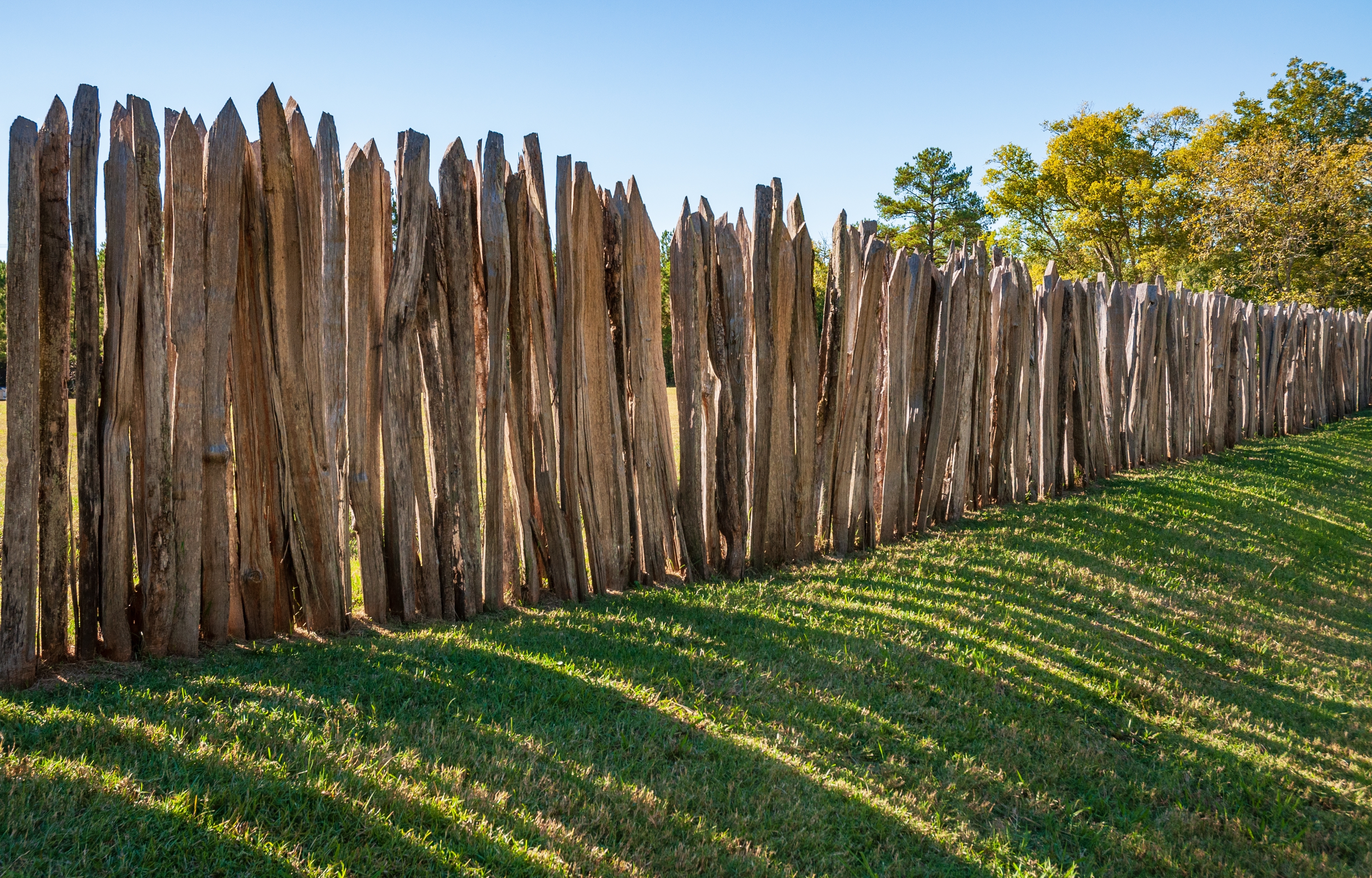

Leave a Reply