
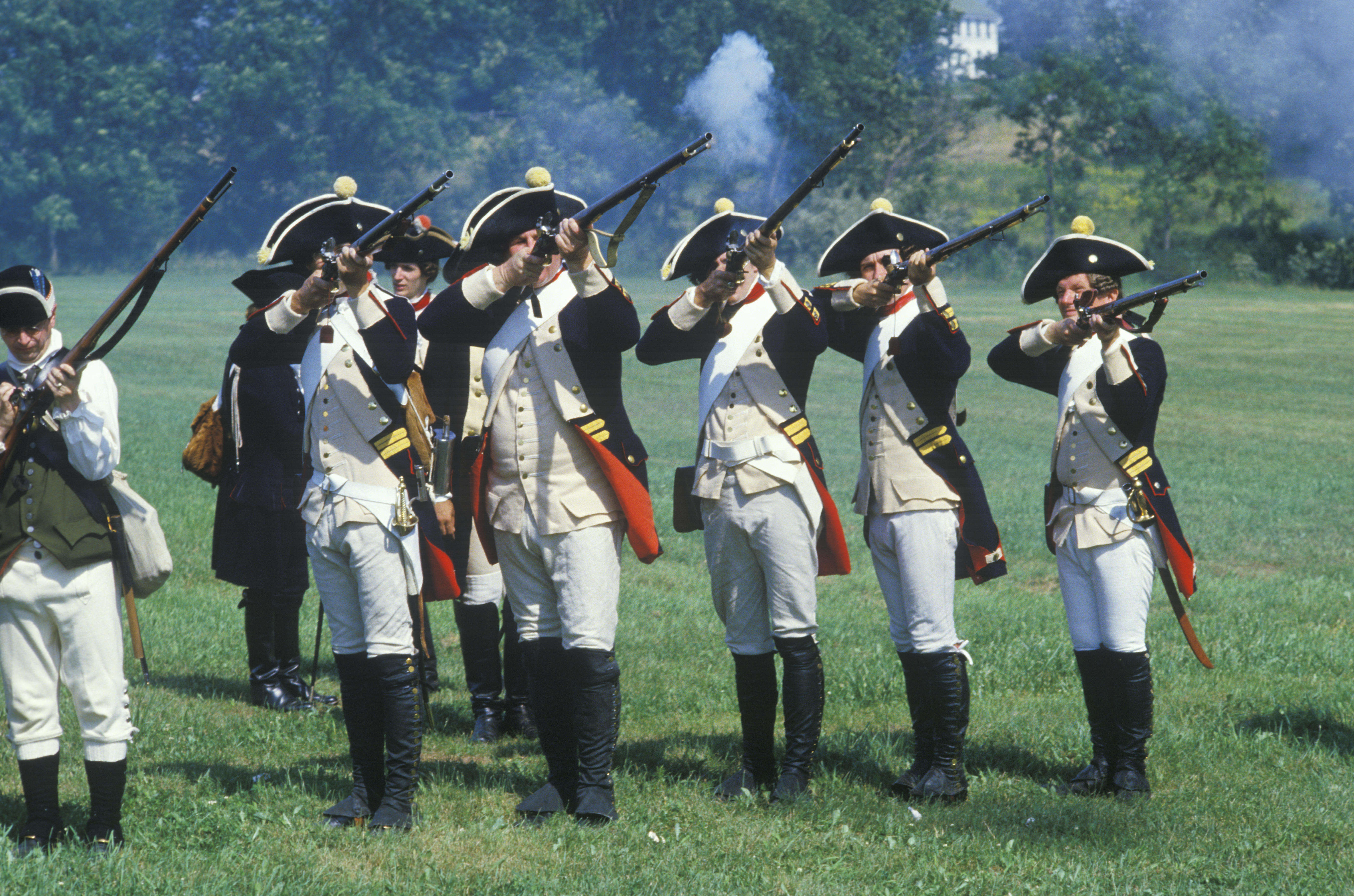

Overview
The Battle of Clapp’s Mill, fought on March 2–4, 1781, near Beaver Creek in present-day Alamance County, North Carolina, was a swift and hard-fought encounter during the American Revolutionary War. The engagement occurred just eleven days before the Battle of Guilford Courthouse and marked a crucial link in General Nathanael Greene’s Southern Campaign.
Patriot light troops, led by Lt. Col. Henry “Light-Horse Harry” Lee—the father of Robert E. Lee—and supported by local North Carolina militia, including units raised from the Huntersville and Lake Norman region, clashed with British cavalry under Lt. Col. Banastre Tarleton along Beaver Creek.
Though small in scale, the skirmish carried major strategic importance. The British suffered about one killed and twenty wounded, while the Patriots lost two killed, three wounded, and seven captured. Despite being a tactical draw, the encounter at Clapp’s Mill proved a strategic success for Greene, helping to weaken Cornwallis’s army and paving the way for the Patriot stand at Guilford Courthouse.
Background: Between the Dan and Guilford
After retreating across the Dan River into Virginia in February 1781, General Nathanael Greene regrouped and then re-entered North Carolina with a reorganized Continental army. He again placed Colonel Otho Williams in command of a fast-moving Light Corps, whose mission was to monitor British positions, protect Patriot supply lines, and choose ground favorable for a major engagement.
Williams’s composite force of Continental regulars, Virginia riflemen, and North Carolina militia—including the Hillsborough District Brigade under Brig. Gen. John Butler—patrolled the dangerous “no-man’s land” between Greene’s main camp at Troublesome Creek and Lord Cornwallis’s headquarters near Hillsborough. These troops came from every corner of the Piedmont, with detachments drawn from modern-day Huntersville, Mecklenburg County, and the Catawba River valley, areas that supplied seasoned militiamen familiar with the rolling terrain of the Carolina backcountry.
By late February, Cornwallis’s army was short on food and forage. Hoping to secure provisions and intelligence, he dispatched Lt. Col. Banastre Tarleton with a detachment of his feared British Legion cavalry, supported by the light company of the Guards under Lt. Col. Francis Dundas and 150 men of the 23rd Regiment of Foot (Royal Welsh Fusiliers). Greene countered swiftly, ordering Lt. Col. Henry “Light-Horse Harry” Lee’s Legion, together with attached riflemen and Catawba scouts, to cross Alamance Creek and intercept Tarleton’s foraging parties near Clapp’s Mill on Beaver Creek.
This set the stage for one of the most tense and skillful maneuvers of the Southern Campaign—a clash between two of the most aggressive cavalry commanders in the Revolutionary War, both determined to control central North Carolina’s vital roadways between the Dan and Guilford Courthouse.
Forces Engaged
Patriot Command: Lt. Col. Henry “Light-Horse Harry” Lee (Virginia)
Approx. 600 men, including:
- Lee’s Legion (240 troopers) – Capts. James Armstrong, Joseph Eggleston, Michael Rudolph, Allen McClane, Henry Archer, and James Tate.
- Mecklenburg County Militia – Capts. Joseph Graham and Charles Polk, with volunteers from the present-day Huntersville, NC area who had fought earlier at Cowan’s Ford and would later see action at Guilford Courthouse.
- Caswell County Militia – Col. William Moore (≈ 100 men).
- Guilford County Militia – Col. John Peasley / Capt. Edward Gwinn.
- Surry County Militia – Capt. Adam Brinkley.
- Botetourt County (VA) Riflemen – Maj. Thomas Rowland (≈ 100 men).
- Virginia Mounted Riflemen – Col. Hugh Crocket (≈ 160 men).
- Maryland Light Company – Capt. Edward Oldham.
- Boykin’s Company of Catawba Indians – Capt. Samuel Boykin (South Carolina).
British Command: Lt. Col. Banastre Tarleton
Force composed of:
- British Legion Cavalry – Capt. Richard Hovenden.
- Light Infantry of the Guards – Lt. Col. Francis Dundas.
- 23rd Regiment of Foot (Royal Welsh Fusiliers) – Capts. James Ingram and Forbes Champagne (≈ 150 men).
The detachment represented the sharp edge of Lord Cornwallis’s army—veteran light troops known for speed and discipline.
The Battle: March 2 – 4, 1781
As Tarleton’s foraging cavalry scoured farms west of Alamance Creek, Capt. Hovenden spotted Patriot scouts and pulled back to report. Tarleton, eager to punish Lee’s raiders, advanced with his entire mixed column.
Meanwhile, Lee arranged an ambush behind a rail fence overlooking open ground near Clapp’s Mill on Beaver Creek. His riflemen and militia crouched in concealment while cavalry guarded both flanks. When Tarleton’s column entered the clearing, the Patriots delivered a sudden, close-range volley that stunned the British vanguard.
Tarleton quickly rallied, deploying Dundas’s Guards with fixed bayonets and sending the 23rd Foot to the front. For twenty minutes musket fire crackled through the woods. Rowland’s Botetourt riflemen and Oldham’s Maryland light infantry held firm, while Capt. Graham’s mounted North Carolinians—refusing to dismount—traded fire from horseback.
Under the intensity of the counter-attack, some of Lee’s inexperienced militia began to waver. Realizing his men could not withstand another bayonet rush, Lee ordered a controlled withdrawal, breaking the force into small detachments to rejoin Col. Otho Williams’s main body by separate routes—an ingenious move that confused Tarleton and prevented pursuit.
Eyewitness Joseph Graham later recalled:
“A smart firing commenced and after three or four rounds, our line gave way… We retreated about one mile to the ford on Big Alamance where Col. Williams and Washington’s Cavalry were drawn up to support us. The enemy did not pursue more than five hundred yards.”
The Patriots regrouped beyond the creek, their losses light, their mission complete: Tarleton had been checked, Cornwallis delayed, and intelligence secured for Greene’s next move.
Casualties and Reports
Contemporary accounts of the Battle of Clapp’s Mill vary slightly, but all agree that the British sustained greater losses despite holding the field. Reports from General Nathanael Greene, Lt. Col. Henry Lee, Capt. Nathaniel Pendleton, and Banastre Tarleton each recorded different totals, reflecting the confusion of the fight.
| Side | Killed | Wounded | Captured | Total Casualties |
| Patriot (Lee’s Legion, militia, and riflemen) | 2 | 3 | 7 | 12 |
| British (Tarleton’s Legion and Guards detachment) | 1 | 20 | 0 | 21 |
According to Greene’s letter from Boyd’s Mill (March 5, 1781), the British suffered “seven killed and upwards of forty wounded.” Pendleton’s report to Gen. John Butler estimated twenty-five British killed and wounded, while Tarleton himself conceded that his corps sustained twenty-one casualties, mainly from the Guards’ light infantry.
By contrast, American losses were light — two killed, three wounded, and seven captured, including militiamen from the Hillsborough District Brigade and volunteers from Mecklenburg County, which includes the present-day Huntersville, NC area. These men were among the local militia who fought repeatedly under Greene’s command across Alamance, Guilford, and the Catawba Valley.
The uneven casualty ratio underscored the success of Greene’s guerrilla-style tactics: the ability of small, mobile Patriot forces to strike hard, retreat quickly, and bleed the British without costly set-piece battles.
Outcome and Significance
Though tactically a draw, the Battle of Clapp’s Mill achieved precisely what General Nathanael Greene intended. Lee’s ambush delayed Banastre Tarleton’s advance, inflicted measurable losses on Cornwallis’s forward guard, and provided Greene’s headquarters with valuable intelligence about British troop strength, morale, and movement.
Cornwallis’s army was already reeling after the defeat of Loyalist forces at Pyle’s Massacre, and his hopes of raising widespread Loyalist support in central North Carolina were rapidly fading. Short on food, forage, and friendly territory, his columns found little assistance from the local populace, who were angered by forced requisitions of livestock and crops.
The Hillsborough District Brigade and militia detachments from across the Catawba River Valley, including men from what is now Huntersville, NC, continued to shadow the British across Alamance County, striking supply trains and foraging parties. These small-scale actions helped bleed Cornwallis’s resources and force his withdrawal toward Guilford.
Just four days later, many of the same soldiers met Tarleton again at the Battle of Weitzel’s Mill, another sharp skirmish that further slowed the British. Then, on March 15, 1781, both armies collided in full force at Guilford Courthouse. The British technically held the field, but at devastating cost — a Pyrrhic victory that compelled Cornwallis to retreat south toward Wilmington to resupply. From there, his weakened force moved north to Virginia, culminating in the final surrender at Yorktown that autumn.
In retrospect, the fight at Clapp’s Mill exemplified Greene’s “strategy of exhaustion” — trading ground for time, using swift local units like Lee’s Legion and North Carolina militia to harass and frustrate a superior British army until it collapsed under its own weight.
The Battlefield and Later History
The site of Clapp’s Mill, originally constructed by Johann Ludwig Clapp and his family in 1768, lay roughly one mile southwest of the Holt factory and three miles northwest of the 1771 Alamance Battleground, where North Carolina Regulators had clashed with royal militia a decade earlier. That earlier conflict foreshadowed the revolutionary fervor that would later ignite across the Piedmont.
By the time of the Revolution, the Clapp mill complex on Beaver Creek was a central hub for local farmers—grinding corn, sawing lumber, and serving as a community gathering place. Its proximity to the Great Alamance Road made it an ideal defensive position, commanding the same rolling terrain and creek crossings that would draw Henry Lee and Banastre Tarleton into combat in 1781.
In 1898, Alamance historian J. M. Bandy, joined by Joseph Whitsett and other local residents, retraced the route taken by the British troops en route to Guilford Courthouse. They identified visible remnants of the old mill dam and race, confirming oral traditions that placed the battle just west of the modern town of Burlington. Over time, much of the original site was submerged beneath a modern reservoir, but archaeologists have verified 18th-century traces—stone foundations, hand-forged nails, and colonial artifacts—along the wooded banks of Beaver Creek.
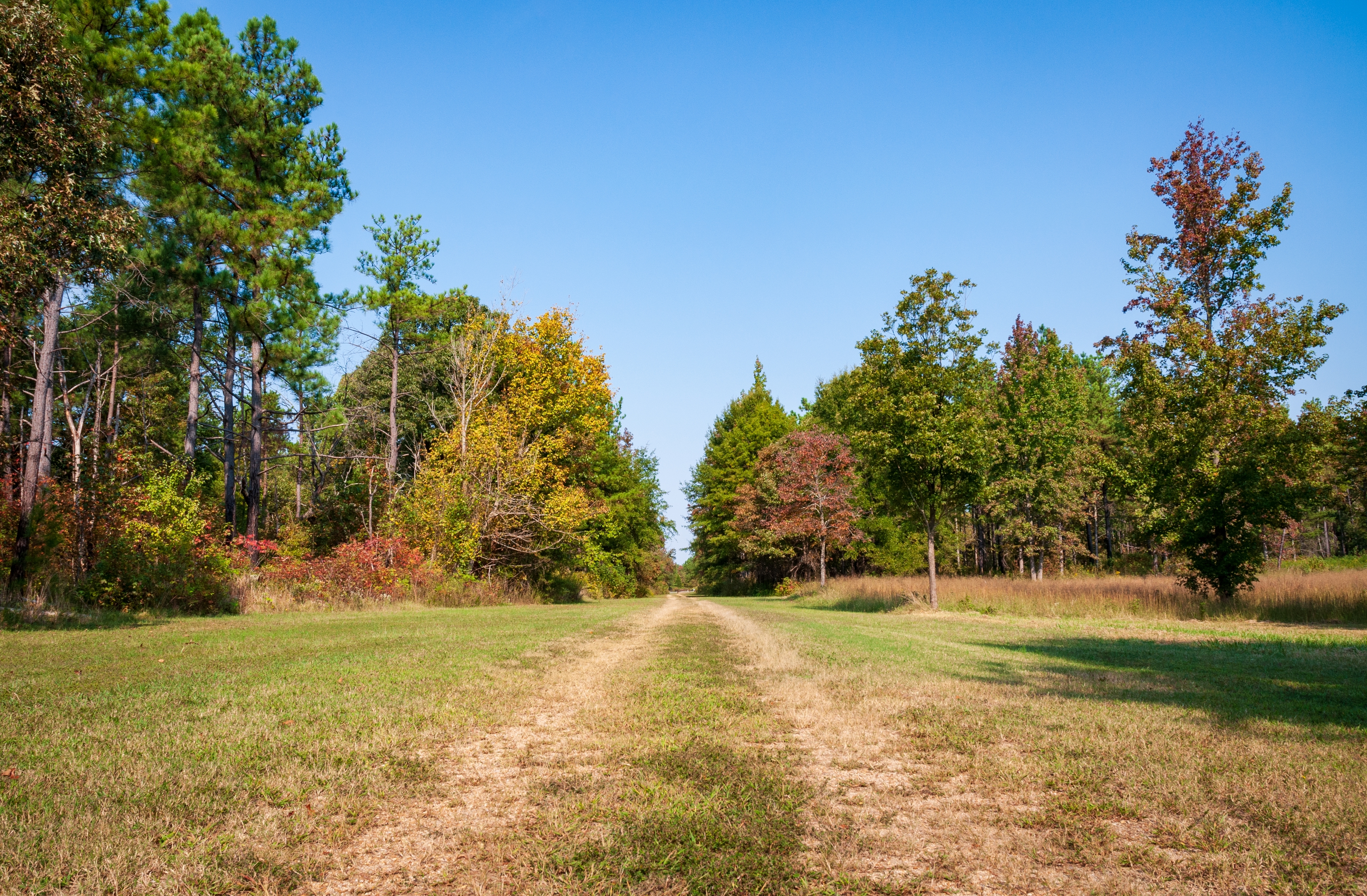
Today, a North Carolina historical marker stands along Huffman Mill Road, commemorating the fight between Lee’s Legion and Tarleton’s dragoons. Visitors to the area can still walk nearby trails where the creek bends through quiet farmland—its landscape echoing the tactical challenges faced by both commanders more than two centuries ago.
The story of Clapp’s Mill is also woven into the broader history of the Lake Norman–Huntersville region, where many of the Mecklenburg County militiamen who served under Capt. Joseph Graham and Charles Polk fought at both Cowan’s Ford and Clapp’s Mill. These men, veterans of skirmishes across the Catawba and Yadkin River valleys, helped link the western and central fronts of the Revolutionary struggle in North Carolina.
Through their actions, the backcountry farmers and tradesmen of the Piedmont—from Huntersville to Alamance—played a decisive role in transforming local mills and creeks into the battlegrounds of independence.
The Hillsborough District Brigade
The Hillsborough District Brigade, commanded by Brigadier General John Butler, supplied many of the Patriot militiamen who fought at Clapp’s Mill and other Alamance County engagements. Formed in 1776 by the North Carolina Provincial Congress, the brigade drew its strength from the central Piedmont counties of Orange, Caswell, Chatham, Granville, and Wake.
These counties formed the beating heart of the state’s backcountry resistance. Their men were experienced frontiersmen, hunters, and farmers who knew the landscape intimately—an invaluable advantage in the rolling forests and creeks of the Piedmont. Under Butler’s leadership, the brigade became one of the most active militia formations in the Southern theater.
By 1781, the Hillsborough troops were operating in constant motion—skirmishing, scouting, and disrupting British foraging columns. They served alongside Lee’s Legion, Otho Williams’s Light Corps, and militia contingents from Mecklenburg and Rowan Counties, including men from present-day Huntersville and the Lake Norman region, who had already seen hard service at Cowan’s Ford in late January.
The brigade’s companies fought in nearly every major action of Greene’s Carolinas campaign:
- Battle of Haw River (Pyle’s Massacre) – February 25, 1781
- Battle of Clapp’s Mill – March 2–4, 1781
- Battle of Weitzel’s Mill – March 6, 1781
- Battle of Guilford Courthouse – March 15, 1781
These back-to-back encounters transformed the Alamance valley into one of the busiest and most strategically important theaters of the Revolution in North Carolina. Though short on formal training and supplies, the Hillsborough Brigade’s perseverance and local knowledge helped General Greene delay, exhaust, and ultimately outmaneuver Lord Cornwallis’s professional army.
The spirit of these militiamen—ordinary citizens defending their farms and neighbors—embodied the grassroots nature of the Revolutionary struggle. From the banks of the Haw and Alamance Rivers to the Catawba crossings near Huntersville, their contributions forged a link between local defense and the broader fight for American independence.
Visiting the Site Today
Visitors seeking to trace the ground where Henry Lee’s Legion and Banastre Tarleton’s dragoons clashed can still find clear signs of the Battle of Clapp’s Mill landscape in western Alamance County, North Carolina.
The confirmed site of the battle lies along Beaver Creek, near Huffman Mill Road, roughly three miles northwest of the 1771 Alamance Battleground and about one mile southwest of the former Holt factory site. A North Carolina Historical Marker (N-6) stands nearby, commemorating the March 1781 encounter.
📍 Approximate GPS Coordinates: 36.0351° N, 79.5268° W
Historians identified this location primarily through:
- J. M. Bandy’s 1898 field survey, which traced British movements toward Guilford Courthouse and noted the visible remains of the Clapp mill dam and race;
- Joseph Graham’s 1832 pension testimony, which detailed the terrain and nearby fords on the Big Alamance;
- And modern archaeological verification, which found 18th-century iron fragments, musket balls, and mill foundation stones consistent with the 1781 encounter.
Today, parts of the old mill site lie beneath the Alamance Creek Reservoir, but the surrounding ridgelines and creek bends still match period descriptions. The landscape retains much of its Revolutionary-era topography—gentle slopes, thick woods, and open fields ideal for cavalry maneuvering.
You can access the area via Huffman Mill Road, west of Burlington, where interpretive markers outline the history of the battle. Visitors can park safely near the shoulder, walk the nearby trail paths, and view Beaver Creek, where the ambush and counterattack took place more than two centuries ago.


📍 Approximate GPS Coordinates: 36.0351° N, 79.5268° W. This is the modern day location of the Battle of Clapp’s Mill.
Legacy
The Battle of Clapp’s Mill epitomized General Nathanael Greene’s “war of movement”—a campaign built not on massive field engagements but on flexibility, endurance, and the coordinated harassment of a superior enemy. Greene’s genius lay in using small, mobile militia units and fast cavalry strikes to exhaust the British while preserving his own strength.
At Clapp’s Mill, this strategy was on full display. Through the cooperation of Continental regulars, local militia, and Catawba Indian allies, Greene and Henry “Light-Horse Harry” Lee demonstrated that even a brief, localized skirmish could shift the strategic balance of the Southern Campaign. Every encounter—no matter how small—forced Cornwallis to expend energy, men, and resources he could not replace.
The battle also underscored the vital role of North Carolina’s militia system, particularly the Hillsborough District Brigade, whose soldiers turned the rolling hills, creek fords, and farmland of the Piedmont into a living battlefield. The men who fought at Clapp’s Mill came from across the central and western Carolinas—from the Alamance valley to the Catawba River basin and what is now Huntersville, NC. Many of these same citizen-soldiers would stand again at Weitzel’s Mill, Guilford Courthouse, and later at Lindley’s Mill, carrying with them the hard-won experience of earlier fights like Clapp’s Mill.
Although tactically inconclusive, Clapp’s Mill proved strategically decisive. It marked the tightening of the noose around Cornwallis, whose army would stagger through a series of bruising engagements on its way to the coast. Within seven months, his surrender at Yorktown would end major hostilities in the Revolution.
Today, the story of Clapp’s Mill endures not only as a tale of military cunning but also as a reminder that the American Revolution was won as much by local resolve as by grand strategy. From the mill villages of Alamance County to the farms and river crossings near Huntersville, ordinary men turned familiar ground into fields of freedom.
The Battles of the Carolina Backcountry
The Battle of Clapp’s Mill was one crucial link in a long chain of Revolutionary War engagements that turned North Carolina’s backcountry into a proving ground for independence. From the coastal swamps of Moore’s Creek Bridge to the rolling hills of Alamance and the river crossings near Huntersville and Lake Norman, each skirmish reflected the courage and endurance of ordinary citizens defending their homes.
The sequence of battles tells a single, connected story of how the Southern Campaign unfolded:
- Battle of Moore’s Creek Bridge (Feb. 27, 1776) – Patriot militia defeat Loyalist Highlanders in the Revolution’s first southern victory.
- Battle of Colson’s Mill (July 21, 1780) – William Lee Davidson’s militia repels Loyalists along the Pee Dee River.
- Battle of Ramsour’s Mill (June 20, 1780) – Neighbors fight neighbors in Lincoln County’s brutal militia clash.
- Battle of Cowan’s Ford (Feb. 1, 1781) – Cornwallis crosses the Catawba under fire from Mecklenburg County patriots.
- Battle of Shallow Ford (Oct. 14, 1780) – Patriots halt Loyalist reinforcements on the Yadkin River.
- Battle of Haw River (Pyle’s Massacre) (Feb. 25, 1781) – Henry Lee’s Legion annihilates Loyalist recruits near Graham.
- Battle of Clapp’s Mill (Mar. 2–4, 1781) – Lee and Williams ambush Tarleton’s dragoons on Beaver Creek.
- Battle of Weitzel’s Mill (Mar. 6, 1781) – Greene’s light troops delay Cornwallis in the final march to Guilford.
- Battle of Guilford Courthouse (Mar. 15, 1781) – Greene’s army inflicts heavy losses that cripple British control.
- Battle of Lindley’s Mill (Sept. 13, 1781) – Loyalists ambush Patriots escorting North Carolina’s captured governor.
Together these engagements reveal how North Carolina’s creeks, farms, and crossroads became the decisive battlegrounds of the American South. Each victory, stand, and skirmish—fought by men from Alamance, Rowan, Mecklenburg, and beyond—built the chain of resistance that eventually led Cornwallis to defeat at Yorktown.
For residents of the Huntersville and Lake Norman region, these stories connect local soil to national heritage. The men who defended the fords of the Catawba River also fought at Clapp’s Mill, Guilford Courthouse, and Lindley’s Mill, carrying the fight for liberty across every river, ridge, and road between Charlotte and Alamance.
Adkins Law, PLLC: A Law Firm Located in Huntersville NC
Adkins Law, PLLC in Huntersville, North Carolina, proudly serves the Lake Norman and Charlotte region. Led by Attorney Christopher Adkins, the firm focuses on family law, divorce, custody, mediation, and estate planning, offering trusted guidance with experience and integrity.


Leave a Reply