

Overview
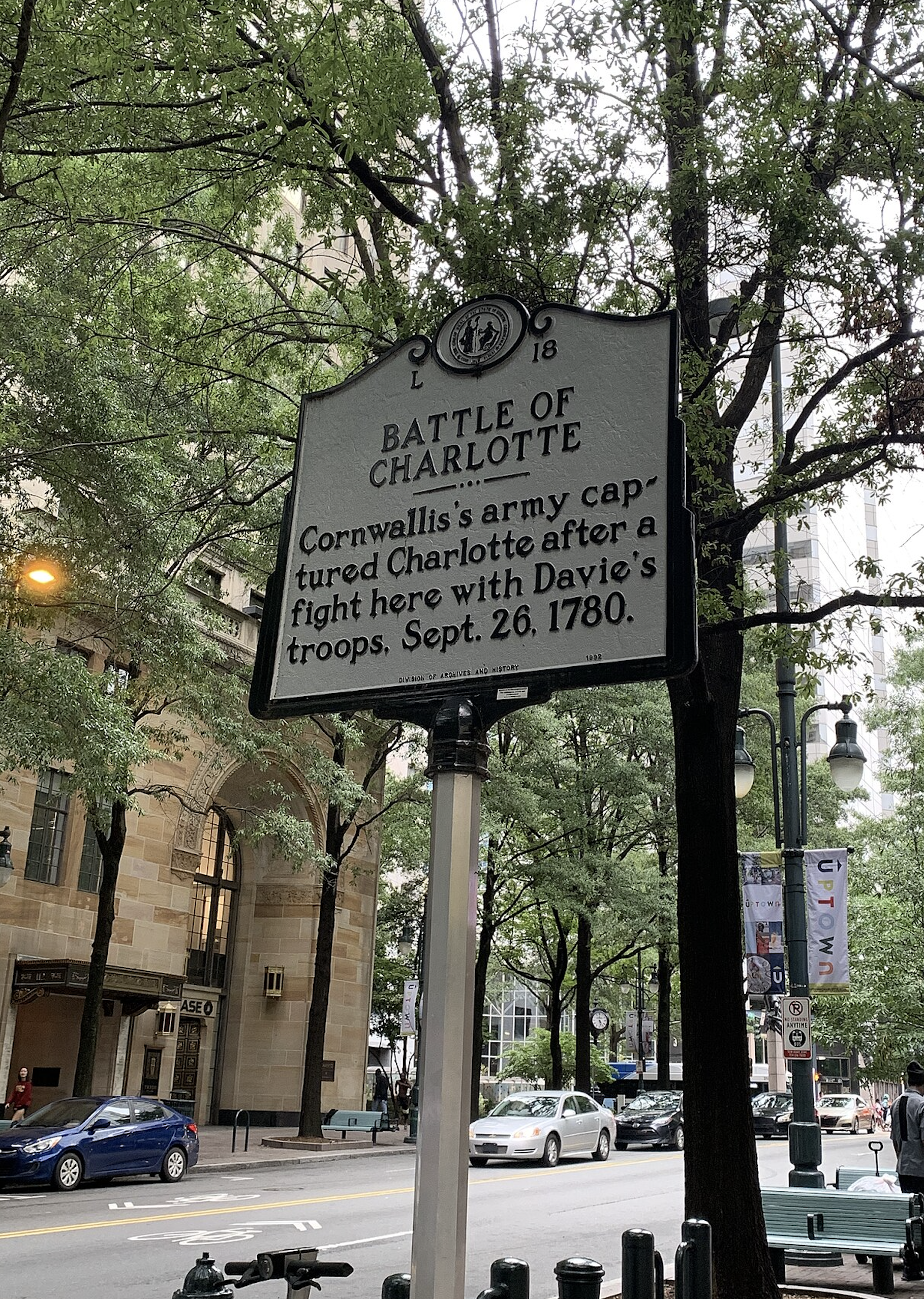
On September 26, 1780, a small Patriot force under Colonel William Richardson Davie met the vanguard of Lord Charles Cornwallis’s invading army in the crossroads town of Charlotte, North Carolina. Although outnumbered, Davie’s disciplined defense at the Mecklenburg County courthouse (present-day Trade & Tryon Streets) delayed the British advance and reinforced the region’s fierce reputation for resistance. Within weeks, Cornwallis would retreat back into South Carolina after a string of reversals, having branded Charlotte a “hornet’s nest of rebellion.”
The Battle of Charlotte stands among a series of engagements that defined the Southern Campaign—including Ramsour’s Mill, Waxhaws, Shallow Ford, Clapp’s Mill, Cowan’s Ford, and Guilford Courthouse—each revealing how North Carolina’s militia and irregular fighters bled the British advance and reshaped the war’s trajectory.
Prelude: The British Push North
After victories at Charleston (May 1780) and Camden (August 1780), Cornwallis prepared to invade North Carolina as part of Britain’s southern strategy. He gathered roughly 2,000 to 3,000 troops at the Waxhaws in late September, preparing to advance through Mecklenburg County toward Salisbury and Hillsborough.
Meanwhile, American commanders Major General Jethro Sumner and Brigadier General William Lee Davidson stationed troops along McAlpine Creek, south of Charlotte, while Colonel Davie and a small mounted detachment shadowed the British movement northward. Davie’s mission was to delay Cornwallis and protect the American withdrawal—a prelude echoed later in Davidson’s fatal stand at Cowan’s Ford (Feb. 1781).
Charlotte in 1780
In 1780, Charlotte was little more than a dusty frontier crossroads—yet its strategic location at the heart of Mecklenburg County made it vital ground. The village lay at the intersection of the Great Wagon Road and Trade Street, two of the most traveled routes through the Carolina backcountry. Its modest collection of about twenty buildings included taverns, blacksmith shops, stables, and a scattering of frame and log houses clustered around the central square.
At the center stood the Mecklenburg County Courthouse, a two-story wooden structure raised on ten-foot brick pillars. Beneath it stretched a shaded marketplace enclosed by a 3½‑foot stone wall, where farmers traded produce and news alike. The courthouse commanded all four approaches—north, south, east, and west—making it both the physical and symbolic heart of the community.
By the autumn of 1780, Charlotte’s residents were seasoned by years of tension. The Mecklenburg Declaration of Independence (May 1775) had already made the county famous for its defiance, and the town’s patriots had supplied men and material to nearby skirmishes from Ramsour’s Mill to Hanging Rock. Its network of roads meant that whoever controlled Charlotte could threaten lines of communication between the Carolinas.
Colonel Davie recognized the courthouse as a natural defensive bastion. From its raised platform, musket fire could sweep the intersecting streets, while the stone wall below offered excellent cover for infantry. The narrow layout of Trade and Tryon, lined with split-rail fences and outbuildings, limited cavalry maneuvering—a factor that would later frustrate Major George Hanger’s British dragoons. Davie’s decision to make a stand here turned Charlotte’s humble crossroads into the stage for one of the most determined small actions of the Revolution.
The Battle
The Ambush
Davie positioned three ranks of men: one under the courthouse, two more advanced among nearby houses and gardens. Capt. Joseph Graham and Maj. Joseph Dickson joined him with Mecklenburg and Lincoln militia cavalry. Davie’s total strength was roughly 150 dragoons and mounted infantry, with an additional 50 local volunteers.
At noon on September 26, Major George Hanger, leading Tarleton’s British Legion cavalry, entered Charlotte from the south. Ignoring Cornwallis’s caution to scout first, Hanger charged headlong into town. Davie’s men held fire until the enemy closed within sixty yards—then delivered a devastating volley. Hanger’s riders reeled back in confusion.
The Counterattack
Believing the Americans to be retreating, Hanger ordered a renewed charge. The Patriots unleashed crossfire from both the courthouse and side streets, wounding Hanger and several British officers. When British light infantry under Lt. Col. James Webster arrived, they pressed the flanks, forcing Davie to withdraw. The Patriots fell back in good order, covering each other’s retreat while continuing to fire from fences and side roads.
Skirmish North of Town
Davie’s men fought a delaying action for several miles. At Sugar Creek Church, about four miles north of Charlotte, Capt. Joseph Graham was severely wounded and Lt. George Locke of Rowan County was killed. Despite losses, Davie successfully covered the retreat and withdrew toward the Rocky River, about 16 miles north of Charlotte.
Reports from the Field
Davidson to Gates (Sept. 26, 1780)
“This day at 11 o’clock the enemy marched into Charlotte in force. Col. Davie skirmished with them at that place, and for several hours since, retreating as per express… He is directed to continue skirmishing with them to cover our retreat.”
— Brig. Gen. William Lee Davidson to Maj. Gen. Horatio Gates, Capt. Phifer’s, Sept. 26, 1780.
Davidson warned that the inhabitants were fleeing “in consternation” and requested reinforcements to defend the Yadkin frontier. He reported Ferguson’s Loyalists moving westward, threatening to join Cornwallis.
Sumner to Gates (Sept. 29, 1780)
“The Enemy continue in Charlotte, about 2,000 strong; some enlarge their number to 3,000… I have detached Col. Davie of the Light Horse and Col. Taylor with 200 Horse to remain and reconnoitre, to prevent the Enemy’s plundering the inhabitants.”
— Maj. Gen. Jethro Sumner to Maj. Gen. Horatio Gates, Camp at the Yadkin Ford, Sept. 29, 1780.
Sumner confirmed Davie’s continuing operations near Charlotte and reported that the British had lost 22 men killed on the day they took the town.
Casualties
| Side | Killed | Wounded | Commanders Wounded |
|---|---|---|---|
| American | Lt. George Locke + 4 privates | Maj. Joseph Graham + 5 privates | — |
| British | ≈ 12 NCOs + 30–40 total | Several officers | Maj. George Hanger, Capts. Campbell & McDonald |
Outcome & Legacy
While Cornwallis held the field, the Battle of Charlotte demonstrated that North Carolinians would resist fiercely. The brief but stubborn fight convinced the British that Mecklenburg County was hostile ground. Within two weeks, Cornwallis’s western detachment under Major Patrick Ferguson was destroyed at Kings Mountain, forcing a full British retreat to South Carolina by November.
The battle’s spirit echoed in later engagements: the Battle of Shallow Ford (Oct. 1780) where Patriot militia struck retreating Loyalists; Clapp’s Mill (Mar. 1781) where militia blunted British scouts near Burlington; Cowan’s Ford (Feb. 1781) where Gen. Davidson was killed defending the Catawba; and the Battle of Guilford Courthouse (Mar. 1781), where Nathanael Greene’s forces inflicted crippling losses on Cornwallis’s main army.
According to local tradition, Cornwallis remarked upon leaving:
“Let’s get out of here; this place is a damned hornet’s nest.”
Charlotte embraced the epithet—its seal, parks, and even its modern NBA franchise commemorate that legacy. The city remains proud of the stand that earned it the nickname “The Hornet’s Nest.”
Key Locations Today
- Trade & Tryon Streets (Uptown Charlotte): Site of the courthouse defense.
- Sugar Creek Church: Scene of the rear-guard clash where Graham was wounded and Locke fell.
- Hornets Nest Park (Beatties Ford Road): Named for Charlotte’s Revolutionary reputation.
- Charlotte Museum of History: Interprets the battle and broader Southern Campaign with tours and exhibits.
Related Battles
For readers exploring North Carolina’s Revolutionary history, we feature companion articles on:
- The Battle of Ramsour’s Mill (June 20, 1780) – Lincoln County militia victory.
- The Battle of the Waxhaws (May 29, 1780) – Tarleton’s controversial massacre of surrendering troops.
- The Battle of Shallow Ford (Oct. 14, 1780) – Patriot ambush following Kings Mountain.
- The Battle of Clapp’s Mill (Mar. 2-4, 1781) – Skirmish preceding Guilford Courthouse.
- The Battle of Cowan’s Ford (Feb. 1, 1781) – Gen. Davidson’s last stand on the Catawba.
- The Battle of Guilford Courthouse (Mar. 15, 1781) – Greene’s strategic victory despite retreat.
Together these engagements show how North Carolinians—farmers, ministers, tradesmen, and militia alike—transformed the backcountry into the decisive theater of the Revolution.
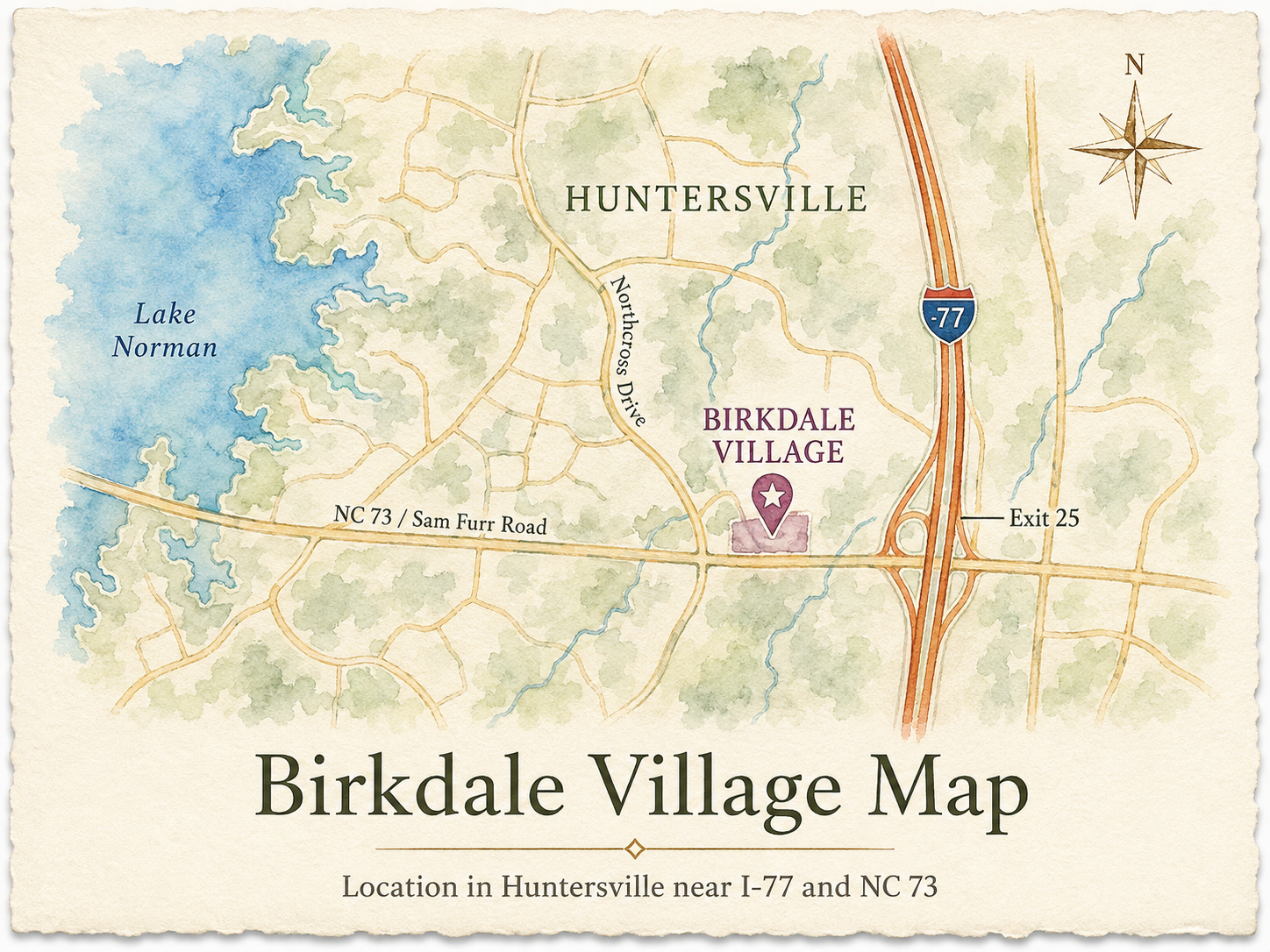
Adkins Law, PLLC: A Law Firm Located in Huntersville NC
Adkins Law, PLLC in Huntersville, North Carolina, proudly serves the Lake Norman and Charlotte region. Led by Attorney Christopher Adkins, the firm focuses on family law, divorce, custody, mediation, and estate planning, offering trusted guidance with experience and integrity.



Leave a Reply