

I. Introduction
Concord, the county seat of Cabarrus County, North Carolina, is a city whose very name reflects its origins. The word “Concord” means harmony — chosen in 1796 to commemorate the compromise between German Lutherans and Scots-Irish Presbyterians who had disagreed over where to locate the new county’s courthouse. That spirit of resolution and community shaped the foundation of the town and continues to echo in its civic life today.
From its colonial roots and the nation’s first gold discovery to its era as a textile powerhouse and its modern role as one of the fastest-growing cities in the Charlotte metropolitan area, Concord has evolved into a community of nearly 100,000 residents. Its history is not only the story of a city but also a window into the development of Cabarrus County and the broader Piedmont region of North Carolina.
II. Founding & Early Settlement
The roots of Concord, North Carolina stretch back to the mid-1700s, when waves of German Lutherans and Scots-Irish Presbyterians began settling in the Piedmont region. These groups, following the Great Wagon Road, established farms, churches, and trading posts across what would become Cabarrus County.
When Cabarrus County was carved out of Mecklenburg in 1792, the question of where to locate the county seat quickly became a point of contention. German settlers favored one site, while the Scots-Irish pushed for another. The dispute might have deeply divided the community, but in 1796, the factions reached a compromise: the courthouse and town would be built on a 26-acre tract of land, and the new community would be named “Concord,” meaning harmony. The choice symbolized unity and peaceful resolution.
Concord was formally incorporated in 1806, establishing it as the civic and judicial center of Cabarrus County. Its location in the Piedmont placed it near important trade paths and within reach of neighboring settlements — including present-day Huntersville, which was part of the same cultural and migration pattern that brought settlers into the Lake Norman and Cabarrus regions. Together, these communities represent the intertwined story of Mecklenburg and Cabarrus Counties as the Carolina backcountry transitioned into a more structured society.
III. Gold Rush & Early Economy
In 1799, a young boy named Conrad Reed made a discovery that would forever change the history of Cabarrus County. While playing in Little Meadow Creek, not far from Concord, he stumbled upon a massive 17-pound gold nugget. This single event launched the first official gold rush in the United States, decades before California’s famous rush of 1849.
The discovery quickly transformed the region. Mines began appearing across Cabarrus County, drawing prospectors, laborers, and entrepreneurs. By the early 1800s, the Reed family mine had grown into a commercial operation, and others followed. With the influx of gold, the need for processing grew — leading to the establishment of the Charlotte Mint in 1837, which directly handled gold extracted from Concord and surrounding mines. This institution tied Concord’s prosperity to Charlotte, the emerging regional hub just to the southwest.
The gold rush left an enduring legacy. The University of North Carolina at Charlotte (UNCC) chose the “49ers” as its mascot in recognition of the area’s pioneering role in America’s early gold history — a symbol that connects modern Charlotte to the 19th-century mines of Concord and Cabarrus County.
While gold mining dominated headlines, Concord’s economy also rested on more traditional foundations. The fertile Piedmont soil supported cotton, tobacco, and grain farming, and by the mid-1800s, Concord had grown into a small but vital trade hub for agriculture and regional commerce. This balance of resource wealth and farming resilience set the stage for the city’s transition into the textile era.
IV. Textile & Industrial Growth
By the 19th century, Concord began to shift from an agricultural crossroads to an industrial hub, particularly in textile manufacturing. The Piedmont region’s access to raw cotton, its river systems for power, and expanding railroads made it ideal for mill development.
One of the earliest and most significant mills was the Odell-Locke-Randolph Cotton Mill, with roots tracing back to 1839. This operation evolved over the decades and became a cornerstone of Concord’s industrial base. Mills like Odell’s not only provided steady employment but also created entire mill villages, reshaping the social and economic life of Cabarrus County.
In 1897, Concord gained national attention when the Coleman Manufacturing Company was established nearby. This became the first African American–owned and operated cotton mill in the United States. Though it faced financial struggles and was eventually sold, its creation symbolized progress and ambition in the South during the post-Reconstruction era.
By the early 20th century, Concord’s network of mills, railroads, and workers’ communities propelled it into prominence as one of North Carolina’s leading textile towns. Its growth mirrored the wider industrial boom seen across the Piedmont.
But Concord’s industrial story wasn’t isolated. The rail lines and trade routes that carried cotton, cloth, and finished goods tied Cabarrus County to communities further north, including the NC High Country. Towns such as Boone and West Jefferson, along with Wilkes County, were historically part of the broader network supplying raw materials, timber, and mountain agricultural products that fed into Piedmont mills. In return, textiles and manufactured goods from Concord flowed back into those mountain markets.
This exchange underscored how interconnected the Piedmont industrial core and the mountain communities were — with Concord acting as a key player in a supply chain that stretched from the Catawba River valley up into the Blue Ridge. The city’s textile identity was not just a local phenomenon; it was part of a statewide economy that linked mill towns with the High Country.
V. 20th Century Changes
As Concord entered the 20th century, its identity as a thriving Cabarrus County seat was reflected in its architecture and economy. The Cabarrus County Courthouse, originally built in 1876, remained the anchor of downtown. Though the courthouse later transitioned into housing the Cabarrus Arts Council and the Veterans Museum, it continues to serve as a symbol of civic pride and historic continuity.
In 1926, the opening of the Hotel Concord added another landmark. Its Beaux-Arts and classical revival style reflected the prosperity of the textile era, when Concord and surrounding mill towns were riding a wave of economic growth. The hotel became a centerpiece for visitors, business leaders, and traveling dignitaries, embodying Concord’s emergence as a modern Southern city.
Much of that prosperity was tied to textiles, particularly the dominance of Cannon Mills in neighboring Kannapolis. At its height, Cannon Mills was one of the largest textile companies in the world, employing thousands and supplying linens to households across America. Concord and Cabarrus County were firmly positioned as part of North Carolina’s textile belt, and mill life shaped generations of families.
Yet by the mid-to-late 20th century, the textile industry faced sharp decline. Globalization, outsourcing, and economic shifts shuttered many mills, leaving Concord and the region with the challenge of reinventing their economies. Out of necessity, the city began to diversify, developing strengths in retail, motorsports, healthcare, and education that continue today.
These changes in Concord reflected broader patterns across the Lake Norman and Piedmont region. Neighboring communities like Terrell, NC, on the west side of Lake Norman, remained smaller and more rural, but felt the ripple effects of industrial decline and the later wave of lake-driven residential development. Meanwhile, Troutman, NC, north of Mooresville, evolved along a different trajectory — retaining its small-town charm while benefiting from proximity to Concord’s industrial corridor and the growth of Lake Norman’s economy.
Together, these towns illustrate how Concord’s story of industrial dominance, decline, and renewal was part of a larger regional transformation. The resilience of Cabarrus County mirrored the adaptability of surrounding Lake Norman communities, each reshaping itself to meet the demands of a new century.
VI. Modern Concord: Growth & Development
Over the past 30 years, Concord has experienced some of the fastest growth in North Carolina. Since 1990, the city’s population has nearly doubled, transforming it from a historic mill town into one of the leading cities of the Charlotte metropolitan area.
A major part of this transformation has been historic preservation paired with adaptive reuse. Once-vacant industrial spaces like Gibson Mill have been reborn as mixed-use centers featuring food halls, breweries, shops, and event venues. Downtown Concord has likewise undergone revitalization, blending historic charm with modern amenities, arts, and cultural spaces that continue to draw both locals and visitors.
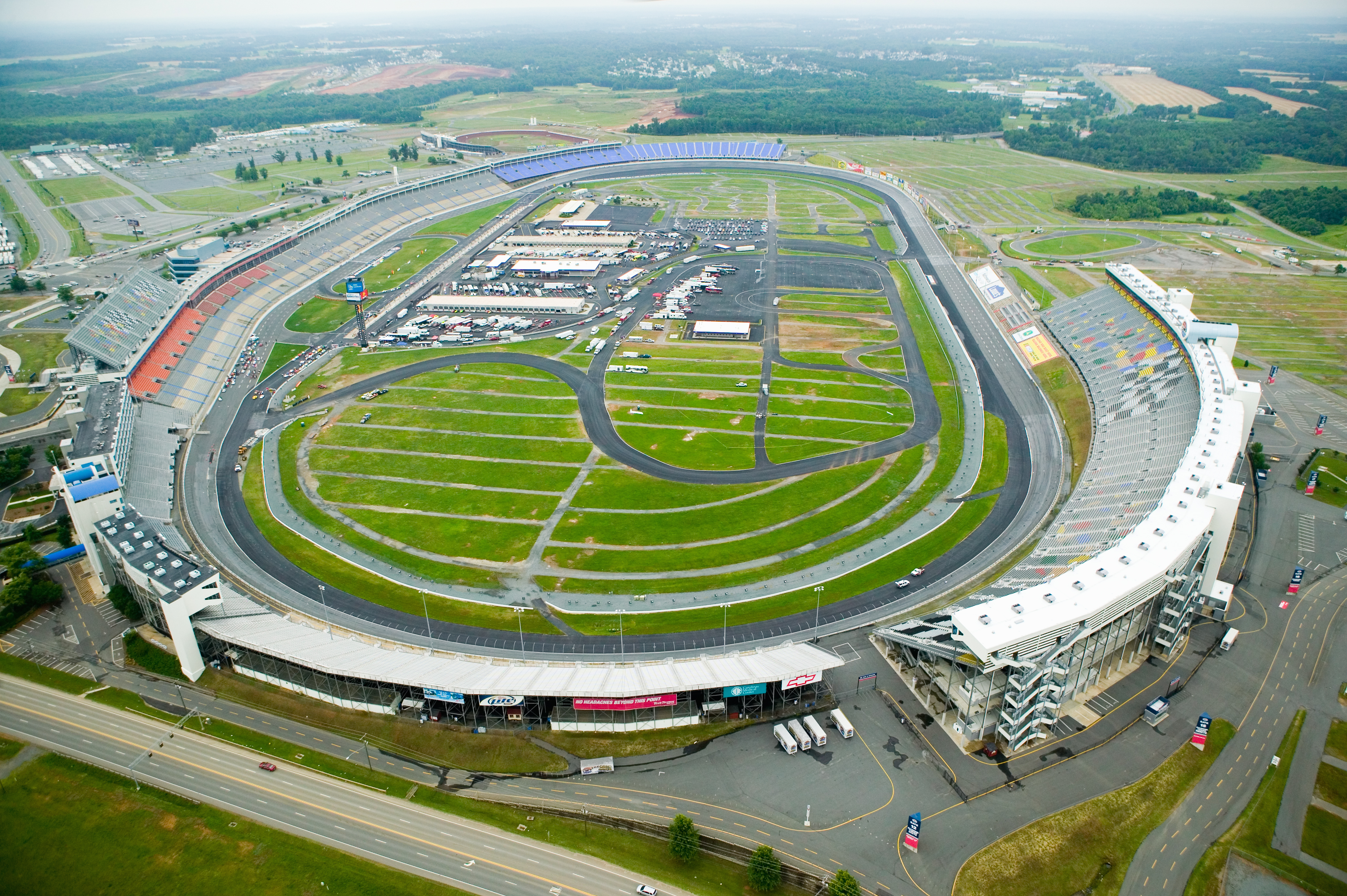
The city’s economy is now diverse and resilient. While textiles once defined Concord, today its strength lies in motorsports, retail, healthcare, education, and tourism. Two of the city’s most iconic draws, Concord Mills Mall and Charlotte Motor Speedway, bring millions of visitors to Cabarrus County each year, contributing to the local economy and identity.
At the same time, Concord has become a place where families and professionals put down roots, fueling demand for schools, healthcare, and legal services. Whether it’s navigating family matters, planning estates, or addressing business needs, there is a growing demand for attorneys in Concord who understand both the historic character of Cabarrus County and the challenges of modern growth.
Even with its rapid expansion, Concord remains closely tied to its heritage. The city continues to balance its history with progress, ensuring that the traditions of Cabarrus County — from gold and textiles to motorsports and innovation — remain part of its story.
VII. Why Concord Matters in Cabarrus County
As the county seat of Cabarrus County, Concord serves as both the administrative heart and a cultural anchor for the region. From its historic courthouse and downtown landmarks to its role as a modern commercial hub, Concord embodies the continuity of governance, community, and identity across centuries.
The city’s growth into one of the region’s leading cities has not erased its roots. Instead, Concord’s story demonstrates how a community can embrace expansion while preserving its history. Today’s revitalized downtown, preserved mills, and cultural institutions ensure that the past remains visible even as new neighborhoods, schools, and businesses continue to shape the city.
Concord is also a living case study of Cabarrus County’s broader transformation:
- From agriculture, when German and Scots-Irish farmers carved homesteads into the Piedmont,
- To gold, when Conrad Reed’s 1799 discovery launched the first U.S. gold rush,
- To textiles, when mills and railroads turned Concord into an industrial town,
- To the diverse economy of today, built on motorsports, retail, healthcare, and education.
This trajectory echoes the resilience of the Carolinas more broadly — from the Hornet’s Nest of Rebellion of the American Revolution, when local resistance around Charlotte earned the region its famous nickname, to the present-day vitality of Cabarrus County and Concord as part of the Charlotte metropolitan area.
For residents, businesses, and families, Concord remains more than just a city — it is a bridge between the traditions that shaped Cabarrus County and the opportunities of the 21st century. From its Revolutionary roots to its modern identity, Concord continues to matter because it reflects both the endurance and adaptability of North Carolina’s people.
VIII. Conclusion
The story of Concord, North Carolina is one of harmony, resilience, and reinvention. From its founding compromise in 1796 to its rise as a textile powerhouse, and from the decline of mills to its rebirth as a diversified modern city, Concord has continually adapted while staying true to its heritage.
As the county seat of Cabarrus County, Concord has mirrored the broader history of the Piedmont and the Charlotte metropolitan region. Its journey — from early settlement through gold mining, textiles, and modern innovation — reflects the determination of generations who shaped not only a city but also a county that remains central to the Carolinas’ identity.
Looking ahead, Concord continues to strike a delicate balance between growth and preservation. Historic landmarks like Gibson Mill and the Cabarrus Courthouse stand beside new development, reminding residents and visitors that progress is strongest when built on solid roots.
This balance is not unique to Concord alone. Nearby Denver, NC, on the western shore of Lake Norman, reflects a parallel story — transforming from a quiet, rural community into a growing suburban town while working to preserve its history and small-town identity. Together, towns like Denver and Concord illustrate the regional character of communities around Charlotte: resilient, growing, and grounded in tradition.
Concord’s path forward will be guided by the same principles that shaped its past: unity, adaptation, and pride in place. From its colonial foundations to its 21st-century role as one of the fastest-growing cities in North Carolina, Concord remains a vibrant example of how a community can honor its heritage while embracing the future.
At Adkins Law, PLLC, based in Huntersville, we are proud to serve families and individuals across the greater Lake Norman area — including Concord, Cornelius, Davidson, Mooresville, Denver, and beyond. Our practice focuses on family law, divorce, custody, estate planning, and mediation, helping clients navigate life’s most important legal challenges with clarity and compassion.
Whether you’re rooted in the history of Cabarrus County or new to the Lake Norman community, our team is here to provide trusted legal guidance close to home.




Leave a Reply