


Introduction
Terrell is an unincorporated community tucked into the eastern edge of Catawba County, where history and growth meet at a busy crossroads. Anchored along NC Highway 150, it lies within the Hickory–Lenoir–Morganton Metropolitan Area, a region historically celebrated as the Catawba Valley for its farms, mills, and manufacturing traditions. Yet Terrell also leans eastward, feeling the steady pull of the Charlotte metropolitan sphere and the lakefront lifestyle that has defined the greater Lake Norman region since the 1960s.
Though modest in size, Terrell has long stood out for its blend of heritage and change. Its 19th-century origins as a rural stop on the road have given way to shoreline neighborhoods, retail centers, and commuter traffic, but the community’s roots remain visible in historic churches, cemeteries, and preserved homes. Terrell’s identity as both a crossroads and a lakeside village mirrors the broader story of small towns across North Carolina—from Troutman and Denver on Lake Norman’s opposite shores to foothill communities near Boone, West Jefferson, and Wilkes County—all of which have adapted to modern pressures while holding on to a strong sense of place.
Today, Terrell is best known for its lakefront beauty, close-knit community, and location at the intersection of regional history and metropolitan growth. It is a place where echoes of the past meet the realities of modern development, making it a distinctive chapter in the evolving story of the Lake Norman corridor.
Origins and Naming
Terrell traces its identity back to the late 19th century, when the community was formally named around 1893 in honor of Pinckney Lawson Terrell, a Methodist preacher and circuit rider who had deep ties to Rehobeth Methodist Church. At that time, rural Catawba County was dotted with crossroads communities that relied on churches and small stores to anchor daily life. In Terrell’s case, the establishment of a post office inside the T.F. Connor Store that same year gave the settlement its first official marker on state maps and postal routes.
The choice to name the community after a preacher reflected both faith and family as central organizing principles. The Terrell family’s roots stretch back to colonial Virginia, and by the 1800s their presence was firmly woven into the backcountry fabric of North Carolina. Like early settlements in Davidson or farmsteads scattered across Wilkes County, Terrell grew around its churchyard and family cemeteries, places where worship, kinship, and memory converged. This mixture of faith-based leadership and practical commerce gave the crossroads a distinctive permanence, setting the stage for its later recognition as a historic district.
The Terrell Historic District
In 1986, the Terrell Historic District was added to the National Register of Historic Places, cementing the community’s importance in the architectural and cultural history of Catawba County. The district encompasses roughly 32 acres and includes 19 contributing buildings and one contributing site, capturing the heart of the old crossroads.
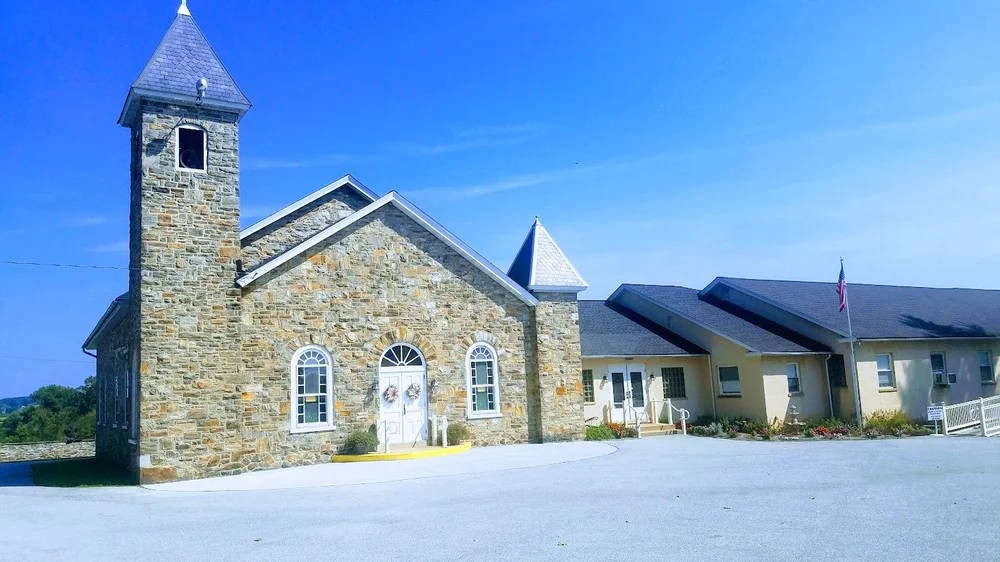
Among its landmarks are the Connor Store, once the hub of commerce and communication; the Rehobeth Methodist Church (1889), which continues to symbolize Terrell’s religious foundation; and historic residences such as the Coleman-Caldwell-Gabriel House and the Powell–Little House, each reflecting architectural styles that defined the late 19th and early 20th centuries.
Together, these buildings provide a tangible link to the generations who transformed Terrell from farmland to community. Just as Statesville has preserved its Commercial Historic District or Davidson College has safeguarded its campus village, Terrell’s historic core stands as a reminder of how small communities can both adapt and endure.
Cemeteries and Family Heritage
The story of Terrell is also etched into its cemeteries. Most prominent is the McCorkle Family Cemetery, the burial ground of Revolutionary War Major Francis Marion McCorkle and his kin. His presence underscores Catawba County’s role in the broader Revolutionary struggle, a region shaped by the same determination that earned Charlotte its nickname, the “Hornet’s Nest of Rebellion.”
Nearby, the Rehobeth Methodist Churchyard and other family plots mark the passage of early settlers and tie Terrell to the era of frontier defense, when conflicts such as the Battle of Cowan’s Ford played out along the Catawba River. Much like church cemeteries in West Jefferson or family plots in the foothills around Boone, these burial grounds remain quiet guardians of memory. They illustrate how Terrell’s story is not only about buildings and roads but also about the families who laid roots, endured hardship, and passed on a sense of place that continues to shape the community today.
Rise and Fall of the Terrell Country Store
The Terrell Country Store stood at the literal and figurative center of the community for well over a century. Built sometime between 1863 and 1885, the wood-frame building passed into the hands of the Connor family in 1891 and quickly became indispensable. It functioned as a grocery, hardware shop, realty office, and post office, serving residents until 1997. For decades, the store was where neighbors caught up on news, farmers bought supplies, and families picked up their mail—a reminder of how rural crossroads towns like Terrell depended on a single gathering place to bind them together.
In 2012, the building enjoyed a revival when it reopened as the Terrell Country Store, reinvented as a nostalgic hub filled with antiques, folk art, handmade quilts, and small gifts. Visitors from across the Lake Norman region stopped by for ice cream or to browse the shelves, while locals cherished the upstairs rooms that had once hosted everything from piano lessons to church socials. But in 2019, news broke that the owners had been evicted and the building would be razed. Community members mounted protests, recalling how the structure had symbolized Terrell’s heart for generations, but the demolition in 2020 was inevitable.
Its loss marked a turning point. Without the store, Terrell’s identity as a classic rural crossroad seemed more fragile. Residents often compared their loss to the preservation efforts in nearby Cornelius, Mooresville, and even Davidson, where historic buildings still serve as community anchors. For Terrell, the removal of the store created a visible gap at its crossroads and symbolized the larger tension between growth and preservation.
Later Development and Lake Norman Transformation
Even before the Country Store’s disappearance, Terrell had been reshaped by mid-20th century forces. The decline of C&O Railroad service to the Buckner station in the 1960s diminished the role of rail in the community’s daily life. At the same time, the construction of Lake Norman in 1963 flooded thousands of acres of farmland, transforming Terrell’s landscape into a shoreline of coves and peninsulas. Families that once tilled the soil turned toward lake-oriented businesses and recreation.
Today, marinas, small neighborhoods, and rental homes dot the shoreline, and fishing on Lake Norman draws both residents and visitors in search of striped bass or a quiet morning on the water. NC Highway 150 became the new lifeline, carrying traffic east toward I-77 and Charlotte. Yet with that opportunity came congestion: the road now functions as both Terrell’s main street and one of the most overburdened corridors in the region.
Modern Development: Retail and Housing Growth
In the 21st century, Terrell’s crossroads have become surrounded by large-scale projects that reflect Lake Norman’s ongoing suburban boom. Just west of the intersection, the Village at Sherrills Ford has risen as a 206-acre Publix-anchored mixed-use development, with retail, restaurants, and residential neighborhoods. Adjacent to it, the Townes at Sherrills Ford townhomes sold out quickly, evidence of the growing demand for housing in eastern Catawba County.
The crossroads itself is now the focus of a new project: in 2024, Catawba County approved Terrell Town Center, Area 2, a development that will place a grocery store, multiple retail shops, a drive-thru restaurant, and a convenience store directly on the historic site of the Connor Store. For longtime residents, the irony is unavoidable—the very spot that once held a humble country store is now slated to host a modern shopping center.
These projects highlight Terrell’s new role as a commuter hub, shaped by traffic flowing from Sherrills Ford into Mooresville each morning and evening. The community that once revolved around a single general store is now part of a rapidly growing retail corridor, emblematic of the changes rippling across the Lake Norman shoreline.
Education and Community Life
Education has long been a pillar of community life in Terrell. Families here are served by Catawba County Schools, with children typically beginning their studies at Sherrills Ford Elementary, moving on to Mill Creek Middle, and eventually graduating from Bandys High School, home of the Trojans. These schools don’t just provide academics; they serve as hubs for athletics, band programs, and community pride, much like schools in neighboring small towns across the region.
For those seeking alternatives, families often look to private or charter institutions. Options include Pine Lake Preparatory in Mooresville, Woodlawn School with its historic campus, or Davidson Day School, known for its research-based learning. Each offers smaller class sizes and specialized programs that attract students from across Lake Norman.
Beyond K–12, the area provides access to strong higher education networks. Nearby, App State’s Hickory campus brings the resources of a mountain university closer to home, while Queens University in Charlotte offers liberal arts and professional studies in an urban setting. Just to the southeast, Davidson College continues its legacy as one of the South’s most respected liberal arts schools. This range of opportunities reinforces Terrell’s connection to the wider educational map of North Carolina, echoing the traditions of learning and civic leadership that have shaped communities since the Revolutionary era.
Community life extends well beyond the classroom. Local churches remain central gathering places, hosting everything from Sunday worship to food drives. The volunteer fire department reflects the strong culture of civic responsibility, staffed by neighbors who answer the call in emergencies. Seasonal events, youth sports, and lake-related activities all weave together to sustain Terrell’s small-town fabric. In many ways, the rhythm of daily life here recalls traditions seen in places like Huntersville, where rapid growth meets an enduring sense of community rooted in schools, churches, and service.
Culture and Identity
Terrell’s culture today reflects both its historic past and its lake-centered present. Motorsports loom large in the Lake Norman area, with nearby Mooresville celebrated as “Race City USA.” NASCAR icons like Matt Kenseth and NHRA champion Jason Line have made their homes around the lake, highlighting the global reach of a local industry. At the same time, Terrell maintains its own identity, balancing modern influences with historic preservation.
Families gather for boating excursions and fishing on Lake Norman, a pastime that links today’s residents with earlier generations who depended on the Catawba River for food and trade. The Terrell Historic District, with its 19th-century homes and churches, offers a reminder of the community’s roots. Together, these elements create a cultural mix where heritage and recreation live side by side.
Regional Context and Growth Challenges
Geographically, Terrell occupies a crossroads between two North Carolina stories: the Catawba Valley, historically tied to textiles, furniture, and industry, and the dynamic metropolitan expansion of Charlotte. This dual identity makes Terrell both a traditional small town and a commuter hub. Like Boone or West Jefferson, which balance mountain heritage with tourism and development, Terrell faces the challenge of preserving character while absorbing growth.
Traffic bottlenecks on NC Highway 150 remain the most visible issue. Tens of thousands of cars travel the corridor each day, many flowing from Sherrills Ford and Denver eastward into Mooresville, creating long waits and raising safety concerns. Development pressures bring both opportunities—new retail, schools, and housing—and risks of erasing the community’s historic fabric. The central question is how to balance economic growth with preservation of identity.
Conclusion
Terrell embodies the story of continuity and change. From a crossroads settlement named for a Methodist preacher to a nationally recognized historic district, from a beloved general store to a retail hub at the heart of Lake Norman, the community has weathered transitions while holding onto its core. Its future will hinge on whether it can balance preservation, identity, and growth in a region that continues to evolve.
What endures is the spirit of Terrell: its people, its schools, its churches, and its place on the lake. Like many communities across Catawba County and the greater Lake Norman area, Terrell reflects both the heritage of the past and the promise of tomorrow—a community with deep roots in history and an ongoing role in the evolving story of North Carolina.
Adkins Law, PLLC — Serving the Lake Norman Community
At Adkins Law, PLLC, we are proud to serve families and individuals throughout Huntersville, Terrell, Cornelius, Davidson, Mooresville, Denver, and the greater Lake Norman area. Led by attorney Chris Adkins, our firm focuses on family law, child custody, estate planning, and mediation. We combine deep legal knowledge with a commitment to personal service, helping our clients navigate life’s most important transitions with clarity and confidence. Whether you need guidance through a custody matter, help planning your estate, or experienced advocacy in family disputes, Adkins Law is here for you.
Click here to arrange a consultation with an experienced family law attorney in Huntersville NC.



Leave a Reply