
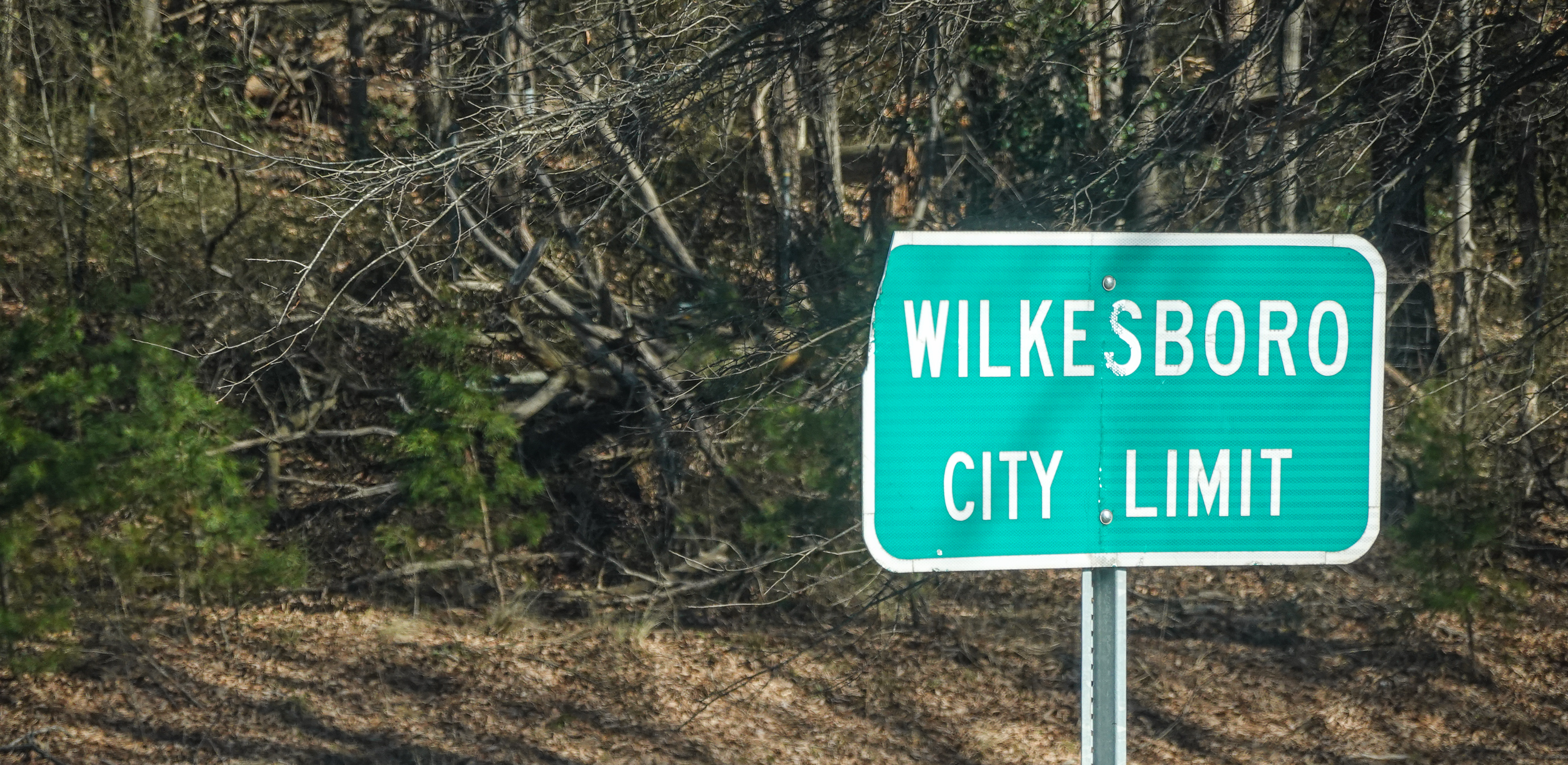

I. Introduction: The Empire Within an Empire
Wilkes County, often nicknamed the “Empire Within an Empire,” was officially established in 1777, carved out of the western frontier of old Surry County during the height of the American Revolutionary War . Its creation reflected the rapid growth of settlements pushing toward the Blue Ridge and the need for local governance in a rugged, independent-minded region. From the start, Wilkes developed a reputation for resilience and self-reliance, traits that would define it for centuries.
Geographically, Wilkes County is a true bridge between worlds. To the west rise the Blue Ridge Mountains, gateway to Boone and West Jefferson in the North Carolina High Country, while to the east and south stretch the rolling Piedmont lands leading toward Charlotte, the “Hornet’s Nest of Rebellion,” and the thriving Lake Norman communities of Huntersville, Cornelius, Davidson, Mooresville, Sherrills Ford, and Denver, NC. This location made Wilkes a meeting ground between mountain culture and Piedmont commerce — a place where traditions of independence and frontier grit met the currents of growth and modernization.
The Revolutionary legacy runs deep here. Many Wilkes settlers, Scotch-Irish and German pioneers, answered the call to arms during the Revolution. Figures such as Colonel Benjamin Cleveland gained lasting fame for leading Wilkes County men at the Battle of King’s Mountain , a pivotal Patriot victory in 1780. The county’s reputation as a hotbed of rebellion tied it to Charlotte’s “Hornet’s Nest” identity, with both regions symbolizing North Carolina’s defiant spirit. Even the tragic yet heroic story of General William Lee Davidson, who fell at the Battle of Cowan’s Ford on the Catawba River, links the Lake Norman area directly to the Revolutionary heritage that Wilkes County shares.
In this way, Wilkes County’s history begins not as an isolated frontier outpost, but as part of a broader struggle — a land caught between mountain and Piedmont, between independence and settlement, between heritage and progress.
II. Indigenous and Frontier Foundations
Long before Wilkes County was formally established in 1777, the lands along the Yadkin and Reddies rivers and the slopes of the Brushy Mountains were home to Indigenous peoples. The Tutelo, a Siouan-speaking tribe, are believed to have lived in the area before being displaced by Iroquois raids in the 17th century. By the 18th century, the Cherokee Nation claimed the Blue Ridge and western slopes, using the Wilkes region as part of their vast hunting grounds. Ancient trading paths and seasonal encampments along the rivers testify to this deep-rooted presence. Even as colonial settlement expanded, echoes of this Indigenous heritage endured in local place names and oral traditions.
By the mid-1700s, waves of settlers began filtering through the mountain gaps. Scotch-Irish immigrants, carrying Presbyterian traditions and a fierce independence, migrated down from Pennsylvania and Virginia. They were soon joined by German families, skilled farmers and craftsmen who sought fertile bottomlands in the Yadkin Valley. Together, these groups shaped the cultural foundation of Wilkes County — hardworking, self-sufficient, and steeped in frontier resilience.
No figure embodies this spirit more than Colonel Benjamin Cleveland, a larger-than-life frontiersman who settled in the area after serving as a hunter, surveyor, and soldier. Cleveland became one of the most prominent Patriot leaders in the Revolutionary South. He rallied Wilkes County militiamen to the Battle of King’s Mountain in 1780, where their marksmanship and courage helped turn the tide against Loyalist forces. Cleveland’s name still resonates in Wilkes County lore, not only as a Revolutionary hero but also as a symbol of the county’s role in shaping America’s independence.
This era cemented Wilkes County’s identity as a frontier stronghold. Forged by the blending of Indigenous legacies, Scotch-Irish and German migration, and the defiant leadership of men like Cleveland, the county entered the Revolutionary War years with a reputation for boldness and independence — traits that remain woven into the fabric of Wilkes life today.
III. Wilkesboro: County Seat and Civic Heart
While Wilkes County was carved out during the Revolutionary era, it was not until the early 1800s that the town of Wilkesboro was formally laid out as the county seat. Positioned on the south bank of the Yadkin River, the site was chosen for its central location and accessibility. From the beginning, Wilkesboro became the administrative and civic heart of the county, where law, order, and community institutions took root.
At the center of town stands the Wilkes County Courthouse, a dignified structure originally built in 1902 that today houses the Wilkes Heritage Museum . Within its walls, visitors can trace the county’s story from frontier days through moonshine and NASCAR heritage. Surrounding the courthouse square, Wilkesboro developed as a classic Southern county seat, with law offices, shops, and hotels framing the civic core.
Not far from the courthouse is the Old Wilkes County Jail, constructed in 1859 . Its thick stone walls confined generations of inmates until its closure in 1915. Today, preserved as part of the museum complex, it offers a window into 19th-century justice and community life.
Equally significant is the Robert Cleveland Log House, built around 1780 by Captain Robert Cleveland, brother of the famed Colonel Benjamin Cleveland . Thought to be the oldest surviving dwelling in the county, it embodies the rugged pioneer architecture of the frontier.
Wilkesboro’s spiritual life also took firm root in the mid-19th century. The Wilkesboro Presbyterian Church, constructed in 1849–50, reflects the strong Presbyterian heritage of the Scotch-Irish settlers . Nearby, the St. Paul’s Episcopal Church and Cemetery (1848) stands as a striking Gothic Revival landmark , linking Wilkesboro to broader currents of antebellum religious architecture.
Residential and commercial buildings also speak to the town’s growth. The Johnson-Hubbard House (c. 1855–57) and the J. L. Hemphill House (1899) showcase Wilkesboro’s Greek Revival and Queen Anne heritage. On the commercial side, the Wilkesboro-Smithey Hotel and the J. T. Ferguson Store offered hospitality and goods to travelers and locals alike, serving as gathering points in a bustling county seat.
Together, these sites form the Downtown Wilkesboro Historic District , a preserved collection of civic, religious, and commercial architecture that captures the layered history of the county’s administrative heart.
Wilkesboro, in short, embodies the continuity of Wilkes County itself: from log cabins to courthouses, from jails to churches, from frontier stronghold to heritage town. It remains the civic anchor of the county, balancing its historic roots with its role as a cultural hub today.
IV. North Wilkesboro: Railroad Town and Industrial Hub
While Wilkesboro served as the civic center of Wilkes County, its twin across the Yadkin River — North Wilkesboro — emerged in the late 19th century as the commercial and industrial engine of the county. The town was officially founded in 1891, its very existence tied to the coming of the railroad, which brought both opportunity and transformation.
The arrival of the Southern Railway created a new hub of trade and transportation. At its heart stood the North Wilkesboro station, completed in 1914 , which linked the foothills of Wilkes to regional markets and cities like Winston-Salem and Charlotte. This depot became not only a travel center but also a symbol of the county’s integration into modern commerce. Goods flowed out — timber, textiles, and agricultural products — while manufactured items and cultural influences flowed in.
Industry quickly took root. The town became home to significant textile operations, including the Wilkes Hosiery Mills, which anchored local employment and fueled growth throughout the 20th century . Alongside hosiery, furniture plants and other light manufacturing helped North Wilkesboro earn its place as a bustling industrial hub in the foothills. The downtown filled with department stores, banks, and small businesses, turning Main Street into the county’s premier commercial corridor.
That heritage survives today in the Downtown Main Street Historic District, which preserves a remarkable collection of early 20th-century storefronts and commercial buildings . Walking through the district, one can still sense the energy of a town that once stood at the center of regional trade, its sidewalks crowded with shoppers and its rail depot alive with activity.
In recent decades, as traditional industries declined, North Wilkesboro — like many foothills towns — faced economic challenges. Yet the story has shifted again. Through historic preservation and revitalization efforts, the town is reclaiming its identity. Restored storefronts, cultural festivals, and the celebrated reopening of the North Wilkesboro Speedway have breathed new life into the community. Heritage tourism, small businesses, and arts initiatives now stand alongside industry as pillars of renewal.
North Wilkesboro remains a town forged by the railroad, enriched by industry, and sustained by resilience. Together with Wilkesboro, it forms a dynamic partnership: one rooted in government and history, the other in commerce and adaptation.
V. Moonshine, NASCAR, and National Attention
Few places in America carry a cultural reputation as colorful as Wilkes County’s. Known far and wide as the “Moonshine Capital of the World,” Wilkes earned its title through generations of backcountry distillers who perfected the art of producing untaxed whiskey in the Brushy Mountains and along the Yadkin River. During the late 19th and early 20th centuries, moonshining was both an economic necessity and a symbol of defiance against government regulation. When Prohibition arrived in the 1920s, the hidden stills of Wilkes County supplied thirsty towns from Charlotte to Winston-Salem, cementing its national reputation.
But moonshine was more than a secret trade — it was the crucible from which stock car racing emerged. To outrun federal “revenuers,” Wilkes County drivers modified ordinary cars to carry heavy loads of liquor while still moving fast enough to evade pursuit. These souped-up cars became the prototypes for race machines, and their drivers became legends. By the 1940s, those same skills found a new stage: organized racing.
The culmination of this transformation came in 1947, when the North Wilkesboro Speedway opened its doors . Built in the foothills just outside of town, it became one of the original tracks of the newly formed NASCAR. Fans filled the grandstands to watch daring drivers — many with moonshine-running backgrounds — thunder around the track. For decades, the Speedway was a cornerstone of the NASCAR schedule, hosting legends such as Junior Johnson (a Wilkes County native and former moonshiner), Richard Petty, and Dale Earnhardt.
Yet, like many rural tracks, the Speedway eventually fell victim to the sport’s shift toward larger, urban markets. In 1996, after nearly 50 years of racing, the final Cup Series race was run at North Wilkesboro, and the track fell silent. For years it stood as a haunting relic, overgrown with weeds, but never forgotten by fans who considered it hallowed ground.
In a remarkable twist of fate, the Speedway experienced a rebirth in the 2020s. Preservation efforts, community determination, and NASCAR’s renewed interest in its roots led to a full-scale revival. In 2023, the track hosted the NASCAR All-Star Race, marking a triumphant return that drew national media attention and reestablished Wilkes County as a sacred place in racing history.
Wilkes’ cultural footprint extends beyond racing. The county also produced notable figures in popular culture, such as comedian and actor Zach Galifianakis, a North Wilkesboro native whose offbeat humor has earned international fame. His career serves as a reminder that Wilkes County’s influence runs from moonlit hollers and racetracks all the way to Hollywood stages.
Today, Wilkes County’s moonshine lore and NASCAR heritage are embraced not as shadows of an illicit past, but as pillars of its cultural identity — proof that this foothills community has always punched above its weight on the national stage.
VI. Geography and Natural Heritage
Wilkes County’s identity is inseparable from its landscape, a terrain that defines its history, culture, and way of life. Nestled in the foothills of the Blue Ridge, Wilkes is a county where rivers, mountains, and valleys converge — shaping both settlement and spirit.
At its heart flows the Yadkin River, one of North Carolina’s great waterways. Rising near Blowing Rock and flowing eastward across the Piedmont, the Yadkin has long served as a lifeline. For Indigenous peoples, it was a travel route and source of sustenance; for settlers, it powered mills and carried goods downstream. In Wilkesboro, the Yadkin meets the Reddies River, whose confluence became central to the town’s location . The two rivers together form a natural crossroads, binding Wilkes County to both the mountains above and the Piedmont below.
To the south rise the Brushy Mountains, often called the “Mother of the Yadkin Valley.” More a high ridge than a true mountain range, the Brushies are renowned for their fertile slopes and apple orchards — celebrated every fall at the Brushy Mountain Apple Festival. Tucked within these ridges is Moravian Falls, a picturesque cascade named for Moravian missionaries who once settled nearby . The falls remain one of the county’s most beloved landmarks, drawing both locals and visitors to its cool spray and scenic beauty.
Further west, the grandeur of Stone Mountain State Park dominates the skyline. Its massive granite dome, rising 600 feet above the valley floor, is both a geologic marvel and a recreational haven . The park’s trails, streams, and preserved homesteads remind visitors of the rugged life carved from these foothills, while also connecting Wilkes County to the larger natural heritage of western North Carolina.
The county’s link to the Blue Ridge Parkway reinforces its role as a gateway between the High Country and the Piedmont . The Parkway’s overlooks and trails provide sweeping views that connect Wilkes to the broader Appalachian story — a reminder that this is land where cultures, geographies, and histories meet.
Even the smaller streams matter. Tributaries like Hoopers Branch , along with countless creeks and watersheds, have shaped local farming, powered small industries, and nourished generations. These waters continue to sustain Wilkes County, feeding into the Yadkin and linking the county to North Carolina’s broader river systems.
Together, the rivers, ridges, waterfalls, and forests of Wilkes form more than just a backdrop. They are the living heart of the county — places of work, worship, and wonder. They explain why settlers stayed, why communities grew, and why Wilkes still embodies the rugged beauty of the Blue Ridge foothills.
VII. Education and Civic Life
Education and community spirit have long been central to Wilkes County’s identity, shaping its people as much as its geography and industry.
The public school system, governed by Wilkes County Schools, serves as the foundation of local education. It operates numerous elementary, middle, and high schools across the county’s diverse terrain. Among its most prominent institutions is Wilkes Central High School, which has served generations of students in the heart of the county. Its counterpart, West Wilkes High School, anchors the western communities, while schools in Millers Creek provide opportunities for one of the county’s fastest-growing areas. These schools not only prepare young people academically but also serve as community gathering points, where Friday night football games, band concerts, and graduations weave together civic pride.
Higher education finds its home at Wilkes Community College (WCC), established in 1964. More than just a two-year institution, WCC has become a hub of cultural life. Its campus hosts MerleFest, one of the largest and most respected roots music festivals in the nation, named in honor of Merle Watson, son of legendary guitarist Doc Watson. Each spring, MerleFest draws tens of thousands of visitors to Wilkesboro, putting the county on the international cultural map while supporting local businesses and the college’s mission. The presence of regional universities like Davidson College further strengthens Wilkes’ educational connections, tying the foothills to one of the most prestigious liberal arts institutions in the South.
Civic pride is also showcased every October at the Brushy Mountain Apple Festival, a sprawling street fair in downtown North Wilkesboro that celebrates the county’s agricultural heritage and mountain culture. With hundreds of craft booths, food vendors, and music stages, the festival attracts visitors from across North Carolina and beyond, reinforcing Wilkes’ role as a cultural anchor of the foothills.
Transportation, too, plays a vital role in community life. The Wilkes Transportation Authority (WTA) provides critical bus and transit services for residents who need access to schools, jobs, healthcare, and shopping. In a rural county where distances are long and car ownership isn’t universal, WTA serves as a lifeline — connecting Wilkes’ smaller communities with its central towns.
Together, the schools, colleges, festivals, and civic institutions reflect Wilkes County’s ongoing investment in its people. They show how a region rooted in rugged independence has built lasting structures of community life, ensuring that Wilkes remains as vibrant culturally as it is historically.
VIII. Wilkes County in the Civil War and Beyond
The American Civil War left deep marks on Wilkes County, as it did across North Carolina. Though officially aligned with the Confederacy, Wilkes was a county of divided loyalties . Many residents supported secession, sending sons to fight in gray uniforms, while others — influenced by the county’s rugged independence and relative isolation — leaned Unionist. Desertion was common, and skirmishes occasionally flared in the mountains. The war years strained families and communities, leaving scars that endured for decades.
After 1865, Wilkes County entered the turbulent era of Reconstruction. The devastation of war, combined with economic dislocation, forced the county to reinvent itself. Out of these challenges, Wilkes slowly pivoted from subsistence farming and small-scale trade to textiles and furniture manufacturing. The arrival of railroads in the late 19th century fueled this shift, with towns like North Wilkesboro growing into industrial hubs. Factories produced textiles, hosiery, and wooden goods that tied Wilkes to regional and national markets.
By the 20th century, Wilkes County was firmly anchored in the textile economy. Mills like the Wilkes Hosiery Mills became major employers, providing steady work to generations of families . Furniture plants and related industries also thrived, building a reputation for Wilkes as a hardworking, productive county. Yet this prosperity carried risks: when globalization and economic change swept across the South in the late 20th century, Wilkes’ traditional industries began to decline. Textile mills closed, furniture jobs moved overseas, and the county faced a painful economic transition.
In response, Wilkes turned to its heritage and tourism. The same mountains and rivers that once hid moonshiners now drew hikers, kayakers, and music fans. Events like MerleFest and the Brushy Mountain Apple Festival showcased culture, while the revival of the North Wilkesboro Speedway reconnected the county to its NASCAR legacy. Historic preservation in both Wilkesboro and North Wilkesboro also provided a new kind of economic engine, turning the past into a resource for the future.
Thus, Wilkes County’s journey from Civil War division to industrial hub, and finally to a heritage-driven economy, illustrates its capacity for reinvention. Each era left its imprint, but the thread of resilience — first forged in the frontier — carried the county forward into new chapters of growth and identity.
IX. Regional Context and Connections
Wilkes County does not exist in isolation. Its story has always been shaped by its position as a gateway between the North Carolina High Country and the Piedmont, connecting mountain culture with lowland commerce.
To the west lies the High Country, anchored by Boone and Appalachian State University. Boone, named after the famous frontiersman Daniel Boone who once roamed the Yadkin Valley, has grown from a mountain outpost into a bustling college town . The presence of Appalachian State University brings not only higher education but also cultural and athletic life, linking Wilkes County to a larger regional identity. Nearby, West Jefferson adds to this High Country network, with its art galleries, historic cheese factory, and role as a cultural hub for Ashe County. Together, these towns form the western frontier of Wilkes’ regional ties, blending mountain traditions with modern growth.
To the east and south, the Piedmont corridor connects Wilkes to larger metropolitan centers. Charlotte, known in the Revolution as the “Hornet’s Nest of Rebellion,” anchors this region. Today, Charlotte’s financial and cultural clout extends influence well into the foothills. Surrounding Lake Norman, the towns of Huntersville, Cornelius, Davidson, Mooresville, Sherrills Ford, and Denver, NC represent some of the fastest-growing communities in the state. Their suburban expansion, tied to Charlotte’s orbit, contrasts with the more rural, mountainous feel of Wilkes — yet the two regions are bound together through commerce, commuting, and cultural exchange. Many Wilkes residents travel to the Lake Norman area or Charlotte for work, healthcare, or recreation, while city dwellers escape westward to Wilkes for festivals, fishing, and the Blue Ridge Parkway.
History deepens these connections. The Battle of Cowan’s Ford (1781), fought near present-day Lake Norman, linked Wilkes’ frontier militiamen with the broader Revolutionary struggle in the Piedmont . The death of General William Lee Davidson at that battle cemented Charlotte’s legacy as the Hornet’s Nest, and Wilkes County’s Benjamin Cleveland stood as a counterpart among the mountain patriots. Together, they illustrate how the fates of the High Country, Lake Norman, and Wilkes County were interwoven from the nation’s founding.
In the modern era, transportation ties sustain this regional role. U.S. Route 421, including the North Wilkesboro Business Loop, serves as the county’s vital east-west artery. It carries travelers from Winston-Salem and Greensboro through Wilkes to Boone and the Blue Ridge Parkway. Along this route, Wilkes becomes both a stopping point and a crossroads — a reminder that its identity rests in connecting regions as much as cultivating its own.
Thus, Wilkes County is not merely a foothills community, but a regional hinge — a place where mountains meet Piedmont, where Revolutionary legacy meets modern growth, and where local pride contributes to a larger North Carolina story.
X. Conclusion: Twin Towns, One County
At first glance, Wilkesboro and North Wilkesboro may appear to be two separate towns divided by the Yadkin River. Yet their stories are inseparable, forming a single identity for Wilkes County. Wilkesboro stands as the civic and governmental center, where courthouses, churches, and historic homes anchor a legacy of law, faith, and public life. Across the river, North Wilkesboro rose as the railroad and commercial hub, its Main Street and industries driving the county’s economic engine. Together, the two towns represent different faces of the same community — one rooted in tradition, the other in adaptation.
The shared identity of Wilkes County is one of resilience and reinvention. From frontier outpost to moonshine capital, from textile mills to NASCAR tracks, and now from industrial decline to vineyards and heritage tourism, Wilkes has never stood still. Each generation has found a way to endure, adapt, and reimagine the county’s place in North Carolina.
Wilkes also serves as a cultural bridge. To the east and south lie Lake Norman communities — Huntersville, Cornelius, Davidson, Mooresville, Sherrills Ford, and Denver, NC — woven into Charlotte’s metropolitan reach. To the west, the road climbs into the Blue Ridge, toward Boone, Appalachian State University, and West Jefferson. Wilkes connects these worlds, blending mountain grit with Piedmont commerce. It stands at the intersection of the Hornet’s Nest of Rebellion and the frontier militia, tied by history to the Battle of Cowan’s Ford and the triumph at King’s Mountain.
This dual role — mountain and foothill, civic and commercial, past and future — defines Wilkes County’s enduring legacy. Its rivers, ridges, and historic towns remind us of a people who have always found strength in challenge and identity in reinvention. In Wilkes, community and history are not simply preserved; they are lived, celebrated, and continually reshaped.
The story of Wilkes County is thus the story of two towns, one county, and countless reinventions — a place where North Carolina’s past meets its future, and where resilience remains the constant thread.
📍 Adkins Law, PLLC — Serving Huntersville & Lake Norman
At Adkins Law, PLLC in Huntersville, we believe that history, heritage, and community are what hold families together — values that places like Wilkesboro and North Wilkesboro remind us of every day. Just as Wilkes County has endured and reinvented itself from frontier days to modern times, families often face seasons of challenge and change.
Our firm focuses on family law, custody, divorce, estate planning, and mediation, helping you navigate those transitions with clarity and compassion. We live and work right here in the Lake Norman community, proudly serving neighbors in Huntersville, Cornelius, Davidson, Mooresville, Denver, Sherrills Ford, and beyond.
Whether you’re seeking guidance through a custody arrangement or planning for your family’s future, Adkins Law is here to protect what matters most.
👉 Call us today to schedule a consultation with an experienced family law attorney in Huntersville, NC.


Leave a Reply