


I. Introduction: Newton at the Heart of Catawba County 🌄🏛️
Nestled in the rolling foothills of North Carolina’s Piedmont, Newton stands as the historic and governmental heart of Catawba County. Established as the county seat in 1845 and formally incorporated in 1855, Newton has served for generations as the center of civic, cultural, and commercial life. The town takes its name from Isaac Newton Wilson, a respected state legislator whose influence helped secure Newton’s early role in regional politics and governance. ⚖️
The city’s foundations were laid by prominent local families—Schenck, Schrum, Forney, Ramsour, Wilson, Bost, Shuford, McCorkle, and Smyre—whose names remain etched into the fabric of the community through historic homes, institutions, and civic leadership. Their legacy is embodied in Newton’s enduring motto: “Honor, Tradition, Progress.” It captures both the pride Newton takes in its heritage and its continual adaptation to new eras of growth and change. 🕰️✨
Geographically, Newton occupies a unique crossroads. To the south and east lie Charlotte and the Lake Norman communities of Huntersville, Cornelius, Davidson, Mooresville, Sherrills Ford, and Denver—areas shaped by suburban expansion, lakefront development, and the vibrant cultural economy of the Charlotte metropolitan region. 🚤🌆 To the north and west, Newton looks toward the NC High Country, with Boone, West Jefferson, and Wilkesboro forming a mountain gateway rich in frontier history and Appalachian culture. 🏔️ This central position lets Newton serve as a bridge—between past and present, between the Piedmont and the mountains, between local tradition and regional progress. 🌉
From its earliest days, Newton has embodied the role of county seat not simply as a location of government offices, but as the symbolic gathering place for Catawba County’s identity. The courthouse square, shaded by trees and ringed with historic storefronts, became the nucleus of civic and social life. 🌳🛍️ Over time, industries, schools, churches, and cultural traditions radiated outward from this central hub, cementing Newton’s reputation as both a historic stronghold and a community continually looking forward. 🔔➡️
II. Indigenous Roots and Frontier Settlement 🪶🌽🏹
Long before Newton was chosen as the seat of Catawba County, the region was home to the Catawba people, whose name the county and the Catawba River still carry today. Known as skilled farmers, hunters, and traders, the Catawba established thriving villages along the riverbanks, where they cultivated corn, beans, and squash 🌽🥒🍂, crafted pottery 🏺, and maintained trading routes that stretched across the Piedmont and into the mountains ⛰️. Their resilience in the face of disease, war, and colonial expansion left an indelible mark on the cultural foundation of the area, and their presence endures in the very identity of the county.
By the mid-18th century, waves of Scotch-Irish and German settlers began moving into the foothills of western North Carolina, attracted by fertile land 🌱, access to river trade 🚣, and proximity to mountain passes. Many of these settlers migrated southward and westward through routes that passed through Wilkesboro, Boone, West Jefferson, Lenoir, and Morganton, eventually establishing farms and homesteads in what would become Catawba County. They brought with them Presbyterian and Lutheran traditions ✝️, hard farming practices, and a frontier ethos of independence 🤠 that echoed throughout the region.
Life on this early frontier was often harsh ❄️, but it produced enduring landmarks. One of the oldest surviving structures in the Newton area, the Bost–Burris House (c.1810), stands as a rare example of early settlement architecture. Built of logs and later framed in more permanent materials 🪵➡️🧱, it reflects both the resourcefulness of pioneer families and the gradual shift from temporary cabins to enduring homesteads. Houses like the Bost–Burris became centers of family 👨👩👧👦, farming 🚜, and community 🤝 in the rugged landscape.
The Revolutionary era also stamped the region with a fierce reputation ⚔️. Neighboring Mecklenburg County became known as the “Hornet’s Nest of Rebellion” 🐝🔥 for the intensity of local resistance to British rule, and that same spirit animated the settlers who spread into Catawba. Though Newton itself did not yet exist, the families who would later form the town carried with them the memory of Revolutionary sacrifices, such as those commemorated at the Battle of Cowan’s Ford (1781), where General William Lee Davidson fell in combat. These stories created a powerful identity of patriotism 🇺🇸, independence 🗽, and communal pride ❤️ that shaped the cultural character of Newton and the county that surrounded it.
III. Formation of Catawba County (1842) and Newton’s Founding (1845–1855) 🏛️📜
The creation of Catawba County in 1842 marked a turning point in the political and cultural development of North Carolina’s western Piedmont. 🌄 Formed out of Lincoln County, the new county was named for the Catawba River 🌊 and the Catawba Indians 🪶, whose long presence in the region made them both a geographic and symbolic namesake. This designation honored not only the landscape but also the enduring heritage of the people who first called it home.
Just three years later, in 1845, the town of Newton was founded and chosen as the county seat. Its incorporation in 1855 cemented Newton’s role as the hub of government, commerce, and law ⚖️ for the young county. Centrally located and easily accessible, Newton was the logical place for residents across the newly drawn county lines to gather for civic and commercial life.
At the heart of Newton lay the courthouse square, the town’s defining feature from the very beginning. When the first courthouse and jail (1845–1846) were built, they instantly became the nucleus of community activity. Court sessions drew residents from miles around—not only to conduct legal business but also to trade goods 🛒, exchange news 📰, and socialize 🤝. The square quickly evolved into more than a center of justice: it became Newton’s marketplace, stage, and gathering place.
The courthouse tradition endured through multiple reconstructions, with the most iconic iteration completed in 1924. Designed in the Beaux-Arts style by Charlotte architect Willard G. Rogers, the Catawba County Courthouse remains a landmark of Newton’s historic downtown. With its Indiana limestone façade 🪨, Ionic pilasters 🏛️, and symmetrical wings, it symbolized civic pride and permanence. Today, it no longer serves as the seat of government, but it houses the Catawba County Museum of History 🏺, preserving the very legacy it once embodied.
By the mid-19th century, the courthouse square and surrounding streets defined Newton’s growth. Businesses clustered nearby to serve farmers and lawyers, families built homes radiating outward 🏡, and churches rose within walking distance ⛪. This early, courthouse-centered pattern set the blueprint for Newton’s role as the political and cultural heart of Catawba County, a legacy that continues today. 🌟
IV. Civil War and Reconstruction ⚔️🇺🇸
When the Civil War erupted in 1861, Newton—serving as the county seat of Catawba—became the center of enlistment, organization, and communication for the region. The courthouse square, already the nucleus of civic life, transformed into a staging ground where men volunteered to fight 🪖, families gathered to say farewell 👋, and officials coordinated wartime responsibilities 📜.
Several regiments drew heavily from Catawba County, with young men from Newton and surrounding farms filling the ranks of Confederate companies. Yet, like much of western North Carolina, the county was not entirely united in loyalty. While most supported the Confederacy, there were undercurrents of Unionist sympathy 🇺🇸 and resistance to conscription, reflecting the divided nature of the foothills. Families often found themselves torn between allegiances 💔, a reality that deepened wartime hardship.
The war placed severe strains on Newton’s economy 💰. Farms that once produced surplus for trade were redirected to supply the Confederate cause, while shortages of basic goods became daily struggles 🥖. Inflation, blockades, and the absence of working men left women, children, and elders 👩👧👦👵 to shoulder the burdens of agriculture and survival. Yet civic life persisted: the courthouse ⚖️ remained active for order and governance, and churches ⛪ provided both spiritual strength and relief for struggling families.
The end of the war brought its own challenges. Reconstruction in Newton was marked by political upheaval and economic uncertainty. Freedmen ✊🏿 sought to establish rights and livelihoods, while many white residents struggled with the realities of defeat. Agriculture began to recover 🌾, and over time, industry and railroads would again draw prosperity—but the Civil War years left lasting scars on Newton’s memory and identity.
One way this legacy endured was through heritage remembrance 📜. Local pride tied Newton and Catawba County to earlier struggles for liberty—most notably the Battle of Cowan’s Ford (1781), where General William Lee Davidson fell fighting the British along the Catawba River 🌊. During and after the Civil War, such Revolutionary touchstones were invoked to frame sacrifice as part of a longer tradition of bravery 🦅, resilience 💪, and devotion to community 🤝. This layered memory—of both Revolutionary valor and Civil War hardship—remained central to Newton’s civic culture as it rebuilt in the decades that followed.
V. Industrial and Transportation Growth 🚂🏭
In the years following Reconstruction, Newton and Catawba County experienced a profound transformation. What had once been a frontier and agrarian society 🌾 based on cotton, corn, and wheat 🌽 slowly gave way to a diversified economy of textiles, hosiery, and furniture 🪡🪑 that placed the region firmly within North Carolina’s emerging industrial Piedmont crescent.
A critical factor in this transition was the railroad 🚂. In 1860, local leaders secured a three-mile spur of the Western North Carolina Railroad (WNCRR), connecting Newton to the larger Salisbury–Asheville line. This allowed farmers and merchants to move goods more efficiently to markets, stimulating commercial growth. Even more transformative was the Chester & Lenoir narrow gauge line (1883), which ran along Newton’s eastern edge. With two rail links converging nearby, Newton suddenly stood at the crossroads of regional commerce 🔀, and prosperity followed.
As railroads reshaped the economy, Newton assumed the role of administrative and civic anchor ⚖️, while neighboring towns developed distinctive industrial and cultural identities:
- Hickory emerged as the railroad hub and furniture powerhouse 🪑, gaining national recognition.
- Conover grew from a depot town into a manufacturing center 🏭.
- Claremont retained a small-town civic identity 🏘️.
- Maiden thrived as a mill town 🧵, its economy centered on textiles and hosiery.
Together, these towns formed a web of interdependent communities, each contributing to the strength of Catawba County’s industrial base.
Newton itself benefitted not only from its central location and courthouse square but also from the foothill furniture industry stretching westward to Lenoir and Morganton. Partnerships with these centers reinforced Newton’s place in a broader furniture and textile production network 🔗 that defined the western Piedmont in the late 19th and early 20th centuries.
This prosperity was reflected in Newton’s architecture 🏠. Wealthier families and civic leaders built homes showcasing the stylistic variety of the era:
- Rudisill–Wilson House (c.1850) — Greek Revival reminder of antebellum roots.
- Foil–Cline House (1883) — striking Queen Anne residence, emblem of Victorian taste.
- Long, McCorkle, and Murray Houses (1890–1910) — eclectic early 20th-century flourishes.
- Perkins House (1905) — Classical Revival elegance and civic pride.
- Self–Trott–Bickett House (late 19th c.) — steady growth of middle-class life.
Now listed on the National Register of Historic Places 🏅, these structures are more than private residences—they are enduring testaments to the prosperity that railroads and industry brought to Newton. Each brick 🧱 and gable 🏡 tells the story of how a once-rural county seat matured into a community connected by rail, powered by industry, and symbolized through architecture 🏛️.
VI. Education, Religion, and Civic Life 🎓⛪📚
From its founding, Newton was not only the seat of government ⚖️ but also the center of education, worship, and civic life for Catawba County. The courthouse square 🏛️, already a magnet for trade and law, doubled as a gathering place where residents came to discuss politics, share news 📰, and engage in traditions that gave Newton its lasting identity.
Education 📖 became a defining part of Newton’s civic role. In 1851, Catawba College 🎓 was established in Newton under the sponsorship of the German Reformed Church. For decades, it was the cultural and intellectual centerpiece of the town before relocating to Salisbury in 1925, where it continues to thrive as a liberal arts institution. Its 75 years in Newton left a permanent mark on the town’s intellectual life, reinforcing Newton’s reputation as a place where learning and leadership converged. 🌟
Elsewhere in the region, higher education flourished, creating a network of institutions serving both Piedmont and mountain communities:
- Lenoir-Rhyne University (Hickory, 1891) anchored Lutheran tradition and academics. 🦁
- Davidson College stood as a nationally respected Presbyterian liberal arts college 📚.
- Appalachian State University (Boone) grew from a teachers’ college into a regional hub for the NC High Country ⛰️.
Together, these institutions reflected the value western North Carolina communities placed on education and their role in producing leaders for the state and beyond.
Religion ⛪ was equally central to Newton’s civic fabric. Churches anchored neighborhoods, provided moral and cultural leadership, and often doubled as schools or meeting halls in the 19th century. Two of Newton’s most enduring landmarks embody this heritage:
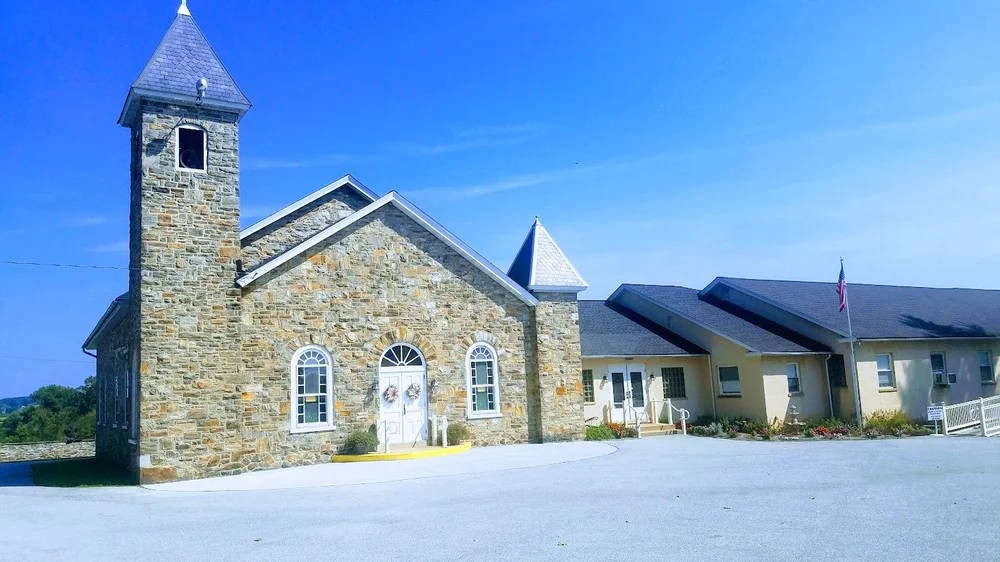
- Grace Reformed Church (1887–1888) — a Gothic Revival sanctuary, a testament to the Reformed tradition in Newton’s history. ✝️
- St. Paul’s Church and Cemetery — also Gothic Revival, preserving worship space and the memory of some of the region’s earliest families ⚰️🌹.
Smaller communities across Catawba County—Conover, Claremont, and Maiden 🏘️—made their own contributions, developing schools, churches, and civic organizations that supported their growth while staying tied to Newton’s courthouse-centered civic structure. Local schools became symbols of pride 🎒, producing graduates who went on to further education in Newton, Hickory, Davidson, or Boone.
Through education, religion, and civic life ✨, Newton emerged as more than just an administrative center. It became the cultural heart ❤️ of Catawba County, connecting its people to a broader network stretching from the Lake Norman towns 🚤 to the NC High Country ⛰️.
VII. Twentieth-Century Transformation 🕰️⚙️
The 20th century was a period of dramatic change for Newton and Catawba County. The upheaval of the Great Depression 📉 was followed by the mobilization of World War II 🌍⚔️, which reshaped both the economy and the community. By the 1940s, Newton’s diversified industrial base—including textiles 🧵, hosiery 🧦, and furniture plants 🪑—helped shield the area from the worst effects of economic collapse. These industries created steady jobs that supported returning veterans 🎖️ and their families in the postwar boom. By mid-century, thousands of Catawbans worked in industry, while Newton remained the county’s courthouse town and civic anchor 🏛️.
The region entered what many call the “golden age of furniture” 🌟🪑. Neighboring towns like Hickory, Lenoir, and Morganton became nationally recognized for furniture production, while Conover and Maiden thrived as hosiery and textile centers. Newton, while not the largest industrial hub, benefitted from proximity to these booming towns and reinforced its role as the administrative and cultural center of the county.
At the heart of Newton’s identity remained the courthouse square ⚖️. Though industries and railroads hummed on the edges 🚂, the square stayed the symbolic and social heart ❤️. Hotels like St. Hubert’s Inn (1889) 🏨 and the Virginia Shipp Hotel (1906–1960s) provided lodging for travelers, attorneys, and businesspeople who came for court week 📑 or commercial dealings. The Virginia Shipp became a landmark until its demolition in the 1960s, symbolizing Newton’s evolution from rural seat to bustling Piedmont crossroads.
Traditions 🎺🇺🇸 reinforced Newton’s role as a community hub. Since 1889, the Old Soldiers Reunion has drawn crowds each summer to honor Civil War veterans. Over time, it grew into one of North Carolina’s longest-running patriotic festivals 🎆, blending parades, speeches, music, and civic pride. It continues today, reflecting Newton’s deep value of memory, service, and shared heritage.
The 20th century also saw a wave of landmark institutions and architecture 🏛️🎞️, many still defining Newton’s downtown:
- State Theater 🎬 (rebuilt 1937, Art Deco) entertained generations during cinema’s golden age.
- First National Bank of Catawba County 🏦 (Spanish Colonial Revival, 1920s remodel) stood as a bold statement of prosperity.
- Mrs. P.O. Carpenter Store (1902) 🛍️, with Romanesque brickwork, exemplified early 20th-century confidence.
- Eagle Building (1920s) 🦅, one of Newton’s few three-story blocks, even served briefly as a temporary courthouse.
- Collectively, these and dozens of others form the Newton Downtown Historic District 🏘️, a 9.5-acre area listed on the National Register of Historic Places 📜, with 69 contributing resources telling Newton’s civic story.
Yet forces of change loomed. The creation of Lake Norman (1960s) 🚤🌊 spurred growth in Sherrills Ford, Denver, Cornelius, and Mooresville, turning farmland into marinas, neighborhoods, and recreation hubs. Meanwhile, the rise of the automobile economy 🚗 and the construction of bypasses and malls 🛣️🏬 pulled activity from courthouse square. Shopping centers along US 321 and US 70, along with Hickory’s Valley Hills Mall, diverted shoppers away. By the 1970s, many long-standing businesses closed or relocated, leaving downtown quieter.
Still, Newton’s twentieth-century journey is one of resilience 💪. From wartime industry and courthouse traditions, to the rise of iconic hotels and theaters, and even through the challenges of suburban sprawl, Newton adapted—holding fast to its role as the civic heart of Catawba County ❤️🏛️.
VIII. Newton, Hickory, Conover, Claremont, Maiden, and Catawba County Today 🌐🏞️
In the 21st century, Catawba County presents a portrait of both continuity and reinvention 🔄. Once overwhelmingly agricultural 🌾 and later dominated by textiles 🧵 and furniture 🪑, the local economy has diversified into advanced manufacturing 🏭, healthcare 🏥, and technology 💻, ensuring the region remains resilient in the face of global economic shifts.
At the county’s core, Newton continues to serve as the civic and heritage hub ⚖️🏛️. Its courthouse square, though no longer the seat of government after the relocation of county offices to the U.S. 321 bypass 🚘, retains powerful symbolic importance. The Newton Downtown Historic District 🏘️, with nearly 70 contributing buildings 🏅, preserves a tangible record of the town’s rise and evolution. Festivals 🎉, concerts 🎶, and civic events 🎺 continue to animate the square, reminding residents that Newton is still the cultural heart of Catawba County. ❤️
To the northwest, Hickory has emerged as both an industrial 💼 and cultural leader 🎨. While once synonymous with furniture 🪑, today Hickory’s economy blends advanced manufacturing with healthcare 🏥, education 📚, and the arts 🎭. Institutions like Lenoir-Rhyne University 🎓 anchor the city’s intellectual and cultural life, while the Hickory Metro Convention Center and local arts groups give it regional reach.
Conover, long a depot town 🚂, has evolved into a suburban/manufacturing hub 🏭🏡. With its strategic location near Interstate 40 🛣️, Conover has attracted industrial parks 🏗️, logistics operations 🚛, and new neighborhoods 🏘️, making it one of the fastest-growing communities in the county.
Claremont has retained its small-town charm 🏡, balancing industrial growth with a sense of civic pride 🎖️ rooted in schools, churches, and community traditions.
Maiden, historically a mill town 🧦, continues to honor its heritage while adapting to metro expansion. The arrival of new employers 💼—including data centers 💾 and advanced manufacturers ⚙️—demonstrates how Maiden has leveraged its location and workforce to stay relevant in a rapidly changing economy.
Catawba County’s towns also benefit from connection to the Charlotte metropolitan region 🌆. To the south, Huntersville, Cornelius, Davidson, and Mooresville 🚤 have grown dramatically with the rise of Lake Norman 🌊 and Charlotte’s suburban expansion. These communities bring new residents 👨👩👧👦, businesses 🏢, and cultural opportunities 🎭 that ripple northward, linking Catawba County to one of the fastest-growing urban economies in the Southeast 📈.
At the same time, Catawba remains tied to the tourism 🌲 and heritage traditions 🪶 of the NC High Country ⛰️. Just a short drive away, Boone and West Jefferson offer mountain culture, seasonal festivals 🎶, and educational anchors like Appalachian State University 🎓. For many Catawba residents, the High Country is both a weekend retreat 🏕️ and a reminder of the cultural continuum linking the foothills to the Blue Ridge Mountains 🌄.
Together, Newton, Hickory, Conover, Claremont, Maiden, and their neighbors form a regional tapestry 🧵—a community rooted in tradition 📜, open to innovation 💡, proud of its heritage 🏅, yet continually reshaping its future 🚀.
IX. Heritage and Progress 🌟📜
The story of Newton is one of endurance 💪, adaptation 🔄, and pride ❤️. Its landmarks 🏛️ tell that story in brick 🧱, stone 🪨, and memory 🕯️. From the Bost–Burris House 🏠, a frontier cabin that speaks to the grit of early settlers, to St. Paul’s Church and Cemetery ⛪⚰️, where generations of worship and remembrance endure, to the Newton Downtown Historic District 🏘️, where courthouse and storefronts still stand as guardians of civic life — each layer reflects Newton’s guiding motto: “Honor, Tradition, Progress.” 🕰️✨
Newton is not an isolated community but part of a broader cultural bridge 🌉. To the south, the growth of the Lake Norman towns 🚤 — Huntersville, Cornelius, Davidson, Mooresville, Sherrills Ford, and Denver — links Newton to Charlotte’s expanding metropolitan energy 🌆. To the north, the gateways of Boone and West Jefferson ⛰️ in the NC High Country remind us of the county’s frontier roots 🌲 and enduring Appalachian influence 🎻. At the center, Newton and its sister towns — Hickory, Conover, Claremont, and Maiden 🏭🏡 — remain vital pillars of Catawba County’s identity, blending the Piedmont’s industrial legacy 🪑 with the High Country’s cultural traditions 🎶.
As Catawba County continues to grow 📈, Newton’s story reminds us that progress is most meaningful when it honors tradition 📜✨. Families here know the importance of carrying heritage forward while navigating change — just as their town has done for nearly two centuries. In the same way, families today often face turning points that require balance ⚖️, wisdom 🧠, and guidance 🤝. That is why many turn to trusted custody attorneys in Huntersville 👨⚖️, professionals who understand both the legal complexities and the personal dimensions of family life.
Newton’s journey illustrates that heritage and progress are not opposites 🔄 but complementary forces. Together, they form the legacy of a community that has stood at the heart of Catawba County ❤️🏞️ since 1845 — a town that remains, even now, a living symbol of resilience 🌟, continuity 🔔, and forward vision 🚀.
📍 Adkins Law, PLLC — Serving Huntersville & Lake Norman
At Adkins Law, PLLC, we know that family 👨👩👧👦, community 🏡, and tradition 📜 are at the heart of life in Huntersville and across the Lake Norman region 🌊. ⚖️ Whether you’re navigating custody 👶, divorce 💔, or estate planning 📝, our team is here to guide you with the same values that have shaped our community for generations.
💼 With deep roots in North Carolina, we combine legal experience ⚖️ with personal understanding ❤️. We live here, we work here, and we are committed to helping our neighbors in Huntersville, Newton, Cornelius, Davidson, Mooresville, Denver, and Sherrills Ford protect what matters most.


Leave a Reply