

Introduction
On a hot Carolina summer day in the early 1800s, the shallow pond at the center of a small Catawba Valley village would dry up, leaving nothing but cracked mud and cattails. Locals began calling the place Dry Pond, a name that stuck for decades. Yet behind that humble nickname lay one of the most dynamic communities in North Carolina — a settlement where frontier axes rang against old-growth oak, where smoke from iron forges rose over the fields, and where faith bound neighbors together as tightly as iron bands around a wagon wheel.
One of the first to recognize the area’s potential was Major John Davidson, a Revolutionary War officer who had moved from Pennsylvania to Mecklenburg County. From the iron-rich soil of Lincoln County, he smelted ore in his small shop and hammered out a broad axe — a simple tool that cleared forests, raised cabins, and symbolized the birth of a new community. That very axe, preserved by descendants as a family heirloom, became a reminder that Denver’s roots were forged in both grit and craftsmanship.
Denver, NC — the name it would later adopt — is far more than a quiet town on Lake Norman’s western shore. Its story stretches back over two centuries, to the hardy Scotch-Irish settlers who carved homesteads, smelted ore, and raised families along the Catawba River.
At the center of it all stood Unity Presbyterian Church. Born of logs and stone, it became the region’s beating heart: a place where sermons stirred souls, camp meetings drew crowds for days of revival, and community leaders forged schools, armies, and industries. Around Unity’s pulpit gathered some of the most influential families in the state — Davidsons, Grahams, Brevards, Forneys, Burtons, and Conners.
To understand Denver’s past, you must look to both the broad axe and the forge — symbols of settlement and industry — and to the church that gave the community its moral compass. Denver’s history is one of resilience, reinvention, and enduring legacy on the banks of the Catawba River.
Chapter 1: Dry Pond and Early Settlement
On cold, wet winter days, a shallow basin at the center of the community would swell with water, becoming a small pond where cattle drank and children splashed. But by the heat of summer, the water disappeared, leaving only dry, cracked earth. This curious cycle gave the settlement its first enduring name: Dry Pond.
For decades, the name was both a landmark and a joke. Travelers along the old wagon roads would ask for directions to “Dry Pond,” only to laugh when told there wasn’t much pond to see at all. Still, the name captured the character of an isolated farming village on the edge of North Carolina’s frontier.
By 1873, however, community leaders decided that Dry Pond was holding them back. They wanted a name that would reflect ambition, not rustic obscurity. Hoping to attract a new railroad line, they adopted the name Denver — a nod to the booming western city in Colorado. The railroad never came, but the name stuck, signaling a community that aspired to growth and connection.
The Scotch-Irish Legacy
The settlers who gave life to Dry Pond were almost entirely of Scotch-Irish stock. These were descendants of Presbyterian immigrants who had first settled in Pennsylvania and Virginia before moving south into the Carolina backcountry in the 1700s. They were known for:
- Faith: Presbyterian churches served not just as houses of worship but also as schools, meeting halls, and the backbone of community order.
- Education: Even on the frontier, books and literacy mattered. Families scraped together resources to send children to “old field schools” or to study under ministers.
- Resilience: Life in the Catawba Valley demanded discipline. Fields had to be cleared with axes, cabins raised by hand, and communities defended during times of conflict.
A Hard but Hopeful Life
For these early families, every log cut, every acre plowed, and every child baptized at Unity Presbyterian marked progress. Their lives were simple but rooted in purpose: to carve out a stable and moral community on the edge of wilderness. By the early 1800s, their perseverance had transformed Dry Pond from a scattered settlement into a recognized village — one that would soon be swept up in the iron boom that made Lincoln County the most populous in the state.
💡 Did You Know?
The “Dry Pond” name never fully disappeared. Even after the official renaming in 1873, many older residents — especially those born before the Civil War — continued to refer to their home as Dry Pond well into the 20th century. The nickname is still remembered today, a reminder of Denver’s humble beginnings.
Chapter 2: The Broad Axe and the Forge
In 1897, historian P.E. McDowell described the Unity neighborhood as a place where “the broad axe was the commencement, and the forge the culmination, of powerful industries and a remarkable civilization.”
That imagery was no accident. The broad axe symbolized the first act of settlement: clearing forest, shaping logs, and building cabins. The forge represented the community’s rise to industry and prosperity: hammering raw ore into tools, weapons, and wealth. Together, they framed Denver’s story — from frontier survival to industrial prominence.
Major John Davidson and the First Broad Axe
The tale begins with Major John Davidson, a Revolutionary War officer who migrated from Pennsylvania into the fertile lands of Mecklenburg and Lincoln Counties. Davidson discovered iron ore in the Catawba hills and smelted it in his own workshop. From that crude ore, he fashioned a broad axe — a tool as practical as it was symbolic.
That axe cleared timber, built homes, and quite literally carved Denver’s future from the wilderness. It became a family heirloom, preserved by descendants as proof of the moment when the region’s destiny shifted from wilderness to civilization.
The Rise of the Furnaces
Davidson did not work alone. He partnered with General Peter Forney, another Revolutionary War veteran, to establish two of the region’s most famous industrial sites: Vesuvius Furnace and Mt. Tirzah Forge. These ironworks became engines of prosperity, supplying wagonloads of iron for tools, nails, plows, and weaponry across the Carolinas.
When Davidson stepped back, his sons-in-law — General Joseph Graham and Captain Alexander Brevard — took over operations. Both men carried military honor and entrepreneurial drive. Under their leadership, Lincoln County’s furnaces reached their peak, with wagon trains hauling iron as far south as Columbia, Camden, and Charleston.
Lincoln County at Its Height
By the 1830s and 1840s, the results were undeniable. Lincoln County became the largest tax-paying county in North Carolina, its iron industry fueling not just local prosperity but also the state’s economy. Blacksmith shops, wagon works, and farms all relied on the steady supply of local iron.
💡 Did You Know?
Lincoln County was not just wealthy — it was the most populous county in North Carolina in the early 1800s. By the 1820 census, it recorded nearly 20,000 residents, more than any other county in the state. For a time, the Catawba Valley was North Carolina’s beating heart of population and industry, rivaling later centers like Charlotte, Raleigh, and Wilmington.
From Forge to Battlefield
The iron made in Denver’s forges did not just stay in farm fields and workshops. By the Civil War, Lincoln County iron was being used to craft Confederate ironclads — the armored warships that fought in Mobile Bay and other naval battles. The same forges that once turned out plowshares now supplied the weapons of war.
Chapter 3: Unity Presbyterian Church — The Heart of the Community
On Sundays in the early 1800s, the quiet fields near Beattie’s Ford would suddenly come alive. Wagons rattled down dusty roads, horses trotted in long lines, and families dressed in their Sunday best gathered beneath the trees. Carriages lined the grounds as neighbors embraced, prayed, and sang together. At the center of it all stood Unity Presbyterian Church, a sanctuary of both faith and fellowship.
Foundations of Faith
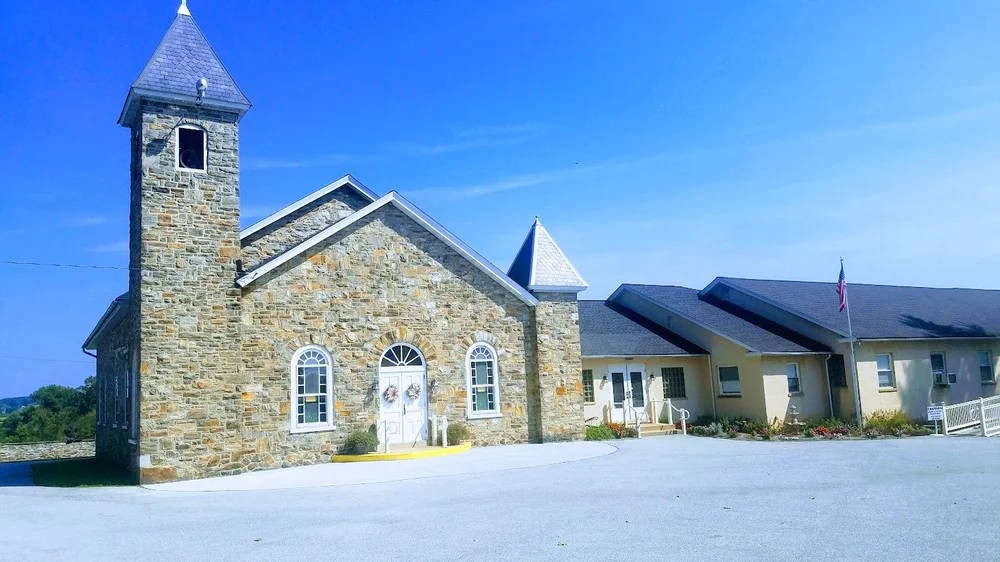
Unity Presbyterian was founded in the late 1700s, its first building a simple log meetinghouse near Beattie’s Ford. In 1801, trustees James Conner, Alexander Brevard, John Reid, and Joseph Graham were deeded land for a larger frame church. By 1833, Robert H. Burton donated the tract where the church still stands today — a site hallowed by generations of worshipers.
Ministers Who Shaped a Community
Unity’s ministers were men of unusual influence:
- Rev. Henry Pharr, nicknamed “the High Priest” for his imposing presence, was the church’s first regular minister.
- Patrick Sparrow, later the first professor of languages at Davidson College, introduced annual camp meetings at Unity. His revivals filled the churchyard with families camping in tents, cooking meals, and worshiping day and night.
- Rev. Dr. Robert H. Morrison, first president of Davidson College and father-in-law to Generals Stonewall Jackson and D.H. Hill, shepherded Unity for over forty years, guiding both its faith and its civic presence.
Camp Meetings and Community Life
Unity’s camp meetings became legendary. Families packed wagons with bread, smoked meat, and bedding, pitching tents beneath brush arbors for days of continuous preaching. Children played near the edges while elders debated scripture and neighbors rekindled friendships. These gatherings were as much about strengthening social bonds as they were about renewing spiritual fervor.
But Unity’s role went far beyond revival. It was also:
- a school, where children learned their letters and catechisms,
- a forum for civic decisions, where community leaders met to deliberate,
- and a moral compass, guiding life in a region that blended frontier hardship with industrial ambition.
By the 1830s and 1840s, Unity stood at its height — a thriving congregation where rows of carriages each Sunday reflected both the prosperity of the iron industry and the deep devotion of its people.
Unity in War and Memory
When the Civil War came, Unity’s congregation gave many of its sons to the cause. From its pews, young men joined the Beattie’s Ford Riflemen (Company K, 23rd NC Regiment). Many did not return, leaving gaps in families and pews alike. The losses of war scarred the congregation, yet the church remained a place of memory and resilience, carrying the stories of those who had fallen.
Unity’s neighborhood was once described as “a wonderland wherein has been exhibited progress, culture, and masterful force.” Indeed, it was more than a church — it was a cradle of leadership, producing governors, generals, educators, and ministers who shaped North Carolina.
💡 Did You Know?
Unity’s cemetery, enclosed by traditional stone walls, holds the resting places of some of the region’s most influential families: Davidson, Graham, Brevard, and Burton. These ironmasters and statesmen left their mark not only on Denver but on the history of the Carolinas.
Chapter 4: Life in the Unity Neighborhood
Unity Presbyterian was never just a church — it was the nucleus of an entire way of life. Around its sanctuary stretched farms, schools, homes, and businesses, forming a community that combined discipline, education, hospitality, and faith. To live in the Unity neighborhood was to live within a cultural rhythm shaped as much by the forge and the plow as by the pulpit.
Education and “Old Field Schools”
Children grew up in a world where learning was seen as both a duty and a privilege. The first schools were humble “old field schools” — one-room log cabins set on worn-out land. Inside, children sat on rough benches without backs, reciting lessons aloud while the schoolmaster drilled them in spelling, catechisms, and scripture.
By the early 1800s, ministers like Patrick Sparrow elevated education, running classical academies where boys learned Latin, Greek, and philosophy. Girls, too, were taught by private tutors or governesses, especially in families like the Brevards and Conners. Education was rigorous, often long hours from sunrise to sunset, but it produced generations of literate, thoughtful citizens who would later lead the state.
Women as Anchors of Faith and Family
Women in the Unity neighborhood were remembered for their strength, literacy, and benevolence. Far from being confined to domestic roles, they blended household responsibilities with charitable outreach. They spun cloth on flax wheels, wove fabric on looms, and managed large farms in their husbands’ absence.
When sickness or misfortune struck, Unity’s women were often the first to respond — riding horseback to nurse the ill, provide food, or extend charity across class lines. Their reputations as “keepers of the home and guardians of morality” made them the silent strength of the community.
Society, Hospitality, and the Wider World
Life in Unity was also deeply social. Weddings were occasions for entire families and neighbors to gather, with guests staying overnight on crowded pallets, sharing meals, music, and stories. Camp meetings doubled as spiritual revivals and family reunions, where worship by day gave way to fellowship by firelight at night.
Even prominent national figures were drawn to the neighborhood. Statesman John C. Calhoun once visited Major Henry Conner at Rock Springs, a reminder that this rural community carried influence far beyond the Catawba River.
Families like the Burtons and Conners became known for their open hospitality, entertaining governors, generals, and educators. Their homes were centers of refinement, blending frontier grit with a surprising level of sophistication.
💡 Did You Know?
Social life at Unity was so lively in the 1830s–40s that observers counted more than forty carriages lined up outside the church on Sundays. These carriages, often barouches and spring wagons, were symbols of prosperity — and proof that the iron industry had brought wealth and refinement to the Catawba Valley.
Chapter 5: War, Decline, and Resilience
The Civil War and Its Scars
When the Civil War broke out in 1861, the Unity community answered the call with patriotic fervor. From its pews marched the Beattie’s Ford Riflemen (Company K, 23rd NC Regiment), a company of young men who carried with them the faith of their church and the pride of their families. They fought in bloody campaigns across Virginia and beyond.
The cost was devastating. Many never returned home, and those who did bore wounds that would mark them for life. Families mourned sons, brothers, and fathers, and the war left gaps not only in households but also in the very pews of Unity Presbyterian. The churchyard became a place of sorrow and remembrance, where sermons often turned to grief and endurance.
The Decline of the Forges
Even as war raged, the region’s iron industry was already waning. For decades, furnaces like Vesuvius and Mt. Tirzah had supplied tools, plows, and weapons across the South. But after the 1850s, these charcoal-fueled operations could no longer compete with the massive coal-fired furnaces of Pennsylvania and beyond.
By the late 1800s, the glow of the furnaces that once lit the Catawba nights faded into memory. The great industrial era that had made Lincoln County North Carolina’s wealthiest and most populous county was gone.
A Shift Toward Agriculture
In the decades that followed, the community adapted. Cotton became the dominant cash crop, alongside subsistence farming of corn, wheat, and livestock. The fields, rather than the forges, sustained families. Denver settled into a quieter agricultural rhythm, no longer the booming industrial hub of earlier generations but still resilient, grounded in the land and the church.
The Steadfast Anchor of Unity
Through all this upheaval, Unity Presbyterian Church remained constant. It continued to serve as the anchor of spiritual and cultural life. Baptisms, weddings, funerals, and revivals carried on beneath its roof and among the graves of its cemetery. Even in decline, the community found strength in faith and tradition.
💡 Did You Know?
Nearby Machpelah Cemetery in Iron Station — established in 1785 — serves as the final resting place for many of the Brevard, Graham, and Davidson families. It is listed on the National Register of Historic Places and is a living monument to the iron industry’s legacy, preserving the memory of the leaders and laborers who once made Lincoln County North Carolina’s industrial heart.
Chapter 6: The Coming of Lake Norman and the Modern Era
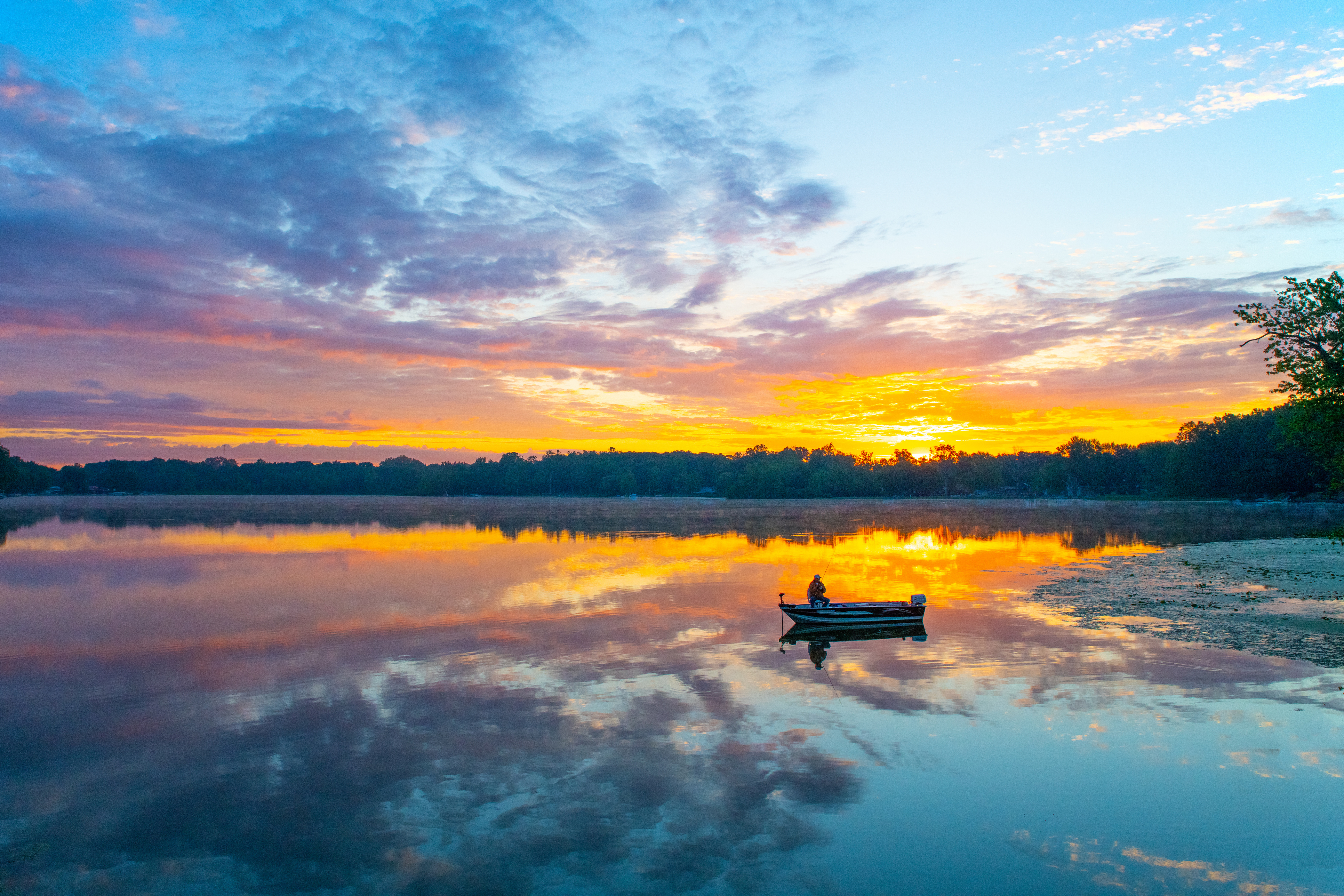
The 1960s brought a transformation unlike anything Denver had ever seen. When Duke Power built the Cowans Ford Dam across the Catawba River in 1963, the waters began to rise. Within months, farmland, homesteads, and even old roads disappeared beneath the floodplain. Out of that inundation was born Lake Norman, the largest man-made lake in North Carolina.
For families whose ancestors had farmed the river bottoms for generations, the change was bittersweet. Barns, fields, and even family graveyards were relocated or lost to the waters. But the lake also brought recreation, development, and new life. The still, deep waters became playgrounds for boaters and fishermen, while its shoreline attracted a wave of growth that reshaped Denver’s identity.
From Crossroads to Lakeside Community
Before Lake Norman, Denver was a quiet agricultural crossroads, known more for its history than its future. After the dam’s completion, however, Denver gradually evolved into a lakeside community tied to the expanding Charlotte metropolitan region.
- Newcomers arrived, drawn by the promise of lakeside living.
- Businesses flourished, from marinas and bait shops to restaurants and housing developments.
- Commuters settled, using Denver as a peaceful retreat while working in Charlotte, Mooresville, or Huntersville.
By the late 20th century, Denver had become part of the larger Lake Norman story — a blend of rural heritage and suburban growth.
Old Roots, New Growth
Despite the change, Denver never lost sight of its past. Unity Presbyterian Church still holds services on the land deeded in 1833. Family cemeteries still dot the countryside. Historic names like Brevard, Conner, and Graham are etched into stone, even as new neighborhoods rise nearby. Today, Denver is both old and new — a place where history and modernity stand side by side.
💡 Did You Know?
Just outside Denver stands Rock Springs Campground, one of the oldest continuous camp-meeting sites in the South. Since the early 1800s, families have gathered here every August for days of revival preaching and fellowship. The “tents” used for the camp are not canvas but rustic wooden cabins, many passed down through the same families for generations.
Family Profiles: The Founders of Denver’s Legacy
The Davidsons
Major John Davidson was both pioneer and blacksmith — a man who bridged the gap between soldier and settler. After serving in the Revolutionary War, he recognized the iron-rich soils of Lincoln County and smelted ore into tools that shaped the land. His handmade broad axe became a symbol of transformation, and his industrial vision set the stage for Denver’s rise. Davidson’s descendants carried his legacy forward: his grandson William A. Graham would later serve as Governor of North Carolina, U.S. Senator, and Secretary of the Navy. The Davidson family’s influence extended from forge fires to the halls of government.
The Grahams
General Joseph Graham, a Revolutionary War hero and ironmaster, cemented his legacy by marrying into the Davidson family. Known for his courage at the Battle of Charlotte and his role as an iron entrepreneur, he helped expand the region’s furnaces and forges. His son, William A. Graham, rose to prominence as one of the most respected statesmen of the 19th century, proof that the Graham name stood for both valor and leadership.
The Brevards
Captain Alexander Brevard ran the Mt. Tirzah Forge, one of Lincoln County’s most productive industrial sites. Marrying Davidson’s daughter, he tied the Brevards directly into the region’s most powerful network of families. Their descendants became judges, doctors, and educators, spreading the Brevard name across North Carolina history. The nearby town of Brevard, NC, honors this family’s legacy, linking their name to both industrial grit and educational excellence.
The Forneys
General Peter Forney, Davidson’s business partner, expanded the reach of the iron industry by establishing additional furnaces and forges. His sons carried the family tradition into politics, with members of the Forney line serving in Congress and helping shape state and national policy. The Forneys demonstrated how industrial wealth could open the doors to civic influence, binding Denver’s fate to the wider political world.
The Burtons
Robert and Alfred Burton, trained lawyers from Granville County, brought legal acumen and refinement to the Beattie’s Ford community. Their family intermarried with the Hokes, producing General Robert F. Hoke, one of the Confederacy’s youngest and most daring generals. The Burton family’s ties blended law, politics, and military leadership, strengthening the neighborhood’s reputation as a cradle of influence.
The Conners
The Conner brothers emigrated from Ireland and quickly established themselves as merchants at Beattie’s Ford. Their trade network helped supply the community with goods and linked it to regional markets. The most prominent, Major Henry Conner, became a respected politician who served more than 20 years in Congress. Though sometimes viewed as an aristocrat, he was equally remembered as a man of the people — the kind of figure who could mend harnesses on his porch while representing his district in Washington.
💡 Did You Know?
The intermarriage of these families created a powerful web of influence that extended well beyond Lincoln County. The Davidsons, Grahams, Brevards, Forneys, Burtons, and Conners were bound by blood as much as by shared enterprise. Their descendants filled roles as governors, generals, congressmen, ministers, and educators — making the Unity neighborhood one of the most influential communities in 19th-century North Carolina.
Conclusion
Denver’s story is not simply one of a town renamed for a railroad that never came. It is the story of a community that rose from the wilderness with an axe in hand and a forge at its heart. It is the story of ironmasters who smelted prosperity from the Catawba hills, preachers who stirred hearts beneath revival tents, and families who raised governors, generals, and educators from the pews of Unity Presbyterian.
From the humble days of Dry Pond to the bustling furnaces that made Lincoln County the most populous and wealthiest county in North Carolina, Denver’s legacy is one of ambition and achievement. From the sorrow of the Civil War to the resilience of farm life, from the flooding of ancestral lands to the dawn of Lake Norman, the community adapted — always carrying forward its spirit of perseverance.
As The Broad Axe and the Forge declared in 1897, the Unity neighborhood was truly “a wonderland wherein has been exhibited progress, culture and masterful force.” That description still rings true today.
Modern Denver may be a lakeside town where marinas, schools, and neighborhoods meet, but its roots remain deep in the red clay of the Catawba Valley. The echoes of axes, the glow of forges, the hymns from Unity’s pulpit, and the laughter of camp-meeting tents still whisper through its fields and waters.
Denver, NC, endures as a community forged in both faith and iron — a place where history is not just remembered, but lived.
👉 Adkins Law, PLLC — Located in Huntersville and serving the Lake Norman area.
At Adkins Law, PLLC in Huntersville, we know that family, community, and legacy are what truly endure. Just as Denver’s history was forged through resilience and faith, we help Lake Norman families navigate life’s most important challenges with strength and clarity.
Whether you need guidance in family law, custody, divorce, estate planning, or mediation, our firm is here to stand by your side. We live and work in this community — and we’re proud to help protect what matters most to our neighbors across Huntersville, Denver, Mooresville, Cornelius, Davidson, and the greater Lake Norman region.

Leave a Reply