

Introduction: Cornwallis in the Backcountry
By the winter of 1781, the American Revolution had dragged on for nearly six years. The southern theater, once quiet, had become the decisive front. Charleston had fallen. Savannah was in British hands. General Horatio Gates’s army had been shattered at Camden. For General Charles Cornwallis, commander of the British southern forces, it seemed the Carolinas lay open for conquest. Loyalist support, he was told, would swell his ranks as soon as his army pushed northward.
Yet Cornwallis soon discovered that the Carolina backcountry was not the tame ground he expected. In Mecklenburg County, and throughout the Catawba River Valley, resistance simmered like a pot about to boil over. Here, the Revolution was fought not only by Continental regulars but by local militia—farmers, hunters, and settlers determined to resist crown authority. Nowhere was this determination more vividly displayed than at Cowan’s Ford on February 1, 1781.
The Southern Strategy and Its Failures
When the war shifted south in 1780, British leaders believed they had devised a winning strategy. The Carolinas and Georgia were thought to contain a strong Loyalist base eager to rise in support of the crown. If the king’s forces could re-establish control in the South, they could then push northward, squeezing Washington’s Continental Army between two strongholds.
At first, the plan seemed to work. Charleston fell in May 1780, yielding thousands of American prisoners. British detachments roamed the countryside, setting up garrisons from the coast to the upcountry. Yet the further they pushed inland, the more they encountered fierce resistance from backcountry militia led by figures such as Francis Marion, Thomas Sumter, and Andrew Pickens. Battles at King’s Mountain (October 1780) and Cowpens (January 1781) demonstrated that the tide could turn against the empire even in its supposed stronghold.
Cornwallis’s frustration grew. He knew that unless he destroyed the remnants of Greene’s army and crushed militia resistance, the South could never be secured. His gamble was to pursue Greene and Morgan into North Carolina, relying on speed and shock to scatter their forces.
Geography and the Importance of the Fords
The Catawba River was no mere obstacle; it was a natural fortress. In winter, swollen by rains, it ran wide and treacherous. Ice-cold currents carried away men and horses alike. Yet armies had no choice but to cross at shallow points known as fords.
Cowan’s Ford was one such place, located where present-day Mecklenburg and Lincoln counties meet. Like Beattie’s Ford a few miles upriver, it was a long-used crossing point on the Great Wagon Road, a route that connected Pennsylvania to Georgia. Controlling Cowan’s Ford meant controlling access from Mecklenburg into the fertile Catawba Valley beyond.
Local militia understood this perfectly. Whoever held the ford could dictate Cornwallis’s next move.
William Lee Davidson: The Patriot Commander
The man who took responsibility for defending the fords was Brigadier General William Lee Davidson. Born in 1746 in Pennsylvania, Davidson came south with his Scotch-Irish family as a child. They settled in Rowan County, where Presbyterian values of faith, duty, and resistance to tyranny took deep root.
By the Revolution’s outbreak, Davidson was a respected planter, militia officer, and father. He entered the Continental Army as a major and rose steadily. He fought under General Griffith Rutherford against the Cherokee in 1776, served at Brandywine in 1777 where he was wounded, and returned to North Carolina to help organize resistance after the fall of Charleston.
Davidson’s character left an impression on all who knew him. Described as earnest, devout, and steady under pressure, he was precisely the kind of leader who could hold together a militia prone to wavering. His Presbyterian faith reinforced his resolve. One contemporary wrote that Davidson viewed the Revolution as not merely a political struggle but a moral duty ordained by God.
By late 1780, after the disaster at Camden, Nathanael Greene reorganized Patriot forces in the South. Recognizing Davidson’s leadership, Greene entrusted him with command of the western North Carolina militia. His assignment: delay Cornwallis long enough for Greene’s army to regroup and maneuver.
Cornwallis on the Move
The victory at Cowpens on January 17, 1781, electrified the Patriot cause. Daniel Morgan’s clever tactics destroyed a large portion of Tarleton’s feared British Legion, killing or capturing nearly 800 men. Cornwallis was furious. To restore momentum, he resolved to chase Morgan across the Carolinas and recapture the prisoners.
But pursuit required speed. Cornwallis made a brutal decision: to burn his army’s baggage wagons, destroying tents, food, and personal belongings. His men would march light, living off the land. It was a gamble that revealed both his determination and his desperation.
By late January, Cornwallis reached the western bank of the Catawba River, pushing deep into the backcountry that had earned the nickname “Hornet’s Nest of Rebellion” for its fierce Patriot resistance. His army numbered roughly 2,500—veterans hardened by campaigns from New York to Savannah. Opposing him on the eastern bank were scattered bands of militia, perhaps 800 in total, stretched thin across multiple fords.
Cornwallis knew the Patriots could not defend every crossing. His plan was to feint at Beattie’s Ford while making his main crossing at Cowan’s Ford.
The Night Before Battle
On January 31, 1781, both armies prepared for the coming clash. Cornwallis instructed Lieutenant Colonel James Webster to lead the main column to Cowan’s under cover of darkness and morning fog. Meanwhile, a diversionary force would create noise and confusion at Beattie’s Ford to draw Patriot attention.
Davidson, ever vigilant, rode among his men that night. He reassured nervous militia, arranged pickets along the bank, and spoke of duty and resolve. One account claims he told a fellow officer: “I will lay down my life on this spot before the enemy shall pass.”
The stage was set for a dawn confrontation.
The Battle at Dawn
At first light on February 1, 1781, Cornwallis’s column entered the frigid waters of Cowan’s Ford. Soldiers linked arms, muskets held aloft, horses snorting in the icy current. The river was chest-deep in places, swift and roaring from winter rains.
On the opposite bank, Davidson’s men opened fire. Muskets cracked, flashes of powder lit the mist, and shouts echoed across the water. British soldiers stumbled, some swept downstream and drowned, others struck by bullets before they reached the far shore.
Cornwallis himself is said to have urged his horse into the current, shouting encouragement. His determination drove his men forward despite heavy fire.
As the British neared the bank, Patriot resistance grew fierce. But in the chaos, tragedy struck: General Davidson, rallying his men near the water’s edge, was shot and killed. Some accounts say a British rifleman concealed in brush fired the fatal shot; others attribute it to a random musket ball. Whatever the cause, Davidson fell instantly.
His death threw the militia into confusion. Without their leader, many fired a final volley and withdrew into the woods. The British secured the bank, but not without cost.
Aftermath and Retreat
Davidson’s death was a grievous blow. He was beloved by his men, respected by peers, and regarded as a rising leader in North Carolina. His loss demoralized the militia, many of whom scattered after the fight.
Yet strategically, the skirmish achieved its purpose. Cornwallis had crossed the Catawba, but the delay allowed Greene to continue his retreat northward. Within days, Greene’s army crossed the Yadkin River and began the famous “Race to the Dan,” pulling Cornwallis ever deeper into hostile territory.
For Cornwallis, the cost of crossing the Catawba foreshadowed the struggles ahead. Supplies dwindled, loyalist support never materialized as promised, and the harsh Carolina winter sapped his men’s strength. Though victorious at Cowan’s Ford, Cornwallis found himself trapped in a war of attrition.
Legacy of Cowan’s Ford
Though small in scale, the battle carried immense symbolic weight. General Davidson was buried secretly by local patriots to prevent the British from desecrating his body. For decades, his grave was unmarked, its location known only to a few. In time, his memory was honored in the naming of Davidson College (1837) and Davidson County.
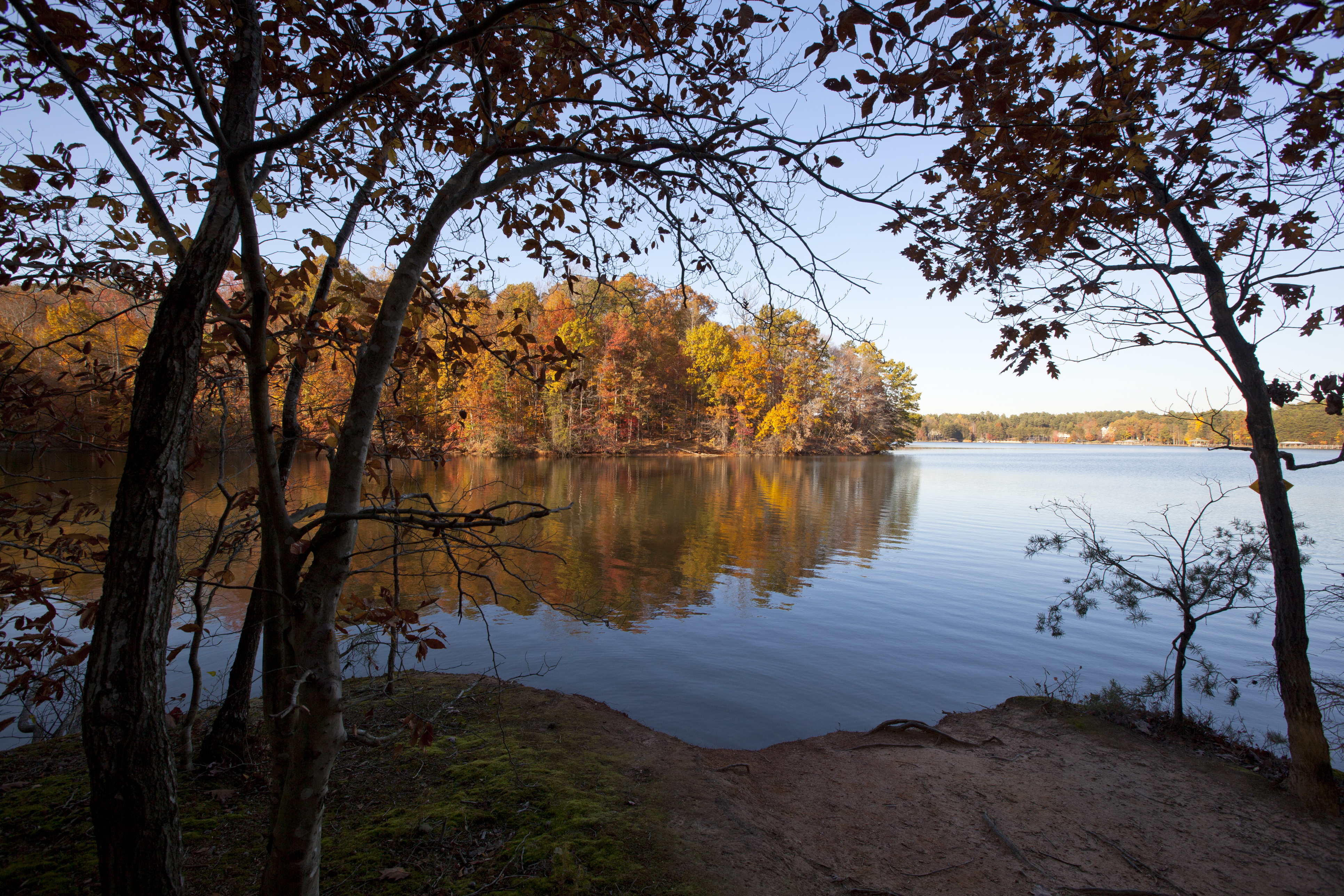
Cowan’s Ford itself disappeared beneath the waters of Lake Norman in the 1960s, when Duke Power built the Cowan’s Ford Dam and Hydroelectric Station. The battlefield today lies submerged, transformed into a placid reservoir. Yet monuments and historical markers preserve the memory.
A Local Struggle in a Global War
The Revolution in the South was as much a civil war as a clash of empires. Families were divided, neighbors took opposite sides, and violence reached into every community. The fight at Cowan’s Ford was one more episode in this broader story—a local battle with global consequences.
Cornwallis’s march northward ultimately led him to Guilford Courthouse, where he won a costly tactical victory but lost so many men that his campaign was fatally weakened. Months later, at Yorktown, his surrender to Washington sealed the fate of the British cause.
In that chain of events, Cowan’s Ford stands as a crucial link. By buying Greene precious time, by demonstrating local resistance, and by sacrificing their general, the men of Mecklenburg contributed directly to the war’s outcome.
Remembering Sacrifice
Today, the story of Cowan’s Ford lives on in historical commemorations, school lessons, and local lore. Historical societies in Mecklenburg and Lincoln counties preserve artifacts, while heritage groups mark Davidson’s death each February.
For residents of the Lake Norman region, the battle offers a reminder that the peaceful waters conceal a violent past. Beneath the lake’s surface lies the ford where redcoats and militia clashed, where General Davidson fell, and where the course of the Revolution tilted, ever so slightly, toward independence.
Conclusion
The Battle at Cowan’s Ford was not a grand clash of armies but a small, sharp encounter in the Carolina backcountry. Yet it encapsulates the Revolution’s essence: determination, sacrifice, and the will of ordinary people to resist. In the icy waters of the Catawba, a handful of militia delayed a mighty army and gave their general as a martyr to the cause.
Cornwallis crossed, but he could not conquer.
Adkins Law, PLLC – Trusted Counsel in Huntersville
Adkins Law, PLLC is a Huntersville-based law firm committed to helping families and individuals through life’s most important legal matters. Led by attorney Christopher Adkins, our practice focuses on family law, estate planning, and mediation. We take pride in delivering clear advice, personal attention, and proven results to clients throughout Huntersville and the Lake Norman region. From divorce and custody to wills, trusts, and mediation, Adkins Law is here to guide you and protect what matters most.

Leave a Reply