
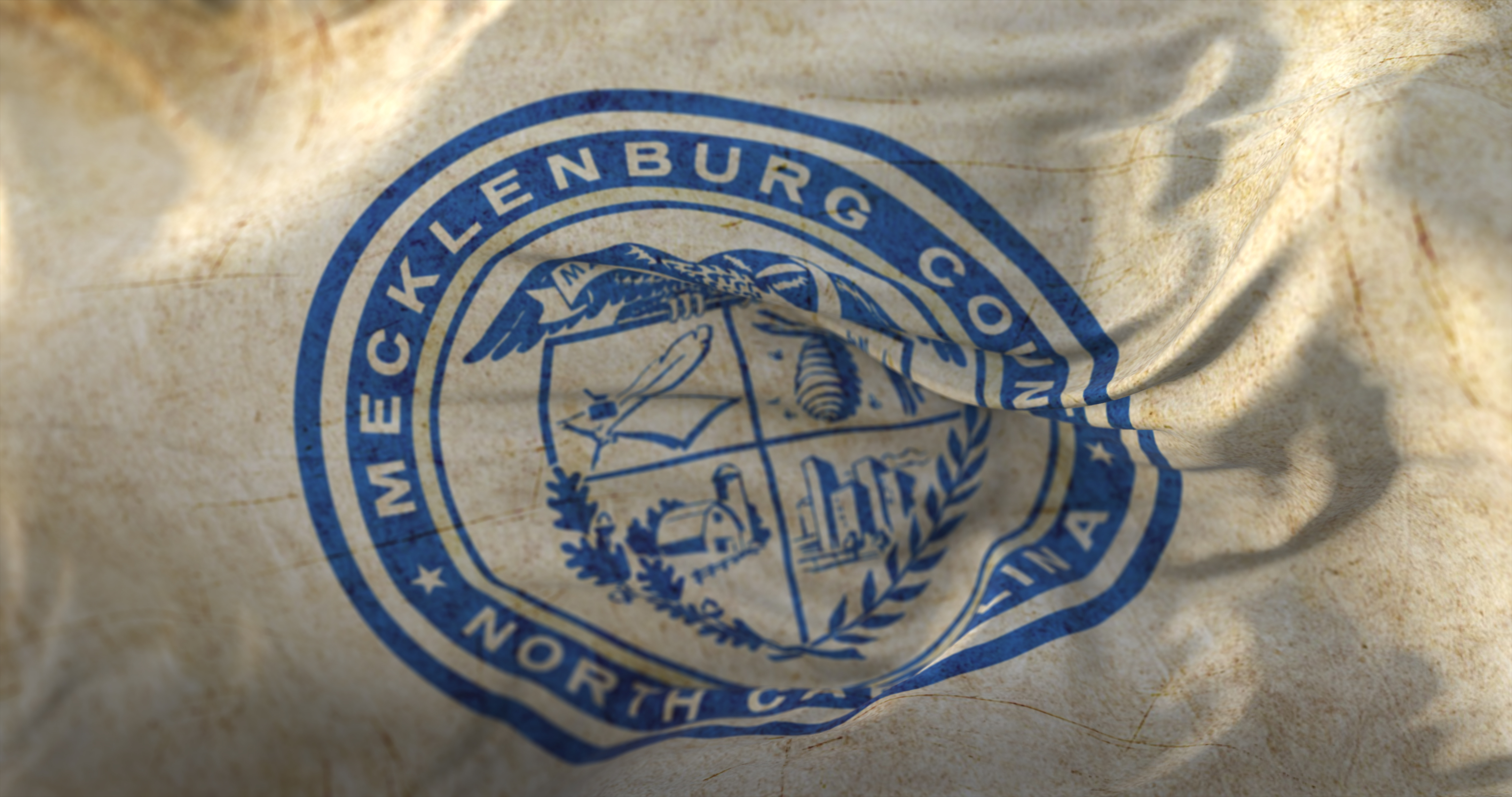

Introduction: A Hornet’s Nest of Rebellion
In the autumn of 1780, the southern colonies seemed ripe for the plucking. British General Charles Cornwallis, his scarlet-coated veterans still flushed from the rout of Horatio Gates’s Continentals at Camden, marched northward into the Carolina backcountry. Camden had been a debacle of such magnitude that survivors fled for hundreds of miles, scattering like leaves before a gale. Charleston, the crown jewel of the South, lay firmly beneath the Union Jack. Loyalist militia, so he was told, were swelling to the king’s cause. To Cornwallis, an aristocrat seasoned in the wars of empire, the road into North Carolina promised obedience, order, and supplies. It seemed only a matter of time before the Carolinas would be brought securely back into the royal fold.
What he found instead was Mecklenburg County.
Charlotte, at the time, was barely more than a crossroads hamlet, a single courthouse perched where two ancient trading paths crossed — one running north–south, the other east–west. The surrounding countryside was a patchwork of red clay fields, pine woods, cabins of squared logs, and meetinghouses of stern Presbyterians. Cornwallis might have expected to billet his troops, draw in fodder, and recruit Loyalists. Within days, however, he realized he had stumbled into a land alive with resistance. Foraging parties sent to collect grain were fired upon from behind fence rails. Cavalry patrols were ambushed along the sandy roads. Rifle fire cracked from the edges of cornfields and then melted into the thickets. The land itself seemed to sting. In anger and exasperation, Cornwallis branded Charlotte “a damned hornet’s nest of rebellion.” He meant it as insult; the people of Mecklenburg took it as a coronation.
Cornwallis’s epithet was no exaggeration. The men and women of Mecklenburg had been steeled by generations of struggle. Many were Scotch-Irish, driven from Ulster to Pennsylvania and then down the Great Wagon Road, carrying with them a hard Calvinist faith that thundered against tyranny from pulpits as surely as it condemned sin. Names like Davidson, Graham, and Alexander carried echoes of clans and castles left behind in Scotland; names like Polk, Sherrill, and Cowan rooted families to farms, fords, and taverns along the Catawba. Their women bore the same iron streak — keeping farms alive while husbands marched, ferrying intelligence, and in some cases taking up muskets themselves. These were not docile subjects of empire. They were, in their marrow, a people schooled in defiance.
To the eyes of Cornwallis’s Guards and grenadiers, the Mecklenburg militia looked like rustic hunters in coarse homespun and leather leggings. But appearances deceived. In the field, they became something new. They fought from courthouse steps and stone walls, from creeksides and barnyards. Their long-barreled rifles — heir to the Pennsylvania frontier tradition — outranged the British musket, and their mobility allowed them to sting and vanish before the bayonet could strike back. They refused open battle unless the ground favored them. To Cornwallis’s columns it must have seemed that every barn sheltered a rebel and every thicket hid a sharpshooter.
The sites of their defiance were plain places, known more for plow and pew than for bloodshed: Wahab’s Plantation, McIntyre’s Farm, Torrence’s Tavern. Yet each became etched into Revolutionary memory. At Wahab’s, William R. Davie’s cavalry slashed through a Loyalist encampment, scattering men who had thought themselves safe. At McIntyre’s, a mere handful of farmers poured fire into a British foraging column hundreds strong. In the chaos, overturned beehives unleashed angry swarms, and the clash passed into lore as the “Battle of the Bees.” At Torrence’s Tavern, Banastre Tarleton’s feared dragoons skirmished in sheets of rain with militiamen who refused to let Cornwallis rest. None of these encounters was large by the scale of armies, but each cost the British men, time, and — most corrosive of all — confidence.
Hovering over these local fights were the great battles of the Southern Campaign. At King’s Mountain, frontiersmen from beyond the Blue Ridge crushed Major Patrick Ferguson and his Loyalist corps, collapsing Cornwallis’s flank. At Cowpens, Daniel Morgan destroyed Tarleton’s Legion in a tactical masterpiece that sent Cornwallis into desperate pursuit, burning his own baggage in reckless haste. And at Guilford Courthouse, Cornwallis would technically claim the field, but his army bled so grievously that he confessed another such “victory” would ruin him.
Threading through all these moments was Mecklenburg’s defiance. At Cowan’s Ford on the Catawba, Brigadier General William Lee Davidson mustered barely 800 militia to oppose Cornwallis’s 5,000. In the gray dawn of February 1, 1781, as Guards splashed across the swollen river, Davidson rallied his men until a musket ball pierced his chest. He fell where he stood, and his body was carried away under cover of night to be buried at Hopewell Church. His death, a calamity to his neighbors, became a martyr’s torch. His comrades William Richardson Davie and Joseph Graham pressed on, orchestrating raids and ambushes that transformed Cornwallis’s march north into something more like retreat.
From these months a legacy took root. The hornet — small, fierce, armed with a sting disproportionate to its size — became the emblem of Mecklenburg’s spirit. What Cornwallis had spat in scorn, the county emblazoned with pride. Monuments rose at Hopewell Church and McIntyre’s Farm. Historians, from Joseph Graham to John H. Wheeler, retold the tales of skirmishes and sacrifices. In the 19th century, Charlotte boosters wove the Hornet’s Nest identity into speeches, parades, and the seals of city government. In the 20th, pageants dramatized the May 20 Declaration and the “Battle of the Bees” before thousands. In the 21st, hornets fly again on the uniforms of professional athletes, and “Buzz City” proclaims to the world what Cornwallis once muttered in frustration: this place stings.
Thus the story of Charlotte in the Revolution is not merely the tale of a British general’s exasperated insult. It is the saga of a frontier people who transformed isolation into independence, resistance into reputation, and reputation into identity. Blood shed on courthouse squares, in farmyards, and on riverbanks in 1780 and 1781 seeded a civic character that endures. Charlotte — a city risen from a courthouse village — still answers, with pride, to the unintended christening Cornwallis gave it: the Hornet’s Nest.
Colonial Mecklenburg: A Soil of Defiance
Long before Cornwallis cursed Charlotte as a “hornet’s nest,” the land itself was shaping a people inclined to sting. The Catawba River valley and the uplands of what would become Mecklenburg County were settled in the mid-eighteenth century by waves of Scotch-Irish Presbyterians coming down the Great Wagon Road from Pennsylvania and Virginia. They came with little: a few tools, a Bible, seeds tucked into pockets. What they carried in abundance was a fierce independence, a Calvinist conviction that conscience stood above crown, and a collective memory of struggle — of clans broken in Scotland, of persecution in Ulster, of migration and hardship.
Names that Drew the Map
The family names that arrived with those wagons soon became the very geography of the county.
- Spratt. Thomas Spratt was the first permanent settler, bringing his daughter Susannah with him into the Sugar Creek wilderness. Their cabin was not merely a home but a signal that settlement could take root. Susannah later married into the Polk family, intertwining two lines that shaped the county’s destiny.
- Polk. From this line would come men like Thomas Polk, signer of the Mecklenburg Resolves and Revolutionary leader, and decades later, James K. Polk, President of the United States. The Polk family’s land straddled the ill-defined Carolina border, a reminder that political lines were often as blurred as the loyalties they inspired.
- Alexander. The Alexanders spread so widely that later historians quipped Mecklenburg could be called “Alexander County.” They filled pulpits, militia rosters, and courthouse benches, producing leaders at every crisis point.
- Davidson. The Davidsons, children of Scotch-Irish immigrants, gave the Revolution Brigadier General William Lee Davidson. His death at Cowan’s Ford in 1781 made him a martyr of the backcountry. Later, his name would live on in Davidson College, in Davidson County, and in the town of Davidson itself.
- Brevard. From the Brevards came Ephraim Brevard, physician and intellectual, remembered as the drafter of the Mecklenburg Resolves — the blueprint of county self-government after royal authority collapsed.
These were not just genealogies; they were a vocabulary of defiance. The very names of Mecklenburg settlers became battle cries, landmarks, and institutions.
The Weight of Names
Even the names themselves carried symbolic meaning. “Henry” came from the Old German Heimirich — “home ruler” — a title lived out by Patrick Henry’s thunder for liberty and echoed in Davidson’s defense of his neighbors. “Cowan,” a Scottish occupational name for an unlicensed mason, became the label for a ford where un-guilded, ordinary men stood their ground against Cornwallis’s Guards. “Sherrill,” from Norman roots meaning “a bright nook of land,” lent itself to another ford where militia gathered. These etymologies weren’t lost on the Scotch-Irish: names were history, and history gave weight to defiance.
The Crucible of Frontier Life
Life in Mecklenburg was a crucible. The wilderness was demanding and unforgiving. Families hacked fields from pine forest, notched logs into cabins, and endured hunger when crops failed. Sabbath gatherings at rough-hewn Presbyterian meetinghouses anchored the week. Ministers like Alexander Craighead thundered against sin, corruption, and the pretensions of tyrants with equal force. In such sermons, liberty was preached as a divine right.
Suspicion of distant authority grew naturally. Colonial officials in New Bern or Williamsburg seemed remote, self-serving, and corrupt. Court fees were high, taxes unpredictable, and sheriffs often predatory. To men who had crossed oceans for freedom, this felt like betrayal. When overreach came close, Mecklenburg answered with fire.
The Black Boys of 1771
In the spring of 1771, nine young men near Rocky River blackened their faces with soot, intercepted wagons carrying powder and arms to Governor William Tryon’s troops, and set the cargo ablaze. These “Mecklenburg Black Boys” acted four years before Lexington and Concord. Their bonfire lit one of the earliest sparks of open armed resistance in the colonies. Local tradition long celebrated them as proof that Mecklenburg’s independence did not begin in 1775, but earlier still.
Regulators and Alamance
That same year, the wider Regulator Movement swept the Piedmont. Farmers, weary of corrupt sheriffs and dishonest judges, banded together under the slogan of fair taxation and honest courts. Mecklenburgers joined them, riding east to stand with their neighbors. The Battle of Alamance (May 16, 1771) ended in blood: Tryon’s artillery cut down farmer ranks, and afterward several Regulators were hanged. Mecklenburg men who returned carried grim lessons — the Crown would use cannon and gallows against freeholders. The revolt was crushed, but its memory hardened resolve.
Liberty in Learning
Resistance even marked education. In 1771, Presbyterian leaders in Charlotte secured a charter for Queens College, the first institution of higher learning south of Virginia. They named it for Queen Charlotte of Mecklenburg-Strelitz, wife of George III, hoping royal flattery would protect it. Instead, the king refused ratification. A Presbyterian school in the backcountry smacked too much of independence. Undaunted, the locals reopened it as Liberty Hall Academy. The name was itself a declaration: liberty, not monarchy, would shape their youth. Students trained there became Continental officers. In 1780, Cornwallis used the building as a hospital and buried his dead in its yard — an irony seared into memory.
Today, the legacy of Queens College lives on in Queens University of Charlotte, a modern institution rooted in that early spirit of defiance. The story resonates across the Piedmont, from Charlotte to Statesville, where Presbyterian heritage and Revolutionary resolve similarly shaped civic life, education, and community identity.
May 1775: Declarations
By May 1775, as news of bloodshed at Lexington and Concord reached the Catawba, Mecklenburg was ready. Local leaders assembled at Charlotte’s courthouse. Out of their deliberations came words that still echo. According to tradition, on May 20 they declared themselves free and independent of Britain — over a year before Jefferson’s famous draft. Eleven days later, on May 31, the Mecklenburg Resolves were adopted: royal commissions nullified, courts and militia reorganized, and self-rule asserted. Whether or not one accepts the May 20 “Mecklenburg Declaration” as literal history, the May 31 Resolves survive in ink. They are stark evidence that Mecklenburg was already living as though independence had been achieved.
Borders and Identity
Even the soil beneath their feet carried ambiguity. The Waxhaws settlement straddled the ill-surveyed line between the Carolinas. Families like the Polks, Spratts, and Jacksons paid taxes to whichever collector appeared. Andrew Jackson, born in 1767, embodied that uncertainty. Both North and South Carolina later claimed him. Jackson himself admitted he never knew on which side of the line he was born. For settlers, such boundaries meant little. Loyalty was not to crown or colony but to kin, church, and community.
Primed for Defiance
Thus, when Cornwallis entered Charlotte in 1780, he did not find an ordinary county but one already steeped in defiance. Its youth had burned powder wagons in protest. Its farmers had marched with Regulators and seen royal cannon fire upon neighbors. Its ministers had preached liberty from pulpits. Its students had studied beneath the banner of Liberty Hall. Its leaders had declared independence before most of America dared whisper the word.
Mecklenburg was not simply another jurisdiction drawn on a royal map. It was a community whose names were etched into rebellion, whose borders were blurred but whose identity was fierce, and whose memory of defiance had hardened into creed. No wonder Cornwallis, when he tried to plant authority here, was met not with obedience but with buzzing resistance. The soil had been seasoned; the hornets already stirred.
The Revolution Ignites: Mecklenburg’s Early Battles
The Battle of Charlotte (September 26, 1780)
Charlotte in 1780 was a courthouse village of a few dozen buildings at the crossroads of two ancient trading paths. For Cornwallis, it was simply a stopover — a convenient place to quarter his men, draw supplies, and regroup after his bruising campaign in South Carolina. For the locals, it was home turf, defended as fiercely as if it were London itself.
William Richardson Davie, fiery and resourceful, understood both the symbolism and the tactical value of Charlotte. With only about 150 militia and dragoons, he resolved to make Cornwallis pay dearly for his entrance. Davie placed his men around the courthouse square at Trade and Tryon Streets. Some crouched behind stone walls, others in nearby buildings, their rifles leveled across windowsills.
When the advance guard of Cornwallis’s army clattered into town — cavalry under the brash Lieutenant Colonel George Hanger, Tarleton’s second-in-command — Davie’s men sprang their trap. A thunder of musket fire rolled down the streets. Horses screamed, British cavalry toppled, and Hanger himself fell, wounded in the leg. Humiliated, he later blamed everything from poor reconnaissance to bad luck, but Mecklenburg tradition relished the memory: George Hanger, aristocrat and cavalry officer, humbled by Carolina farmers.
Cornwallis himself soon arrived with the main body. His red ranks pushed forward, cannons booming into the town. Outnumbered ten to one, Davie’s men slipped away northward, their stand complete. Casualties were light in numbers but heavy in meaning. Cornwallis had taken the square, but he had taken it at cost — and with stings to his pride that cut deeper than bullets.
It was after this frustration that Cornwallis coined the phrase that would echo forever: “a damned hornet’s nest of rebellion.” He meant it as contempt. Charlotte embraced it as identity.
Wahab’s Plantation (September 21, 1780)
A few days before the courthouse fight, Davie had already shown what backcountry militia could do. At Captain James A. Walkup’s (Wahab’s) plantation near the Catawba River, Loyalists and Tarleton’s Legion had set up camp. Loyalists were confident — after all, Cornwallis’s main army was close, and they outnumbered any small Patriot force.
At dawn on September 21, Davie led about 150 men in a surprise attack. Guided by Walkup himself, who wanted his farm cleansed of Tory presence, Davie’s cavalry swept in with sabers flashing. Muskets cracked from behind fences; British Legion men fell from their saddles. Loyalists tried to rally but were cut down amid their own tents.
By the time the smoke cleared, fifteen Loyalists were dead, forty wounded, and the camp scattered. Davie’s men lost only one. The attack was brief, sharp, and surgical — exactly the kind of sting that gave the militia its reputation.
The psychological effect was greater than the casualties. Loyalists realized they could not sleep easy even in supposedly friendly territory. Cornwallis learned that Davie was bold enough to strike within sight of his army. And Mecklenburg gained a legend: Wahab’s Plantation, where farmers and dragoons sent Tarleton’s men reeling.
McIntyre’s Farm: The Battle of the Bees (October 3, 1780)
If Wahab’s humiliated the British and Charlotte stung Cornwallis’s pride, McIntyre’s Farm made him question his campaign altogether. Cornwallis, desperate for supplies, dispatched Major John Doyle with 450 infantry, 60 cavalry, and 40 wagons to forage north of Charlotte. They arrived at McIntyre’s farm on Beatties Ford Road, a modest holding of a Patriot family.
Waiting for them were just 14 militia under Captain James Thompson. Fourteen men — against hundreds. But Thompson knew the ground, and he knew the spirit of his neighbors. Concealed behind fences and trees, they opened fire as the British scattered through barns and fields. One officer fell laughing at the thought of being killed by such a small party; a bullet silenced his laughter.
As musketry roared, British soldiers overturned barrels and in their panic knocked over several beehives. Angry swarms engulfed men and animals alike. Horses reared, soldiers dropped muskets to swat stingers, and the ambush turned to chaos. Farmers from nearby cabins joined in. Wagon horses were shot, blocking the road. Doyle’s men retreated in disorder, abandoning supplies.
The British lost eight dead, twelve wounded — but far more in morale. Patriots suffered no recorded casualties. Survivors later swore that “every bush along the road concealed a rebel.”
The story of bees became folklore, a tale retold in Mecklenburg for generations. The farmhouse, still scarred by musket holes, stood until 1941. Today monuments mark the spot, bearing the hornet’s nest emblem — proof that the legend lives on.
Torrence’s Tavern (February 1, 1781)
The last of Mecklenburg’s early clashes came months later, after the bloody morning at Cowan’s Ford where General William Lee Davidson fell. As Cornwallis pushed forward, Banastre Tarleton led his cavalry toward Torrence’s Tavern on Beatties Ford Road. There, militia who had fled the ford regrouped, weary and soaked by rain.
Tarleton’s Legion, famed for speed and ruthlessness, struck like lightning. Powder was wet; many Patriots could not fire. The clash devolved into saber against pike, bayonet against club. Tarleton scattered the militia, inflicting heavy losses and burning the tavern. It was a brutal reminder that while Mecklenburg could sting, the British still carried the sting of their own.
Yet even in defeat, the militia’s resistance delayed Cornwallis, harassed his columns, and forced him to bleed energy on small fights. Every day spent in Mecklenburg was a day Greene’s Continentals gained to regroup further north.
The Cumulative Effect
Wahab’s. Charlotte. McIntyre’s. Torrence’s. Individually, they were skirmishes. Collectively, they were a campaign. Each fight denied Cornwallis food, sapped his men, and emboldened Patriots. Each ambush spread fear among Loyalists and anger among redcoats. Each name became shorthand for resistance.
By spring 1781, Cornwallis was learning the lesson every occupier learns: you can seize towns, but you cannot hold ground when every bush hides a rifle. Mecklenburg had proved itself exactly what Cornwallis called it — a hornet’s nest, buzzing, stinging, and unyielding.
Kings Mountain: Turning Point in the Backcountry
The summer of 1780 marked the high-water mark of Britain’s southern campaign. Charleston had fallen in May, delivering thousands of prisoners and the South’s greatest port to the Crown. Savannah had long been secure. In August, at Camden, General Horatio Gates’s proud Continental army had disintegrated under Cornwallis’s bayonets, its militiamen fleeing in panic, its Continentals cut down in disciplined volleys. From London to Charleston, the British believed the rebellion in the South had been broken. Loyalist militia were mustering in ever greater numbers, and with the king’s troops striding confidently through the Carolina countryside, Cornwallis thought the time ripe to extend his conquest northward into North Carolina and eventually Virginia.
Patrick Ferguson and His Threat
To secure his western flank, Cornwallis relied on Major Patrick Ferguson, a Scottish-born officer of uncommon energy. Ferguson had gained a reputation as an innovator, famed for his breech-loading rifle — one of the first of its kind — and for his attempts to adapt British drill to the realities of frontier fighting. By the late summer of 1780, Ferguson commanded over 1,000 Loyalist militia, camped in the Carolina backcountry, poised as both a deterrent and a spear.
But Ferguson’s confidence became his undoing. In September, he sent a chilling message across the Blue Ridge to the rugged frontier communities of what is now Tennessee, warning that unless they submitted to the Crown, he would march into their valleys, “hang their leaders, and lay waste their country with fire and sword.” To men who had carved farms out of wilderness and buried kin in hard soil, it was more than a threat — it was a call to arms.
The Overmountain Men
The response was swift and furious. From the valleys of Virginia, the Holston and Watauga settlements of Tennessee, and the high ridges of western North Carolina, riflemen began to gather. These were not regular soldiers; they were farmers and hunters in homespun and buckskins, armed with long rifles that could drop a man at 200 yards. Known to history as the “Overmountain Men,” they assembled in late September at Sycamore Shoals on the Watauga River.
Before they departed, ministers prayed over them and mothers pressed their sons forward, knowing many might not return. Then they set out across the Blue Ridge — a force of roughly 900, hardened by frontier life, determined to cut Ferguson down before he could carry out his threat. Their march was a feat in itself: rain, mud, and the rocky ridges of the Appalachians tested men and beasts alike. Yet within days they crossed into the piedmont, joined by North Carolina militia under William Campbell, Isaac Shelby, and John Sevier.
Kings Mountain
On October 7, 1780, they found Ferguson’s corps encamped at Kings Mountain, a rocky ridge just over the South Carolina line. The ridge was narrow, heavily wooded, and steep — “like a hog’s back,” one participant recalled. Ferguson, confident in his position and the loyalty of his men, had not entrenched. His Loyalists occupied the crest; the Patriots surrounded the slopes.
The battle began with the crack of rifles from the trees. Ferguson’s men charged down with bayonets, scattering the riflemen temporarily. But each time the Loyalists surged, the Overmountain Men slipped back into cover, re-formed, and poured accurate fire into their flanks. Ferguson blew his silver whistle to rally his troops, riding up and down the line in a checkered hunting shirt, saber flashing. Three times the Loyalists charged, and three times they were driven back by relentless rifle fire.
At last Ferguson himself was struck — one, some said multiple, rifle balls tearing into him. He toppled from his saddle, one foot caught in a stirrup, and was dragged along the rocky ridge before his lifeless body tumbled free. Leaderless and surrounded, the Loyalists’ will collapsed. White flags began to appear. By late afternoon, the fight was over.
Aftermath
The cost to Ferguson’s corps was catastrophic. Nearly 300 Loyalists lay dead, 163 wounded, and over 600 taken prisoner. The Patriot losses were a fraction: 28 killed, 62 wounded. An entire British-led force had been annihilated in less than an hour on a wooded ridge in the backcountry.
But the numbers alone do not tell the full story. Kings Mountain shattered the myth of British invincibility that had loomed so large after Camden. It silenced Loyalist recruitment in the western Carolinas; men who had hesitated to pick sides now saw the king’s cause as mortal. Cornwallis, stunned by the news, halted his advance into North Carolina and fell back toward Winnsboro, South Carolina, to regroup.
The psychological impact was immense. Thomas Jefferson would later write that Kings Mountain was “the joyful annunciation of that turn of the tide of success which terminated the Revolutionary War with the seal of our independence.” To the Overmountain Men, it was proof that riflemen of the frontier could destroy a British-led force. To Cornwallis, it was a warning that the Carolinas were not subdued but combustible.
Meaning for Mecklenburg
For Mecklenburg and its neighbors, Kings Mountain was vindication. This was the backcountry rising to defend itself, just as Mecklenburg had declared independence in 1775, burned powder at Rocky River in 1771, and turned Charlotte’s streets into ambushes in September. Now the ridges themselves seemed to echo the county’s creed: ordinary farmers could bring down the empire’s finest.
Kings Mountain set in motion a chain of events: Daniel Morgan’s triumph at Cowpens in January, William Lee Davidson’s stand and death at Cowan’s Ford in February, and Greene’s hard-fought stand at Guilford Courthouse in March. The momentum shifted, and the Southern Campaign — once Britain’s brightest hope — began to unravel.
From Camden’s disaster to Kings Mountain’s triumph, the tide had turned. The backcountry — fierce, stubborn, armed with creed and rifle — had announced itself as a power to be reckoned with. Cornwallis, retreating in shock, would never forget it.
Cowpens to Cowan’s Ford: The Race to the Dan
Cowpens: Morgan’s Masterstroke
On the icy dawn of January 17, 1781, the frost-covered pasture known as the Cowpens — a cattle-grazing ground in the South Carolina backcountry — became the stage for one of the most brilliant tactical victories of the Revolutionary War. Daniel Morgan, grizzled veteran of Quebec and Saratoga, commanded roughly 1,000 men. His little army was a patchwork quilt of the Revolution itself: hard-bitten Continentals from Maryland and Delaware in blue and buff, militia from the Carolinas and Georgia in homespun, and lean frontier riflemen in hunting shirts who carried the deadly long rifles of the Appalachians.
Bearing down on them was Lieutenant Colonel Banastre Tarleton, Cornwallis’s notorious “Green Dragoon.” Tarleton embodied both daring and brutality, the cavalryman whose very name evoked fire and sabre. With 1,100 troops at his back — the red-coated regulars of the 7th Regiment, the proud Highlanders of the 71st, artillery pieces, and his fearsome British Legion cavalry — Tarleton was convinced he would scatter Morgan’s force as easily as Camden had broken Gates’s army months earlier.
Morgan understood otherwise. He knew the militia’s limits — unsteady in prolonged bayonet charges, prone to break under pressure — but he also knew Tarleton’s nature. Reckless, headlong, and hungry for glory, Tarleton could be baited into a trap. So Morgan conceived a plan as unorthodox as it was brilliant: he would turn the militia’s weakness into the bait, and Tarleton’s rashness into the snare.
The first line of militia would fire two deliberate volleys, then fall back in apparent disorder. Tarleton, mistaking this for panic, would rush forward. Beyond them, on higher ground, stood the core of Morgan’s force: Continental regulars under the cool-headed John Eager Howard, and to the rear, cavalry under William Washington — cousin of the commander-in-chief — waiting to thunder in at the decisive moment.
The battle unfolded exactly as Morgan had foreseen. The militia loosed their volleys, felling scores of redcoats, then retreated in controlled withdrawal. Tarleton, certain victory was within his grasp, drove his men forward with unrelenting fury. But when his line crested the rise, they met the disciplined fire of Howard’s Continentals at point-blank range. Musket volleys tore through their ranks. Confusion spread. And at that instant, William Washington’s cavalry charged from the flank, sabres flashing, while riflemen swarmed from the wings.
What followed was not merely a rout — it was annihilation. British formations collapsed in on themselves. Soldiers threw down their arms or fled. Tarleton himself barely escaped, his horse shot beneath him, his sword marked by a personal clash with Washington in the melee.
By the time the smoke cleared, the scale of the triumph was staggering: over 100 British dead, 229 wounded, and more than 700 captured — nearly Tarleton’s entire command. Patriot casualties were scarcely 70. In less than an hour, Cornwallis’s strike force had been destroyed.
Cowpens was not simply a victory; it was a masterclass in tactics, a battle studied centuries later in military academies worldwide. In a single winter morning, Daniel Morgan transformed a patchwork force into an instrument of precision and dealt Cornwallis a blow from which his southern campaign would never recover.
Cornwallis Burns His Baggage
When the stunning news of Cowpens reached Lord Cornwallis at his camp on Turkey Creek, it struck like a cannon blast. An entire wing of his army — Tarleton’s Legion and its supporting infantry — had been shattered in a single morning. More than 700 of His Majesty’s soldiers were now captives in Morgan’s hands, marching northward through the Carolina backcountry. The loss was not just of men, but of reputation, confidence, and momentum. Cornwallis, a commander of pride and urgency, knew he could not let such a blow stand unanswered.
He resolved to pursue at once. Yet pursuit demanded speed, and speed was precisely what his army lacked. Burdened with long baggage trains, wagons piled high with tents, provisions, and officers’ effects, his redcoats plodded along like beasts under harness. Morgan’s ragtag force — lighter, hungrier, more mobile — would surely slip away across the Catawba before the British could come within striking distance.
Cornwallis made a decision as ruthless as it was extraordinary. He ordered the baggage destroyed. Soldiers watched in stunned silence as their wagons were rolled into heaps, barrels of food split open, tents and clothing dragged out, and even officers’ treasured trunks cast upon the pyres. Flames rose into the winter sky, carrying with them the comforts of an army — spare uniforms, blankets, shoes, and stores of rum. Men who had endured years of campaigning saw their last possessions consumed in fire.
The sacrifice was not merely practical; it was psychological. Cornwallis was telling his army, and the world, that nothing mattered now but speed and battle. They would march stripped to the bone — half-clothed, ill-fed, trudging through the mire of a Carolina winter — but they would march fast. His men set off with grim determination, their red coats ragged, their rations meager, yet their commander’s urgency spurred them on.
Thus began what history would call the “Race to the Dan.” Nathanael Greene, now commanding the southern Continental army, grasped the stakes instantly. Morgan, burdened with hundreds of British prisoners, pushed north to safety. Greene himself rode across the Piedmont like a man possessed, rallying militia, begging reinforcements, and weaving a retreat that was at once tactical withdrawal and strategic trap.
The British followed hard on their heels. Day after day, through rain and frost, Cornwallis’s men slogged over frozen roads, some barefoot, their tracks marked with blood on the icy ground. They were an army stripped of everything but their muskets, bayonets, and their commander’s will.
It was a pursuit that would stretch both armies to breaking, a grim contest of endurance, strategy, and survival. And all of it had begun with the flames at Turkey Creek — Cornwallis’s desperate gamble, a conflagration that turned baggage into ashes and the southern campaign into a relentless chase.
Cowan’s Ford: February 1, 1781
By the waning days of January 1781, Nathanael Greene’s Continentals had safely crossed the swollen Catawba River, buying precious time in their desperate retreat north. But Lord Cornwallis, relentless as ever, refused to break off the chase. His quarry was within reach, and every hour counted. Guarding the fords of the river was General William Lee Davidson — a veteran of Valley Forge, trusted by Greene, and beloved across the Piedmont as both neighbor and soldier.
Davidson had barely 800 militia under his command, men drawn from farms and villages nearby, armed with long rifles, fowling pieces, and stubborn resolve. He placed them at the river crossings — Beattie’s Ford most heavily, for there the water spread wide and shallow, a natural point for an army to attempt a crossing. Cornwallis, reading the defense, sent General James Webster with artillery and infantry to feint there, drawing Patriot eyes and muskets.
But the true thrust came before dawn on February 1. Guided by a local Tory, Cornwallis marched his main body silently through the night to Cowan’s Ford — a narrower passage, but perilous, with the river swollen from days of cold rain, chest-deep, its current swift and merciless. In the gray mist of morning, the Guards plunged into the torrent, muskets raised overhead, water surging about them.
On the far bank, Davidson’s pickets opened fire. Muzzle flashes ripped through the fog. Lead hissed across the water, striking men midstream. Some Guards slipped beneath the surface and did not rise again. Horses screamed, floundering against the icy current. Yet the British pressed on with grim discipline, their red ranks re-forming as they clawed up the northern shore.
Davidson himself arrived amidst the chaos, rallying his militia to hold firm. Standing exposed on the slope, he urged his men to stand their ground. At that instant, a musket ball — tradition says fired by a Tory sharpshooter who knew him — struck Davidson square in the chest. He fell instantly, his lifeblood staining the soil he had sworn to defend.
The effect was immediate and devastating. Leaderless, the militia wavered. Some fired a last ragged volley; others fell back through the woods. Cornwallis had forced the crossing, but at a heavy price: dozens of his men lay dead in the water or sprawled along the bank, grim testimony to the ferocity of the stand.
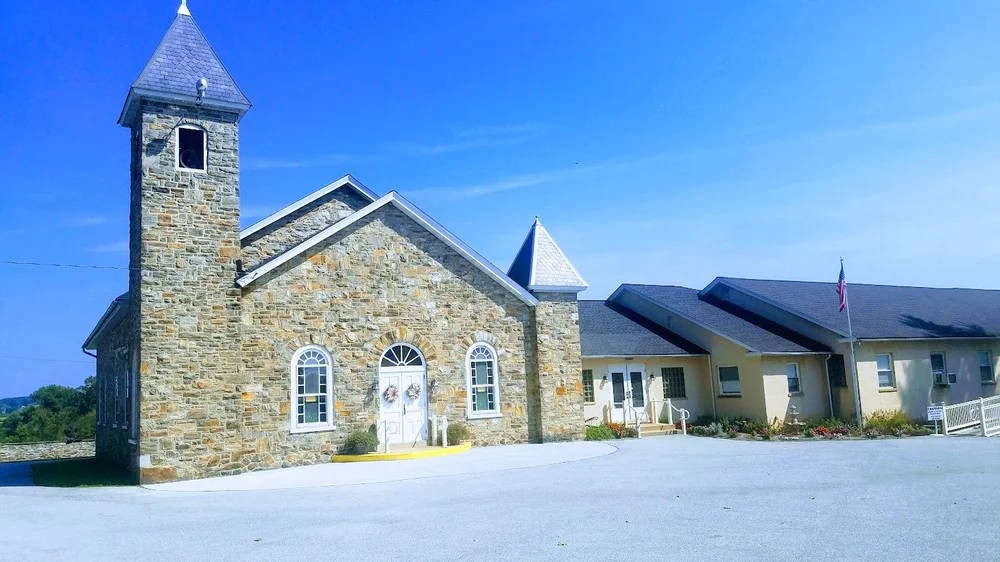
That night, Davidson’s body was quietly recovered by friends and kin. Fearing desecration by the British, they bore him by torchlight to Hopewell Presbyterian Church. There, beneath the cover of darkness, they laid him to rest in an unmarked grave. For decades, the precise spot was known only to a few. But the memory endured. Davidson became more than a fallen general — he was enshrined as the martyr of the Catawba, a symbol of North Carolina’s defiance.
Torrence’s Tavern
Cornwallis pressed forward after forcing the crossing at Cowan’s Ford, determined to maintain momentum despite the heavy losses and the martyrdom of William Lee Davidson. But the pursuit through Mecklenburg’s backcountry was far from orderly. Militia who had fled the ford gathered in ragged groups along the road, many making their way toward Torrence’s Tavern, a well-known landmark situated on Beattie’s Ford Road a few miles north of the river. The tavern, run by Hugh Torrence and his family, had long been a meeting place for locals — a spot where travelers paused, militia mustered, and rumors of war spread over tankards of cider.
On the afternoon of February 1, 1781, it became the scene of chaos and carnage. Dozens of weary militiamen — soaked from the morning’s rain, demoralized by Davidson’s death, and poorly supplied — sought shelter there. Some stopped to rest, others to drink and recover their nerve. Few were prepared when Tarleton’s Legion suddenly descended upon them.
Banastre Tarleton, infamous for his ruthless efficiency, led his cavalry into the yard at a gallop. Sheets of cold rain poured down, drenching powder and rendering most muskets useless. The clash that followed was not a battle of volleys and formations but of blades and brute force. Tarleton’s dragoons swept through the yard with sabres flashing, cutting down men who scarcely had time to raise their weapons. Patriots swung back with whatever they had at hand — rifles used as clubs, pikes, hunting knives, even fence posts torn from the ground. Horses crashed into one another in the mud, and the cries of men mingled with the pounding of hooves.
The tavern itself soon became a target. As militia scrambled for cover inside, Tarleton’s men set it alight. Flames rose through the rain, consuming the building and forcing Patriots into the open where cavalrymen cut them down. Some escaped into the woods; others lay dead or dying in the mud. For those who survived, the day burned into memory as one of the grimmest episodes of the southern campaign.
The British counted the action as a success — dozens of Patriots were killed or dispersed, and the militia in that sector temporarily shattered. Yet even Tarleton, whose reputation for brutality was unmatched, conceded that the effect was fleeting. Militiamen beaten at Torrence’s Tavern would reappear days later along another road or ridge, harassing foraging parties, ambushing detachments, and reminding Cornwallis that he was in hostile country.
For Mecklenburg, Torrence’s Tavern was both tragedy and testament. It revealed the vulnerability of raw militia against professional cavalry, yet it also underscored the resilience of the local resistance. Cornwallis could scatter taverns, burn homes, and cut down farmers, but he could not extinguish their determination. The countryside itself seemed to replenish the Patriot ranks — a hydra-headed resistance that refused to die.
In the larger campaign, Torrence’s Tavern symbolized the nature of Cornwallis’s march through North Carolina: costly, bitter, and ultimately fruitless. Every skirmish sapped his men, stretched his supply lines, and hardened the will of the Patriots. The flames that consumed Torrence’s Tavern were only a small part of a greater fire — the backcountry spirit that Cornwallis had dismissed as a mere nuisance but which would, in the end, bleed his army dry.
Tactical vs. Strategic Meaning
On the surface, Cowan’s Ford belonged to the British. Lord Cornwallis had forced a defended river crossing under fire — no small feat in any war. His Guards and grenadiers, drenched and shivering, had clawed their way across the icy Catawba, driven the militia from the north bank, and continued the pursuit of Greene. Historians Franklin and Mary Wickwire are right to call it Cornwallis’s last clear tactical success before Guilford Courthouse. In the narrow language of battlefield results, the British had won.
But beneath the surface, the meaning was far more complex — and far less favorable to the Crown. As historian John Pancake argued in This Destructive War, Cowan’s Ford represented the kind of “victory” that corrodes an army from within. Cornwallis paid dearly in time, energy, and morale. The crossing cost him dozens of men drowned or shot in the water, hundreds more exhausted, and a command stretched thin in a countryside that grew more hostile with every mile.
Worse still, in killing General William Lee Davidson, the British inadvertently created a martyr. Davidson was no ordinary officer. He was a Valley Forge veteran, a man known personally to many of the very farmers who bore rifles that morning. His death struck the Piedmont like a funeral bell. Within weeks, his name was enshrined in sermons, letters, and place names — echoing in Davidson College, Davidson County, and towns across North Carolina. The loss did not break Patriot resistance; it deepened it, giving the militia a sacred cause to avenge.
Strategically, Cornwallis’s success only dragged him deeper into peril. By forcing the ford, he extended his lines of supply into a wilderness bristling with sharpshooters. Every road harbored an ambush. Every barn and tavern concealed the possibility of rebel fire. He had gained the north bank, but what awaited him was not submission, only more resistance.
Meanwhile, Nathanael Greene had achieved precisely what he intended. Greene never meant to contest the Catawba with full force. His goal was survival, not a stand-up victory. By withdrawing his Continentals intact, safeguarding the prisoners taken at Cowpens, and stretching Cornwallis’s pursuit across rivers and mud, Greene ensured that the British army would burn itself out before it could deliver a decisive blow.
In that sense, Cowan’s Ford was emblematic of the entire “Race to the Dan.” The contest was not about who held a ford or a field at the end of the day. It was about endurance — who could keep their army in being, who could sustain morale, and who could sap the other’s strength until collapse became inevitable. Cornwallis won the riverbank; Greene won the campaign.
Thus Cowan’s Ford stands as a paradox. Tactically, it was a British success, a hard-fought crossing under fire. Strategically, it was a Patriot triumph, for it cost Cornwallis more than he could afford to spend. It stiffened resolve, birthed a martyr, and carried Cornwallis one step closer to the exhaustion and defeat that awaited him at Guilford Courthouse and, ultimately, at Yorktown.
The Race Continues
From the triumph at Cowpens to the bloodied waters of Cowan’s Ford, the pattern of the southern campaign revealed itself with unmistakable clarity. The Patriots, under Morgan and Greene, struck like hornets when the ground favored them, then slipped away when it did not. They fought on their own terms — sharp, sudden, elusive — never allowing Cornwallis the set-piece battle he craved. Each time the British advanced, they found not submission but retreating riflemen who reappeared days later to sting again.
Cornwallis, meanwhile, seemed propelled less by strategy than by frustration and pride. Each skirmish won, each ford forced, only dragged him deeper into peril. He mistook tactical footholds for strategic progress, believing that the capture of ground equaled the conquest of a people. But the Carolinas were not conquered by miles of road or riverbanks. They were held by farmers, preachers, and militiamen whose loyalty lay not with a distant crown but with the soil beneath their feet.
Thus began the grueling contest remembered as the “Race to the Dan.” Greene, calm and calculating, refused to gamble his army in a premature battle. He stretched Cornwallis across the breadth of North Carolina, trading space for time, bleeding the British with every mile. Greene’s Continentals and militia withdrew in good order, prisoners from Cowpens safely shepherded away, while Patriot scouts harassed Cornwallis’s columns at every bend in the road.
The British march north was punishing. Men trudged through rain and snow, their feet bare, leaving bloody tracks on the frozen earth. Supply lines unraveled. Hunger and exhaustion stalked the ranks. Yet Cornwallis pressed forward, convinced that one decisive clash would redeem the hardships.
That clash came at Guilford Courthouse in March 1781, where Cornwallis would indeed hold the field but at staggering cost — one-quarter of his army killed or wounded. “Another such victory would ruin us,” he confessed. From there, the unraveling quickened: Cornwallis’s battered troops limped eastward to Wilmington, then marched into Virginia, where the trap at Yorktown finally closed.
In retrospect, the cold dawn at Cowan’s Ford foreshadowed all that followed. The death of William Lee Davidson, the grim crossing of the Catawba, the scattering at Torrence’s Tavern — these were not isolated tragedies but part of a larger truth: Cornwallis could burn wagons, ford rivers, and slash through taverns, but he could not extinguish the will of a people whose land had become, in his own bitter words, a hornet’s nest of rebellion. The sting that nettled him in Mecklenburg would pursue him all the way to surrender on the banks of the York River.
Guilford Courthouse: The Hornet’s Nest Expands
By March 1781, the southern campaign had become a grueling trial of endurance. Nathanael Greene, though outnumbered and outgunned, had preserved his army through weeks of retreat, skirmish, and maneuver. Cornwallis, by contrast, had driven his men to exhaustion in a relentless pursuit that left them hungry, ragged, and stretched thin across a hostile countryside. Yet Cornwallis remained convinced that one more decisive clash could destroy Greene’s force and secure the Carolinas for the Crown.
That clash came on March 15, 1781, at a modest crossroads in the North Carolina backcountry: Guilford Courthouse. Greene, now reinforced by militia and Continentals, assembled a force of nearly 4,500 men — a mixture of Virginia militia, North Carolina volunteers, and his seasoned Continental regulars. Cornwallis, commanding fewer than 2,000 veterans, advanced with the confidence of discipline but the desperation of dwindling numbers.
Greene adopted a strategy reminiscent of Morgan at Cowpens. He deployed his militia in successive lines, each ordered to fire as long as possible before falling back. The first line of North Carolina militia stood behind fences and trees, unleashing ragged volleys before slipping into the woods. The second line, mostly Virginians, fought more stubbornly, trading shots with redcoats before retreating in order. Finally, at the rear, Greene stationed his Continentals — the backbone of his army — supported by artillery and cavalry.
The battle unfolded in brutal stages. Cornwallis’s troops advanced steadily, bayonets flashing, drums pounding, as they drove one line after another from the field. The woods echoed with musket fire, smoke, and the cries of the wounded. British and Hessian regulars pressed on with iron discipline, but each advance came at a terrible cost. The Americans yielded ground but not spirit; every hedgerow, every fence line extracted blood.
The climax came near the courthouse itself. Greene’s Continentals, drilled and determined, exchanged disciplined volleys with Cornwallis’s weary regiments. At one desperate moment, British lines wavered under the weight of fire. Cornwallis, unwilling to see his army collapse, ordered his artillery to fire grapeshot directly into the melee — a barrage that tore through both friend and foe but steadied his advance. It was a measure of his desperation, a general willing to sacrifice his own men to cling to the field.
By day’s end, Greene chose to withdraw. His militia scattered into the woods, his Continentals marched off in order, and Cornwallis held the ground — technically the victor. But the victory was ruinous. Of the 1,900 British who entered the fight, nearly 550 were killed or wounded — almost one-quarter of the army. Cornwallis, surveying the carnage, confessed bitterly: “Another such victory would ruin us.”
The truth of that remark became clear within days. Though Cornwallis held the field, he had no strength left to pursue. His army was crippled, his supplies exhausted, his soldiers worn to shadows of themselves. Greene, though beaten tactically, emerged strategically stronger. His army lived to fight again; Cornwallis’s army had bled itself nearly dry.
The ripple effects were profound. Greene swept back into South Carolina, reclaiming post after post from the weakened British. Cornwallis, unable to recover in the interior, limped eastward to Wilmington to regroup and resupply. From there, he made the fateful decision to march into Virginia — a move that would end not in triumph but in entrapment at Yorktown.
In this sense, Guilford Courthouse was where the hornet’s sting was fully realized. Cornwallis had faced the backcountry resistance in its most organized form — militia, Continentals, and community resolve fused together — and though he had driven them from the field, he emerged mortally weakened. The spirit Cornwallis had derided in Charlotte now manifested across North Carolina, swelling into a force that no British bayonet could quell.
From Cowpens to Cowan’s Ford, from Torrence’s Tavern to Guilford Courthouse, the pattern was the same: the British won ground, but the Americans won endurance. The Hornet’s Nest, once a local insult, had become a strategy — sting, retreat, sting again — until the imperial army, like a beast bled by countless cuts, stumbled toward its end. Guilford Courthouse was not just a battle; it was the hinge of the southern campaign, the moment when the rebellion’s sting proved fatal.
From Guilford to Yorktown: The Hornet’s Sting Spreads
Cornwallis emerged from Guilford Courthouse with the field but not with victory. His battered regiments, reduced by a quarter, were in no condition to resume the chase. Ammunition was low, wagons empty, and men exhausted from weeks of marching and battle. To remain in the Carolina interior was impossible; the countryside bristled with hostility, and Greene was already regrouping to strike elsewhere.
Cornwallis turned eastward. His army staggered to Wilmington, arriving in late April 1781, gaunt and weary but still intact. There, he faced a stark choice: attempt to restore British control of the Carolinas, or march north into Virginia to link with other forces and seek a fresh theater of war. He chose Virginia — a decision that would seal his fate.
In Virginia, Cornwallis hoped to strike a decisive blow, believing the Old Dominion the key to cutting off the rebellion’s resources. Instead, he found himself pursued again, harried by militia, and shadowed by Continental forces under Lafayette, Wayne, and Steuben. By summer’s end, his maneuvers had carried him to the tidewater, where he entrenched his weary army at Yorktown, expecting the Royal Navy to provide relief and reinforcements.
But the hornet’s sting had spread beyond the Carolinas. Washington and Rochambeau seized the moment, marching south with a combined Franco-American army. At sea, Admiral de Grasse bottled up the Chesapeake. By autumn, Cornwallis was trapped. The “hornet’s nest” that had begun in Mecklenburg, that had stung him at Charlotte, Cowan’s Ford, Torrence’s Tavern, and Guilford Courthouse, now swarmed in Virginia.
On October 19, 1781, Cornwallis surrendered his army at Yorktown — 7,000 men laying down arms to the strains of “The World Turned Upside Down.” What had begun with stubborn farmers firing from behind fence rails and tavern doors in North Carolina had ended with the empire’s defeat.
Memory and Identity: The Hornets’ Nest Lives On
When Lord Cornwallis muttered in frustration that Charlotte was “a damned hornet’s nest of rebellion,” he intended contempt. Instead, he minted a legend. What he meant as insult became identity — a rallying cry, a source of pride, and eventually the civic emblem of an entire region. The sting of Cornwallis’s words, like the sting of the militia’s rifles, has echoed far longer than he ever imagined.
The first and most solemn layer of memory was laid in the ground itself. At Hopewell Presbyterian Church, by the flicker of torches, William Lee Davidson’s body was buried after his fall at Cowan’s Ford. His grave went unmarked for decades to protect it from desecration, but neighbors remembered its location and passed it down in hushed tones. Davidson’s name, revered in sermons and preserved in oral tradition, spread outward into the landscape. Davidson College, Davidson County, and the town of Davidson all carry his name, ensuring that each generation encountered the story of the general who gave his life on the banks of the Catawba.
Other names, too, became cornerstones of local identity. At McIntyre’s Farm, where a mere handful of farmers stung a British column and sent it retreating in confusion, a marker commemorates the “Battle of the Bees.” At Cowan’s Ford, monuments honor both the desperate crossing and Davidson’s sacrifice. Families like the McIntyres, Cowans, Alexanders, Grahams, and Polks became more than lineages — they became fixtures of memory, their names etched into schools, courthouses, and the very geography of Mecklenburg.
By the nineteenth century, as the new nation looked back to its founding struggles, Charlotte and Mecklenburg claimed their place with renewed vigor. Local chapters of the Daughters of the American Revolution (DAR) and Sons of the American Revolution (SAR) organized parades, pageants, and anniversary celebrations. Leaders like Baxter Davidson, descendant of the fallen general, worked tirelessly to preserve cemeteries, battlefields, and family records. Elaborate commemorations of the Mecklenburg Declaration of Independence filled the calendar, complete with orations, patriotic hymns, and schoolchildren marching in processions. Town squares raised obelisks and marble plaques that proclaimed Charlotte not simply a city but the Hornet’s Nest of American liberty.
The twentieth century carried the hornet symbol from commemoration into everyday civic identity. Police and fire departments adopted the hornet’s nest for their badges and insignia, signaling that vigilance and protection were as much a part of Charlotte’s character as defiance had been in 1780. Local newspapers incorporated the emblem, civic clubs buzzed with it, and it appeared in everything from parade floats to high school mascots. The hornet had become shorthand for Mecklenburg itself — fierce, stubborn, independent.
When Charlotte entered the national spotlight with professional sports, the symbol gained a new stage. The NBA’s Charlotte Hornets, first founded in 1988, emblazoned the city’s Revolutionary nickname on jerseys seen around the world. Their rallying cry, “Buzz City,” revived Cornwallis’s curse for a new era and turned it into one of the most recognizable brands in American sports. Even after the franchise briefly departed, the demand to restore the “Hornets” name revealed how deeply the symbol was woven into Charlotte’s self-image.
Over more than two centuries, the meaning of the hornet has evolved but never diminished. What began as a sneer from a frustrated British general became a Revolutionary honor, a cultural inheritance celebrated by nineteenth-century orators and civic groups, and a twentieth-century emblem of public service and civic pride. In the twenty-first century, it has become global — a symbol known not only in Mecklenburg but across arenas, airwaves, and international broadcasts.
Charlotte today rises as a city of glass towers and financial clout, home to corporate giants and a skyline Cornwallis could never have imagined. Yet amid the skyscrapers and highways, the hornet still hovers — on badges, in team colors, in monuments, and in the memory of a people who continue to embrace their reputation for sting. What Cornwallis muttered as contempt has endured as anthem. The Hornet’s Nest lives on, not only in granite and pageantry but in the living spirit of a community that still takes pride in having stung an empire.
Reflection: From Battlefield to Buzz City
The hornet that Cornwallis swatted at in 1780 has never died. It has only multiplied, its sting passed down through generations, reshaped by memory, and reborn in civic pride. When modern Charlotteans cheer in the Spectrum Center under the banner of “Buzz City,” they are echoing the same spirit that farmers carried to McIntyre’s cornfield, that William Lee Davidson carried to the banks of the Catawba, and that William R. Davie carried into the streets of Charlotte itself.
The continuity is remarkable. The Revolutionary hornets fought with muskets and long rifles; their descendants honor them with parades, monuments, and team jerseys. Yet the essence is the same: small but fierce, defiant against odds, unwilling to bow to distant authority. The sting Cornwallis cursed became the lifeblood of Mecklenburg’s identity — a reminder that resistance could change history.
Today, Charlotte’s skyline proclaims modern power: a banking hub, a transportation crossroads, a city at the heart of the New South. But beneath the glass towers lies an older foundation, built not of steel but of memory — the torchlit grave at Hopewell, the scarred farmhouse at McIntyre’s, the riverbank at Cowan’s Ford. These sites whisper the origins of “Buzz City,” reminding every generation that Charlotte’s strength was not inherited from empire but forged in defiance of it.
The hornet’s nest, then, is more than an emblem. It is a living inheritance — a bridge between battlefield and city street, between musket smoke and modern pride. From the volleys that stung Cornwallis to the roar of a basketball crowd, the spirit remains the same: fierce, independent, and unyielding. The Hornet’s Nest lives on — a city still buzzing with the defiance that once stung an empire.
Conclusion
From the overturned beehives at McIntyre’s Farm to the torchlit burial of William Lee Davidson at Cowan’s Ford, the Charlotte region fought far above its weight during the Revolutionary War. Its battles were measured not in thousands of troops or miles of territory, but in moments of defiance that rippled far beyond their scale. A dozen farmers firing from behind fences could shake an army. A general’s death in the gray dawn of a river crossing could galvanize a county. Every ambush, every skirmish, every volley from a cornfield reminded Cornwallis that he had stumbled into a land that would not be tamed.
The “Hornets’ Nest” identity, born from the scorn of an exasperated British commander, proved a fitting symbol of Mecklenburg’s spirit. It captured the stubborn independence of a people who fought not for empire, but for their own farms, churches, and communities. It explained why Cornwallis’s advance stalled, why his army bled itself dry, and why the Revolution turned in favor of the Patriots. And in the decades that followed, it gave Charlotte an inheritance to cherish. Generations preserved the names of Davidson, Davie, Graham, McIntyre, and Cowan, raising monuments, staging commemorations, and weaving their stories into schools, towns, and institutions. What began as resistance became memory; what began as memory became identity.
By the nineteenth century, Charlotte styled itself proudly as the Hornet’s Nest of American Liberty, its Revolutionary story central to its civic pride. By the twentieth, the emblem of the hornet buzzed through police and fire insignia, local newspapers, and community clubs. By the twenty-first, it soared into global arenas on the uniforms of the Charlotte Hornets, a brand instantly recognizable far beyond North Carolina. Cornwallis’s insult had become Charlotte’s anthem.
Charlotte today is no longer the courthouse hamlet Cornwallis tried to occupy. It is a banking capital, a transportation hub, and one of the fastest-growing cities in the South. Towers of glass and steel line the skyline; Fortune 500 companies call it home. Yet in its marrow, the city remembers. The hornet endures as more than a symbol — it is a declaration that this place will not be subdued, that its people have always carried a sting disproportionate to their size.
Cornwallis felt that sting in 1780–81. It bled his army, undermined his campaign, and helped carry the Revolution toward victory. Two and a half centuries later, it still buzzes — in civic pride, in cultural identity, and in the enduring character of a city that wears its nickname without apology.
Charlotte is, and always will be, the Hornet’s Nest.
Adkins Law PLLC — Proudly Serving Huntersville & Lake Norman
Rooted in Huntersville and driven by service, Adkins Law PLLC helps families navigate life’s most important decisions with clarity and care. From family law and mediation to estate planning and guardianships, Managing Attorney Christopher Adkins and team offer practical counsel, strong advocacy, and local insight. We live here, work here, and believe in this community—so when your legal matter hits close to home, you’ll have a steady hand right here in Huntersville. Visit huntersvillelawyer.com.



Leave a Reply