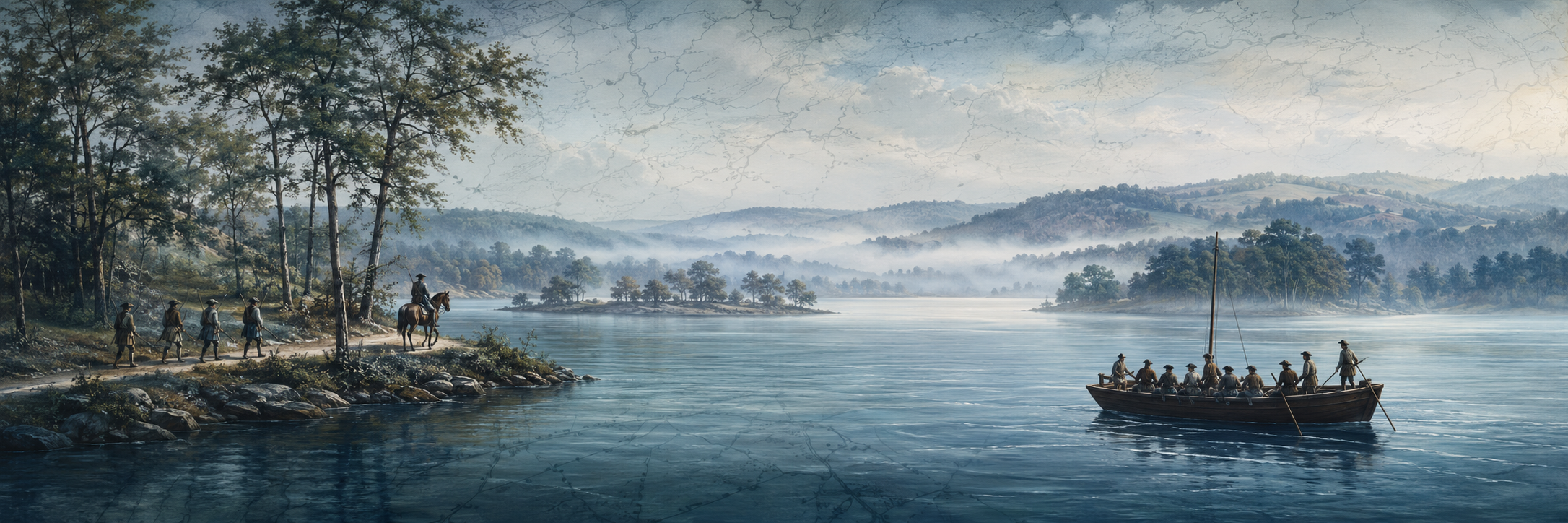


Winding nearly 469 miles through the heart of the Appalachian Mountains, the Blue Ridge Parkway stretches from Shenandoah National Park in Virginia all the way to Great Smoky Mountains National Park in western North Carolina. More than just a road, it is a living museum of mountain culture, ecology, and design — a journey through both natural beauty and the story of the American landscape itself.
Origins and Construction
The idea for a scenic “motorway” along the Blue Ridge peaks emerged in the early 20th century as a way to connect national parks while showcasing the mountain scenery of the southern Appalachians. Officially authorized on June 30, 1936, the Parkway was a product of the New Deal, built largely by workers from the Civilian Conservation Corps (CCC), the Works Progress Administration (WPA), and local contractors from the mountain communities.
Construction was arduous and often slow, with workers carving tunnels through granite ridges and building stone bridges to blend with the environment. Twenty-six tunnels were completed in all — one in Virginia and twenty-five in North Carolina — making the Parkway one of the most engineering-intensive road projects of its era.
Among its greatest feats is the Linn Cove Viaduct, the stunning curved bridge that hugs the side of Grandfather Mountain near Boone, North Carolina. Completed in 1987, the viaduct was the final section of the Parkway to be finished. Its design — a marvel of modern engineering — allowed the bridge to snake around the mountain without scarring the fragile landscape. Today, it stands as one of the most photographed and celebrated stretches of the entire Parkway.
By 1966, most of the Blue Ridge Parkway was open to travelers, but the completion of the Linn Cove Viaduct marked the true end of a half-century-long construction journey — a blend of human craftsmanship and natural preservation unlike any other in the United States.
Route, Features, and Highlights
The Blue Ridge Parkway links two of America’s greatest national parks, serving as both a scenic drive and a protected natural corridor. Its speed limit never exceeds 45 mph, encouraging visitors to slow down and experience the winding ridgelines, mountain valleys, and countless overlooks along the way.
Elevation varies dramatically — from rolling foothills to high-altitude crossings above 6,000 feet. The highest point on the Parkway, near Richland Balsam, reaches 6,053 feet and offers breathtaking panoramic views of the surrounding Blue Ridge Mountains. Because of its elevation, certain segments and tunnels close during heavy snow or ice, particularly in winter.
In North Carolina, the Parkway passes through some of the state’s most iconic mountain landscapes and communities, including Boone, Blowing Rock, and West Jefferson — each offering small-town charm, local art, and access to outdoor adventures.
Notable stops include:
- Doughton Park (Milepost 241.1) — a vast recreation area with hiking trails, open meadows, and picnic areas.
- Craggy Gardens (Mileposts 364–367) — famous for its brilliant rhododendron blooms each June.
- Mount Mitchell Connector (Milepost 355.4) — the access point for Mount Mitchell, the highest peak in the eastern United States.
- Laurel Knob, Walker Knob, and Glassmine Falls Overlooks — offering quiet moments and spectacular views of cascading waterfalls and forested ridges.
Whether you’re driving through the highlands near Boone, exploring the art scene in West Jefferson, or photographing the sweeping curve of the Linn Cove Viaduct, every segment of the Parkway reveals a different side of North Carolina’s mountain heritage.
Ecology, Culture, and Conservation
The Blue Ridge Parkway is more than a scenic road — it’s a protected ecological corridor stretching across hundreds of miles of forest and wildlife habitat. It passes through ecosystems ranging from oak and hickory hardwoods at lower elevations to spruce-fir forests at the highest peaks.
The Parkway lies within the Blue Ridge National Heritage Area, which encompasses the Pisgah and Nantahala National Forests and the ancestral lands of the Cherokee Nation. Along its route are dozens of cultural sites, historic cabins, gristmills, and mountain craft centers that preserve the traditions of Appalachian life.
Conservation efforts continue through organizations such as the Blue Ridge Parkway Foundation, which helps maintain trails, overlooks, and educational programs for the millions who visit each year.
Travel Tips and Considerations
There is no toll to drive the Blue Ridge Parkway, and it is designed for leisure travel, not speed. Because of the region’s elevation and unpredictable weather, sections of the Parkway may close seasonally due to snow or maintenance. Always check for road conditions before planning your trip.
Many of the Parkway’s most beautiful features are just steps away from the road — short hikes to waterfalls, overlooks, or mountain summits reward even the briefest detour.
Autumn is the busiest time of year, as visitors from across the country flock to see the fall foliage blaze across the Blue Ridge. Traveling early in the morning, on weekdays, or in shoulder seasons (late spring and early summer) can help you avoid crowds.
Legacy and Impact
Since its creation, the Blue Ridge Parkway has become one of the most visited units in the National Park System, drawing over 15 million visitors annually. It stands as both an engineering marvel and a living monument to conservation — a road that invites travelers not just to reach a destination, but to truly experience the land in between.
From the Linn Cove Viaduct’s sweeping curve around Grandfather Mountain to the pastoral hillsides near West Jefferson and Boone, the Parkway connects the past and present of North Carolina’s mountain country. Every bend reveals a new vista, every pull-off tells a new story, and every mile affirms why this remarkable route is often called America’s Favorite Drive.
⚖️ About Adkins Law
Adkins Law, PLLC, based in Huntersville, North Carolina, provides trusted legal representation in family law, divorce, custody, mediation, and estate planning. Founded by Attorney Christopher Adkins, the firm proudly serves clients across Huntersville, Lake Norman, and the greater Charlotte area, combining experience, integrity, and personalized attention in every case.
🌐 www.huntersvillelawyer.com | 📞 (704) 274-5677 | Click here to contact Adkins Law, PLLC to speak with an experienced divorce attorney in Huntersville NC.




Leave a Reply