


Introduction
Troutman is a small but steadily growing town in southern Iredell County, North Carolina. Nestled along Interstate 77 between Mooresville and Statesville, it offers the perfect blend of historic roots and modern convenience. The town began as a simple railroad stop in the 1850s, but its story stretches back to the 18th century, when German-speaking settlers from Pennsylvania and Maryland carved farms out of the Carolina Piedmont.
Today, Troutman is known for its deep family legacy, preserved landmarks, and community spirit. From the Troutman Family Cemetery and the last standing all-wood railroad depot in the state to its famed Independence Day Parade and growing neighborhoods near Lake Norman, the town embodies both heritage and progress. It’s a place where traditions like the Troutman Family Reunion meet modern amenities like Troutman ESC Park and Lake Norman State Park.
With its location in the heart of Iredell County, Troutman is more than a commuter town for Charlotte — it’s a community with its own identity, balancing small-town values with the opportunities and challenges of regional growth.
Early Settlement (1750s–1780s)
The story of Troutman begins long before a town appeared on the map. In the mid-18th century, waves of German-speaking immigrants left the Palatinate region of Germany, fleeing war and hardship. In 1751, Johann Jacob Trautmann — later known as Troutman — sailed aboard the Phoenix with his family, settling first in Pennsylvania before joining the great migration into the southern backcountry.
By the 1780s, members of the Troutman family had pushed into the Carolina Piedmont, seeking fertile land and new opportunities. After the death of his father in 1788, Jacob Troutman and his widowed mother moved south into what would become Iredell County, establishing a farm that anchored the family in the region. Like many German and Scots-Irish settlers of the Piedmont, they built log homes, cleared fields, and laid out small family cemeteries that became lasting landmarks.
This early migration connected Troutman to the wider settlement patterns of western North Carolina. The Piedmont was a crossroads of cultures, where settlers from Pennsylvania, New Jersey, and Maryland mixed with frontier families pushing west from Rowan and Mecklenburg counties. In time, this network of farms and kinship ties would form the nucleus of what became the Troutman community.
Growth and Naming (1850s)
By the mid-19th century, the scattered farms of the Troutman family began to coalesce into a recognizable community. In 1853, Anna Troutman, a widow from the original family line, moved her household from their ancestral homestead to a new tract of land a few miles away. That relocation created a new hub of family activity and gave the area a natural gathering point.
The decisive moment came just a few years later, when the Western North Carolina Railroad pushed its tracks through Iredell County. In 1857, a small depot was constructed to serve the surrounding farms. Railroad workers, in a gesture both practical and symbolic, labeled the stop “Troutman’s.” From then on, the family name was not just tied to a lineage, but to a place on the map.
This development transformed Troutman from farmland into a transportation crossroad. Farmers could now ship crops, livestock, and timber more efficiently, linking them to markets as far away as Salisbury and Charlotte. Mail and passengers also passed through, making the depot a true community anchor.
At the time, Troutman’s emerging identity stood in contrast to its larger neighbors. Statesville, already serving as the county seat, was growing as a center of government and trade. To the south, Mooresville was beginning to take shape around its own depot, attracting industry and merchants. Troutman, smaller but determined, would grow in the shadow of these towns — a railroad village with a family name, destined for incorporation decades later.
Town Formation and Industry (1905–1930s)
The small railroad stop known as “Troutman’s” grew steadily through the late 19th century, but it was not until 1905 that the community was formally incorporated as the Town of Troutman. Incorporation marked a turning point, giving the town an official government structure and a stronger identity within Iredell County.
In the early 20th century, Troutman evolved into a modest mill town. A local chair factory became the economic backbone of the community, providing steady employment to residents and tying Troutman into the region’s growing textile and furniture economy. Surrounding the factory was a self-sufficient mill village, complete with a grocery store, a pharmacy, and a post office. For families who lived and worked in the village, nearly every daily need could be met within walking distance.
Historical maps underscore Troutman’s transformation. On the 1845 map of North Carolina, the area that would become Troutman is nothing more than farmland, unmarked and unnoticed. By the 1859 and 1860 maps, however, the arrival of the Western North Carolina Railroad and its depot had firmly placed “Troutman’s” on the map. Its emergence just before the Civil War is significant — Troutman was literally born as the nation teetered on the brink of conflict.
Though Troutman never rivaled its larger neighbors — Statesville as the county seat and Mooresville with its expanding industrial base — the town carved out its own identity as a place where family, railroads, and industry converged. Its modest but steady growth in the early 1900s laid the foundation for the Troutman we recognize today.
Heritage and Preservation
Troutman has never forgotten its roots, and much of the town’s identity is anchored in the places and traditions that preserve its past.
The Troutman Family Cemetery, established in the late 1700s, is one of the community’s oldest landmarks. The earliest marker, dated 1797, belongs to Maria Margaretha Troutman, wife of Johann Jacob Troutman. Today, the cemetery holds more than 1,000 burials, spanning multiple generations, and remains a sacred site cared for by the Troutman Family Historical Association.
Nearby, the Old Railroad Depot stands as a reminder of the town’s birth. Originally built in 1857, the depot was the first structure to put “Troutman’s” on the map. In 1976, it was moved to the cemetery grounds for preservation. As the last all-wood depot in North Carolina, it is both a rare survivor and a centerpiece of Troutman’s early life.
Education and community life are remembered in the Troutman Schoolhouse, constructed in 1878. This one-room building served not only as a classroom but also as a gathering place for families in the years before Troutman’s incorporation.
Architectural history is represented in the Davidson House (1805), a Federal-style farmhouse and one of the oldest standing residences in southern Iredell County. Its listing on the National Register of Historic Places highlights Troutman’s ties to the region’s earliest settlers.
Just as important as physical landmarks are the traditions that keep Troutman’s story alive. The Troutman Family Reunion, held for over a century, brings together descendants from across the United States and even abroad. Passed-down tales like Troutman’s Own Betsy Ross, recalling a local flag-maker, and Jacob’s Ladder, blending frontier struggle with biblical imagery, add a layer of faith, resilience, and patriotism to the town’s collective memory.
In Troutman, history is not tucked away in archives — it is woven into everyday life, reminding each generation of where the town began and why it endures.
Community and Culture
Few small towns in North Carolina celebrate community spirit quite like Troutman. At the heart of that identity is the Independence Day Parade, a tradition so large it has been featured in Our State magazine. Every July, Main Street fills with floats, marching bands, fire trucks, and vintage cars as thousands of residents and visitors line the sidewalks. The parade has become one of the biggest in the Lake Norman region, a true expression of small-town pride and patriotism.
Modern community life revolves around gathering places that blend recreation with togetherness. ESC Park serves as the town’s green centerpiece, with greenways, playgrounds, and sports fields that bring families outdoors year-round. It has become a symbol of Troutman’s investment in quality of life as the town grows.
Just minutes away, Lake Norman State Park offers an even broader natural escape, with boating, hiking, fishing, and camping opportunities. For both longtime residents and new families moving into the area, the park provides a reminder of the natural beauty that makes southern Iredell County special.
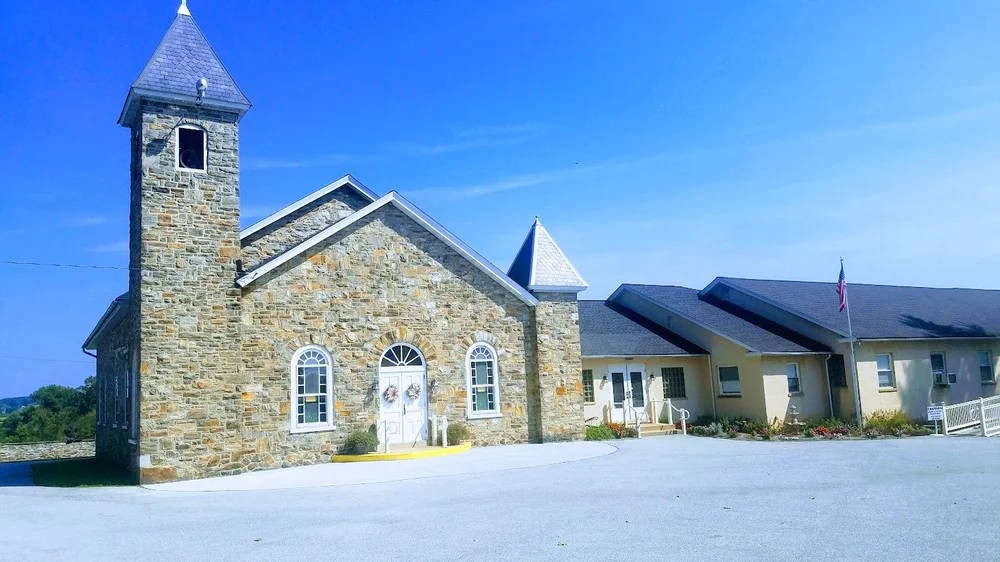
Faith has also played an essential role in shaping Troutman’s cultural fabric. The Life Center Church, founded in 1943 as a small church plant, has grown into a thriving congregation. Its ministries, community events, and local outreach continue to anchor Troutman’s spiritual and civic life.
Together, these traditions and gathering places define Troutman’s reputation as a “small town with a big heart.” While the town adapts to new growth and change, its cultural life remains firmly rooted in community, faith, and shared celebration.
Notable People
Though small in size, Troutman has produced individuals who have left their mark far beyond the borders of Iredell County.
One of the most prominent is Jim Lauderdale (b. 1957), a Grammy Award–winning singer-songwriter whose career has spanned country, bluegrass, and Americana. Known as a “songwriter’s songwriter,” Lauderdale has written hits for artists like George Strait, Patty Loveless, and the Dixie Chicks, while also recording more than thirty albums of his own. He has collaborated with legends such as Ralph Stanley, Elvis Costello, and Buddy Miller, and his artistry has earned him international recognition. Despite his success, Lauderdale’s roots trace back to Troutman, a reminder that small towns in North Carolina continue to shape the broader American cultural landscape.
Troutman has also made its mark in the world of motorsports. Josh Richeson (b. 1981), raised in Troutman, competed in NASCAR’s Busch (now Xfinity) Series, the Truck Series, and ARCA. Over the course of his career, he made more than two dozen starts at the national level, racing against some of the sport’s top drivers. Richeson’s path reflects the grit and determination associated with Troutman, and his connection to the broader NASCAR world ties the town to neighboring motorsports hubs like Mooresville, often called “Race City USA.”
Together, figures like Lauderdale and Richeson illustrate Troutman’s reach: from the stages of Nashville to the speedways of Charlotte and beyond, this small Lake Norman community has contributed to both the cultural and athletic fabric of North Carolina.
Regional Context
Troutman sits near the heart of Iredell County, which was carved out of Rowan County in 1788. This positioning has always shaped Troutman’s identity — not large enough to dominate the county like Statesville, yet not as industrially ambitious as Mooresville, Troutman developed as a middle ground, balancing agricultural roots with railroad access and, later, suburban growth.
To the north, Statesville has long served as the county seat and a hub of government, law, and commerce. To the south, Mooresville capitalized on its depot to become an industrial and NASCAR center, pulling in jobs and investment. Between them, Troutman retains its small-town character, even as the growth of Charlotte’s expanding metro area pushes northward along I-77.
This region has always been tied to the broader currents of North Carolina history. Nearby at Cowan’s Ford, Revolutionary War militia clashed with British forces in 1781 — a fight remembered alongside Charlotte’s proud nickname, the “Hornet’s Nest of Rebellion.” Just to the west, the High Country communities of Boone, West Jefferson, and Wilkes County shaped their own mountain identity, while to the east and south, towns like Cornelius, Huntersville, Denver, Sherrills Ford, and Newton grew up around the Catawba River and, later, Lake Norman.
Troutman’s role within this tapestry is distinctive. It may not be the largest town in Iredell County, but its deep family legacy, preserved landmarks, and sense of community allow it to stand as a cultural bridge — connecting rural traditions, small-town values, and the dynamism of the greater Lake Norman corridor.
Conclusion
Troutman embodies both continuity and change — from its origins with 18th-century German settlers carving farms in the Piedmont to its present role as a growing Lake Norman suburb. The town has preserved its heritage through landmarks like the Troutman Family Cemetery, the Old Depot, and the Davidson House, while celebrating its spirit through traditions like the Independence Day Parade and the Troutman Family Reunion.
In many ways, Troutman reflects the broader story of western North Carolina. From the Lost State of Franklin in the 1780s to the so-called Lost Provinces of Ashe, Alleghany, and Watauga a century later, this region has always balanced isolation and identity, tradition and transition. Troutman stands within that arc — not a forgotten frontier but a community that remembers its past while adapting to modern pressures.
Like its neighbors Statesville and Mooresville, and within reach of the “Hornet’s Nest of Rebellion” in Charlotte, Troutman now faces the challenges of growth: balancing new neighborhoods, interstate traffic, and metropolitan influence with the small-town values that define its identity. What endures through these shifts is the town’s strength in family, community, and tradition — qualities that have carried it from the railroad era into the 21st century and will shape its future for generations to come.
Adkins Law: A Law Firm Located in Huntersville NC
At Adkins Law, PLLC, we proudly serve clients in Troutman, Mooresville, Statesville, and across the Lake Norman region. Whether you need guidance in family law, custody, mediation, or estate planning, our team combines local knowledge with trusted experience to help you navigate life’s most important challenges. Rooted in this community, we are committed to providing practical solutions with the care and dedication you deserve.
Click here if you would like to arrange a consultation with an experienced family law attorney.


Leave a Reply