

Introduction: A River Transformed
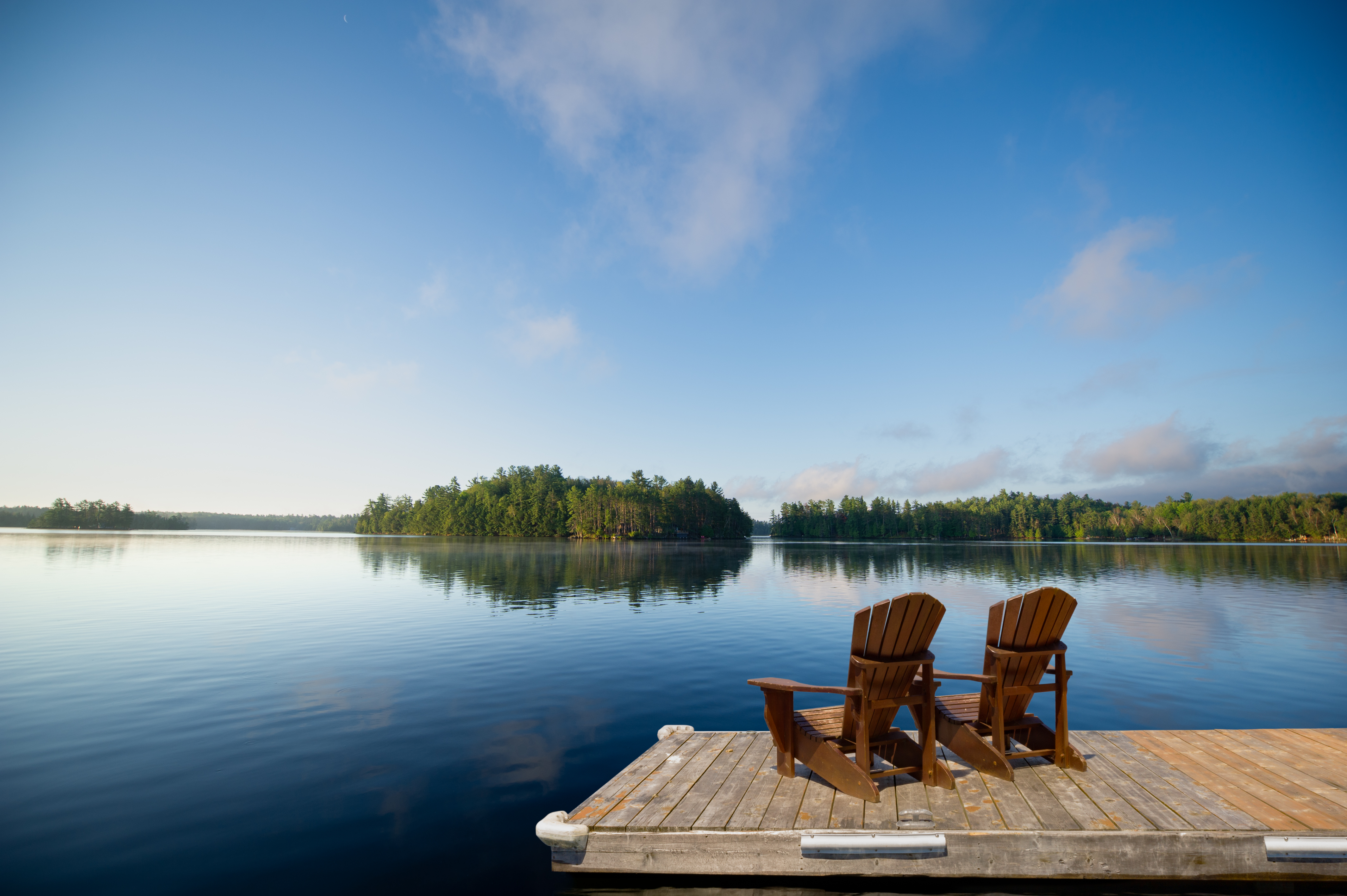
When people today think of Lake Norman, they picture shimmering coves lined with waterfront homes, sailboats catching an afternoon breeze, and busy marinas alive with summer crowds. It is the centerpiece of the region’s lifestyle—a place where families gather, anglers compete, and businesses thrive on the energy of the water.
Yet less than three generations ago, none of this existed. The landscape was a patchwork of rolling farms, red clay roads, textile mill villages, and deep forests along the Catawba River. Barns stood where pontoons now float, children played baseball in fields that would one day be submerged, and church cemeteries overlooked a river that flowed swiftly toward the South Carolina border.
The transformation of this valley into North Carolina’s largest man-made lake was not an accident of nature, but a deliberate feat of engineering. It was also a story of sacrifice and reinvention. Families who had called the valley home for generations were uprooted, their houses moved or abandoned to the rising water. Mills that once drove the local economy were shuttered, their ruins now resting on the lakebed. At the same time, the project brought electricity to millions, forged a recreational paradise, and helped spark one of the greatest suburban booms in North Carolina history.
To understand Lake Norman today—the “Inland Sea” that fuels both dreams and debates—we must first return to the Catawba River Valley as it was before the floodwaters rose, and trace the visionaries, workers, and communities who turned a river into a lake, and in doing so, reshaped an entire region.
The Catawba River Valley Before the Lake
Long before bulldozers and dynamite reshaped its course, the Catawba River was the lifeblood of the Carolina Piedmont. For centuries, it sustained Indigenous peoples—especially the Catawba Nation, for whom the river was both highway and harvest. They fished its waters with handwoven nets, hunted deer and turkey in its surrounding forests, and farmed the fertile bottomlands with corn, beans, and squash. The river carried not just food, but culture, trade, and stories passed through generations.
With the arrival of European settlers in the 18th century, the valley’s landscape began to change. Farms and plantations took root along the riverbanks, their fields carved from the red clay and hardwood forests. Small communities grew around churches and trading posts, while ferries and fords offered crossing points that connected the region’s scattered settlements. Sherrills Ford, for instance, became a crucial crossing place—its name preserving the family who first established it and the ford that once spanned the water.
By the 19th century, the Catawba’s swift currents and rocky shoals attracted the textile industry. Entrepreneurs built mills along the river’s rapids, harnessing its natural power to turn looms. Villages such as East Monbo and Long Island blossomed around these factories. Rows of modest mill houses, company stores, schools, and baseball fields gave shape to a self-contained way of life. Families worked long shifts at the mills, tended gardens to supplement their diets, and gathered for worship and recreation. Life was often simple and tightly knit, bound by the rhythm of the river and the hum of machinery.
But as the 20th century approached, a new vision emerged. Where earlier generations saw the Catawba as a source of water and local power, industrialists began to imagine something larger: a river that could be tamed, dammed, and transformed into electricity on a massive scale. This vision would eventually submerge the very villages that once relied on the river’s flow.
The Dukes and the Dream of Hydroelectric Power
The story of Lake Norman begins not with water, but with power—electrical power. At the turn of the 20th century, the Duke family was already a household name in the Carolinas. James Buchanan “Buck” Duke and his brother Benjamin had built immense fortunes in tobacco and textiles, industries that thrived but demanded reliable, affordable energy. Steam engines and small waterwheels were no longer enough. The Dukes began looking to the Catawba River with a new ambition: not simply as a boundary to be crossed or a source for local mills, but as the backbone of a hydroelectric empire.
Their inspiration came from the great falls of the North. In the 1890s, the world marveled as engineers at Niagara Falls harnessed cascading water to generate electricity and transmit it across miles of wire. If that could be done on the Canadian border, why not in the Piedmont of North Carolina?
The Dukes joined forces with Dr. Gill Wylie, a visionary physician who believed electricity could transform the rural South, and his brother, along with a young engineer named William States Lee. In 1904, together they founded the Southern Power Company. From the outset, their mission was bold: to tame the Catawba with a chain of dams and deliver power not just to a single mill or town, but across an entire region.
Within a few years, dams at Great Falls, Mountain Island, and other sites were generating electricity. Textile mills that had once relied on coal or steam quickly converted, and with them came jobs, growth, and modernization. What Southern Power created was nothing short of revolutionary: one of the first integrated hydroelectric grids in the South.
By 1927, Southern Power had merged into Duke Power, a company whose reach now extended far beyond a single river valley. Electricity flowed to towns, factories, and households across North and South Carolina. Yet even as Duke Power expanded, company leaders looked ahead to something greater still—a single, massive reservoir that would crown their system, generate immense power, and secure the region’s energy future. That vision would take shape at a place called Cowan’s Ford.
Building Cowan’s Ford Dam
By the mid-20th century, Duke Power’s hydroelectric system was already extensive, but company leaders envisioned a project unlike any before. The Catawba River still held untapped potential, and the wide, flat bottomlands at Cowan’s Ford offered the perfect site for a monumental reservoir.
The choice of location carried deep historical resonance. Nearly 180 years earlier, during the Revolutionary War, this very ford had been the site of a desperate clash. On February 1, 1781, British troops under Lord Cornwallis crossed the river here, engaging North Carolina militia in a bloody skirmish. General William Lee Davidson was killed in the battle, his sacrifice later memorialized in the naming of Davidson College and the town of Davidson. That place of conflict and sacrifice would now be transformed into the foundation of North Carolina’s largest man-made lake.
Construction officially began on September 28, 1959, when Governor Luther Hodges pressed the plunger that set off the first charge of dynamite. The blast echoed across the valley, signaling the start of a project that would reshape the land forever. Over the next four years, more than 800 men labored around the clock in shifts. Bulldozers carved away the earth, while massive cement mixers churned day and night. In total, crews poured nearly 400,000 cubic yards of concrete and moved close to a million cubic yards of dirt and stone—an undertaking of epic proportions for its time.
The dam itself grew to a colossal structure: more than 7,000 feet in length, rising 130 feet above the riverbed. Engineers marveled at its scale, calling it the capstone of the Catawba River hydroelectric chain. When the final sections were sealed, the waters of the Catawba began to back up, slowly submerging farms, roads, and mill villages until they became part of the new lakebed.
By 1963, Lake Norman had reached its full pool, stretching 34 miles in length and covering more than 32,000 acres. It held an estimated 3.4 trillion gallons of water and boasted 520 miles of shoreline. On September 29, 1964, Duke Power hosted a dedication ceremony, with Governor Terry Sanford praising the project as a “wellspring of power for the growing Piedmont Crescent.”
What had once been a flowing river valley was now a vast inland sea, shimmering under the Carolina sun. For Duke Power, it was the crowning achievement of decades of planning and investment. For the region, it marked the beginning of a transformation still unfolding today.
Displacement and Preparation for the Lake
For all its promise of power and progress, the creation of Lake Norman came at a steep human cost. Before a single drop of water could be impounded, the Catawba River Valley had to be cleared, and that meant dismantling communities that had stood for generations.
Duke Power had begun quietly purchasing land as early as the 1900s, but when Cowan’s Ford Dam became a reality, the process accelerated. In total, approximately 700 parcels of land were acquired. Much of it was fertile farmland—by some estimates, 70 percent of the land flooded had been under cultivation, with the rest consisting of timberland and rugged terrain. For families who had worked this soil for decades, the transaction was bittersweet: a check in exchange for roots that ran deep.
The physical preparations were immense. More than 70 roads were submerged, requiring detours and new routes to be carved. Eleven bridges had to be rebuilt or raised to clear the rising waters. Utility companies scrambled to relocate 17 miles of gas pipeline, 40 miles of power and telephone lines, and three sewage plants. The cost of land acquisition and relocation alone consumed more than ten percent of the dam project’s entire budget.
Perhaps most poignant were the cemeteries. Entire burial grounds—like the Cornelius Family Cemetery, with graves dating back to 1827—were carefully exhumed and moved to higher ground. Families stood watch as loved ones were reburied, a reminder that the project was rewriting not only the landscape but also the resting places of the dead.
For the living, the impact was just as profound. Some houses were jacked up and rolled to safer elevations, while others were demolished. Many, especially in the mill villages, were simply abandoned to the water. Oral histories speak to the heartbreak of those days. Shirley Sherrill, who grew up in East Monbo, remembered mill houses renting for just 25 cents a room and the close-knit community life that revolved around the company store and ballfield. Kay Cline recalled dirt roads, family gardens, and the sadness of watching it all vanish.
In the end, what disappeared beneath the waves was more than structures—it was a way of life. Churches, schools, farms, and mills that had defined the rhythm of the valley were erased in the name of progress. For some, the move opened new opportunities, drawing them to jobs in Statesville, Mooresville, or Charlotte. But for many others, the rising waters symbolized a loss that could never truly be measured in dollars or acres.
The valley was cleared, the foundations laid, and the people displaced. By the early 1960s, the stage was set: the Catawba River would soon swell into an inland sea, and a new chapter of history would begin.
The Early Years: Cabins and Leased Lots
When Lake Norman first filled in the early 1960s, Duke Power wasn’t eager to part with its new shoreline. Rather than selling, the company offered annual leases for modest sums—often less than $200 a year. For that price, a family could stake a claim on a piece of the “Inland Sea,” even if they could never truly own it.
The leases came with strict rules. Cabins had to be built on skids or posts so they could be hauled away if Duke ever reclaimed the land. No brick chimneys, no poured foundations, no permanent improvements that might anchor someone too firmly to the shore. Even cutting down a tree required company approval. The message was clear: the lake was first and foremost a utility project, and Duke Power intended to keep its options open.
But to families hungry for a retreat, the restrictions hardly mattered. Week after week, pickup trucks rolled down dirt roads carrying lumber, hammers, and tin roofing. Fathers and sons built one-room cabins, often with little more than a screened porch and a woodstove. Mothers furnished them with cast-off couches and enamel cookware. Wooden piers, nailed together from rough boards, stretched into quiet coves where fishing poles could be dropped at dawn.
For many, these cabins became magical summer worlds. Children learned to swim in water that had only recently covered fields and forests. They spent long afternoons catching bream and catfish, or exploring the muddy shoreline for arrowheads and old bottles churned up by the new waves. At night, families gathered on porches to tell stories or watch fireflies flicker above the water.
By 1965, roughly 1,000 homes dotted the shoreline, though only about ten percent were occupied year-round. Most were weekend getaways—simple places for escape, not permanent residences. In those days, the lake felt remote, its roads unpaved, its coves silent except for the splash of fish or the hum of a boat motor.
It was a short-lived era, but one that shaped the early identity of Lake Norman. Before the marinas, the luxury homes, and the suburban sprawl, there were cabins on stilts and families with toolboxes, carving out their little slice of summer by the water.
Recreation and the Rise of the “Inland Sea”
From the moment the waters of Lake Norman reached their full pool, the new reservoir began drawing people to its shores. Its sheer size—34 miles long, stretching up to nine miles wide in places—was unlike anything North Carolinians had ever seen. Locals quickly began calling it “The Inland Sea,” a nickname that captured both its vastness and its novelty.
For anglers, fishing on Lake Norman was an instant paradise. Bass and catfish thrived in the flooded bottomlands, and stories spread of record catches pulled from its depths. Before long, organized fishing tournaments brought competitors from across the state, transforming Lake Norman into a destination for serious sportsmen as well as casual weekend fishers.
The broad, open waters also proved perfect for boating. Families who had once paddled rowboats on the Catawba suddenly found themselves sailing sunfish dinghies, piloting small powerboats, and—by the late 1960s—trying their hand at the new thrill of waterskiing. The lake’s long coves and wide channels offered a playground where skiers could carve arcs across glassy water and children could cling to inner tubes behind whirring outboards.
As demand grew, marinas began to spring up around the shoreline. What started as little more than wooden docks and fuel pumps evolved into full-service facilities offering boat rentals, storage, and restaurants. These marinas became gathering places, the social hubs of the lake, where neighbors met over bait buckets in the morning and swapped stories over fried catfish dinners at night.
Institutions, too, found ways to embrace the new resource. Davidson College, just a few miles from the lake’s eastern shore, purchased property and developed what became known as the “Lake Campus.” Here, students learned to sail, kayak, and paddleboard, turning the lake into both a recreational retreat and a living classroom for environmental study. For generations of Davidson students, weekends at the Lake Campus became as much a part of college life as lectures and exams.
For the wider public, Lake Norman offered a blend of rural charm and aquatic adventure. Families who had never dreamed of living by the water could now spend weekends at leased cabins or public parks, while Charlotte residents just thirty miles south discovered an escape that felt worlds away from the growing city.
And beyond Lake Norman, North Carolinians compared the new “Inland Sea” to familiar retreats in the NC High Country. Families who spent summers hiking and trout fishing in Boone or West Jefferson found a different kind of recreation here—warm-water bass fishing, waterskiing, and lazy pontoon rides. Together, the mountains and the lake gave the region a one-two punch of outdoor fun: trout streams in the High Country and big-water adventure on Lake Norman.
The Inland Sea had become more than a utility reservoir—it was a cultural landmark, a place where leisure and community began to redefine what life in the Piedmont could look like.
Suburban Boom and the Changing Shoreline
If the 1960s marked Lake Norman’s birth and the 1970s its youth, the decades that followed would bring its coming of age. The transformation of the lake’s shoreline and its surrounding communities accelerated at a pace few could have predicted.
A turning point came in 1976 with the completion of Interstate 77. Suddenly, what had been a 45-minute to one-hour trip down winding country roads from Charlotte became a straight shot north. The lake, once a quiet weekend retreat, was now within easy commuting distance of the city. What followed was a flood not of water, but of people.
Duke Power, which had held onto most of the shoreline for leases, began selling lots outright in the late 1970s. What had once been dotted with cabins on skids quickly attracted developers who saw opportunity in the water’s edge. Subdivisions sprouted almost overnight, offering cul-de-sacs of brick homes with boat slips. Golf courses stretched across former farmland, and luxury neighborhoods promised residents both prestige and panoramic lake views.
The impact on local towns was dramatic. Huntersville, once little more than a crossroads community, grew from about 3,000 residents in 1990 to more than 40,000 today. Cornelius, which had been home to just 2,500 residents in 1990, surged to over 21,000 by the early 21st century. Davidson managed to preserve its college-town charm but still saw steady growth, carefully balancing upscale lakefront development with historic preservation.
Mooresville underwent perhaps the most remarkable transformation. Known for decades as a textile town, it reinvented itself into “Race City USA,” home to NASCAR teams, racing shops, and the Lowe’s corporate headquarters. The influx of jobs and national recognition pushed Mooresville into the spotlight and made it one of the most desirable communities on the lake.
By the 1990s and 2000s, nowhere was the transformation more visible than on the Brawley School Road peninsula in southern Mooresville. Once a quiet finger of farmland stretching into the lake, it became lined with multi-million-dollar estates, gated communities, and private docks. The gravel lanes and modest clapboard homes of earlier decades gave way to manicured lawns and sprawling waterfront mansions.
The boom was not without growing pains—traffic congestion, school overcrowding, and debates over zoning became part of daily life—but the lake had firmly established itself as more than a recreational reservoir. It was now an engine of suburban expansion and one of the fastest-growing corridors in the Southeast.
Ecology, Islands, and Legends
Although Lake Norman is entirely man-made, its sheer scale has given rise to a surprisingly rich natural environment. The lake today contains more than 60 islands, many of them managed as wildlife refuges. Some are little more than clusters of rock and brush, while others are forested havens where herons nest in the treetops and turtles bask along sandy edges. For boaters, these islands are both navigational markers and places of quiet discovery, offering secluded coves where time seems to stand still.
The shoreline itself has become a tapestry of native flora. Tulip poplars, dogwoods, sassafras, red maples, and hickories line the water’s edge, their roots dipping into the fluctuating levels of the lake. In spring, the banks glow with blossoms, and in autumn, they ignite in fiery hues of gold and crimson. Wildlife flourishes here, too: ospreys dive with precision into the water, deer slip through thickets at dusk, and foxes patrol the wooded ridges. On rare occasions, even black bears have been spotted wandering the perimeter, reminders that the Piedmont’s wilderness is never far away.
Beneath the surface lies an entirely different world. Divers describe an eerie underwater landscape of remnants left behind by the floodwaters—concrete bridge pilings, stretches of paved road, mill foundations, and chimney stacks rising like ghostly monuments from the lakebed. In 1974, a small amphibious plane crashed into the lake, later discovered decades afterward by sonar. These submerged relics are both attractions for scuba divers and silent witnesses to the valley that once was.
And then there is Normie. Much like the famed Loch Ness monster, Lake Norman has its own cryptid legend: a mysterious creature said to haunt the depths. Reports vary—some describe a long, serpent-like shape gliding under boats, others swear they’ve seen ripples in otherwise calm water. While never proven, the myth of Normie adds a layer of folklore to the lake, blending modern mystery with ancient echoes of river lore.
In truth, Lake Norman’s ecology and legends reflect the same paradox that defines its history: it is both natural and artificial, modern and timeless. It is an ecosystem born of concrete and dynamite, yet now home to forests, wildlife, and myths that feel as old as the land itself.
Economic and Cultural Impact
Though Lake Norman is beloved for its sunsets, sailing, and summer weekends, its importance reaches far beyond recreation. It is, at its core, a working lake—a vital piece of infrastructure that continues to power the Piedmont.
The Cowans Ford Hydroelectric Station, completed alongside the dam in the early 1960s, remains an integral part of Duke Energy’s grid, generating renewable electricity for thousands of homes and businesses. But the lake’s utility doesn’t stop there. The Marshall Steam Station and the McGuire Nuclear Station, two of the region’s largest power plants, both draw cooling water from Lake Norman, making it an essential support system for North Carolina’s energy economy.
The lake also serves as a crucial water supply. Municipalities from Huntersville to Mooresville, Davidson to Cornelius, rely on its vast reservoir for drinking water. Its flood-control capacity protects downstream communities along the Catawba, ensuring that heavy rains don’t bring disaster to Charlotte and beyond. In every sense, Lake Norman underpins the growth of the region—not just as a scenic resource, but as a life-sustaining one.
Economically, the lake has transformed property values and development patterns. Waterfront real estate has become some of the most sought-after in the Carolinas, fueling one of the fastest-growing suburban corridors in the Southeast. Restaurants, marinas, boat dealerships, and tourism industries thrive along its shores, while corporations like Lowe’s, NASCAR teams, and a range of Fortune 500 executives have chosen to base themselves near the water.
Culturally, Lake Norman has become a stage. It has hosted sailing regattas, fishing tournaments, music festivals, and countless community gatherings. Its coves have appeared in film and television, and its neighborhoods are home to celebrities, professional athletes, and entrepreneurs who value both its privacy and prestige.
Yet beyond these marquee moments, Lake Norman has come to embody something more subtle: a shared identity. For residents of the four surrounding counties, “Lake Norman” is not just a reservoir but a name that signifies community, aspiration, and belonging. It has become a brand unto itself—an Inland Sea that represents both where people live and how they live.
Reflections: Gains and Losses
The history of Lake Norman is, at its heart, a story of contrasts—creation and destruction, gain and loss, progress and sacrifice. The reservoir that North Carolinians now celebrate as a jewel of the Piedmont did not come into being without cost.
On one hand, the “Inland Sea” ushered in a new era of opportunity. It brought renewable electricity to a rapidly industrializing region, supplied water to growing towns, and created one of the most desirable places to live in the Southeast. It offered families recreation, businesses new markets, and communities a shared identity around the lake’s shining waters. For many who have arrived in recent decades, Lake Norman embodies possibility: the promise of a better lifestyle, whether through waterfront living, thriving commerce, or simply the chance to spend a summer afternoon on the water.
But the lake also swallowed a past that can never be reclaimed. Entire communities—East Monbo, Long Island, and countless farms and homesteads—disappeared beneath the floodwaters. Cemeteries were exhumed and moved, while churches, schools, and ballfields were erased. Families whose roots traced back generations were forced to pack up and begin again on higher ground. For those who remember the valley as it once was, the beauty of the lake is tinged with loss, its glimmering surface a reminder of what lies buried below.
This tension between gain and loss defines Lake Norman’s legacy. It is both a triumph of engineering and a monument to displacement. It represents the forward march of industry and the quiet fading of tradition. And yet, perhaps because of this complexity, Lake Norman is more than just a body of water. It is a mirror—reflecting the ambitions, sacrifices, and evolving identity of the people who live along its shores.
Today, Lake Norman is woven into the very fabric of Charlotte-Mecklenburg and its neighboring counties. It links past to present, industry to leisure, and the natural to the man-made. Its story is still unfolding, and each generation adds its own chapter—whether through memories of farmsteads lost, summers spent on pontoon boats, or visions of the lake’s future in a changing world.
In the end, Lake Norman reminds us that landscapes are never static. They are living histories, shaped by human hands and remembered in human hearts. And the Inland Sea of North Carolina stands as one of the most remarkable examples—a place where progress and memory flow together, as inseparable as the waters that cover the valley below.
Conclusion
From its beginnings as fertile farmland and Revolutionary War ground to its present role as a hub of energy, recreation, and suburban growth, Lake Norman’s history is anything but simple. It is a layered story, one that intertwines triumph with loss, engineering with memory, and modern expansion with the echoes of the past.
The Inland Sea stands today as a testament to human ambition. It reflects the vision of industrialists like Buck Duke, the labor of hundreds of workers who built Cowan’s Ford Dam, and the dreams of families who turned leased shoreline lots into summer cabins. It also holds within it the sacrifices of those who were displaced, the mill villages that vanished, and the cemeteries carefully relocated so that progress could move forward.
For some, Lake Norman represents opportunity—a place where communities thrive, businesses flourish, and families build lives along its waters. For others, it is a reminder of what was lost when the river valley disappeared beneath the flood. Both perspectives are true, and together they form the mosaic of the lake’s identity.
What makes Lake Norman remarkable is not just its scale or its economic impact, but the way it has become part of the region’s cultural DNA. It connects Charlotte and its neighboring towns, uniting Huntersville, Cornelius, Davidson, Mooresville, and Denver under a shared landmark. It is both playground and powerhouse, sanctuary and suburb, myth and memory.
In the end, Lake Norman reminds us that landscapes are never merely physical. They are stories written into the land and water, lived by those who came before and carried forward by those who call the place home today. And as the shoreline continues to evolve, the Inland Sea will keep adding new chapters—each one reflecting the complex dance between people, place, and the passage of time.
About Adkins Law, PLLC
At Adkins Law, PLLC, we believe history shapes community—and community shapes the lives we protect through our practice. Our firm, based in Huntersville, is proud to serve families across the Lake Norman region. Whether you are navigating divorce, planning your estate, or seeking mediation, our goal is to help you protect what matters most with clarity, compassion, and proven experience.
Click here to arrange a consultation with an experienced family law attorney in Huntersville NC.



Leave a Reply