
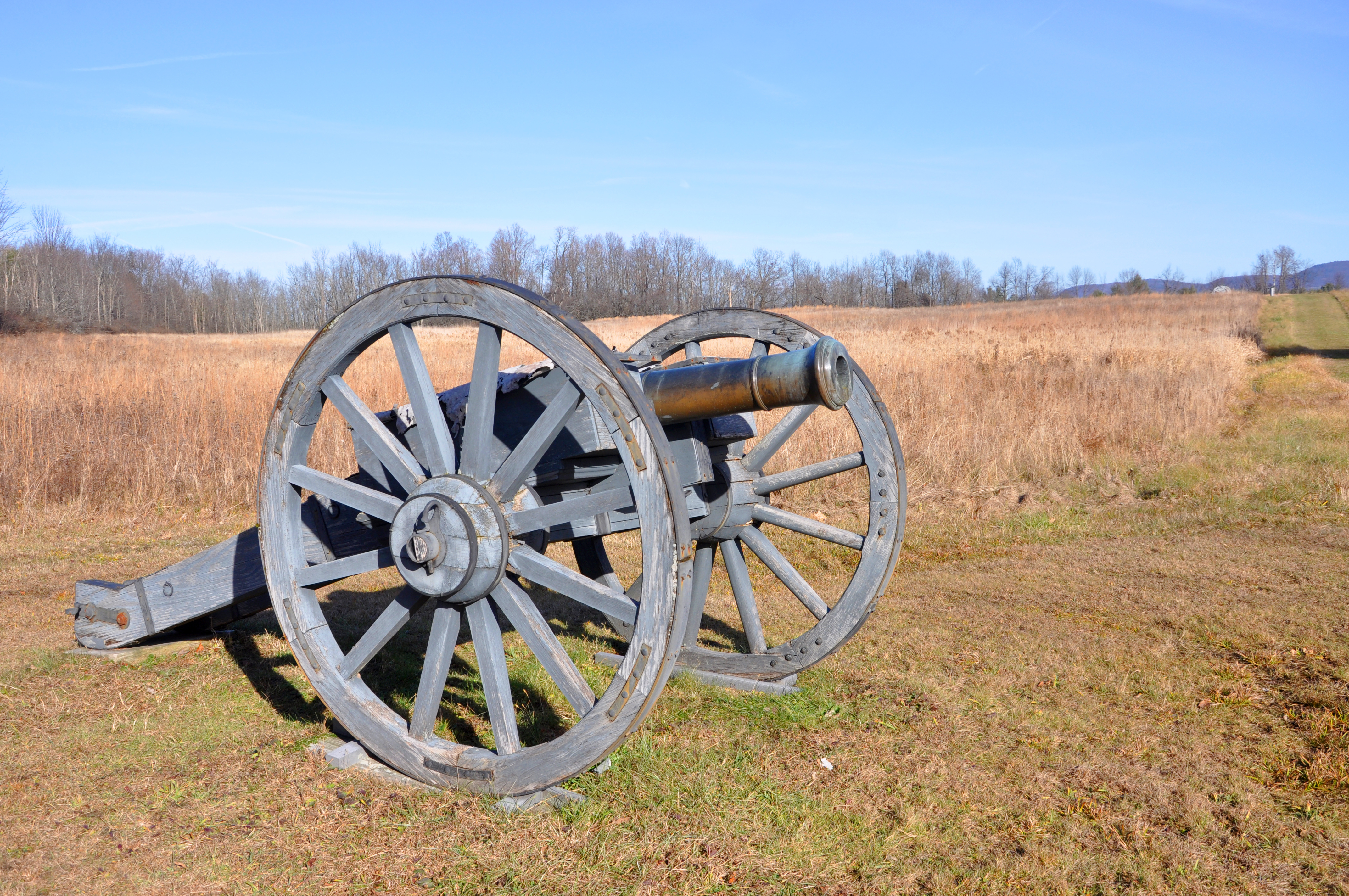

In the spring of 1780, the Revolutionary War stormed into the Carolina backcountry. What had once been a patchwork of quiet farms and pine forests stretching between Charlotte, North Carolina, and Lancaster County, South Carolina, erupted into violence that would shock the colonies and define the brutal nature of the war in the South.
The engagement became known as the Battle of the Waxhaws — or, as horrified Patriots soon called it, the Waxhaw Massacre. In a matter of minutes, British cavalry under Lieutenant Colonel Banastre Tarleton decimated an American force led by Colonel Abraham Buford, killing more than a hundred men and earning the battle an enduring reputation for cruelty.
But the Waxhaws were more than just a battlefield. This borderland region, named after the Waxhaw (or Catawba) people, stretched across modern Union and Mecklenburg Counties in North Carolina and Lancaster County in South Carolina. It was the same rugged territory where Andrew Jackson was born, and where the spirit of rebellion had already taken deep root.
In nearby Charlotte Town, that spirit would soon earn the city its enduring nickname — “The Hornet’s Nest of Rebellion.” British General Lord Cornwallis would give Charlotte that title after his occupation in the fall of 1780, frustrated by the unrelenting resistance of local militia who attacked his troops at every turn.
The massacre at the Waxhaws became a rallying cry for those very same men. From these pine-lined roads and small Carolina settlements came the fierce independence that would define the Southern campaign — a determination to resist, to fight back, and to remind the British that even on the frontier, the Revolution burned hot.
The Waxhaws: A Region Divided by State Lines, United by History
The Waxhaws were more than just a backdrop to battle — they were a living borderland where cultures met, empires clashed, and the early identity of the Carolinas began to take shape.
This broad stretch of rolling piedmont terrain straddles the modern line between North and South Carolina, lying today within Lancaster County, South Carolina, and parts of Union and Mecklenburg Counties, North Carolina. Only a short drive south of Charlotte, the Waxhaws were then a sparsely populated frontier, defined by open pine woods, red clay soil, and a scattering of small homesteads connected by rough wagon trails.
The name “Waxhaws” honors the Waxhaw people, an Indigenous Siouan-speaking tribe closely related to the Catawba Nation. Before European settlement, the Waxhaw had lived here for generations — along the creeks and ridges that flow toward the Catawba River — hunting, farming, and trading with neighboring tribes. But by the early 18th century, waves of disease, warfare, and colonial expansion had decimated their population. The surviving Waxhaw people merged with their Catawba kin, whose descendants still maintain tribal lands near Rock Hill, South Carolina, preserving one of the last enduring Native communities in the Carolinas.
By the time of the Revolution, the Waxhaws had become a frontier crossroads of Scots-Irish, English, and German settlers, many of whom arrived from Pennsylvania and Virginia seeking fertile land and independence. Here, the new American frontier spirit mixed with the lingering presence of Indigenous history. The same soil that had borne ancient tribal villages now gave rise to rough-hewn log cabins and backcountry churches.
It was in this rugged borderland that Andrew Jackson, the future seventh president of the United States, was born in March 1767 — within the very zone disputed by North and South Carolina. Jackson’s birthplace, long claimed by both states, symbolizes the region’s complex identity: a place where political boundaries blurred, yet where loyalty to the cause of freedom ran deep.
By 1780, when the Revolutionary War thundered into the Waxhaws, this region was a powder keg — fiercely independent, deeply divided, and tied by family and faith more than by government or geography. Loyalists and Patriots sometimes lived on the same road, or even under the same roof. That mix of frontier defiance and neighborly tension would make the Waxhaws a flashpoint in the Southern campaign — and a defining chapter in the story of the Carolinas.
Spring 1780: The British Push Into the South
By the spring of 1780, the American Revolution had reached a critical turning point. After years of frustration in the northern colonies, British commanders shifted their focus south, believing the Carolinas and Georgia held enough Loyalist support to restore royal control. Their new “Southern Strategy” aimed to rally Loyalist militias, seize key ports, and isolate the rebellion from within.
In May 1780, British forces under Sir Henry Clinton captured Charleston, South Carolina, after a grueling siege — one of the most devastating American defeats of the entire war. More than 5,000 Continental soldiers were taken prisoner, and the British suddenly held one of the most important cities in the South. From there, red-coated troops and Loyalist units poured into the Carolina backcountry, determined to stamp out what remained of organized Patriot resistance.
Among the units retreating from the disaster at Charleston was a small detachment under Colonel Abraham Buford, commanding roughly 380 Virginians. Buford’s column pushed north through the rough wagon roads that cut across the Waxhaws region, heading toward Charlotte, a modest but strategically vital crossroads settlement at the time.
Though still little more than a courthouse town, Charlotte already played a growing role in the Revolution. It sat at the center of several key routes linking the Carolina interior to the Catawba River and the Appalachian foothills. Its citizens — fiercely independent Scots-Irish settlers — had earned a reputation for open defiance of British authority. The city would later be dubbed the “Hornet’s Nest of Rebellion” by General Lord Cornwallis, whose occupation of Charlotte in the fall of 1780 met fierce local resistance.
As Buford’s weary men made their way north, they hoped to reach Charlotte’s safety — and perhaps the defensive line forming farther west along the Catawba River. But Lieutenant Colonel Banastre Tarleton, commander of the British Legion, was already in pursuit. Known for his speed, aggression, and ruthless precision, Tarleton’s cavalry could cover miles of backcountry in a single day.
Tarleton’s success in the Southern campaign had made him both admired and feared. He would later lead British troops near Cowan’s Ford in early 1781, where Patriot General William Lee Davidson and North Carolina militia attempted to block the British crossing of the Catawba. There, like in the Waxhaws, the fighting would be intense, personal, and symbolic of the brutal nature of the war in the Carolinas.
In May 1780, however, none of that was yet decided. Buford’s men — marching through the thick pine country south of Charlotte — had no idea that Tarleton’s cavalry was closing fast behind them, or that the fields of the Waxhaws would soon run red with the blood of one of the Revolution’s most infamous encounters.
May 29, 1780: The Battle — and the Massacre
The morning of May 29, 1780, dawned hot and still across the Waxhaws, the Carolina backcountry alive only with the hum of insects and the rustle of pine. Along a rough wagon road near Waxhaw Creek, Colonel Abraham Buford and his weary detachment of Virginia Continentals prepared to make their stand.
After days of retreat northward from the fall of Charleston, the men were exhausted, their uniforms tattered and their horses thin. Still, they formed ranks with disciplined resolve — about 380 infantry and 40 cavalry, drawn up on open ground bordered by forest. They knew the British cavalry was closing fast.
By midday, Lieutenant Colonel Banastre Tarleton and his British Legion came into view — a green-clad force of mounted infantry and dragoons who had earned a reputation for terrifying speed. Tarleton, only twenty-six years old, was already famous for his aggression and iron will.
As the Legion approached, Tarleton sent forward a messenger under a white flag demanding Buford’s surrender. Buford refused, declaring that he would “defend himself to the last extremity.” Tarleton wasted no time. Within minutes, he gave the order to charge.
The British cavalry thundered forward in formation, sabers glinting in the sunlight. The Virginians managed a single ragged volley — then chaos erupted. Tarleton’s horse was shot beneath him, throwing the young commander to the ground. Some of his men, seeing him fall, believed their leader had been killed. What followed was fury without restraint.
The Legion swept through the Patriot line like a blade through grass. Within fifteen minutes, the field was a scene of horror — shattered muskets, broken wagons, and men cut down as they tried to flee. When the surviving Americans dropped their weapons and raised their hands in surrender, the killing did not stop. Many were bayoneted, slashed, or trampled as the British rode through the ranks again and again.
Of Buford’s 420 men, 113 were killed outright, 150 wounded, and 53 captured — an astonishing 80 percent casualty rate. Tarleton’s Legion lost only 17 men.
The few who survived described the aftermath as a massacre. Wounded soldiers were left in the open sun, their cries echoing through the pines. Local settlers who arrived later found bodies mutilated and stripped, muskets shattered beside them.
The brutality of the encounter shocked even those hardened by years of war. Patriots throughout the Carolinas quickly spread the story that Tarleton’s men had given “no quarter” — meaning no mercy, no chance to surrender. The phrase “Tarleton’s Quarter” entered Revolutionary legend as a byword for ruthless slaughter, and the Battle of the Waxhaws would forever be remembered as the Waxhaw Massacre.
For the people of the Carolinas, it marked a turning point. Outrage swept through the backcountry — through small towns like Charlotte, Waxhaw, and Camden — stirring local farmers and militia leaders to take up arms once more. The slaughter at Waxhaw Creek was meant to crush resistance; instead, it ignited it.
Waxhaws to Charlotte: Outrage and Resistance
Word of the Waxhaw Massacre spread like wildfire across the Carolinas. What the British intended as an act of terror instead lit a fuse of fury that no army could extinguish. Far from intimidating the colonists, the slaughter at Waxhaw Creek enraged them. In farmhouses, taverns, and churchyards from the Catawba Valley to the French Broad River, one phrase echoed through the hills:
“Remember Waxhaws!”
Across the southern backcountry, Patriot militias swelled with new recruits. Men who had once tried to stay neutral now took up arms, driven by outrage and vengeance. From this wave of defiance emerged a new breed of leaders — Thomas Sumter, Francis Marion, and Andrew Pickens — men who understood that the British might win battles, but they could never hold the hearts of the people.
Operating in small, mobile bands, these militia commanders launched daring hit-and-run attacks on British supply lines, convoys, and Loyalist outposts. Their tactics — ambushes, midnight raids, and swift retreats through the swamps and forests — became the foundation of Southern guerrilla warfare. The British army, stretched thin across hundreds of miles of hostile terrain, found itself harassed at every turn.
The outrage that began in the Waxhaws would ripple westward across the Carolinas, stirring frontiersmen who lived along the French Broad River and beyond the Blue Ridge Mountains. From those remote settlements came the legendary Overmountain Men, backcountry riflemen who would march east that fall to confront a Loyalist army at the Battle of King’s Mountain.
That 1780 battle — fought on a rocky ridge near the border of the Carolinas — became the turning point of the war in the South. The Overmountain Men’s victory over Major Patrick Ferguson’s Loyalist force shattered British momentum and forced General Cornwallis to withdraw deeper into North Carolina. Many who fought at King’s Mountain had lost friends or family at the Waxhaws — and they carried that memory with them into battle.
Meanwhile, the impact of the Waxhaw Massacre reverberated through the Piedmont, particularly in the growing village of Charlotte Town. Once a small trading post along the Great Wagon Road, Charlotte became a hotbed of Patriot coordination and resistance. Militia leaders gathered there to plan raids, share intelligence, and rally local support. When Cornwallis occupied the town later that year, he met fierce resistance from the very people he hoped to intimidate — prompting him to brand Charlotte “a Hornet’s Nest of Rebellion.”
From the bloodshed of Waxhaw Creek to the triumph on King’s Mountain, the Southern backcountry transformed from a fractured frontier into a unified front of defiance. The rivers, ridgelines, and crossroads of the Carolinas — from the Waxhaws to the French Broad River valley — became the proving ground for the revolution’s fiercest patriots.
A Region of Memory and Heritage
Today, the quiet pastures and pine stands near Lancaster, South Carolina, hide the echoes of one of the most brutal days of the Revolutionary War. The Buford Massacre Site, preserved along the Rocky River Road, marks the ground where the Battle of the Waxhaws erupted on May 29, 1780.
Monuments, historical markers, and interpretive displays now honor the fallen soldiers of Colonel Abraham Buford’s command — men who gave their lives in what became one of the most infamous episodes of the Southern campaign. Their sacrifice, once a symbol of outrage, has become one of remembrance, uniting generations under a shared story of struggle, loss, and resilience.
Visitors to the site find more than just stone and inscriptions; they find a landscape that still whispers of the past. The rolling fields, shaded creeks, and red Carolina soil remain much as they were when the thunder of hooves and musket fire shattered the peace of that May afternoon.
Beyond the battlefield, the Waxhaws endure as a living link to the past — a region where Native, colonial, and modern histories intersect. It is home to the descendants of early settlers and to the Catawba Nation, the last federally recognized tribe in South Carolina. The Catawba people, once close allies of the Patriots, continue to live on their ancestral lands near Rock Hill, preserving traditions that long predate the Revolution.
Nearby communities like Waxhaw, North Carolina, proudly carry forward the region’s name and heritage. Once a modest outpost on the old Great Wagon Road, Waxhaw has grown into a thriving town whose brick-lined streets, historic rail depot, and surrounding farmlands reflect both progress and preservation. Local museums and heritage centers tell the story of the Waxhaws — from the Indigenous nations who named it, to the frontier families who settled it, and the Patriot fighters who bled for it.
For travelers journeying south from Charlotte, the drive through this landscape is a journey through time. The same backcountry roads that once echoed with the sound of muskets and wagon wheels now lead through fields, churches, and crossroads that witnessed the birth of a nation.
Here, between the Catawba River and the Carolina piedmont, the Revolution’s Southern story truly began. The Waxhaws remind us that even the quietest corners of the countryside can shape the destiny of a nation — and that the spirit of defiance that once earned Charlotte the title “Hornet’s Nest of Rebellion” still hums beneath the Carolina soil.
Legacy: From Tragedy to Turning Point
Though small in scale, the Battle of the Waxhaws became one of the most defining moments of the Southern Campaign of the American Revolution. What began as a devastating defeat for the Patriots soon transformed into a rallying cry that helped turn the tide of the war.
The massacre near Waxhaw Creek exposed the brutal nature of the conflict in the South — a war fought not only between armies, but between neighbors. The horror of that day spread through the backcountry, from the pine thickets of the Waxhaws to the foothills of the Blue Ridge. It ignited anger, unity, and resolve among the colonists who refused to yield to tyranny.
The shock of the Waxhaws transformed British victory at Charleston into an emotional defeat, uniting scattered militias under a single purpose. Patriot leaders — emboldened by outrage and driven by vengeance — rose to strike back. Within months, they delivered two of the Revolution’s most decisive southern victories: the Battle of King’s Mountain in October 1780 and the Battle of Cowpens in January 1781.
At King’s Mountain, frontier riflemen — many from the same Carolinas backcountry that had witnessed the Waxhaw Massacre — overwhelmed Loyalist forces, killing Major Patrick Ferguson and crippling British strength in the region. At Cowpens, General Daniel Morgan’s brilliant tactics crushed Banastre Tarleton’s Legion, avenging the blood spilled at Waxhaw Creek and proving that British arms were not invincible.
These victories shifted the balance of power in the South, forcing General Cornwallis to withdraw through North Carolina and eventually into Virginia, where the campaign ended with the Siege of Yorktown and American independence.
Yet the Waxhaws’ legacy is not measured only in tactics or territory — it lies in the awakening of a people. The massacre galvanized communities from Charlotte’s “Hornet’s Nest of Rebellion” to the high valleys of the French Broad River, binding them through shared sacrifice.
Today, the story of the Waxhaws endures as a reminder that history is often shaped not by grand cities or famous generals, but by ordinary men and women standing firm in extraordinary moments.
The Waxhaws remind us that even the smallest crossroads can carry the weight of history — and that in the Carolina backcountry, freedom was born in both courage and blood.
⚖️ About Adkins Law
Adkins Law, PLLC, based in Huntersville, North Carolina, proudly serves clients across the Lake Norman region and the greater Charlotte area. Founded by Attorney Christopher Adkins, a former police officer and military officer, the firm focuses on family law, divorce, custody, mediation, and estate planning. Adkins Law combines experience, integrity, and a deep commitment to the community — representing clients with the same courage and resolve that have long defined the people of North Carolina.
🌐 www.huntersvillelawyer.com | 📞 (704) 274-5677 | Click here to contact Adkins Law, PLLC to speak with an experienced divorce attorney in Huntersville NC.


Leave a Reply