
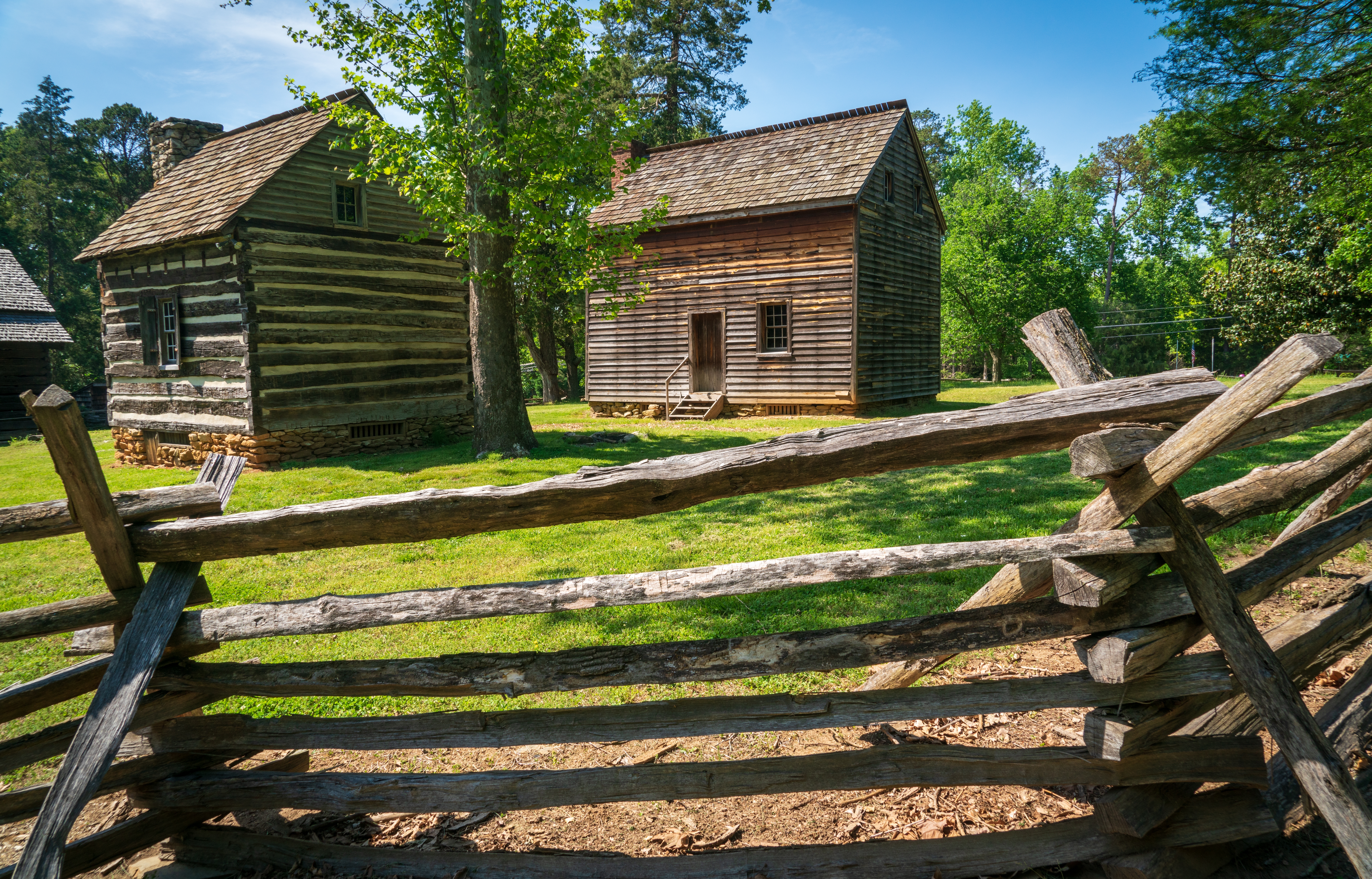

Prelude: The Southern War Comes to North Carolina
By the spring of 1781, the American Revolution had reached its boiling point in the South. After years of inconclusive fighting in the northern colonies, the British shifted strategy — the so-called Southern Campaign — hoping to rally Loyalist support and isolate the Carolinas and Georgia from the rest of the rebellion.
Their plan initially succeeded. Charleston fell in May 1780, one of the worst American defeats of the war. British General Charles Cornwallis, commanding a hardened army of regulars, Loyalists, and German auxiliaries, began sweeping northward through the Carolinas. The victories at Camden and Waxhaws (the latter remembered as the Waxhaw Massacre) left Patriot morale in tatters.
But the brutality of these engagements had the opposite effect: it ignited resistance across the backcountry. From Charlotte, known to the British as the “Hornet’s Nest of Rebellion,” to the rugged valleys of the French Broad River, local militias rallied under men like Thomas Sumter, Francis Marion, Andrew Pickens, and William Lee Davidson.
By early 1781, American forces under Major General Nathanael Greene had adopted a new strategy of attrition — trading space for time, wearing the British down rather than risking destruction in one decisive battle. This “fighting retreat” through the Carolinas would culminate on the fields near present-day Greensboro, North Carolina.
Commanders: Greene and Cornwallis
Nathanael Greene, a self-taught Rhode Island Quaker turned soldier, was appointed commander of the Southern Department in late 1780. Outnumbered and under-supplied, Greene divided his forces to harass Cornwallis’s army, forcing the British to chase him across rivers, swamps, and forests.
Charles Cornwallis, an experienced aristocrat and soldier, had served with distinction in Europe and earlier American campaigns. Determined to end the rebellion in the South, he pursued Greene northward into the Piedmont, burning supplies and destroying his own wagons in a desperate attempt to move faster.
Their collision was inevitable.
The Road to Guilford: Skirmishes and the Fight at Cowan’s Ford
Before reaching Guilford, both sides clashed in smaller but fierce encounters. On February 1, 1781, at Cowan’s Ford on the Catawba River, North Carolina militia under General William Lee Davidson tried to block Cornwallis’s crossing. The British forced the ford but lost several men to the swift current. Davidson was killed while rallying his troops — his death becoming a symbol of North Carolina’s sacrifice.
Further skirmishes unfolded across the Piedmont, including actions near Beattie’s Ford and New Garden Meeting House. Greene continued his fighting withdrawal, using the terrain and rivers as natural barriers. By mid-March, with reinforcements arriving, he was ready to turn and fight.
The Battlefield and Order of Battle
Greene chose the rolling woods near Guilford Courthouse, a small community northwest of modern Greensboro, as his defensive ground. The site offered dense timber, open clearings, and commanding ridgelines — ideal for layered defense.
He deployed approximately 4,400 men in three lines:
- Front line – North Carolina militia under Generals John Butler and Thomas Eaton, positioned behind a split-rail fence with orders to fire two volleys and fall back.
- Second line – Virginia militia under Edward Stevens and Robert Lawson.
- Third line – Continental regulars, including Maryland, Delaware, and Virginia Continentals, supported by artillery and dragoons under Henry Lee and William Washington.
Cornwallis’s 2,100 British troops — veterans of campaigns from Camden to King’s Mountain — formed opposite, their regiments including the 23rd and 33rd Foot, Guards Battalions, 71st Highlanders, von Bose Regiment, and cavalry under Banastre Tarleton.
March 15, 1781: The Battle of Guilford Courthouse
Under cloudy skies and the first signs of spring, the British advanced shortly after noon. The North Carolina militia unleashed a ragged volley before breaking — some firing bravely, others fleeing after the first exchange. But their resistance bought precious minutes and inflicted early losses.
The British pressed into the Virginia line, where steadier militia fire and wooded terrain slowed their advance. Hand-to-hand combat erupted along the fence lines. Cornwallis’s army, pushing forward in dense smoke and forest, began to lose cohesion.
When the redcoats finally reached Greene’s Continental line, they met disciplined volleys and counterattacks. The Maryland Brigade in particular fought with distinction, launching a bayonet charge that nearly broke the British Guards. Cornwallis, desperate to prevent encirclement, ordered his own artillery to fire grapeshot into the melee — a desperate act that may have struck his own men.
After over two hours of fighting, Greene judged his army’s objective achieved: the British were bloodied and disorganized. He withdrew in good order, leaving Cornwallis to claim the field — but at catastrophic cost.
Casualties and Consequences
The numbers tell the story. Of Cornwallis’s 2,100 men, 93 were killed, 413 wounded, and 26 missing — nearly a quarter of his army. Greene lost 79 killed, 184 wounded, and roughly 1,000 missing or scattered (mostly militia).
Cornwallis held the field, but he could not hold North Carolina. His “victory” was pyrrhic — a triumph so costly it amounted to defeat. He retreated to Wilmington to resupply, then marched north into Virginia, where later that year he would surrender at Yorktown.
Greene, meanwhile, returned south. His strategy had succeeded: the British were broken in spirit and stretched thin across hostile territory.
Aftermath: Greensboro, the Park, and Memory
The battlefield became a site of pilgrimage in the 19th century. In 1808, Greensboro was founded nearby and named for General Nathanael Greene, preserving his legacy in the city’s very identity.
Today, the site is protected as Guilford Courthouse National Military Park, established in 1917 as the first Revolutionary War battlefield preserved by the U.S. government. The park, encompassing over 250 acres, features walking trails, monuments, and exhibits that trace the lines of battle and honor the soldiers — Patriot and British alike — who fought there.
The National Park Service continues to research and interpret the battle, correcting earlier monument placements and connecting the park’s trails to Greensboro Country Park.
Each March, reenactments commemorate the struggle that marked North Carolina’s decisive role in the Revolution.
Legacy: A Victory in Defeat
The Battle of Guilford Courthouse stands among the Revolution’s most important southern battles. Like the Waxhaws, Cowpens, and King’s Mountain, it proved that determination, strategy, and local resolve could overcome British might.
Though Greene’s army left the field, his campaign delivered the decisive blow that unraveled the British Southern Strategy. From the Hornet’s Nest of Rebellion to the Catawba River crossings, from the Waxhaws to the French Broad River, North Carolina’s landscape became the crucible in which independence was forged.
As Greene himself wrote after the battle:
“We fight, get beat, rise, and fight again.”
At Guilford Courthouse, that persistence became victory — and the Revolution’s final momentum turned inexorably toward freedom.
⚖️ About Adkins Law
Adkins Law, PLLC, based in Huntersville, North Carolina, proudly serves clients throughout the Lake Norman and Charlotte region. Founded by Attorney Christopher Adkins, a former police officer and military officer, the firm focuses on family law, divorce, custody, mediation, and estate planning. Adkins Law combines experience, integrity, and a deep respect for North Carolina’s heritage — helping families navigate life’s challenges with clarity and compassion.
🌐 www.huntersvillelawyer.com | 📞 (704) 274-5677 | Click here to contact Adkins Law, PLLC and speak with an experienced family law attorney in Huntersville NC.



Leave a Reply